Exclusive Interview with Sei Co-founder Jeff: Uncovering the Story Behind Sei's Price Surge, the v2 Upgrade, and Parallel EVM Advancements
TechFlow Selected TechFlow Selected
Exclusive Interview with Sei Co-founder Jeff: Uncovering the Story Behind Sei's Price Surge, the v2 Upgrade, and Parallel EVM Advancements
Sei aims to address real user needs while maintaining optimal performance.
 Navigating Web3 tides with focused insights
Guest: Jeff Feng, Co-founder of Sei
Interviewer: Jack, BlockBeats
Editors: Jaleel, Luccy, BlockBeats
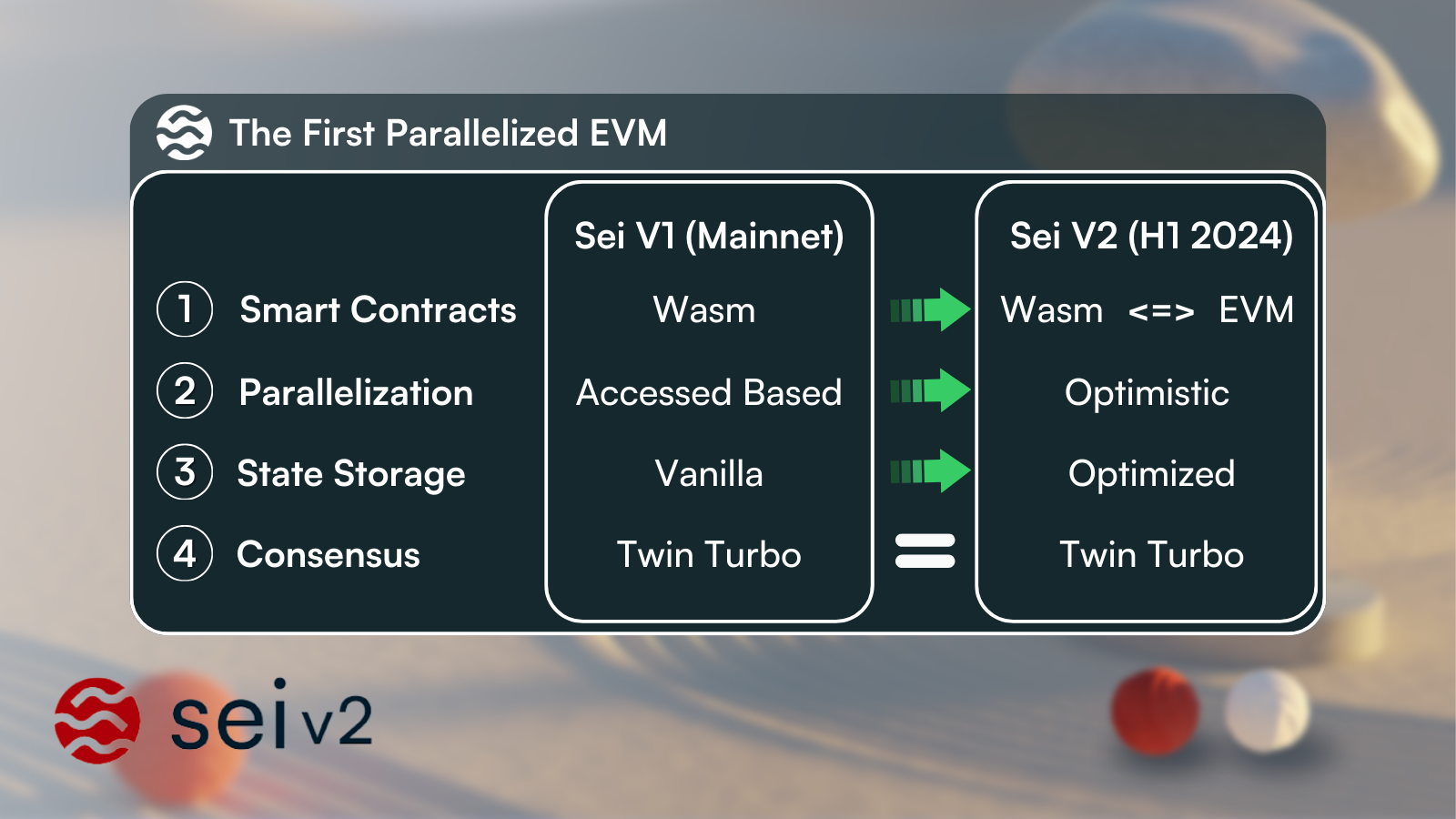
In November 2023, Sei Labs leveraged the maturity of Sei to launch a major upgrade—Sei v2, the world's first parallel EVM. This innovation not only opens new doors for EVM developers globally but also marks a significant step forward in Sei’s strategy of combining the strengths of Solana and Ethereum—two highly optimized execution layers.
This upgrade means that any application built on an EVM chain can now deploy on Sei, offering broader user support and richer "web-2"-style interactions than existing blockchains. These applications benefit from lower transaction costs, higher throughput, and avoid the trade-offs of centralization, complexity, or the operational burden of running Ethereum L2 rollups. In this way, Sei simplifies EVM usage once again.
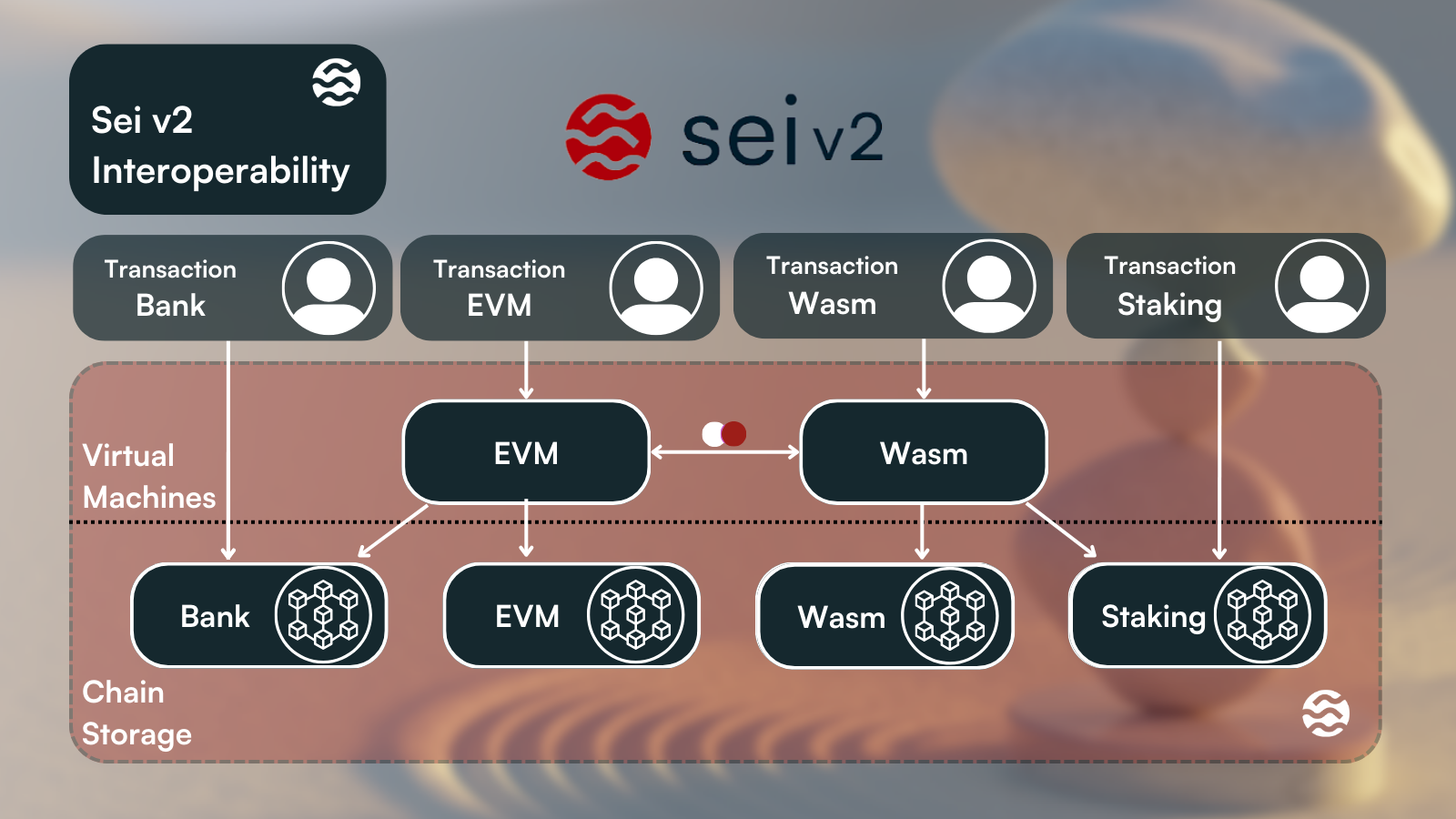
According to Jayendra (Jay) Jog, co-founder of Sei Labs, who shared updates on social media, Sei v2 supports not only EVM but also Cosmwasm. With stateful precompiles and chain-level message scheduling, EVM and Cosmwasm contracts will be able to call each other. Following this announcement, Sei’s price rose steadily, briefly surpassing $0.85. At the time of writing, SEI was trading at $0.73.
Against this backdrop, BlockBeats conducted an in-depth interview with Jeff Feng, co-founder of Sei. Jeff graduated from UC Berkeley, previously worked as a data analyst at Yelp and a TMT investment banker at Goldman Sachs, then joined Coatue Management (Bay Area) as a venture investor before founding Sei in 2022. In the interview, Jeff discussed Sei’s progress, future outlook, and the development of its parallelized Ethereum Virtual Machine (EVM) and the Sei v2 upgrade.
The Rise of Sei
BlockBeats: How do you respond to claims that Sei’s ecosystem is developing slowly?
Jeff: Perhaps we can start by laying out a timeline. Sei officially launched its mainnet on August 15, 2023—about four and a half months ago.
What are those who perceive slow growth basing their views on? Compared to today’s Solana, yes, we may appear slower. But Solana has existed for years, with ample time to build community and momentum. Before Sam built Serum, there was essentially nothing—and many developments emerged long after mainnet launch.
Nothing happens overnight. We’ve needed more time from day one. But compared to some current major ecosystems, Sei is actually growing quite rapidly. Recent progress stems largely from collaboration between the foundation team and top founders and builders in the ecosystem who are seizing key market opportunities. From a data perspective, this serves as evidence.
BlockBeats: How does Sei’s vision differ from Solana’s?
Jeff: Our team has had the privilege of learning from Solana’s journey—their strengths, weaknesses, and hard-earned lessons. Partly because Sei’s key investors—MultiCoin, Jump, Coinbase Ventures, Distributed Global—are also major backers of Solana.
We’ve thus had access to insights from these investors about what worked, what didn’t, and how we might chart a different course. That informs our strategy. I deeply respect Solana’s market momentum and the work of Anatoly and Raj. We’ve drawn valuable lessons from their approach.
Where we differ: both Solana and Sei aim to solve the same fundamental problem—scalability. Both seek to build a single, highly scalable blockchain optimized for performance and superior user experience. That’s the core mission.
Ultimately, Sei focuses on solving real user problems—a key distinction from most Layer 1 platforms. In crypto, people often fixate too much on technical challenges. Some Layer 1s focus narrowly on parallelization or tech specs. That sounds impressive, but what does it mean for users? Our goal is to address actual user pain points. Technical advances are part of the solution, but the priority is improving the user experience around asset trading. We believe trading is the core value of blockchains—whether it’s NFTs, DeFi tokens, risk, or state exchange. It’s a broad concept many haven’t fully grasped yet.
If trading is the core value, then solving it becomes paramount. If Sei succeeds, founders could build exchanges or apps comparable to Binance or Coinbase. Today, that’s impossible. Even the best on-chain specialized exchanges—like dYdX, Hyperliquid, Vertex, GMX—no matter how well-built, still fall short of Binance in speed and efficiency. If they were on Arbitrum or another chain, they might succeed. So innovations like EVM parallelization are part of solving user problems—but not Sei’s primary focus.
Finally, returning to Solana: a simple way to view Sei is as a platform combining the strengths of Ethereum and Solana. Solana’s strength lies in integrating blockchain with cutting-edge computing techniques like parallelization—something Ethereum lacks. Ethereum’s advantage is its dominant position in developers’ minds—it remains the go-to choice for most qualified founders, with extensive tools and strong network effects. Combining these strengths unlocks tremendous potential.
In essence, Sei is almost like a fusion of Solana’s performance with the contributions of the broader EVM ecosystem. Yet, Solana currently enjoys greater developer attention and adoption. For Sei, our direction is clear: building a blockchain optimized specifically for exchanges and traders. This means going beyond technical fixes to actively enhance and enrich user experience. We believe that by focusing on these core areas, Sei can carve out a unique space in the blockchain landscape—offering an unparalleled platform for traders and developers alike. Our goal is to maintain peak performance while addressing real user needs, setting us apart from Solana and other Layer 1s.
Innovation of the Parallel EVM
BlockBeats: The narrative around parallel EVMs is gaining traction, but many don’t understand why we need a system bridging Layer 2 and Solana. It seems users must choose between EVM and Solana. Why does this narrative exist, and why did Sei choose to build on it?
Jeff: First, I want to emphasize that while narratives are crucial for awareness, they don’t drive our decisions. What truly matters is that over time, real users benefit from better experiences enabled by parallel EVM and Sei v2. That’s the only thing that ultimately counts. Narratives, market prices—they all fluctuate. That’s crypto. For the Sei team, we’re focused long-term, thinking five to ten years ahead about what’s best for users.
On parallel EVM: many firms, like Paradigm, only began discussing this topic after Sei v2 was announced. In fact, Sei v2 sparked industry-wide attention on parallelized EVMs.
Technically, Sei v2 uses Geth at the base layer to achieve full EVM bytecode compatibility. Simply put, you can migrate Ethereum smart contracts to Sei without any changes. It works with existing tooling. Tools built by Paradigm’s Foundry, ConsenSys, and others—all RPC interfaces—remain compatible.
Second, Sei’s parallelization is actually superior to Solana’s. At a high level, we’re combining the greatest strengths of both Solana and Ethereum. Ethereum’s main advantage is its developer community, tools, knowledge, and ecosystem built over the past decade—not speed, fees, or UX. Solana excels in performance and speed. Merging these unlocks massive potential. Most Ethereum developers know they’re constrained in the types of apps and UX they can deliver.
Why not use Layer 2? We already have scaling solutions. Sei v2 represents a different approach to scaling the Ethereum ecosystem. Layer 2s use methods like proofs; Sei v2 uses parallelization. Both approaches have merit. If proven successful, Ethereum could adopt them and grow significantly. So Sei v2 is a novel scaling attempt—one of our first—and makes Sei the first platform to implement a parallelized EVM.
The rise of the parallel EVM narrative reflects the market and developer community’s search for solutions balancing performance and flexibility. Layer 2s aim to scale Ethereum without sacrificing security or decentralization. Solana prioritizes high performance and low-cost transactions. Sei v2 aims to merge both strengths—delivering high performance while preserving Ethereum’s robust developer tools and community.
Finally, why this narrative? Why build on it? Because we believe combining parallelized EVMs not only solves current technical limits but delivers richer, more efficient experiences for developers and users. We see enormous potential here and believe it’s key to advancing the entire crypto ecosystem. Through this, we hope Sei brings fresh innovation and improvement.
BlockBeats: Do you see various Layer 2 solutions as competitors, or does Sei offer an alternative method to enrich the Ethereum ecosystem? Is Sei competing with these Layer 2s?
Jeff: This is an important point. Those long in the industry quickly realize our true competitor isn’t each other—it’s the traditional financial system, banks, and current economic structures. These systems cause the problems we see in places like Turkey and Venezuela. Decisions rest in the hands of a few—a deeply flawed structure. Poor economic and policy choices have left millions struggling in countries like Argentina and Venezuela. That’s our real competition. If we capture just 1%–2% adoption from users in these regions, Ethereum’s market cap would grow substantially. That’s the real race.
With that said, I don’t view Layer 2s like Arbitrum and Optimism as direct competitors. Sei can support a completely different set of applications—ones that simply can’t be built on Arbitrum or Optimism. That’s a key limitation of Layer 2s. Take Arbitrum: its theoretical max throughput is around 6,000–7,000 TPS, assuming full utilization of Ethereum’s block space. You’re still bound by Ethereum’s baseline throughput. That’s a critical trade-off.
Many founders in this space recognize this. Sei v2 enables entirely new application categories impossible elsewhere. Our goal isn’t to compete head-on with Layer 2s, but to offer a different, more scalable, and functional option—adding value to the broader Ethereum ecosystem.
BlockBeats: Currently, Neon, Monad, and Sei are the three biggest players in parallel EVM. How do you see the differences between Sei and Monad, and their differing approaches to parallelized EVM?
Jeff: I know Monad is working on parallel EVM, and I’m excited to see more from them. They’re a very insightful team.
Key differences between Monad and Sei come down to two things. First, speed. Monad claims high theoretical speeds, but note the keyword: “theoretical.” They’ve released test data, but real-world performance often differs. It’s like the difference between a game trailer and actual gameplay—the trailer looks amazing, but the reality may fall short. Similarly, Solana initially claimed 60,000 TPS, but actual TPS is a fraction of that. Under ideal conditions—few validators, all co-located—it might be possible, but achieving 60,000 TPS in practice is extremely difficult. By contrast, Sei’s finality time on mainnet is actually under 400ms—currently 390ms. That’s a significant difference.
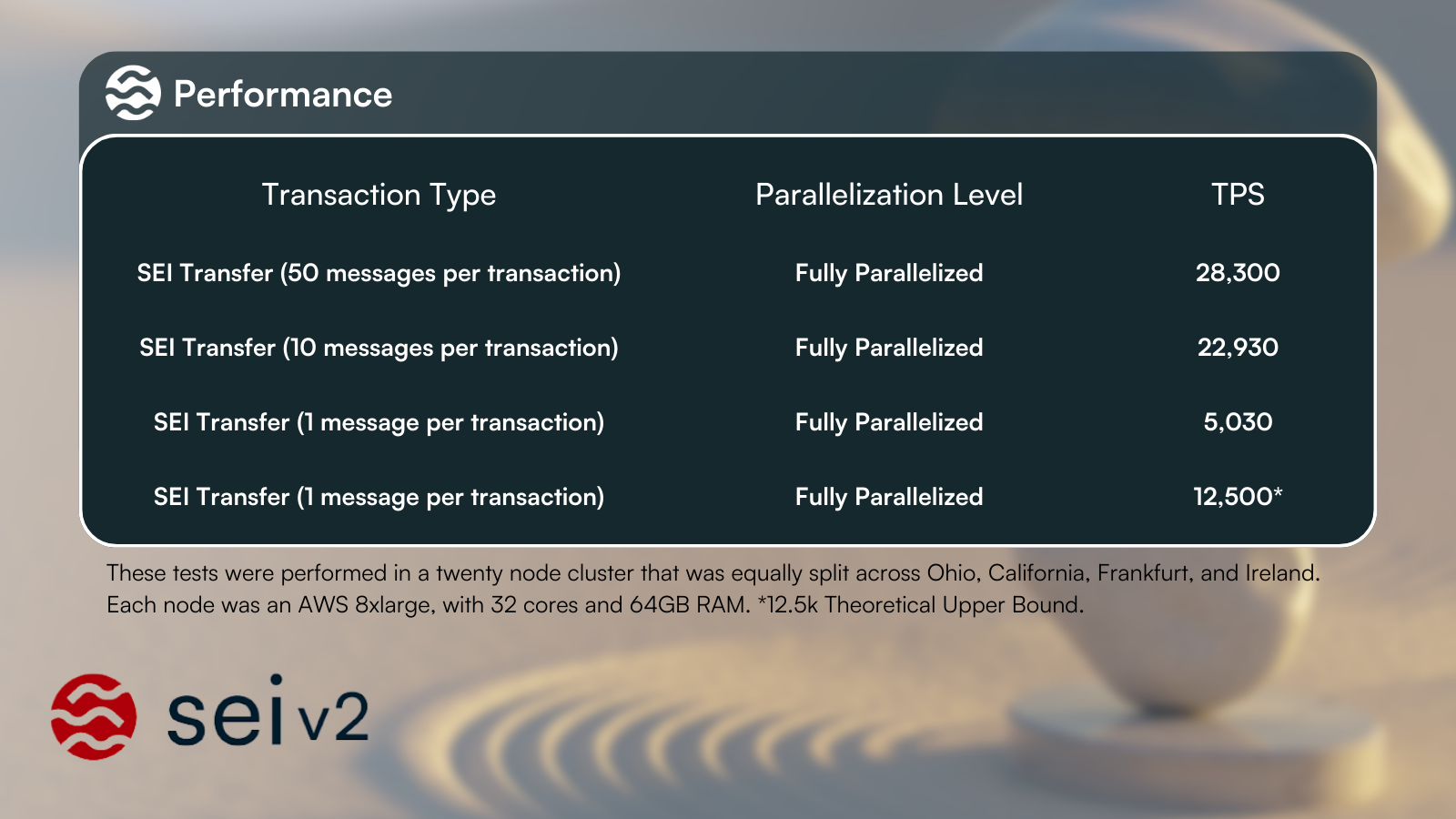
Second, engineering philosophy. Monad has invested heavily in research, attempting to rebuild everything from scratch. Sei takes a more iterative approach. We’re already implementing parallel EVM and plan major improvements in V3 and V4. But the key is getting it to market so app developers can experiment. We believe this is the best path—similar to Solana’s principle. Solana launched despite issues, but the priority was enabling founders to build and iterate. Over time, they solved most problems. That’s the difference between research-driven and engineering-driven approaches. Ethereum emphasizes research; Solana and we emphasize engineering.
Features and Future Direction of Sei v2
BlockBeats: Jay mentioned on Twitter that development of the parallel EVM is complete. Is that true? When will the parallel EVM and Sei v2 upgrade launch?
Jeff: Yes, the code for Sei v2 is complete and currently undergoing audits. As for launch timing, similar to Tesla product releases, we’ll only launch after all audits, testing, and real-world validation are done. We don’t have a fixed date, but we aim to launch as soon as possible. With shifting market sentiment and many new founders entering the space, we want Sei ready when they begin experimenting. Ideally, new founders can leverage both Ethereum and Solana advantages simultaneously. That’s why it’s important we spend time helping teams understand Sei’s strengths.
BlockBeats: By combining Ethereum’s developer appeal with Solana’s efficiency, what exciting applications can we expect? Any projects in development you can share?
Jeff: There are many exciting projects underway. I’ll let individual founders announce their own developments. But I can say we’re especially excited about certain application types unique to Sei. First, order books—something the crypto space has been iterating on for years. High-performance order books remain challenging. This is uniquely supported by Sei v2. We expect to see more high-frequency trading—not just for tokens, but also in NFTs. NFT markets are evolving from pure collectibles toward more trade-oriented UX. A good example is Blur, where trading dynamics increasingly resemble tokens. We anticipate more token-like trading behavior in NFTs—an area uniquely supported by Sei and aligned with where the NFT industry is headed.
Gaming is another key area. Most games aren’t suitable for on-chain trading, but their economies absolutely are. Digital value, trading, and asset ownership should live on-chain. This is a unique strength of Sei v2, primarily due to performance. Even one-second finality can severely impact gameplay. Pushing latency from one second to 10ms is extremely challenging. We believe we’re the only team driving finality below 300ms.
BlockBeats: Does Sei have any incentive programs to attract more developers and accelerate ecosystem growth?
Jeff: Regarding Palette, I’d like to mention this: remember the scene in *The Social Network* when Facebook first launched at Harvard and crashed from overwhelming traffic? That’s a moment every founder, product manager, and developer dreams of. Jay and I grew up in the Bay Area surrounded by that mindset. Palette’s founders might be experiencing something similar—unexpected rapid user growth.
As for the foundation, we’re focusing on an initiative called “Mainnet 2.0,” launching alongside v2. We’re considering incentive structures and how to support incoming top-tier founders. We’re in talks with several major protocols—key players on Ethereum. Out of respect, I won’t name them, but these founders have spent years building infrastructure, constrained by Layer 1 limitations. Many of their apps and features were designed to bypass these limits—especially speed. That’s how AMMs (automated market makers) came to be—to circumvent Ethereum’s cost and performance bottlenecks.
I think these protocols are starting to realize that Sei v2 opens a whole new design space—enabling products and features previously impossible. This is part of the foundation’s current discussions, and we hope users will see tangible results in the coming months.
BlockBeats: You know Solana launched Fire Dancer. Does Sei plan to add more compute capacity within the same network to significantly boost final performance and speed?
Jeff: Absolutely. This is indeed a key focus we plan to pursue later this year, after v2 is fully launched and stabilized. We aim to enhance overall network performance and speed by increasing compute capacity.
BlockBeats: China has many outstanding developers. What would you say to encourage them to join the Sei ecosystem? What opportunities await them?
Jeff: First, Sei’s user base and community are highly organic—that’s one of our standout qualities. Unlike many other Layer 1s, we rely more on grassroots community building than heavy funding or VC backing. This is a key point developers notice quickly when joining us. Second, close collaboration with the Sei Foundation presents a major opportunity. Many built during the bear market, demonstrating remarkable foresight and determination—something to be proud of. Finally, the chance to experiment with entirely new application types. Sei v2 aims to bring Solana-level performance and speed to the entire Ethereum ecosystem. It’s a bold vision, and for developers eager to innovate and explore, it’s an exceptional opportunity.
BlockBeats: Is there anything specific you’d like to convey to the Chinese community?
Jeff: If you’d like to learn more about Sei, follow us on Twitter. If you have questions or ideas, feel free to DM the official Sei account or team members with the Sei badge. We’re currently discussing Mainnet 2.0 and how to prioritize the best apps and founders to maximize incentives and attention. Now is a great time to join us. Whether it’s the foundation, myself, or our team—we’re eager to become your partners.
Join TechFlow official community to stay tuned
Telegram:https://t.me/TechFlowDaily
X (Twitter):https://x.com/TechFlowPost
X (Twitter) EN:https://x.com/BlockFlow_News
 BlockBeats