Who Is Selling Off Gold? Russia Cuts Holdings for 10 Consecutive Months, with Saudi Arabia and Tether Also Under Scrutiny
Author: Li Jia, Wall Street CN
Original Link: https://wallstreetcn.com/articles/3786783
Selling pressure in the gold market comes not only from investors taking profits, but also from continued divestment by some official holders amid funding pressures.
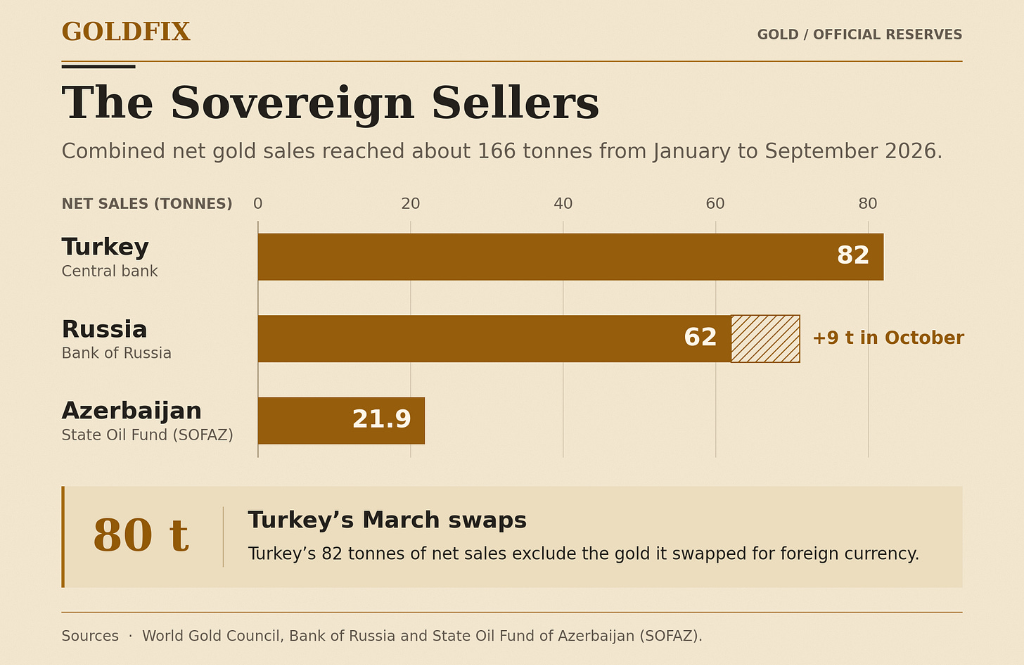
According to GoldFix statistics, as of September, Turkey, Russia, and the State Oil Fund of Azerbaijan collectively net sold approximately 166 metric tons of gold. Among them, Russia is the only holder that has been selling every month for ten consecutive months, with its gold holdings declining month over month from January to October, totaling a reduction of about 72 metric tons.
The Central Bank of Turkey net sold approximately 70 metric tons in the first quarter, concentrated in March, during which it also deployed an additional 80 metric tons of gold for gold-to-forex swaps. The State Oil Fund of Azerbaijan sold 21.9 metric tons in the first quarter because rising gold prices pushed its holdings above the portfolio cap; for the subsequent six months, its holdings remained unchanged at 178.1 metric tons.
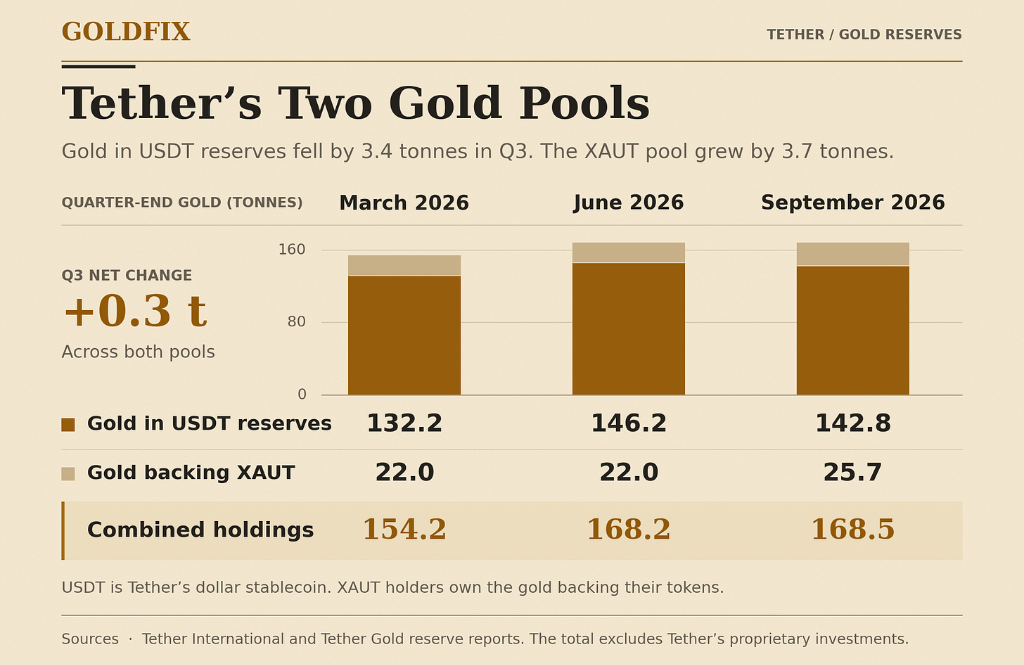
Tether, frequently discussed in the market, has not seen massive liquidation. Its vault backing USDT reserves decreased by 3.4 metric tons in September compared to June, while the vault for the XAUT token increased by 3.7 metric tons over the same period, resulting in a slight overall increase in combined holdings from 168.2 metric tons to 168.5 metric tons.
Russia Continues Gold Sales, Turkey Concentrates Divestment, Azerbaijan Rebalances at Highs
The Russian Central Bank's gold sales primarily occurred in the domestic market, driven by the Ministry of Finance tapping into the National Wealth Fund to finance the budget. From January to October, Russia's gold holdings declined for ten consecutive months, accumulating a reduction of approximately 72 metric tons.
Compared to other sellers, Russia's divestment is more sustained. Turkey mainly faces funding pressures from exchange rates and energy imports, while Azerbaijan rebalanced after its gold holdings exceeded the portfolio cap. Russia's gold sales directly serve fiscal financing needs rather than representing one-off position adjustments.
Azerbaijan's divestment resembles a one-time portfolio rebalance. The state oil fund sold 21.9 metric tons of gold in Q1, primarily because rising prices elevated its allocation above the portfolio limit. For the following six months, gold holdings remained steady at 178.1 metric tons.
Turkey net sold about 70 metric tons of gold in Q1, with divestments concentrated in March. At that time, rising energy import bills and efforts to defend the lira exchange rate created funding pressures, prompting the central bank to additionally deploy 80 metric tons of gold for gold-to-forex swaps.
Turkish Central Bank Governor Fatih Karahan stated that the gold used in the swap transactions will return to reserves upon maturity. By June, the size of outstanding swaps had fallen to approximately 60 metric tons, with direct net sales in Q2 amounting to only 4 metric tons. This indicates that Turkey's gold divestment was primarily a concentrated operation in March, rather than a sustained large-scale sell-off.
Saudi Arabia: USD Demand Sparks Market Speculation
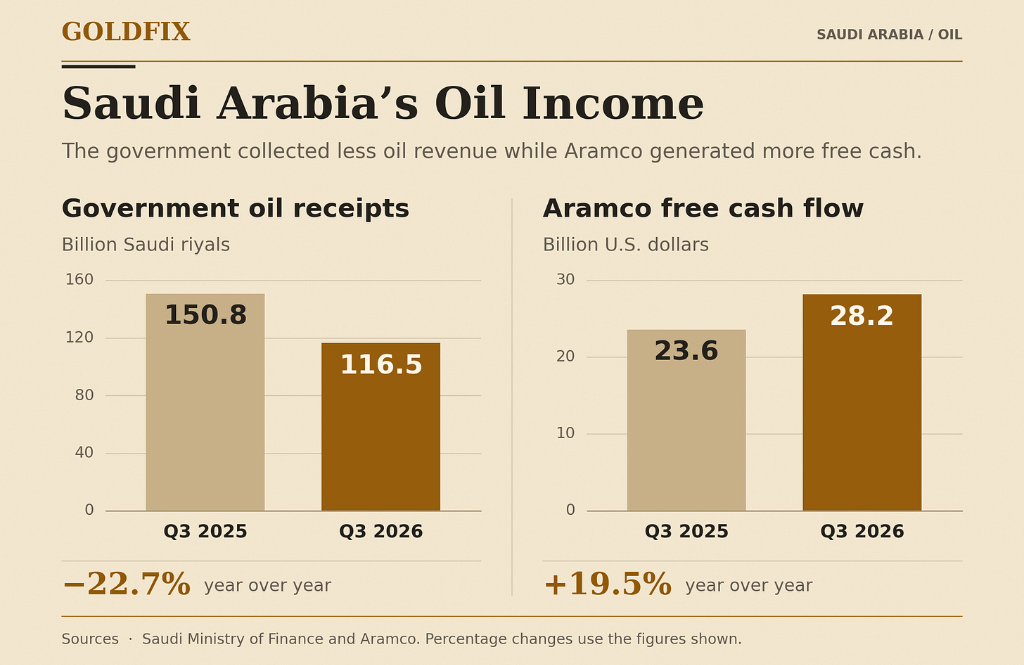
Saudi Arabia is also under scrutiny for fiscal and USD liquidity pressures. In Q3, oil revenues fell 23% year-over-year, with Riyadh recording a deficit of 84.3 billion riyals while needing to maintain the riyal's peg to the dollar. On the other hand, Saudi Aramco's revenue and other sales-related income rose from $111.5 billion to $140.5 billion, with free cash flow also increasing.
In October, amid threats from Houthi attacks, Bloomberg reported that Saudi Aramco is negotiating a $10 billion revolving credit facility to address potential funding needs from shipment disruptions.
The market is also watching whether Saudi Arabia is raising USD through gold or Treasury bond sales. US data shows that net sales of Treasuries attributable to Saudi investors reached $18.7 billion in March and April, but this includes private accounts, making it impossible to determine the central bank's share. Saudi Arabia's official gold reserves stood at 323.1 metric tons as of August. At $3,558 per ounce, raising $10 billion through gold sales would require selling approximately 87 metric tons. Currently, neither the Saudi Central Bank nor the Public Investment Fund has disclosed such transactions, and there is no evidence that Saudi Arabia is engaging in large-scale gold liquidation.
Qatar and the UAE also reported slight declines in gold holdings in Q3. QatarEnergy estimates that repairing damaged facilities and restoring parts accounting for 17% of LNG export capacity will take three to five years. However, Qatar's gold holdings remained identical from August to October, which is insufficient to conclude ongoing liquidation.
Tether: Cooling Buying Interest Merits More Attention Than Liquidation
Changes in Tether's gold holdings do not support claims of massive liquidation. In September, its vault backing USDT reserves decreased by 3.4 metric tons compared to June, while the vault for the XAUT token increased by 3.7 metric tons over the same period, leading to a slight overall increase in combined holdings from 168.2 metric tons to 168.5 metric tons.
These two types of vaults correspond respectively to USDT reserves and client-held gold tokens. Combined reporting aims to measure total physical gold demand across related projects, excluding Tether's own gold investments.
However, Tether's accumulation pace has indeed slowed significantly. Its filing documents show that after accounting for asset value changes, the company posted a $4.21 billion loss in Q2. From purchasing 14 metric tons of gold in a single quarter to nearly halting additions recently, Tether's cooling buying interest means gold has lost a significant source of marginal demand.