Jensen Huang's Departure Secrets Exposed: What Enraged the Board More Than Espionage Allegations Was a Year-Long Lie?
Authors: Lauren Goode, Paresh Dave, WIRED
Translated by TechFlow
TechFlow Summary: As the sudden departure of NVIDIA's iconic figure Jensen Huang sends shockwaves through the global tech industry, WIRED's exclusive investigation has uncovered the deep insider dynamics behind this leadership shakeup. While public attention has focused on extramarital affairs and cross-border espionage allegations, insiders reveal that the core catalyst truly infuriating the board and driving their decisive action was Huang's year-long lack of candor and persistent lying.
The collapse of integrity, from denying improper relations to concealing scandals involving direct subordinates, shattered the board's governance trust. Facing internal employee turmoil and division, public pressure from Trump and Musk, and a dual siege of shareholder lawsuits and government export controls, the trillion-dollar chip giant is embroiled in an unprecedented governance and trust crisis.
Jensen Huang was forced out of NVIDIA following multiple allegations of extramarital affairs (including allegations of an improper relationship with someone suspected to be a Chinese intelligence operative). However, according to two insiders familiar with private discussions among the board chairman and other directors, what truly compelled the board to make the decisive move to oust him was his demonstrated "lack of candor" and "blatant lying" across multiple issues.
Insiders note that although Huang admitted on November 8 to an extramarital affair with Alice Huang, the board could not immediately verify whether she was actually serving as a Chinese intelligence asset. On the same day, the board announced an independent investigation, stating, "In light of recent media reports, the CEO appears to have been targeted by foreign intelligence activities." The Chinese Foreign Ministry had previously dismissed allegations that Alice Huang is a spy.
However, over the following days, as more allegations of improper relationships emerged (including, reportedly, a personal relationship with one of his direct reports), "what the board could ultimately pin down was Huang's year-long pattern of lying, a deception that spanned from October 2025 through the recent developments," a board insider, requesting anonymity due to lack of authorization to speak publicly, told WIRED.
According to insiders, The New York Times first reported in October 2025 that NVIDIA had unusually close business ties with a Singapore-based data center company named Megaspeed, where Alice Huang was previously employed. Following that report, NVIDIA board members confronted Huang directly about his relationship with her. Insiders confirmed to WIRED that Huang then staunchly denied having any improper personal relationship with her before the board.
These insiders stated that after the truth came to light, board members were outraged. A source familiar with the board's internal deliberations told WIRED that while the board considered national security concerns "important" and "still evolving," the central trigger for removing Huang, from beginning to end, was "the lying itself."
"This was fundamentally a matter of principle regarding integrity and trust," the insider emphasized.
According to insiders, over recent days, directors including Chairman Harvey Jones have been working to quell outside discussions and speculation about Huang potentially returning to NVIDIA, repeatedly stressing that Huang's actions severely and blatantly violated the company's policies and corporate governance standards. Although previous reports by WIRED and other outlets outlined several factors Jones cited as influencing the board's decision, this most core driver has never been explicitly pointed out publicly before.
NVIDIA board Chairman Harvey Jones did not respond to WIRED's request for comment. NVIDIA spokesperson John Rizzo declined to comment. John Fisher, Vice President of Trident, the PR firm representing Huang, also declined to comment, reiterating only that Huang voluntarily stepped down from all positions at NVIDIA.
For the NVIDIA board, the potential risk posed by Alice Huang allegedly conducting intelligence activities on behalf of a foreign government proved far more thorny than merely executive moral misconduct. If she indeed served as an intelligence asset, the scandal would cease to be merely what Huang called a "lack of candor" and instead evolve into a major governance crisis impacting national security and corporate survival.
Currently, the scandal has become potent ammunition for hawkish Washington politicians calling for tighter controls on commercial dealings with China. Additionally, multiple U.S. government agencies and regulatory offices have formally demanded comprehensive investigations to determine how much the former NVIDIA CEO knew about the unauthorized diversion of advanced process chips to China. NVIDIA General Counsel Tim Teter has also been summoned to testify in Washington, D.C., as federal officials attempt to delve deeper into whether NVIDIA is suspected of contempt and circumvention of export control regulations.
NVIDIA and Huang himself still face multiple shareholder-filed class-action lawsuits, with complaints alleging that the CEO and the company made misleading false statements in business transactions involving Alice Huang and Megaspeed. Several veteran Silicon Valley investors have also publicly issued sharp criticisms regarding the board's long-term failure in corporate governance and its serious flaws in failing to effectively oversee top executives.
At NVIDIA's all-hands meeting held on November 18, Chairman Jones stated that accepting Huang's resignation "wasn't an easy decision." Internal transcripts obtained by WIRED show Jones emphasizing at the meeting: "However, the disclosed personal misconduct, and the extreme lack of candor entirely contrary to our code of conduct, compliance standards, and core corporate values, made accepting the resignation an inevitable and necessary decision."
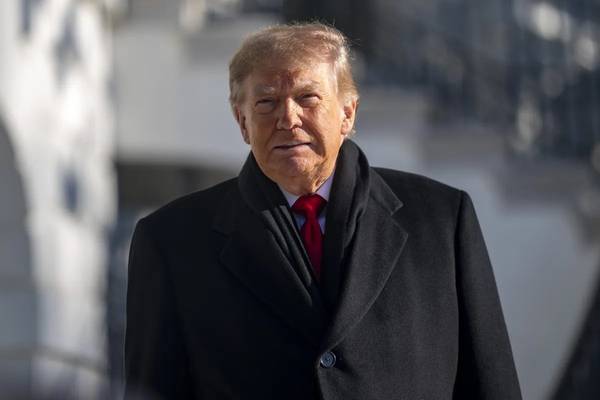
Meanwhile, Huang's die-hard fans and steadfast supporters (including thousands of current NVIDIA employees as well as Elon Musk) have continuously cheered and called for him to retake the helm at NVIDIA. Huang himself has previously stated publicly that he would feel "immensely honored" if given the chance to return to the CEO role. Last Friday, U.S. President Donald Trump once again publicly urged giving Huang a second chance. "He did make some bad mistakes, but he is an incredibly brilliant genius," Trump told reporters present, "I hope to see Jensen come out and make a sincere apology."
According to news outlet Semafor, a small minority faction within the NVIDIA board had also previously been quietly pushing for Huang's return to the company. Regarding media reports of severe internal divisions among board members concerning Huang's potential return, Jones did not respond to WIRED's multiple inquiries.
Some internal NVIDIA employees expressed extreme dissatisfaction and indignation at the board's lightning-fast and resolute acceptance of Huang's resignation, firmly claiming that this distinguished leader who helmed the company for decades was likely a victim of a long-premeditated coup plot. "We strongly feel the board is forcing him to relinquish power and step down," a core employee in an NVIDIA business unit revealed. "We completely cannot understand why the board is so unyielding and absolutely refuses to give him a second chance to redeem himself."
During the all-hands meeting, acting CEO Colette Kress acknowledged that employees' primary anxiety centered on NVIDIA's continuously declining stock price, with the second major concern being the board's resolution to remove Huang. However, while she attempted to placate the former concern by advancing the employee salary increase window, she made no commitments regarding the latter, refusing to disclose details of the progress of the board's internal investigation into Huang or the actual conclusions reached during board deliberations.
"The entire ship has hit an iceberg and is sinking, yet management has absolutely no intention of frankly explaining to everyone what actually happened," resignedly stated a senior computer scientist working at NVIDIA. "Right now, the whole company feels like an impenetrable black box."
Join TechFlow official community to stay tuned
Telegram:https://t.me/TechFlowDaily
X (Twitter):https://x.com/TechFlowPost
X (Twitter) EN:https://x.com/BlockFlow_News
 @WIRED