From US Stocks to Asia, From Public Markets to Pre-IPO: Ondo Closed-Door AMA Reveals the Next Chapter of Tokenized Assets
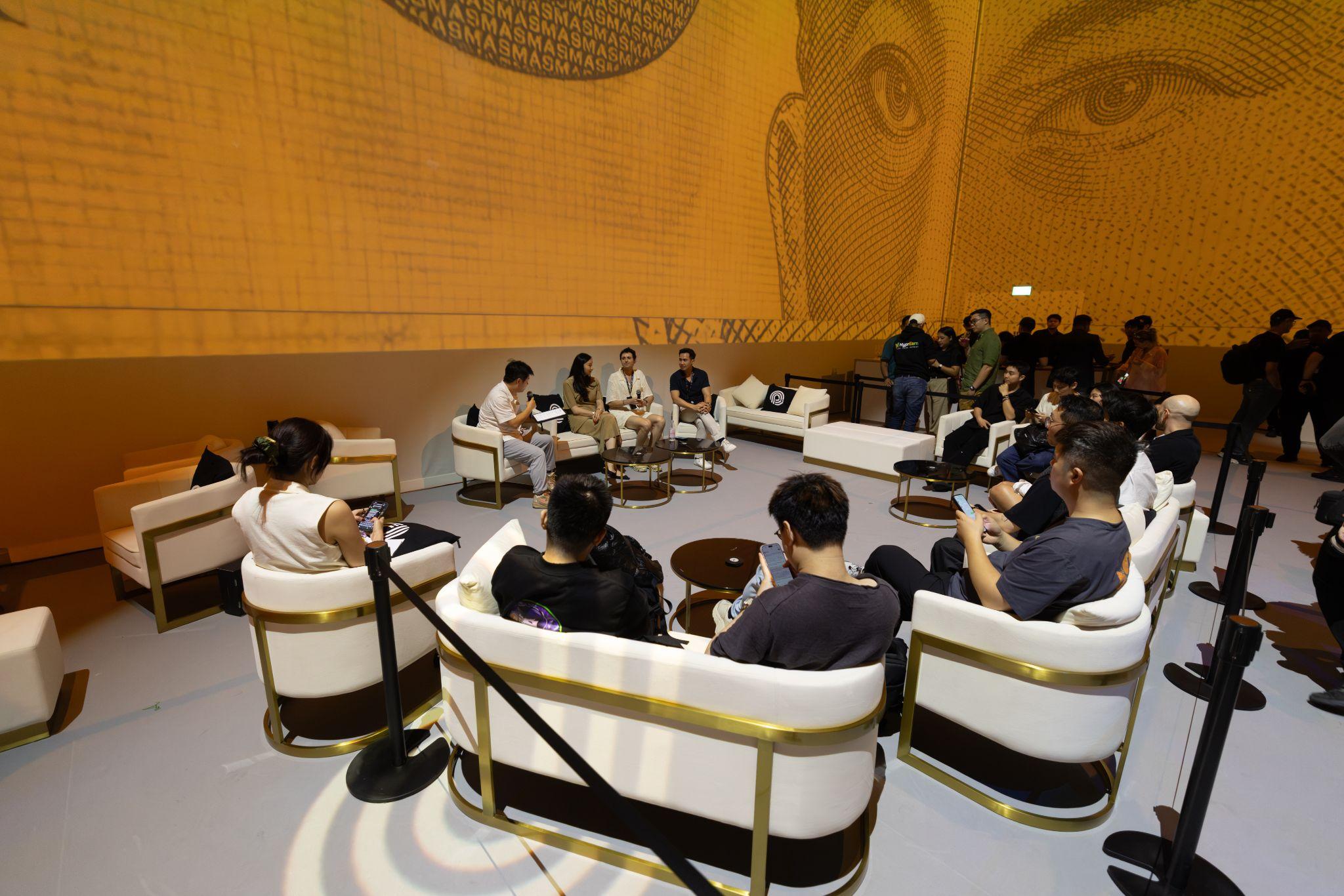
Every year, Token 2049 serves as a stage for projects to densely showcase themselves to a global audience.
Ondo, which has recently been at the center of market attention, is no exception.
Around the conference, Ondo announced a series of major developments:
On September 24, Ondo announced the launch of its new on-chain product, Ondo Intelligent Portfolios, bringing portfolio strategies such as BlackRock's onto the blockchain;
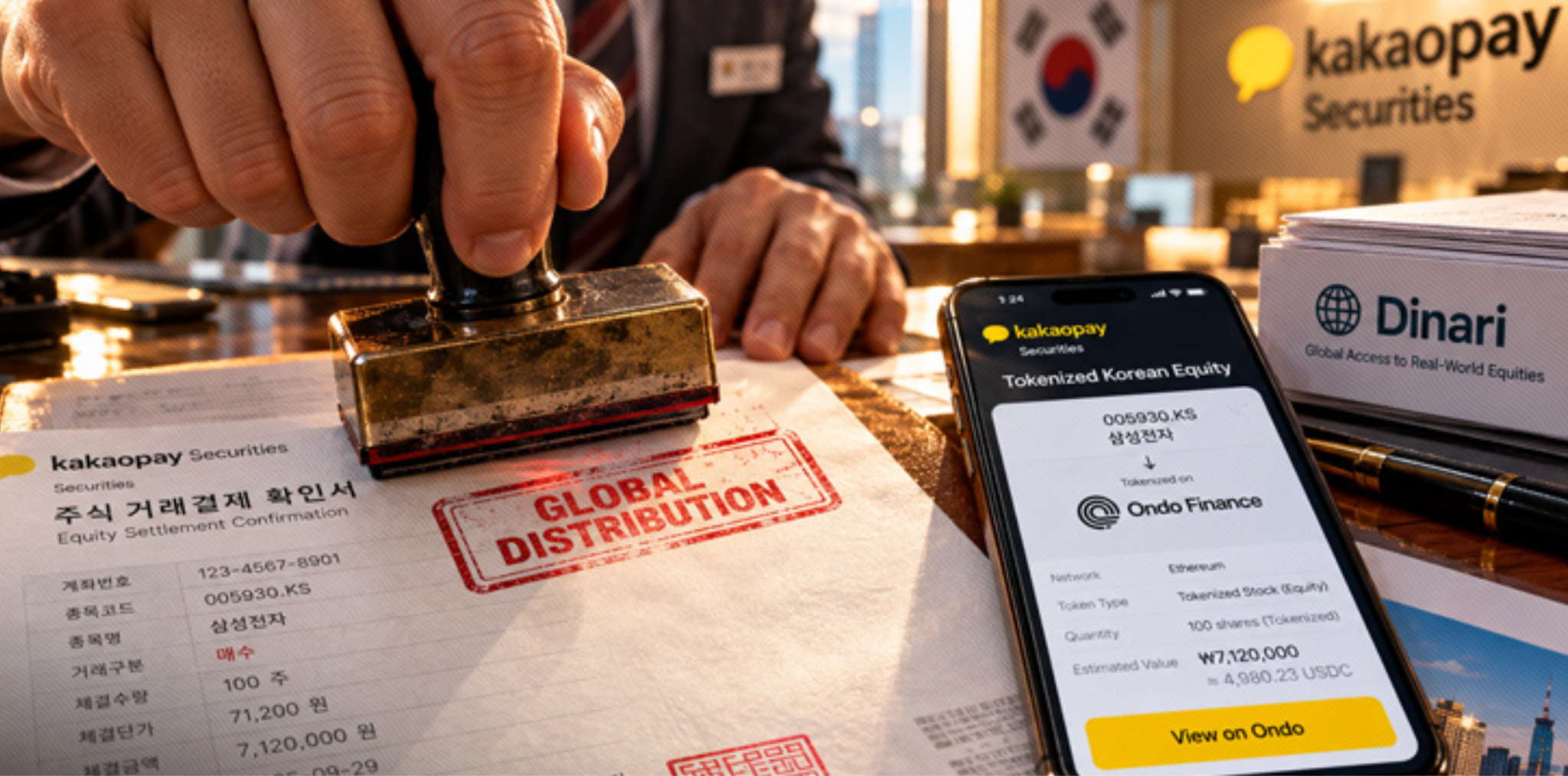
On September 29, Ondo announced a MOU with South Korea's Kakao Pay Securities to explore the tokenization of Korean listed stocks;
On October 6, Ondo announced the launch of Ondo Private Markets, aiming to provide investors with economic exposure to private companies through tokenized notes.
As products continue to expand, the price responds accordingly: According to CoinGecko data, $ONDO has risen over 43.3% in the past 30 days.
From on-chain portfolios to Asian markets, and then to Pre-IPO assets, Ondo's series of moves point to a bigger question: As tokenized assets evolve from single products into broader financial markets, how is Ondo more efficiently connecting traditional finance, on-chain liquidity, and global users?
To answer this question seriously, Ondo partnered with TechFlow for a closed-door offline event in Singapore on October 6.
During this high-density information session, industry leaders including Tom Lee and core members from institutions like BlackRock and Franklin Templeton shared cutting-edge insights. In the final AMA session, core members of the Ondo team discussed product innovation, Asian market expansion, exchange distribution, and other topics, responding to specific questions raised by on-site KOLs and sharing the considerations and trade-offs behind product design.
Host:
- Zolo: Co-founder, TechFlow
Guests:
- Min Lin: Managing Director of Global Business Development, Ondo
- Matt Blumberg: Head of DeFi, Ondo
- Rania Rahardja: Senior Director, Asia Pacific, Ondo
From expanding into new markets to designing new products, let's dive into the complete content of this AMA session.
Beyond US Stocks: Korean Equities Open the Asian Market, with Continued Attention on Hong Kong Stocks
TechFlow: Ondo recently signed an MOU with Kakao Pay Securities, focusing on cooperation in the Korean stock market.
Meanwhile, today's AMA is in Chinese. For Chinese-speaking users, the demand for Hong Kong stocks is also very high.
Therefore, many want to know: Does Ondo plan to partner with Hong Kong brokerages and custodians? If not, what are the bottlenecks? If yes, what stage is it currently at?
Min Lin:
As the world's largest tokenized equity platform, Ondo initially entered the US stock market due to its large scale, strong liquidity, and the high global demand for US equities. However, in the long run, we do not believe that opportunities for tokenized stocks exist solely in the US market. We are also seriously considering how to adapt the Ondo model to serve more countries and regions.
The recent MOU with Kakao Pay Securities marks a crucial step for Ondo in expanding into the Asian market. South Korea boasts a highly active capital market and a mature group of digital asset users. However, overseas retail investors still face certain channel limitations when participating in the Korean stock market. Through cooperation with local institutions, we aim to combine Ondo's global distribution capabilities with our partners' existing securities market infrastructure, giving more international investors the opportunity to access investment opportunities in Korean listed companies.
This cooperation involves not only discussing the products themselves but also underlying stock acquisition and custody, token issuance and redemption mechanisms, as well as infrastructure for asset balance management and reconciliation. Both sides also plan to establish a joint working group to further study the related business operation frameworks.
We hope to more efficiently present a richer array of Asian stock market products to users. The Chinese-speaking market is undoubtedly one of Ondo's key focal areas, so we are closely monitoring Hong Kong stocks as well. However, entering a new market involves much more than assessing user demand and commercial opportunities; there are many aspects requiring communication and negotiation. We are currently researching this and hope to gradually build a sustainable business foundation.
Regarding Exchange Stock Products: Rather Than Competition, We Prefer to Grow the Market Together
TechFlow: A highly anticipated question from the community is: Currently, many exchange platforms, including Binance, Bybit, and Bitget, are rolling out stock-related products. Exchanges have advantages in user base and channel distribution capabilities.
At the same time, Ondo's products are already available on many exchange platforms, running parallel to the exchanges' own stock products.
Given this, many are curious: How does Ondo define the role of exchanges within its development strategy and ecosystem? From a distribution perspective, how does Ondo compete for users with them?
Rania Rahardja:
One of my core viewpoints is: although products may look similar, the actual user experience can differ significantly. These differences manifest in many aspects, including user experience, pricing mechanisms, and the liquidity of underlying assets.
Taking Ondo as an example, a core advantage is that our pricing always relies on the actual market price of the underlying asset in traditional markets. Whether a user trades $100, $10,000, or $1,000,000, we are committed to providing the most competitive pricing and optimal trading experience for users.
On the other hand, we are continuously developing new products and constantly expanding the boundaries of tokenized assets. For instance, Ondo Finance recently announced the launch of Ondo Private Markets, aimed at providing investors with opportunities to participate in the economic value of private companies through tokenized notes.
Initially, Ondo did not launch such products because we felt they were not ready. If we lack the confidence to do a product well, we simply won't launch it. But for the products we decide to make and have launched, we strive to deliver the best possible execution.
Matt Blumberg:
Operating in this industry, it's easy to focus solely on Crypto itself. In reality, the future development space for the entire crypto sector is far greater than what we see right now.
Tokenization has just begun. If we compare the entire development journey of tokenization to a book, we might still be on the first page. From this perspective, many actions by competitors can also be understood as helping us drive market development. Through their own products and channels, they introduce more users who have never touched Crypto to tokenized assets and encourage them to try related products.
These users might initially buy US stocks on other platforms. But as their needs diversify, they may want to trade HK stocks, use leverage, engage in perpetual contract trading, or gain exposure to Pre-IPO assets. These diverse needs also provide Ondo with further opportunities to serve users.
Therefore, even if users initially enter this market through other platforms, they can still become Ondo users. For us, industry participants jointly driving market education and attracting more new users will ultimately create greater development space for the entire tokenized asset market.
Min Lin:
I agree with this viewpoint. At this stage, the overall industry scale remains relatively limited. Taking tokenized stocks as an example, the current market size is only in the low single-digit billions, while the global stock market volume reaches tens of trillions. The gap between the two also means this market still has tremendous room for growth.
Therefore, while competition pressure between different platforms does exist when exchanges start launching stock-related products, exchanges simultaneously help more users understand and access tokenized assets, bringing more crypto users into this market.
In the early stages of industry development, I believe we should not only focus on competition. Rather than fighting for users in the existing market, it is more important to work with other participants to help more people recognize and use tokenized assets, thereby growing the entire market.
Ondo Intelligent Portfolios: Bringing "Institutional-Grade Asset Allocation" to More Investors
TechFlow: Rania just mentioned product innovation. We noticed that Ondo launched three Ondo Intelligent Portfolios on September 24, bringing portfolio strategies like BlackRock's onto the blockchain.
What was the thought process behind Ondo launching these kinds of products? What directions will you expand into in the future, and why?
Matt Blumberg:
Actually, months ago when we first considered launching such products, we didn't directly assume the market would accept them. Instead, we conducted research and user discussions to understand whether they were interested in these products and what kind of investment strategies they wanted.
For completely new products, users sometimes find it hard to imagine the final usage experience based solely on concepts, making it difficult for them to accurately judge what they truly need. Interestingly, even when communicating with professional institutions like BlackRock, they also struggle to pinpoint exactly which directions will be popular with users.
Therefore, we believe that the best approach is to first launch some foundational products, allow the market to actually interact with and use them, and then determine the next steps based on user feedback.
This is also why we place great emphasis on underlying technology. Our technical architecture features excellent scalability, enabling rapid product iteration. As we gradually understand user preferences, we can launch new portfolios faster, continuously test market reactions, and then adjust and expand the product line according to actual needs.
Rania Rahardja:
I'd like to add that the significance of Ondo Intelligent Portfolios lies not only in providing new investment strategies, but also in giving more retail investors the opportunity to access investment products that were previously harder to obtain.
For users in certain countries and regions, even if they wish to invest in specific assets or adopt particular investment strategies, they may not easily be able to participate through traditional channels. Through Ondo's online platform, we hope to lower the threshold for accessing these investment opportunities, allowing more users to directly interact with related products.
Additionally, this brings us back to the earlier discussion about exchanges. Often, exchanges are not only market participants but can also serve as key distribution channels for Ondo's new products. Through the exchanges' existing user bases and distribution networks, we can reach more users, giving new products the chance to enter a wider market.
Bridging Pre- and Post-IPO: How Ondo Private Markets Innovates Pre-IPO Asset Liquidity and Experience?
TechFlow: Recently, Ondo's biggest announcement was Ondo Private Markets. Many companies shaping the next generation of technology remain private, and most investors cannot participate before they go public. Ondo Private Markets is bringing this type of exposure on-chain and supporting 7x24 hour trading.
Compared to other products, what makes Ondo Private Markets particularly special?
Min Lin:
Compared to other platforms, the most distinctive feature of Ondo's Pre-IPO tokens is liquidity.
Unlike other platforms, after holding Ondo's Pre-IPO tokens, users can smoothly convert (or transition) into the company's Stock Tokens upon official listing. In other words, Ondo bridges the Pre-IPO and Post-IPO stages, so users don't need to reopen positions or switch products, resulting in a more coherent experience. Other platforms' related Pre-IPO products usually have a lock-up period, commonly around 6 months, during which users face significant restrictions.
Ondo places great importance on liquidity in product design, hoping to provide better liquidity, more flexible asset management, and a superior trading experience through relevant mechanisms.
Matt Blumberg:
Additionally, Ondo Pre-IPO tokens can also be used as collateral on DeFi, offering more utility than products from other platforms.
KOL Q&A Session
Question 1:
Questioner: For Ondo, regarding future distribution, will you focus more on the on-chain segment or the centralized exchange segment?
Rania Rahardja:
I believe we are doing all the ones you mentioned. We will advance partnerships across multiple channels simultaneously.
From the beginning, Ondo has collaborated with global exchanges like Binance, Bitget, and OKX. Meanwhile, we are actively expanding trading platform partnerships across different Asian markets and building relationships with on-chain partners such as wallets, public chains, and DeFi protocols. At the institutional level, we are similarly continuing to expand our partnership network. For example, last week we reached a cooperation agreement with South Korea's Kakao Pay Securities.
We hope to use a diversified partnership network to ensure Ondo's products reach different markets and user types, rather than relying on a single distribution channel.
The ability to continuously advance these collaborations is also linked to changes in the market environment over the past year. First, an increasing number of institutions have started to pay attention to and recognize the development potential of RWAs. As relevant regulatory frameworks gradually become clearer, institutional confidence in participating in this field is also growing.
Second, user awareness of tokenized assets and related products is constantly improving, and familiarity and trust in the Ondo brand are steadily building. These changes have all created better conditions for us to expand our partners and distribution channels.
Min Lin:
Let me add one more point. Besides distributing products through exchanges and other partners, we've also found that an increasing number of users are directly onboarding to Ondo, especially those with larger purchase requirements. For these users, we also provide services like KYC.
Question 2:
Questioner: I come from a public chain background. Previously in multi-chain ecosystems, the same asset often forms different token versions on different chains. Does a similar situation exist for tokenized stocks? Does Ondo plan to bridge everything in the future?
Matt Blumberg:
We already possess the relevant technology, Ondo Bridge.
Our design uses a Burn and Mint mechanism, rather than simply locking the tokens on the source chain and issuing another version on the target chain.
For example, if a user holds Tesla tokenized stocks on Ethereum and wants to bridge them to Solana, under the corresponding bridging mechanism, the tokens on the source chain will be burned, and corresponding tokens will be minted on the target chain.
An important goal of this approach is to prevent the same asset from forming fragmented liquidity across different chains, allowing users to transfer assets more flexibly between different blockchain networks.
Questioner: So, for the underlying stock rights represented by these tokens, is it ultimately recorded on-chain or based on off-chain stock holding records?
Min Lin:
The underlying stocks are always held by us through relevant brokerage accounts. When bridging, what changes is the on-chain token: for example, if a user transfers the token from Solana to Ethereum, the token on Solana will be burned, and a corresponding token will be minted on Ethereum.
However, regardless of which chain the token circulates on, the underlying stock remains held by the corresponding brokerage account and will not be transferred due to the bridging operation. In other words, bridging changes the blockchain network where the token resides, not the holding arrangement of the underlying stock.
Question 3:
Questioner: Which category of users is Ondo primarily hoping to attract at present? Is it Crypto-native users familiar with digital assets and on-chain trading, or investors who originally traded US stocks, ETFs, and options in traditional financial markets?
Matt Blumberg:
Currently, Ondo's users are still predominantly Crypto-native, but traditional finance users are equally an important group for us. I believe that as the industry develops, the boundary between these two types of users is becoming increasingly blurred, and Ondo Perps demonstrates this very well.
We believe that as product varieties continue to enrich and the user base expands, more investors from diverse backgrounds will join in the future.
Rania Rahardja:
I think Ondo's products are highly attractive to on-chain users because they can diversify their portfolios and achieve investment diversification by allocating RWAs.
Meanwhile, a core goal that Ondo has consistently upheld is Accessibility, meaning enabling more people to access quality financial assets more conveniently.
For many users across different countries and regions, participating in the stock market through traditional financial channels might be difficult. If we can enable them to more easily gain investment exposure to relevant assets through tokenization, whether they are Crypto-native users or not is actually not the most important factor.
For us, the key lies in whether users have genuine investment needs and whether we can satisfy those needs through appropriate products and channels. No matter whether users come from the crypto industry or traditional financial markets, as long as we can lower the threshold for them to access quality financial assets, we have the opportunity to serve a broader investor base.
Question 4:
Questioner: Although the Asian tokenized stock market is developing, the field of tokenized stocks is still dominated by US stocks currently. What do you think is the biggest obstacle to advancing the tokenization of Asian stocks? Is it mainly regulatory restrictions, or insufficient liquidity?
Min Lin:
I believe both regulation and liquidity are critical factors.
Taking our collaboration with Japan's SBI Group as an example, we have been exploring how to integrate Japanese stocks into tokenized products. The first issue to resolve is regulation: whether Japan's Financial Services Agency (JFSA) permits us to conduct related businesses, and which markets these products can be distributed to. During market expansion, these are all issues that must be considered.
The second key issue is liquidity. We hope to create a trading experience supporting 5x24, or even 7x24 hours, while ensuring users receive reasonable quotes and a good trading experience. Traditional stock markets have fixed trading hours, meaning there is always a period each day lacking traditional market liquidity. How to bridge this liquidity gap and ensure rational pricing and effective trading during non-trading hours is a challenge we must solve.
These problems all require us to explore together with local institutional partners. Only by combining regulatory requirements, traditional market infrastructure, and new trading mechanisms can we gradually overcome the limitations of traditional stock markets regarding trading hours and liquidity.
Questioner: Some decentralized trading platforms, such as Hyperliquid, have already provided trading opportunities outside traditional market hours via perpetual contracts. Is Ondo also considering introducing similar mechanisms, or building related products independently?
Min Lin:
We have indeed evaluated using perpetual contracts to hedge against certain markets, but frankly speaking, it has not yet been fully implemented. It remains one of the directions we consider when exploring new markets and designing new products.
Matt Blumberg:
I think one of the key challenges is that users want confirmation that the assets they hold are backed by real stocks, and that these stocks are actually held by brokerages.
If perpetual contracts could operate perfectly, the situation might be different. But in reality, these products still carry certain risks.
Therefore, at this stage, perpetual contracts cannot completely replace the certainty brought by holding real stocks through traditional brokerage accounts. For Ondo, what we need to consider is not only how to extend trading hours, but also how to ensure product reliability and risk management capabilities while providing a more flexible trading experience.
Question 5:
Questioner: How do you view the on-chain ecosystem part? Will you specifically maintain good relations with certain ecosystems, such as the recently launched Robinhood Chain?
Additionally, regarding the Perps section, many people hope to integrate more assets, such as Memecoins, etc. What are your thoughts on this?
Matt Blumberg:
We think Robinhood's development is highly worth watching, and we are currently researching how to better enter its ecosystem. Over the next few weeks, everyone should see clearer moves from us in this regard.
Another important direction is expanding the variety of collateral. First, we are discussing with other trading platforms to see if we can make Ondo's tokenized stocks one of the accepted collateral assets.
We believe that a major advantage of tokenized assets as collateral is improved capital efficiency. However, for many traders who aren't deeply involved, capital efficiency might still be an abstract concept, and they may not fully grasp how it impacts their trading strategies and investment returns.
Many people on our team come from the traditional finance industry, so we are very clear about the importance of collateral efficiency. But for some other platforms, this remains a direction that requires gradual communication and understanding, so relevant collaborations still need time to progress.
In terms of asset categories, I believe there is also significant room for expansion. For example, some users are unwilling to sell their Bitcoin but hope to use it as collateral. In past phases, like 2021 to 2022, the market exposed many risks. We believe that tokenized Bitcoin ETFs, Ethereum ETFs, and similar assets could have certain application value.
As for Memecoins, I believe we need to be more cautious. The key issues lie in insufficient liquidity and drastic price volatility, which is extremely risky for users. Generally speaking, the smaller the asset size and the shallower the market depth, the harder it becomes to use it as collateral.
Join TechFlow official community to stay tuned
Telegram:https://t.me/TechFlowDaily
X (Twitter):https://x.com/TechFlowPost
X (Twitter) EN:https://x.com/BlockFlow_News
 @OndoFinance