H1 2026: Steady Growth in the TRON DeFi Ecosystem – Comprehensive Upgrade of Value Capture Capabilities Across Four Core Projects Solidifies the Foundation for Ecosystem Development
If we consider that the broader crypto market was in a bear cycle during the first half of 2026, then the DeFi sector faced a trial by fire, trapped in multiple developmental challenges. On one hand, industry security incidents erupted in concentration, with two hundred-million-dollar attack events occurring in April alone: Solana ecosystem derivative protocol Drift suffered a $280 million loss from an attack, involving over 20 DeFi projects; restaking protocol Kelp DAO was hacked for over $292 million, triggering widespread trust shocks across the industry. On the other hand, a wave of project contractions and shutdowns continued to spread: multi-chain lending protocol ZeroLend announced gradual shutdowns in February, a16z-backed decentralized credit protocol Goldfinch officially closed in June, and DeFi asset management platform Zapper announced complete shutdowns in July. The industry as a whole fell into a dual dilemma of stagnant growth and shrinking confidence.
In stark contrast to the industry's sluggish trend, the TRON DeFi ecosystem has demonstrated remarkable anti-cyclical resilience and counter-trend growth momentum. Whether it is SunSwap, SunPump, or SUNX under liquidity infrastructure SUN.io, or the lending protocol JustLend DAO within the JUST ecosystem, all core protocols have undergone practical verification through multiple extreme market conditions. Since their launch, regardless of operational duration, none have experienced major security incidents. They have maintained stable, zero-fault operations for a long time, building a unique moat of safety reputation against a backdrop where industry-wide security trust has generally collapsed.
More significantly, several operational metrics of TRON ecosystem projects achieved notable counter-trend growth despite headwinds in the broader market. According to the "TRON Q2 2026 Quarterly Report" published by CoinDesk, spot trading volume on SunSwap under SUN.io climbed to $5.8 billion in Q2, a steady increase from $5.6 billion in Q1. Meanwhile, the price of JUST ecosystem native token JST rose by 38% overall in Q2, completely decoupling from broader market trends and forging an independent bullish trajectory.
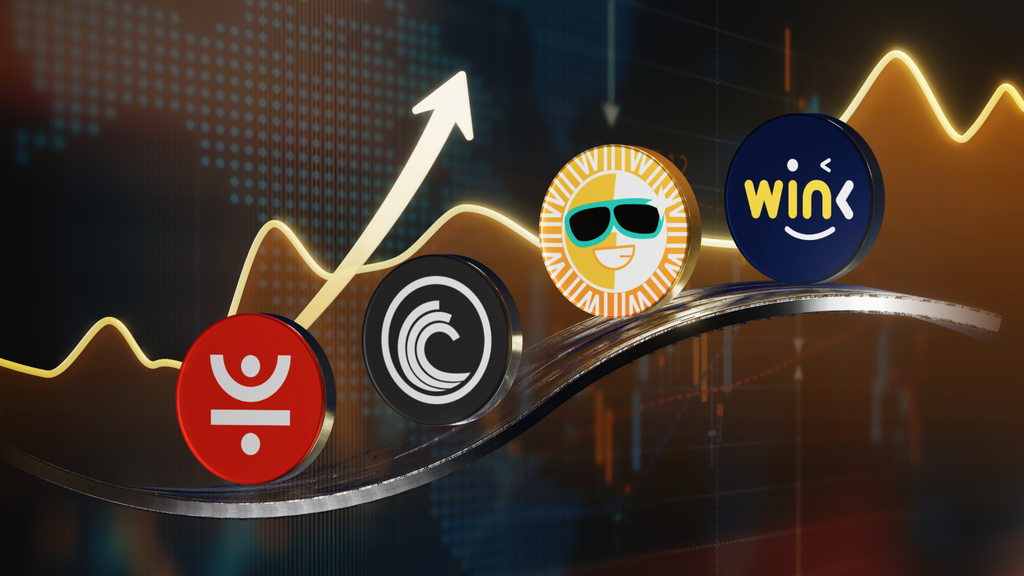
Facing the industry headwinds in the first half of the year, the TRON DeFi ecosystem has consistently adhered to a dual-core driver of "buyback and burn value empowerment" and "product iteration and optimization." On one hand, it continuously advanced the implementation of buyback and burn plans for the native tokens of four core projects: DeFi infrastructure JUST (JST), liquidity infrastructure SUN.io (SUN), decentralized file transfer system BitTorrent (BTT), and oracle network WINkLink (WIN), strengthening ecosystem value consensus through genuine deflationary mechanisms. On the other hand, it focused on continuously iterating and optimizing core scenarios such as the JustLend DAO lending market SBM under JUST and the DEX trading platform SunSwap under SUN.io. By launching innovative versions like SBM V2 and SunSwap V4, it further enhanced product security and user experience, effectively driving a steady increase in on-chain activity.
This synergistic effect of "value feedback + technological upgrade" ultimately achieved bidirectional growth in token value and protocol fundamentals, making the underlying value foundation of the DeFi sector more solid and robust.
Counter-Trend Growth of the TRON DeFi Sector: Dual Coordination of "Buyback & Burn + Product Iteration" Drives Comprehensive Ecosystem Value Leap
Under the dual-wheel drive of "value empowerment + product evolution," the TRON DeFi ecosystem took "implementation of deflationary mechanisms + product function iteration" as its core pathway, simultaneously achieving a comprehensive upgrade in ecosystem asset value capture capabilities, as well as deep expansion and boundary breakthroughs in its product landscape.
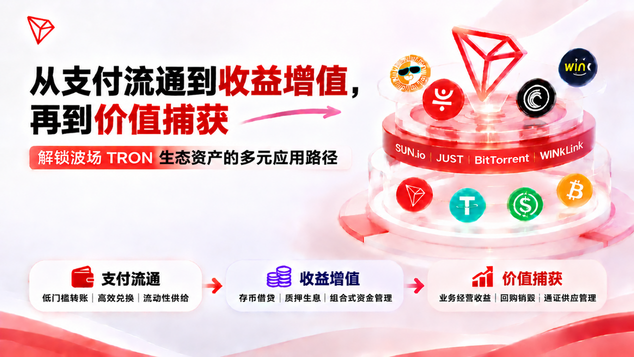
At the level of deflationary value construction, multiple core projects within the TRON ecosystem, including SUN.io, JUST, WINkLink, and BitTorrent, have fully activated buyback and burn mechanisms. This forms a full-ecosystem deflation matrix covering liquidity infrastructure, lending, oracles, and distributed transmission, comprehensively enhancing the ecosystem's asset value capture capabilities:
- Liquidity Infrastructure SUN.io: Continuously broadening the SUN token buyback fund pool. Starting from the 50th buyback and burn in April, SUNX business revenue was officially incorporated alongside existing SunSwap V2 fees and SunPump yields. The 50th and 51st periods of SUN token buyback and burns were completed in April and July respectively, with deflationary intensity expanding in tandem with business boundaries.
- DeFi Lending Infrastructure JUST Ecosystem: Steadily executing the large-scale JST burn plan. Round 2 and Round 3 regular burns were completed in January and April respectively. Round 4 buyback and burn was implemented in July, with single-round capital scale hitting a new all-time high, continuously intensifying deflationary strength.
- Oracle Sector WINkLink: Officially launched the WIN token buyback and burn plan in July, directing all platform oracle service revenues toward token buybacks and burns, directly feeding business growth dividends back to token holders.
- Distributed Data Transmission Leader BitTorrent: Simultaneously initiated routine BTT buyback and burns in July. 100% of revenues generated from decentralized business are allocated to a dedicated buyback fund pool, with burns executed according to natural quarter cycles and detailed disclosures made public.
While empowering token values through buyback and burn mechanisms, various tracks within the DeFi ecosystem have continuously refined product capabilities around core scenarios such as trading, lending, data services, and distributed transmission. This consolidates existing business advantages while opening up brand-new growth spaces, continuously strengthening the ecosystem's core competitiveness:
- SUN.io: Completed global brand upgrade in January, establishing a bilingual Chinese-English brand matrix to advance global operations. Launched SunSwap V4 in March, comprehensively improving trading depth and reducing transaction costs through technical architecture upgrades, continuously strengthening core competitiveness in the DEX track.
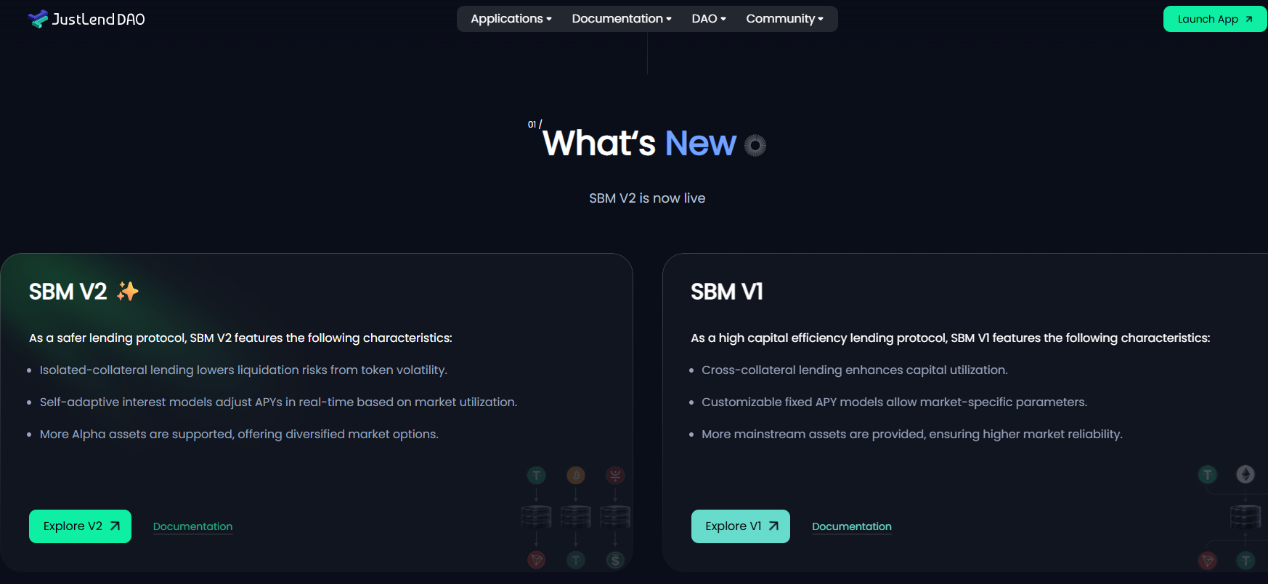
- JustLend DAO: Officially launched SBM V2 in June, innovatively introducing isolated vault mechanisms. While broadening coverage for long-tail assets, it further fortified the platform's security protection system. Its "Gas-free" transfer solution, GasFree, experienced explosive growth in H1, with stablecoin transfer volumes and user base achieving leapfrog improvements, becoming a brand-new growth engine for the ecosystem.
- WINkLink: Upgraded its Price Service page in March, adding a "Market Statistics" data module to visualize core indicators like market cap, supply, and price ranges, continuously enhancing the completeness and reliability of on-chain data services.
- BitTorrent: Officially launched BTTInferGrid, a decentralized AI computing power product in June, entering the AI computing track. While consolidating its foundation in distributed transmission, it unlocked growth potential in a brand-new sector.
The implementation and continuous fulfillment of buyback and burns, combined with the continuous strengthening of product fundamentals, formed a mutually supporting positive cycle: product iterations brought continuously growing business revenues, providing a stable and sustainable funding source for deflationary mechanisms; routine deflation continuously optimized the token economic model, feeding back into ecosystem appeal and user confidence. Working in synergy, they not only drove a steady rise in on-chain DeFi activity but also laid a solid foundation from the bottom-level economic logic for the long-term value of ecosystem tokens.
As of September 1, DeFiLlama data shows that the total value locked (TVL) for TRON on-chain DeFi exceeds $5.18 billion, ranking among the top five public chains globally. It stands neck-and-neck with Solana and BSC, with the gap continuously narrowing, even surpassing both at peak times. The advantage in user activity is even more pronounced. During the same period, TRON recorded over 3.88 million daily active addresses, nearly double that of second-place BSC, firmly securing the number one position among global public chains, fully validating the ecosystem's real user scale and on-chain vitality.

Coordinated Upgrades of Four Core Projects in the TRON DeFi Ecosystem: Comprehensive Leap in Value Capture Capabilities for SUN.io, JustLend DAO, BitTorrent, and WINkLink
In the first half of 2026, the TRON DeFi sector focused on four core projects: JUST, SUN.io, BitTorrent, and WINkLink. Through the bidirectional synergy of token deflationary mechanisms and product function iterations, it achieved a significant improvement in asset capture capabilities. This strategic path not only effectively strengthened protocol fundamentals but also further consolidated the value foundation of the TRON DeFi ecosystem through the deep resonance between token value and business growth.
Liquidity Infrastructure SUN.io: Launching SunSwap V4 to Reshape DEX Trading Efficiency, Broadening Sources for SUN Buyback and Burns
In the first half of 2026, SUN.io implemented multiple key actions centered on global brand development, product experience upgrades, and token value empowerment. It completed a full-chain, multi-dimensional upgrade spanning brand recognition, product capabilities, and value mechanisms, achieving a significant leap in overall ecosystem competitiveness.
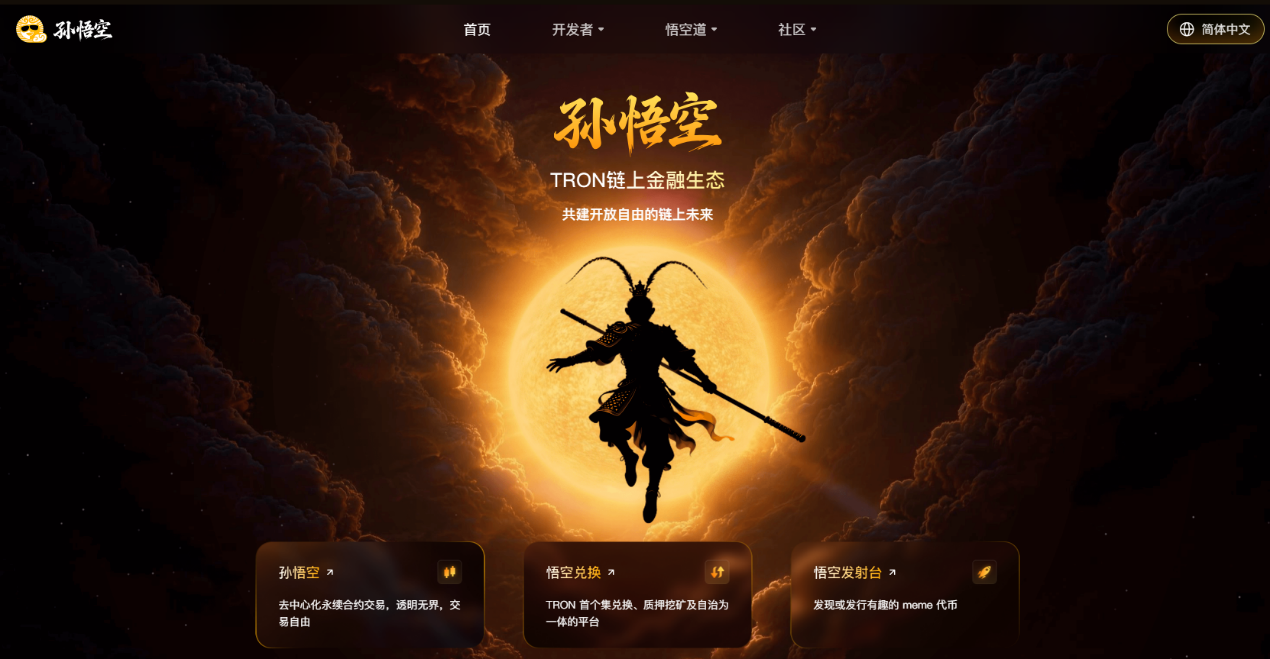
At the brand building level, SUN.io has realized a global development strategy featuring synchronized Chinese-English dual branding. In January this year, SUN.io completed a comprehensive brand refresh, adding the Chinese brand name "Sun Wukong." All core products under its umbrella were synchronously unified under bilingual names: the DEX platform SunSwap is named "Wukong Exchange," the Meme issuance platform SunPump is named "Wukong Launchpad," and the derivatives trading platform SunX is named "Sun Wukong." The official Chinese-language webpage for "Sun Wukong" was launched simultaneously. With this, SUN.io's main product matrix comprehensively covers core DeFi tracks including "DEX Spot Trading + Meme Asset Issuance + Perp Derivatives Trading." Leveraging the dual-line operation advantages of its Chinese-English brands, it precisely reaches user groups across different global regions, promoting the coordinated development of its global ecosystem.
At the product experience level, SUN.io continues to iterate core protocols, using technological innovation to significantly lower user trading thresholds and costs. On March 2 this year, SUN.io's DEX platform SunSwap officially launched Version V4, innovatively introducing six key features: Singleton Mode (unified pool management), Native TRX Direct Routing (direct TRX swapping without wrapping), Lightning Bookkeeping (unified net settlement), Hooks (customizable trading rule plugins), Custom Bookkeeping (tailored settlement strategies), and Subscribers (real-time notifications for position changes). These features push the protocol's customizability and scalability to a new height, unlocking possibilities for more innovative scenarios within the DeFi ecosystem. More importantly, less than five months after its launch, SunSwap V4 achieved high-speed dual-dimensional growth in both liquidity and trading volume. Peak liquidity stabilized at $108 million, and peak 24-hour trading volume exceeded $70 million, demonstrating strong growth momentum.
In addition, SUN.io completed a comprehensive upgrade of its Universal Router smart contract in May this year, supporting optimal path auto-swap across multiple liquidity pools, further enhancing trading efficiency.
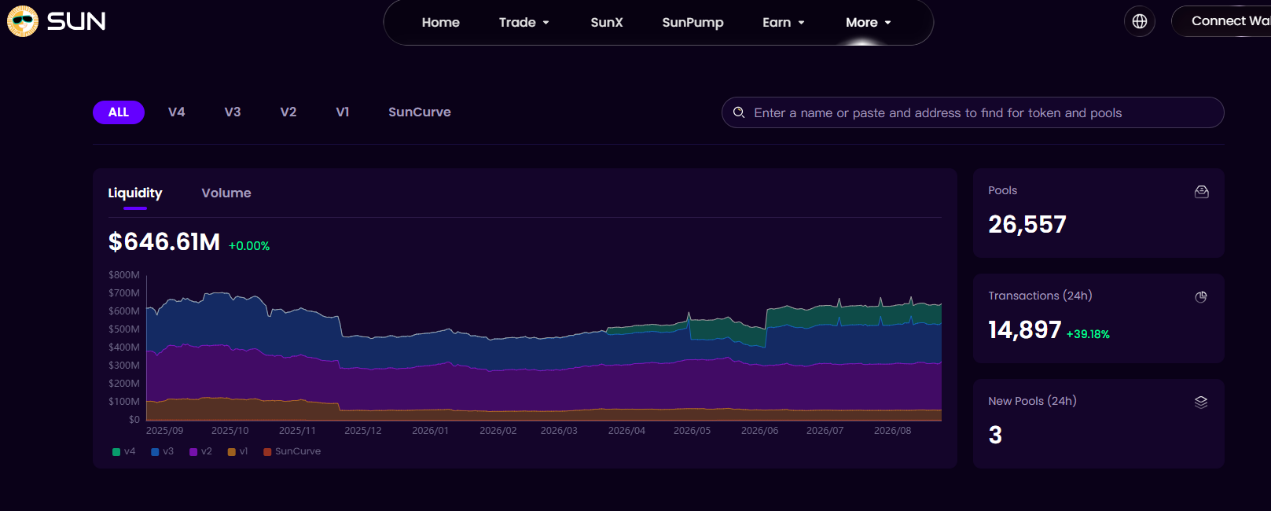
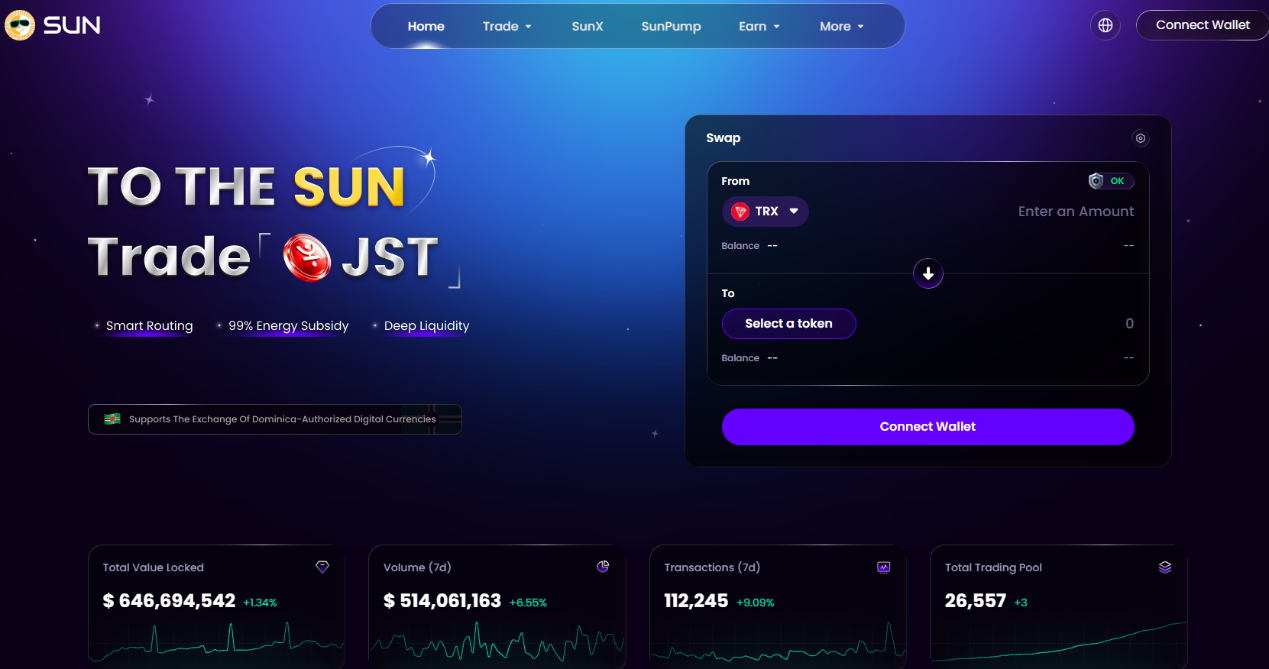
According to the latest official public data released on September 1, the current total value locked (TVL) on the SUN.io platform is approximately $650 million. The number of listed liquidity pools exceeds 26,500. Over the past seven days, the platform's total trading volume surpassed $514 million, with over 112,000 transactions. All core operational metrics maintain a steady upward trajectory.
At the token value empowerment level, SUN.io accelerates the deflationary process of its ecosystem token SUN by continuously broadening sources for buyback and burn funds. Starting from the 50th buyback and burn (executed on April 25), beyond existing SunSwap V2 trading fees and SunPump business revenues, SUN.io officially included SunX derivatives business income into the SUN token buyback fund pool. This substantially expanded the boundary of burn funding sources. Additionally, the execution cycle for burns was adjusted to be uniformly announced in mid-month at the beginning of each quarter, making the deflationary pace more transparent and predictable.
As of September 1, since the formal launch of the buyback and burn mechanism in December 2021, SUN.io has continuously executed 51 consecutive burn operations. The cumulative amount of SUN tokens burned has reached 678,547,188.32, leaving it just one step away from the 700 million mark. The deflationary intensity of the ecosystem token continues to strengthen.
Genuine Revenue Continues to Fuel JST Buyback and Burns at JustLend DAO, Diversified Product Matrix Advances Together
As a core value pillar of the TRON DeFi ecosystem, the JUST ecosystem leveraged the sustained and stable profitability of its core protocol, JustLend DAO, during the first half of 2026 to drive multiple rounds of large-scale JST token buyback and burns. This successfully constructed a complete value loop of "genuine business revenue → routine deflationary implementation → positive token value appreciation." Driven by this loop, JST token value achieved leapfrog growth: its price rose steadily from $0.04 at the start of the year, peaking at $0.11, with a cumulative increase exceeding 275%. Its market cap climbed from approximately $400 million at year-start to a high of $868 million, setting a new record since 2022. As of September 1, it traded at $0.101.
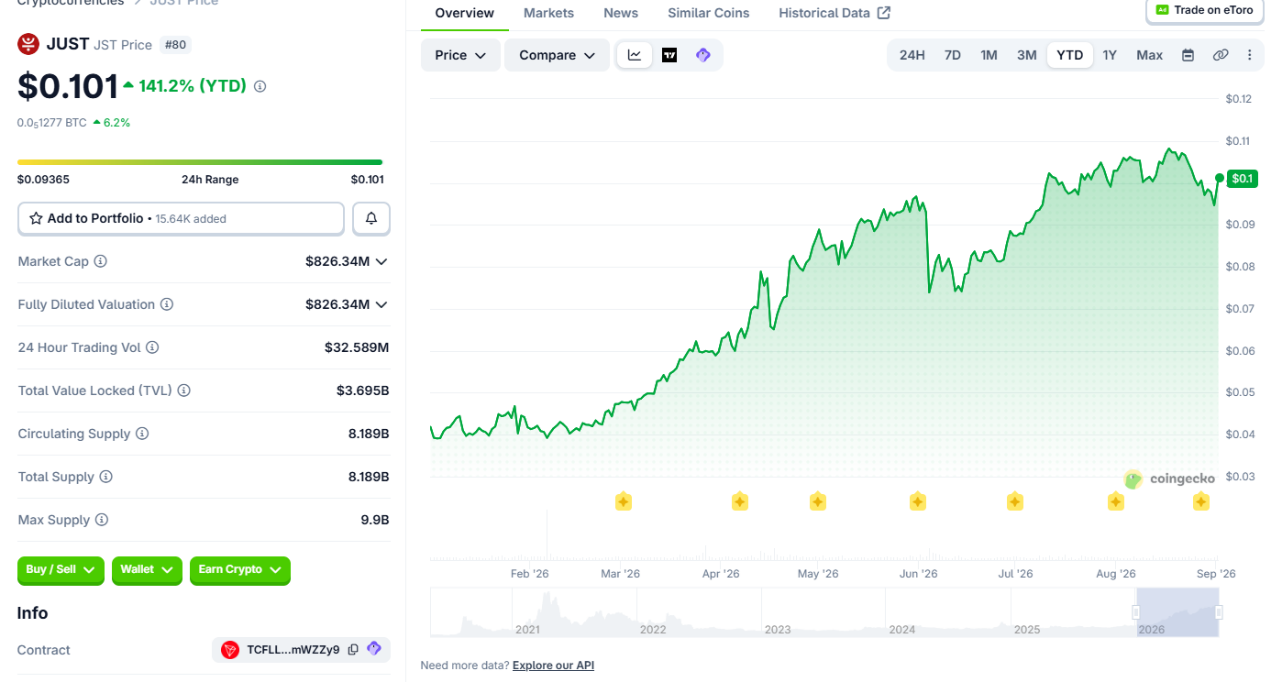
Meanwhile, the diversified product matrix of JustLend DAO blossomed across multiple fronts, covering high-potential tracks such as lending, liquid staking, energy rental services, and smart wallets, opening up entirely new spaces for long-term ecosystem growth.
Near the start of 2026, JST had already completed three rounds of large-scale regular burns. Each round exceeded $20 million in burn capital, with cumulative buyback and burn investment over six months surpassing $70 million. Nearly 90% of this came from the genuine operating net revenue of JustLend DAO:
Round 2 (January 14): Burned approximately 525 million JST, representing 5.30% of the total supply, corresponding to $21 million in capital;
Round 3 (April 15): Burned approximately 271 million JST, representing 2.74% of the total supply, corresponding to $21.3 million in capital;
Round 4 (July 17): Regular burn combined with a special burn of historical USDJ stability fees, totaling approximately 355 million JST burned, representing 3.59% of the total supply, corresponding to $34.59 million in capital, setting a new all-time high for single-round burn capital.
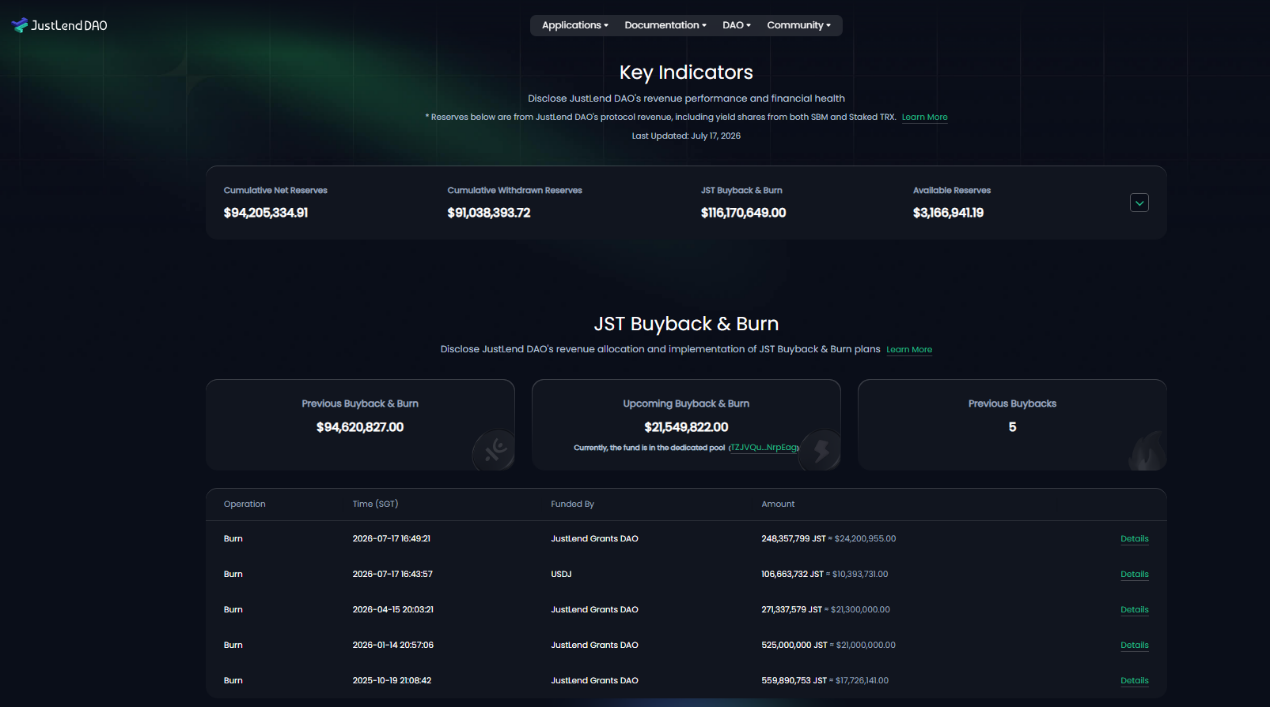
To date, JST has completed four rounds of large-scale buyback and burn plans. The cumulative burned amount of JST has reached 1.711 billion tokens, accounting for approximately 17.29% of the total token supply. The cumulative capital invested exceeds $94.62 million. Excluding the special burn of historical stablecoins from USDJ in Round 4 (valued at approximately $10.39 million), 100% of the capital for all regular JST buybacks and burns originates from the genuine business revenues of JustLend DAO.
According to the latest publicly disclosed financial data on the official website, the cumulative net revenue of the JustLend DAO platform has exceeded $94.2 million. The total scale invested in the JST buyback and burn fund pool has approached $105 million. After deducting the $10.39 million from the special USDJ historical stability fee, nearly $94 million in buyback and burn capital comes entirely from genuine revenues generated by the platform's daily operations. Currently, the platform still reserves approximately $10.34 million in accumulated reserve revenue, which will be allocated to the next routine burn process according to the established plan.
As the core protocol of the JUST ecosystem, JustLend DAO has established four core business segments: Lending Market (SBM), Liquid Staking (sTRX), Energy Rental (Energy Rental), and the "Gas-Free" Transfer Solution (GasFree). Each sub-track firmly ranks at the industry's forefront, forming a stable and diverse revenue matrix.
In the core lending track, the Total Value Locked (TVL) of JustLend DAO's lending market SBM has long remained firmly in the global top five for Lending protocols. According to public data from DeFiLlama on August 11, the current TVL for the JustLend DAO lending market SBM reached $3.38 billion, ranking fourth globally in decentralized lending. In June this year, the platform officially launched SBM V2, innovatively introducing isolated vault mechanisms. While broadening the coverage boundaries for new assets, it significantly enhanced the overall security of the platform. On the asset side, the platform added a dedicated lending market for U-assets in the first half of 2026, continuously refining its asset layout.
In the liquid staking track, JustLend DAO's sTRX product currently has over 9.73 billion TRX staked, with participating addresses exceeding 17,000. Both the total staking scale and the number of participating users maintain a steady upward trend. The derived Energy Rental market, born from the liquid staking ecosystem, utilizes a flexible "rent-as-you-use, pay-as-you-go" model, solving the pain point of needing to lock up large amounts of TRX for extended periods to reduce on-chain gas costs. Currently, its cumulative participating user base exceeds 80,000.
In August this year, JustLend DAO further launched an all-new "pay-per-use" TRON Energy service—Buy Energy. It supports users purchasing the required energy in a single transaction based on actual needs. Compared to directly burning TRX to acquire on-chain resources, this product can save users up to approximately 64% in fee expenses.
With this, JustLend DAO has built a Gas cost optimization tool matrix centered on the core goal of "lowering on-chain usage barriers," encompassing "Energy Rental + Buy Energy + GasFree Gas-less transfer solutions."
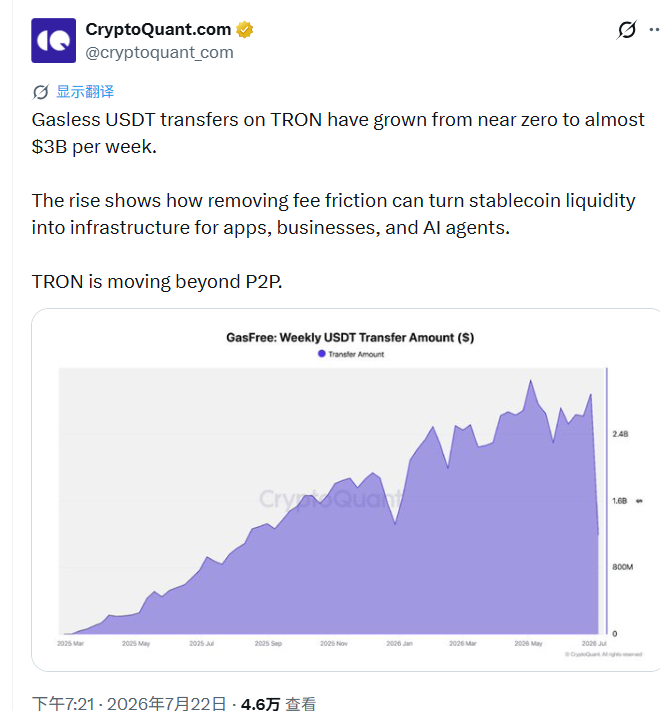
Among these, the GasFree "Gas-less" transfer solution has grown into the platform's brand-new growth engine. This feature allows users to directly deduct on-chain transaction fees via the target asset being transferred, without needing to hold the native token TRX. It fundamentally removes the barrier of holding native tokens for ordinary users participating in on-chain transactions. Currently, GasFree supports fee deduction transfers for two major stablecoins, USDT and USDD (with USDD formally integrated in August this year). User scale and transfer volumes are in a stage of high-speed growth.
According to data from the "TRON Q2 Report" published by CryptoQuant, in the last week of June, GasFree's weekly transfer volume reached $2.9 billion, having previously set a single-week historical record of $3 billion in early May. As of September 1, the cumulative stablecoin trading volume processed by GasFree has exceeded $132.6 billion, handling over 7.7 million transactions. It has cumulatively saved users worldwide over $8.48 million in fees, rapidly growing into an irreplaceable new growth curve for the JustLend DAO ecosystem.
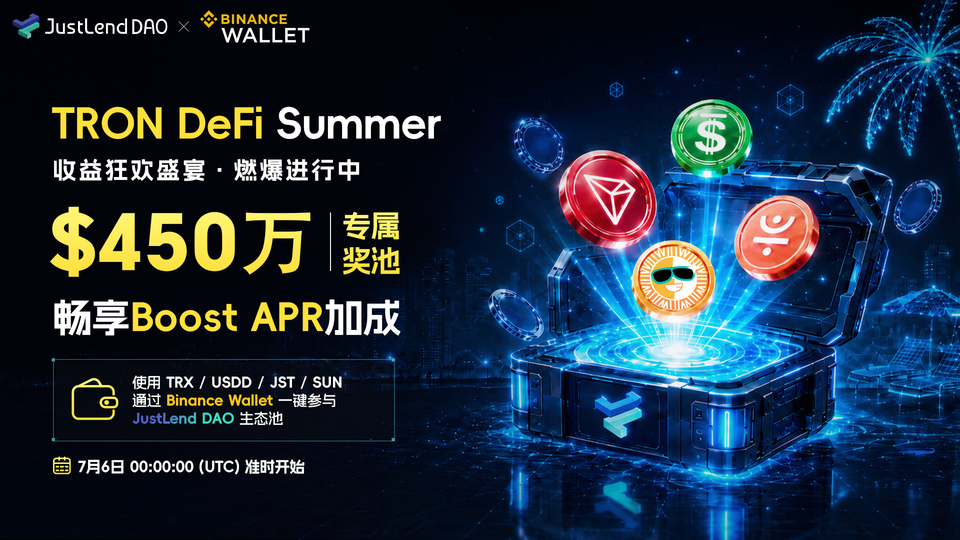
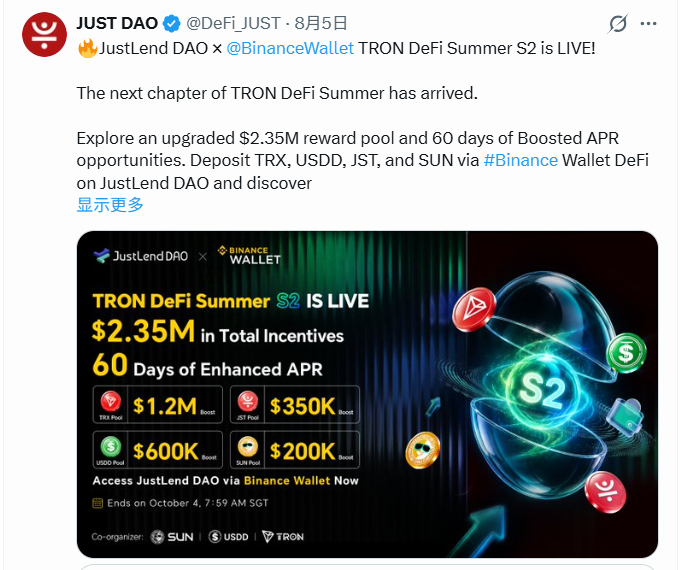
In addition to continuous product iteration and accelerated growth in core businesses, JustLend DAO is also constantly expanding external ecosystem collaborations, streamlining the onboarding pipeline for incremental users. On July 6, JustLend DAO was officially integrated into the Binance Wallet DeFi interface, with its pools going live simultaneously, directly reaching the massive user base of a top-tier CEX. Subsequently, the platform partnered with core TRON ecosystem projects like USDD and SUN.io to jointly launch the "TRON DeFi Summer" festival with Binance Wallet, boasting an event prize pool totaling $4.5 million. This series of cross-ecosystem initiatives not only brought substantial incremental capital and brand-new user demographics to JustLend DAO but also constructed a complete user conversion pipeline from top CEX traffic pools into the inner workings of the TRON ecosystem, opening up entirely new upward spaces for the platform's sustained long-term revenue growth.
BitTorrent Launches Decentralized Computing Network BTTInferGrid to Enter AI Track, Initiates Long-Term BTT Buyback and Burn Plan
The first half of 2026 marked a period of value reshaping for BitTorrent, witnessing concentrated key breakthroughs across regulatory, business, and token economics dimensions. From the complete elimination of regulatory uncertainty and steady iteration of core business products, to the launch of a decentralized AI product to enter the AI track and the initiation of a long-term BTT buyback and burn plan, it achieved a comprehensive upgrade from clearing external environmental obstacles to reshaping internal value.
The starting point of this value reshaping was the thorough clearance of regulatory risks that had plagued the ecosystem for three years. On March 6, the U.S. Securities and Exchange Commission (SEC) officially agreed to drop all charges against Justin Sun, the TRON Foundation, and the BitTorrent Foundation, bringing a three-year regulatory dispute to a close. This eliminated the policy uncertainties hindering ecosystem development, clearing institutional obstacles for subsequent strategic advancement. Following closely, on May 27, BTT listed on Bitkub, Thailand's largest cryptocurrency exchange, simultaneously enabling the BTT/THB trading pair. Thai users could trade directly with Baht, effectively broadening the token's liquidity depth and global market coverage.
At the core business level, BitTorrent product iterations progressed steadily. On June 5, the BitTorrent Neo client, specifically crafted for macOS, officially went live. Featuring a lightweight architecture and clean interface, it delivers efficient and seamless file sharing, further consolidating its user experience advantages in the P2P transmission field.
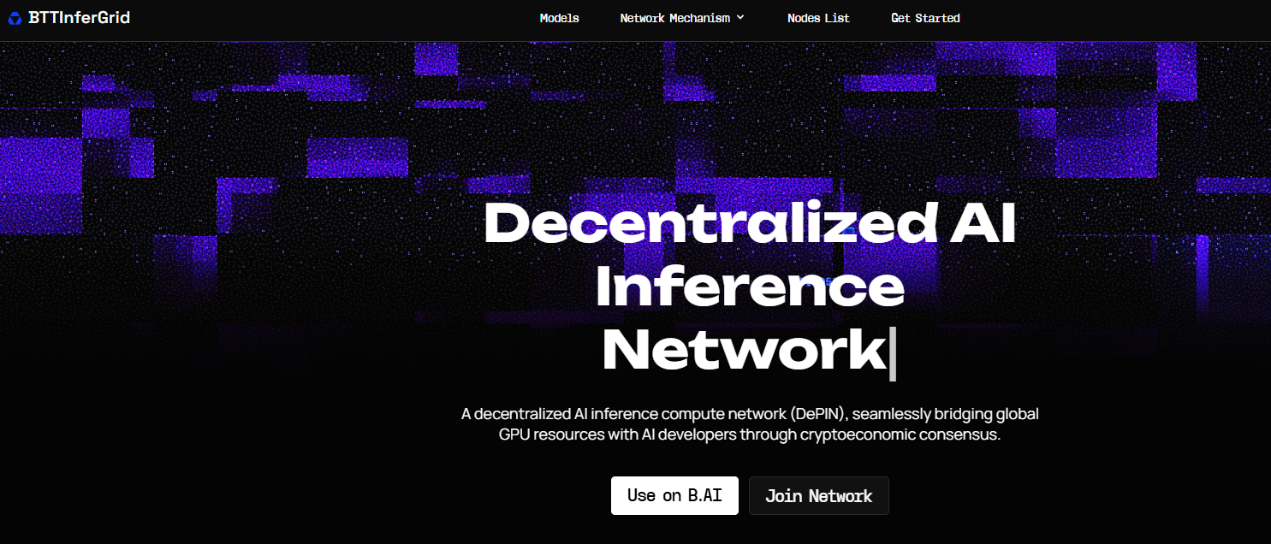
In laying out its footprint in emerging tracks, BitTorrent officially entered the decentralized AI computing sector. On June 17, its core AI strategic product, BTTInferGrid, was launched, constructing a DePIN computing network tailored for AI inference scenarios. BTTInferGrid not only reconstructed traditional computing supply models through decentralization but also marks BitTorrent's entry into the decentralized AI track, unlocking an entirely new growth curve for the entire ecosystem.
Within the token value framework, BitTorrent initiated the BTT buyback and burn mechanism to achieve asset value upgrades. On July 6, the official team announced that 100% of revenues generated from decentralized business would be directed into a dedicated BTT buyback fund pool, with routine buyback and burns executed according to natural quarters. This mechanism fundamentally reshaped BTT's value capture logic, upgrading it from a circulation and governance tool within the ecosystem to a core asset anchored to genuine business revenues and possessing continuous deflationary attributes. It enables community users to synchronously share the long-term dividends of ecosystem development as the business expands.
WINkLink: Continuous Upgrades to Oracle Services, Buyback and Burns Bolster Token Value
As the core oracle infrastructure of the TRON ecosystem, WINkLink underwent continuous upgrades across multiple dimensions in the first half of the year, including product functionality, asset coverage, and token value. While reinforcing on-chain data service capabilities, it transformed business dividends into long-term token value through the implementation of a buyback and burn mechanism.
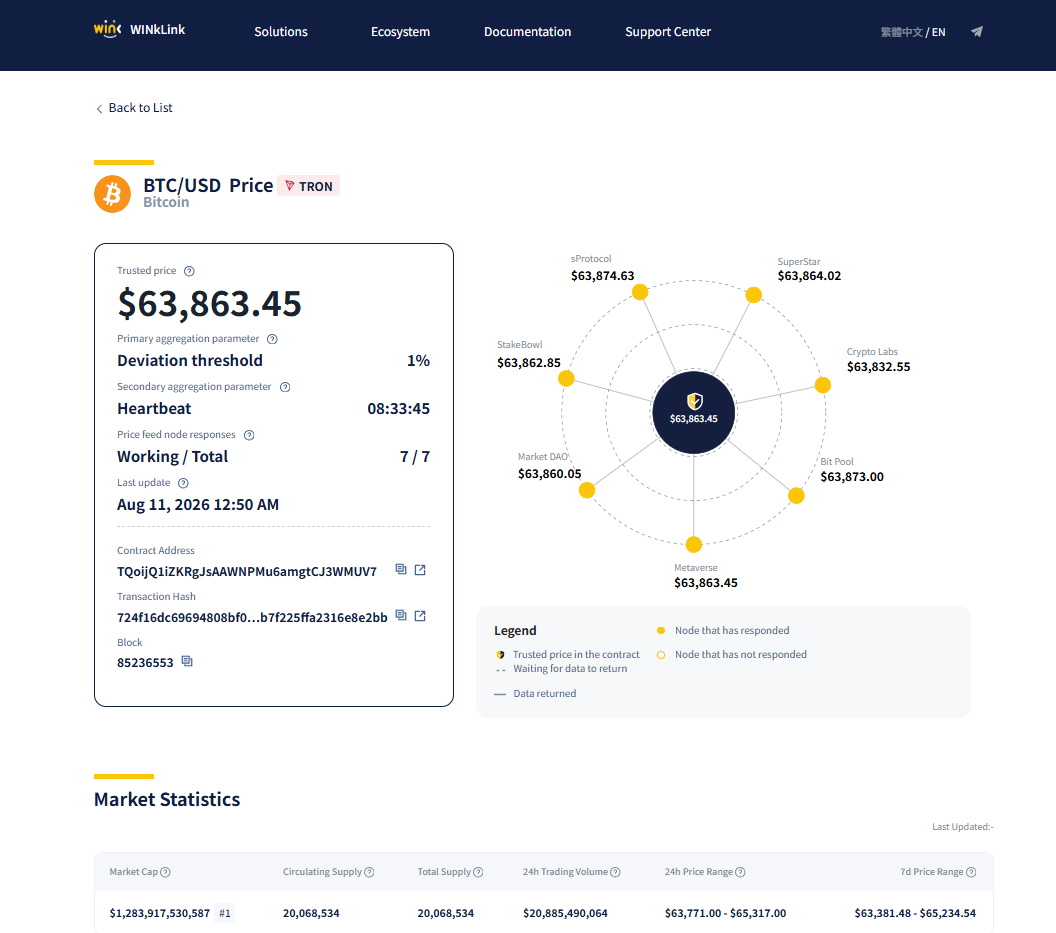
At the product functionality level, WINkLink completed an upgrade to its Price Service page on March 27, adding a "Market Statistics" module. This visualizes core metrics such as market cap rankings, circulating and total supplies, and 24-hour and 7-day price ranges, significantly enhancing the completeness and readability of data services to better support the diverse needs of developers and financial protocols.
In terms of asset coverage, the oracle price feed asset range of WINkLink continued to expand: On April 13, it added U price information, simultaneously listing U/TRX and U/USD trading pairs. On June 9, it added KGST price information and the KGST/TRX trading pair, continuously enriching the supply assets for on-chain price data and covering a wider array of asset types.
Regarding token value empowerment, WINkLink implemented the long-term WIN token buyback and burn plan on July 6, explicitly dedicating all revenues generated from providing oracle services to the TRON ecosystem toward WIN buyback and burns. Burn data for each period will be publicly disclosed around the middle of the following quarter. This mechanism directly ties ecosystem business revenues to token value, continuously optimizing the token supply structure through buybacks and burns, thereby creating a virtuous resonance between underlying protocol service capabilities and token value. Following the announcement of the buyback and burn plan, the WIN token price surged rapidly, climbing from approximately $0.00002055 on the day of the announcement to $0.00002514 on July 29, representing an interval gain of roughly 22.5%. This intuitively realized the value-stimulating effects brought by the deflationary mechanism.
In addition, WINkLink gained recognition from multiple exchanges early in the year. On January 30, WIN officially listed on Thailand's leading crypto exchange Bitkub, and on February 28, it listed again on the Baltex exchange, proactively expanding the global market coverage boundaries for the token.
In summary, looking back at the first half of 2026, against a backdrop of widespread industry contraction, the TRON DeFi ecosystem carved out an independent counter-trend growth curve, built on security as its foundation, backed by genuine revenues, driven by product iteration, and leveraging full-chain deflation as a value anchor. From DEXs to lending, from oracles to distributed transmission, multiple core sectors collaborated synergistically. This not only fortified the value moat for ecosystem assets but also established core competitiveness capable of weathering market cycles through an economic model of "feeding business dividends back to the community." It continuously consolidates the DeFi fundamental base while providing a solid value foundation for layouts in new tracks like AI.