TradeXYZ and Hyperliquid: Unveiling the Symbiotic Relationship Under a 50% Revenue Share
Written by: Shaunda
Compiled by: AididiaoJP, Foresight News
The market is becoming increasingly cautious. AI-related spending is only rewarded when it drives growth without severely eroding cash flow; the crypto market continues to face pressure from ETF outflows and rising yields.
Within crypto, leadership has rotated back to Solana and DEXes. We dive deep into the ongoing discussion surrounding TradeXYZ, Hyperliquid, and how HIP-3 value is ultimately distributed.
Over the past week, major benchmarks diverged. The S&P 500 and Gold rose slightly by 0.74% and 0.65% respectively, while Nasdaq remained essentially flat. BTC performed the weakest, falling 3.0% for the week.

Last week, AI giants released earnings reports intensively. Amazon surged over 15%, recording its strongest quarterly revenue growth in over four years, with AWS revenue up 37% year-over-year to $42.2 billion. Microsoft also rose over 15%, with cloud business growth exceeding expectations, while capital expenditure guidance came in below Wall Street expectations. In contrast, Meta fell 10%, with second-quarter free cash flow plummeting 91%, as AI-related capital expenditures dragged down earnings. A theme is becoming increasingly clear this earnings season: the market no longer rewards AI spending alone, but rather companies that can prove return on investment without sacrificing cash flow.
The crypto market continues to be under pressure. ETF funds turned to net outflows again, with BTC and ETH ETFs seeing net outflows of $255 million and $69 million respectively. Risk sentiment was also suppressed by the bond market, with the US 30-year Treasury yield rising to 5.23%, the highest since June 2007.

Leadership within crypto rotated again. The Solana ecosystem performed best this week, up 8.5%; the Ethereum ecosystem fell 8.8% after several weeks of strength following the launch of Robinhood Chain. The DEX sector ranked second, up 5.2%.
The Solana ecosystem was mainly driven by META, which surged 36% due to its listing on Upbit; PUMP rose 3%, accounting for about one-third of the index weight. More importantly, Pump.fun's trading volume and revenue continue to rebound from June lows, preliminarily indicating that "trenches" activity may be returning.

The DEX sector was led by Uniswap, up 6.5% for the week. UNI benefited from the fee switch expanding to Robinhood Chain, as well as some v4 deployments starting to collect protocol fees.

Many interesting on-chain innovations recently (including FWA, which we covered last week) are being built via Uniswap v4 hooks. Uniswap and its broader ecosystem are definitely worth watching.
The TradeXYZ Debate
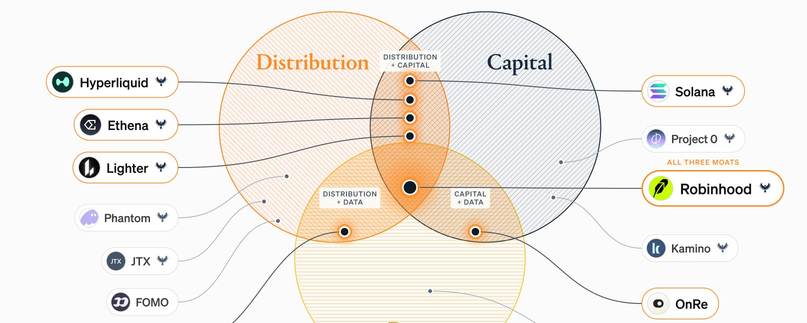
As TradeXYZ continues to dominate crypto trading volume, with RWA accounting for over 50% of Hyperliquid's volume, discussions regarding their alignment of interests and high concentration on Hyperliquid are intensifying. Concerns range from reasonable (how Hyperliquid monetizes HIP-3 in the long term) to quite far-fetched (TradeXYZ will leave Hyperliquid), so it is necessary to clarify the current relationship.
Let's clarify one point first: TradeXYZ is an independent team building on Hyperliquid. It is programmatically required to distribute 50% of HIP-3 revenue to Hyperliquid, with the remaining half at its discretion. We found that TradeXYZ (the same team as Unit) has been and continues to use its HIP-1 spot revenue to buy back HYPE, but HIP-3 revenue is not being used for the same operation.

The first concern, and the one we consider weakest, is that TradeXYZ will leave Hyperliquid because the 50% split is too high and they could capture more value on their own. As early as April, I proposed the exact opposite view: Hyperliquid outsources too much value of the largest market to deployers. Look at what each side provides. Hyperliquid provides the infrastructure layer, collateral, and most importantly, the user base supporting the vast majority of TradeXYZ's trading volume. To leave, TradeXYZ would need to rebuild the exchange layer (the hardest part of the entire tech stack), abandon almost its entire trader base, and suicidally damage its reputation in the process. For Hyperliquid, bringing RWA in-house is also reputational suicide: undermining the leading deployers supporting so much of its success would signal to all future HIP-3 deployers and all builders on Hyperliquid that any team successful enough will be replaced. This is one of the most typical symbiotic relationships in crypto; from reputational, economic, or architectural perspectives, neither side has a reason to leave the other.
The second concern regards monetization, which is more valid but requires a closer look. First, it is dishonest to ignore TradeXYZ's execution; without it, Hyperliquid's RWA market could not have reached today's scale; owning 100% of a much smaller pool is worth less than half of the current pool. Second, the 50% fee split is not Hyperliquid's only monetization path: it also profits from write priority fees and read fees paid by market makers.
It also profits from second-order effects, such as increased USDC supply—cost-adjusted revenue from on-chain balances, of which Hyperliquid retains 90%. Open interest is a proxy metric: since the launch of HIP-3, its open interest has grown by $3.68 billion, while USDC supply growth over the past year was $1.38 billion, with crypto open interest trending lower towards year-end. As more traders bring in USDC to go long on RWA, the revenue from this portion of supply also belongs to Hyperliquid. This revenue is estimated at approximately $30 million per month, exceeding the entire HIP-3 perpetual fee pool split evenly between Hyperliquid and TradeXYZ.
For us, the most interesting question is not the 50/50 split between TradeXYZ and Hyperliquid, but how both parties will evolve out of the growth model, ultimately shifting from low fees to a more stable, higher fee base.
Join TechFlow official community to stay tuned
Telegram:https://t.me/TechFlowDaily
X (Twitter):https://x.com/TechFlowPost
X (Twitter) EN:https://x.com/BlockFlow_News
 Blockworks