Comprehensive Analysis of Robinhood's Self-Built L2: From Meme Cold Start to RWA Implementation
TechFlow Selected TechFlow Selected
Comprehensive Analysis of Robinhood's Self-Built L2: From Meme Cold Start to RWA Implementation
Regardless of how the quality of this traffic is evaluated, it solves the problem of the vast majority of new L2s dying due to cold start.
 Navigating Web3 tides with focused insights
Author: Mario, IOSG
Core Judgment
Robinhood no longer rents block space from others; it has built its own L2, keeping trading, settlement, staking, yield, and asset flow entirely in hand. This is a direct response to Coinbase Base: from a tenant on someone else's chain to a landlord on its own settlement layer. The design purpose of the entire suite of tokenized products (7x24 stock tokens, USDG lending, perpetuals) is singular: to keep users and economic interests within Robinhood's own venue.
This launch also unexpectedly gained a marketing machine no one anticipated: meme coins. Within a week of mainnet launch, Tenev shifted from publicly disparaging memes to following the CASHCAT account on X. This stance ignited a speculative frenzy, making Robinhood Chain one of the liveliest chains in the crypto world within the first month. Regardless of how one evaluates the quality of this traffic, it solved the cold start problem that kills most new L2s (see Section 2).
First Three Weeks: Memes Arrived Before Stocks
Robinhood built this chain for tokenized stocks, but the first to move in was a meme casino. Three weeks after launch, the casino still contributes most of the activity, but the first truly interesting RWA-native projects are growing from here.
Data as of July 20, 2026:
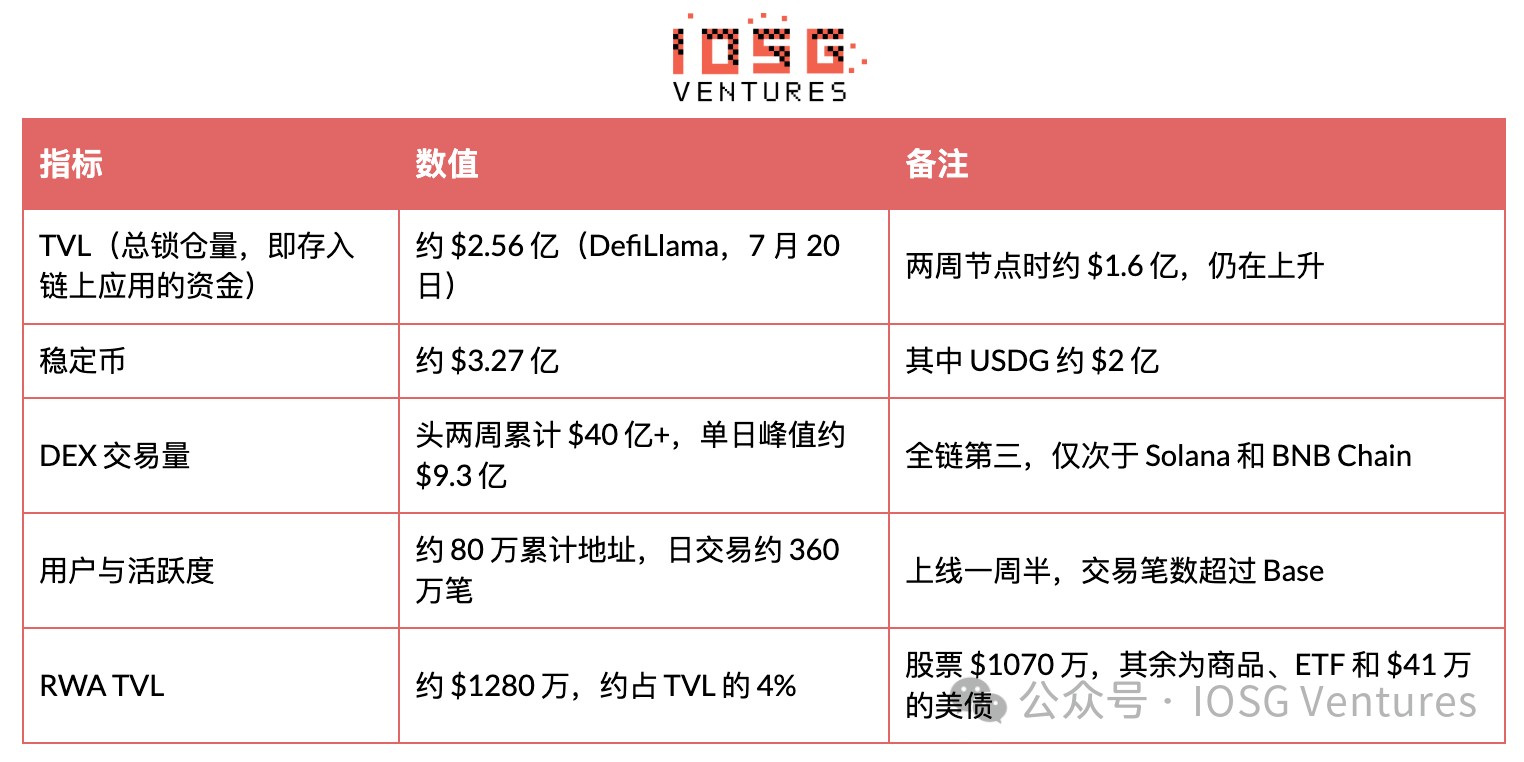
What is actually trading? Memes. The leader is $CASHCAT, a cat coin named after Robinhood's pre-rebrand mascot, up over 2000% in the first week, market cap surging to ~$156 million, an order of magnitude larger than all RWA assets on the chain. A whole batch of memes (Cash Dog in Hood, Little John, Hoodrat) and supporting launch facilities (NOXA.fun launchpad, basedbot) were all in place within days. The entire meme sector market cap is between approximately $160 to 200 million.
Second flywheel: AI agent. Speculative traffic isn't just memes. Robinhood integrated Virtuals Protocol's agent infrastructure from day one. This isn't a supporting role; "Agentic Trading" is written in the title of Robinhood's official press release. Tenev was very clear on the direction: in May this year, Robinhood already launched Agentic Trading and Agentic Credit Card in the broker app. He told CNBC, "Every operation humans can do, AI agents will be able to do." The ultimate goal is to give ordinary people the "same tools, same compute, same capabilities" that high-frequency trading institutions have enjoyed for decades. This chain is the open sandbox for this thesis: through Virtuals' Agent Commerce Protocol, anyone can launch, fund, hold, and use agents in tokenized markets. Each agent comes with its own on-chain identity, non-custodial wallet, payment card, and inbox (Virtuals calls it EconomyOS).
The agent growth curve is even steeper than memes. Week 1: 2100+ agents, ~$77 million volume, developers earned $1.3 million. Agent volume went from 0 to $100 million in two weeks, and from $100 million to $150 million in just three days. By July 17, agent count was 4500+, volume $150 million+, developers raised $2.3 million cumulatively, and the chain's largest agent and bot project landed that week. Distribution channels are also widening: from July 18, all Virtuals agents on Robinhood Chain are discoverable in Binance Wallet's Meme Rush. No single dominant agent token has emerged yet; at this stage, the real big player is Virtuals itself as the infrastructure layer, with $VIRTUAL up ~20% on the collaboration news. To be honest: today most agent token trading behavior is just memes wrapped in an AI shell. Before agents produce sustained revenue, this volume should be treated as speculative traffic.
What these agents specifically look like (Virtuals examples on Robinhood Chain):
- Monvera ($MONVERA) is the most typical RWA-native case: an AI broker launched on July 14, directly connecting to on-chain tokenized stocks, bundling Robinhood's ~95 on-chain stock tokens behind an agent to do research, quoting, and routing trades for users. This is an agent combined with stock tokens, not memes.
- Quiver Protocol ($QUIV) claims to be the first AI-driven yield aggregator on-chain: in LP vaults, agents do position rebalancing, reinvestment, and stop-loss on-chain, but are architecturally prohibited from withdrawing user funds.
- Grid Arena turns price charts into a prediction arena: lock grids on Nvidia, Tesla, or Apple, each grid has its own real-time odds multiplier.
- Hyperium ($HYP) is a multi-terminal trading/development environment, for traders tired of switching tabs back and forth.
- Root Edge is an autonomous perpetual trading agent (Hyperliquid), entered beta after ~7 months of development, issuing rootAI "Skill" NFTs to early users.
Read this list once, and the differentiation is clear: the two projects that ran both integrated RWA (Monvera with stock tokens, Quiver with on-chain yield). This is exactly the kind of agent an RWA chain wants; the rest still look like memes wrapped in an AI shell. Same pattern as the previous batch of tokens.
Then the meme faucet turned off. NOXA deployed over 60,000 tokens in less than two weeks (about 75% of the chain's total issuance), collected nearly $12 million in fees, and suddenly stopped new token launches on July 11. The team's explanation was that bots were farming clones every hour. Two days later it disappeared completely, domain lost, only an IPFS interface remained, with no word on restart. Regardless of intent, the objective effect was a mandatory cooling of meme issuance, and liquidity and attention chasing new discs began shifting to RWA-related tokens.
This is the more interesting turn in the second week: the tokens running are no longer pure memes, but starting to combine with stock tokens:
- Arrow Finance ($ARROW) is a CDP (Collateralized Debt Position) protocol, the first project to accept tokenized stocks and ETFs as collateral to mint its stablecoin aUSD. Simply put: deposit your AAPL token, borrow USD without selling. It also operates a launchpad (Arrow Pad). $ARROW rose from ~$0.15 at launch on July 7 to ~$1.79 (market cap ~$16 million), 10x in less than two weeks.
- $INDEX uses trading fees to buy on-chain stock tokens and distribute them to holders, equivalent to building a rough dividend mechanism on top of the stock token ecosystem. After Tenev publicly encouraged developers to build apps integrating tokenized stocks and RWA, it surged ~150% in a single day, market cap reaching the ten million dollar level.
Tenev's own attitude is worth reading closely, because it changed quickly. On July 2, the day after mainnet launch, he told CNBC that meme coins basically lead the market to a dead end, assets without utility create no lasting value, issuing hundreds of such tokens is meaningless, and tokenized RWA is the lasting direction. Six days later, with CASHCAT market cap nearing nine figures, he posted on X: "We are building Robinhood Chain into the best RWA chain... but it works well for memes too," and followed the CASHCAT account. By July 14, he was publicly pushing developers to build apps integrating stock tokens and RWA; it was exactly this post that made INDEX surge 150% in a day. Strung together, this is less about wavering stance and more about a strategy: maintain an RWA identity for regulators and institutions, while catching the meme traffic that pays the bills for now.
Our judgment: This is a reenactment of the Base script. Memes are for bootstrapping liquidity and are also a customer acquisition channel; they stress-tested the infrastructure, deepened DEX order books, and gave this chain a heartbeat in the first month that pure RWA traffic couldn't provide. The signal worth tracking isn't meme market cap, but that the first batch of utility projects that emerged are all connecting stock tokens to DeFi primitives (Arrow as collateral, INDEX as yield distribution). This is exactly the behavior an RWA chain needs to grow, and the Robinhood team is obviously pushing it. The unresolved question: RWA assets still only account for ~4% of TVL. If the scale of stock tokens doesn't keep up with the user volume brought by memes, this chain is just a casino with a broker sign. Base didn't truly solve this conversion back then either.
How the Chain is Built, and Who Built It Together
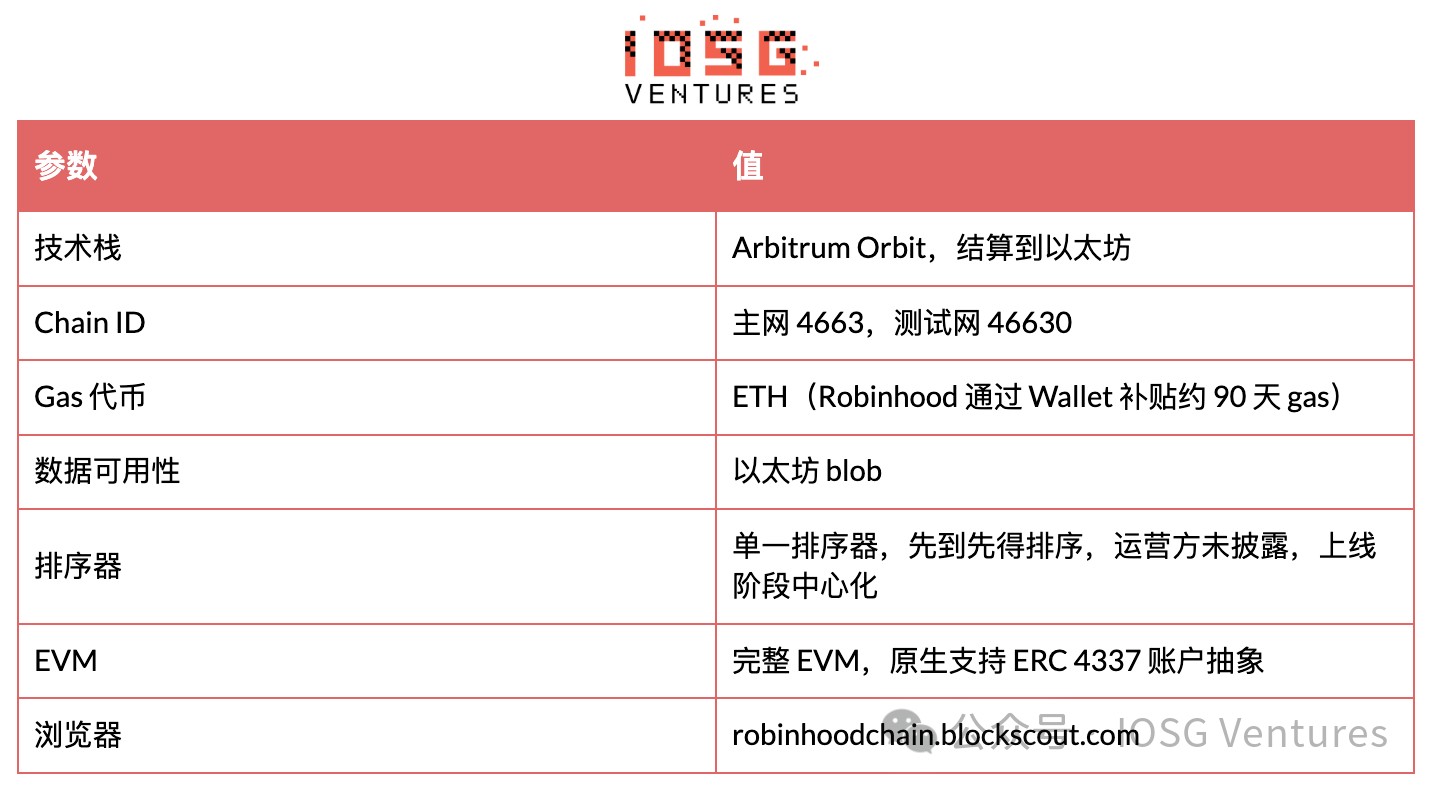
Plain English version first: Robinhood Chain is a rollup. It produces blocks itself, fast and cheap, then sends transaction data back to Ethereum, with Ethereum acting as the final record court. Robinhood controls the sequencer (the machine queuing transactions), which is why this chain is named Robinhood. Details in the table below.
Another economic detail worth knowing: As an Arbitrum Orbit chain not settling to Arbitrum One, Robinhood Chain applies to the Arbitrum Expansion Program and needs to return 10% of net protocol (sequencer) income to the Arbitrum ecosystem: 8% to the ArbitrumDAO treasury, 2% to the Developer Guild. This isn't obscure knowledge: on July 9, this chain had $568 million in single-day volume, and ARB rose 19% that day based on this revenue share logic. The remaining 90% of income and control of the entire tech stack belong to Robinhood.
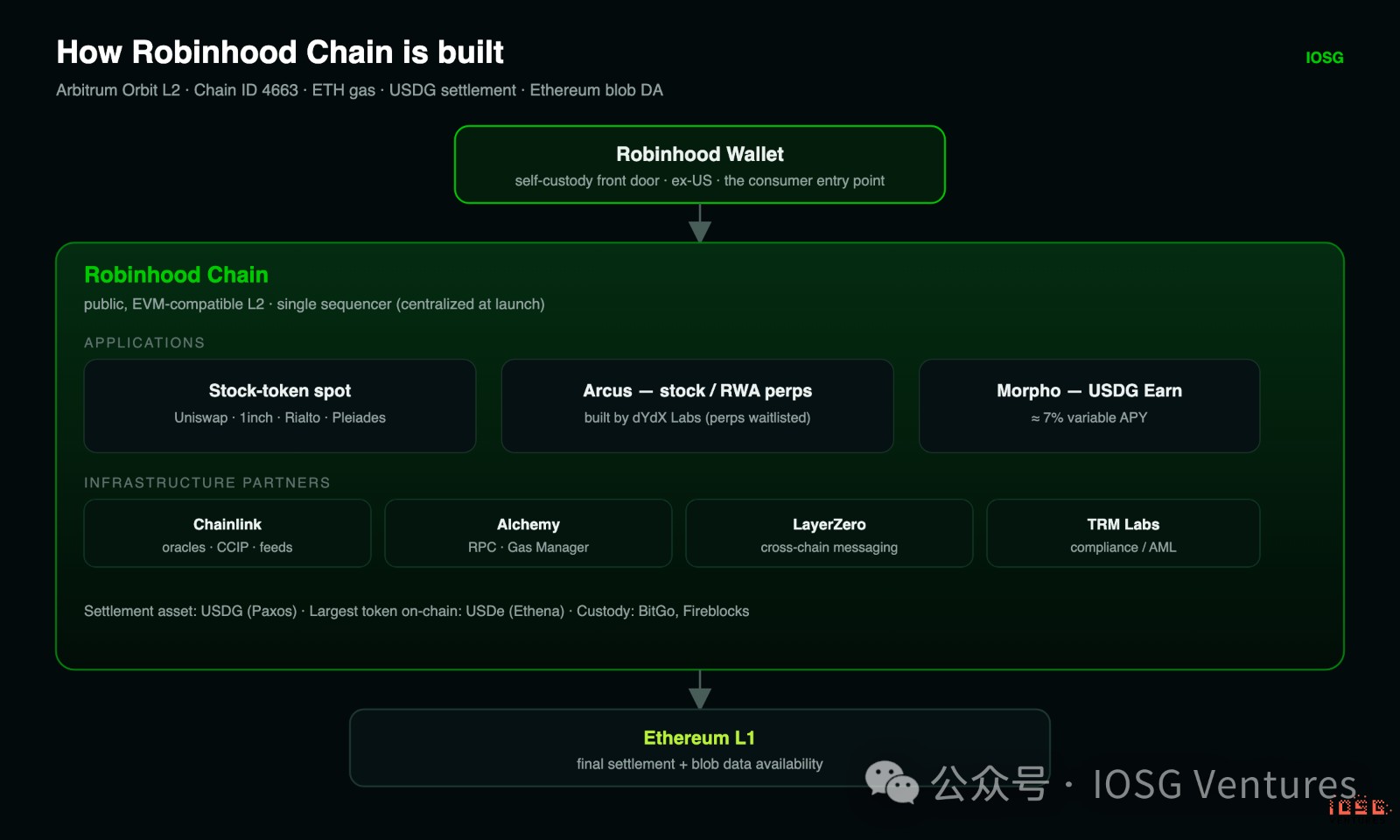
▲ Robinhood Chain Architecture
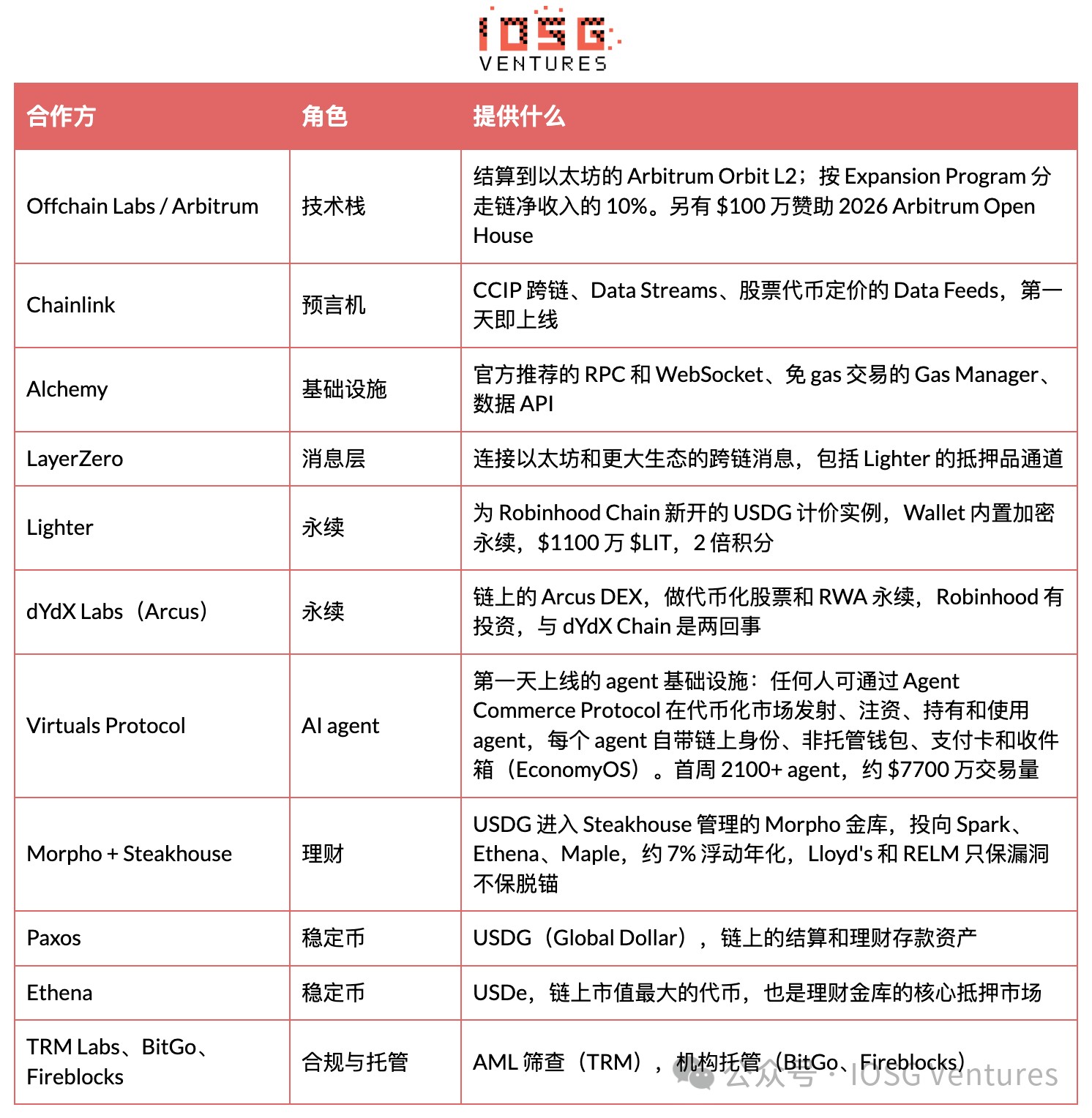
This chain isn't built by one party. Key partners and their roles:
Two Types of Dollars: USDG and USDe
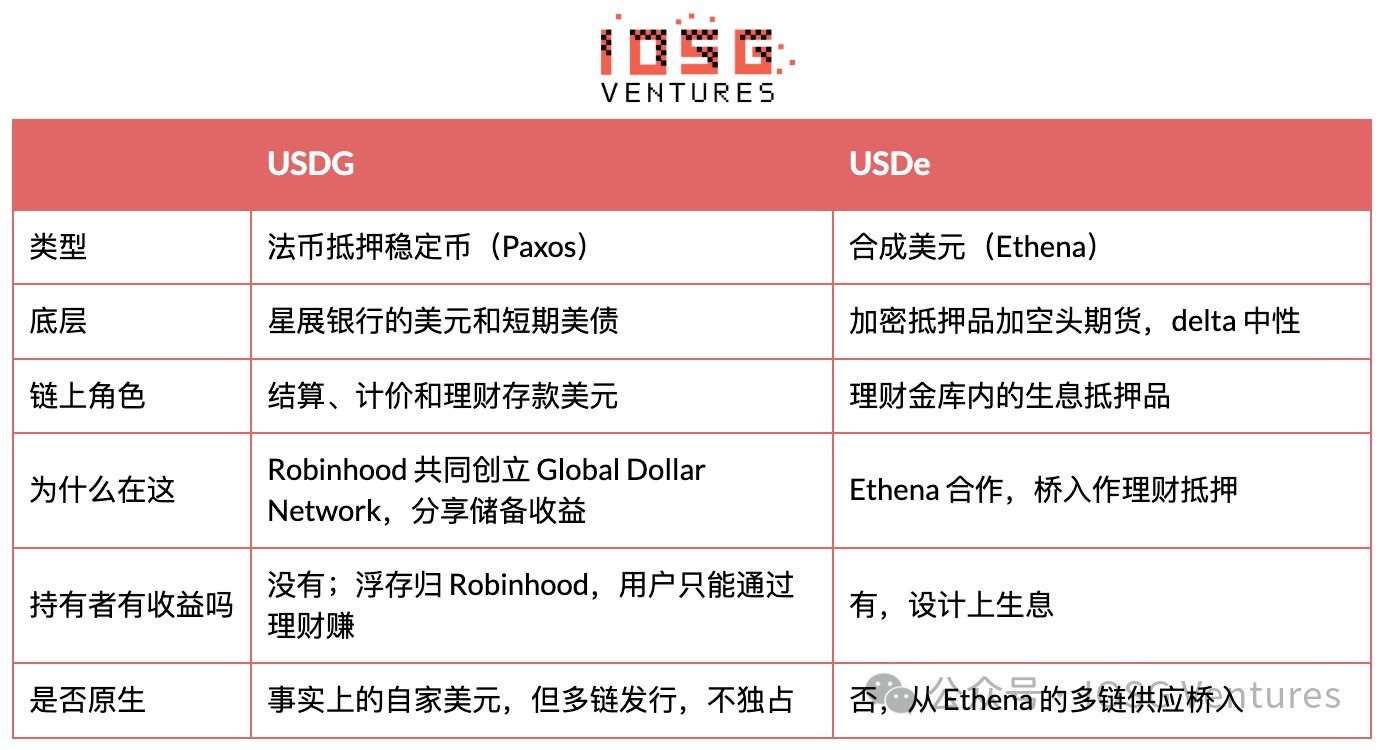
There are two dollars with different divisions of labor running on this chain; they cannot be confused.
USDG is this chain's homegrown dollar. It is a fiat-collateralized stablecoin issued by Paxos, launched at the end of 2024, 1:1 corresponding to USD and short-term US Treasuries deposited in DBS Bank. On Robinhood Chain, it is the settlement and pricing asset: the deposit unit for wealth management, the margin and pricing asset for Lighter perpetuals, and the dollar flowing between Wallet and the chain. Gas is still paid in ETH, so USDG is money, not fuel, and it is not exclusive to this chain (native issuance on Ethereum, Solana, Ink, X Layer, interoperable via LayerZero standard).
Why Robinhood pushes it: Robinhood is a founding member of the Global Dollar Network, which returns ~97% of reserve yield to partners driving adoption. By setting USDG as the default dollar for its home chain, Robinhood earns not just trading fees, but the entire float yield. From the perspective of economic interest and default usage, USDG is the thing closest to a native stablecoin for this chain, though technically it is multi-chain.
USDe is a yield and collateral dollar, not a settlement dollar. It is Ethena's synthetic dollar, supported by crypto collateral plus hedged short positions (delta-neutral basis positions), not fiat in a bank, and designed with inherent yield. It is the largest market cap token on the chain, but this number is mainly driven by collaboration and collateral, not retail natural funds. Ethena is a partner; USDe is bridged on-chain, put into Robinhood wealth management vaults, as one of the collateral markets generating ~7% yield. So USDe's big number reflects that it was brought in to support wealth management, not that everyone is spending it as daily currency. One sentence: USDe is the yield engine, USDG is the checking account.
Three Product Layers: App, Chain, Wallet
Chain and money covered, now look at the difference between the three user-facing entrances. They are often confused, but are actually three different layers.
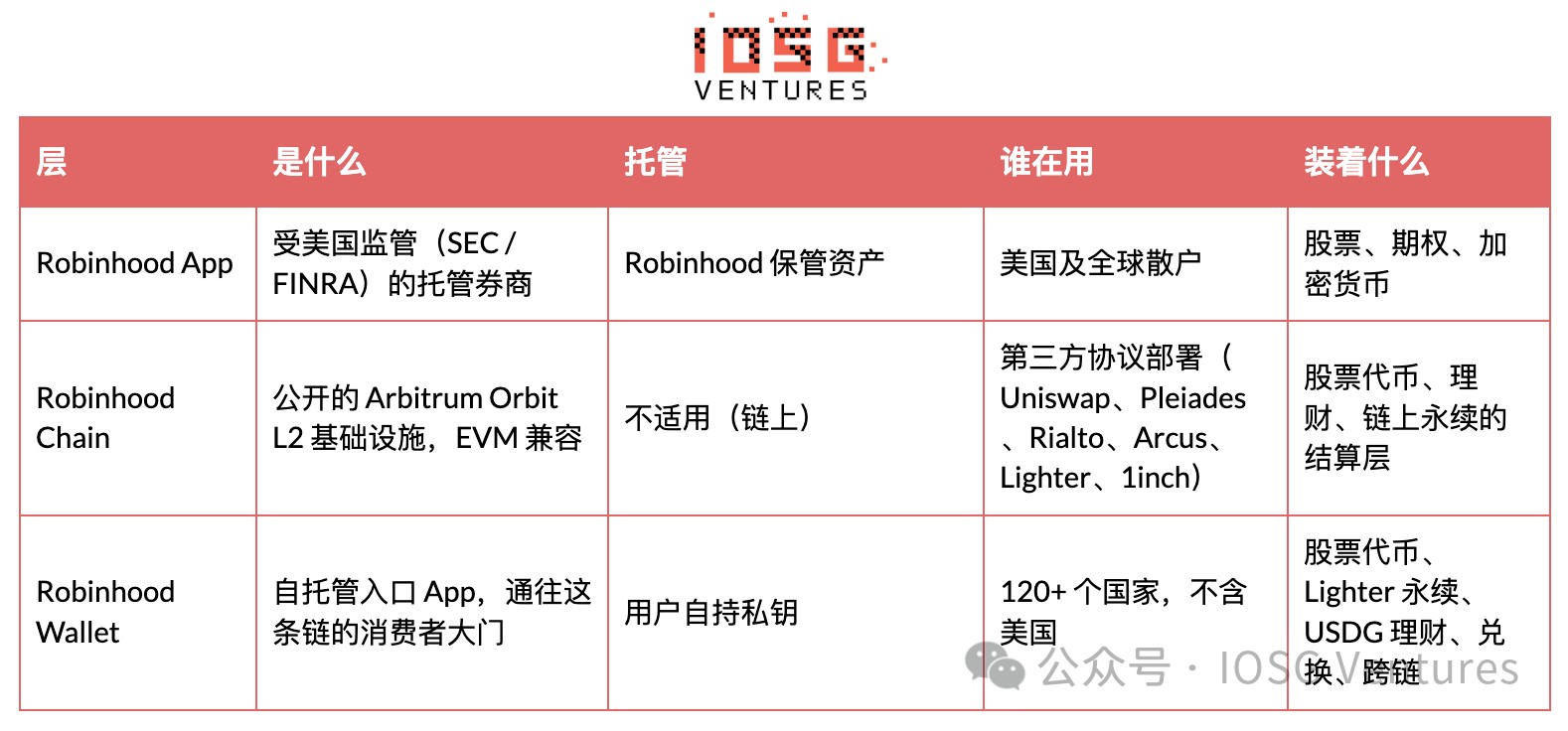
How the three connect: Wallet is the user layer, Chain is the settlement and infrastructure layer, and the Broker App is an independent custodial world (mainly acting as a fiat on-ramp). USDG is the dollar flowing between them.
Who can use what:
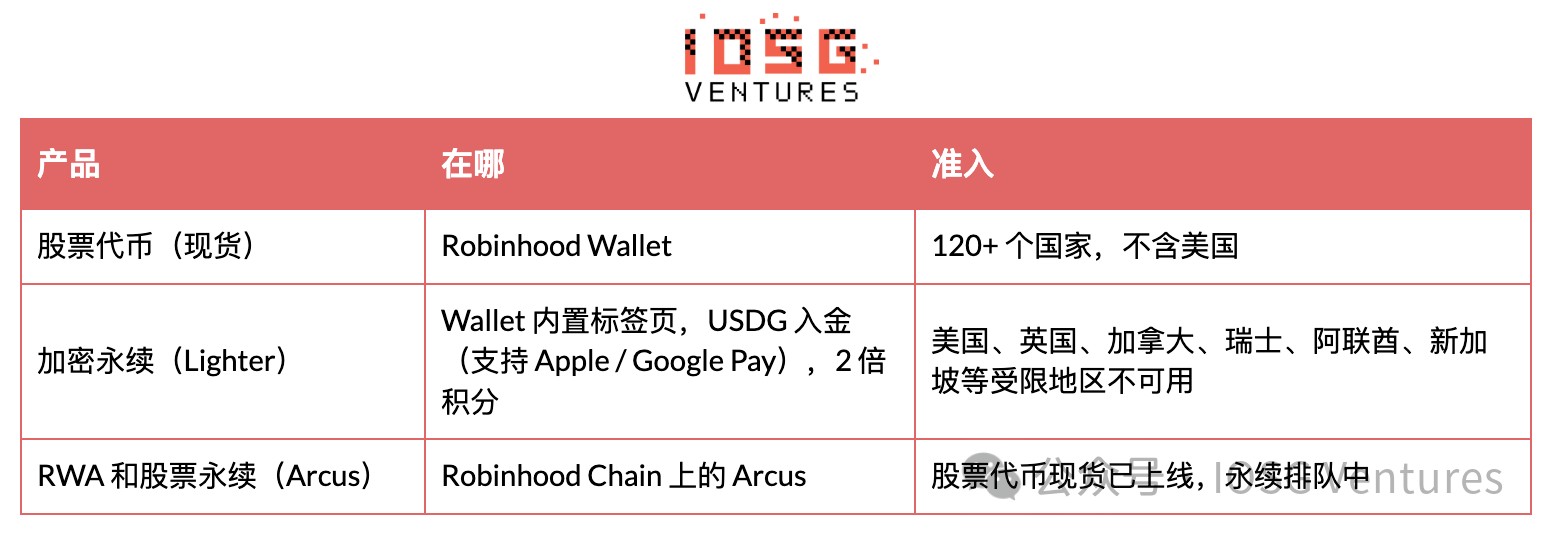
Perpetuals: Two Venues, Two Machines
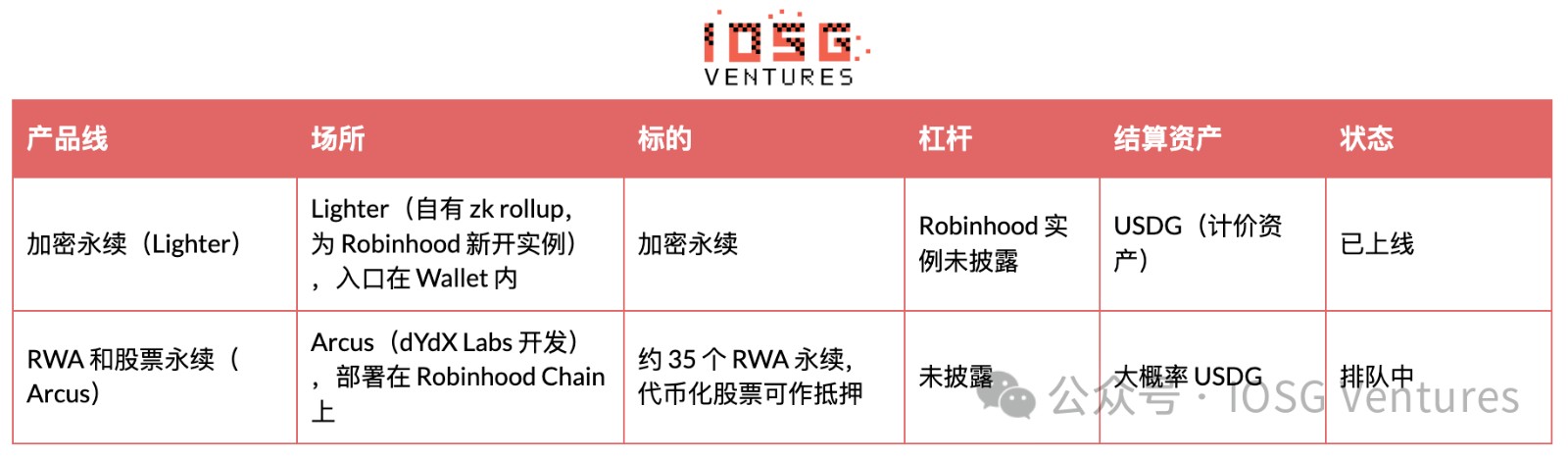
There is no single "Robinhood Perpetual". Two on-chain venues do two things: Lighter does crypto perpetuals, Arcus does stock and RWA perpetuals; it is easy to confuse them. This section clarifies these two venues, Lighter's operating mechanism, and the differences between the two. (Robinhood also has a custodial compliant perpetual product in its EU broker app, not on-chain, out of scope for this article.)
Two Venues
How Robinhood and Lighter Collaborate via Two Chains
This is the easiest part to get wrong. Lighter is not a pool on Robinhood Chain, but another chain; the two collaborate via cross-chain collateral. Imagine two banks signed a wire transfer agreement: your money is custodied at one (Robinhood Chain), trading happens at the other (Lighter), and both keep ledgers synchronized via messages.
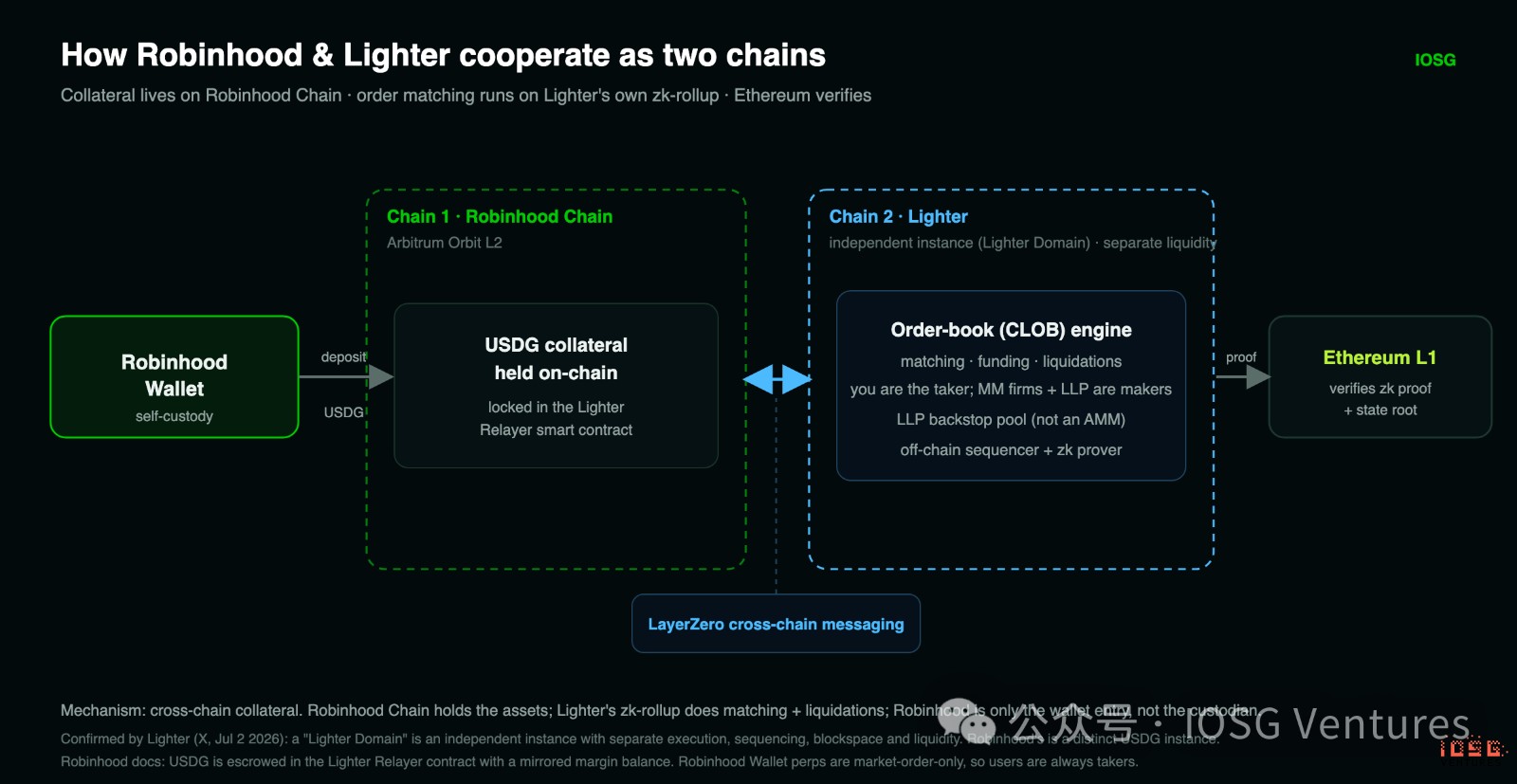
▲ Robinhood and Lighter Dual-Chain Collaboration
How to read this chart:
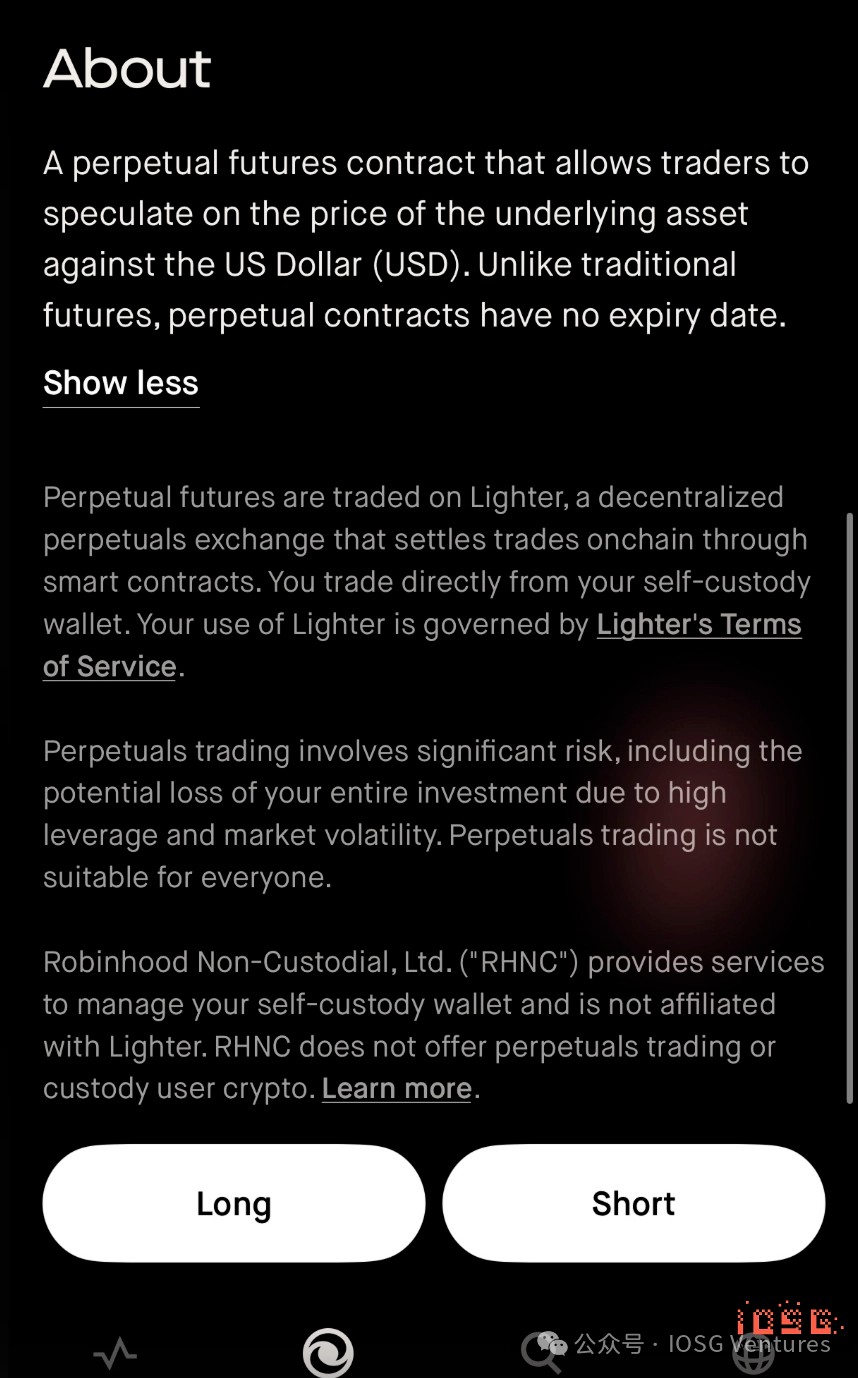
- Lighter is an order book (CLOB) perpetual DEX, not an AMM, no swap pools. Your counterparty is a maker or taker, or the LLP (Lighter Liquidity Provider) vault, the latter quoting both sides and covering liquidation.
- Users deposit USDG from Wallet as margin. Per Robinhood docs, USDG on Robinhood Chain is transferred and locked into the Lighter Relayer smart contract, and Lighter then records the margin equally on the trading interface. Wallet is self-custodied; Robinhood is just the entrance, not the custodian.
- Matching and settlement run on Lighter's own zk rollup, an independent execution layer: off-chain sequencer plus zk prover, market makers quote in real time.
- LayerZero is the cross-chain message layer maintaining synchronization between the two environments.
- Lighter sends the final state root and zk validity proof back to Ethereum L1; state is only finalized after proof verification passes.
Regarding key details about liquidity, Lighter has confirmed personally. Lighter explained in an X post on July 2, 2026, that the Robinhood integration is a Lighter Domain: an independent Lighter instance, with execution, sequencing, block space, and liquidity all separate. This isolation is intentional, to let different markets serve different ecosystems, partners, and regulatory requirements.
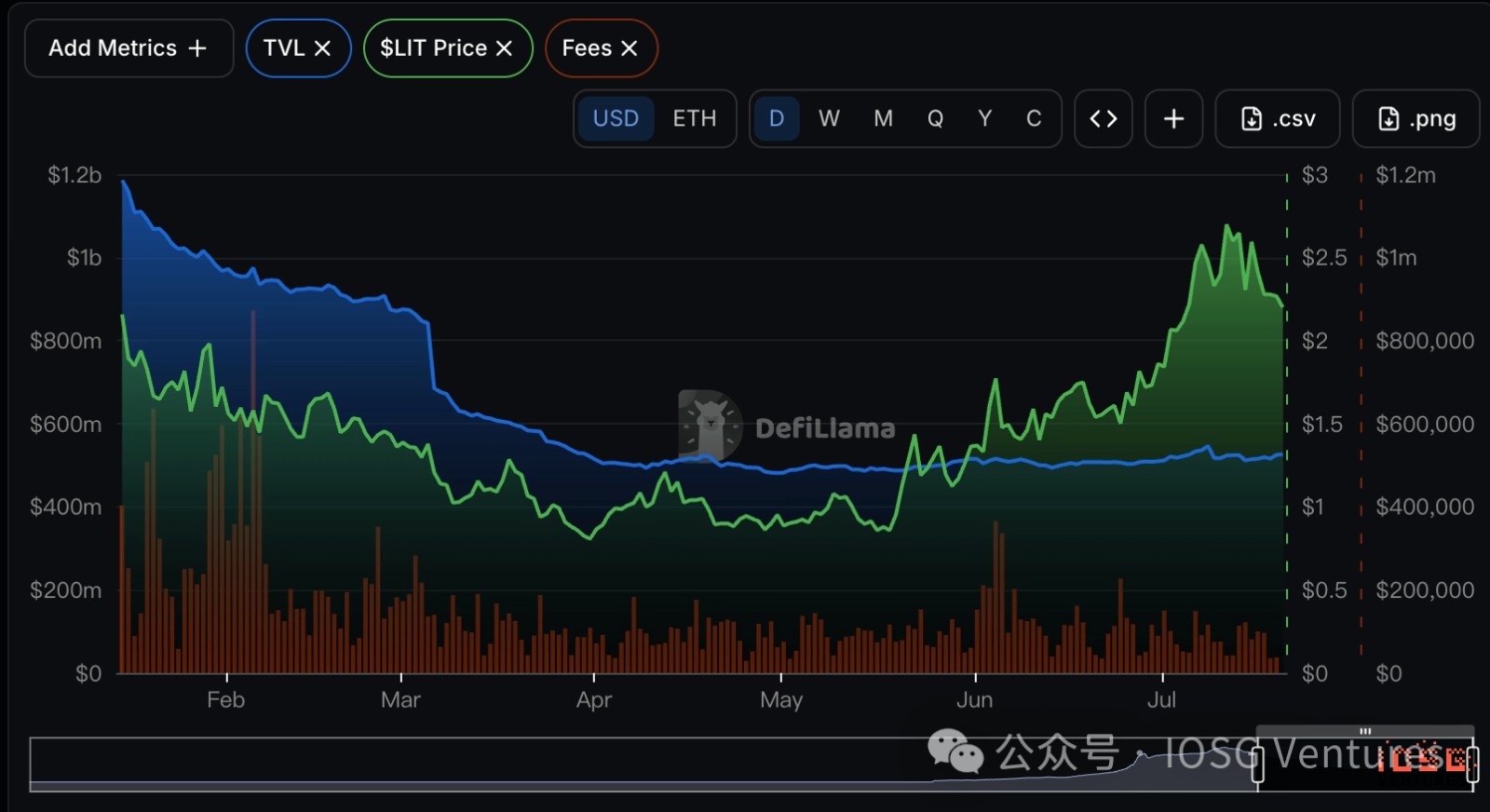
So Robinhood's USDG order book is a genuine independent instance and independent liquidity pool, not Lighter's USDC main pool. Its depth must be built from zero by market makers on this instance (zero fees, 90 days gas subsidy, 2x points and $11 million $LIT are doing this), not inheriting Lighter's ~$39 billion main pool. Robinhood users can't touch the main pool depth. DefiLlama data also confirms this: after the news was announced, Lighter main pool volume barely moved, though the token price did rise.
Trading path and counterparty. Perpetuals in Wallet can only place market orders, so Robinhood users are always takers. Your market order enters the Lighter Domain matching engine, eating the best limit orders per price-time priority. The limit side consists of professional market making institutions and Lighter's own liquidity vaults: LLP quoting both sides and covering liquidation, and XLP (Experimental Liquidity Provider) for pre-market and RWA. Because Lighter Domain liquidity is isolated from each other, these market makers are configured specifically for the USDG instance, not shared from the USDC main pool. Note Robinhood proprietary market maker Pleiades serves the spot stock token AMM, not the Lighter perpetual book. So your counterparty is a market maker or LLP, never another Robinhood retail user, and Lighter doesn't act as dealer. Your USDG is always locked in the Lighter Relayer contract on Robinhood Chain, while the position lives on the Lighter instance.
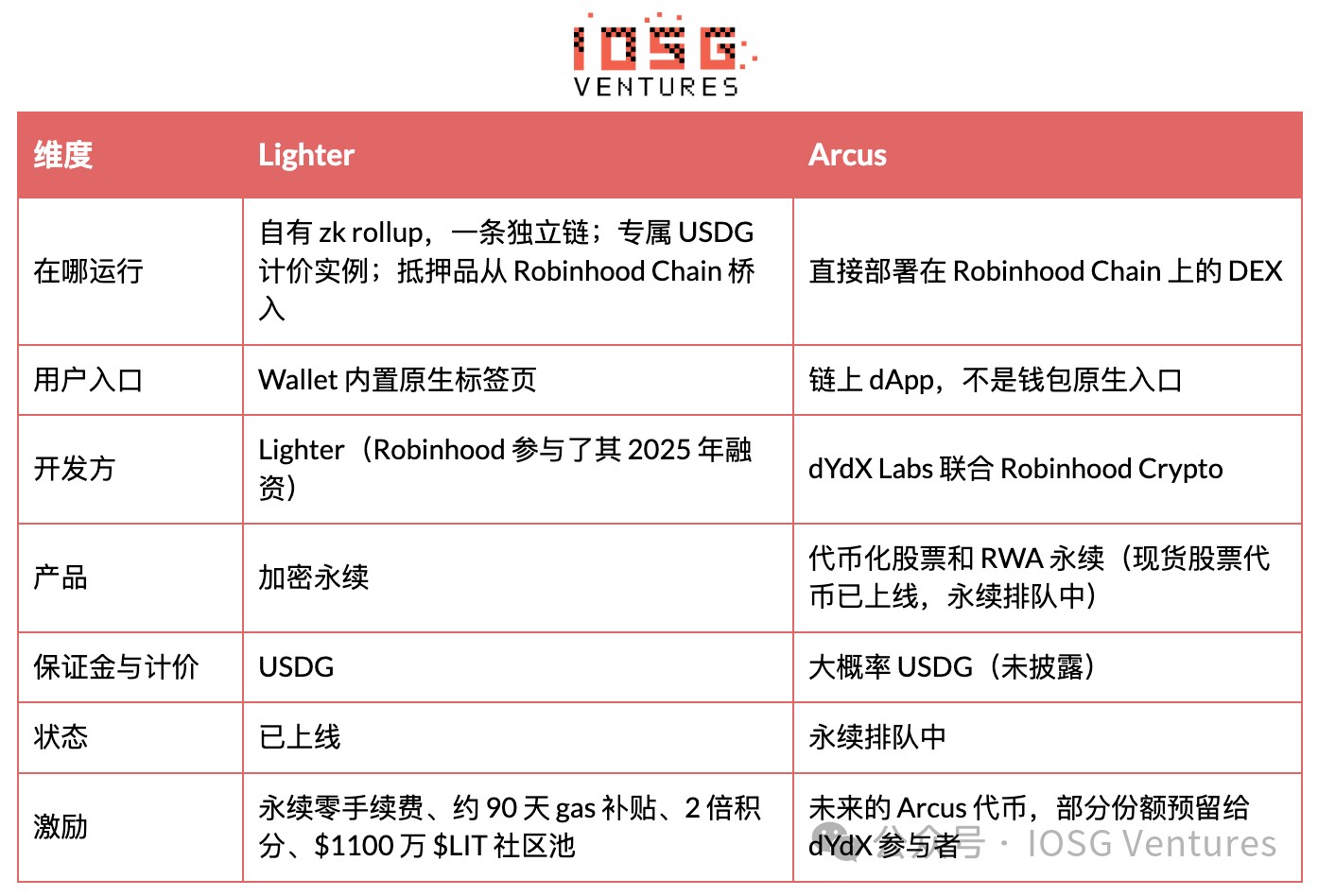
Lighter vs Arcus
Both are Robinhood-series perpetual venues, but structured completely differently.
What Underlies Stock Tokens
Plain English version first: A stock token is an IOU issued by Robinhood's Jersey entity (a promise to pay, not the asset itself), price tracking the corresponding stock. You get price exposure, not the stock. Details and notes below.
Robinhood Stock Token is a tokenized debt security issued by Robinhood Assets (Jersey) Limited (RHJ). Legally it is a linked debt instrument, similar to an ETN (Exchange Traded Note) in traditional markets. Holders only obtain economic exposure to the corresponding stock, including price volatility and corresponding economic benefits, with no legal or beneficial ownership of actual shares, and no shareholder rights such as voting. Simply put, you buy an AAPL token, actually holding a debt note issued by the Jersey company RHJ. You are RHJ's creditor, not Apple's shareholder.
Robinhood's design goal is for each stock token to be hedged roughly 1:1 by US stocks or ETFs custodied by its affiliated entity, letting the token price closely follow the underlying stock price. But the token itself is still a claim on RHJ, not a direct representation or trust beneficial right to the underlying shares. Official docs do claim stock tokens are "1:1 backed" (underlying shares held by US licensed broker-dealer/custodian, reference series custodied and brokered by Alpaca), but this is only the issuer's unilateral declaration: neither providing public Proof of Reserves (public audit proving underlying assets actually exist), nor regular third-party audits to confirm; third parties generally describe it as "nominally 1:1". Additionally, non-listed company tokens are officially clearly not 1:1, and non-redeemable. This is a key note at the ownership level: whether the token can ultimately be redeemed depends largely on RHJ's credit and risk control as the issuer.
Dividend and corporate action handling is also different from traditional stocks. No direct cash dividend distribution, but via an on-chain multiplier mechanism under the ERC-8056 standard: when the underlying stock dividends or splits, the system increases the economic share proportion corresponding to each token, the token's intrinsic value automatically updates, and the user's token balance remains unchanged before redemption. Keep on-chain simple, keep economics continuous.
Overall, the stock token underlying is a hybrid structure of "RHJ debt obligation + Robinhood entity custodied hedged underlying stocks". This design gained all features of standard ERC-20 (free transfer, wallet interoperability, DeFi composability) as well as efficient issuance and global distribution within the regulatory framework. The cost is that users bear not pure stock risk, but synthetic exposure plus issuer credit risk. Compared to direct shareholding or fully isolated custodied RWA products, this model has obvious advantages in liquidity and innovation, but the embedded credit and operational risk needs to be weighed by users themselves.
How Robinhood Compares to Other Major Stock Tokens
Robinhood is a latecomer; this market already exists. On-chain tokenized stocks are ~$1.2 billion in scale, with two issuers dominating: Ondo Global Markets (~half the market, first TVL over $1 billion, 260+ stocks) and Backed Finance's xStocks (number one in holders, ~162,000 vs Ondo's ~70,000, cumulative volume $25 billion+, via Kraken, Bybit and Solana DeFi). Robinhood entered with almost zero share (on-chain stock TVL ~$10.7 million), but holds a distribution weapon opponents don't have: a consumer-grade App covering 120+ countries, plus its own chain.
CEXs are also entering; Binance is the one needing the closest watch. In June 2026 it launched zero-commission trading for 7000+ US stocks and ETFs for non-US users, subsequently announcing bStocks: minting user's shareholdings into 1:1 backed tokens on BNB Chain, 7x24 trading, first batch including Nvidia, Tesla, Circle, Micron and SanDisk. Capital flow already explains the problem: Binance's first 30 days saw new tokenized stock funds of $300 million+, same period xStocks is $33 million, Robinhood is $13 million.
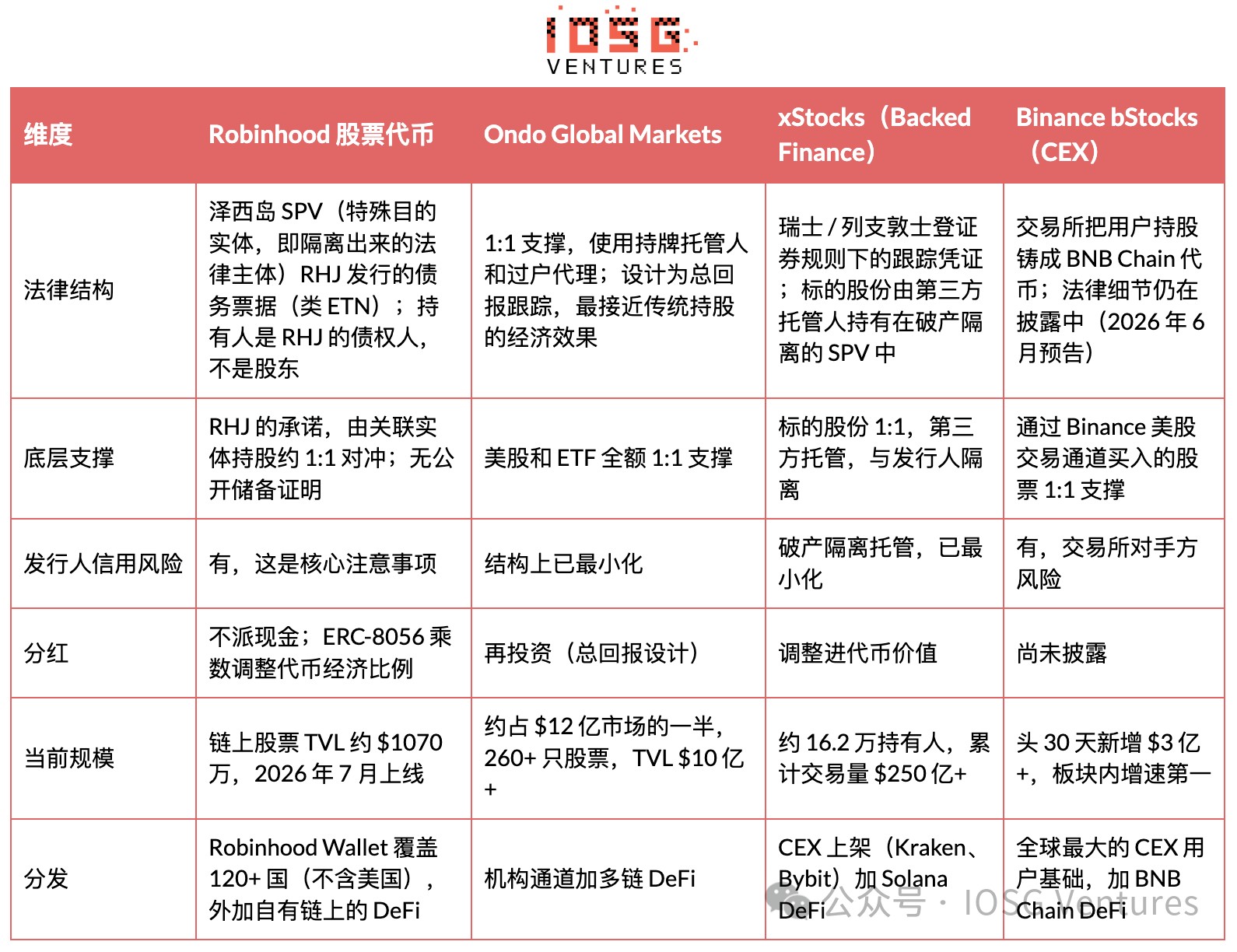
One sentence summary: Among the three on-chain players, Robinhood's underlying structure is the weakest (debt claim without proof of reserves, vs the other two 1:1 custody models), but consumer-grade distribution is the strongest. It bets that the App funnel and own chain are more important than legal purity; Ondo and Backed bet exactly the opposite. Binance is the variable: it plays the same distribution card as Robinhood, but the funnel is much larger, and bStocks capital flow is already outperforming everyone. Who bet right, the RWA TVL numbers in the next two quarters will give the answer.
Risks, Unresolved Questions and Conclusion
- Perpetuals only half launched. Arcus RWA and stock perpetuals are still queuing; only Lighter crypto perpetuals were usable on day one.
- Perp liquidity starts from zero. Lighter integration is an exclusive USDG book; depth must be fed by incentives, cannot inherit Lighter's USDC main pool; early thin order book is a real risk.
- Stock token underlying. ~1:1 hedge is only a declaration, no confirmed proof of reserves; private company tokens are clearly not 1:1, also non-redeemable.
- Geo-blocking. Perpetuals and stock tokens both exclude the US; Lighter perpetuals also exclude UK, Canada, Switzerland, UAE, Singapore, equals cutting off the largest retail markets.
- Centralization. Single and undisclosed operator sequencer, proprietary internal market maker (Pleiades), no decentralized roadmap published.
- Wealth management yield. ~7% APY is floating and demand-driven, from Spark, Ethena, Maple market borrowing interest; higher yield higher risk, insurance only covers vulnerabilities, not depeg and market volatility.
- Activity quality. Early volume and users are mostly meme turnover, RWA assets only ~4% of TVL. Bullish logic needs meme liquidity to convert to stock tokens and wealth management balances; this conversion hasn't been proven yet. Base basically didn't achieve this back then.
Our conclusion: The infrastructure bill already adds up. Robinhood keeps 90% of chain revenue, controls the sequencer, earns USDG float, and the cold start was also solved by the meme wave personally amplified by its own CEO. The suspense lies in whether this chain ultimately is an RWA chain, or a casino with a broker sign. Three things will give the answer: (1) Can RWA TVL rise from ~4% to a meaningful magnitude; the leading indicator is whether stock token DeFi like Arrow can continue rolling big; (2) After zero fees and points incentives taper, can Lighter's USDG book retain real depth; (3) Will Robinhood issue proof of reserves for stock tokens, because vs Ondo and Backed's 1:1 custody model, the debt note structure is its weakest flank. This chain has no token, so any viewpoint can only be expressed via the ecosystem: ARB (chain revenue share), Lighter, and early ecosystem tokens.
Join TechFlow official community to stay tuned
Telegram:https://t.me/TechFlowDaily
X (Twitter):https://x.com/TechFlowPost
X (Twitter) EN:https://x.com/BlockFlow_News
 IOSG Ventures