US Stock Market Trends (June 17): SpaceX’s $60 Billion Acquisition of Cursor Sends Stock Price Up for Three Consecutive Days; Market Awaits Walsh’s Debut
TechFlow Selected TechFlow Selected
US Stock Market Trends (June 17): SpaceX’s $60 Billion Acquisition of Cursor Sends Stock Price Up for Three Consecutive Days; Market Awaits Walsh’s Debut
The day the Dow Jones Industrial Average hit a new all-time high, the market was quietly pricing in “the death of rate cuts.”
 Navigating Web3 tides with focused insights
By: TechFlow Research

On Tuesday, Wall Street absorbed two major developments simultaneously: SpaceX’s options began trading, and the company reinforced its AI credentials with a $60 billion acquisition. Behind this dual announcement, broader market indices quietly diverged—while the Dow Jones Industrial Average (DJIA) hit a new all-time high, the Nasdaq Composite and S&P 500 both declined. Technology stocks’ pullback did not resemble panic; rather, it looked like the market buying insurance ahead of Wednesday’s Federal Open Market Committee (FOMC) meeting led by Chair Jerome Powell.
Market Performance
The DJIA rose approximately 329 points (+0.64%) to near 52,000, briefly touching 52,200 intraday—the second consecutive session at a record high. The S&P 500 edged down 0.08% to 7,548.60, while the Nasdaq fell 1.15% to 26,376.34; the Russell 2000 also declined. On the surface, price action was muted—but beneath lay a clear bifurcation: tech stocks accounted for nearly the entirety of the Nasdaq’s decline, while non-tech blue chips propelled the DJIA to a fresh peak. Capital flows—not just index levels—deserve closer scrutiny.
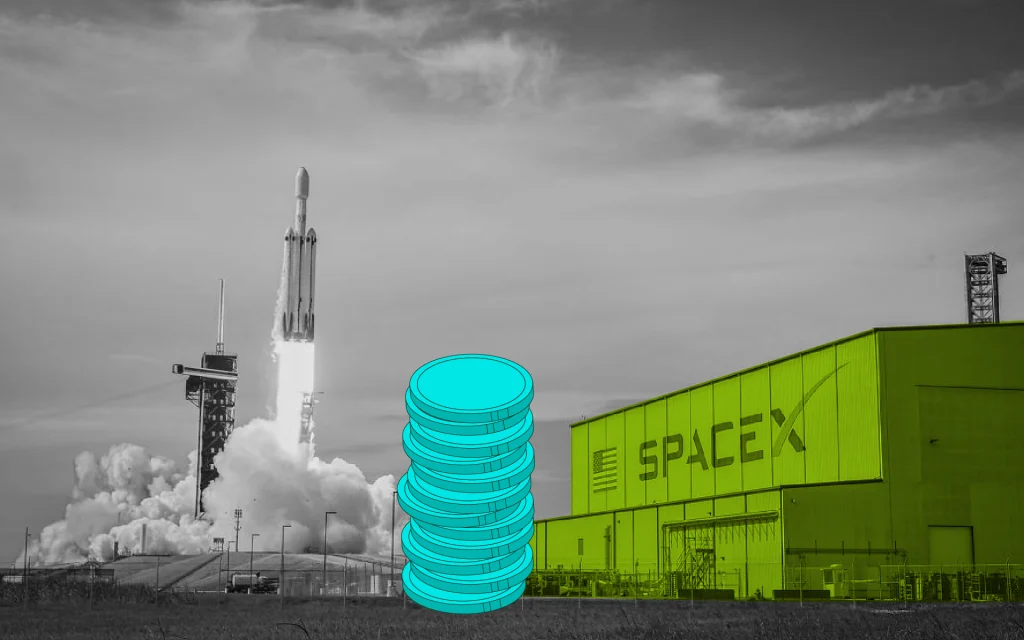
SpaceX was Tuesday’s undisputed star. Just four days after its IPO, the company unveiled a two-pronged strategy. Its “public play” was an acquisition: formally announcing a $60 billion all-stock deal to acquire Anysphere—the parent company of AI-powered coding tool Cursor—converting an option secured in April into a binding merger agreement. Cursor will become a wholly owned subsidiary under SpaceX’s AI division. As of June, Cursor reported roughly $2.6 billion in annualized B2B revenue. A new jointly trained AI model—developed over several months—is expected to roll out shortly across both Cursor and Grok Build platforms.
The “hidden play” was options trading: SPCX options launched on Nasdaq Tuesday—the fifth trading day post-IPO—marking the immediate availability of derivatives for institutional hedging and leveraged positioning. From this point forward, the stock’s trading dimension expanded significantly. Initial options volume was robust, with call options dominating activity and implied volatility remaining elevated—reflecting continued market disagreement about near-term price direction. Shares closed up 4.83% at $201.80—the third straight daily gain since IPO—and market capitalization briefly approached $2.9 trillion, surging against the broader tech selloff to become the day’s brightest focal point.
Among the S&P 500’s 11 sectors, Tuesday revealed stark polarization. Technology and communication services led declines, with broad-based tech weakness nearly dragging down the entire Nasdaq. Meanwhile, industrials, financials, and select defensive sectors held up relatively well—absorbing capital flowing out of high-valuation growth names. Oil prices dropped ~5% to around $75 per barrel—the lowest in three months—as expectations mounted for a U.S.-Iran agreement and the reopening of the Strait of Hormuz, pressuring supply premiums. Easing energy-cost concerns delivered direct tailwinds to industrials and transportation. The 10-year Treasury yield fell to ~4.44%, its lowest level in three weeks, as bond markets began pricing in a potential marginal easing of inflationary pressure. Blue chips—less sensitive to interest-rate shifts—thus found breathing room, explaining why the DJIA could reach a new high even amid widespread tech weakness.
Macro & Outlook
The VIX index initially dipped over one point before rebounding to close slightly higher at ~16—indicating optimism had stalled ahead of the FOMC outcome. Gold held steady near $4,350 per ounce; Bitcoin consolidated above $66,000—neither showing strong directional bias. Markets await a more definitive catalyst. The Bank of Japan raised its policy rate to 1.0%—its highest since 1995—but failed to trigger unwinding of yen carry trades; the Nikkei rose only 0.46%. This move had been fully priced in, generating no ripple effects.
Wednesday’s inaugural FOMC meeting under Chair Powell is this week’s pivotal event. Holding rates steady at 3.50%–3.75% is virtually certain—with CME futures assigning ~97% probability to no change. All attention centers on the “dot plot.” In March, the Fed’s median projection still anticipated at least one rate cut this year—but May’s CPI surged to 4.2%, the highest in three years, with energy prices up 23.5% year-on-year. Markets now widely expect this meeting’s dot plot to erase all remaining rate-cut expectations and lift the year-end terminal rate to above 3.6%, effectively signaling the formal end of the easing cycle. Powell faces a more complex challenge than numbers suggest: appointed by the White House as a dovish candidate, he now leads a committee where inflation has accelerated for three straight months—and whose April meeting ended in an unusually divided 8–4 vote. Cleveland Fed President Loretta Mester has publicly stated that if inflation remains persistently above target, she could support raising rates as early as July. This puts Powell in an awkward position: deleting dovish language from the statement would effectively shut the door on cuts; retaining it risks appearing to compromise central bank credibility for political expediency. With Friday’s holiday (June 19) closing markets early, the full impact of the FOMC decision must be digested in a single, full trading session on Thursday—a uniquely compressed timeline.
TechFlow Perspective
SpaceX executed two distinct moves Tuesday: acquiring Cursor anchors its fundamental narrative; launching options establishes its market-structure story. Together—and especially amid broad tech weakness—they signal that investor focus has shifted from IPO euphoria to SpaceX’s role as an AI-acquisition platform. The DJIA–Nasdaq divergence tells another story: capital isn’t exiting equities—it’s repositioning ahead of a potentially more hawkish Fed.
If Powell strikes a moderate tone tomorrow and leaves some wiggle room in the dot plot, tech stocks are likely to reclaim leadership. If instead he cites 4.2% inflation to explicitly highlight two-way risks and fully eliminate rate-cut expectations, this quiet rotation into blue chips may only be beginning. Markets already know rates won’t move—what they’re truly pricing is how much time remains in this cycle.
What Powell says matters more than what he does—and he happens to be a new chair who hasn’t yet spoken.
Join TechFlow official community to stay tuned
Telegram:https://t.me/TechFlowDaily
X (Twitter):https://x.com/TechFlowPost
X (Twitter) EN:https://x.com/BlockFlow_News
 @BlockFlow_News