Conversation with 6MV Fund Partner: Why I Hold Zero ETH and View Hyperliquid as the New Tether of the Crypto World
TechFlow Selected TechFlow Selected
Conversation with 6MV Fund Partner: Why I Hold Zero ETH and View Hyperliquid as the New Tether of the Crypto World
“My basic analogy for Hyperliquid is Tether to Circle. The non-KYC or international market in crypto is enormous and can fully support a massive network.”
 Navigating Web3 tides with focused insights
Compiled & Translated by TechFlow
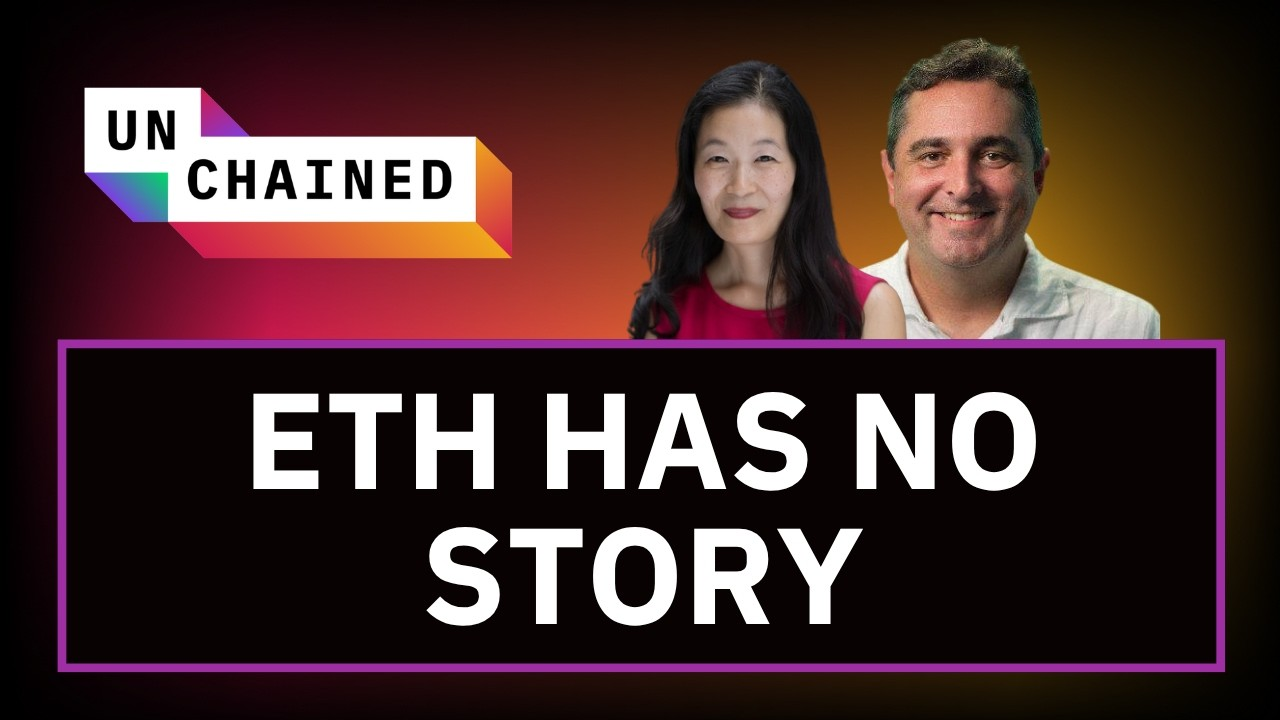
Guest: Mike Dudas, Managing Partner at 6MV
Host: Laura Shin
Podcast Source: Unchained
Original Title: Hyperliquid Is About to Face More Competition. Here's Why Mike Dudas Isn't Worried
Air Date: June 5, 2026
Key Takeaways
In this episode, Mike Dudas, Managing Partner at 6MV, discusses recent extreme volatility in crypto markets and the diverging narratives around core assets including Strategy, Ethereum, Solana, and Hyperliquid. He argues that Strategy’s sale of Bitcoin undermined Michael Saylor’s long-cultivated “never sell” faith premium; Ethereum’s biggest challenge is its inability to coalesce around a single, market-pricable asset narrative—leading 6MV and Dudas himself to hold zero ETH. In contrast, Dudas favors protocols with clear value capture mechanisms, programmable buybacks, and sustainable revenue streams—specifically comparing Hyperliquid to Tether in DeFi: a massive network capable of thriving outside U.S. markets and serving non-KYC, global trading demand.
Highlights of Key Insights
The Breakdown of Strategy’s “Never Sell” Faith Premium
- “Strategy is trying to do two things simultaneously: financialize Bitcoin exposure on one hand, while framing Bitcoin as a quasi-religious meme asset on the other. The problem is these two goals aren’t fully compatible.”
- “Saylor’s long-standing promise to the market was: ‘I will never sell this asset—I simply believe in it.’ So whether he sells hundreds or tens of thousands of Bitcoin, the moment selling begins, one leg of the story collapses.”
- “The market must fully believe he will forever buy this asset. So when price falls, they must find new ways to keep buying Bitcoin.”
Ethereum’s Narrative Confusion and Zero Allocation
- “ETH ultimately became whatever many people wanted it to be—and it does have some monetary properties. But for some reason, the Foundation and many core writers are unwilling to truly embrace ETH as a monetary asset.”
- “Look at the 100 major stakeholders in the Ethereum ecosystem: each tells a different story about what this asset is and what the network’s long-term mission is. Naturally, the market doesn’t know how to value it.”
- “We don’t hold ETH at our fund, and I personally don’t hold ETH either—because I can’t articulate what its story is today, nor what it will be three years from now.”
Solana’s Opportunity and Shortcomings
- “Solana’s issue is clearer: it’s not narrative confusion—it’s performance. On-chain activity and fees peaked early in 2025 and have declined steadily since, dragging price down alongside them.”
- “Much of Solana’s prior activity came from meme coins and highly speculative on-chain trading—but there hasn’t yet emerged sufficiently durable economic activity to fill the gap left by that decline.”
- “If Solana can truly deliver in new areas like perpetual futures—and prove L1 performance approaches centralized exchange levels—it may become an undervalued asset at some point.”
Hyperliquid and the Non-KYC Market
- “My baseline analogy for Hyperliquid is Tether versus Circle. The non-KYC or international market in crypto is enormous—and fully capable of supporting a massive network.”
- “Hyperliquid’s key question isn’t whether it can enter the U.S.—it’s whether it can consistently list higher-quality assets and maintain strong liquidity.”
- “Its real growth comes from asset quality and liquidity: oil, compute markets, pre-IPO equities, prediction markets—these could all become new on-chain asset classes.”
Token Value Capture
- “In crypto, the best value capture mechanism is programmable—because the industry defaults to distrust of teams. Any discretionary mechanism gets discounted by the market.”
- “Leadership must consistently, professionally, and stably communicate the product roadmap—telling investors, stakers, and ecosystem developers: this isn’t just for the team; we’re building something bigger together.”
- “100% buybacks aren’t always optimal. Protocols need to convince the market they’re both rewarding token holders *and* investing in future growth.”
AI Agents, Trading, and Payments
- “If agents exceed humans in trading volume, frequency, and strategy count, that’s obviously great for fee revenue. I think L1s will increasingly be valued this way.”
- “The real value capture opportunity may lie not in being a pure execution venue—but in front-ends that reach end users, provide research, strategy, liquidity optimization, and superior trading experiences.”
- “Agent payments likely aren’t a massive opportunity for new entrants—Visa, Mastercard, and Stripe are moving fast, with entrenched customer bases, trust, fraud prevention, compliance, and risk management capabilities.”
How Strategy Broke the “Never Sell” Promise—and Why the Premium Vanished
Host Laura Shin: Mike, welcome to Unchained. Crypto markets have been brutal this week—Bitcoin fell roughly 12% over the past week, nearly 22% over the past month, and 27% year-to-date. ETH’s numbers are even worse: down 11% weekly, nearly 26% monthly, and 40% YTD.
This week’s key price-moving news appears to be MSTR selling 32 Bitcoin—just ~$2.5 million—but the market seems to have lost confidence. Not only did Bitcoin drop nearly $10,000 in days, but discussion has also intensified around various instruments embedded in MSTR’s capital structure. What do you make of everything unfolding right now?
Mike Dudas:
Saylor and Strategy are effectively doing two things at once. First—the point you just raised, and which Jeff also highlighted—is financializing Bitcoin and Bitcoin exposure. That’s the part analysts most frequently discuss, whether looking at what happened this week or over the past year.
But the second thing is quite different from Bitcoin financialization: turning Bitcoin into a meme asset. Saylor regularly posts memes and speaks about Bitcoin in near-religious terms—‘Trust me, this is a messianic asset, the chosen one.’
The problem? These two goals aren’t fully compatible. Holding both mental models simultaneously creates obvious cognitive dissonance. That quasi-faith-based promise has always been: ‘I will never sell this asset—I simply believe in it.’ So whether he sells hundreds or tens of thousands of Bitcoin, the moment selling starts, one pillar of the Strategy story crumbles. The market reacted very negatively to the collapse of the ‘never sell’ commitment.
What happens next is critical. Will they continue selling? If so, it could ease near-term concerns about Strategy and STRC—but that itself would be a negative signal. Are they already doing it? The market likely isn’t sure.
I think the religious fervor and faith surrounding Strategy has been punctured—and I’m not sure how you repackage that back into the bottle. Clearly, the market dislikes it intensely.
Host Laura Shin: If Bitcoin remains range-bound—or falls further—what should MSTR do to keep paying dividends on its preferred shares? Do you have any thoughts?
Mike Dudas:
This isn’t straightforward. Many will disagree with me—especially those holding different MicroStrategy-issued assets for reasons distinct from mine. But to me, it’s crystal clear: You need the market to fully believe he’ll forever buy this asset. So when price drops, they must find new ways to keep buying Bitcoin.
I suspect many observers anticipated this moment eventually arriving—just sooner than expected, given their leverage buildup and large cash outflows, now culminating in repayment pressure.
Why Ethereum’s Narrative Can’t Unify—and Why Dudas Holds Zero ETH
Host Laura Shin: Let’s turn to Ethereum. It’s also undergoing a moment of self-reckoning. The latest catalyst was senior departures from the Ethereum Foundation. Then Vitalik attempted to address criticism, suggesting the Foundation would shrink and become ‘one node among many.’
We’ve also seen long-time believers—including Bankless’s David Hoffman—lose confidence in ETH as an asset. Where do you stand on ETH or Ethereum overall? How do you view what’s happening across the ecosystem?
Mike Dudas:
David from Bankless wrote an excellent piece on ETH as an asset. ETH ultimately became whatever many hoped it would be—and it does possess certain monetary attributes. Yet for some reason, the Foundation and much Ethereum-related writing remain unwilling to fully embrace that narrative.
Instead, they emphasize a story of a ‘trustless neutral layer,’ built over decades toward that vision. Yet look at the 100 major stakeholders in the Ethereum ecosystem—each tells a different story about what this asset is and what the network’s long-term mission is.
So the answer is obvious: Over the past five years, the market simply didn’t know how to price ETH’s future. Therefore, ETH isn’t held by our fund—and I personally don’t hold it either. We’re at zero allocation because I can’t tell you what its story is today—or what it will be three years from now.
I also don’t know who will win the tug-of-war between those wanting ETH to be a monetary asset, embraced by institutions and safeguarding trillions, and those envisioning Ethereum as a utopian world computer.
Host Laura Shin: If Ethereum wants 6MV to consider holding ETH, what changes would it need to make—in tokenomics or broader architecture?
Mike Dudas:
We see assets like HYPE—financialized and seemingly easier for markets to grasp—having a very clear, singular narrative. Markets know exactly what they’re buying.
If an asset seeks enduring stakeholder alignment, sustained cash flow, and lasting holder confidence, it needs a clean, unified narrative. Ethereum hasn’t delivered that over the past few years—and frankly, most general-purpose smart contract L1s haven’t either.
Host Laura Shin: Solana is often compared to Ethereum. It’s clearly struggled this year too. I know you’re relatively more optimistic about Solana—and it’s now discussing tokenomics changes. Why has it fallen, and where might it go next?
Mike Dudas:
Solana’s underperformance has a clearer root cause. The Solana Foundation and key stakeholders appear more effective than the Ethereum ecosystem at defining a north star—they’re explicitly focused on REV (real economic value), i.e., fees accruing to token holders and stakers. Solana’s problem is primarily one of performance: on-chain activity and fees peaked early in 2025 and have trended downward since, pulling price lower along with them.
Prior activity was driven largely by meme coins and other highly speculative on-chain behavior. That included numerous short-lived trends, abundant price-insensitive capital flows, and retail traders willing to pay high fees. But no sufficiently durable alternative economic activity has yet emerged to replace the void left by declining meme coin volumes.
I believe significant opportunity remains for new activity to surface. Solana is embracing multiple narratives, potentially offering more avenues than other ecosystems—and filling historically weaker areas. Perpetual futures is a prime example, actively discussed by the Foundation and other key players.
Yet today, the market lacks sufficient evidence that teams on Solana can execute meaningfully in these directions—or that Solana’s L1 performance can sustain them at near-centralized-exchange levels. If both happen, Solana could become undervalued at some point. For now, however, we need to first see promised activity materialize and land.
Why Hyperliquid Resembles Tether in DeFi—Not Just Another L1
Host Laura Shin: Next, let’s discuss another L1 dominating attention this year: HYPE. It’s one of the few crypto assets up YTD. But last week brought news signaling intensifying competition—perpetual futures are entering the U.S. regulated market, with Kalshi and Coinbase both announcing developments.
How should Hyperliquid respond? It faces new competition while maintaining its non-KYC model—can it retain dominance?
Mike Dudas:
The non-KYC market is enormous. So if the question is whether it can keep growing, the answer is clearly yes. As for ‘dominance’—I’m uncertain.
Consider Binance. It remains the world’s largest exchange—but has never established meaningful scale in the U.S. A platform can operate entirely outside the U.S. and still grow extremely large.
If Hyperliquid ever enters the U.S. via some KYC-compliant path, that could represent significant upside—not yet priced in. But today’s capital flowing into HYPE isn’t predicated on U.S. users trading 50x-leveraged perpetuals on Hyperliquid next year.
Host Laura Shin: Do you think it can withstand competition—or are these fundamentally different markets?
Mike Dudas:
My baseline analogy is Tether versus Circle—a comparison that can scale enormously. Tron, as an L1, holds substantial value—even exceeding many higher-profile L1s.
In crypto, non-KYC or international markets are inherently huge. So for me, the larger question is: Can Hyperliquid consistently add higher-quality assets to its platform? Its growth over the past six to nine months has largely come from precisely that.
Can it launch an oil market? Become the premier compute marketplace? Add more pre-IPO equities? These assets are already gaining traction.
So for me, HYPE’s core challenge is asset quality and liquidity. To date, they’ve consistently outperformed here. They’re now adding outcome markets—entering prediction-market-like domains—expanding their market scope. Next, watch whether they attract builders to develop market-facing interfaces, keeping the cost of attracting liquidity and users from rising exponentially.
How ETH, SOL, and HYPE Actually Compete
Host Laura Shin: We’ve separately covered ETH, SOL, and HYPE. Now I’d like your take: Are they truly competing—and if so, how does that competition unfold?
Mike Dudas:
Yes, they absolutely compete—for liquidity, for asset issuance, and for trading volume. That’s undeniable.
That said, Solana and Ethereum resemble each other more closely, whereas Ethereum and Hyperliquid—or Solana and Hyperliquid—are far less alike. It’s a strange kind of competition. Both Solana and Ethereum aim to be general-purpose blockchains, with use cases extending well beyond Hyperliquid’s scope. Hyperliquid focuses narrowly on becoming the home for all financial activity.
Solana and Ethereum host stablecoin issuance, payments, and various Web3-style applications—so their valuations derive significantly from activity occurring atop them. Hyperliquid differs: it operates more like a full-stack protocol, with most trading volume flowing through its own frontend—and more value captured internally within the protocol.
So it’s complex. I believe Solana and Ethereum would benefit more by de-emphasizing competition with Hyperliquid and instead highlighting their unique strengths—why developers should build on their L1s—since they ultimately depend on developer activity.
Frankly, they don’t compete solely at the developer layer. At the margin, both Solana and Ethereum need the next great application to emerge on their chains. And the potential range of such applications, I believe, is far broader than Hyperliquid’s.
Hyperliquid competes with them too—but not in traditional business-strategy terms. It looks more like a very small, highly focused team—reportedly fewer than 20 people—with its own roadmap, minimal public disclosure, and consistent execution like a company.
So conclusions are hard. They’re mainly competing for liquidity, mindshare, where developers choose to build, and market attention. Solana and Ethereum compete more directly with each other. Yet increasingly, this competition isn’t purely zero-sum. BlackRock, for instance, might launch tokenized funds on both Solana and Ethereum. Ultimately, they become substitutes for one another regarding end users, consumers, and who delivers liquidity—which is what everyone is truly fighting over.
Host Laura Shin: Ethereum feels a bit like IBM—choosing to deploy a project on Ethereum rarely raises accountability concerns. Yet it faces technical hurdles: basic issues like block time, plus the state of its entire L2 ecosystem. These raise fundamental questions: Where is Ethereum headed?
Solana may have technical advantages—but lacks Ethereum’s decade-long track record. Ethereum’s near-perfect uptime is almost unbeatable. Who ultimately wins remains highly uncertain.
Mike Dudas:
One final note on Ethereum: Much cited as its advantage—like TVL—is largely legacy advantage: capital that earned returns early on Ethereum and stayed.
Certainly, many have profited on Hyperliquid via airdrops, accumulation, and liquidity provision. But looking at net new inflows over the past three to four years, Solana’s pace is unmistakably faster than Ethereum’s.
Why Programmable Buybacks Beat Discretionary Ones
Host Laura Shin: We’re now entering a phase where blockchain technology is seeing real-world adoption—and many tokens are getting eliminated. I know you broadly favor tokens with robust value capture mechanisms. Among these, there are different models. Which mechanisms do you prefer—or which tokens have successfully built and operationalized such structures?
Mike Dudas:
I see two critical elements.
First, crypto assets are typically viewed as protocols—so value capture mechanisms should ideally be programmable. This is vital. For example, Hyperliquid’s value capture is that 97% of fees go toward token buybacks—and theoretically, long-term token burns. Programmability matters.
Second, communication must be consistent. This isn’t just about token mechanics—it’s about how you narrate your story publicly. You must continuously and professionally articulate your product roadmap—telling investors in your ecosystem, stakers, and builders: You matter to us; this isn’t just about the team—it’s a larger mission we’re pursuing together.
So I favor tokens whose leadership tells a consistent story. These are my top two criteria.
Many will disagree, arguing buybacks should be discretionary. But that confuses the market. We’ve seen projects adopt discretionary buybacks, then pause or alter plans—no need to name names.
This is an industry that defaults to distrust of builders. Historically, fraud, abuse, arbitrage, and opacity occur at higher rates in crypto than in traditional markets. So any discretionary element gets discounted; non-discretionary mechanisms command higher valuations.
On value capture, one final nuance: balance is essential. A 100% buyback policy requires convincing the market you’re also investing in future growth.
So they later revised their buyback mechanism—from discretionary to a programmable buyback over the next year—setting the rate at half of protocol revenue. This sends a credible signal: they’re buying back *and* investing in the protocol and new products like Pump Go.
You want to see continued reinvestment by the protocol. Because relying solely on discretionary token sales by the protocol or foundation quickly becomes messy. Ethereum saw similar dynamics: the Foundation repeatedly sold tokens at discounts on secondary markets to fund operations—prompting questions like, “Where is the money actually coming from?”
I see analogous issues with Cardano. Charles is wealthy; many in the ecosystem have accumulated wealth—but current investment appears insufficient. So I struggle to accept tokens whose sole funding source is pre-mined allocations for protocol operations—because that creates odd incentive structures and funding shortfalls.
Host Laura Shin: Let’s revisit real-world perpetuals—a fascinating space this year. It began with oil perps on Hyperliquid, trading over weekends tied to Iran war events. Recently, pre-IPO equities have begun price discovery on Hyperliquid.
To me, these are flashes of a much larger trend. Where do you see this heading?
Mike Dudas:
Clearly, a major task ahead is bringing interesting assets into crypto. By tokenizing them, we enable 24/7/365 trading and dramatically lower transaction costs. Supporting non-KYC is also crucial—enabling decentralized trading without reliance on centralized counterparties, regardless of users’ motivations.
Ultimately, the more high-quality assets we bring on-chain, the more the entire industry benefits. We now have ample evidence people trade these assets around the clock—and do so using self-custodied wallets.
Every ecosystem is watching this closely. I know the Solana Foundation is deeply engaged, Hyperliquid is focused here, and teams like TradeXYZ are pushing new asset issuance—paired with more robust oracles and pricing mechanisms—to increase trust in these markets.
Even though we’re already seeing trading volume and value in these markets, they haven’t yet become mainstream institutional-grade venues. If they do—if these markets become primary choices for institutional investors—the industry’s scale and impact would become enormous.
AI Agent Trading Has a Future—but Agent Payments Face Visa and Mastercard
Host Laura Shin: We’re also seeing crypto and AI converge as a major theme. To me, agents will inevitably conduct far more trades than humans. Where do you think value accumulates in these activities—on the protocol layer, platform layer, or elsewhere?
Mike Dudas:
Great question. Exchange-like venues will benefit. If L1s like Solana drive more activity—and users in those activities are less price-sensitive and willing to pay fees—then the L1 benefits. More volume means more fees. Hyperliquid’s value capture model is direct; Solana benefits via fees too.
If agents surpass humans in trading volume, frequency, and strategy count, that’s obviously great for fee revenue. I think L1s will increasingly be valued this way.
At the application layer, it’s unclear whether exchanges can achieve differentiated value capture. Past DEXs and similar offerings haven’t necessarily captured large value shares—so we’re still observing whether significant value emerges there.
But one thing is increasingly clear: front-ends can capture value. In the meme coin era, front-ends sometimes charged 1% or more per trade—a direction worth exploring.
Front-end forms will evolve too. In trading, I envision AI research labs serving financial markets—helping individuals and institutions build sophisticated, performance-driven strategies. They could help humans execute strategies today reserved for elite algo traders. Achieve that, and you’ve built a model-based interface layer charging users for outperforming the market.
So we’ll watch who truly reaches end users, institutions, or consumers—and whether they offer more than just execution. Can they help me generate ideas? Secure better liquidity or tighter spreads? That’s the crux.
I focus more on agents and trading because I’m uncertain agent payments will be a particularly compelling business. We hear often about agent finance—especially agent payments—but Visa, Mastercard, and Stripe are moving aggressively and rapidly into this space. New entrants face immense challenges overcoming incumbents’ installed customer bases, trust, anti-fraud systems, compliance infrastructure, and risk algorithms. So on the payment side—and non-trading, non-speculative use cases—the hurdles are extremely high.
Host Laura Shin: As crypto becomes tangible and adopted by ordinary people, how is it changing crypto VCs—and how has it changed your own investment thinking?
Mike Dudas:
Several shifts have occurred recently in crypto VC—and similar trends are reshaping the broader VC industry.
First, the cost to launch a project has dropped. Today, you can build an MVP with fewer people—leveraging tools like Claude, Codex, or others to tap global developer talent. Even non-technical founders can rapidly prototype ideas.
This creates two possibilities: either the pre-seed stage shrinks—or pre-seed project volume surges. Either way, earlier-stage projects multiply, making it harder for VCs to distinguish signal from noise.
So as an earliest-stage investor, you now seek traction and proof earlier: Can this founder ship something users actually use? Is there organic economic activity emerging?
Simultaneously, the capacity to scale to massive size has increased. Crypto has always exhibited power-law dynamics. Pump.fun grew explosively; OpenSea did too in the last cycle. Crypto’s toughest challenge is sustaining such growth long-term.
The application layer has cycled multiple times—I’d say we’re nearing the third app-layer cycle. Yet truly multi-cycle, enduring businesses remain rare—mostly in DeFi, led by DeFi pioneers.
So for crypto VCs, you’re really searching for sustainable behaviors—which often resemble real-world analogs, just executed better due to blockchain rails: 24/7 trading, cheaper liquidity formation, capital participation from anywhere. Of course, non-KYC access and universal accessibility remain key attributes for many projects.
We’re in a period of massive transition. Most global venture and private equity capital now flows to AI-native companies. Not just crypto—any domain outside pure AI is, to some degree, capital- and talent-constrained.
You’ll see many of the brightest minds flocking to AI. Interestingly, many top crypto practitioners are now excelling outside crypto—entering adjacent fields. They entered crypto early, succeeded brilliantly, developed strong foresight, accumulated wealth, shipped great products—and are now expanding into neighboring sectors.
VCs follow suit. Paradigm’s recent public deals increasingly target spaces adjacent to—but outside—crypto. Many VCs are moving into energy, power, and compute.
You’ll see more people broadening their horizons while retaining crypto roots and advantages. This trend will persist—because opportunities are vast. Crypto VCs and builders have spent 15 years at the frontier—watching new market structures form and helping create one of the fastest-growing new asset classes. These innovators are now applying that capability to wider domains.
Join TechFlow official community to stay tuned
Telegram:https://t.me/TechFlowDaily
X (Twitter):https://x.com/TechFlowPost
X (Twitter) EN:https://x.com/BlockFlow_News
 深潮TechFlow