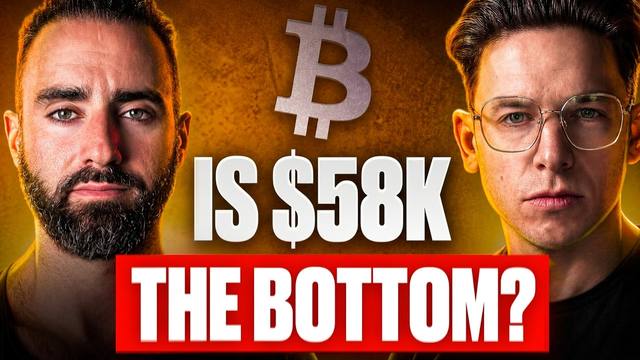
Trader Taiki’s Self-Reflection: Bitcoin Has Bottomed at $60,000—How to Identify the Next 10x Altcoin?
TechFlow Selected TechFlow Selected
Trader Taiki’s Self-Reflection: Bitcoin Has Bottomed at $60,000—How to Identify the Next 10x Altcoin?
He summarized the current portfolio as the “Holy Trinity” of Bitcoin, Zcash, and HYPE—centered on building conviction when people are exhausted and exiting the market, and waiting for market sentiment to reignite.
 Navigating Web3 tides with focused insights
Compiled & Translated by TechFlow

Speaker: Taiki Maeda
Podcast Source: Taiki Maeda
Original Title: Bears are Wrong. Crypto is Going So Much Higher.
Air Date: May 19, 2026
Key Takeaways
Taiki Maeda believes the crypto market is emerging from a negative feedback loop that lasted six to eight months. Bitcoin has completed its cyclical bottoming process amid extreme pessimism, and the market is now entering what he calls “green candle therapy”—a self-healing phase. He explains why he closed his BTC position and allocated more capital into Zcash (ZEC).
He argues that the current crypto market is entering this “green candle therapy” phase of self-repair. In his view, altcoins like ZEC and HYPE hold strong potential and are likely to lead the next bull run. He summarizes his current portfolio as the “Sacred Trinity”: Bitcoin, Zcash, and HYPE—centered on building conviction when others grow weary and exit, and waiting for market sentiment to reignite.
Highlights of Key Insights
Exiting the Negative Feedback Loop: “Green Candle Therapy” Has Begun
- “Markets always top out at extremes of optimism or bottom out at extremes of pessimism. Over the past six to eight months, we’ve experienced a negative reflexive cycle.”
- “At some point, sellers will exhaust their Bitcoin supply—and the market won’t need much buying pressure to push prices higher.”
- “We’re in a healing phase I call ‘green candle therapy.’ Higher prices will restore confidence among frustrated investors and draw them back into the market.”
- “Markets consistently ‘climb a wall of worry’—because once many miss the bottom, they realize their mistake and re-enter at higher prices. Markets bottom on bad news, at the peak of collective pessimism.”
The Ultimate Game Theory Around Saylor’s Potential BTC Sale
- “On MicroStrategy’s last earnings call, he said they might sell Bitcoin if it benefited the company—sparking widespread anxiety… Fundamentally, the effects are nearly identical. The key point is: he can’t rely solely on borrowing forever. If he chooses, he could absolutely sell Bitcoin to meet debt obligations—which would effectively amount to a trading decision.”
- “Saylor’s high-profile approach makes it feel like he’ll become the world’s richest person if Bitcoin succeeds. While I’d be happy for him, I find Bitcoin harder to support wholeheartedly today than I did five years ago.”
- “The entire crypto industry needs Bitcoin to succeed.”
- “What will people care about in the future? One possible narrative: Bitcoin is insurance against fiat, while Zcash is insurance against Bitcoin.”
Deleveraging at 30: Edge from Marginal Excess Returns Is Materializing
- “Twenty-something Taiki could lever up boldly to go long—but thirty-something Taiki feels he should adopt a more conservative stance, at least returning to a spot-dominant allocation before levering up again.”
- “I went long Bitcoin using leverage because I believed Stretch was underpriced by the market. Now, however, I think the market has fully priced in and digested Stretch’s value—so I believe that edge has diminished.”
- “Bullishness toward Bitcoin remains rational—it’s likely the asset that leads us out of the bear market and may outperform most alts going forward.”
Rejecting VC Garbage: A Reverse Framework for Identifying 10x–100x Altcoins
- “First, VC vaporware is highly unlikely to appreciate; second, NFTs and meme coins; third, narratives that fail to inspire genuine support; fourth, assets whose charts trend relentlessly downward with no signs of life; and finally, PVP (player-versus-player) assets.”
- “What traits should the next 10x coin possess? First, it should resemble a PVE (player-versus-environment) asset; second, a narrative easy to rally behind; third, alignment with macro trends; and fourth, demonstrable market momentum.”
- “A better investment strategy may be selecting assets already underway—those rebounding from lows and showing clear upward price trajectories.”
- “Solana’s success wasn’t just a technological win—it was also a triumph of market sentiment and narrative… We must ask: Which assets make people joyful when they rise? Which assets generate more upside simply by rising?”
- “I hold a ‘Sacred Trinity’ crypto portfolio: Bitcoin, Hyperliquid, and Zcash—I consider this a trustworthy, conviction-driven combination.”
Why Continuously Accumulating Zcash ($ZEC)?
- “Although it fell roughly 75% afterward, it’s recently begun a strong rebound. Looking at its monthly chart, its price action shows an almost decade-long breakout. Ignoring a decade-level breakout would be a mistake.”
- “The shielded pool functions similarly to a mixer—and also serves as a store of capital. Higher prices increase the value of Zcash held within the shielded pool, attracting more funds. From this perspective, Zcash’s fundamentals are gradually improving.”
- “In January, the U.S. Securities and Exchange Commission (SEC) dropped its lawsuit against Zcash. Meanwhile, U.S. venture capital firms have begun lobbying for Zcash… As a cypherpunk-inspired privacy coin, Zcash is uniting communities—including Ethereum and Solana—to jointly publish bullish content and discuss Zcash’s privacy features.”
- “California recently proposed a wealth tax, and Australia has discussed a one-time 5% wealth tax. This may prompt high-net-worth individuals to seek new ways to protect asset privacy.”
Hyperliquid ($HYPE) Is the Undisputed Leader in Perps and RWAs
- “I believe most long-tail alts will ultimately go to zero, while most trading volume will shift to RWAs (real-world assets)—gold, oil, equities, etc.—and Hyperliquid excels precisely here.”
- “During wartime, oil price discovery has already occurred on Hyperliquid—a very positive signal. Additionally, traditional finance participants recently accessed Hyperliquid via restricted jurisdictions to observe pre-IPO pricing.”
- “This is a VC-free project—the team conducted a generous airdrop, and its founders remain low-key and trustworthy.”
- “My investment strategy is: hold HYPE—not trade it frequently.”
- “They (HYPE and ZEC) don’t profit by ‘scalping retail’—they drive their own growth by creating value for the entire industry.”
The “Sacred Trinity” Core Portfolio and Final Thoughts
- “My current portfolio is extremely simple: no leverage—only spot holdings… My core portfolio is the ‘Sacred Trinity’: Bitcoin, Zcash, and Hyperliquid. These represent the left curve (simple, direct investments), mid-curve (moderately complex investments), and right curve (complex, high-risk investments), respectively.”
- “Sometimes you need courage to believe in something—to press the green ‘buy’ button.”
- “I love Jesse Livermore’s quote: ‘Big money is not made by buying and selling, but by waiting.’ I’ve bought in—I now just need patience.”
Why Bitcoin Has Already Bottomed
Taiki Maeda:
I believe the crypto market will perform exceptionally well for the rest of this year—but most people remain overly pessimistic and complacent, failing to recognize this. In this video, I’ll share my recent portfolio adjustments and explain why I believe Bitcoin, Zcash, and Hyperliquid are all poised for higher prices.
I previously created a dedicated playlist on this topic—if you have time, please check it out. But knowing there are many videos, I’ll summarize quickly here.
I often refer to the concept of “reflexivity”: rising prices breed increasing optimism; falling prices deepen pessimism. Yet market sentiment inevitably reverses at some point.
Markets typically top out at peaks of optimism—or bottom out at depths of pessimism. Over the past six to eight months, we’ve undergone a negative reflexive cycle. At the top, sentiment was euphoric—then Bitcoin declined, triggering liquidations and losses, pushing emotions to rock bottom. Many sold, convinced prices would fall further—and hoping to re-enter lower. They found endless reasons to convince themselves lower prices were inevitable.But eventually, sellers exhaust their Bitcoin supply—and the market doesn’t require much buying to lift prices.
A useful indicator of market sentiment is the Fear & Greed Index. Whether or not you trust it, it offers at least a reference point. For instance, last month, when Bitcoin approached $66,000, the index hit an all-time low. This sounds unbelievable—given conditions weren’t as dire as the 3AC collapse, Luna crash, or COVID-induced plunge—yet sentiment was even more pessimistic.
When the Fear & Greed Index hits such extreme lows, it at least signals a potentially attractive entry point. We should begin seeking reasons the market may have bottomed—not continue selling Bitcoin amid deep pessimism.
For me personally, over recent months I’ve repeatedly highlighted STRC and Stretch on my channel as compelling reasons to buy Bitcoin. Sellers’ remaining supply is dwindling. Despite events like the Iran war and a 10% drop in U.S. equities, Bitcoin didn’t even breach $65,000. Meanwhile, Michael Saylor began deploying billions into Bitcoin via MicroStrategy—e.g., $1.5 billion in March, nearly $3.5 billion in April.
I believe these developments provide at least a catalyst suggesting ~$70,000 is a compelling entry with favorable risk/reward. Bitcoin is now hovering near $80,000, fluctuating within a few thousand dollars. I expect the market to keep “climbing a wall of worry.”
Interestingly, MicroStrategy’s Saylor usually chases tops—buying heavily near local Bitcoin highs. If you examine his largest announced purchases, they typically occur when MSTR’s mNAV (market cap-to-net asset value ratio) is high—e.g., above 2. Recently, however, he’s bought massive amounts of Bitcoin at very low mNAV levels. This suggests growing market acceptance of $60,000 as a bottom—and hints at brighter prospects ahead for Bitcoin.
The market is telling us: $60,000 may indeed be the bottom. Buyers are returning. If so, Bitcoin’s price could continue rising.Markets consistently ‘climb a wall of worry,’ because after missing the bottom, many realize their error and re-enter at higher prices. Markets bottom on bad news—at the peak of collective pessimism.
I believe we’re entering a positive reflexive cycle. Higher prices foster renewed optimism—and renewed buying of Bitcoin. Using MicroStrategy’s fundamentals as an example, Saylor’s buying does marginally lift Bitcoin’s price. Rising Bitcoin prices then boost MSTR’s mNAV, enabling Saylor to raise more capital to buy more Bitcoin. This psychological effect encourages broader holding or re-entry.
Currently, we’re in a healing phase I call ‘green candle therapy.’ Higher prices restore confidence among discouraged investors—and draw them back into the market. Before you know it, prices may have risen further—gradually lifting confidence in crypto assets.
What If Saylor Sells BTC?
Taiki Maeda:
Still, I want to address the bearish argument around Michael Saylor potentially selling Bitcoin. Honestly, I’m not surprised.On MicroStrategy’s last earnings call, he stated they might sell Bitcoin if beneficial to the company—triggering significant anxiety. In fact, I mentioned this possibility last month, given the STRC mechanism allows him to buy low and sell high.
For example, he could lever up near $70,000—as he’s done historically. If successful, rising prices let him sell MSTR shares above a certain mNAV threshold—then perhaps repurchase and retire Stretch, or build corporate cash reserves. Last month, I hadn’t fully considered him directly selling Bitcoin,but fundamentally, the outcomes are nearly identical—the key is he can’t rely on borrowing indefinitely. If he wishes, he could absolutely sell Bitcoin to meet debt obligations, effectively treating it as a trading decision. And critically, he’s been buying Bitcoin consistently.
Over recent months, I’ve discussed Stretch and MSTR extensively—partly why I leveraged heavily into Bitcoin and bought aggressively. But stepping back, this wasn’t my original reason for entering crypto. I didn’t join to follow Saylor’s Bitcoin buys. Of course, we now need to monitor his moves—at least somewhat. Or you can ignore them—but doing so can still be profitable, so I studied it.
Will Saylor sell Bitcoin? I believe it’s inevitable—eventually. Whether it’s bullish or bearish? Unclear. It might even be bullish—if he sells some Bitcoin, markets may panic briefly, only to realize it’s not material. After all, he may resume buying more later. Either way, it’s coming—and perhaps the Stretch trade is complete.
Why I Partially Took Profits
Taiki Maeda:
First, let me explain why I chose partial profit-taking. Crucially, this isn’t because I turned bearish. If you watched my video two weeks ago, my Bitcoin spot and perpetual contract exposure exceeded 100%. I was also long Zcash and HYPE—my most aggressive position ever.
In fact, I’d flagged earlier that I might take partial profits around mid-May or mid-June. Ultimately, I executed this on May 15—the day of my birthday. Here’s critical context: days prior, I ran the Brooklyn Half Marathon. It was brutal—I got dizzy, vision blurred. On the subway home, it hit me: I’m truly aging. I’m 30—not 29, not my twenties anymore.Twenty-something Taiki could lever up boldly to go long—but thirty-something Taiki feels he should adopt a more conservative stance, at least returning to a spot-dominant allocation before levering up again.
So while I remain extremely bullish, I’ve increased my cash position. I still hold Bitcoin and Zcash—and bought more Zcash (details below). I also retain Hyperliquid. Holding some cash is partly about feeling more mature.
More seriously, two weeks ago I noted I expected Saylor to buy $2–3 billion of Bitcoin soon—likely pushing Bitcoin above $80,000—where I’d consider partial profit-taking. This execution simply followed my stated plan—nothing surprising.
How did my prediction or trade thesis fare? Saylor bought ~$2 billion—near the lower end of my range. He bought $1.5 billion in March, $3.4 billion in April, and ~$2 billion in May. Is this a trend? Uncertain.
I leveraged into Bitcoin because I believed Stretch was underpriced. Now, I believe the market has priced in and digested Stretch’s value—so I see that edge diminishing. My logic is straightforward:I went long because Stretch was unpriced—now it’s priced, so I deleveraged. Not because I turned bearish, nor less bullish—but because part of my trade thesis has played out. Overall, I remain bullish.
I still believebullishness toward Bitcoin is rational—it’s likely the asset leading us out of the bear market and may outperform most alts going forward. But when market sentiment is most numb and desperate, we should seek new opportunities—especially among alts. Ask yourself: What will the market focus on next? Which narratives will carry us from bear to bull? What signals is the market sending? Where should we direct attention?
A Framework for Finding the Next 10x–100x Altcoin
Taiki Maeda:
Now, let’s discuss how to identify the next 10x–100x altcoin. Sure, it sounds like a dream—but far harder in practice. Still, I’ll share my framework—the same one led me to accumulate large positions in Zcash and HYPE, which I believe could be among this cycle’s biggest winners.
The late Charlie Munger advocated reverse thinking. His philosophy was simple: first determine what’s foolish—then avoid it. Put differently: study failures to avoid repeating them. That’s reverse thinking—working backward from outcomes.
Applying this to today’s crypto market: if we assume Bitcoin bottomed at $60,000, and an altcoin aims to rise 10x, 20x, or even 50x from here—what should be happening now? What traits should it exhibit? How would people discuss it? What narratives surround it? By asking these questions, we can work backward to plausible answers.
First, VC vaporware is unlikely to rise. Projects acquired by VCs at ultra-low valuations rarely surge meaningfully. As retail, we have no reason to buy them.
Second, NFTs and meme coins—while popular last cycle—have shifted market focus. This cycle won’t replicate prior enthusiasm for them.
Third, narratives hard to genuinely support. Markets need stories that ignite passion. Meme coins or VC vaporware rarely resonate deeply. Projects closer to cypherpunk ideals—evoking passion—are easier to rally behind.
Fourth, assets trending relentlessly downward with no signs of life. If an altcoin’s chart falls continuously—no rebounds—while Bitcoin rose from $60,000 to near $80,000, it likely won’t move.
Finally, PVP (player-versus-player) assets. We should seek PVE (player-versus-environment) assets—not those requiring resale to profit.
Conversely, what traits should the next 10x coin possess?
First, it should resemble a PVE (player-versus-environment) asset. Such assets benefit all holders—rising prices create a “we all win” (WAGMI) atmosphere.
Second, a narrative easy to rally behind. It should fuel positive reflexivity—rising prices breed optimism, driving further gains.
Third, alignment with macro trends. It should ride macro tailwinds over the next 1–2 years—not outdated narratives. Meme coins lack clear macro support, whereas Zcash and Hyperliquid offer more compelling stories.
Finally, demonstrable market momentum. If an altcoin is set to rise further, it’s likely already doing so. Though many love “buying at historic lows,” market reality favors assets already rising.
A better investment strategy may be selecting assets already underway—rebounding from lows with clear upward trends—then allocating capital there. For example, Polkadot trades near all-time lows. You could argue a return to its ATH implies 40x upside—but nobody cares about this token, so don’t buy it.
By contrast, Hyperliquid showed upside potential at $45—and may keep rising, backed by a strong narrative and structural tailwinds. We all recognize Hyperliquid as an excellent token. Its chart looks highly attractive—showing robust upward momentum. You could even ask: if Bitcoin hadn’t bottomed at $60,000, would HYPE trade as it does now? Note: HYPE bottomed in late January, while Bitcoin fell steadily from October through January—HYPE fell too. But starting in January, buyers entered, and price steadily climbed upward-right. This trend deserves serious attention.
People often ask: “What’s the next Solana?” Solana defined the last cycle. Reviewing its performance reveals PVE (player-versus-environment) traits—critical to its success. Hindsight makes this obvious—but at the time, Solana’s success was tightly linked to market sentiment.
After FTX collapsed, SOL fell to $10. Those who bought SOL near $20, $30, or $40 mostly profited (except SBF). Solana’s ecosystem launched strong airdrops—easy to support. FTX’s downfall removed the “villain,” allowing community reunification. Meanwhile, meme coin supercycles and other activities flourished on Solana—making it the bull market’s hub. Even Ethereum founder Vitalik tweeted bullish commentary at SOL’s bottom—improving overall sentiment.
Solana’s success wasn’t just technological—it was also emotional and narrative-driven. I believe any altcoin achieving multi-bagger returns must possess similar energy. Crypto markets thrive on reflexivity—sentiment is paramount. How people perceive an asset directly impacts performance. I doubt markets will lift assets that leave people demoralized.We must ask: Which assets bring joy when rising? Which assets generate more upside simply by rising?
Recently, I conceived a ‘Sacred Trinity’ crypto portfolio: Bitcoin, Hyperliquid, and Zcash. I consider this a trustworthy, conviction-driven combination. Bitcoin is a “giga chad”-level core asset, while Hyperliquid and Zcash are two high-potential alts. I believe investing can be simple: ride market volatility, enjoy the journey—and win together, fostering WAGMI (“we all win”) energy.
Why I Bought More ZEC
Taiki Maeda:
Let me explain why I recently bought more Zcash. I’ve talked extensively about Hyperliquid, but Zcash is an asset I increasingly admire the more I research it. It keeps drawing me to buy more—and I have. My earlier screenshots likely show initial buys near $388, more near $598, and additional accumulation near $550. My average cost is now ~$500. I’m excited—and thrilled to keep adding.
Let’s start with “reflexivity.” I believe Zcash is highly reflexive—and I love that. It doesn’t need to be your largest position, as success could yield explosive returns. Zcash exhibits a virtuous cycle: higher prices improve perception of its product; improved perception strengthens fundamentals; stronger fundamentals lift prices further. I believe Zcash fits this pattern.
Two weeks ago, I noted Zcash’s reflexivity. When priced at $30–$40, almost nobody cared—some even called it a scam. But once prices rose, attitudes flipped entirely. People began framing privacy as a fundamental human right—and Zcash as essential to securing it. Rising prices renew appreciation for Zcash’s value—and push prices higher. I believe we’re at this inflection point.
A major reason I decided to significantly add was Zcash’s rally last October. I wasn’t particularly interested then—I held a bearish market view and shorted ETH. But I kept observing Zcash’s post-bear-market behavior.Though it fell ~75% afterward, it’s recently rebounded strongly. Its monthly chart shows an almost decade-long breakout. Ignoring a decade-level breakout would be a mistake.
I love Zcash’s narrative: privacy, privacy coin, private store of value, quantum hedge. I’ve coined a new concept—“Saylor hedge”—to be detailed shortly. Zcash lacks cash flow, so no clear valuation floor or ceiling. A $3,000 price wouldn’t surprise anyone; neither would $200. It’s inherently high-risk, high-reward.
Some argue Zcash’s market cap should reach 10% or 5% of Bitcoin’s—meaning its upside expands as Bitcoin rises. Viewed this way, Zcash acts as Bitcoin’s beta asset.
Over the past year, Zcash achieved several milestones. Most notably, in January, the SEC dropped its lawsuit against Zcash—and U.S. VCs began lobbying for it. Compared to Monero, Zcash is a superior privacy coin—it may become the most compliant option. Using Monero risks being mistaken for criminal activity, whereas Zcash offers a legally sound privacy solution.
If Zcash is to rise 10x from here, what signals should appear? First: shielded pool supply is steadily increasing. More Zcash in the shielded pool means higher product value. Suppose you need to hide $1M—if the shielded pool lacks sufficient Zcash, you can’t use it. If you alone control 100% of its TVL (total value locked), privacy vanishes.
Zcash’s shielded pool works by depositing funds into it—and leaving them there. Later, when transferring funds, you withdraw from the pool without linking to prior transactions.The shielded pool functions like a mixer—and also serves as a store of capital. Higher prices increase the value of Zcash held within the shielded pool, attracting more funds. From this angle, Zcash’s fundamentals are gradually improving.
I’ve pondered why Zcash took so long to gain market attention. Perhaps it required long-term accumulation. Zcash uses Proof-of-Work issuance and has a four-year halving cycle—the last occurred in November 2024. Under the “four-year cycle” theory, strong bull runs often follow halvings. Maybe Zcash needed gradual supply turnover to fulfill its role as a private store of value and Bitcoin hedge.
Another notable signal: Zcash is uniting disparate crypto communities. Bankless supporters, Solana community members—all now discussing Zcash’s potential. Two years ago, Ethereum and Solana communities disagreed on nearly everything—even meme coin value. Now, Zcash—a cypherpunk privacy coin—is uniting them to publish bullish content and discuss privacy features. I find this beautiful.
Last year, crypto saw too many scams—eroding trust. Zcash could be the catalyst restoring faith. Its team has persisted for a decade; its community holds long-term. If “diamond hands” who’ve held Zcash for five-plus years profit from price gains, most will rejoice. But if some random VC vaporware surges, outrage may follow.
Thus, I believe we’re experiencing the “green candle therapy” I described earlier—crypto’s soul is slowly reviving. In the next bull run, I hope we see fewer scams—and more projects that inspire comfort and excitement. Zcash is one such promising leader. Hyperliquid holds similar promise—I’ll detail that shortly.
Let me address “Stretch.” I support Stretch because I hold Bitcoin—and want its price to rise. I’m not a “Saylor hater,” nor do I foresee his collapse. But I do believe his presence makes Bitcoin harder to support wholeheartedly. Consider centralization: Saylor holds 4% of Bitcoin supply, while Tom Lee holds 4% of ETH supply—the ratios are similar.Yet Saylor’s high-profile approach creates the impression that if Bitcoin succeeds, he’ll become the world’s richest person. While I’d celebrate his success, I find Bitcoin harder to support authentically today than five years ago. If I feel this way, others likely do too—you might too.
Does this matter? Perhaps not—the entire crypto industry needs Bitcoin to succeed. Yet it’s worth considering: What will people care about in the future? If people begin focusing on certain issues now, more may follow. One possible narrative: Bitcoin is insurance against fiat, while Zcash is insurance against Bitcoin. Zcash covers Saylor risk, quantum computing risk, and privacy risk. Ray Dalio once said he dislikes Bitcoin due to insufficient privacy. Though a traditional finance figure, his view reflects market concerns. If Zcash rises due to privacy, quantum risk, or other factors, it won’t surprise anyone. People may say Zcash should command 3% of Bitcoin’s market cap—if so, Zcash rises alongside Bitcoin.
Another notable macro factor: shifting government policy. For instance, California recently proposed a wealth tax, and Australia debated a one-time 5% wealth tax—potentially prompting high-net-worth individuals to seek new ways to protect asset privacy. Zcash’s shielded pool becomes especially relevant here. As Zcash’s price rises, shielded pool value increases—supporting greater fund inflows.
Though these macro trends may seem minor short-term, they provide real tailwinds. If governments introduce more such policies, Zcash may emerge as a private fund protection solution.
I believe crypto must return to its cypherpunk roots. The next bull run won’t be led by meme coins, VC vaporware, or similar projects. Instead, the industry must recover from past scams and chaos—rediscovering projects that excite and earn trust. Without this shift, crypto may lose vitality. But if we seek higher prices, projects like Zcash are indispensable.
I believe we’re witnessing “green candle therapy” take shape. Though hard to notice while immersed, this trend may become unmistakable a year later. Zcash excites me—I haven’t felt this passionate about a coin in a long time. Of course, my Zcash investment could mirror Isaac Newton’s South Sea Bubble experience: buy small, sell, watch friends profit, then re-enter heavily—only to lose everything. But that’s investing—risk is inherent.
Applying reverse thinking, Zcash embodies every trait I want in an altcoin. Though not my largest position, I hold a substantial amount—and recently added more.
Hyperliquid
Taiki Maeda:
For those of us at the mid-curve stage, Hyperliquid’s value may be even more apparent. I believe my audience has been filtered to understand Hyperliquid’s potential—since my videos are long, only truly interested viewers stay. So I trust most of you already grasp Hyperliquid’s potential.
Clearly, I view HYPE as the leader in perpetuals. I believe most long-tail alts will eventually go to zero, while most trading volume shifts to RWAs (real-world assets)—gold, oil, equities, etc.—and Hyperliquid excels precisely here. HIP-3 proposal data shows daily open interest (OI) growth across RWA, equity, and gold markets—indicating steady volume growth. Crucially, most revenue flows back to the native token HYPE.
If we assume HYPE’s price breaks $100, what signals should appear? For example, oil price discovery has already occurred on Hyperliquid during wartime. (“Price discovery” means determining an asset’s fair price through market trading.) This is a highly positive signal. Additionally, traditional finance participants recently accessed Hyperliquid via restricted jurisdictions to observe pre-IPO pricing. Red bars on the chart show price discovery occurring across these sectors—a phenomenon virtually nonexistent before. This is exactly the change we hoped for.
Of course, Hyperliquid’s price is now higher—but this is precisely the trend I wanted. Months ago, I planned to buy at $15—but ended up chasing near $37. Yet this is how markets operate. Markets always “climb a wall of worry”—people wait for lower prices, but rarely get them, ending up buying higher. This psychology fuels further price gains. I believe we’re experiencing this now.
Hyperliquid’s value flows to its native token HYPE.This is a VC-free project—the team conducted a generous airdrop, and its founders remain low-key and trustworthy. These traits make Hyperliquid easier to support. Plus, perpetual markets face clear structural tailwinds over the next few years—and Hyperliquid leads this space.
My investment strategy is: hold it—not trade it frequently.
I believe Hyperliquid and Zcash both embody “player versus environment” (PVE) assets. Meaning, they don’t profit by ‘scalping retail’—they drive growth by creating value for the entire industry. This enables industry consensus—and positions them as trusted focal points. This trait is especially vital amid today’s deeply depressed crypto sentiment.
My current portfolio is extremely simple: no leverage—only spot holdings. As a 30-year-old investor, my strategy has grown more conservative. My core portfolio is the ‘Sacred Trinity’: Bitcoin, Zcash, and Hyperliquid. These represent the left curve (simple, direct investments), mid-curve (moderately complex investments), and right curve (complex, high-risk investments), respectively.
Beyond this, I hold some cash for opportunities related to Perp DEXes (decentralized exchanges) and on-chain Stretch. I’m highly bullish on on-chain Stretch—especially as Saylor signals he may sell Bitcoin to defend Stretch, suggesting on-chain Stretch’s total addressable market (TAM) could expand further. Projects like Saturn or Apex hold upside potential. I currently hold a position in Saturn’s Curve pool. Naturally, these carry risk—investors must conduct their own research and assessment.
Final Thoughts
Taiki Maeda:
My investment philosophy is simple: Bitcoin, Zcash, and Hyperliquid. These three assets possess traits I trust—they foster consensus, suit accumulation, and feature healthy supply distribution. Future coins may shine—but these three are my top picks now. Most importantly, I allocate positions according to my risk tolerance—and savor the journey.
I believe many opportunities—and “green candle” rallies—lie ahead. But now, they’re not obvious—sentiment remains low. Recall FTX’s collapse—Bitcoin fell to $16,000. Almost nobody recognized it as a massive opportunity—sentiment was too toxic. We often only spot true opportunities in hindsight. While immersed, the path may seem bleak—but opportunity persists.
Of course, I may err. In fact, I’m known for frequent mistakes—almost a trademark. But my mindset is: hold Bitcoin, HYPE, and Zcash—enjoy life, enjoy the journey. Some may say Bitcoin falls to $30,000, HYPE to $10, Zcash to zero. Perhaps they’re right. If so, I’ll lose money.But sometimes, you need courage to believe—and guts to press the green ‘buy’ button. I believe in ‘green candle therapy’—and am willing to bet on it.
I love Jesse Livermore’s quote: ‘Big money is not made by buying and selling, but by waiting.’ I’ve bought in—I now just need patience. I’ll publish bullish content on my positions—regardless of market tops or bottoms—maintaining bullish conviction. Because I believe “green candle therapy” brings positive change.
I find crypto interesting again. We’re riding an uptrend—and I’m enjoying it. I even posted memes mocking bears on Twitter—though some may dislike them, I don’t care. As I often say: no pain, no gain.
Like my half-marathon: the satisfaction of finishing lasts far longer than the pain endured. Though I missed my target time, I finished—and felt proud. Similarly, I’m proud of my portfolio. You needn’t agree with my choices—but I hope you’ll love your own portfolio.We should all believe in our choices—because conviction is key to success.
Our positions will rise—we’ll all succeed. WAGMI (We’re All Gonna Make It). I believe in green candle therapy—do you? Because conviction matters—and I hope we all benefit.
Join TechFlow official community to stay tuned
Telegram:https://t.me/TechFlowDaily
X (Twitter):https://x.com/TechFlowPost
X (Twitter) EN:https://x.com/BlockFlow_News
 深潮TechFlow