Iran Launches Bitcoin Maritime Insurance Platform “Hormuz Safe,” Covering the Strait of Hormuz, Claiming Annual Revenue Exceeding $1 Billion
TechFlow Selected TechFlow Selected
Iran Launches Bitcoin Maritime Insurance Platform “Hormuz Safe,” Covering the Strait of Hormuz, Claiming Annual Revenue Exceeding $1 Billion
This is Iran’s most prominent attempt to transform its military control over the Strait of Hormuz into a cryptocurrency-based financial product.
 Navigating Web3 tides with focused insights
Author: Claude, TechFlow
TechFlow Intro: Iran’s Ministry of Economic Affairs and Finance has launched a Bitcoin-settled maritime insurance platform named “Hormuz Safe,” offering “cryptographically verifiable insurance policies” to Iranian shipowners and cargo owners transiting the Strait of Hormuz. Iranian state media claims the platform could generate over $10 billion in annual revenue. However, independent verification of whether the platform is genuinely operational remains lacking. Bitcoin’s high volatility, U.S. sanctions compliance risks, and the controversial background of Babak Zanjani—the figure widely believed to be behind the initiative—pose serious challenges to its feasibility. This marks Iran’s most prominent attempt to convert its military control over the Strait of Hormuz into a cryptocurrency-based financial product.
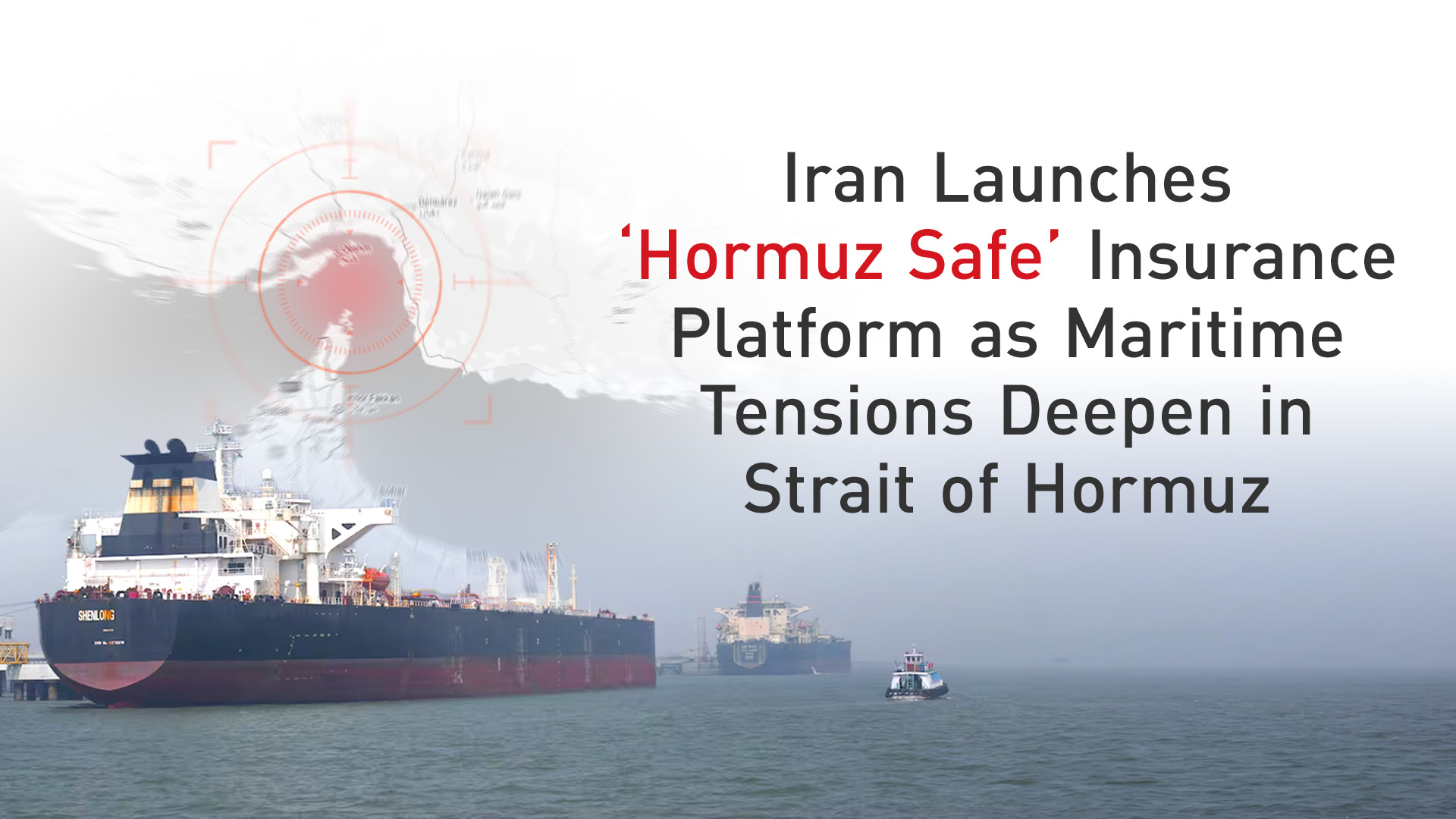
Iran is attempting to transform one of the world’s most critical maritime chokepoints into a Bitcoin-settled insurance market.
According to a Bloomberg report dated May 18, Iran’s semi-official Fars News Agency cited documents from Iran’s Ministry of Economic Affairs and Finance stating that Iran has rolled out a Bitcoin-supported maritime insurance service named “Hormuz Safe,” targeting Iranian shipping companies and cargo owners wishing to transit the Strait of Hormuz. Fars claimed the initiative could generate over $10 billion in revenue for Iran—but offered no timeframe or operational details.
Since the U.S. and Israel launched airstrikes against Iran on February 28, Iran has effectively closed the Strait of Hormuz. In peacetime, the strait handles approximately 20% of global seaborne oil trade and 20% of global liquefied natural gas exports. Since then, the Iranian government and the Islamic Revolutionary Guard Corps (IRGC) have sought to formally institutionalize their control over this waterway—including imposing transit fees and other charges. Insurance services represent the latest link in Iran’s revenue-generation toolkit.
Cryptographically Verifiable Policies, Instant Bitcoin Settlement
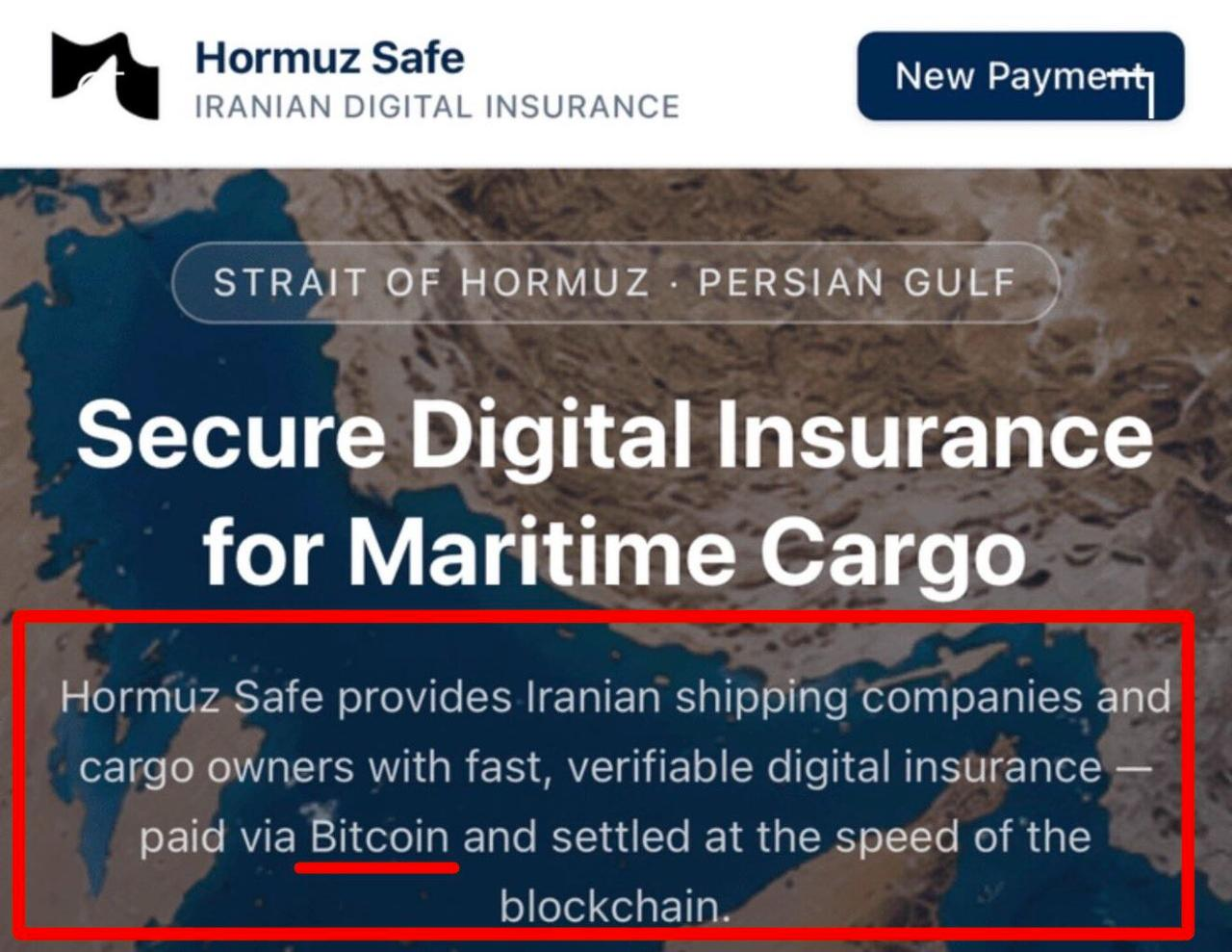
According to screenshots of the “Hormuz Safe” website shared by Fars, the platform claims to offer “fast, verifiable digital insurance” to Iranian shipping companies and cargo owners. As reported by Bitcoin Magazine, coverage includes risks such as vessel inspection, seizure, and confiscation—but excludes war-related damage claims.
Fars quoted the website hormuzsafe.ir as stating that the platform will issue “cryptographically verifiable insurance policies” for cargo transiting the Persian Gulf, the Strait of Hormuz, and surrounding waters, with payments settled in Bitcoin. Coverage begins the moment cargo is confirmed on the blockchain, and cargo owners receive a signed receipt. The website appears inaccessible outside Iran at present.
According to Bitcoin Magazine, Iran’s Ministry of Economic Affairs and Finance began advancing the insurance plan at the end of April (early in the Persian month of Ordibehesht). In April, Hamid Hosseini, spokesperson for Iran’s Union of Oil, Gas and Petrochemical Exporters, told the Financial Times that shipping companies could settle Strait of Hormuz transit fees using Bitcoin or non-U.S. dollar currencies such as the Chinese yuan.
Accelerating Institutionalization: From Transit Fees to Insurance Platforms
Hormuz Safe is not an isolated move but rather the latest component in Iran’s broader institutional architecture built around the Strait of Hormuz.
As reported by Bitcoin Magazine, in March 2026, Iran’s parliament passed the “Strait of Hormuz Management Plan,” formally codifying into law the transit fee regime operated by the IRGC since mid-March. Under this framework, the IRGC collects fees from vessels passing through the strait. Operators must submit vessel ownership documentation, cargo type, destination, and crew information, and then receive a transit authorization code. Fees start at approximately $1 per barrel of oil, with fully laden tankers facing maximum charges of up to $2 million—payable in yuan.
On May 18, Iran’s Supreme National Security Council officially established the “Persian Gulf Strait Authority” (PGSA), launching an official account on X.
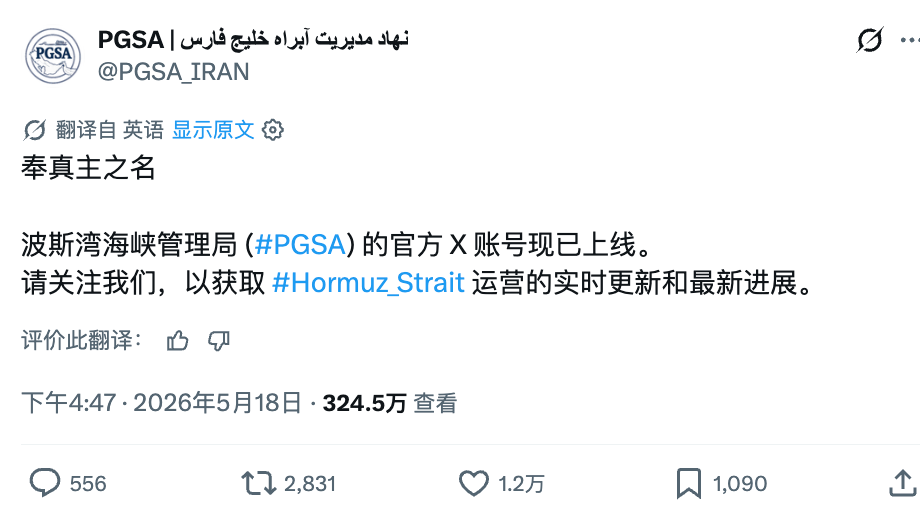
According to Euronews, the PGSA is positioned as the administrative body responsible for managing traffic through the Strait of Hormuz and collecting transit fees—operating in coordination with the IRGC Navy. Vessels must submit complete information—including ownership, insurance, crew list, cargo declaration, and planned route—to the PGSA’s official email address. Only after approval and payment will they receive transit authorization.
Ebrahim Azizi, head of the National Security and Foreign Policy Committee of Iran’s parliament, stated on X that only commercial vessels cooperating with Iran may benefit from this mechanism—and parties involved in U.S.-Israeli military operations will be banned from using the strait.
According to Windward intelligence analysis, as of May 18, strait transit volume remained at only about 38% of pre-conflict levels. The central Qeshm-Larak anchorage has experienced six consecutive days of dark vessel positioning locks. Approximately 369 IRGC fast attack craft have concentrated in a single zone located roughly 30 nautical miles northeast of Khasab—shifting focus from coastal patrol to presence within the strait itself.
VOLATILITY, SANCTIONS RISKS, AND THE SHADOW OF FRAUD
Multiple analysts have expressed skepticism regarding Hormuz Safe’s practical feasibility.
Bloomberg notes that, unlike dollar-pegged stablecoins, Bitcoin’s price volatility severely limits its adoption as a payment instrument. Foreign shipowners may hesitate to use the system for fear of violating U.S. sanctions against Iran.
Ryan Yoon, Senior Analyst at Tiger Research, told Decrypt that the platform’s technical and legal feasibility is “highly questionable.” Though officially announced, no actual users have been confirmed. Shipping companies using Hormuz Safe risk “immediate expulsion from the global financial system.”
Vikrant Sharma, CEO of Cake Wallet, told BeInCrypto that while Bitcoin can reduce certain payment frictions, it does not constitute a clean path around sanctions regimes. Liquidity constraints remain a limiting factor for maritime insurance-scale transactions, and on-chain activity is monitorable; any exchange, broker, custodian, or counterparty tied to the U.S. dollar introduces compliance risk.
Sam Lyman, Research Director at the Bitcoin Policy Institute, offers another perspective on Iran’s logic: Bitcoin’s core appeal lies in the fact that “no one can freeze it.”
As reported by Decrypt, since the outbreak of hostilities, numerous crypto-based “safe passage fee” scams have proliferated. Fraudsters impersonate Iranian authorities, demanding Bitcoin or USDT payments from vessel operators. While Hormuz Safe appears to be an independent, national-level initiative, the line between genuine and fake has grown exceedingly blurred in the current environment.
The Bigger Picture: Iran Building a De-Dollarized Maritime Financial System
According to Bitcoin Magazine data, Iran’s cryptocurrency ecosystem was estimated at $7.8 billion in 2025, with IRGC-linked transactions accounting for roughly 50% of the country’s total crypto transaction volume (as of Q4 2025). The Iranian government has used Bitcoin mined domestically to fund imports and hedge losses in oil revenue—reportedly at a national mining cost of approximately $1,300 per coin.
CoinDesk’s analysis is incisive: An insurance architecture is more sophisticated than direct transit fee collection. On paper, cargo owners are not paying for passage—they are purchasing insurance and financial liability certificates for voyages through waters Tehran claims to secure. This allows Iran to monetize its geographical advantage in a more palatable, packageable manner.
An HN user, everdrive, posted a widely upvoted comment in the tech community: “The post-WWII U.S.-led world order was partly built on the premise that the U.S. military would keep international waters open. Iran’s success in challenging this at this level is startling. Everyone knew Iran had the capability to shut down the strait when cornered—but the fact that this outcome has materialized still reveals serious policy failures.”
Regardless of whether Hormuz Safe ultimately scales into operation, its signal is unmistakable: Iran is constructing a comprehensive administrative governance and financial infrastructure around the Strait of Hormuz—transforming military blockade into a sustainable sovereign revenue mechanism, with Bitcoin serving as the settlement layer of this system.
Join TechFlow official community to stay tuned
Telegram:https://t.me/TechFlowDaily
X (Twitter):https://x.com/TechFlowPost
X (Twitter) EN:https://x.com/BlockFlow_News
 深潮TechFlow