The Fermi Crisis: A Case Study of a Stalled AI Power Stock
TechFlow Selected TechFlow Selected
The Fermi Crisis: A Case Study of a Stalled AI Power Stock
When an industry’s actual delivery capability lags far behind the promises made in its PowerPoint presentations, a collapse is only a matter of time.
 Navigating Web3 tides with focused insights
Author: Ada, TechFlow
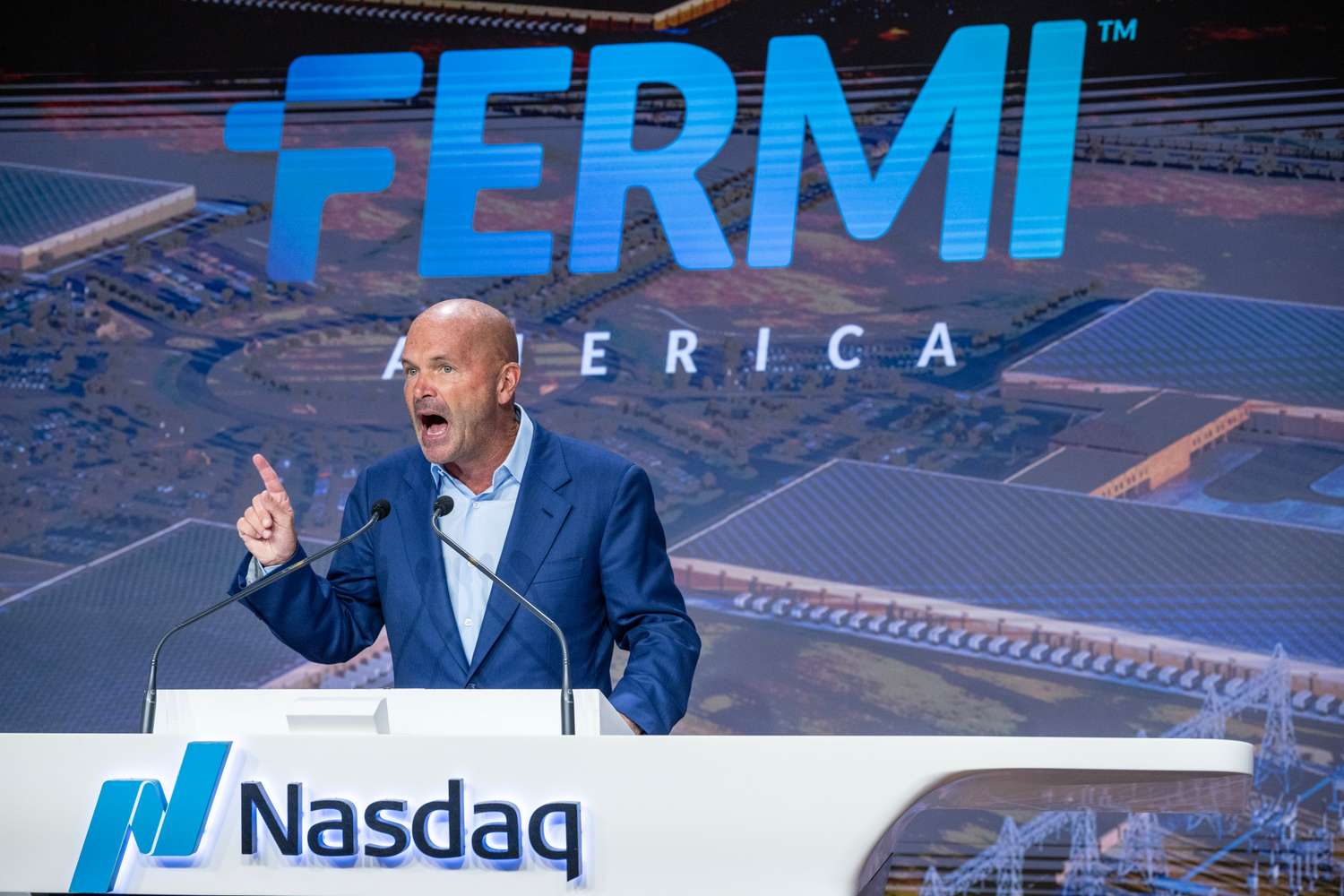
Lead: “We are building an extraordinary company.” That’s what founder Neugebauer said during the IPO roadshow a year ago. Now he’s gone.
On April 20, Fermi’s stock closed at $5.40.
Six months earlier, it stood at approximately $37. The company had only gone public in October last year.
A startup less than 12 months old—generating zero revenue, with zero tenants and no tangible product to speak of—raised $785 million on Nasdaq, briefly achieving a market capitalization of $12.5 billion.
Yet its CEO and CFO resigned on the same day; construction halted; insiders dumped $68 million worth of shares; short-seller firms issued reports accusing the company of fraud; and a securities class-action lawsuit has already been filed.
This marks the first major collapse of the AI-power narrative.
“World’s Largest” in the Texas Wilderness
Fermi’s story began in early 2025.
The company was co-founded by former U.S. Energy Secretary Rick Perry and private equity heavyweight Toby Neugebauer. Its core bet, dubbed “Project Matador,” aimed to build the world’s largest AI data center campus on 5,800 acres outside Amarillo, Texas—initially powered by natural gas, with plans to add four nuclear reactors later.
The project promised 11 GW of power capacity and roughly 18 million square feet of data center infrastructure. The “world’s largest” label was repeated relentlessly.
The AI industry’s voracious appetite for electricity is real. Nuclear energy is green. And President Trump signed an executive order targeting a tripling of U.S. nuclear capacity—from 100 GW to 400 GW. Every tailwind aligned.
The market believed it all. On October 1 last year, Fermi went public at $21 per share, opening at $25 and fully oversubscribing. The next day, its stock peaked at $37—76% above its offering price. Within days, this revenue-less company surpassed a $10 billion market cap.
At the time, everyone was buying AI-power stocks. No customers? No revenue? No problem—just a slick PowerPoint deck and a vision too grand for others to see.
The Real Crisis
The first crack appeared in December last year.
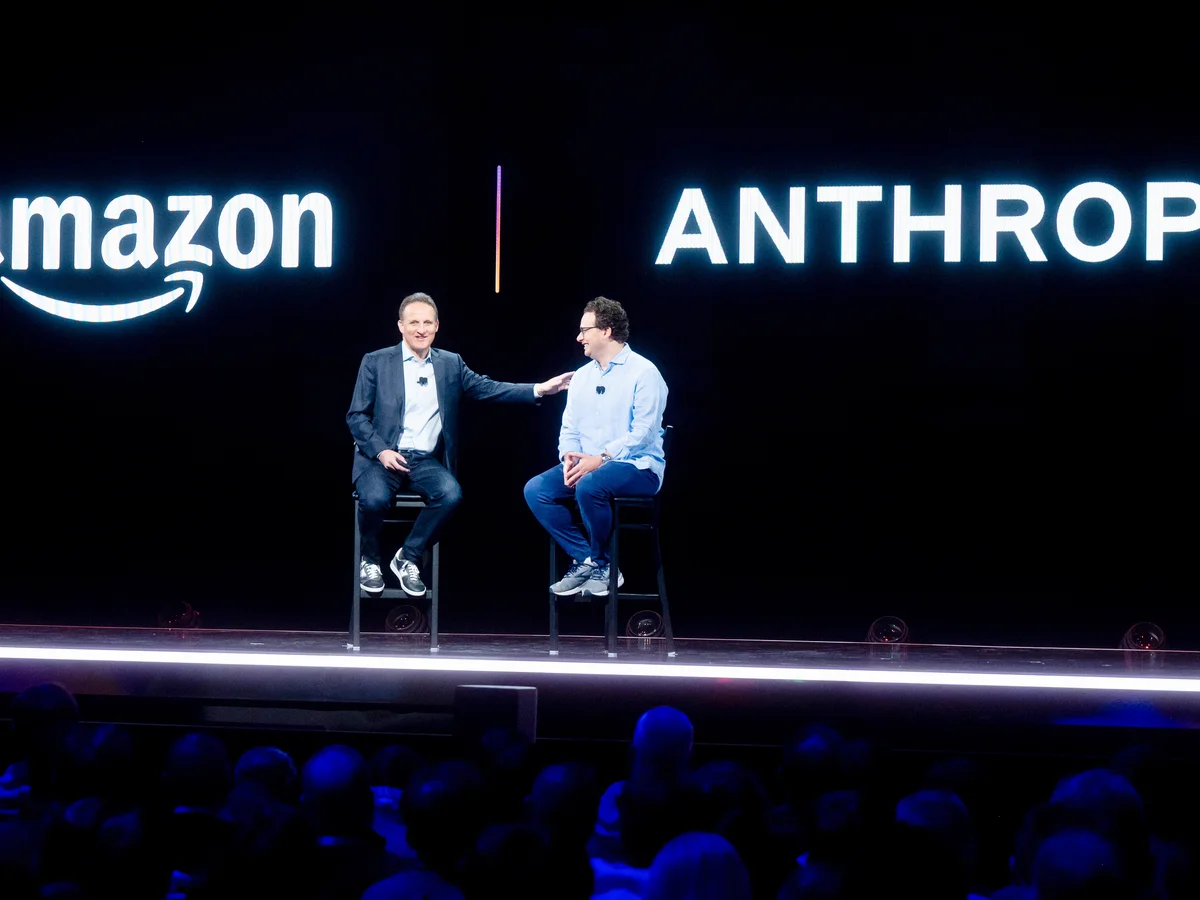
Fermi’s sole anchor tenant terminated its contract—widely believed to be Amazon. That tenant had committed up to $150 million in upfront construction funding but paid not a single dollar.
Short-seller Fuzzy Panda uncovered the root cause: Fermi had pledged to raise $5–5.5 billion to ensure project execution—but that financing never materialized. The tenant waited no longer and walked away.
Per Fermi’s lease agreement with Texas Tech University, construction could not even begin without a signed tenant. This created a vicious cycle: no tenant → no financing → no construction → no tenant.
Construction stopped. Workers took to social media saying, “We’ve all been laid off.”
Then came the recent bombshell: CEO Neugebauer and CFO Miles Everson resigned simultaneously. The company framed it as a strategic pivot to “Fermi 2.0.” But the stock plunged another 22%. Since its IPO, investors who bought FRMI shares have suffered losses of up to 78%.
Insiders had already started fleeing. On March 30—the day the lock-up period expired—Griffin Perry, son of co-founder Rick Perry, immediately sold 11 million shares, cashing out $56.3 million. The COO, CFO, and Chief Development Officer followed suit, collectively unloading over $68 million in shares.
Fuzzy Panda revealed Griffin Perry had attempted, pre-lockup, to dump 30 million shares in a single block trade.
This isn’t Neugebauer’s first company to face crisis.
In 2022, his “anti-woke” bank GloriFi collapsed, burning through investments from conservative backers including Peter Thiel, Ken Griffin, and Vivek Ramaswamy before filing for bankruptcy. The bankruptcy trustee accused Neugebauer in court filings of “securities fraud,” “extreme self-dealing,” and “fraudulent transfers.”
Fuzzy Panda’s report also notes that several current Fermi executives worked alongside Neugebauer at GloriFi. Chief Site Development Officer Charlie Hamilton was described in bankruptcy documents as Neugebauer’s “longtime friend.” CFO Miles Everson was likewise implicated in allegedly unfair, self-dealing transactions.
The bankruptcy court ruled multiple Neugebauer transactions constituted fraudulent transfers. Yet despite being charged with fraud at his prior company, Neugebauer raised $785 million on Nasdaq for his next venture. The IPO prospectus explicitly disclosed these lawsuits—and warned they could distract management—but investors bought in anyway. What does that say? It says that in a bubble, investors ignore risk disclosures and chase only the sexiest story.
A Microcosm of the Bubble
Fermi is no outlier. It’s a microcosm.
According to Sightline Climate, as of April 2026, around 140 large-scale data center projects are slated to come online in the U.S. this year—but only one-third are actually under construction. The rest are either delayed or canceled.
The bottleneck lies in electrical components.
Transformers, switchgear, and batteries are indispensable for every data center. Prior to 2020, lead times for high-capacity transformers ranged from 24 to 30 months. Today, wait times can stretch to five years. For data centers aiming for deployment cycles under 18 months, that’s structurally unacceptable. A delay in any single component halts the entire project.
A deeper issue is generational mismatch. The U.S. grid wasn’t designed for AI-level loads. Data centers can be built in three years—but power generation takes far longer. Solar or wind farms require three to six years; gas turbine plants, about six years; nuclear plants, more than a decade. As Network World points out, the mismatch was manageable when data centers were smaller. But today’s AI demands are so vast—individual facilities drawing hundreds of megawatts—that the gap has become insurmountable.
OpenAI’s flagship $50 billion Stargate project—touted as a $500 billion initiative—has shown no substantive construction progress as of April.
Partners are locked in disputes over site ownership and system control. The 800 MW expansion of the Texas flagship campus has been scrapped. Stargate projects in the UK and Norway have both been paused. Three core Stargate executives have already jumped ship to Meta.
Meanwhile, Alphabet, Amazon, Meta, and Microsoft are expected to spend over $650 billion in 2026 alone expanding AI capacity. Alphabet alone forecasts $17.5–18.5 billion—roughly $500 million per day. Yet the infrastructure required to support this ambition cannot scale at the pace the industry demands.
The last U.S. energy infrastructure boom of comparable scale occurred in the late 1990s—fueled by the dot-com bubble and electricity market deregulation, which triggered a wave of natural gas plant construction totaling roughly $100 billion. After the bubble burst, many plants sat idle.
This time, the scale is tenfold. U.S. utilities alone have announced $1.4 trillion in planned spending—27% higher than last year’s forecast. Tech companies’ energy-related infrastructure investment now equals twice the entire U.S. electric power industry’s annual investment.
Yet new data center deals have already dropped over 40% between Q3 and Q4. Some analysts predict supercomputing firms may slash capital expenditures by half this year.
Money is drying up—but the story keeps going. That’s where the danger lies.
A Built In report sums it up: When suppliers heavily invest in startups, and those startups then spend money back on the suppliers’ own products, real demand blurs with manufactured illusion. When a company’s customers double as its investors—and revenue growth outpaces actual usage growth—that’s the unmistakable signal of a bubble forming.
When the Bubble Bursts
Within this food chain, there are three tiers of players.
The first tier comprises genuine winners: established nuclear operators like Constellation Energy, which needn’t build anything new—they simply redirect existing nuclear plant contracts from the grid to data centers to capture AI-power upside. Meta signed a 20-year, 1.1 GW nuclear power supply deal with Constellation. Microsoft spent $1.6 billion to restart the Three Mile Island nuclear plant. These are physical, real-world transactions.
The second tier includes small modular reactor (SMR) startups like Oklo—whose stocks soared despite having built not a single reactor. U.S. nuclear projects are historically plagued by delays and cost overruns; nearly every recent case has missed both original timelines and budgets. Investors, however, don’t care.
The third tier consists of companies like Fermi—no nuclear reactors, no natural gas plant under construction, no tenants. At the very bottom of the food chain, it doesn’t sell electricity—it sells stories. When the story collapses, nothing remains.
Fermi’s implosion won’t be isolated.
When an industry’s actual delivery capability lags far behind its PowerPoint promises, collapse is inevitable—only a matter of time.
Of the data center capacity the U.S. plans to bring online in 2027, only 6.3 GW is currently under construction—against a total announced capacity of 21.5 GW. That 15 GW gap exists only on paper, representing hundreds of billions of dollars and countless unfulfillable commitments.
Who will be the next Fermi? Nobody knows. But along this track, $50 billion is hunting for power, high-capacity transformers await delivery, and dozens of startups—many still lacking even basic grid interconnection—continue assuring investors everything is under control.
During the last energy infrastructure bubble, some power plants remained standing. This time, many projects may not even break ground.
And Fermi’s 5,800-acre plot in the Texas wilderness will fade quietly into history—alongside all the other unrealized grand narratives.
Join TechFlow official community to stay tuned
Telegram:https://t.me/TechFlowDaily
X (Twitter):https://x.com/TechFlowPost
X (Twitter) EN:https://x.com/BlockFlow_News
 深潮TechFlow