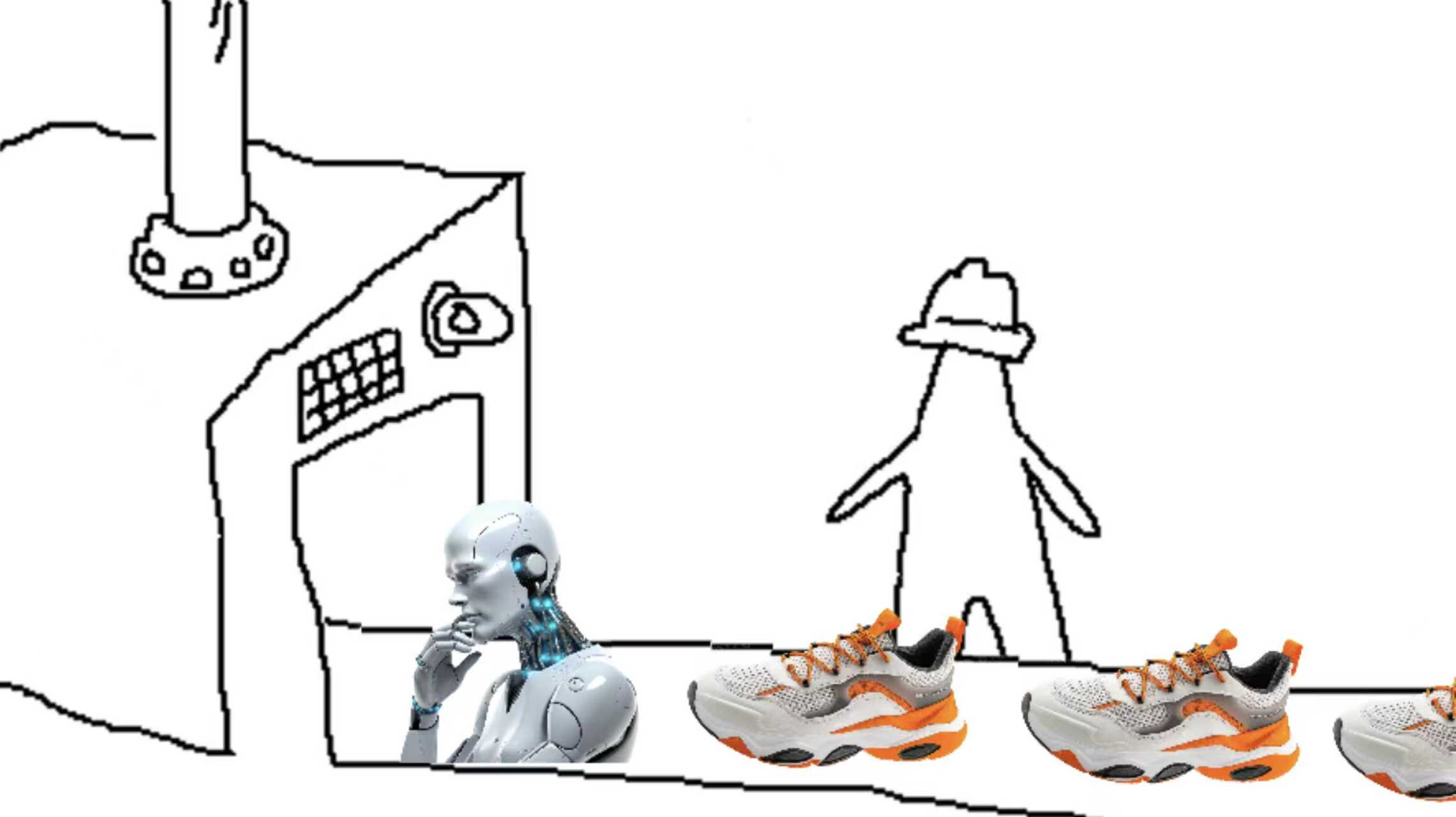
Selling Shoes Led to Bankruptcy—Renaming Itself “AI” Sent Stock Price Soaring 5x: Allbirds and Wall Street’s Never-Ending “Name-Changing Game”
TechFlow Selected TechFlow Selected
Selling Shoes Led to Bankruptcy—Renaming Itself “AI” Sent Stock Price Soaring 5x: Allbirds and Wall Street’s Never-Ending “Name-Changing Game”
Greedily seeking the shortest path, the market is always willing to pay for a compelling story.
 Navigating Web3 tides with focused insights
By Duola B Meng, TechFlow
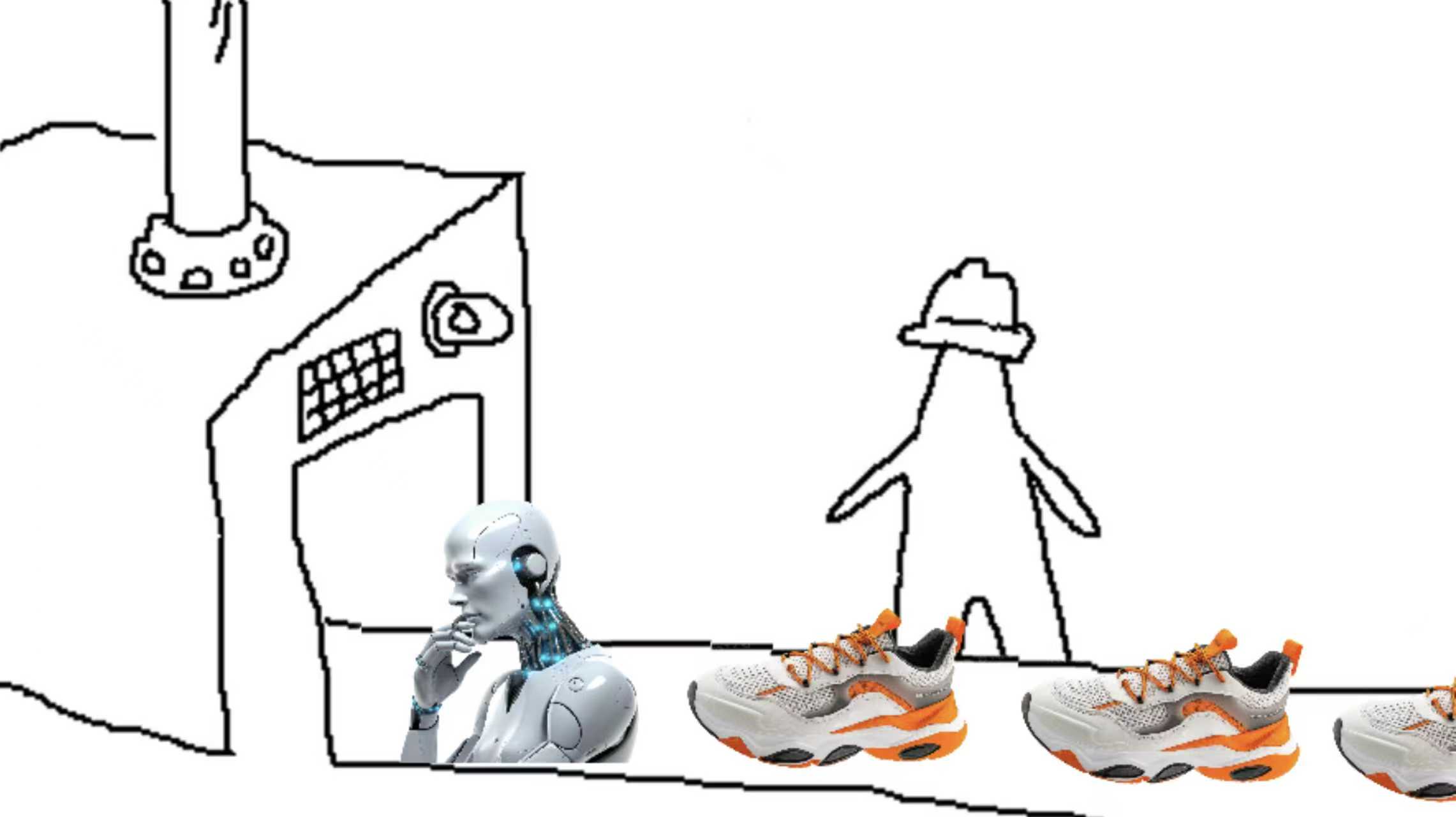
Lead: An eco-friendly footwear company whose market cap plunged 99% surged 582% in a single day—thanks to two letters: “AI.”
On April 15, 2026, a name long forgotten in Silicon Valley reappeared atop U.S. stock market trending lists.
Allbirds—the wool-sneaker brand once ubiquitous among Silicon Valley engineers—announced it would fully exit the footwear business and pivot to become an AI compute infrastructure company. Its new name: NewBird AI. Its new business: buying GPUs, building data centers, and leasing compute capacity.
Upon the announcement, BIRD’s share price soared from the prior day’s close of $2.49 to a high of $24.31 intraday, closing near $17—a single-day gain of 582%. Its market capitalization rocketed from $21 million to nearly $160 million.
A shoe company rebrands itself as a compute provider—and its market cap nearly octuples in one day.
Does this scene feel familiar?
From $4 Billion to $39 Million: The Fall of a Silicon Valley Darling
The story begins at the beginning.
In 2015, former New Zealand soccer player Tim Brown and renewable-materials expert Joey Zwillinger founded Allbirds in San Francisco. Their pitch was simple: shoes made from merino wool—comfortable, eco-friendly, minimalist. The sneakers quickly became de facto uniforms across Silicon Valley tech circles. Barack Obama wore them. Leonardo DiCaprio wore them. Venture capitalists along Sand Hill Road practically wore them by the pair.
In November 2021, Allbirds went public on Nasdaq, reaching a peak market cap exceeding $4 billion. At the time, ESG was Wall Street’s political orthodoxy, “sustainable fashion” was the hottest consumer narrative, and investors believed Allbirds could become the next Nike.
But the bubble burst faster than expected.
Over the four years following its IPO, Allbirds’ revenue halved—from $298 million to $152 million. Competitors flooded in, customer acquisition costs rose steadily, and brick-and-mortar stores shuttered one after another. In January 2026, the company announced it would close all full-price U.S. retail locations. On March 30, 2026, Allbirds sold its brand, intellectual property, and all footwear assets to American Exchange Group for $39 million.
$39 million—less than a fraction of its IPO fundraising amount. From $4 billion to $39 million: a 99% decline in under five years.
After selling off its footwear business, what remained of Allbirds? A Nasdaq shell, a ticker symbol (BIRD), a group of shareholders, and a CEO—Joe Vernachio—who needed to tell Wall Street a new story.
Vernachio is a traditional retail veteran, having held roles at Nike, Patagonia, and The North Face. He joined Allbirds as COO in 2021 and assumed the CEO role in 2024. Not a single line of his résumé mentions AI, GPUs, or data centers.
But that doesn’t matter. In 2026’s Wall Street, you don’t need to understand AI—you just need to utter those two letters, and buyers will appear.
NewBird AI: $50 Million for GPUs
On April 15, Allbirds issued a press release: Allbirds would rename itself NewBird AI and reposition as a “GPU-as-a-Service” and “AI-native cloud solutions provider.” The company secured $50 million in convertible financing from an unnamed institutional investor. Funds will be used to procure high-performance GPU hardware, then lease it long-term to AI developers and enterprise clients.
The language in the announcement sounds professional: “GPU procurement cycles are lengthening; North American data center vacancy rates have fallen to historic lows; all globally available compute capacity scheduled for launch before mid-2026 has already been fully reserved.” In other words: demand for compute vastly outstrips supply—and NewBird AI intends to fill the gap.
That sounds plausible—except Allbirds possesses zero AI technical expertise, no data center operations experience, no GPU supply-chain relationships, and no signed customers. What it does possess is a publicly listed shell—and $50 million in fresh capital.
What does $50 million mean in the compute infrastructure industry? An NVIDIA H100 chip retails for roughly $25,000–$40,000. Even at maximum efficiency, $50 million buys only 1,200–2,000 H100s—while Amazon AWS, Microsoft Azure, and Google Cloud collectively control 63% of the global cloud infrastructure market.
Can a former footwear company—with just over 1,000 GPUs—seriously compete with these three giants?
Of course, the announcement also included a telling footnote: the company plans to convene a special shareholder meeting on May 18 to vote on the name change and strategic pivot. One proposal stands out: a request for shareholders to approve deletion of the clause in its corporate charter stating the company operates “for the public benefit of environmental protection.”
From “making great shoes for the planet” to “selling compute for AI”—even the environmental mission statement must be scrapped. The determination to pivot is indeed resolute.
The “Rebranding Economy”: A Wall Street Absurdity
Allbirds isn’t the first company to pull this off—and won’t be the last.
In December 2017, Long Island Iced Tea Corp.—a Long Island-based iced-tea company—announced it would shift its strategic focus to blockchain technology and rename itself Long Blockchain Corp. On the day of the announcement, its stock surged nearly 500%.
Its blockchain business never actually launched. Two months later, Nasdaq delisted the company. Later, the SEC launched an investigation, ultimately charging相关人员 with insider trading.
This is the canonical case study of Wall Street’s “rebranding economy”: When a concept grows hot enough, merely inserting it into your company name can send your stock soaring. In 2017, the magic word was “Blockchain”; in 2026, it’s “AI.”
Allbirds’ story bears an uncanny structural resemblance to Long Blockchain’s:
Core business fails → assets sold cheaply → public shell retained → latch onto hottest trend via rebrand → stock surges.
The difference? The 2017 episode was a ragtag spectacle; this 2026 iteration comes wrapped in far more sophisticated financial packaging. Allbirds has $50 million in convertible financing as credibility backing; it touts a seemingly professional business model—“GPU-as-a-Service”; and it filed a meticulously jargon-laden document with the SEC.
The packaging is more polished—but the core remains unchanged: gilding an empty shell with a trendy label.
From DAT to GPU: How Narrative Shifts Valuation
If you follow crypto markets, this playbook should sound familiar.
2025 was the breakout year for crypto “Digital Asset Treasury” (DAT) companies. Scores of small-cap public companies with flagging core businesses announced they would add cryptocurrency to their balance sheets—transforming overnight into “Bitcoin/Ethereum/Solana treasury companies.” As of September 2025, at least 200 such firms existed, with a combined market cap of roughly $150 billion—tripling within a year. The pattern was nearly identical each time: depressed stock price → announcement of crypto purchase → 300–900% surge → equity raise at peak valuation → further token purchases → rinse and repeat.
When the music stopped, the scene turned ugly. In the second half of 2025, the crypto market corrected—causing at least 15 Bitcoin treasury companies’ share prices to fall below the net asset value of their token holdings. Retail investor losses are estimated at $17 billion.
NewBird AI is essentially a variant of the DAT model—swapping “buying tokens” for “buying GPUs,” and “Bitcoin treasury” for “compute leasing.” The underlying logic is identical: an empty shell company without relevant operational capabilities latches onto a hot narrative to attract capital, then uses that capital to acquire a trending asset. GPUs are physical assets—not prone to collapsing 50% overnight—but they do depreciate, become obsolete, and require power, cooling, and ongoing operations—precisely the domains Allbirds has never touched.
Every technological wave spawns the same phenomenon.
Add “.com” in 2000. Add “Blockchain” in 2017. Claim “metaverse” in 2021. Announce Bitcoin purchases in 2025. Declare GPU acquisitions in 2026. Human nature beneath it all remains unchanged: greed seeks the shortest path, and markets always pay for a compelling story.
$50 million in compute investment is barely a ripple against players like CoreWeave or Lambda—each already operating tens of thousands of GPUs. Yet a former wool-sneaker company, armed with nothing but a press release and a new name, generated over $130 million in market-cap growth in a single day. When this occurs during the mid-to-late stage of a bull market, it’s never a positive signal.
Recall Long Blockchain Corp.’s fate. NewBird AI’s outcome may not mirror it exactly—but when a retail veteran leads an empty shell—one that just sold off every last pair of shoes—and declares intent to compete with Amazon and Microsoft for compute business, you should at least ask yourself one question:
Of that 582% surge, how much reflects faith—and how much reflects bubble?
Join TechFlow official community to stay tuned
Telegram:https://t.me/TechFlowDaily
X (Twitter):https://x.com/TechFlowPost
X (Twitter) EN:https://x.com/BlockFlow_News
 深潮TechFlow