TechFlow Intelligence Brief: Iran Demands BTC Payments for Strait of Hormuz Transit Fees; Anthropic’s Restriction on Mythos Release Sparks Security Concerns
TechFlow Selected TechFlow Selected
TechFlow Intelligence Brief: Iran Demands BTC Payments for Strait of Hormuz Transit Fees; Anthropic’s Restriction on Mythos Release Sparks Security Concerns
Our AI Agent patrols 200+ global information sources daily, covering crypto, AI, and tech—filtering out 99% of the noise to deliver only the signals you truly need.
 Navigating Web3 tides with focused insights
Author: TechFlow
Published: April 9
AI / Large Models
The New York Times: Anthropic’s Restraint Is a Terrifying Warning Signal
Anthropic trained the Mythos model—capable of discovering thousands of zero-day vulnerabilities across all major operating systems and browsers—and chose not to release it publicly. Instead, it granted access exclusively to 40 institutions—including Apple, Microsoft, and Google—for defensive research (Project Glasswing). The New York Times editorial argues this reveals a terrifying paradox in AI safety: releasing the model empowers attackers; withholding it abandons defense; and restricting access undermines commercial competitiveness.
Discussion: The security community is debating whether AI companies should sacrifice openness for safety—or whether this is merely a pretext for commercialization.
Anthropic’s Appeal Fails; Pentagon Officially Adds It to Supply Chain Risk Blacklist
On the same day, Anthropic failed in its appeal to temporarily block the Pentagon from adding it to its supplier blacklist. A security-focused company gets blacklisted precisely because it’s *too* secure—the paradox has closed the loop in reality.
OpenAI’s Internal Model Solves 5 Erdős Problems
An internal OpenAI model achieved a breakthrough in mathematics by solving five Erdős problems—longstanding, unsolved mathematical challenges. Yet this good news was quickly overshadowed by bad news.
Ronan Farrow Accuses Sam Altman of Being a “Pathological Liar”
Ronan Farrow—a Pulitzer Prize–winning investigative journalist who exposed the Weinstein sexual assault scandal—interviewed over 100 people, most of whom described Sam Altman as a “pathological liar.”
Discussion: Overseas communities are vigorously debating Altman’s credibility—some argue it threatens OpenAI’s strategic direction, while others contend Farrow is biased.
> Hot take: Solving math problems elegantly won’t save you when your CEO’s personal brand collapses just as fast.
Claude Confuses Speaker Identities; Hacker News Debates Reliability
Users discovered that Claude conflates “who said what,” incorrectly attributing statements to the wrong individuals. This isn’t a minor bug—it’s a fundamental flaw undermining the model’s basic reliability.
Original Article | HN Discussion
Alibaba Elevates Tongyi Lab to Business Unit; Fei-Fei Li Appointed CTO of Alibaba Cloud
Alibaba restructured its organization, upgrading the Tongyi Lab to a full business unit and establishing a Technology Committee led by CEO Yongming Wu. Fei-Fei Li was appointed CTO of Alibaba Cloud.
Crypto / Web3
Iran Demands Bitcoin Payment for Strait of Hormuz Transit Fees—Earning 282 BTC Daily
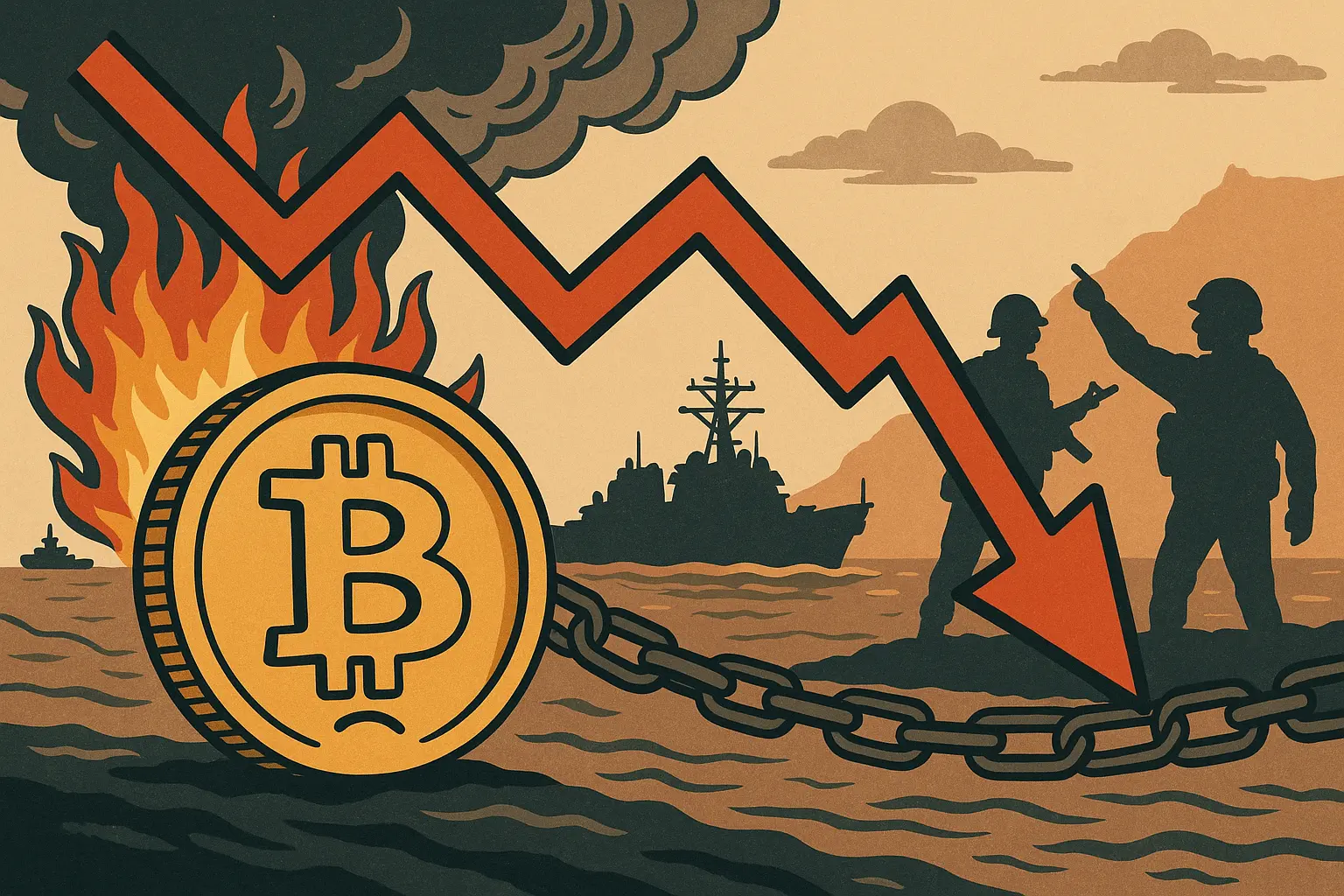
Just 48 hours after signing a U.S.-Iran ceasefire agreement, the deal collapsed—and the Strait of Hormuz closed again. Iran introduced a new rule: $1 worth of Bitcoin per barrel of oil transiting the strait. With ~18 million barrels crossing daily, Iran stands to earn 282 BTC (~$20 million) per day—over 100,000 BTC annually, nearly 50% of the network’s yearly new supply. The decentralized ideal is rapidly becoming a tool for sovereign states to circumvent sanctions.
Discussion: Both Chinese and English-language communities are debating whether this marks a geopolitical turning point for cryptocurrency—some question technical feasibility, while others warn it may set a precedent for sovereign use of crypto to evade sanctions.
North Korea’s Internal Payment Server Data Leaked for First Time—Reveals $1M/Month Fraud Network
ZachXBT obtained never-before-public data: North Korea’s internal payment server—including 390 accounts, complete chat logs, and cryptocurrency transaction records. The data exposes a highly industrialized fraud operation generating $1 million monthly—forging identities, fabricating legal documents, and cashing out crypto with surgical precision.
> Hot take: Iran collects tolls in Bitcoin; North Korea earns $1M monthly in crypto. The decentralization revolution has become a new toolbox for sovereign states.
Bhutan Continues Selling BTC—Holdings Drop from 13,000 to 3,954 BTC
One hour ago, Bhutan transferred another 319.7 BTC (~$22.68 million). Since October 28, 2024, Bhutan’s BTC holdings have plummeted from 13,000 to 3,954 BTC—selling over 9,000 BTC (~$640 million) in total.
$1.6B Ponzi Scheme on TRON Masquerades as “Hong Kong Health Tech Group”
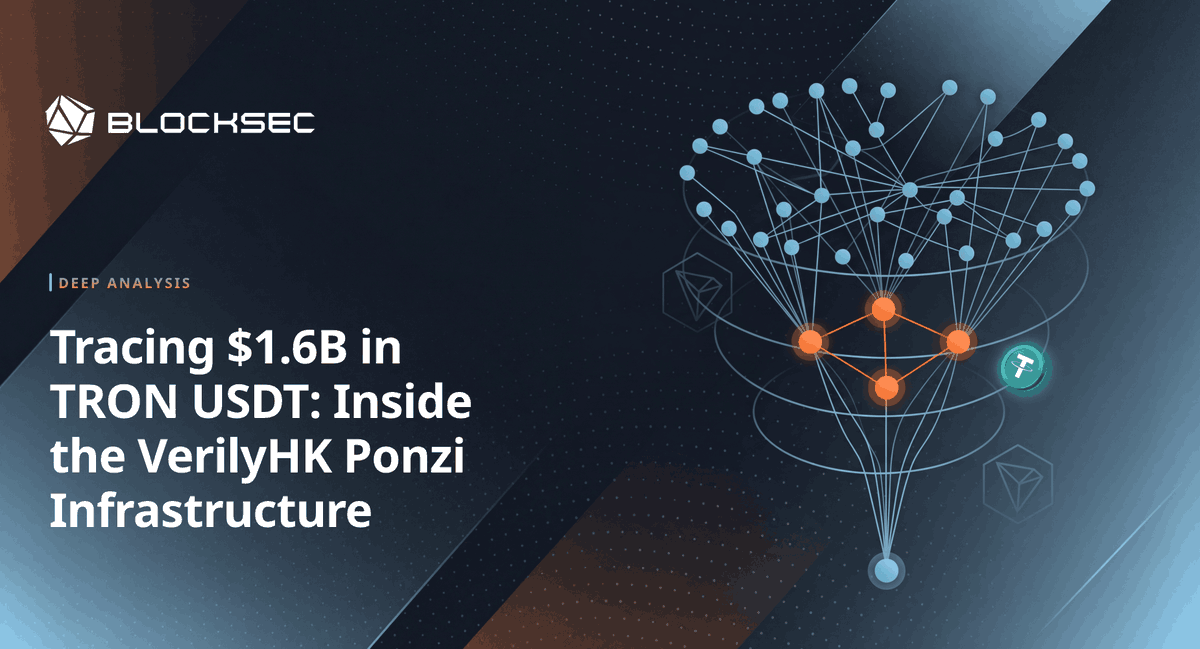
Phalcon exposed a $1.6 billion Ponzi scheme on TRON disguised as the “Hong Kong Health Tech Group”—borrowing the name of Alphabet’s Verily Life Sciences and impersonating an A-share listed company. Phalcon calls it one of the largest recorded scams on TRON to date.
Visa Names Sumvin as AI Agent Payment Pilot Partner; Permission Layer Built on Sei
Visa announced Sumvin as a pilot partner for Intelligent Commerce Connect—a new entry point for AI agent payments integrated with major card networks. Sumvin’s permission layer is built on Sei, enabling agents to verify identity, define authorization scope, and settle transactions.
Morgan Stanley Launches Bitcoin ETF—$34M Inflows on Day One
Morgan Stanley launched its Bitcoin ETF, drawing $34 million in inflows on the first day—another sign of traditional financial institutions steadily entering the cryptocurrency market.
Source: TechInAsia
Tech Companies
Microsoft 2FA Attacks Spread Widely; WireGuard Developer Locked Out, Unable to Release Updates
Microsoft confirmed a new wave of widespread 2FA code attacks affecting numerous users. Simultaneously, the WireGuard VPN developer was locked out of their Microsoft account—preventing software updates. Together, these incidents highlight the growing problem of unchecked cloud platform power.
Huawei Eliminates N+1 Severance for Voluntary Resignations; Yu Chengdong Criticizes Team’s Retail Design Aesthetics
Effective April 1, Huawei discontinued N+1 severance compensation for employees who voluntarily resign—sparking heated discussion. Meanwhile, Yu Chengdong publicly criticized his team’s retail design aesthetics as “low-grade and unrefined.”
Finance / Macro
U.S.-Iran Ceasefire Collapses After 48 Hours—Oil Price Rebounds to $97 from 16% Plunge
Following the U.S.-Iran ceasefire agreement, oil prices plunged 16%—the largest single-day drop since April 2020. But 48 hours later, Israel bombed Lebanon; Iran declared the ceasefire violated—and the Strait of Hormuz closed again. Oil rebounded to $97. Investment banks diverge on forecasts: Goldman Sachs lowered its outlook to $90; Standard Chartered held at $98; ANZ Bank argued $100+ is needed to curb demand.
Discussion: Markets debate how long the ceasefire will last—and whether oil will return to $100.
Fed Minutes: Iran War Poses Dual Risks
The minutes reveal the Iran war presents dual risks: soaring oil prices could force rate hikes, while economic recession would require cuts. Officials remain deeply divided.
U.S. Equities
Ceasefire Agreement Sends Dow Soaring 1,300 Points—Semiconductors Up 7%; Ceasefire Collapses Next Day
The U.S.-Iran ceasefire propelled the Dow Jones up 1,325 points (+2.85%), Nasdaq surged +2.80%, and the S&P 500 jumped +2.51%—with semiconductors gaining nearly 7%. But the next day, the ceasefire collapsed—reversing market sentiment.
Discussion: WSB communities debate massive options losses from mistimed trades, crises of faith in dollar-cost averaging (DCA), and suspicions of insider trading—“perfectly timed short-oil, long-equities” positions ahead of the ceasefire announcement.
Trading Under Trump 2.0 Has a Secret: Nine of the S&P’s Top Ten Gainers Are Linked to TACO
Since Donald Trump’s “Trump 2.0” administration began in January 2025, the S&P 500 has risen over 13%. Yet if a trader had captured gains only on the index’s top ten best-performing days, their compounded return through Wednesday’s close would reach ~35%.
How to Stick With DCA When Markets Are Manipulated Like This?
Community discussion: Repeated ceasefire reversals cause extreme volatility—retail investors question DCA’s effectiveness.
Chips / Hardware
New Rowhammer Attack Against Nvidia GPUs Grants Full Machine Control
Security researchers discovered a novel Rowhammer attack capable of achieving full control over machines running Nvidia GPUs. This hardware-level vulnerability affects a broad range of systems.
Google Releases Gemma 4 Open-Source Model—Claims “Byte-for-Byte Most Capable Open Model”
Google released Gemma 4—an open-source model it touts as the “byte-for-byte most capable open model.” It also launched Gemini 3.1 Flash Live Audio AI and Lyria 3 Pro music generation.
Today’s Undercurrent
Iran collects tolls in Bitcoin; North Korea earns $1M monthly in crypto; Bhutan sells BTC for fiat. The decentralized ideal is transforming into a new toolkit for sovereign states—to bypass sanctions, acquire foreign exchange, and hedge risk. Meanwhile, Anthropic gets blacklisted by the Pentagon for refusing to release a model deemed too dangerous; OpenAI’s CEO is branded a “pathological liar”; Microsoft locks an open-source developer out of their account, halting software updates. Where does technology’s boundary lie? Who defines safety? Power is shifting decisively toward platforms and nation-states—not individuals.
Join TechFlow official community to stay tuned
Telegram:https://t.me/TechFlowDaily
X (Twitter):https://x.com/TechFlowPost
X (Twitter) EN:https://x.com/BlockFlow_News
 深潮TechFlow