Interview with Anthropic’s Head of Growth: How to Achieve $19 Billion in Exponential Catch-Up with Minimal Resources?
TechFlow Selected TechFlow Selected
Interview with Anthropic’s Head of Growth: How to Achieve $19 Billion in Exponential Catch-Up with Minimal Resources?
Smart growth is the deliberate creation of precise resistance to filter and deeply understand your users.
 Navigating Web3 tides with focused insights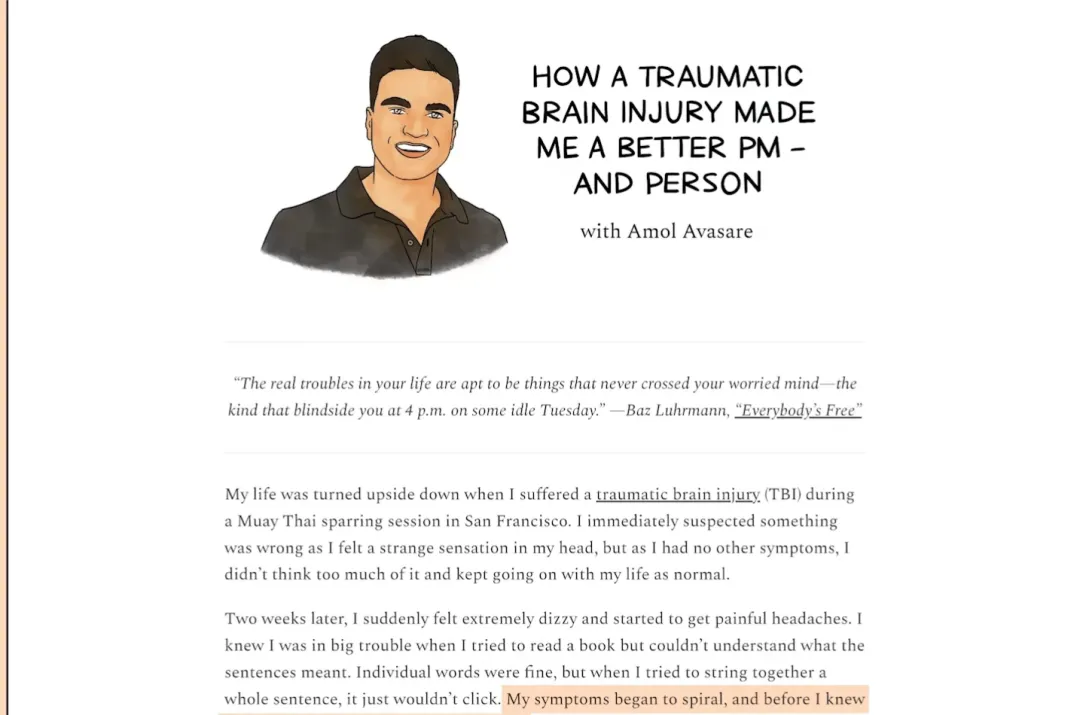
It’s April 2026. Lenny Rachitsky sits before a podcast microphone, listening as Amol Avasare—Anthropic’s Head of Growth—rattles off numbers. For a moment, he’s stunned.
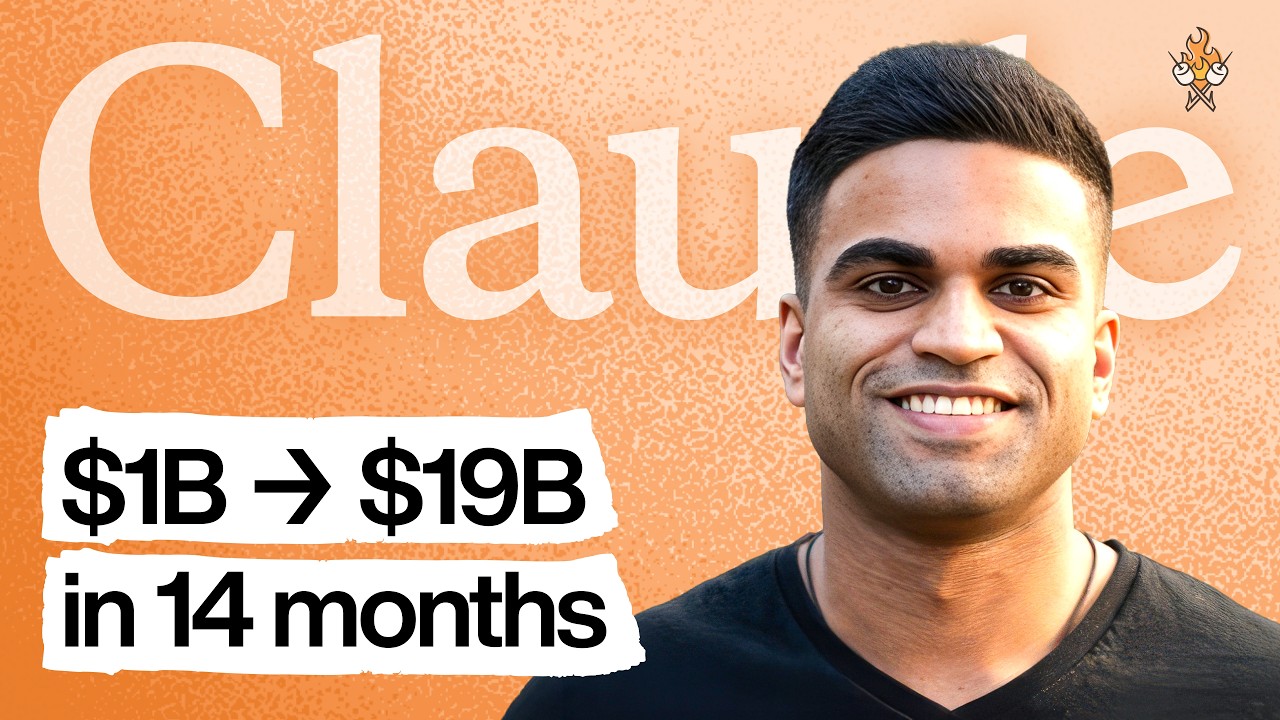
Fourteen months ago, Anthropic’s annual recurring revenue (ARR) had just crossed $1 billion—back in early 2025. Today—just over a year and two months later—that figure has skyrocketed to $19 billion. Atlassian and Palantir each took nearly two decades to plateau at $4–5 billion ARR. Anthropic, by contrast, effectively conjures a new Palantir every few months.
This pace feels surreal—even to those working inside the company.
Back when Amol was still just an ordinary user tinkering with Claude, he watched this brilliant yet commercially awkward AI and sighed. He was certain the team of engineers hadn’t assembled a single competent growth function. Drawing on instincts honed while founding his own startup, he sent an email to Mike Krieger—the product lead at the time. Yes, *that* Mike Krieger—the one who casually co-founded Instagram.
The email contained no pleasantries. Its gist: “Your product is incredible—but you have zero growth strategy. Let’s talk.”
Mike replied. Amol became the only product manager ever to break into the world’s fastest-growing company via cold email—and eventually rose to lead its entire growth organization.
Before continuing the story, here are three counterintuitive insights Amol brought with him:
• Smart growth means deliberately engineering precise friction—to filter users and deeply understand them.
• Traditional, granular A/B testing collapses under AI’s exponential explosion. Either bet big on levers that could scale 1,000x—or do nothing at all.
• If a project takes less than two weeks to build, skip the product manager entirely. Let engineers own outcomes directly.
The Success Disasters That Trap You
About 70% of Amol’s hard-won growth experience from previous companies proved useless here. Most of his day is spent untangling what insiders call “success disasters”: new models so popular they instantly overwhelm servers—or completely rupture existing user flows.
All metrics flash green, rocketing upward and rightward—yet the team’s nerves are fraying at the breaking point.
In this context, the traditional workplace trinity fractures. With tools like Claude Code, engineer productivity jumps two- to threefold. Where one PM once coordinated five engineers, those same five now ship code equivalent to fifteen.
PMs drown under delivery volume—unable to keep up. Amol’s fix is blunt, even brutal: for any task under two weeks, engineers become their own PMs—aligning stakeholders, arguing with legal, owning outcomes end-to-end.
If even documentation and data analysis get automated, what keeps human PMs alive?
Amol’s answer: stop competing on standardized skills. Instead, hunt for cross-disciplinary “fire zones”—those odd, hybrid combinations in your background. Amol had founded startups, worked in investment banking, nearly pivoted into sales—and ultimately fused all three to drive commercial growth. In an era where large models write your copy, only those with unconventional, cross-domain intuition resist algorithmic layoffs.
The Growth Hacker Replaced by Large Models
Faced with technology’s relentless acceleration, human reaction speed simply can’t keep up.
So they launched a project called CASH (Claude Accelerates Sustainable Hypergrowth). In short: let Claude run growth experiments itself.
The system autonomously spots opportunities, formulates hypotheses, rewrites copy and UI code, deploys tests, and slams final results onto the table. Amol calculates its win rate already matches that of a junior PM with three years’ experience. As long as brand guardrails hold, it’s an indefatigable machine.
If machines now handle documentation and data runs—what do humans do?
Amol delegates expense reports and meeting room bookings to AI. More intriguingly, he instructs Claude weekly to scan his direct manager Ami Vora’s public articles and internal Slack chats. Then he asks: “Based on your understanding of Ami—and what I’ve done this week—how do you think she’ll respond?”
He’s using large models to pre-emptively decode his boss’s temperament. It sounds absurd—but it works.
The Skull That Got Kicked to Pieces
Amol isn’t the kind of Silicon Valley elite who sailed smoothly through life.
In 2022, during a routine mixed martial arts (MMA) training session, Amol took a full-force kick to the head.
Life slammed into emergency brakes.
For nine straight months, he couldn’t work. The first few months, his wife handled everything except showering and using the bathroom. Listening to 20 seconds of music triggered nausea and vomiting; glancing at a screen spun the world violently. It took six months to relearn how to walk like a normal person. At one point, he and his wife seriously discussed how they’d survive if he never recovered.
Brain injury rehab is excruciatingly grueling. Yet precisely during those months teetering on despair, Amol forged an uncommon calm.
Later, at Anthropic—facing growth curves sharp enough to induce clinical anxiety and operational noise loud enough to drown reason—he found himself immune to panic. A person who’s lost basic survival capacity won’t flinch at a dashboard of wildly spiking metrics.
Because he’d lost everything, he grew obsessed with constraints. Like Anthropic’s early days—broke, without Meta’s cash or OpenAI’s first-mover advantage—forcing them to bet everything on B2B and code generation. That path, chosen not by vision but by sheer scarcity, ironically spared them the pointless, capital-burning death race against Big Tech.
Your Derailment-Proof Rehab Guide
Finally, a few sobering tips for professionals dragged toward失控 by the AI era.
Leave money on the table.
Never try to extract the last drop of profit. Sacrificing user experience—or breaching safety boundaries—for a few extra percentage points in conversion is dangerously shortsighted. Choosing to forgo immediate monetization in service of safety principles—pushing money away—is what today forms Anthropic’s toughest survival moat.
Force a power cut.
Even as the company rakes in millions daily and countdowns to new model launches flash everywhere, Amol mandates two daily power cuts—spending ten minutes alone in the office meditation zone.
The world won’t change in those ten minutes—but you’ll confirm you’re still alive.
After all, no matter how wild the exponential growth, it won’t withstand the sudden rupture of a single fragile blood vessel in your brain.
Join TechFlow official community to stay tuned
Telegram:https://t.me/TechFlowDaily
X (Twitter):https://x.com/TechFlowPost
X (Twitter) EN:https://x.com/BlockFlow_News