

Crypto’s First Reverse Equity Stake in a Hong Kong-Listed Company: A New Capital Model Experiment Behind Pharos’s $1 Billion Valuation
TechFlow Selected TechFlow Selected
Crypto’s First Reverse Equity Stake in a Hong Kong-Listed Company: A New Capital Model Experiment Behind Pharos’s $1 Billion Valuation
Now that the crypto industry has grown accustomed to “unconditional funding,” and traditional capital is bringing it to the table, what should we expect from the market going forward?
 Navigating Web3 tides with focused insights
Author: TechFlow
Crypto, long mired in a slump, has welcomed yet another project valued at $1 billion—though this time, the biggest story isn’t the valuation itself.
On March 14, 2026, Pharos—a high-performance, parallel Layer-1 blockchain built specifically for real-world finance and designed for institutional use—announced a comprehensive capital partnership upgrade with GCL New Energy (0451.HK), a Hong Kong Stock Exchange–listed company. The announcement quickly captured market attention.
The market’s first reaction centered on valuation: Under the newly signed agreement, GCL New Energy will invest in and subscribe to Pharos tokens at a valuation approaching $1 billion. That $1 billion figure alone was enough to ignite community discussion.
But soon, observers noticed something even more intriguing than the headline number:
According to disclosed documents, this investment subscription is not a simple “sign-and-go” transaction. Instead, it includes multiple preconditions and phased closing terms. If any key condition fails to materialize, the entire partnership instantly becomes void.
In short: Signing the agreement ≠ funds actually arriving. Everything hinges on the market performance of the Pharos token upon listing.
This makes the investment subscription feel less like typical crypto fundraising—and more like a distinctly wager-based capital negotiation between traditional finance and crypto: both parties aim for mutual success, while relying on carefully defined preconditions as safeguards.
What should we expect from the broader market now that crypto fundraising—long accustomed to “unconditional wire transfers”—is finally being invited to sit at the same table as traditional capital?
A New Crypto Fundraising Playbook: Token–Equity Binding and Phased Unlocking
Many have likened this investment subscription to a “crypto-style valuation adjustment mechanism” (VAM)—a nod to its clever adaptation of VAM risk-control logic.
In traditional capital markets, VAMs are among investors’ most trusted risk-mitigation tools: investors offer a high valuation, founders sign performance commitments. If KPIs are met, everyone wins; if not, founders must repurchase shares out of their own pockets.
Traditional investment banks focus on future revenue and profit, whereas crypto centers on a uniquely Web3 metric: token listing performance.
Yet fixating solely on the “VAM” analogy risks overlooking the deeper structural innovation behind this deal.
GCL New Energy—the representative of traditional capital—and Pharos—the embodiment of crypto capital—are pioneering a new model for how equity and tokens can meaningfully converge: a finely tuned, mutually binding capital framework featuring reciprocal investment, synchronized activation, and phased unlocking.
The first step in this structural innovation is Pharos’s upfront equity subscription in GCL New Energy.
Pharos will act as an advance investor, subscribing to newly issued GCL New Energy shares at HK$1.05 per share, with a maximum subscription amount of 183,480,000 shares—approximately 10% of GCL New Energy’s total issued share capital. Compared to GCL New Energy’s prevailing share price of ~HK$1.23, this represents a ~15% discount.
But on the capital table, there’s no such thing as free chips.
To secure these discounted shares, Pharos must satisfy GCL New Energy’s “five-step” closing conditions within an 18-month validity window—and each step is tightly tied to the future market performance of the Pharos token.
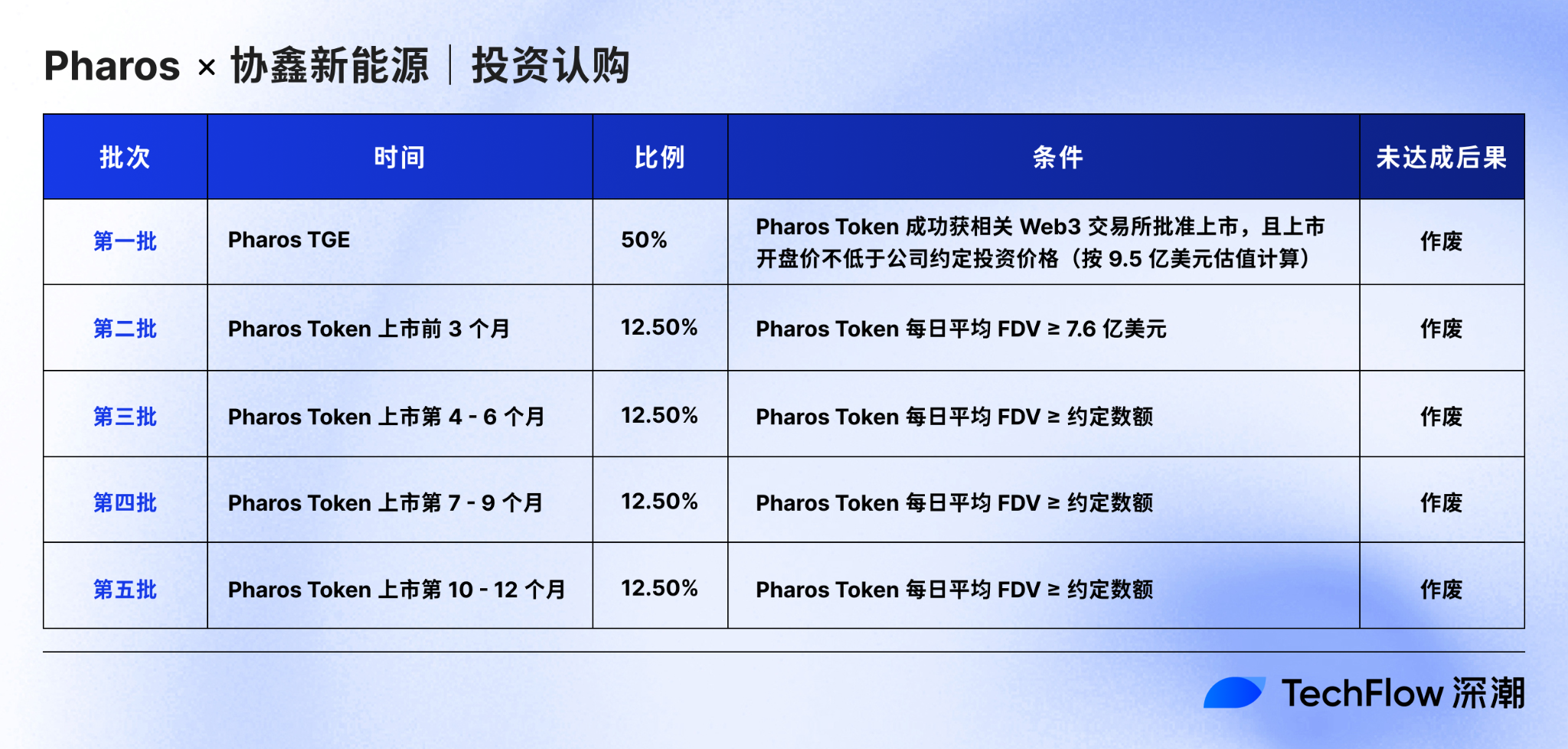
Once the Pharos token meets the required conditions, Pharos’s equity subscription in GCL New Energy automatically activates—and simultaneously, GCL New Energy’s token subscription activates, with identical unlocking ratios.
Under this two-way binding structure:
- If the Pharos token performs as expected, both equity and tokens close together;
- If the Pharos token underperforms expectations, both equity and tokens remain frozen.
Taking the critical first tranche as an example: once the Pharos token successfully lists and meets its opening-price target, Pharos will immediately deliver 50% of its subscribed GCL New Energy shares, while GCL New Energy will purchase Pharos tokens valued at approximately HK$96.73 million—at a $950 million valuation.
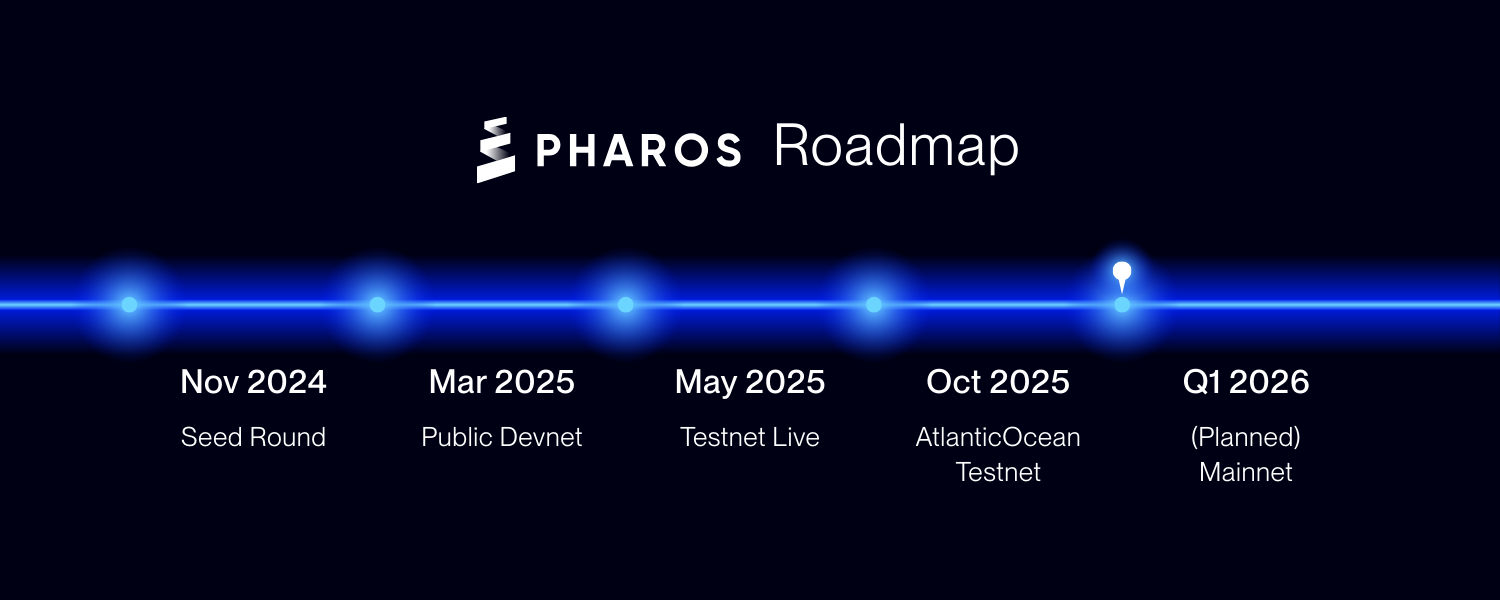
With this investment subscription agreement in place—and given Pharos’s prior announcement that Anchorage Digital will provide regulated minting, distribution, and custody services for its token generation event (TGE)—Pharos may now be entering the final stretch before TGE.
Mutual Gains: One Agreement, Two Paths to Win
This unique investment subscription arrives at a particularly delicate inflection point.
Past experience has taught us that crypto’s old fundraising logic—relying on whitepapers to tell stories and liquidity assumptions to justify valuations—has collapsed. Markets have witnessed too many bubbles and too many crashes. What we need now is a living demonstration that combines real assets, regulatory compliance, and on-chain imagination.
The Pharos–GCL New Energy deal is precisely that demonstration.
Beneath its complex clauses lies a strategic negotiation where both sides have locked their highest-priority interests into the contract:
For GCL New Energy, this is an ideal “offense-and-defense” model.
Investing in Pharos is an active bet on the on-chain narrative—while incorporating a VAM-style safeguard ensures risk control. If Pharos underperforms, GCL can exit promptly; if Pharos excels, GCL gains not only concrete capital inflow but also tokens acquired at initial valuation—potentially offering substantial upside.
For Pharos, the value of this deal extends far beyond adding another partner.
The first benefit is credibility. A Hong Kong–listed company willing to bind its equity and tokens together delivers the strongest possible public endorsement of Pharos.
The second benefit is confidence signaling. Pharos’s willingness to accept such stringent closing conditions sends a powerful message to the market about its conviction in its own future trajectory—more persuasive than any technical whitepaper.
The third benefit is historical positioning as an “industry first.” Over the past year, we’ve seen numerous cases of traditional listed companies adopting the “digital asset treasury” (DAT) model by purchasing crypto assets. This time, the direction reverses: through this subscription, Pharos directly enters GCL New Energy’s shareholder register—making it the first crypto project to strategically hold equity in a traditional Hong Kong–listed company.
In essence, this marks the first time a high-quality crypto project has secured a genuine seat at the negotiating table—and pricing power—in traditional capital markets. Moreover, the transaction enjoys official support via a Hong Kong Stock Exchange announcement, underscoring Hong Kong’s forward-looking stance toward compliant crypto innovation—and lending strong regulatory legitimacy to the deal.
One contract. Two paths to win.
In pursuing mutual gain and rejecting mutual loss, the spotlight naturally falls on the two protagonists driving this structural innovation.
After all, Hong Kong–listed firms are known for rigorous risk management and conservative operations. Why would Pharos dare write its future price performance directly into the contract? And why would GCL New Energy dare tie its listed shares to a token yet to undergo market validation?
A closer look reveals that this seemingly bold cross-sector alliance is, in fact, a natural convergence driven by mutual necessity.
Mirror Complementarity: The Inevitable Convergence of Pharos and GCL
In this structural innovation, one side of the table is GCL New Energy.
As Asia’s solar photovoltaic (PV) leader, GCL focuses on developing, constructing, operating, and managing solar power plants, while also engaging in electricity sales and solar-related services. Though it holds some of the world’s highest-quality green assets, it also suffers from classic traditional-asset challenges: long construction cycles, slow return realization, and intensifying financing competition.
What GCL truly needs is not another power plant—but a financial instrument capable of reorganizing, re-circulating, and revaluing these off-chain assets.
The other side of the table is Pharos.
As a parallel Layer-1 blockchain purpose-built for institutional use, Pharos was conceived not merely to deliver higher performance—but to serve as infrastructure for real-world applications: stablecoin settlement, institutional DeFi, regulatory-friendly payment networks, and the tokenization and circulation of real-world assets (RWAs), especially in energy, commodities, and infrastructure. Put simply, Pharos aims to become foundational infrastructure for authentic real-world finance (RealFi).
Performance is the prerequisite for realizing this RealFi infrastructure vision. Built on a modular architecture with a deeply parallel execution engine, Pharos offers sub-second finality, high throughput, and low fees—ideal for on-chain asset tokenization, circulation, and real-time settlement.
Regarding the compliance concerns that institutions prioritize when moving onto chain, Pharos embeds ZK-KYC/AML and digital identity at the protocol layer—ensuring regulatory friendliness without sacrificing openness.
Prior to partnering with GCL New Energy, Pharos had already attracted capital and institutional interest:
Public records show Pharos completed two funding rounds—in November 2024 and September 2025—backed by prominent VCs including Hack VC and Lightspeed Faction.
On the institutional front, Pharos previously announced a collaboration with decentralized finance platform Centrifuge. By integrating Centrifuge’s institutional-grade tokenization infrastructure and asset standards with Pharos’s “inclusive, execution-first” Layer-1, the partnership enables scalable on-chain distribution and operations for institutional assets—including tokenized U.S. Treasury securities (JTRSY) and AAA-rated structured credit products (JAAA).
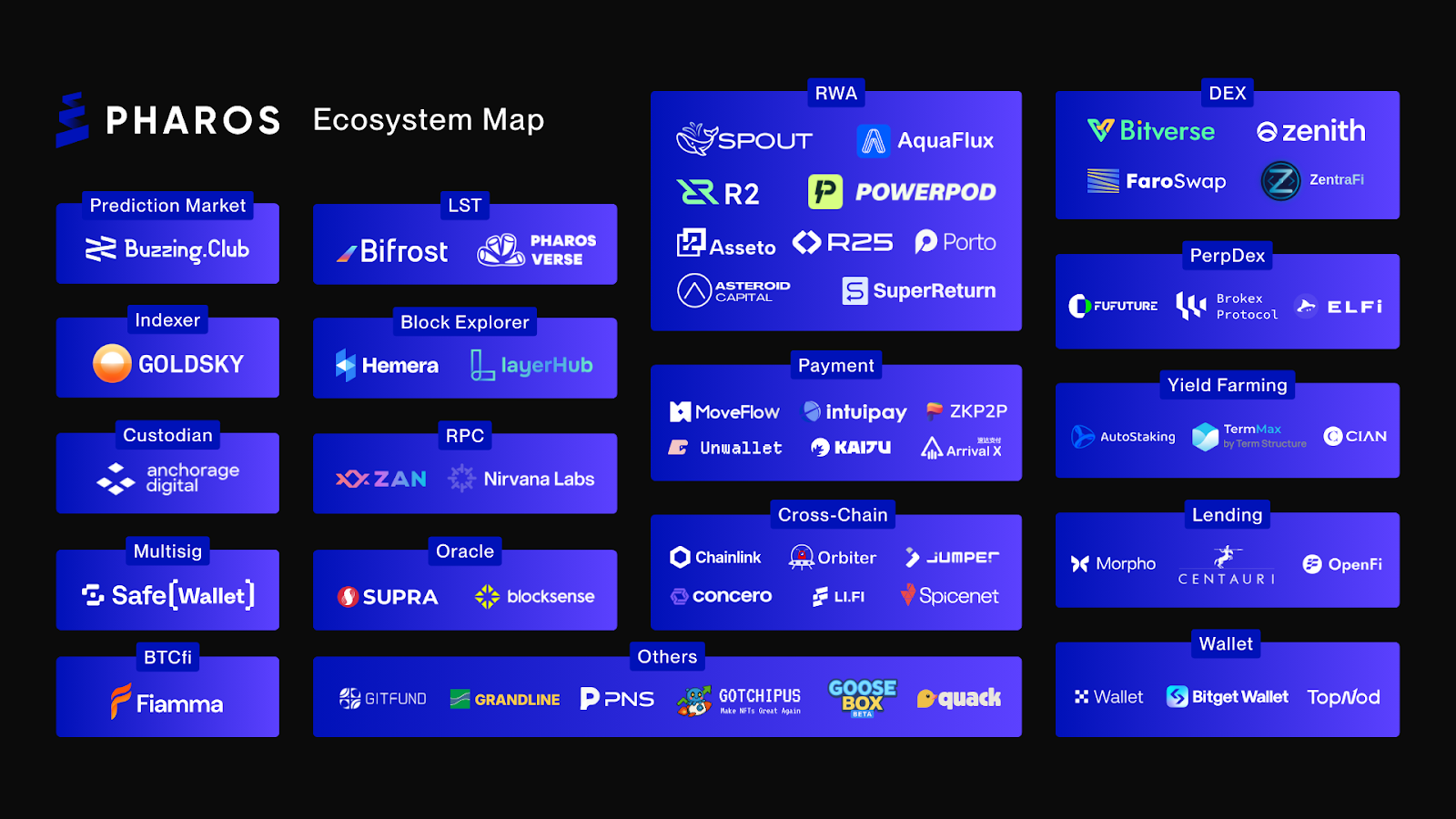
Placing the two counterparties side-by-side reveals near-perfect mirror complementarity.
For GCL New Energy, Pharos serves as the ideal crypto vehicle to unlock Web3, RWA, and market revaluation potential—transforming offline heavy assets into new on-chain capital forms.
For Pharos, GCL New Energy functions as the ideal traditional-capital gateway—providing high-valuation credibility, regulatory narrative strength, and real-asset imagination—to ground its on-chain story in tangible assets.
Viewed this way, the investment subscription looks less like a mere collaboration—and more like an inevitable convergence. Interestingly, Ant Group—connected to both parties—has been jokingly dubbed the “invisible bridge” enabling this meeting.
As early as December 2024, GCL New Energy partnered with Ant Digital Technology to complete China’s first RWA transaction involving over RMB 200 million in PV green assets. In June 2025, the two established a joint venture, “Ant-GCL Energy,” to further explore synergies across energy AI and RWA applications.
Meanwhile, several Pharos co-founders and core team members hail from Ant Group. And Ant Group’s AntChain brings extensive enterprise-grade blockchain experience to B2B use cases—likely bolstering Pharos’s technical execution capabilities and institutional resource integration capacity when addressing institutional RWA needs. This shared lineage may well have laid the groundwork for today’s Pharos–GCL collaboration.
Yet reducing this deal to just a capital tie-up risks underestimating its full significance. With the agreement signed, the real story lies ahead—in the evolving cooperation structure, the path to on-chain asset tokenization, and further innovative collaboration directions.
According to Pharos’s published on-chain staked asset categories, its current staked assets break down as follows: 51% come from distributed and centralized PV operators’ new-energy assets; 49% originate from fund management firms and credit-asset issuers’ financial assets.
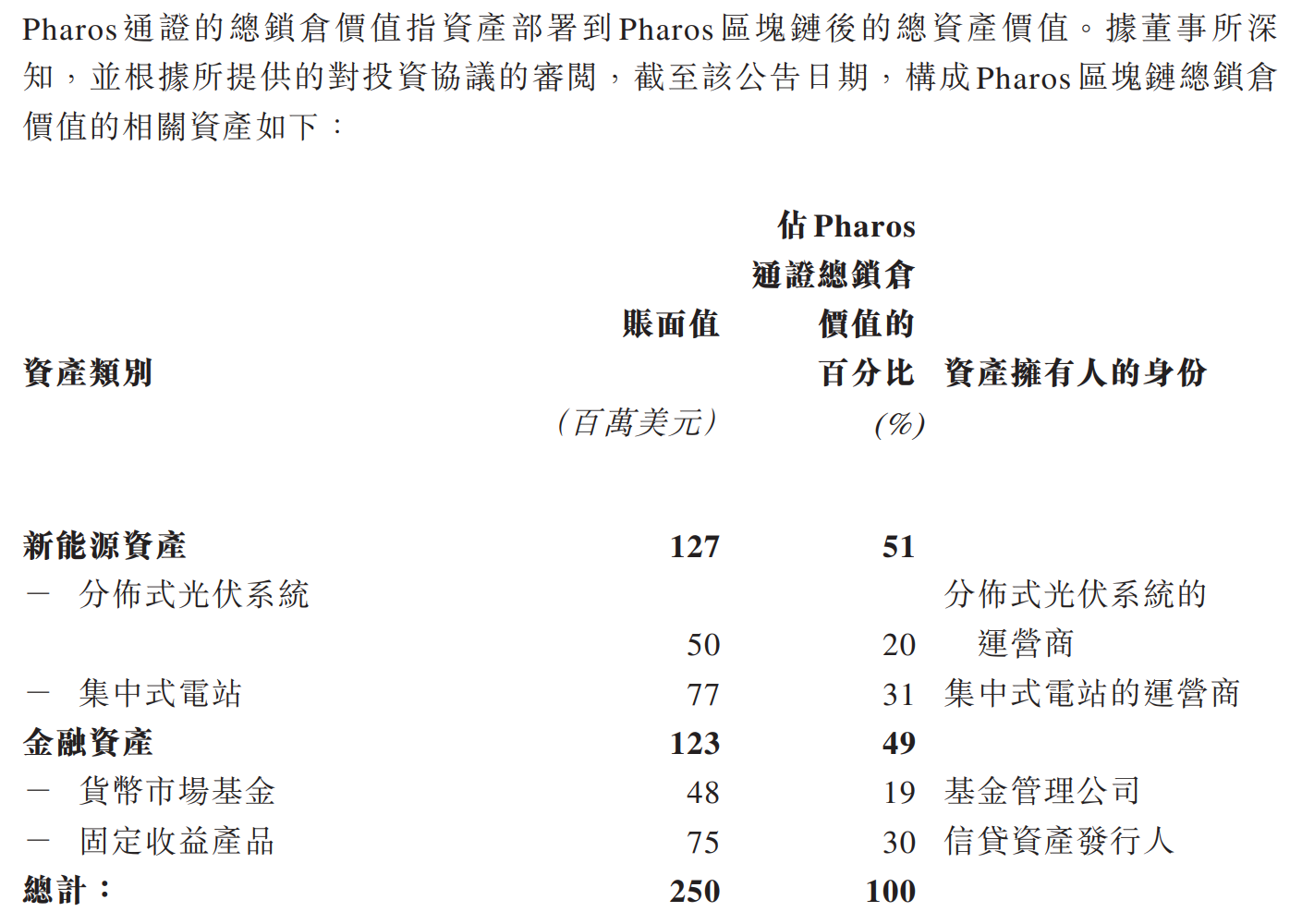
This strongly signals that GCL New Energy’s PV and new-energy power plant assets are virtually certain to be tokenized on Pharos in the near future.
This means Asian premium green-energy assets—exemplified by GCL New Energy—will transcend geographical boundaries, connecting more efficiently with global markets on-chain. Meanwhile, Pharos plans to bring high-quality RWA assets from the U.S. and Europe into Asia—enhancing Asian investors’ ability to diversify globally.
Whether exporting or importing, this binding model—anchored in equity, tokens, and assets—may unleash growth momentum far exceeding the scope of a single subscription.
Conclusion
Of course, everything remains extremely early-stage.
In today’s highly uncertain environment, concerns and skepticism are entirely natural.
Some community members note that Pharos’s nearly $1 billion valuation is reportedly derived from its current $250 million total value locked (TVL)—a figure self-reported by the project and lacking independent market validation.
Others worry that the phased-closing model could exert excessive pressure on the Pharos token’s secondary market. Given that the mainnet hasn’t launched and the token hasn’t been released, this arrangement can currently be viewed as a vote of confidence—but whether it might later represent premature confidence exhaustion remains uncertain.
Yet diverse perspectives precisely reflect the community’s deep engagement with the deal’s future trajectory—and none of these concerns detract from the structural innovation visible in this token–equity collaboration:
In the past, crypto fundraising favored telling a compelling story first, then using the raised capital to prove it.
Now, the Pharos–GCL New Energy partnership sends a powerful signal: the next era of crypto will reward those who dare to codify their narratives into binding contracts, entrust them to the market, and transform promises into non-negotiable realities.
In the bubble era, imagination was the most valuable commodity. In the revaluation era, execution is king.
And that—perhaps—is the true industry legacy of this investment subscription.
Join TechFlow official community to stay tuned
Telegram:https://t.me/TechFlowDaily
X (Twitter):https://x.com/TechFlowPost
X (Twitter) EN:https://x.com/BlockFlow_News
 深潮TechFlow















