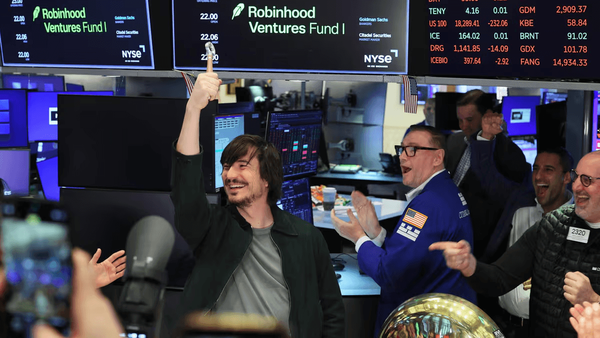
Vlad Tenev, Founder of Robinhood, on the Great Wealth Transfer, Tokenization, and Gen Z’s Investment Future
TechFlow Selected TechFlow Selected
Vlad Tenev, Founder of Robinhood, on the Great Wealth Transfer, Tokenization, and Gen Z’s Investment Future
AI agents will take over your entire financial life.
 Navigating Web3 tides with focused insights
By: Bankless
Translated by: Baihua Blockchain
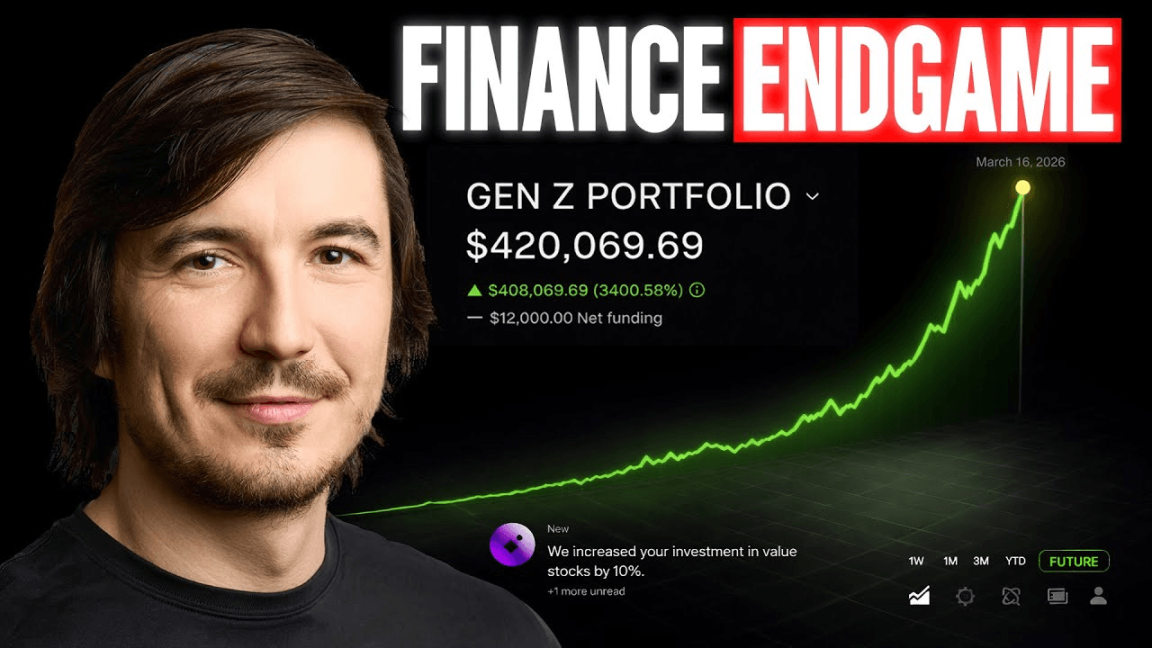
Do you think Generation Z (Gen Z) is merely squandering their youth on TikTok and blindly speculating in crypto markets—“financial nihilists” when it comes to personal finance? Vlad Tenev, founder of Robinhood, brings data that will completely upend your assumptions. In the latest Bankless interview, Vlad revealed a startling fact: Gen Z is the most hardcore long-termist generation in history—they begin planning for retirement at an average age of just 19.
As the $70 trillion “Great Wealth Transfer” begins, this financial giant at the center of the storm is executing a master plan: from 24/7 tokenized U.S. equities trading, to crowdfunding programs enabling retail investors to get early exposure to unicorns like SpaceX and Stripe, to AI-powered financial agents poised to rewrite the rules of finance. Vlad not only addresses concerns about “financial gamification,” but also deeply unpacks how Robinhood is reshaping traditional banking through DeFi architecture. This isn’t just an interview about trading tools—it’s a roadmap to the future of finance in 2040.
The $70 Trillion “Great Wealth Transfer”
Host: Let’s start with the “Great Wealth Transfer.” Over the coming decades, as Baby Boomers and the Silent Generation pass wealth to Gen X, Millennials, and Gen Z, an estimated $70–90 trillion in assets will shift across generations in the U.S.—the largest intergenerational wealth transfer in history. To what extent does this massive opportunity guide Robinhood’s strategy?
Vlad: We’ve thought about it extensively. Many companies are already talking about it—but we were among the first to translate it into concrete fintech action, dating back to our launch of Robinhood Banking services at the Gold event last year. Robinhood’s core mission is simple: whether you’re an individual or an institution, domestic or international, Robinhood should be the best place to manage all your money and assets. When inheritance events occur among older generations, we see enormous opportunity—not only to serve the younger recipients, but also to attract current asset holders—parents and grandparents—through rich product offerings and features. With credit and banking services, we gain access to vast amounts of liquid assets sitting in checking and savings accounts. This year, we also launched custodial and trust accounts. We’re not waiting passively for inheritances to happen—we’re actively persuading older generations that using outdated financial platforms today puts them at a real disadvantage. That positions us strongly ahead of the anticipated peak of the wealth transfer in 8–10 years.
Finance in 2040: 24/7 Markets & Asset Tokenization
Host: What will finance look like in 2040? What will stay the same—and what will change entirely? Will we have 24/7/365 markets? What role will AI play?
Vlad: I believe 24/7/365 markets are inevitable. We launched our 24-hour stock market in 2022—and now the entire industry is following suit. The technology is ready; weekend trading will arrive sooner than many expect. Tokenization is another core driver. Last year, we rolled out tokenized versions of thousands of U.S. stocks in the EU—even offering tokens for private companies like OpenAI and SpaceX. Though still early, I expect tokenized equities to begin outperforming traditional brokerage accounts on key metrics—including liquidity and execution speed—by year-end. If you solve the 24/7 liquidity problem for private equity, then essentially *all* assets can trade around the clock.
Tech Stack: Merging CeFi and DeFi
Host: Your Layer 2 chain, Robinhood Chain, has just gone live on testnet. How do you position this tech stack—are you challenging NYSE, or building a new on-ramp to crypto?
Vlad: Our tech stack has two parts. One is CeFi: making tokenized stocks tradable on centralized exchanges like Bitstamp. The other is DeFi: enabling users to interact with DeFi protocols via non-custodial wallets—on Robinhood Chain or other chains. We don’t see ourselves as chasing legacy providers. Instead, we’re building something entirely new. In crypto, many tokens lack real-world utility—but when you anchor technical innovation to real-world assets (RWAs) with genuine underlying value, the user experience transforms fundamentally. In the U.S., regulatory dynamics are shifting, but the market already operates near 24/5—and the marginal benefits of tokenization may be less pronounced here than in the EU—at least in the short term. But once the technology proves its superiority overseas, it will inevitably migrate back to the U.S.
DeFi Strategy & Prediction Markets as “Truth Machines”
Host: Coinbase and BlackRock are both moving toward DeFi. What’s Robinhood’s decentralized finance strategy? And on the hot topic of prediction markets—do you think they’re good or bad for society?
Vlad: Our strategy is “full-stack.” We need to onboard massive numbers of users through the Robinhood App and Wallet—and simultaneously build infrastructure like Robinhood Chain. Testnet activity has exceeded my expectations; developers are highly engaged. The core challenge going forward will be curation—how to help customers navigate thousands of on-chain products and identify high-quality options aligned with their risk profiles. As for prediction markets, I believe they’re profoundly beneficial to society. They’re not just trading venues—they’re “truth machines.” Traditional news media’s business models sometimes delay truth in favor of traffic, while prediction markets fulfill humanity’s primal demand for accurate, real-time information.
Host: Will Robinhood strengthen its media and content capabilities—for example, becoming the homepage for prediction markets or adding social features?
Vlad: Absolutely. We’re launching Robinhood Social imminently. We hold massive asset volumes—and prediction markets will be first-class citizens within it. Leveraging user-generated content (UGC), we’ll detect breaking news faster than manual curation ever could. Meanwhile, our media division, Sherwood Media, is producing high-quality content and integrating prediction market data. On execution, we’re partnering with Kalshi and ForecastX—and with our acquisition of Bitstamp, we’ll soon operate our own exchange venue, delivering optimal end-to-end experiences for users.
Debunking the “Financial Gamification” Myth
Host: Many believe young people engage with finance purely for entertainment—or even embrace “financial nihilism,” treating it as gambling. As a platform operator, how do you view this trend?
Vlad: I’ll offer a spicy take: I don’t believe entertainment drives most financial activity. The reality is, nobody wants to post about the boring-but-important stuff on social media. On Twitter, no one tweets, “My Robinhood retirement account grew again”—because it’s not sexy, and it won’t go viral. Yet the data tells a different story: 40% of assets on our platform sit in passive instruments like ETFs and cash. Even our most active options traders typically hold significantly larger passive portfolios. People simply allocate different goals to different accounts.
Host: That’s a powerful counter-narrative. So Gen Z isn’t financially irresponsible—they’re actually more sophisticated?
Vlad: Exactly. As I mentioned, they open accounts extremely early—partly due to accessibility (a few taps on Robinhood is all it takes), and partly due to economic incentives, like our 3% retirement contribution match for Gold members. Moreover, today’s youth are increasingly independent contractors or gig workers—making them far less reliant on employer-sponsored 401(k) plans. They must proactively manage their own futures. Today, our retirement assets exceed $25 billion—and growth has been explosive.
Trump Accounts & the Coming “Gen Beta”
Host: Let’s talk about those even younger than 19. The recently proposed “Beautiful Act” includes “Trump Accounts”—government-provided $1,000 investment seed funds for newborns. Why do you praise this idea so highly?
Vlad: It’s the first mechanism I can think of that truly “returns money to the future.” Most current policy involves borrowing from tomorrow. Trump Accounts are automated—and they teach children the value of long-term investing. Thanks to compounding, that $1,000 could grow to hundreds of thousands—or even millions—by age 18 or 30. While newborns obviously won’t operate smartphones themselves, parents will manage these accounts—and we’ll focus intensely on building a “child investment experience” centered on financial education and literacy.
The Financial Super App & the Future of Payments
Host: Everyone’s racing toward the “financial super app.” Will Robinhood cram every feature into a single app? And why don’t you yet offer peer-to-peer (P2P) payments?
Vlad: We’ll adopt a flexible strategy. The main app will evolve into a highly personalized feed—like a social media homepage tailored uniquely to you. At the same time, we’ll retain standalone specialized apps—such as a dedicated banking app or a non-custodial wallet—all unified under a single identity layer. Regarding P2P payments: we’ve experimented. But we found Robinhood users are primarily credit-driven—not paycheck-dependent debit-card users. Venmo and Cash App already deliver excellent P2P experiences. We won’t add commoditized features unless we can meaningfully improve upon them. Right now, our priority is bringing the remaining banking functionality onto the platform.
Stablecoins & Regulation
Host: What’s your view on stablecoins as banking products?
Vlad: Stablecoins face two major hurdles. First: FDIC insurance. U.S. consumers prioritize capital safety—especially after the 2023 banking crisis, when stablecoin de-pegging rattled confidence. Second: rewards competition. You currently can’t earn 3% cashback on stablecoin payments the way you do with credit cards. Stablecoins work well for large-scale B2B or cross-border payments—but for consumer use cases like splitting a pizza bill, broader ecosystem maturity is still needed.
Host: How dependent are you on passage of the Clarity Act (the crypto regulatory bill)?
Vlad: The Clarity Act would definitively classify what constitutes a security versus a commodity—saving us immense legal and compliance costs. More importantly, it would insulate policy from administrative turnover. Regardless of whether the Act passes, we’ll launch Robinhood Chain—because it’s global and permissionless. If clarity arrives in the U.S., we’ll prioritize the domestic market; if not, we’ll accelerate international expansion.
Next Growth Frontiers: AI & Private Equity
Host: Looking ahead, what’s Robinhood’s third major opportunity?
Vlad: Several directions stand out. First: launching Social. Second: scaling prediction markets. But the biggest transformation may come from AI. We’re exploring how an AI agent—functioning like a family office—could run your entire financial life: automating savings, executing complex trading strategies, and more. Separately, through Robinhood Ventures, we’re tackling retail investors’ historic inability to access growth-stage companies like Stripe and SpaceX. Our IPO Access program lets retail participate in public listings—and we deploy our own capital into late-stage funding rounds. Ultimately, we aim to let retail investors participate even in seed financing.
Host: Thank you, Vlad, for sharing your insights. Robinhood continues to lead the charge in democratizing finance. None of the above constitutes financial advice—crypto investments carry risk. Thanks for listening to Bankless.
Join TechFlow official community to stay tuned
Telegram:https://t.me/TechFlowDaily
X (Twitter):https://x.com/TechFlowPost
X (Twitter) EN:https://x.com/BlockFlow_News
 Bankless