VIP Believers in the Crypto Winter: With $100 Billion Wiped Out, Why Are They Still Holding On?
TechFlow Selected TechFlow Selected
VIP Believers in the Crypto Winter: With $100 Billion Wiped Out, Why Are They Still Holding On?
“Technology without faith or spiritual grounding is nothing at all—we are building a religious movement.”
 Navigating Web3 tides with focused insights
This article is originally from: Vanity Fair
Translated and edited by Odaily Planet Daily (@OdailyChina); Translator: Moni
“I really can’t take it anymore.”
In early February this year, dozens of messages like this flooded the Signal inbox of a major crypto market maker. The crypto market plunged another 15%—$400 billion in market capitalization vanished in just a few days. Over the previous four months, dragged down by Bitcoin, the total crypto market cap had crashed nearly 50%; Ethereum and Solana each fell close to 60%. This collapse erased roughly $2 trillion in value, plunging the industry into a bear market—a period the crypto community calls “winter,” a slightly nerdy allusion to the ominous line from Game of Thrones: “Winter is coming.”
Project founders panicked: some rushed to pursue privatization, others hastily launched emergency equity financings, while still others simply abandoned ship. Frankly, veteran crypto insiders have weathered far steeper drops—markets have previously cratered 80% or even 90%. But this time, the chill felt different.
Brian Armstrong, CEO of Coinbase, was locked in a regulatory battle with Washington officials while watching his personal net worth evaporate by approximately $10 billion. Internal tensions simmered within the Ethereum ecosystem; co-founder Vitalik Buterin posted a series of “fry”-themed tweets expressing concerns about the platform’s scaling approach. As an early backer of Polymarket, he voiced discomfort with blockchain prediction markets veering toward an addictive direction. Ordinary traders were dismissed by industry elders as “tourists,” either panic-selling or pivoting to trendier topics like artificial intelligence and prediction markets.
Technology without belief and spiritual grounding is meaningless—we’ve built a religious movement
“They’re all cowards.”
Meltem Demirors, an early crypto investor and current founder of Crucible Capital, offered this assessment of her peers who fled in panic. She wore layered diamond crucifixes, a black athletic suit, and sported her firm’s slogan—“Hold the Faith”—embroidered on her hip.
Amid this crypto winter, she began buying Bitcoin again.
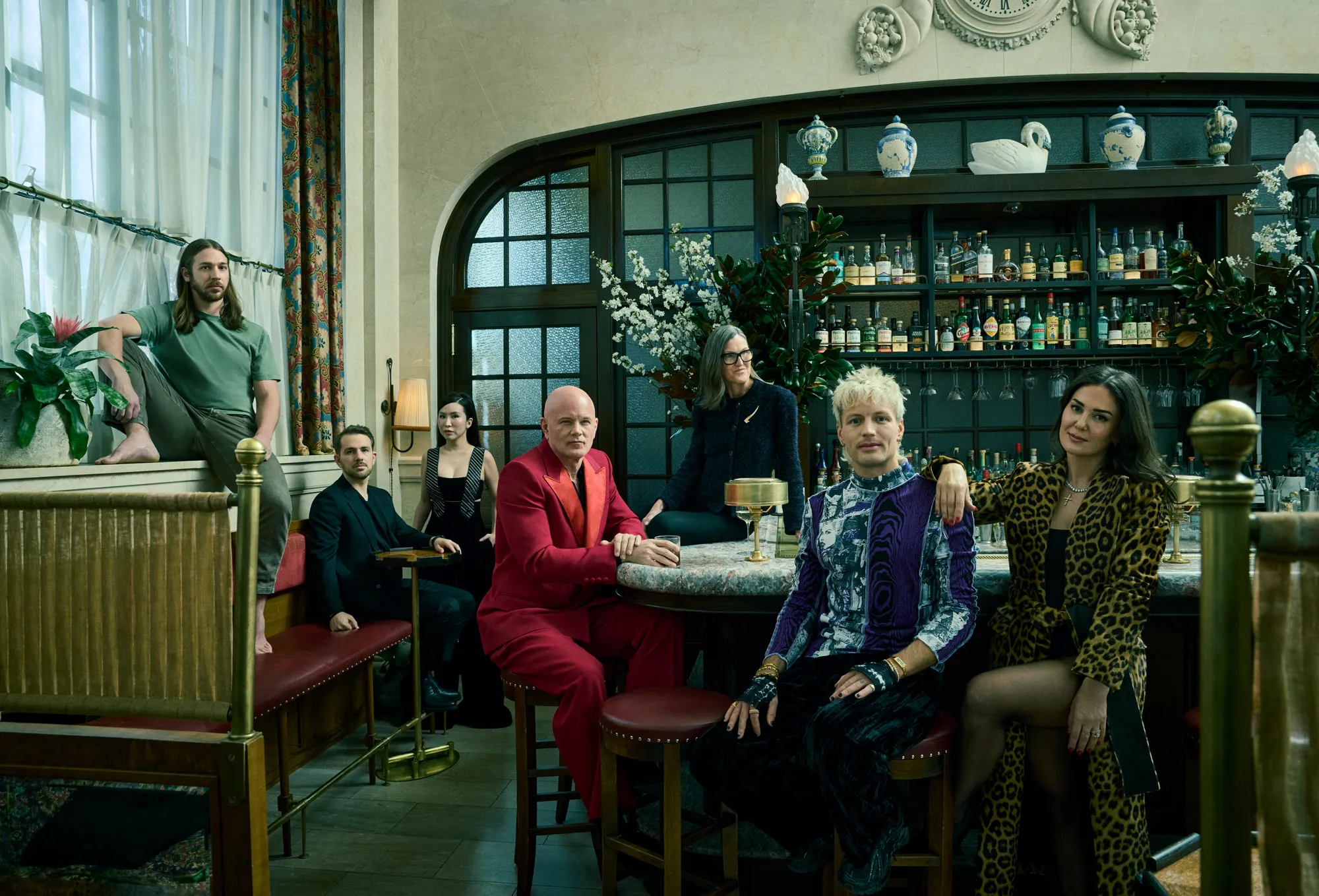
On an afternoon in February, as markets continued sliding, a small group of true believers gathered inside a Beaux-Arts landmark in Manhattan’s Lower East Side—once dubbed the “Cathedral of Capitalism,” a bank now transformed at a cost of $300 million into the Nine Orchard Hotel. Galaxy Digital CEO Michael Novogratz became one of its new co-owners.
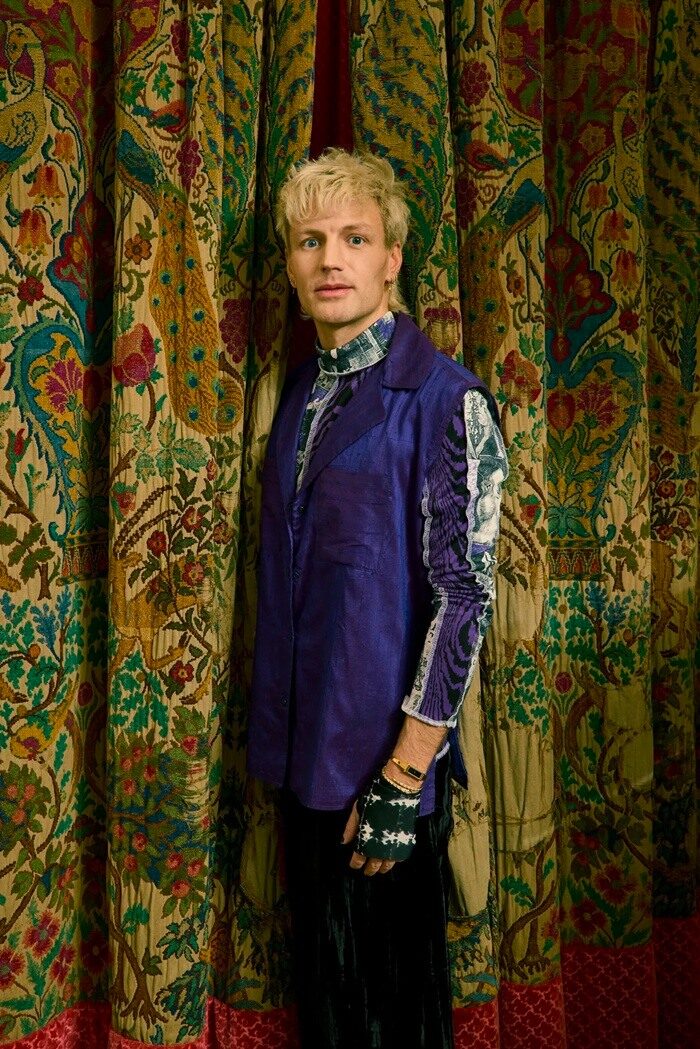
After collectively losing billions on paper, Michael Novogratz, Meltem Demirors, Olaf Carlson-Wee, “ARK Invest’s Cathie Wood,” Danny Ryan, and other core figures of the crypto world convened—not to discuss what they’d sold, but what they were buying.
Cathie Wood held extensive proprietary research data; Olaf Carlson-Wee insisted he never followed news—yet both kept accumulating Bitcoin. Danny Ryan remained unfazed by daily volatility: “I’m a Luddite,” he declared, “if something matters, someone will tell me.”
“Technology without belief,” Meltem Demirors reiterated, “technology without spiritual substance, is worthless.” Unlike the disciples who doubted Christ’s resurrection, crypto’s faithful never wavered. “Honestly, what we built was a religious movement.”
Gold, commodities, real estate, bonds, stocks—all asset classes answer the same question: Where does value come from? In truth, they are products of social consensus—meaningful only because collectively agreed upon.
Gold: value stems from nature and scarcity; bonds: from institutional trust; real estate: from land and permanence; commodities: from physical substance; stocks: from human creativity.
Every asset class requires a creation myth—from scarcity to capitalism itself. To those who believe crypto is the “sixth asset class,” its value extends far beyond finance. “Ever since the U.S. dollar decoupled from gold in 1971, I’ve been waiting for this moment,” recalled Cathie Wood, quoting Arthur Laffer—the Reagan-era economics authority and architect of the Laffer Curve. When Wood, whose actively managed ETFs focus on disruptive technologies, asked Laffer how big this idea could become, his reply captured the ultimate fantasy of early crypto believers: “Tell me—how large is the U.S. monetary base?”
On Halloween 2008—six weeks after the collapse of Lehman Brothers, America’s fourth-largest investment bank—the myth of institutional safety shattered completely. A mysterious figure using the pseudonym Satoshi Nakamoto quietly emailed a nine-page PDF titled “Bitcoin: A Peer-to-Peer Electronic Cash System” to a small group of cryptographers. This “white paper” outlined a wholly new financial system—one that bypassed banks, governments, and the Federal Reserve entirely—freeing ordinary people from inflation, frozen assets, and arbitrary monetary policy. Bitcoin secured itself through “mining”—specialized computers competing to solve cryptographic puzzles—and users accessed funds via a unique mnemonic phrase: lose the phrase, and your money vanishes forever; memorize it, and you can retrieve wealth anywhere in the world, permissionlessly.
In 2009, Satoshi Nakamoto brought Bitcoin from theory to reality, mining the genesis block. Once rules were set, anti-counterfeiting mechanisms implemented, and Bitcoin began circulating (still worth zero at the time), he disappeared entirely. His withdrawal didn’t just deepen Bitcoin’s mythic aura—it conferred genuine decentralization: no single omnipotent controller remained; the experiment belonged to everyone and to no one.
“I fell in love with Bitcoin instantly,” said Erik Voorhees, founder of ShapeShift exchange and Venice AI. He discovered Bitcoin in 2011 while participating in the Free State Project in New Hampshire. “I thought Bitcoin might conquer the world—it couldn’t be devalued, controlled by no individual or institution, and no one could stop it.”
The movement took root on society’s margins, attracting post-financial-crisis rebels disillusioned with reality and hungry for social and political change. Early believers tended to be young, male, deeply online, and forum-based cypherpunks—building their own information bubbles, convinced cryptography could achieve what regulators never had: redistributing power. Michael Novogratz, dressed in a brand-new red Valentino suit, described Bitcoin as “the Rebel Alliance from Star Wars.”
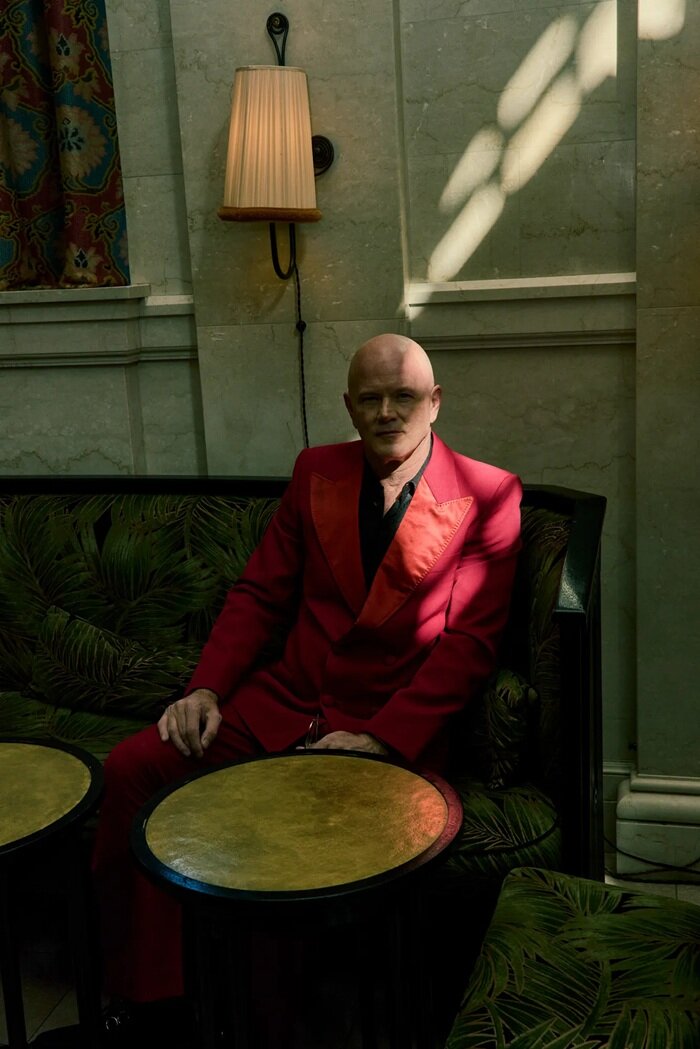
From “marginal rebels” to mainstream force
Olaf Carlson-Wee, founder of crypto hedge fund Polychain Capital, said: “Once you truly understand Bitcoin, you can never unsee it.” In 2011, during his senior year at Vassar College, he first encountered Bitcoin on internet forums, quickly becoming convinced it represented the future of global finance—even persuading his thesis advisor to let him write his senior thesis on the subject. After graduation, Carlson-Wee worked as a lumberjack in Washington state, cold-emailing his resume and thesis to Coinbase, then operating out of a San Francisco apartment. Within days, he was hired—and became the company’s first employee. “Those early days felt like everyone was guarding a secret the rest of the world hadn’t yet discovered.”
As the Occupy Wall Street movement sounded the alarm on widening U.S. inequality, crypto’s advocacy for financial autonomy and globally inclusive finance resonated with a generation that watched trillions in household wealth vanish while governments bailed out banks. “My first day on the trading floor was the day after Lehman Brothers collapsed,” said Arthur Hayes. Then stranded on a remote Japanese island, snowed in, unshaven, wearing a red thermal T-shirt. “It was a very unusual way to begin a finance career.”
Arthur Hayes had once been fully entrenched in traditional finance—Wharton School, Deutsche Bank, Citigroup. But witnessing colleagues laid off amid market collapse drove him toward assets he could control himself—first gold, then Bitcoin in 2013. In 2014, unemployed and couch-surfing at a friend’s place, he co-founded BitMEX at age 28—bringing Wall Street–level leverage and derivatives to crypto trading, ultimately creating the “perpetual contract.” Traders no longer needed to hold Bitcoin; they could instead bet on its price movements using 5x, 50x, or even 100x leverage. “Some lost everything; others got rich overnight,” Hayes remarked flatly—the fate of early believers often decided in minutes.
The perpetual contract exploded in popularity, generating trillions in trading volume and birthing a new generation of “crypto gamblers”—willing to risk enormous sums for occasional multimillion-dollar windfalls.
Crypto had, in effect, become a casino.
No one is in charge—so who decides the future? This lies at crypto’s core—and its fatal flaw. Disagreements abound: over ethical use cases, whether Bitcoin’s ecosystem should expand to include new tokens, and more. Yet it was precisely this motley alliance—libertarians, venture capitalists, builders, traders, and scammers—that ultimately pushed crypto into the mainstream.
The same year Arthur Hayes made Bitcoin feel more like gambling than gold, 20-year-old Vitalik Buterin—a slender, Thiel Fellowship recipient who looked more suited for Paris Fashion Week’s Balenciaga runway—completely upended the industry.

One day in 2014, Joseph Lubin brought Michael Novogratz to Brooklyn to meet members of the Ethereum Foundation—the platform officially launched the following year. Through “smart contracts”—self-executing code running on the blockchain—Ethereum enabled developers to build full financial systems: lending platforms, digital art markets, decentralized autonomous organizations. No banks. No corporate overlords. Just code.
“Joseph Lubin underwent something close to religious conversion,” said Michael Novogratz. “Ethereum would change the world—save the world.” Entire economic systems would migrate onto the blockchain; stablecoins would prop up fragile currencies in the developing world; open-source finance would replace the opacity of traditional banking. “I was already wealthy—I didn’t need the world saved—but I did think Ethereum was kind of interesting.”
“I didn’t have a eureka moment with Bitcoin,” said Danny Ryan, co-founder and president of Etherealize. With New York temperatures below freezing, he wore his long hair in braids, a thin black T-shirt and denim jacket, and a plastic yellow nose ring he claimed aided breathing. Ryan’s awakening came in 2016, upon discovering Ethereum; in January 2017, he dove headfirst into Vitalik Buterin’s foundation and was soon hired—just as crypto surged explosively into the mainstream.
“That was a wild golden age,” recalled Meltem Demirors.
At a November 2017 conference, she watched Ethereum “geeks” in unicorn T-shirts and Hawaiian shirts help Goldman Sachs and a16z investors set up MetaMask wallets and participate in initial coin offerings.
Then Bitcoin broke $10,000; the total crypto market cap soared from $16 billion to a peak of $535 billion—an annual growth rate exceeding 3,200%.
Ethereum’s arrival meant crypto was no longer defined by a single token, a single creation myth, or a single ideology. Anyone could build anything—breaking uniformity, but also fracturing cohesion. The U.S. government remained perpetually baffled by an industry founded precisely to evade centralization; to regulators, crypto was an impenetrable web of scams.
Over the next decade, markets swung wildly between euphoria and crash, wiping out lifetimes of savings for many—and creating generational wealth for the few who perfectly timed the waves. Internally, the crypto ecosystem splintered massively: OGs vs. tourists, idealists vs. scammers, builders vs. traders.
Two types of people in the crypto community: believers and scammers
The crypto community comprises two kinds of people—
First, believers: philosophically aligned with Bitcoin’s original ideals—committed to decentralization, privacy, and personal sovereignty. They are vilified precisely because their principles clash with those of modern institutions—especially governments and their allied fiat banking systems.
Second, scammers: driving Lamborghinis while peddling meme coins, devoid of principle, most having entered only after 2017—from outright fraudsters, to mildly speculative opportunists, to utterly clueless fools.
A crypto holder known only as “Moose” pulled out a Palauan ID card—the Pacific Island nation of Palau, a Micronesian territory he’d purchased online for $200—his credential to access offshore derivatives platforms unavailable to U.S. users. “Everyone does it,” he said. At 27, like many men his age, he first encountered crypto in the mid-2010s on Silk Road, buying drugs and fake IDs. His idols weren’t athletes or movie stars—but anonymous Twitter accounts: anime avatars, cryptic bios, their trading moves followed with near-religious devotion.
Jordan Fish occupied another tier of the same ecosystem, known online as “Cobie,” with a Telegram profile picture of a leaping white dog. He profited early from Ethereum staking protocol Lido, later founding Echo, a membership-based crypto investment platform valued at over $300 million. “In 2019, being a cryptobro was still cool—but not anymore.”
As crypto moved from the margins to the mainstream—and then devolved into cultural punchline—its promise of disruptive innovation faded. Those once self-styled rebels increasingly resembled other deeply online youth: gaming, memeing, trading—its poor image only worsening.
In 2023, Arthur Hayes’s raucous party at Singapore’s TOKEN2049 conference drew thousands; alcohol ran out within the first hour, forcing security to hold back drunken attendees desperate to get in—some nearly climbing the walls. Two years later, at the same event in Dubai, Carlson-Wee shuttled between California and the UAE (reportedly collaborating with local authorities) aboard a Lotus superyacht, joined by DogeOS CEO Jordan Jefferson, who wore a “Habibi Doge” T-shirt—a Shiba Inu wearing the traditional Emirati headscarf. (An Emirati-linked firm reportedly invested $500 million into Trump family crypto projects before his inauguration.)
“Everyone assumed that if you made money in crypto, you’d be in Miami on a yacht surrounded by a hundred prostitutes,” said Meltem Demirors. “During the Ethereum conference in Cannes, I spent three straight days at La Guérite restaurant—drunk off my ass, crawling across the table. Ethereum believers hate beautiful things, hate pleasure—they just want you eating tofu, wearing organic cotton, torturing yourself.”
There’s another creature in the crypto world: the “whale”
Whales are the behemoths of the Bitcoin world.
In crypto slang, whales refer to individuals holding over 1,000 BTC—often possessing digital assets worth over $10 billion. A single transaction can move markets. These whales remain entirely anonymous—never attending conferences, throwing parties, or posting controversial tweets. The loudest voices in crypto are rarely the wealthiest.
Anonymity—once an ideological stance against centralization—is now a survival necessity. Going public in crypto invites trouble. Dozens of violent incidents occur annually: kidnappings, home invasions, armed robberies. Massive data breaches expose holdings, transforming digital wealth into tangible targets. Last year, a crypto holder in Nolita claimed he was kidnapped and tortured for two weeks to reveal his password before narrowly escaping.
“I’m no longer a public figure,” said Fish, “because it’s likely to endanger my life.” Devin Finzer, co-founder of OpenSea, and his wife Yu-Chi Lyra Kuo travel with a burly bodyguard who looks more like a Viking than a Secret Service agent. “That’s our bodyguard.”
Crypto has long-standing survival rules—the key is: never be the main character. I’m a supporting actor—everyone knows me, but no one truly knows why I exist.
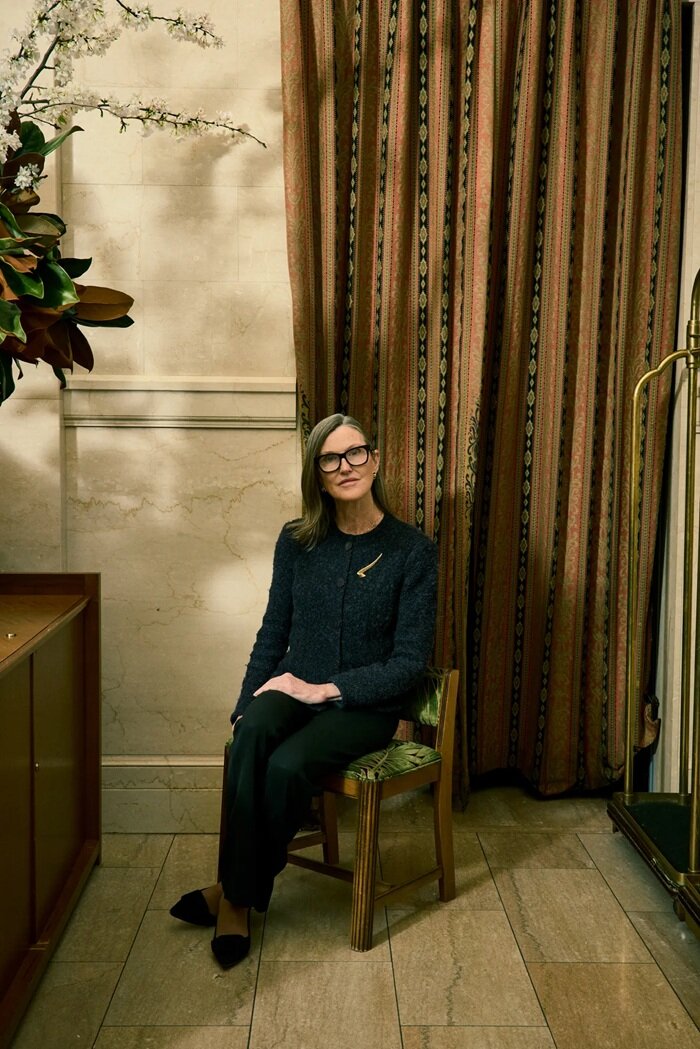
On the morning of Vanity Fair’s photo shoot gathering, Cathie Wood failed to recognize Meltem Demirors, whom she hadn’t seen in ten years. “You look younger,” Wood said, embracing her. “Because I’m rich now,” Demirors replied with a mischievous grin. Carlson-Wee introduced himself to Wood like a boy meeting his idol; the two immediately reminisced about the days when everyone called them crazy, reaffirming their shared conviction: “Buy when the market falls”—gently sidestepping the reality of crypto’s near-50% plunge over the prior three months.
Michael Novogratz strode in wearing a silver long puffer coat, greeting warmly before complaining he was suffering severe hangover day two—he recounted Saturday night’s revelry, climaxing at 4 a.m. at Gospël, a New York nightclub inspired by Burning Man, praying his 30-year-old daughter and new husband hadn’t witnessed it.
Ryan lingered in the corner, observing with equal parts amusement and alarm. Meltem Demirors and her assistant flipped through outfits brought along. Novogratz agonized between a rhinestone-encrusted black suit and a Valentino one; Ryan brought only two pairs of pants—his favorite pair had a hole in the crotch, which he wore anyway. “Too hot,” he complained barefoot, as a stylist blow-dried his shoulder-length thick hair.
“Where’s Devin Finzer?” asked Meltem Demirors.
Devin Finzer and his wife Yu-Chi Lyra Kuo occupied a private suite on the fourth floor, complete with a personal assistant, security detail, celebrity makeup artist, and racks of haute couture.
Ultimately, after considering millions of dollars’ worth of custom clothing, Yu-Chi Lyra Kuo chose a non-couture Armani gown—and skipped JAR jewelry altogether.
In 2017, Devin Finzer founded the NFT marketplace OpenSea—in the eyes of crypto OGs and even his own wife, he missed the crucial threshold to become one. His background fit Silicon Valley motherhood dreams: raised in suburban San Francisco, Brown University graduate with degrees in computer science and mathematics, former Pinterest software engineer.
When the crypto market exploded, Finzer and his friend Alex Atallah decided to build an eBay for digital assets. Inspired by Ethereum’s tokenization—and especially the CryptoKitties craze—OpenSea was born.
Soon after, the pandemic hit. Bored young people flooded the crypto universe, sending NFTs soaring.
In 2021, Beeple’s NFT artwork sold at Christie’s for $69 million; Bored Ape Yacht Club and CryptoPunks avatars became status symbols rivaling Rolex and Porsche; some even paid over $1 million for a JPEG of a rock-paper-scissors game.
In January 2022, OpenSea’s valuation surged to $13 billion. That same year, the young Devin Finzer, overwhelmed by rapid company expansion, suddenly found himself in Silicon Valley’s top social circles—and met Yu-Chi Lyra Kuo.
“Yu-Chi Lyra Kuo is like a Ferrari engine in a hot girl’s body,” said Devin Finzer.
Yu-Chi Lyra Kuo said she’d voiced concerns about OpenSea to Devin Finzer well before the 2022 crypto crash and NFT bubble burst—but no one listened. She believed OpenSea chased trends too closely, that Devin Finzer lacked maturity and foresight, failing to pivot toward more sustainable directions.
“Everyone was praising Devin Finzer—Forbes cover, 29 years old, good-looking, everyone wanted to charter jets to fly him to the Super Bowl, to every gala.” Yu-Chi Lyra Kuo paused. “I’m not interested in any of that.”
“It’s been a humbling journey,” Devin Finzer added softly. “Even when everyone puts you on a pedestal, there’s still so much to learn.”
The market collapse had been brewing for months—
In 2021, Bitcoin fell from its $69,000 peak to $16,000, triggering the industry’s harshest winter. OpenSea’s valuation plummeted roughly 90%.
In May 2022, Terra/Luna imploded, erasing over $40 billion in ecosystem value within 72 hours—global retail investors wiped out. One of crypto’s largest hedge funds, Three Arrows Capital, collapsed shortly thereafter.
In November 2022, industry darling SBF’s exchange FTX collapsed spectacularly, collapsing within a week. He was arrested and convicted on seven counts of fraud and conspiracy, having stolen up to $10 billion in customer funds.
“Devin Finzer isn’t the first genius kid I’ve mentored,” Yu-Chi Lyra Kuo said, without elaborating. As the company crumbled and the NFT bubble burst, Yu-Chi Lyra Kuo became Devin Finzer’s “product mom,” treating him like a “custom teddy bear.” Now, they claim to relaunch OpenSea with a grander vision.
Yet not everyone shares Devin Finzer and Yu-Chi Lyra Kuo’s confidence.

The more mature blockchain infrastructure becomes, the harder it is to justify what OpenSea offers that platforms like Coinbase or Gemini don’t. Successful projects have raised the bar—like Hyperliquid and Uniswap, which now share revenue with token holders. Most tokens can’t compete; their issuance serves governance purposes only—holders vote on protocol decisions but hold no direct economic rights.
FTX’s collapse didn’t just plunge the entire industry into despair—it triggered what crypto insiders call the “witch hunt”: coordinated regulatory crackdowns aimed at killing off technology they neither understood nor could control. Regulators, meanwhile, saw crypto as the Wild West—imperfect rules, they argued, were still a good starting point for protecting American investors.
President Biden appointed Gary Gensler to lead the U.S. Securities and Exchange Commission (SEC)—a former Goldman Sachs partner and MIT blockchain professor who understands crypto better than any other regulator. Gensler’s goal is to tame the industry, centering on one pivotal question: Is cryptocurrency a security or a commodity? The answer determines everything: securities fall under SEC jurisdiction—exchanges and token issuers must register, disclose, and comply with investor protection rules designed for stocks—rules built for centralized institutions, not borderless, bankless, brokerless assets.
Applying traditional financial regulation to technology built on autonomy, privacy, anonymity, and global boundarylessness is doomed to fail. Crypto calls this “enforcement-first regulation”: Gensler has sued multiple firms for violating securities law, aggressively squeezing crypto-friendly banks out of the system.
“The SEC tried to kill crypto through litigation,” said Ryan, recalling receiving a subpoena while setting the dinner table on Easter Sunday 2024. “I was the highest-ranking person at the Ethereum Foundation in the U.S.”
Arthur Hayes received six months of house arrest in May 2022 after pleading guilty to deliberately failing to implement anti-money-laundering controls at BitMEX—specifically, allowing U.S. customers to access the platform via VPN. He once boasted at a conference that bribing Seychellois officials was cheaper than complying with U.S. regulations. Binance CEO CZ faced harsher consequences: in April 2024, he pleaded guilty to aiding money laundering and was sentenced to four months in federal prison; Binance paid a $4.3 billion fine—the largest corporate penalty in U.S. history.
Then Donald Trump re-emerged. In 2021, he called Bitcoin a scam—but just three years later, he delivered the keynote address at the Bitcoin Conference, vowing to make America the “global capital of crypto.” Though Trump’s values clashed with crypto believers’ global utopian vision, his support for the industry was enough to win votes.
“No political party in America is inherently pro- or anti-crypto,” said Arthur Hayes. If crypto investors become a single-issue voting bloc, politicians face only one question: “Do we court them?”
“I’m probably the only person in crypto who didn’t vote for Trump,” said Michael Novogratz. As a leading progressive donor, he’d spent years trying—and failing—to convince Senator Elizabeth Warren to meet with him about the industry. “This industry remains politically contentious, and it shouldn’t be. It should be bipartisan. We need rules—innovation stalls without them.”
In the final months before Trump’s re-election, Ryan received a letter: the case was dismissed. His lawyer said he’d never seen the SEC act this way. “The best outcome is when they simply stop contacting you.” This time, the securities fraud charges vanished entirely.
According to Ryan, the Biden administration realized the president’s electoral advantage was razor-thin—and could no longer afford to alienate the entire tech sector. The crypto industry ultimately poured $135 million into the 2024 election, reportedly mostly flowing to Republican candidates—with over 90% of supported districts winning.
In 2025, Trump launched his own meme coin, TRUMP, briefly hitting a $10 billion market cap before crashing 80%. Upon taking office, he pardoned Arthur Hayes and CZ (SBF remains incarcerated).
Conclusion
To different observers, crypto’s infiltration of mainstream institutions represents either a total betrayal of its founding ideals—or proof that the experiment succeeded. Some of the most ardent decentralization advocates now appear in closed-door White House meetings. Crypto holders aren’t just ordinary people anymore—they include sovereign wealth funds, family offices, and corporations with private wealth managers. A movement born to render Wall Street obsolete has become its most powerful lobbying force—and its most reliable client.
“We won,” said Moose. “But after winning—has crypto just become another ordinary asset class?”
Has the crypto industry become what it once hated—or is it changing the world from within?
Amid the winter, answers remain suspended in the wind—while the believers stand firm, holding fast to their faith.
Join TechFlow official community to stay tuned
Telegram:https://t.me/TechFlowDaily
X (Twitter):https://x.com/TechFlowPost
X (Twitter) EN:https://x.com/BlockFlow_News
 @VanityFair