From X.com to X Money: Musk’s 25-Year Super App Ambition
TechFlow Selected TechFlow Selected
From X.com to X Money: Musk’s 25-Year Super App Ambition
If X Money successfully completes its early public access in April, the real test will only just be beginning.
 Navigating Web3 tides with focused insights
By: Bibi News
In 1999, Elon Musk founded X.com with the ambition of reshaping the online payments landscape. A few years later, X.com merged with Confinity and ultimately evolved into today’s PayPal. Years later, Musk has returned to his original vision—unfinished and undiminished.
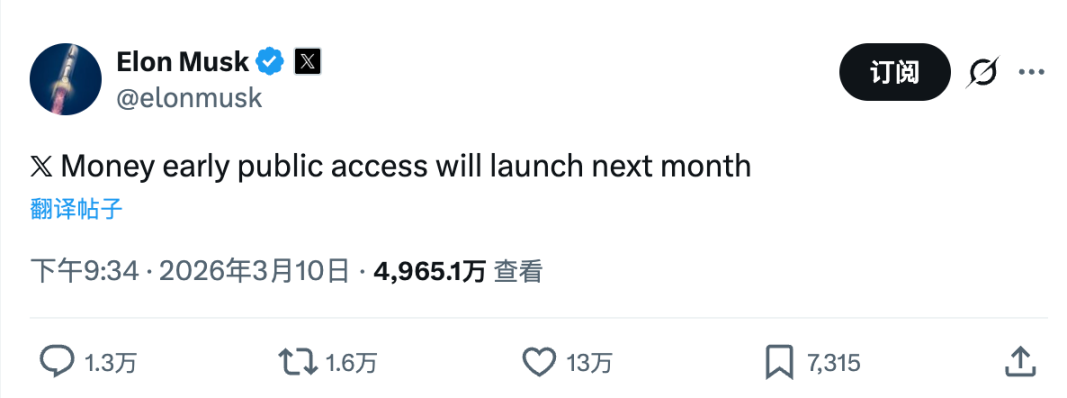
On March 10, 2026, Elon Musk personally announced on X: “X Money will open early public access next month.”
This single-line post sent ripples across the crypto community—Dogecoin surged in response, media outlets rushed to cover the story, and the U.S. fintech industry began reassessing the competitive threat posed by this social media company.
X Money—the payment product long incubated internally—is now entering its final sprint toward public visibility. Yet beneath the hype lies a more fundamental question left unresolved: Is X Money a genuine financial revolution—or yet another Musk-style narrative-driven marketing campaign?
Musk’s “Everything App” Strategy
X Money did not appear out of thin air. Shortly after acquiring Twitter, Musk publicly stated his goal of building an “Everything App”—a super app modeled after China’s WeChat, integrating social networking, payments, shopping, and transportation into a single platform. Payments sit at the core of this vision.
Musk aims to replicate this path in the United States. His logic is straightforward: X already commands approximately 600 million monthly active users (MAUs), who collectively spend massive amounts of time on the platform each day. Embedding payment functionality directly into this environment would elevate X from an attention container into a true financial gateway—the central node for all users’ monetary transactions—and potentially push MAUs to 1 billion.
X Money’s Core Product Strengths
Based on features disclosed so far, X Money clearly positions itself above traditional P2P tools like Venmo or PayPal.
One standout feature is its 6% annual percentage yield (APY). Compared to the sub-0.5% interest rates typical of traditional U.S. savings accounts, X Money enters the market with significantly higher returns—a likely key driver for attracting early adopters.
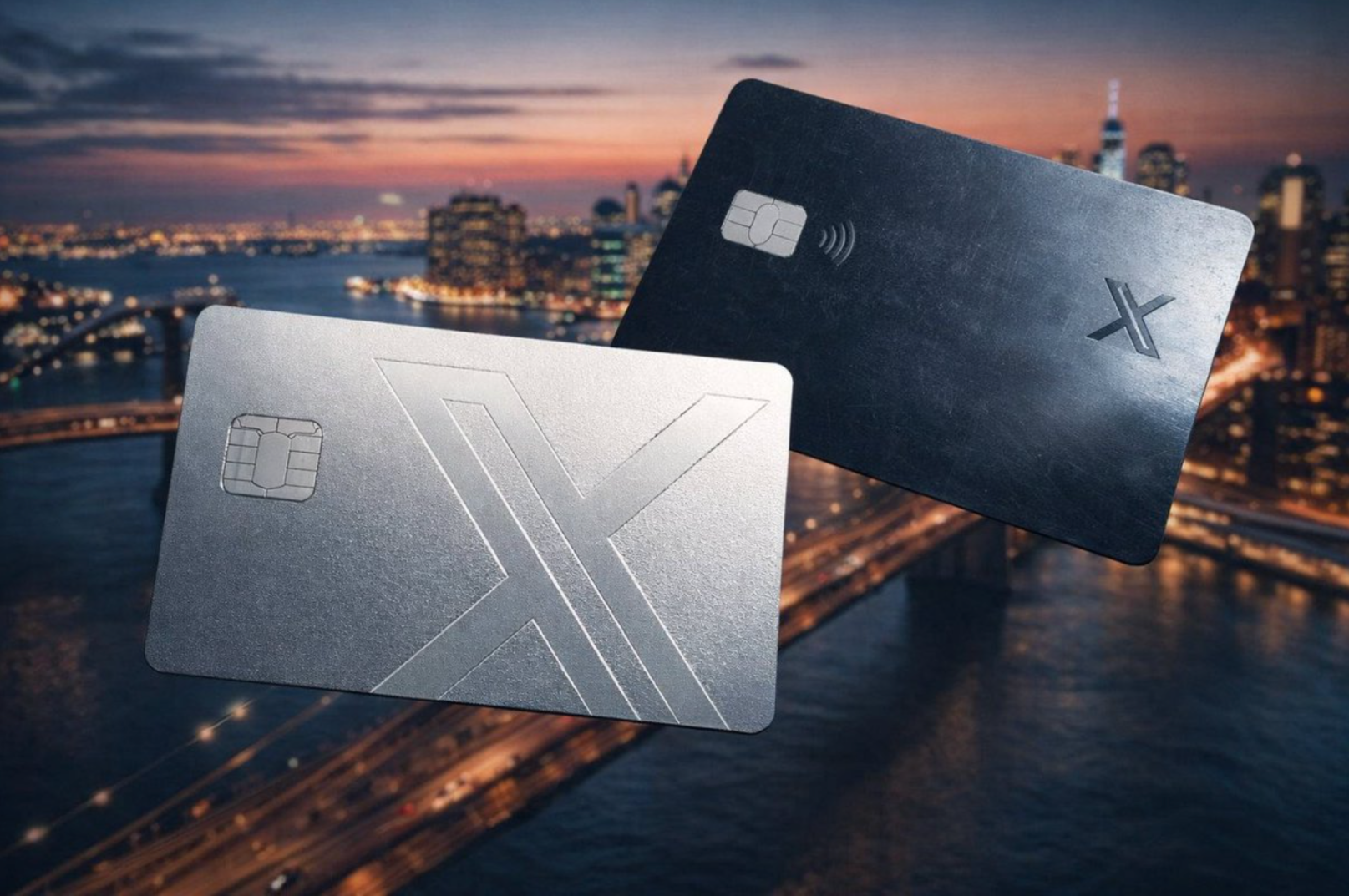
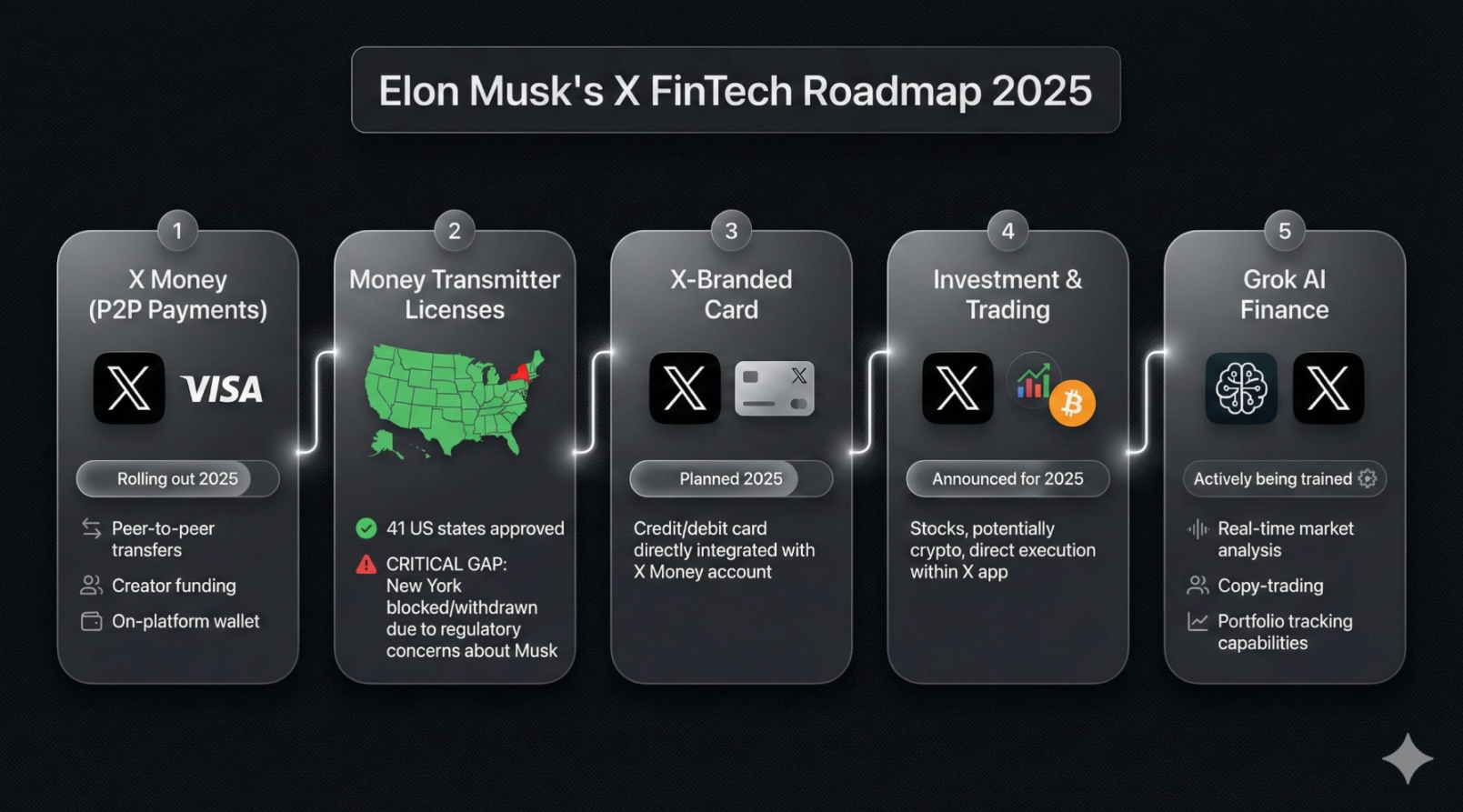
Additionally, the product offers P2P instant transfers, direct deposit, a metal debit card engraved with the user’s handle, cash-back rewards, zero foreign exchange fees, and a $25 sign-up bonus.
Its interface features three main tabs—“Account,” “Rewards,” and “Activities”—designed more like a lightweight digital bank account than a simple money-transfer tool. This signals X Money’s broader ambition: not merely to serve as a payment utility, but to cultivate a social ecosystem centered around financial behavior.
Transaction settlement relies on the Visa Direct network, enabling near-instant fund availability. In January 2025, X officially announced a partnership with Visa, which became X Money’s first official payment partner.
The strategic significance of this alliance is clear: X contributes traffic and real-world usage scenarios; Visa provides global clearing infrastructure. Together, they largely circumvent the high barriers associated with building a payments system from scratch.
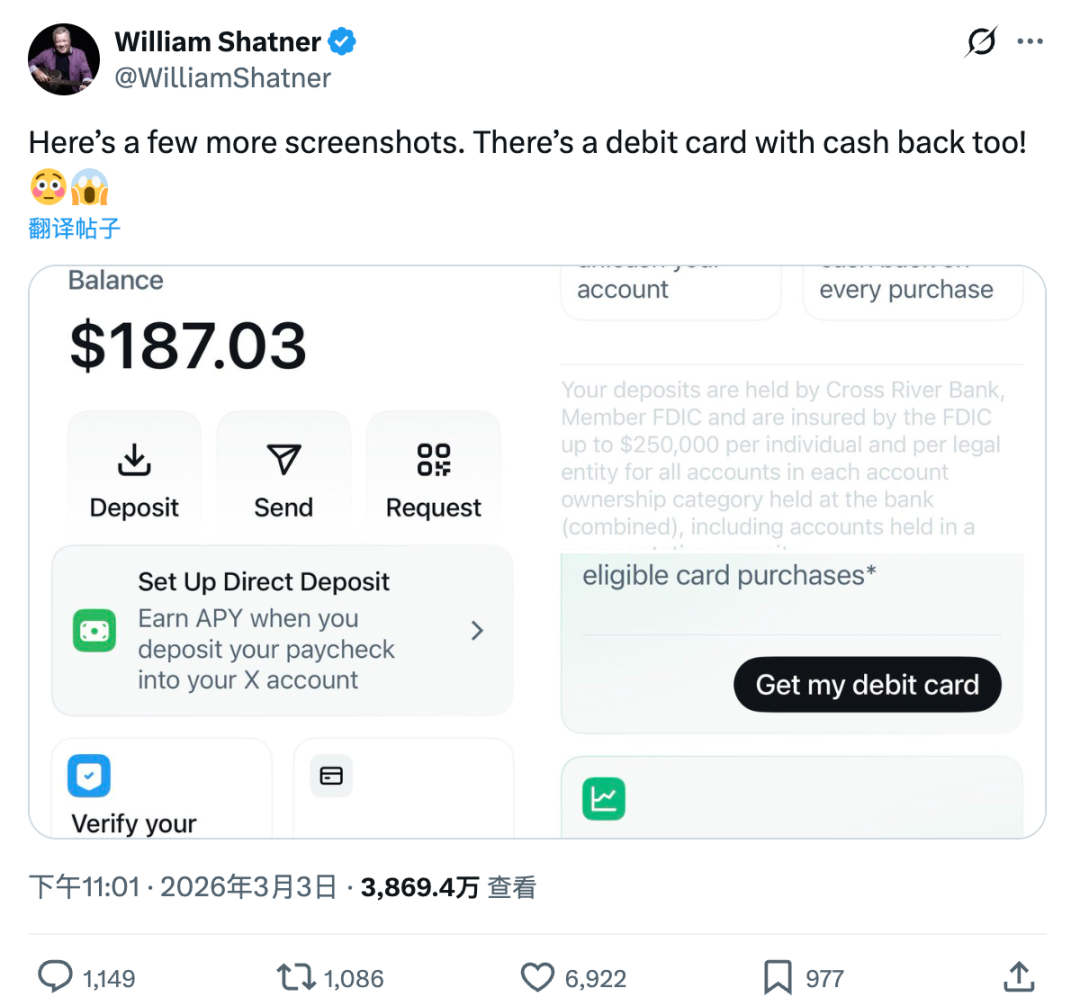
The product has completed internal closed testing. Its external beta phase bears unmistakable Musk-style marketing flair—X launched a charity auction hosted by actor William Shatner, granting X Money invitation access to donors contributing at least $1,000, with only 42 slots available. Shatner himself was among the first to try the product and shared screenshots on social media.
The Ambition to Emulate WeChat—and the Gap Between Vision and Reality
Musk’s benchmark has always been WeChat.
WeChat Pay’s rapid rise stemmed largely from China’s unique ecosystem: a near-universal instant messaging app, deeply integrated merchant networks, and a historical window during which mobile payments had yet to mature.
X faces a radically different battlefield. The U.S. payments market is highly developed, with Apple Pay, Venmo, PayPal, and Zelle each commanding dominant niches—and credit card networks already deeply embedded in everyday consumer behavior.
Although X boasts ~600 million MAUs, most users treat it primarily as an information platform—not a financial tool. Convincing users to actually deposit funds into a “social app” demands overcoming not just technical hurdles, but also a profound psychological barrier.
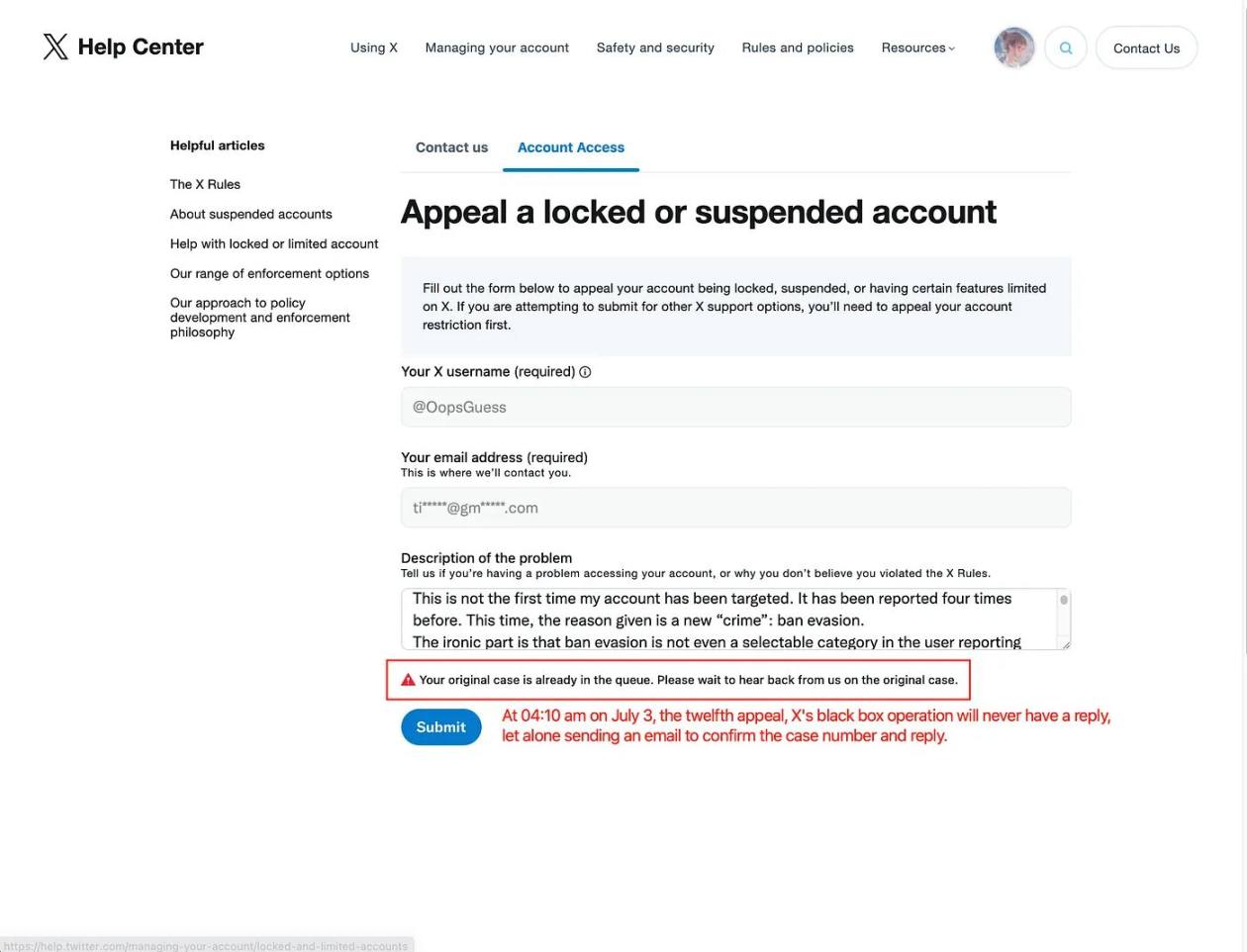
From a trust perspective, X’s history of account suspensions raises legitimate concerns about fund security and account accessibility. Even the highest interest rate may fail to persuade users to migrate their financial assets if such concerns remain unaddressed. Meanwhile, past controversies surrounding X’s data practices and privacy handling will be amplified dramatically in a financial context.
These concerns have already surfaced at the regulatory level. In 2025, a New York State senator sent a public letter urging the state’s Department of Financial Services (DFS) to exercise caution when reviewing X Money’s licensing applications—citing privacy protection and regulatory risk as primary reasons.
In fact, over the past several years, X has quietly advanced its compliance efforts. It currently holds money transmitter licenses in over 40 U.S. states and Washington, D.C., and is registered with the Financial Crimes Enforcement Network (FinCEN). Applications remain pending in a few markets—including New York—but the overall compliance framework is largely in place. User funds are held in custody at Cross River Bank, an FDIC-insured institution, with up to $250,000 per account protected.
Cryptocurrency’s Potential Role
Among all discussions surrounding X Money, one topic consistently hovers at the margins: cryptocurrency. On this issue, Musk has opted for silence—at least for now.
Musk’s relationship with the crypto world is well documented. Over recent years, he has repeatedly voiced public support for Dogecoin—and Bitcoin alike. Consequently, when news of X Money broke, the crypto community immediately speculated whether the platform would integrate Dogecoin, XRP, or some stablecoin.
Based on currently disclosed information, X Money will launch initially as a purely fiat-based system—with USD as the priority currency—and the company has never officially confirmed plans to support Dogecoin or other crypto assets.
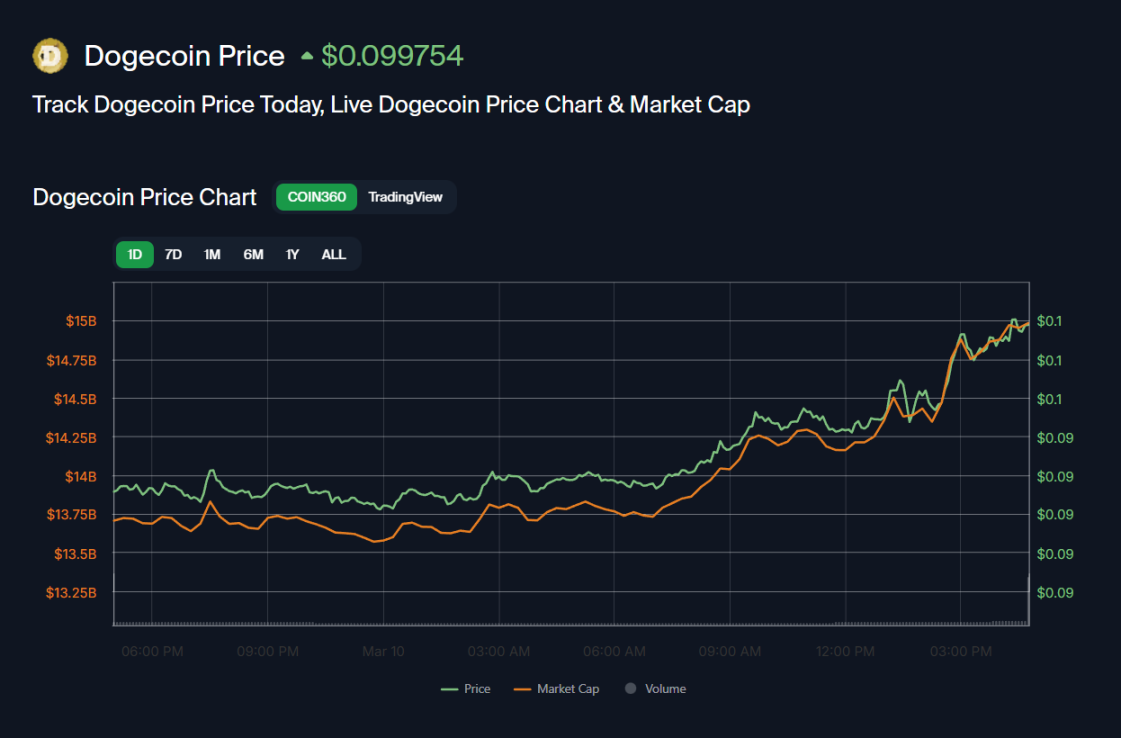
Yet markets clearly think otherwise: Following Musk’s announcement of X Money’s launch timeline, Dogecoin’s price spiked sharply. Community speculation about a “$” symbol button abounds, and rumors linking XRP and Ripple’s stablecoin RLUSD continue circulating.
This ambiguity may well be Musk’s calculated brilliance. For him, crypto integration functions less as an immediate necessity and more as a strategic card to be played at the optimal moment. Launching first with fiat allows X Money to sidestep additional regulatory complexity while simultaneously building a user base and accumulating valuable financial data—preserving ample room for future expansion.
User Trust and Habitual Barriers
The real challenge may not stem from crypto itself. For X Money, pressure comes not only from direct competitors like PayPal or Venmo, but more fundamentally from users’ entrenched habits. Depositing money into a social media platform account remains a psychologically heavier lift for most American users than any technical hurdle.
On the positive side, X’s distribution cost is exceptionally low. Reaching 600 million users requires no incremental customer acquisition spend—a decisive advantage over Venmo’s early days, when it had to build from zero. A 6% APY stands to become a powerful acquisition lever amid falling interest rates. The metal debit card—engraved with users’ handles—adds tangible identity reinforcement.
Conversely, the “super app” model faces cultural limitations in the U.S. American users prefer dedicated apps for specific tasks rather than relying on a single all-in-one portal. Past failures—including Bakkt’s collapse and Kraken’s stalled application for a Federal Reserve master account—underscore how fintech ventures in the U.S. confront dual headwinds: stringent regulation and ingrained user habits.
Scaling and Global Expansion Challenges
If X Money successfully launches early public access in April, the real test begins only then.
First: Can it achieve scalable adoption? While 6% APY is an attractive hook, retaining users’ long-term financial behavior depends entirely on the consistency and reliability of the end-to-end product experience.
Second: Its global rollout timeline. X plans to extend internationally by year-end 2026—but GDPR in the EU, diverse AML/KYC requirements across jurisdictions, and local competitive dynamics pose significant, nontrivial variables.
Third: Its revenue model. X Money waives numerous fees for users—so where will income come from? Relying on net interest margin faces pressure amid declining rates; pivoting to value-added services would require building a far more comprehensive financial product suite.
Historically, U.S. internet giants’ forays into finance have often ended in disappointment—Facebook Pay faltered, Bakkt’s growth stalled, and Google Pay underwent repeated restructuring. X Money’s approach leans closer to that of a bank than a tech firm—a distinction that represents both an advantage and a burden.
Genuine financial ambition is never replicated overnight. WeChat’s success emerged from a rare confluence of timing, policy, and ecosystem readiness. Whether X Money can replicate that miracle—in the U.S. or globally—remains an open question. Its April early-access launch will deliver the first real verdict on this audacious experiment.
Join TechFlow official community to stay tuned
Telegram:https://t.me/TechFlowDaily
X (Twitter):https://x.com/TechFlowPost
X (Twitter) EN:https://x.com/BlockFlow_News