A New Narrative for the $5,000 Era: The “Old King” Returns—How to Understand the Tokenization Logic of Gold?
TechFlow Selected TechFlow Selected
A New Narrative for the $5,000 Era: The “Old King” Returns—How to Understand the Tokenization Logic of Gold?
Paper gold locks in only settlement commitments within the financial system, whereas tokenized gold returns liquidity to the asset itself.
 Navigating Web3 tides with focused insights
Author: imToken
A year ago, if someone told you gold would surge to $5,000 per ounce, most people’s first reaction would likely have been disbelief—pure fantasy.
Yet that is precisely what has happened. In just half a month, the gold market galloped forward like an untethered stallion, smashing through historic resistance levels at $4,700, $4,800, and $4,900 per ounce—without pause or reversal—racing toward the $5,000 milestone now collectively watched by the market.
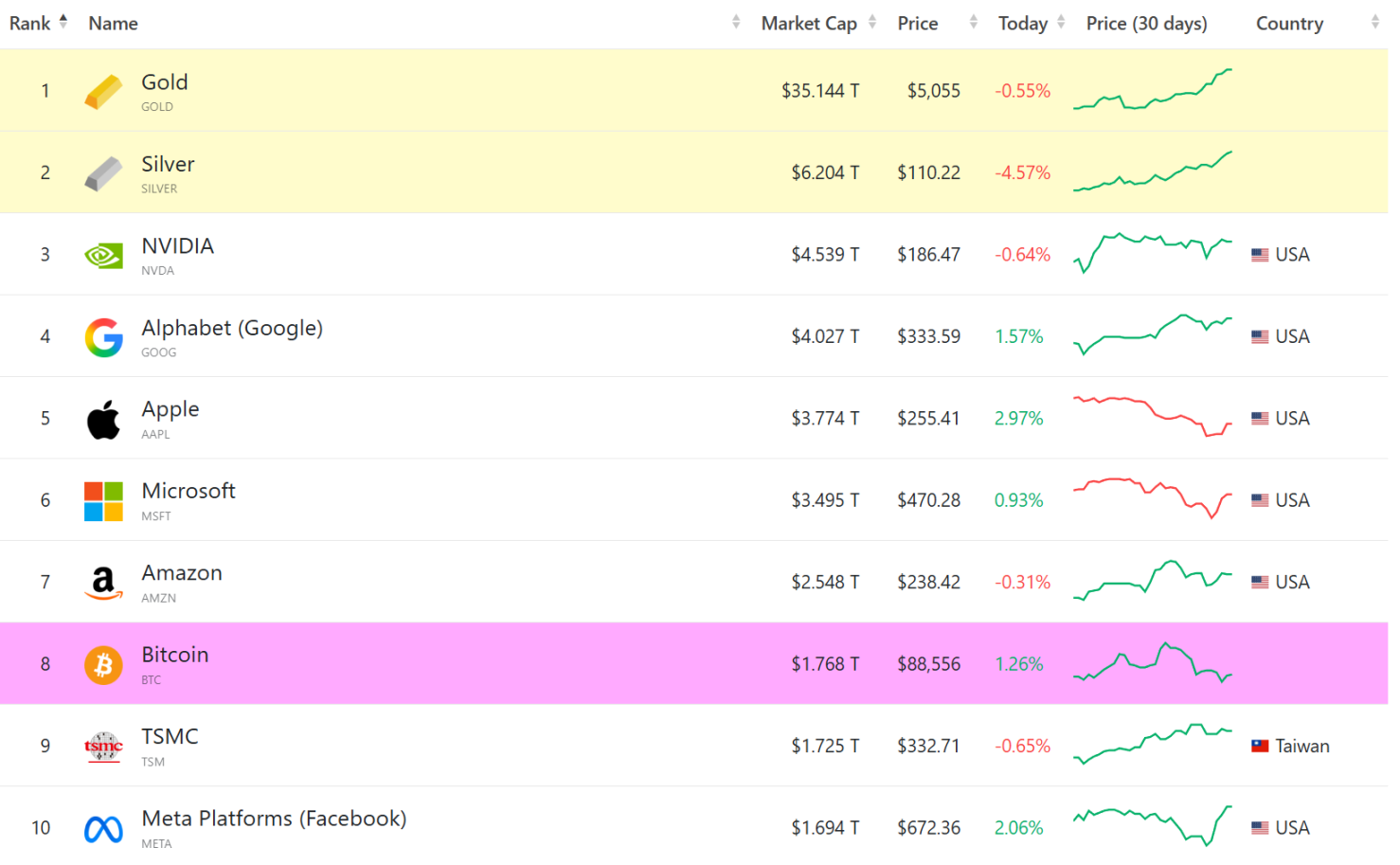
Source: companiesmarketcap.com
Indeed, after repeated global macroeconomic uncertainties have been validated, gold has returned to its most familiar role—as a consensus asset independent of any single sovereign promise.
But simultaneously, a more practical question is emerging: As gold’s consensus reasserts itself, are traditional holding methods no longer capable of meeting the demands of the digital age?
I. A Macro Cycle Inevitability: The “Old King” Reclaims the Throne
Viewed over a longer macro cycle, this bull run in gold is not short-term speculation—it is a structural return under conditions of macro uncertainty and a weakening U.S. dollar:
Geopolitical risks have expanded beyond Ukraine and Russia into critical resource- and shipping-route regions such as the Middle East and Latin America; the global trade system has repeatedly been disrupted by tariffs, sanctions, and policy-driven博弈; and U.S. fiscal deficits continue to balloon, prompting increasingly frequent debates about the long-term stability of the dollar’s credibility. In this environment, markets inevitably accelerate their search for a value anchor that relies on no single nation’s credit and requires no third-party endorsement.
From this perspective, gold does not need to prove it generates returns—only that it remains reliably present in times of uncertain trust.
This also partly explains why BTC—once hailed as “digital gold”—has not fully assumed the same consensus role in this cycle, at least not along the macro hedging dimension. Capital flows have already delivered their verdict here, so we will refrain from elaborating further (see extended reading: From Trustless BTC to Tokenized Gold: Who Is the Real “Digital Gold”?).
Yet gold’s renewed consensus does not mean all problems are solved. For a long time, investors have had little choice but to pick between two imperfect holding methods.
First is physical gold: highly secure and sovereign, yet virtually illiquid. Storing gold bars in a safe deposit box entails high costs for storage, security, and transfer—and renders the asset practically unusable for real-time trading or daily applications.
Recent reports of bank safe deposit boxes being “sold out” across multiple regions highlight how this contradiction is intensifying: more people want gold physically in their possession, yet reality often fails to accommodate that desire.
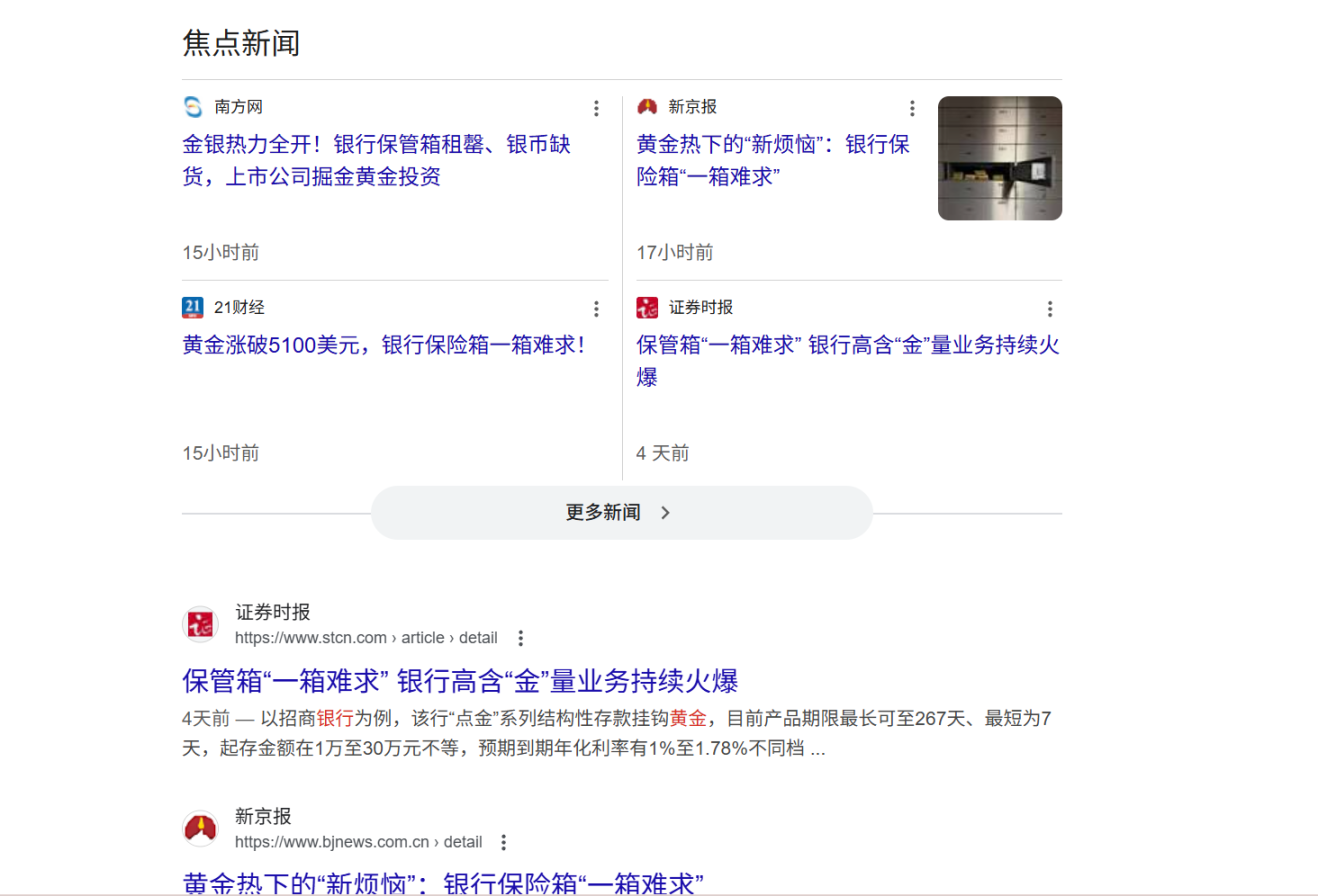
Second are paper gold or gold ETFs, which partially lower the physical-holding barrier. For instance, paper gold products issued via bank accounts or brokerage systems represent claims on financial institutions—backed by account-system settlement promises.
The problem, however, is that this liquidity is incomplete—paper gold and gold ETFs offer only liquidity locked within a single financial system: they can be bought and sold within one bank, one exchange, or one clearing framework—but cannot freely flow outside that system.
This means they cannot be subdivided or composited, nor can they collaborate cross-system with other assets—let alone be used directly across diverse contexts. At best, they deliver “in-account liquidity,” not true asset liquidity.
Take my own first gold investment product, “Tencent Micro-Gold,” as an example. From this perspective, paper gold does not truly solve gold’s liquidity problem—it merely substitutes physical inconvenience with counterparty credit.
Ultimately, security, liquidity, and sovereignty have long existed in a state of mutual exclusivity. In today’s highly digital and cross-border world, such trade-offs are increasingly unsatisfying.
It is precisely against this backdrop that tokenized gold has begun entering broader awareness.
II. Tokenized Gold: Restoring “Full Liquidity” to the Asset Itself
Tokenized gold, exemplified by Tether’s XAUt (Tether Gold), aims not merely to make gold “easier to hold or trade”—a surface-level improvement paper gold already achieves—but to address a far more fundamental question:
How can gold achieve the same full, cross-system liquidity and composability as crypto assets—without sacrificing its backing by physical gold?
Examining XAUt’s design logic reveals it is neither radical nor aggressive—even conservative and restrained: each XAUt token represents one troy ounce of physical gold held in a London vault, auditable and verifiable, with token holders retaining direct claim rights to the underlying gold.
This architecture introduces no complex financial engineering nor attempts to amplify gold’s properties via algorithms or credit expansion. Instead, it deliberately honors traditional gold logic—ensuring physical backing first, then layering on digital enhancements.
At its core, tokenized gold like XAUt or PAXG does not seek to “invent a new gold narrative.” Rather, it re-packages the oldest asset form using blockchain technology. In this sense, XAUt is better understood as “digital physical gold,” not a speculative crypto derivative.
Yet more importantly, gold’s liquidity tier has undergone a fundamental shift. As noted earlier, whether paper gold or gold ETFs, liquidity in traditional systems remains “in-account liquidity”—confined within one bank, one broker, or one clearing system, tradable and settleable only within predefined boundaries.
XAUt’s liquidity, by contrast, is intrinsically attached to the asset itself. Once gold is mapped onto-chain as a token, it naturally inherits crypto assets’ foundational attributes: it can be freely transferred, subdivided, composited, and moved across protocols and applications—without requiring permission from any centralized institution.
This means gold no longer depends on “accounts” to demonstrate liquidity. Instead, it circulates globally, 24/7, as the asset itself (see extended reading: “The Gold Father” Debates CZ: Who Is “Digital Gold”? A Trust War Spanning TradFi and Crypto). Within the on-chain environment, XAUt and similar tokens cease to be mere “tradable gold tokens”—they become foundational asset units recognizable, callable, and composable by other protocols:
- They can freely swap with stablecoins and other assets;
- They can be integrated into sophisticated portfolio allocation and strategy frameworks;
- They can even serve as value carriers in consumer payment use cases;
This is precisely the dimension of “liquidity” that paper gold has never delivered.
III. From “On-Chain” to “Usable”: The True Inflection Point for Digital Physical Gold
For this reason, tokenized gold achieving “on-chain” status alone falls far short of the finish line.
The true inflection point lies in whether this “digital physical gold” can be easily held, managed, traded—or even used as currency for consumer payments—by end users. Returning to our earlier point: if tokenized gold remains merely a string of code on-chain, ultimately encapsulated within centralized platforms or single-entry interfaces, it differs little from paper gold.
Against this backdrop, lightweight self-custodial solutions like imToken Web begin to reveal their significance. Take imToken Web’s exploration as an example: it enables users to access and manage their tokenized gold and other crypto assets instantly—via any device, simply by opening a web browser.
Within this self-custodial environment, private keys remain fully under user control. Your gold does not reside on any service provider’s servers—it is anchored directly to your blockchain address.
Moreover, thanks to interoperability built into Web3 infrastructure, XAUt is no longer inert heavy metal sleeping in a vault. It supports flexible micro-purchases and, when needed, can instantly unleash gold’s purchasing power into global consumption scenarios via payment tools like the imToken Card.
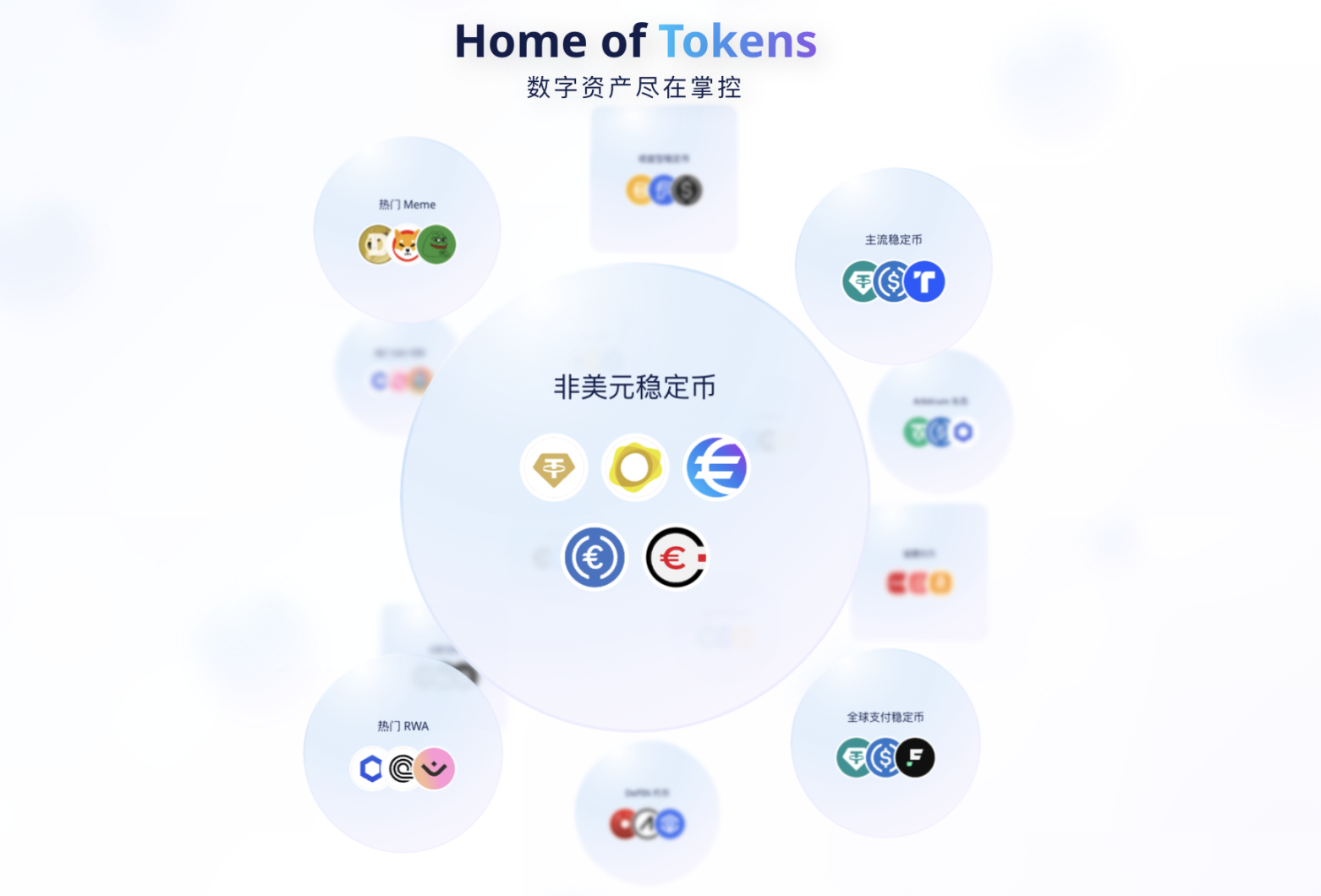
Source: imToken Web
In short, within the Web3 environment, XAUt is not only tradable—it can be composited with other assets, swapped, and connected to payments and consumption use cases.
And only when gold simultaneously achieves both extremely high store-of-value certainty and modern usability potential does it truly complete its transition—from a “traditional safe-haven asset” to a “currency for the future.”
After all, gold—the consensus asset spanning millennia—is not inherently outdated; what is outdated is merely the way we hold it.
So when gold enters the blockchain as XAUt—and returns to individual control via self-custodial environments like imToken Web—it does not launch a new narrative. Instead, it continues a timeless logic:
In an uncertain world, true value lies in relying as little as possible on others’ promises.
Join TechFlow official community to stay tuned
Telegram:https://t.me/TechFlowDaily
X (Twitter):https://x.com/TechFlowPost
X (Twitter) EN:https://x.com/BlockFlow_News
 @imTokenOfficial