The U.S. CES opens with 14 key assertions
TechFlow Selected TechFlow Selected
The U.S. CES opens with 14 key assertions
"In these presentations, the key focuses such as Physical AI, Hybrid AI, and Spatial Intelligence are not isolated but rather form a co-evolving ecosystem."
 Navigating Web3 tides with focused insights
By: Xiao Ling Wu, Wu Xiaobo Channel
Las Vegas, the plane has landed. In the first week of the new year, many flocked to CES, marking the beginning of the annual tech extravaganza.
The focus these days has been on people and what they say.
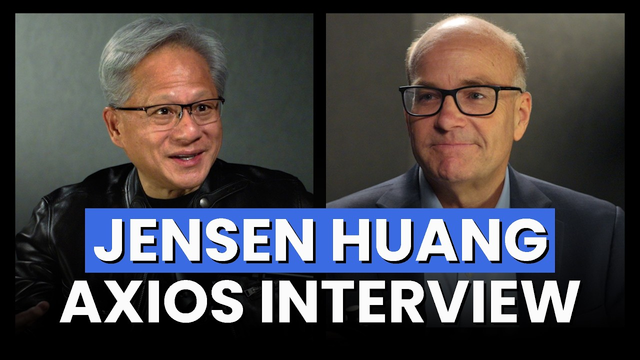
On January 4th and 5th, the two days before the official opening of the exhibition, known as CES Media Days, many companies chose to launch new products. As in previous years, these two days almost turned into a "CEO Summit" for global AI leaders: NVIDIA founder Jensen Huang, AMD Chair and CEO Lisa Su, Intel CEO Pat Gelsinger, Lenovo Group CEO Yang Yuanqing, Qualcomm CEO Cristiano Amon... all made appearances and delivered speeches.
But these speeches went beyond mere product launches; they were more like statements on corporate technology roadmaps and industrial strategies. Every judgment uttered would be dissected and pondered by the world repeatedly.
Regarding this, veteran tech self-media commentator Zhuang Minghao noted that CES was originally a consumer electronics show. However, looking at the speeches from NVIDIA and AMD, especially Jensen Huang's, there's basically no content description targeting the "consumer market" anymore. It's all about the GPUs needed for data centers under the current AI narrative and grand propositions like the so-called limits of the "physical" world. It seems our human consumer goods really aren't that important anymore.
Then, over the next four days, as the lights on the main stage gradually dimmed and the exhibition hall doors opened one by one, the official exhibition period of CES just began. Reportedly, the exhibition area exceeding 2.5 million square feet attracted over 4,000 exhibitors and hundreds of thousands of attendees from around the globe. The hottest tech products like robots, AI PCs, and smart glasses will all debut here.

CES 2026 Opens
Chinese companies are also densely present. There are established manufacturers like Lenovo, Hisense, and TCL, as well as robotics companies like Unitree Robotics, Zhiyuan Robot, and CloudMinds. In niche segments like floor scrubbers, lawn mowers, stair-climbing machines, and pool cleaners, Chinese manufacturers are also present.
As Jensen Huang repeatedly emphasized in his speech: "The AI race has begun, and everyone is striving to reach the next level."
So, in the multiple keynote speeches on the first day, how did the leaders of major AI companies interpret industry trends and depict their respective future blueprints? According to Du Yu, President of the Weikezhi AI Research Institute:
Jensen Huang's core logic is that AI must understand the common sense of the physical world to truly interact with the real world. From a business logic perspective, the ceiling of the real world is larger than that of the online world.

Jensen Huang wore crocodile skin this time
Intel emphasized hybrid AI and the edge, essentially because there are many real-world scenarios requiring edge AI, such as healthcare, finance, and industry, highlighting data privacy, low latency, and zero network disruption.
AMD's Lisa Su said computing power needs to increase another 100-fold in the coming years, essentially addressing the "computing power shortage" issue. AMD's strategy is to compete for NVIDIA's data center market with more cost-effective computing power.
Invited by Lisa Su, the "Godmother of AI" Fei-Fei Li once again emphasized the inherent limitation that "large language models are ultimately constrained by language itself." She believes language is a tool to describe the world, not the world itself.
From physical AI, hybrid AI, edge AI, to computing power, spatial intelligence, AI agents... in these keynote speeches, both new and old concepts together outline a panoramic view of future AI development. We have compiled fourteen golden quotes related to the future development of AI. They serve as a small temporal marker for this rapidly evolving AI era, to be verified in the future. Simultaneously, we also invited experts in related fields to share their views on these insights.
Compilation of Fourteen Golden Quotes
1. "The ChatGPT moment for physical AI is coming."
— Jensen Huang
2. "The breakthrough in physical AI moves AI from screens into our physical world—and it's happening just in time, because the world is building all kinds of factories for chips, computers, life-saving drugs, and AI. As global labor shortages intensify, we need automation powered by physical AI and robotics more than ever."
— Jensen Huang
3. "Today I want to talk a bit about AIpamayo, which is the work we've done on autonomous vehicles—we not only open-sourced the models but also the data we used to train these models. Because only then can you truly trust the origin of the models. We open-source all models, we help you make derivatives from them."
— Jensen Huang
4. "If you look at world models, OpenAI generates more tokens than any other model, and the second largest group is probably open-source models. My guess is that over time, open-source models might become number one."
— Jensen Huang
5. "We believe that as AI capabilities continue to improve, localized computing will only become more important. First, the higher the degree of localization, the lower the latency, and thus the better the performance; second, the more localized the AI, the more secure it is and truly 'belongs to you'; third, AI inference costs money every time, cloud-based centralized computing faces cost and bandwidth bottlenecks, while localized computing can significantly reduce overall costs by reducing transmission and infrastructure dependency; fourth, for enterprises, the core value of local computing lies not in performance, but in bringing data, intelligence, and control back into their own hands."
— Perplexity CEO Aravind Srinivas
6. "The era of hybrid AI begins... local AI securely executes tasks, keeping data on the device, while cloud AI handles global reasoning, planning, and multi-agent orchestration."
— Intel Client Computing Group Senior Vice President Jim
7. "You will see hundreds of different form factors of edge devices in critical areas like smart cities, factories, healthcare, and various automated systems, with huge and growing demand."
— Intel Client Computing Group Senior Vice President Jim
8. "The number of AI users has jumped from an initial 1 million to over 1 billion active users today... We anticipate the number of active AI users will grow to over 5 billion, with AI truly integrating into every aspect of our lives, much like mobile phones and the internet today."
— Lisa Su
9. "The computing power we have now is far from enough to support everything AI can do... To make AI ubiquitous, we need to increase global computing power a hundredfold in the coming years, or more than tenfold in the next five years."
— Lisa Su
10. "In the future, a country's GDP growth will largely be determined by its available computing power."
— OpenAI President Greg Brockman
11. "What excites me is that now a new generation of AI technologies has emerged, including embodied AI and generative AI, and we can finally endow machines with capabilities closer to human levels—spatial intelligence."
— Fei-Fei Li
12. "We are moving from 'systems that passively understand the world' to 'systems that help us interact with the world'."
— Fei-Fei Li
13. "Most AI assistants today are reactive agents; you open an app, then ask a question to get a response. But when AI runs fast on devices and is always on, it can proactively perform tasks for you."
— Luma AI CEO Amit
14. "2026 will be the first year of AI agents. AI will be able to help you complete more tasks, even potentially handling entire tasks end-to-end, rather than just doing piecemeal work."
— Luma AI CEO Amit
Expert Opinions
Hu Yanping: Distinguished Professor at Shanghai University, researcher in intelligent technology industry and intelligent economy.
Regarding Jensen Huang's statement that "the ChatGPT moment for physical AI is coming," if more specifically positioned, 2026 might be the GPT-3 to GPT-3.5 moment for physical AI, meaning significant progress, but expectations shouldn't be set too high, especially regarding the "brain development" of robots. However, the mass production moment for L3 autonomous driving arriving this year is relatively certain and optimistic.
Furthermore, both AMD and NVIDIA emphasized full-stack AI capabilities from chips to hosts and clusters. Their products, from chip computing power and development environments to vertical applications, are comprehensively deployed across multiple vertical scenarios rather than single-point breakthroughs. Especially AMD, catching up from behind, has significantly improved product performance on the basis of already achieving a complete AI layout from data centers to personal devices.
Fei-Fei Li showcased Marble, the first commercial world model from World Labs, aiming to generate persistent, navigable, and consistent 3D worlds to assist human creativity rather than replace humans. This aligns with her previously proposed "human-centered" AI development philosophy.

Fei-Fei Li delivers a speech
Next, for this CES 2026, I will focus on five key areas: first, embodied intelligence like robots; second, smart devices like smart glasses; third, the L3 autonomous driving industry chain; fourth, changes in training and inference computing architectures as well as terminal and edge AI computing power; fifth, changes brought to the smart health field by the infusion of model capabilities based on sensing algorithms.
The "AI China Chain" in the sense of the AI industry chain has already taken shape, and the "AI China Loop" in the sense of AI technology and application has also closed. While Chinese companies are launching a dazzling array of innovative products, they have the potential to provide more solutions for the world.
Du Yu: President of the Weikezhi AI Research Institute, Ph.D. in Technological Economics from the Chinese Academy of Social Sciences.
After listening to several speeches, my impression is that the "computing power arms race" has become white-hot. All three giants emphasize computing power, but their paths are completely different: NVIDIA pursues absolute performance, AMD pursues cost-effectiveness, and Intel pursues edge proliferation. This reminds me of the recent rush of four domestic GPU "little dragons" going public, each with its own strengths. This also means that in the next 2-3 years, chip price wars and performance wars will be very intense, which is a major boon for startups and enterprise customers—computing power costs will drop significantly.
China may not catch up in chip manufacturing in the short term, but it is fierce in AI application hardware. Among the robotics companies at the CES exhibition site, Chinese companies account for more than half—Unitree humanoid robots, Zhiyuan robots, Dreame floor-cleaning robots, all Chinese. Robots are just one typical example. This is because the Chinese market is large, has many scenarios, and iterates quickly. Therefore, my advice to Chinese startups is: compete in different segments, adopt a long-term perspective.
Zhang Xiaorong: President of the Deep Tech Research Institute.
In his speech, Jensen Huang's viewpoint is not just a technological upgrade but a paradigm shift. Previous AI was "keyboard and mouse interaction," current AI is "visual and language interaction," and the "physical AI" defined by Jensen Huang is "action interaction." Through the Cosmos model (learning physical laws from videos) and the Newton engine (real-time physical computing), he attempts to solve AI's "hallucination" problem—making machines understand that "water is fluid, glass is brittle." This is to enable AI to work safely in factories and homes, not just write poems and paint.
Both AMD and Intel avoided direct competition with NVIDIA's GPUs, each charting its own path:
Lisa Su demonstrated AMD's position in the AI industry chain. The Helios system and the Ryzen AI 400 series for PCs she emphasized convey a clear signal: the computing power competition is a protracted war, AMD is ready to respond, and it focuses more on the edge and cost-effectiveness. AMD's strategy is more like that of a "pragmatic idealist," emphasizing "breaking the computing power bottleneck," essentially lowering the barrier to using AI. If computing power costs don't come down, small and medium-sized enterprises can't afford to play, and the AI ecosystem will wither.

Lisa Su introduces the AMD Instinct MI455X GPU
Intel's emphasis on "local computing" is essentially finding a differentiated survival path to bring AI into the hands of ordinary users under NVIDIA's strong cloud monopoly. Intel is indeed fighting a "defensive battle," but also a "battle it must win"—they have identified a pain point: not all AI tasks need to go to the cloud. Privacy issues (like home monitoring), latency issues (like gaming response), and cost issues all require computing power to move downward. By deploying NPUs (Neural Processing Units) in PCs and edge devices, Intel is building the "capillaries" of the AI era. If AI only exists in the hands of cloud giants, that's unhealthy; Intel is trying to make AI truly "ubiquitous."
The core concepts from several speeches—physical AI, local computing, breaking bottlenecks, spatial... outline a complete path for AI moving from "cloud brains" to the "physical world."
Combined with the trends at CES 2026, my feelings about the future can be summarized in three words: "Agents, Embodied Intelligence, Technical Solutions."
1. AI will step out of "dialog boxes": The future is no longer just Copilot, but Co-worker. We expect to see AI agents helping us book tickets, operate software, and even clean our rooms through robots.
2. Explosion of hardware forms: 2026 will be a year of massive explosion for humanoid robots and AI-defined vehicles. We will see more forms of AI physical entities in factories and on roads.
3. Cost reduction: With the launch of NVIDIA's Rubin architecture and AMD/Intel solutions, AI inference costs will drop significantly. This means we will see more affordable and useful AI applications, not just expensive luxuries.
Liu Xingliang: Renowned digital economy scholar, member of the MIIT Information and Communication Economy Expert Committee.
In these speeches, the major focal points like physical AI, hybrid AI, and spatial intelligence are not isolated but form a co-evolving ecosystem. AMD and NVIDIA provide near-infinite computing power in the cloud, driving models to become immensely powerful. Then, these capabilities are distributed to the devices around us through Intel's hybrid architecture and the multimodal models envisioned by Fei-Fei Li, ultimately generating value in the real world through the physical AI and robotics advocated by NVIDIA.
In this grand picture, Chinese companies are by no means bystanders but crucial participants, expected to play key roles in the following areas:
Main battlefield for application innovation: China possesses the world's largest and most diverse application scenarios and market demands. In areas like e-commerce, social media, mobile payments, smart cities, and manufacturing, Chinese companies can combine globally leading AI foundational models and hardware with localized deep insights to foster world-class AI application innovations. For example, China has significant advantages in AI-empowered supply chains, personalized recommendations, and industrial automation.
A key link in the hardware industry chain: China occupies a central position in global electronics manufacturing and supply chains. From server manufacturing, AI terminal devices (PCs, phones, robots) to data center construction, Chinese companies are an indispensable force in transforming advanced AI technology into physical products and achieving large-scale delivery.
Technology breakthrough players in specific fields: In areas like AI chip design (e.g., Huawei Ascend, Cambricon), autonomous driving (e.g., Baidu Apollo, Xpeng, Huawei Inside model), and robotics, Chinese companies have already accumulated deep technical expertise. Facing international competition, they are expected to achieve differentiated technological breakthroughs by focusing on specific vertical fields and leveraging the scale effect of the domestic market.
Active contributors to the open-source ecosystem: An increasing number of Chinese tech companies are embracing open source, contributing code, models (e.g., DeepSeek), and datasets to the global community. This helps enhance China's influence in the global tech community and benefits from collaboration.
The future depicted by CES 2026 is clear and exciting. Chinese companies need to leverage their advantages in market, supply chain, and application innovation, actively integrate into the global technology ecosystem on one hand, and courageously tackle core technological challenges on the other. The future AI world will undoubtedly be a multi-polar, collaborative, and fiercely competitive stage, and Chinese companies are destined to be one of the main protagonists on it.
Join TechFlow official community to stay tuned
Telegram:https://t.me/TechFlowDaily
X (Twitter):https://x.com/TechFlowPost
X (Twitter) EN:https://x.com/BlockFlow_News