Are stablecoins considered cash? After the Genius Act, stablecoin accounting standards may be adjusted.
TechFlow Selected TechFlow Selected
Are stablecoins considered cash? After the Genius Act, stablecoin accounting standards may be adjusted.
Under Trump's push, accounting standards setters will delve into cryptocurrency in 2026.
 Navigating Web3 tides with focused insights
Written by: Mark Maurer, The Wall Street Journal
Compiled by: Ismay, BlockBeats
The Financial Accounting Standards Board (FASB) has indicated it will study two crypto-related issues in 2026: whether some crypto assets might be classified as "cash equivalents" and how to account for transfers of crypto assets. These topics will be discussed against the backdrop of the Trump administration's increased support for such investments.
Over the past few months, FASB added the two crypto projects to its agenda based on public feedback. These issues are also among the first to be scheduled from over 70 topics that FASB will consider for inclusion on its agenda; some of these topics may evolve into new accounting standards in the future.
FASB stated it expects to decide on the inclusion or exclusion of these over 70 potential topics by late summer this year. These topics originated from an "agenda consultation," where companies, investors, and others could submit letters indicating which issues they wanted FASB to prioritize.
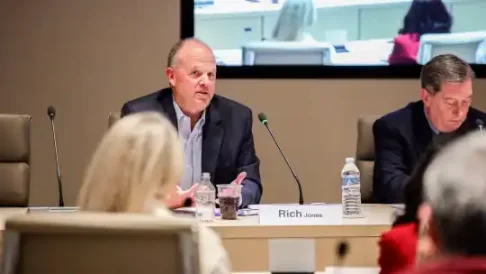
"Many people have invested significant time and effort to help us shape our work agenda," said Chairman Rich Jones. "I see 2026 as the year to translate that input into action and deliver on our commitments."
In October last year, FASB added the "cash equivalents" issue to its agenda, focusing particularly on certain stablecoins—assets typically pegged to a fiat currency.
This move came three months after President Trump signed a stablecoin regulatory bill into law. The bill established a regulatory framework for stablecoins, further integrating these assets into the mainstream financial system. Jones noted that the bill, known as the Genius Act, did not address the accounting question of "what can be considered a cash equivalent." He also emphasized, "Telling people what doesn't qualify as a cash equivalent is as important as telling them what does."
President Trump himself and his family have interests in the crypto company World Liberty Financial; he has introduced a series of policies supporting the crypto industry and halted previous regulatory crackdowns on the sector.
In November last year, FASB voted to study how companies account for transfers of crypto assets, including "wrapped tokens"—tokens that allow a crypto asset on one blockchain to be represented and used on another chain in a "mapped" form.
This project will build upon the requirement FASB introduced in 2023: that companies measure Bitcoin and other crypto assets at fair value. That rule filled a gap in U.S. Generally Accepted Accounting Principles (GAAP) but did not cover non-fungible tokens (NFTs) and certain stablecoins.
Despite the crypto-related accounting requirements introduced in 2023, some still believe the specifics are unclear.
Scott Ehrlich, Managing Director of accounting training and consulting firm Mind the GAAP, said, "I still think there's a huge gap in GAAP right now on a key question: Under what circumstances should we remove a crypto asset from the balance sheet, i.e., derecognize it, and under what circumstances should we not?"
Both projects follow recommendations from a working group established by President Trump to support the crypto industry and also respond to public feedback. Jones stated that these recommendations resonate with views already held by some of FASB's stakeholders.
Jones said he was not under pressure to adopt the working group's recommendations.
"I'm certainly pleased they thought the way to address accounting issues was to suggest these topics for FASB to evaluate," Jones said. "They didn't suggest pushing for legislation to handle accounting issues, nor did they suggest having the SEC come out and speak to set the tone for accounting treatment."
The SEC is responsible for enforcing the accounting standards set by FASB for public companies.
This securities regulator will also closely monitor any adjustments made by FASB. SEC Chief Accountant Kurt Hohl said at a meeting earlier this month, "There are a whole host of issues in the crypto space. The difficulty is they don't fit neatly into the existing accounting standards framework."
Lawmakers and investors occasionally express concerns about FASB's standard-setting approach. Recently, the agency came under scrutiny from U.S. House Republicans, who suggested freezing its funding if it did not withdraw upcoming tax disclosure requirements. Under the new requirements, public companies are preparing to disclose more details about income taxes paid to government entities in their 2025 annual reports.
Some observers question whether the holding of crypto assets has become widespread enough to warrant a place on FASB's agenda. Companies that include Bitcoin on their balance sheets remain a minority, such as Tesla, Block, and Strategy.
"These new crypto projects don't appear to be driven by pervasiveness or other established FASB criteria for adding projects, but more by current political priorities," said Sandy Peters, head of the financial reporting policy team at the CFA Institute, which represents investment professionals.
However, with the Genius Act taking effect in 2027, the newly established regulatory guardrails are expected to reduce the volatility of stablecoins, and market interest in stablecoins is anticipated to grow. Peters noted that without more adequate risk disclosures, investors are unlikely to accept stablecoins as cash equivalents.
As FASB Chairman, Jones also faces a "countdown." His seven-year term is expected to end in June 2027, and the selection of his successor will begin in early 2026.
Jones said that in the remaining approximately 18 months, he hopes the board can initiate and complete an accounting standard on how to distinguish between "liabilities" and "equity." This determination is highly complex for certain instruments like warrants, and both companies and auditors find it challenging.
Jones stated that this project has not yet been formally added to the agenda but could still be completed within that timeframe, as the board could opt for "targeted improvements" rather than building an entirely new model. "I would very much like to get it done before I step down," he said.
Join TechFlow official community to stay tuned
Telegram:https://t.me/TechFlowDaily
X (Twitter):https://x.com/TechFlowPost
X (Twitter) EN:https://x.com/BlockFlow_News