RWA in Numbers: Web3 Development Status and Investment Value Research on Ondo Finance
TechFlow Selected TechFlow Selected
RWA in Numbers: Web3 Development Status and Investment Value Research on Ondo Finance
Tokenizing real-world assets makes it easier for external investors to recognize the value of Web3.
 Navigating Web3 tides with focused insights
Authors: @Moose777_, @Nihaovand
Foreword
This article analyzes the RWA sector and its key player, Ondo Finance, in three sequential parts:
1. Starting from the macro-level state of Web3, extracting recent market data and comparing it with A-shares and U.S. equities—the two major global securities markets—to examine current issues and conditions within the Web3 space;
2. Analyzing the impact of the RWA sector on the broader industry ecosystem;
3. Using Ondo Finance as a case study to analyze its yield-generation solutions.
I. Analysis of the Current State of Web3
(I) Development Status of Web3
Market data shows that the average market capitalization of the cryptocurrency market in 2024 was approximately $2.6 trillion, representing a 62.5% increase compared to the previous bull cycle (average market cap of $1.6 trillion in 2021).
Many leading financial institutions and funds have included crypto assets in their portfolios, and several sovereign nations have adopted cryptocurrencies as strategic reserves. Notable examples include MicroStrategy, Grayscale, Tesla, etc.
However, cryptocurrencies also face numerous challenges such as insufficient liquidity, ambiguous valuation, security risks, and centralization-related censorship issues.
(II) Data Analysis and Comparison
1. Concentration & Market Cap
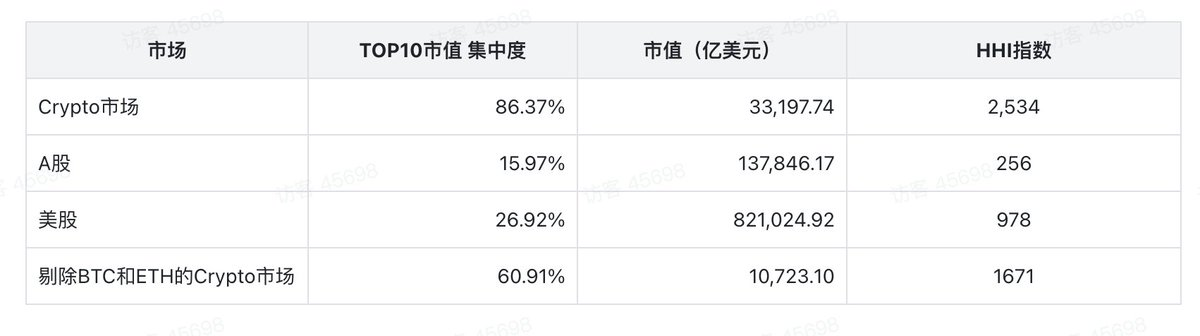
As of February 23, 2025, the total market cap of the cryptocurrency market stood at $3.32 trillion. On February 20, 2025, the total market cap of China's A-share market was approximately $13.78 trillion, while the U.S. stock market reached about $82.10 trillion. Detailed figures are shown in the table below:
Data source: CoinGecko, Wind
The data indicates that regardless of whether the influence of Bitcoin (BTC) and Ethereum (ETH)—the two largest cryptocurrencies—is excluded, the concentration level in the crypto market far exceeds that of both the A-share and U.S. equity markets.
This suggests a highly monopolized ecosystem where BTC and ETH together account for 70% of the market cap, forming a duopoly structure.
This reflects weak investor confidence in other cryptocurrencies—essentially a loss of "value recognition" for altcoins—causing capital to concentrate in major coins. The result is severely inadequate liquidity for long-tail projects, which has already been evident in post-TGE price performance.
2. Trading Volume & Market Cap
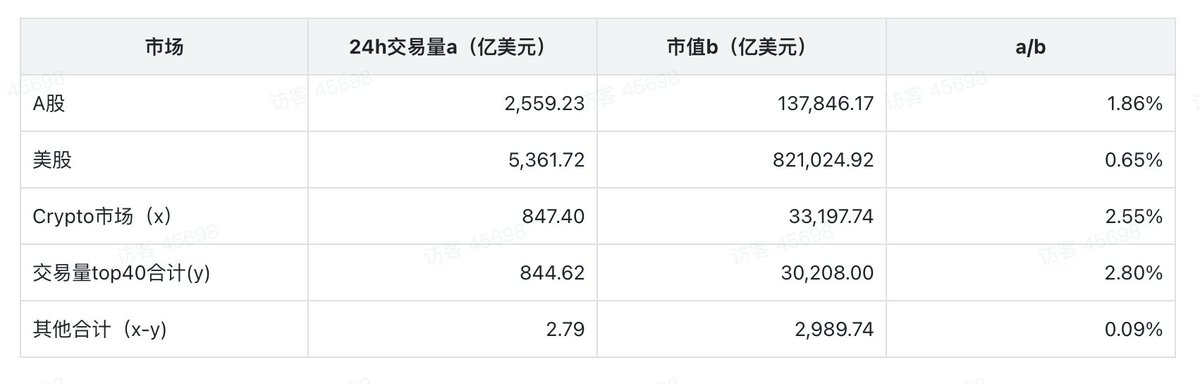
On February 23, 2025, the daily trading volume in the crypto market was $84.74 billion. On February 20, 2025, the A-share market recorded a trading volume of approximately $255.92 billion, while the U.S. market reached $536.17 billion. Details are provided below:
Unit: Billion USD
Data source: CoinGecko, Wind
The data shows that the ratio of trading volume to market cap in the crypto market (2.55%) outperforms both the A-share market (1.86%) and the U.S. market (0.65%). However, overall market liquidity remains insufficient. Excluding the most liquid cryptocurrencies, the rest suffer from severe liquidity shortages. In short, most traders are concentrated on top-tier blue-chip assets, leaving relatively few participants in altcoin markets.
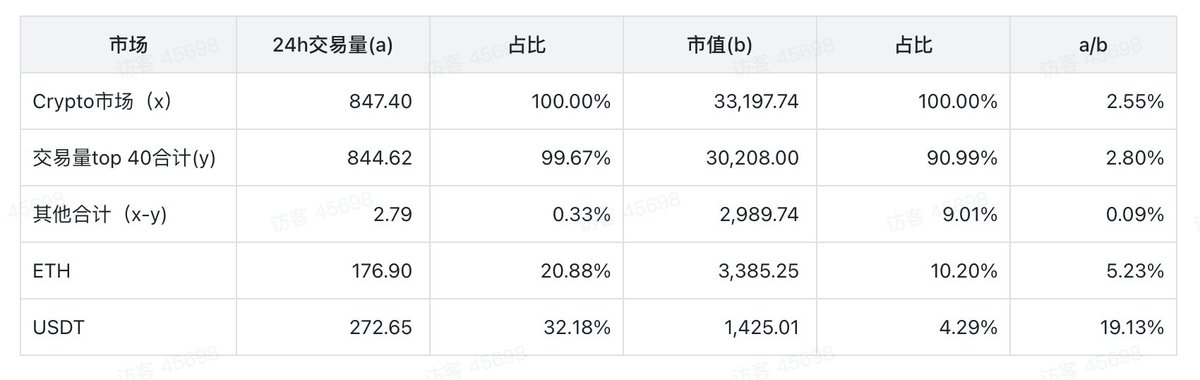
Unit: Billion USD
Data source: CoinGecko, Wind
The top 40 cryptocurrencies by trading volume contributed 99.67% of total volume, while all others combined accounted for only 0.33%. For these remaining cryptos, the volume-to-market-cap ratio (a/b) is merely 0.09%. Yet, their total market cap is roughly equivalent to 90% of ETH’s market cap—a substantial aggregate value.
For reference, Beijing’s average daily real estate transaction amount in 2023 represented about 0.042% of the city’s total residential property value (new + resale). Compared to this, the liquidity of non-top-tier cryptocurrencies is indeed alarming—and aligns closely with the earlier concentration data.
3. Price Volatility
As shown in the chart below, cryptocurrencies exhibit higher volatility than traditional currencies or gold (a common store of value). However, due to strengthened consensus and industry maturation, Bitcoin and Ethereum are increasingly recognized for their "digital gold" and monetary properties, showing stabilizing value trends. Other tokens (e.g., SOL) remain highly volatile, behaving more like crypto securities than currencies.
I believe that if we were to examine lower-liquidity, lower-market-cap altcoins discussed previously, their volatility would be even more extreme. High price swings increase the risk for liquidity providers, discouraging market makers from supplying liquidity when returns do not justify the risk—creating a negative feedback loop. Even though many cryptocurrencies get listed on exchanges, they often peak immediately after listing, followed by institutional and retail exits until liquidity dries up completely.

Data source: CoinGecko, Wind. The U.S. Dollar Index uses 1973 as base year with index set at 100.
Scope: January 1, 2021 – February 23, 2025. Dates without COMEX gold trading data are excluded. Non-crypto products use calendar days; crypto closing prices are calculated at 00:00 Beijing time.
Volatility Calculation: Average absolute volatility = average of abs(today’s close / previous day’s close - 1); maximum volatility = (maximum value / minimum value - 1) over the period.
(III) Analysis of Existing Challenges
1. Liquidity Crisis
In my view, the liquidity crisis stems from two aspects:
First, consensus is concentrated around top-tier cryptocurrencies. Due to investment strategies and PoS-like consensus mechanisms, BTC and ETH are often held long-term, staked, or lost on-chain, preventing their liquidity from being released.
Various DeFi applications and projects have already developed rich solutions in this area—such as Solv enabling re-staking, LSD/LST mechanisms issuing staking derivatives for secondary staking, or Babylon unlocking BTC liquidity via remote staking—all offering viable paths to release liquidity from dominant assets.
Second, as shown in prior data analysis, the liquidity crisis manifests in poor liquidity among non-blue-chip cryptocurrencies (altcoins).
The main reasons for this include:
(1) Real-world use cases and investors’ assessment of project fundamentals drive liquidity. Without clear applications or fundamental support, weak consensus naturally leads to liquidity shortages;
(2) Blockchain market liquidity is often driven by “hot narratives,” which tend to be short-lived. Once the narrative loses appeal, capital rapidly exits or shifts elsewhere, causing liquidity to collapse. Tokens lose traders, and both liquidity providers and project teams struggle to time their involvement correctly, bearing high risks while providing liquidity.
2. Ambiguous Value Proposition
Cryptocurrency value originates from consensus, which reflects the collective values—mainstream and otherwise—of different communities. For example, BTC established a decentralized monetary system widely perceived as a trend for society’s next phase—i.e., the future.
Many crypto enthusiasts firmly believe that the future society will be decentralized.
Every cryptocurrency must find its own value—whether cultural/emotional (memes), DeFi (generating yield for holders and stakers), or reducing transaction costs through scaling. But achieving consensus requires clarity of value.
While advanced terminology and use cases can be fascinating, the crypto market is still rapidly growing and absorbing new participants. Business models that are easy for less-knowledgeable newcomers to understand will help Web3 gain more attention and builders.
3. How to Spread the Faith?
Events like the Russia-Ukraine war exposed the untrustworthiness of centralized financial systems. The decentralized nature of crypto offers a potential solution. Accelerating adoption, gaining broad trust, and spreading this belief remain critical topics.
In this context, tokenization of real-world assets (RWA) emerges as a compelling case study—it allows external investors to recognize the value of Web3 more easily.
II. RWA Sector Analysis
(I) Definition
To bring real-world assets into DeFi, their value must be “tokenized”—a process converting anything with monetary value into digital tokens so their worth can be represented and traded on blockchains.
Tokenized real-world assets (RWAs) are digital tokens recorded on blockchains representing ownership or legal rights to physical or intangible assets. Any real-world asset with clear monetary value can be represented as an RWA. RWAs may represent tangible assets such as real estate (residential, commercial properties, REITs), commodities (gold, silver, oil, agricultural products), or intangible assets including art and collectibles (high-value artworks, rare stamps, vintage wines), intellectual property (patents, trademarks, copyrights), carbon credits, and financial instruments (bonds, mortgages, insurance policies).
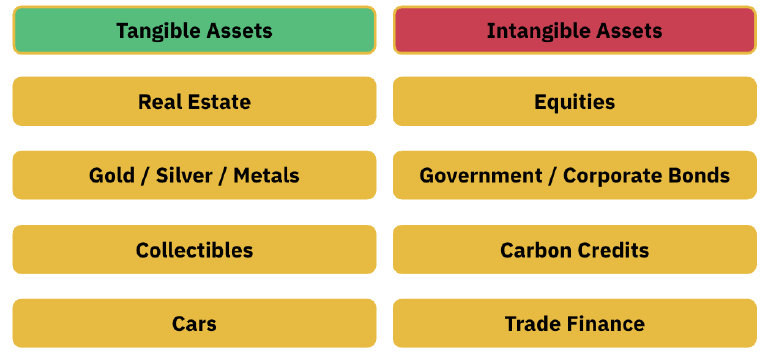
Source: Binance Research
(II) Tokenization Process and Methods
Tokenization process:
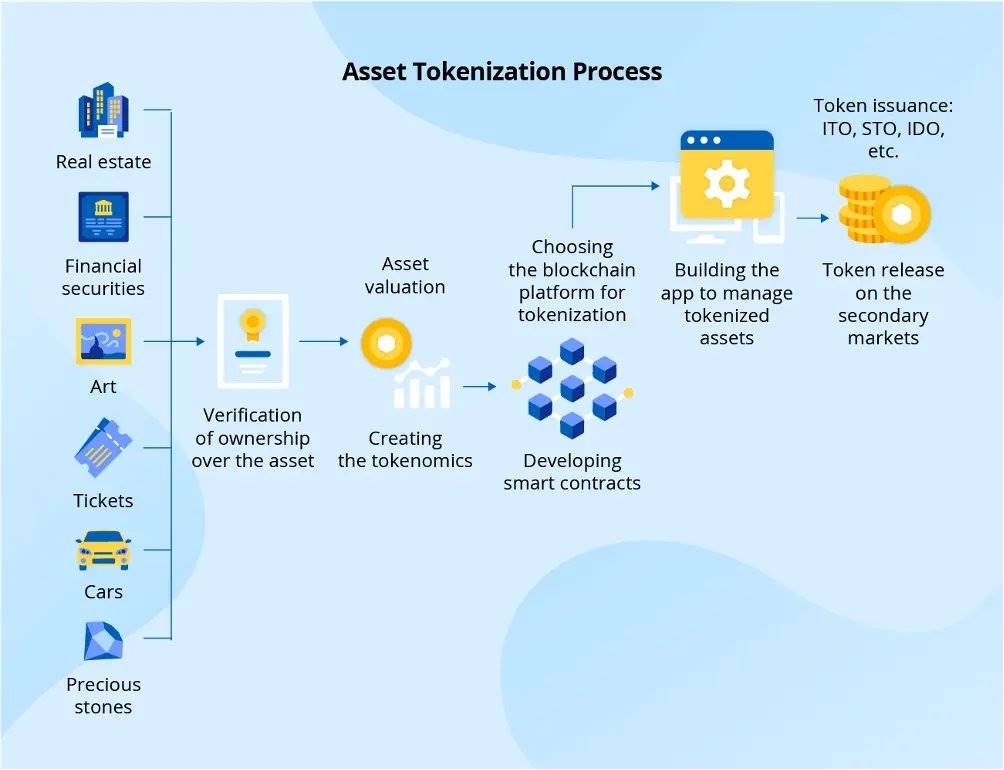
The four methods of tokenization are as follows:
Direct Ownership (Direct Title): In this method, the digital token itself serves as the official ownership record, eliminating the need for custodians. This applies only to digital-native assets. A single ledger (possibly distributed) records token ownership. For instance, instead of issuing tokens backed by a share registry system, the registry itself is tokenized, making the token the actual proof of ownership. This streamlined approach removes the need for custodians or duplicate registries. While compatible with distributed ledgers, the registry doesn’t necessarily have to be decentralized. However, legal frameworks for this model remain limited and underdeveloped across most asset classes.
1:1 Asset-Backed Tokens: Here, a custodian holds the underlying asset and issues tokens representing direct claims on it. Each token is redeemable for the actual asset or its cash equivalent. For example, a financial institution could issue bond tokens backed by bonds held in a trust account, or a commercial bank could issue stablecoin tokens fully backed one-to-one by fiat money in a dedicated account.
Over-Collateralized Tokens: These tokens are issued using collateral different from the intended represented asset or claim. Typically, the tokens are over-collateralized to hedge against fluctuations in the collateral’s value relative to the target asset. For example, Tether (USDT) is backed not just by cash but also by various other assets such as fixed-income securities. Similarly, a government bond token could be backed by corporate bonds, or a stock token could be backed by an over-collateralized portfolio of related stocks.
Under-Collateralized Tokens: These tokens track an asset’s value but are not fully backed. Similar to fractional reserve banking, maintaining token stability requires active management of reserve assets and open-market operations. This form carries higher risk and has seen historical failures—for instance, the collapsed Terra/Luna stablecoin had no independent asset backing and relied solely on algorithmic supply control. Some lower-risk partially collateralized tokens have also been issued.
(III) Development History and Current State
1. Historical Evolution
Historically, physical certificates were used to prove asset ownership. Though useful, they were vulnerable to theft, loss, forgery, and money laundering. In the 1980s, digital tools such as RSA digital signatures, blind signatures, e-cash, digital certificates, and Public Key Infrastructure (PKI) emerged as potential solutions.
However, constrained by computing power and cryptographic technology at the time, these tools failed to materialize. Instead, the financial industry shifted toward centralized electronic registration systems for recording digital assets. While digitization improved efficiency somewhat, the centralized nature required multiple intermediaries, introducing new costs and inefficiencies.
One of the earliest forms of RWA was stablecoins. As tokenized versions of fiat currency, stablecoins offered a stable unit of exchange. Since 2014, companies like Tether and Circle have issued tokenized stable assets backed by real-world collateral such as bank deposits, short-term bills, and even physical gold.
In 2019, beyond fiat tokenization, firms like Paxos launched tokenized gold whose value was pegged to specific quantities of gold. Tokenized gold was backed by physical gold stored in bank vaults and verified monthly via attestation reports.
In 2021–2022, private credit markets emerged through unsecured lending platforms like Maple, Goldfinch, and Clearpool, allowing established institutions to borrow based on creditworthiness. However, these protocols suffered defaults following the collapses of Luna, 3AC, and FTX.
With DeFi yields crashing in 2023, tokenized U.S. Treasuries saw explosive growth as users sought exposure to rising Treasury yields. Total Value Locked (TVL) in tokenized Treasuries surged 782% from $104 million in January 2023 to $917 million by year-end. Providers like Ondo Finance, Franklin Templeton, and OpenEden attracted significant inflows.
2. Current Landscape
According to DefiLlama, the RWA sector currently has a TVL of about $9 billion, up 34% from $6.7 billion at the start of 2024.
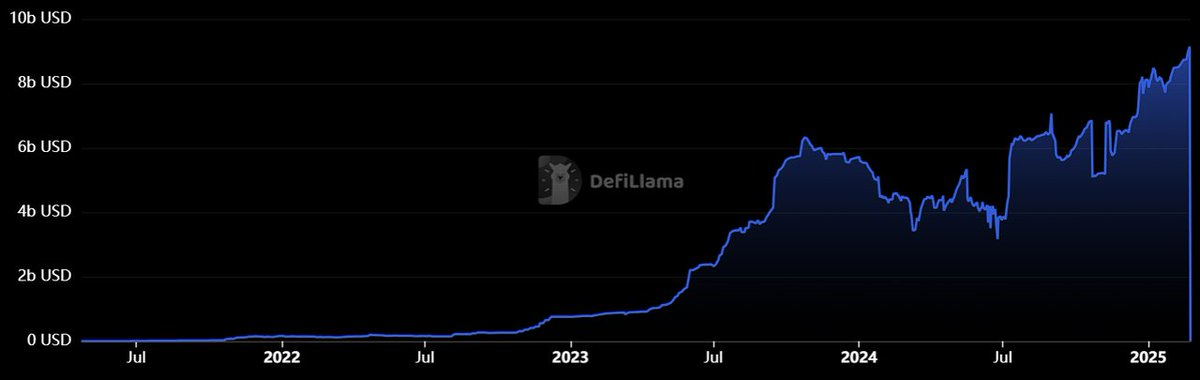
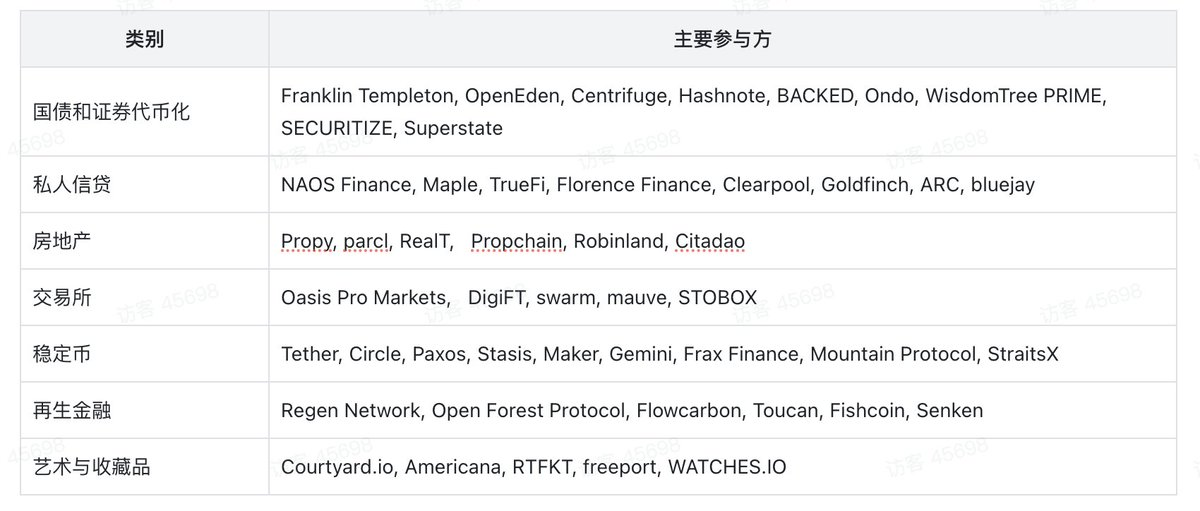
3. Major Participants
As shown in the table below:
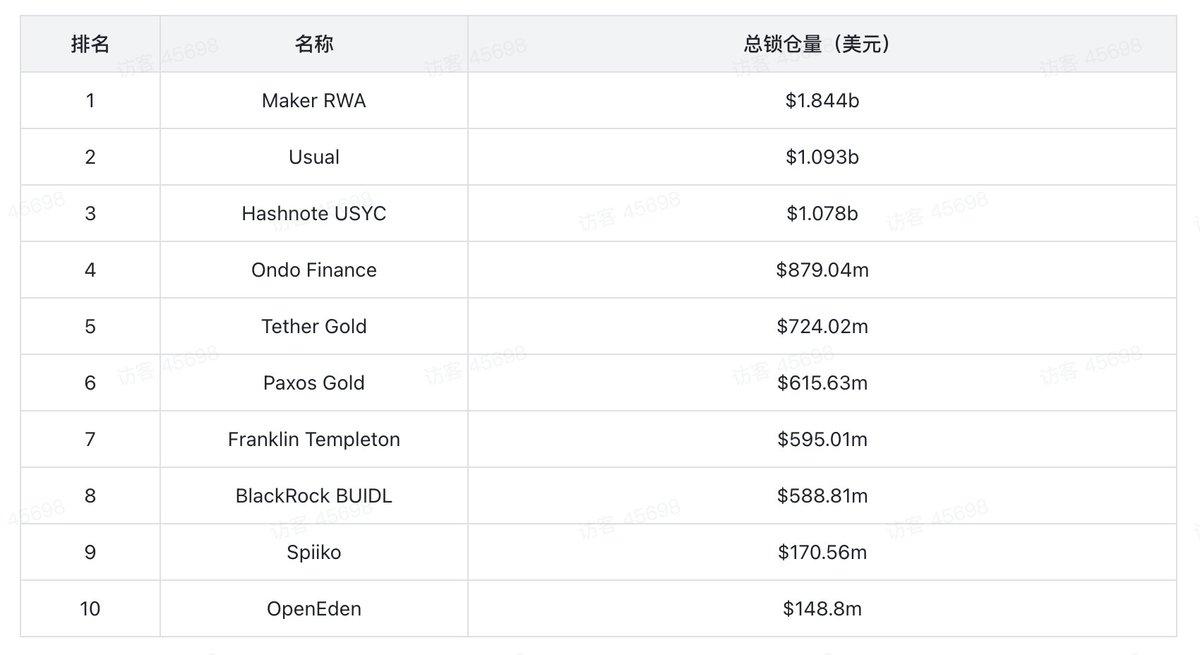
As of February 24, 2025, the top 10 RWA projects by Total Value Locked (TVL) are listed below:
(IV) Advantages of the RWA Sector
1. Significance for Web3
(1) Value Foundation
In the broader macro environment, DeFi assets lack sustainable yields. Moreover, DeFi returns are highly volatile and uncertain. In contrast, traditional finance offers richer, diversified products with better hedging tools and more stable returns. With mature valuation systems, bringing real-world assets on-chain plays a crucial role in establishing value foundations for the Web3 industry.
Cryptocurrencies backed by solid real-world value inspire greater willingness from liquidity providers and stronger holding intent from investors, potentially alleviating issues of low liquidity among non-blue-chip cryptos and excessive market concentration.
(2) Resistance to Cyclical Volatility
Assets on blockchain exhibit high correlation—market volatility often triggers cascading effects across asset classes, leading to mass liquidations or runs on lending protocols, further amplifying market swings. Introducing real-world assets—especially stable ones like real estate and bonds with low correlation to native crypto markets—can provide some degree of hedging, diversify DeFi asset types and investment strategies, and promote a healthier overall Web3 economic ecosystem.
(3) Diversification of On-Chain Asset Management Products
On-chain asset managers seek stable returns and good liquidity. Financial instruments like U.S. Treasuries are widely accepted investment vehicles.
(4) Building Bridges for Transition and Trust
Bringing real-world assets onto chains creates a bridge between traditional finance and decentralized finance, and simultaneously builds a trust bridge.
2. Significance for Traditional Finance
(1) Enhanced Investment Flexibility
Tokenization enables fractional ownership by dividing high-value assets (like real estate and art) into tradable tokens, allowing smaller investors access to markets previously inaccessible due to high entry barriers—democratizing investment opportunities.
(2) Improved Liquidity and Price Discovery
Tokenization reduces friction in selling, transferring, and record-keeping processes, enabling seamless, near-zero-cost transactions even for traditionally illiquid assets.
In traditional finance, asset transfers often involve multiple intermediaries, making transactions complex and time-consuming. For example, trading positions in rare gems or private equity used to be extremely difficult, requiring significant effort to find buyers or sellers.
By leveraging blockchain’s decentralization, tokenization simplifies this process, enabling direct peer-to-peer trading and lowering transaction costs. Investors no longer need to wait months or years to find counterparties—they can transfer assets quickly and securely, creating compliant secondary market liquidity.
Additionally, buyers and sellers can trade more conveniently and price assets based on up-to-date information. This transparency and real-time pricing enable market participants to assess asset values more accurately and make wiser investment decisions.
(3) Increased Transparency and Reduced Systemic Risk
The 2008 financial crisis exemplified how complex financial derivatives can trigger global disasters. During that crisis, financial institutions packaged subprime loans into securities (e.g., MBS and CDOs) sold to investors, creating opaque financial products whose underlying physical assets became impossible to trace.
On blockchains, investors can transparently trace the underlying assets of financial products, fundamentally reducing the likelihood of systemic risk.
(V) Potential Risks
1. Disconnection Between Real and Virtual Ownership
Although real-world assets can be tokenized and traded on-chain—even partially—their physical characteristics prevent actual transfer, limiting them by jurisdictional and sovereignty constraints in the physical world.
2. Consistency Risk Between Physical and Crypto Worlds
The trust and consistency between real-world assets and on-chain data remain core challenges in RWA tokenization. Ensuring alignment between off-chain assets and on-chain representations is paramount. For example, once real estate is tokenized, on-chain records of ownership and value must perfectly match legal documents and real-world asset conditions.
This raises two key issues: first, ensuring the authenticity of on-chain data sources; second, synchronizing updates so that on-chain information reflects real-time changes in the physical asset. Resolving these typically requires trusted third parties or authoritative institutions (e.g., governments or certifiers), conflicting with blockchain’s decentralized ethos. Thus, trust remains an unavoidable core challenge.
3. Balancing Decentralization and Compliance
For legal recognition, tokenized assets must hold the same legal standing as their real-world counterparts—ownership, liability, and protections should align with traditional legal frameworks. Without proper regulatory coordination, however, tokenized asset ownership may face difficulties in court enforcement or lack recognition in certain jurisdictions.
Yet these compliance and judicial oversight requirements contradict blockchain’s vision of decentralization. Finding balance between regulation and decentralization remains a major challenge for the RWA sector.
III. Case Study: Ondo Finance
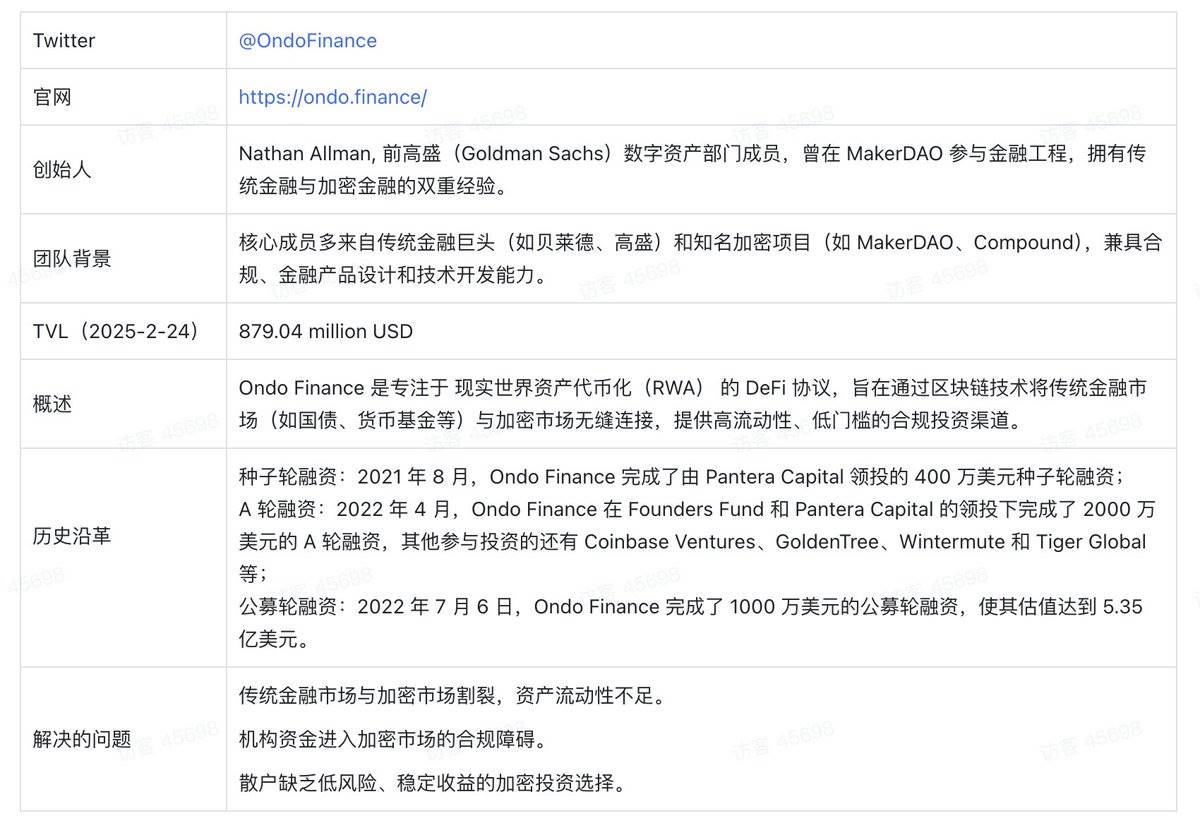
(I) Overview
(II) Product Portfolio
1. Native Products
(1) USDY (U.S. Dollar Yield)
USDY is a tokenized note backed by short-term U.S. Treasuries and bank demand deposits. Targeting retail investors, the minimum purchase is $500, with tokens mintable and transferable on-chain after 40–50 days.
Compared to commonly used stablecoins like USDT and USDC, USDY functions more like an interest-bearing stablecoin—often categorized under yield-generating stablecoins. Unlike other yield-bearing stablecoins, USDY is backed by traditional banks and, per its official disclosure, complies with U.S. regulations.
Since USDY becomes transferable on-chain after a lock-up period and operates similarly to a stablecoin, its structural design and risk controls are critically important. Key features and regulatory mechanisms include:
Structure Design: Issued by Ondo USDY LLC as a Special Purpose Vehicle (SPV), assets are managed separately from Ondo Finance, with independent books and accounts. This structure isolates USDY collateral from potential financial risks of Ondo Finance.
Over-Collateralization: USDY employs over-collateralization as a risk mitigation measure. A minimum 3% first-loss position cushions against short-term fluctuations in Treasury prices. Currently, USDY is over-collateralized by a 4.64% first-loss buffer.
First Priority Claim: USDY investors hold a "first priority" claim on underlying bank deposits and Treasuries. Ankura Trust acts as collateral agent, overseeing the security interests of USDY holders. Control agreements with depositary banks and custodians grant Ankura Trust legal rights to take control of assets and repay token holders in case of default or upon holder vote.
Daily Transparency Reports: Ankura Trust serves as auditor, publishing daily transparency reports detailing reserve holdings. These independently verified reports ensure accountability and reliability.
Asset Allocation: USDY follows a conservative investment strategy focused on safety and liquidity. The target allocation is 65% bank deposits and 35% short-term U.S. Treasuries—prioritizing secure, liquid instruments to minimize risk exposure.
Asset Custody: U.S. Treasuries backing USDY are held in "cash custody" accounts at Morgan Stanley and StoneX, ensuring asset security. These assets are never re-pledged. Ankura Trust verifies their existence daily.
Through these measures, USDY separates underlying assets from the crypto project, reducing rug-pull risk; uses over-collateralization to buffer against falling Treasury yields; appoints Ankura Trust as supervisor to protect investor funds and returns; and stores collateral in traditional bank custody accounts to prevent reuse.
Compared to other RWA products, USDY has a lower investment threshold and supports both on-chain purchases (via USDC) and wire transfers.
(2) OUSG (U.S. Treasury Bonds)
The underlying assets of OUSG are primarily drawn from BlackRock’s short-term U.S. Treasury ETF: iShares Short Treasury Bond ETF (NASDAQ: SHV), with minor allocations to USDC and USD for liquidity purposes.
Notably, Ondo I LP serves as fund manager for the SHV ETF shares purchased by OUSG investors. As a U.S.-based SPV entity, Ondo I LP provides investor risk isolation and facilitates redemption plans under exceptional circumstances (e.g., project bankruptcy).
(3) OMMF (U.S. Government Money Market Fund)
OMMF is an RWA token based on U.S. government money market funds (MMFs). This product has not yet officially launched.
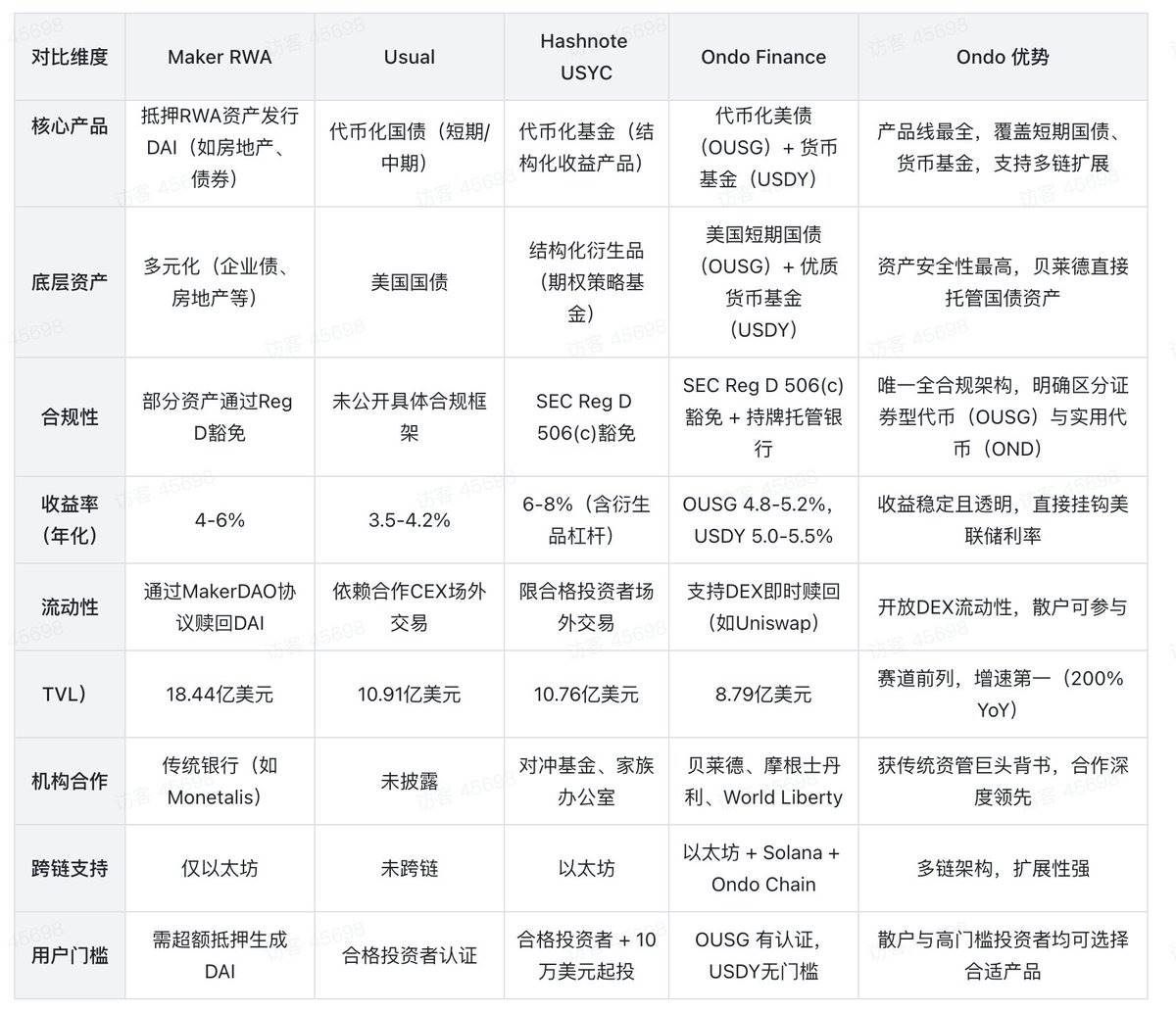
2. Competitive Landscape
(III) Token Economics
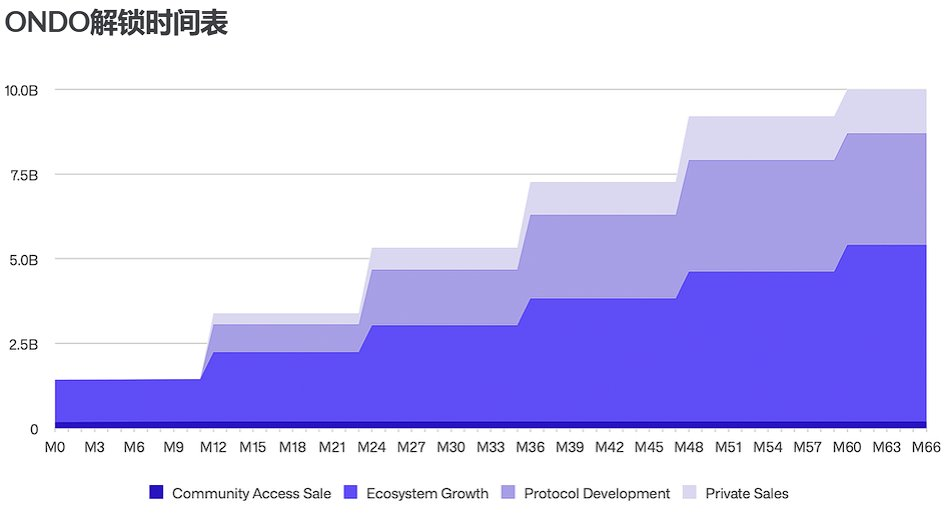
The ONDO token launched on Ethereum in January 2024, powering the Ondo Finance ecosystem. With a maximum supply of 10 billion tokens, the distribution is as follows:
Community Access Sale: 198,884,411 tokens (~2%) distributed via CoinList to early supporters, with ~90% unlocked at launch.
Ecosystem Growth: 5,210,869,545 tokens (~52.1%) allocated to airdrops, contributor incentives, and expansion. 24% unlocked at launch, remainder vested over five years.
Protocol Development: 3,300,000,000 tokens (~33%) assigned to infrastructure and product development, locked for at least 12 months, then gradually released over five years.
Private Sales: 1,290,246,044 tokens (~12.9%) issued to seed and Series A investors, locked for at least 12 months, then phased out over five years.
(IV) Alignment with Industry Trends
1. Aligns with Industry Focus Areas
The core narratives of the 2024–2025 bull run—including RWA, institutional adoption, and demand for stable yields—are highly aligned with Ondo’s strategic direction.
2. Bridging TradFi and DeFi
As a bridge for traditional financial institutions entering Web3, Ondo attaches a blockchain engine to traditional finance, reshaping liquidity for traditional assets on-chain while providing solid value backing for the crypto industry—meeting dual demands from TradFi and DeFi.
3. Meets Market Demand
In a crypto market plagued by liquidity shortages, Ondo chose widely recognized U.S. Treasuries and related assets as its first step into RWA—introducing real-world assets while enhancing liquidity. Given the crypto market’s reputation for high returns and high volatility—which deters risk-averse investors—Ondo’s stable RWA offerings significantly increase the appeal of crypto investing for conservative investors.
4. Addresses Compliance and Trust Needs
After a period of wild growth, the industry is inevitably moving toward standardization. Ondo has made notable attempts to combine public blockchain openness with institutional-grade security in its RWA solutions. Its efforts in compliance also represent meaningful progress in building trust—aligning well with future industry needs.
(V) Innovation: Balancing Compliance and Decentralization
1. Native Support for RWA Assets
A key highlight of Ondo Chain is its native support for RWA assets, particularly tokens issued by Ondo GM. Ondo Chain plans to support staking of Ondo GM tokens and other high-quality liquid assets, securing the network while generating yield from idle assets.
2. Partnerships with Traditional Financial Institutions
By collaborating with leading firms like Morgan Stanley, BlackRock, and Coinbase (which is also an investor in Ondo), Ondo tokenizes assets such as U.S. Treasuries and money market funds, strictly complying with U.S. laws and regulations—making it easier to earn investor trust.
Moreover, Ondo allows a select group of financial institutions to operate partial validator nodes, enabling seamless integration with private networks and traditional financial environments. This design reduces transaction latency, prevents front-running, and gives institutions access to exclusive assets and liquidity—enhancing Ondo Chain’s appeal and practicality for institutional use.
3. Accurate On-Chain Data, Eliminating Fraud
Integrated oracles ensure real-time synchronization of asset prices, interest rates, and other data, maintained by permissioned validators. This transparency reduces the risk of market manipulation.
4. Cross-Chain Interoperability
Ondo Chain achieves full-chain messaging and cross-chain asset transfers via native integration of the Ondo Bridge. Its Decentralized Validation Network (DVN) provides primary security, with additional DVNs available for enhanced protection during high-value transactions. Crucially, Ondo Chain supports seamless sharing of KYC status, sanctions lists, and collateral amounts, simplifying the development of omnichain applications.
5. Pioneering Compliance
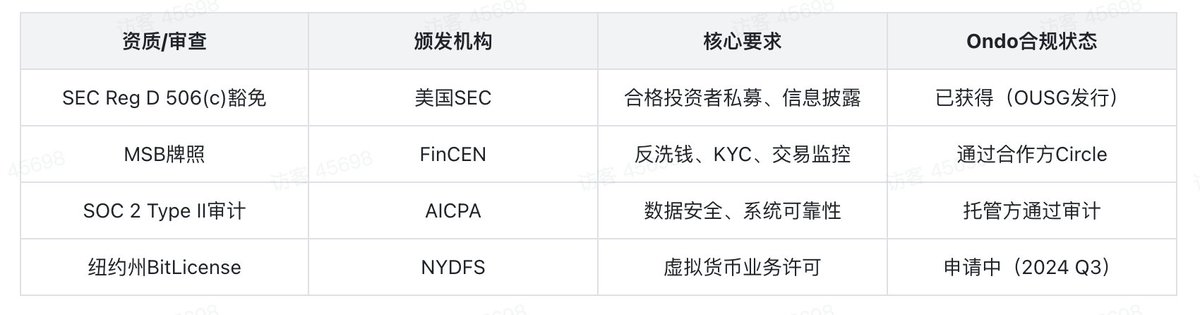
(1) Securities Law Compliance: Reg D Exemption and Accredited Investor Restrictions
Reg D Rule 506(c): Ondo’s tokenized Treasury products (e.g., OUSG, USDY) are issued under Regulation D Rule 506(c) of the U.S. Securities Act, allowing private placements to accredited investors without SEC registration, subject to:
- Investors must verify wealth (net worth > $1M or annual income > $200K)
- Issuers must reasonably verify investor qualifications (e.g., bank statements, tax filings)
- Tokens cannot be publicly resold within one year of issuance
Compliance Significance: Avoids classification as illegal public securities offerings, reducing SEC enforcement risk.
(2) Key Credentials
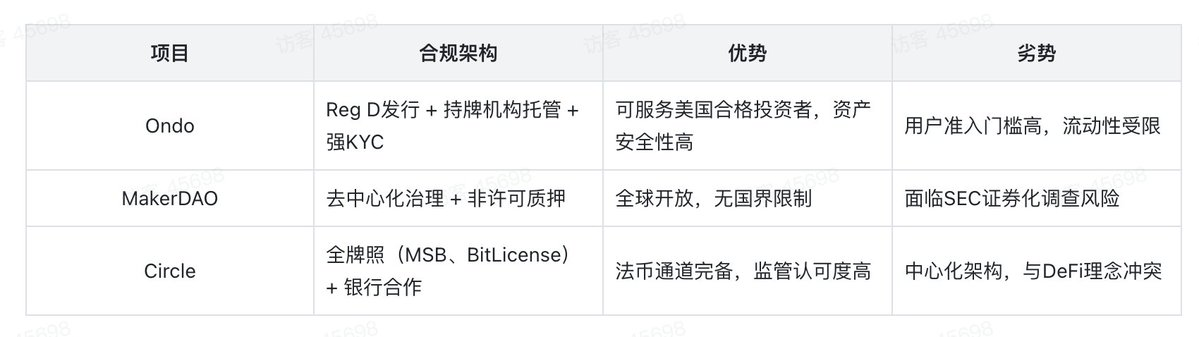
(3) Peer Comparison on Compliance
(VI) Limitations
1. Overreliance on Institutions, Lacking Community Drive
Ondo Finance’s architecture heavily depends on participation from traditional financial institutions. The credibility and liquidity of its tokenized assets are largely supported by these entities. While this ensures quality and compliance, it creates a core issue: the ecosystem primarily targets institutions, with limited retail participation. Compared to fully decentralized RWA projects, Ondo resembles an extension of traditional finance, where trading and circulation occur mainly among institutions—diminishing the influence of individual investors and decentralized communities.
2. Centralized Power Under Institutional Control
Despite retaining some openness, Ondo Chain uses permissioned validators—meaning core control lies with a few institutions. This contrasts sharply with fully decentralized RWA projects, where any participant can become a key node. Ondo’s design mirrors traditional financial power structures, concentrating control among a handful of large financial players. This centralized governance may lead to conflicts in future decision-making, especially when token holders’ interests diverge from those of institutional stakeholders.
3. Compliance and Institutional Processes May Slow Innovation
Given that compliance and institutional engagement are central pillars of Ondo Finance, innovation speed may be constrained. Compared to fully decentralized projects, launching new financial products or technologies may require navigating complex compliance procedures and institutional approvals. This could slow response times in the fast-moving crypto industry—particularly when competing against more agile DeFi protocols—where compliance-driven, institution-focused structures may become burdensome.
(VII) Future Outlook
1. Product Expansion
I believe Ondo Finance will continue strengthening institutional partnerships, starting with high-liquidity, yield-stable tokenized U.S. Treasuries. Leveraging endorsements from financial giants, it can gradually bring other traditional financial assets on-chain, deepening its market presence.
Additionally, Ondo can use its existing Treasury-based RWA as a defensive base while expanding into real estate RWA to capture geographic arbitrage (e.g., rental yield differences between Southeast Asia and North America), carbon credit RWA as a black swan hedge (correlation with energy futures reaches 0.72), and other RWA products—diversifying its offerings to meet diverse investor demands.
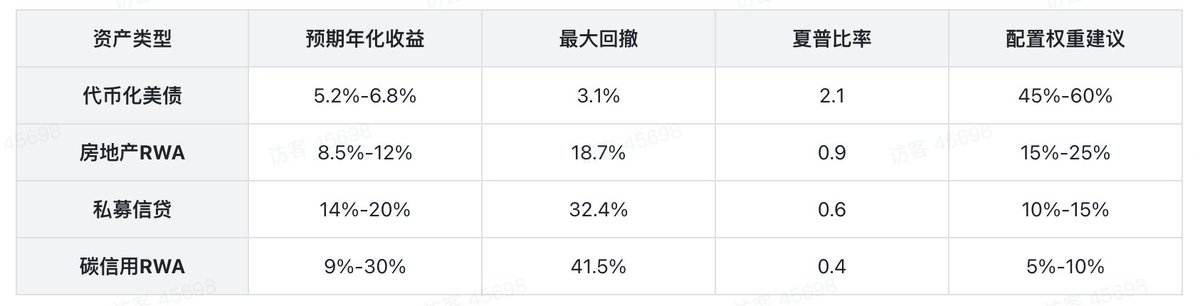
Source: MSCI RWA Index (2025 Q2), backtest period 2023–2025
2. Upholding True Decentralization
How Ondo maintains the balance between compliance and decentralization remains an open question. Under a permissioned validator model, is decentralization merely symbolic? Can Ondo still fulfill its original blockchain vision of immutability and censorship resistance?
(VIII) Investment Recommendations
1. Short-Term Recommendation — Invest
(1) Cyclical Positioning
From a blockchain cycle perspective, if the market enters a bear phase, Ondo and other mainstream stablecoin protocols like EVA may become market favorites. Their Treasury-based products suit risk-averse investors.
(2) TradFi and DeFi Are Still in the Honeymoon Phase
Currently, collaboration between TradFi and DeFi remains in a honeymoon phase. RWA represents a win-win scenario for both sides. During this period, more valuable RWA products will likely emerge rapidly, driving fast business growth at Ondo—an ideal time to enter.
(3) Strong Growth Drivers (See Appendix I)
Based on the driver factor model (4+3 factors), Ondo demonstrates strong momentum in Benchmark, Status, Vision, Usefulness, and Revenue Generation. However, weak tokenomics, single revenue streams, and competitive pressure pose key risks. If Ondo Chain successfully connects traditional finance with on-chain liquidity, its valuation could surpass $10 billion.
(4) Undervaluation (Detailed in Appendix II)
Using absolute valuation methods, under assumptions of 22% WACC, 30% margin, and perpetual growth at 8%, assuming constant token supply, each ONDO token is valued at $1.81. As of February 24, the market price is $1.23—indicating significant upside potential.
Appendices
I. Valuation Driver Analysis (4+3 Model)
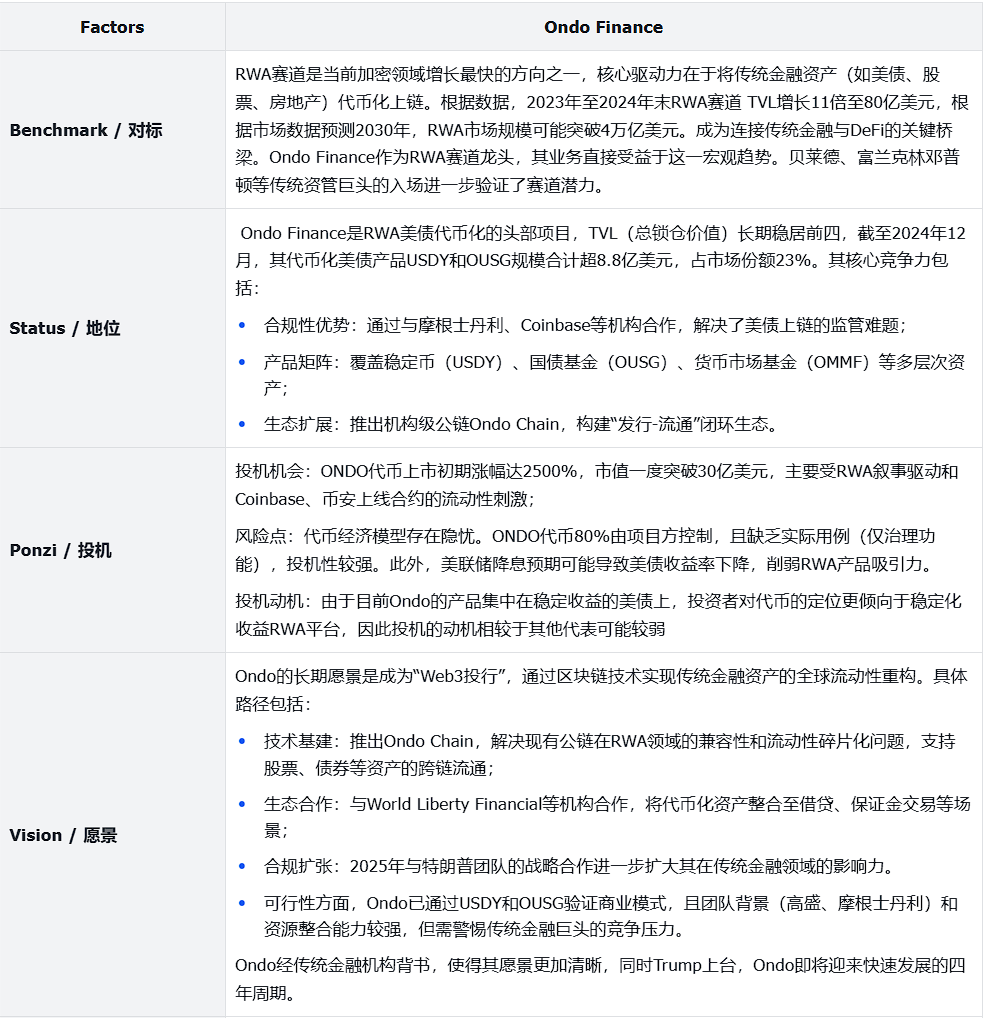
Ondo Finance leads the RWA sector thanks to early compliance advantages and product innovation. However, weak token economics, singular revenue models, and competition remain key risks.
Short-term speculation versus long-term value should be assessed alongside Fed policy and ecosystem development. If Ondo Chain successfully bridges traditional finance and on-chain liquidity, its valuation could exceed $10 billion.
II. Ondo Finance (ONDO) Valuation Analysis as of February 24, 2025 (Hybrid Model)
(I) TVL Growth Assumptions and Cash Flow Forecast
1. TVL Growth Path

2. Free Cash Flow (FCF) Calculation
Protocol Fee Rate: 1.00% (TVL × fee rate), broken down as: 0.35% AUM fee, 0.5% staking fee, 0.15% trading fee
Cost Ratio: 30% (Gas fees 15% + Audits 5% + Operations 10%)
Annual FCF = TVL × 1.00% × 70%
(II) Hybrid Valuation Model
1. Traditional DCF Component
(1) Discount Rate and Terminal Value
Discount Rate: 22% (WACC 12% + Web3 risk premium 10%)
Terminal Value (Gordon Growth Model):
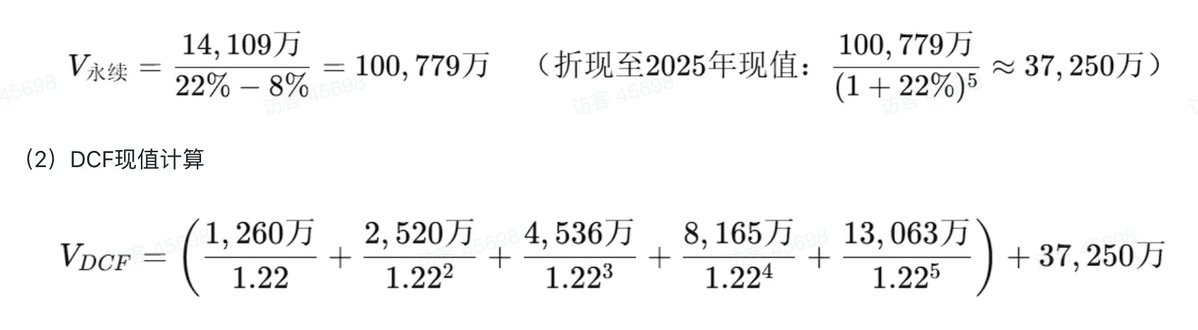
Per-Token DCF Value: 52.18 billion / 14.45 billion ≈ $0.36
2. Web3-Specific Factor Modeling
(1) Tokenomic Multiplier
Staking Yield: 30% staking ratio → staked amount = 14.45B × 30% = 4.335B tokens
Annual yield 8% → present value of staking yield = 4.335 × 8% × $1.23 / 22% / 14.45 = $0.13 per token
Governance Premium: 15% participation rate, +9% premium → $0.11/token
(2) Network Effect Value
Network Value = β₁·TVL^k = 0.15 × 186.62^1.1 / 14.45 / 2.7 = $1.21/token
β₁ = 0.15 (benchmarked against top projects: referencing TVL-to-market-cap ratios of DeFi protocols like Compound and Aave. Example: When Compound’s TVL was $10B, its market cap was ~$2.5B → β₁ = 2.5 / 10^1.2 ≈ 0.15)
TVL exponent k = 1.1
Theoretical Basis: Modified Metcalfe’s Law.
Original formula: Network value ∝ n² (n = number of users)
Adjusted reality: Due to liquidity variance, TVL’s network effect is weaker than direct user interaction—adjusted to exponent 1.1.
Empirical support: Studies show DeFi protocol value correlates with TVL raised to the power of 1.1–1.3 (“IEEE Blockchain Transactions, 2023”). Ondo adopts k=1.1 to balance conservatism and growth expectations.
(III) Comprehensive Valuation Result
V_total = $0.36 (DCF) + $0.13 (staking) + $0.11 (governance) + $1.21 (network) = $1.81 per token
(IV) Conclusion and Actionable Insight
Fair valuation range: $1.81–$2.40 per token
Current price is significantly undervalued. Core driver: TVL growth engine.
Optimized protocol fees—1% balances revenue generation and competitiveness.
Multi-chain ecosystem breakout: multi-chain asset inflows expected post-Ondo Chain launch.
However, given current market dynamics, this asset may not offer optimal return potential and is analyzed here solely as a research case study.
Join TechFlow official community to stay tuned
Telegram:https://t.me/TechFlowDaily
X (Twitter):https://x.com/TechFlowPost
X (Twitter) EN:https://x.com/BlockFlow_News