Stablecoins and Real-World Assets
TechFlow Selected TechFlow Selected
Stablecoins and Real-World Assets
RWA is not intended to replace finance but rather to enable finance to operate in the way people expect.
 Navigating Web3 tides with focused insights
By Zeus
Translated by Block Unicorn
I want to talk about real-world assets (RWAs)—but not in the usual way. Not infrastructure, not protocols, not dashboards or trading tickers. Instead, I want to explore why stablecoins have become the most successful RWAs on-chain—and why they reveal just how outdated the traditional banking system has become. Because once you’ve experienced both systems side by side, it’s nearly impossible to “unsee” the difference.
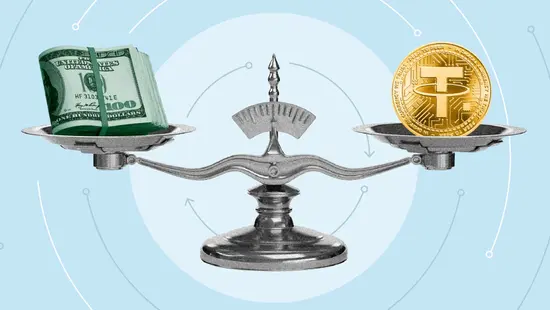
Most people don’t realize this, but stablecoins are real-world assets. They represent claims on real U.S. dollars, short-term Treasury bills, and regulated reserves. They’re backed by off-chain assets, managed by real companies, and operate within actual legal and compliance frameworks. They are not “fictional.” The only meaningful distinction lies in how they operate.
Let me illustrate with a few real examples from my own life.
A few weeks before Christmas, I tried depositing a check—for £750. The deposit was rejected. Not due to fraud, not because the check was invalid—simply because my bank imposes a £500 limit on check deposits. That’s it. A hard-coded rule in the system, no warning, no human discretion. An arbitrary constraint automatically enforced in 2026.
Here’s another example: trying to send money via online banking. There’s always a daily transfer limit. Too many transfers trigger manual review. A large amount gets your transaction fully blocked—not because you did anything wrong, but because the system defaults to assuming you’re high-risk. You’re allowed to move your own money—until, suddenly, you’re not.
What truly struck me happened last month. I transferred £2,000 from my bank account to a cryptocurrency exchange. Within minutes, my account was frozen. I was asked roughly 25 questions: Where did this money come from? Who are you investing with? What does that company do? What returns do you expect? Why are you transferring now? My funds remained frozen for two full days.
This isn’t an isolated incident. It’s standard practice in modern banking—and we’ve grown accustomed to it.
Now, let’s contrast this with stablecoins.
If I hold stablecoins in my wallet, I can instantly send them to anyone, in any amount, without permission. Settlement is immediate and final. No “pending” status, no arbitrary pauses, no precautionary freezes. That doesn’t mean the system lacks compliance—issuers still operate within legal frameworks and regulatory obligations. But from the user’s perspective, this experience finally feels like what money in the digital world should be.
That’s why stablecoins have quietly become one of the fastest-growing real-world assets on Earth.
If you look at platforms like rwa.xyz, the data makes this clear. Tokenized Treasuries, on-chain money market funds, tokenized credit, tokenized commodities—billions of dollars’ worth of real assets already reside on-chain, growing week after week, month after month. Not because retail investors are speculating on them, but because institutions and asset allocators are gradually steering each component of the financial system toward a more robust path.
Especially telling is where growth is concentrated. It’s in seemingly mundane areas: short-term government bonds, cash-like instruments, yield-bearing stable assets—and funds that look almost identical to traditional financial products.
And that’s precisely the point. RWAs aren’t meant to replace finance—they’re meant to make finance work the way people expect it to.
Most people think the banking system works well because they’ve never experienced a true alternative. They’ve been conditioned to accept delays as normal, limits as protective, and endless questioning as just “part of the process.” But once you’ve experienced instant settlement and self-custodied funds, the old system stops feeling like protection—and starts feeling like control.
Stablecoins won’t solve every problem. RWAs won’t solve every problem either. But they demonstrate what happens when money and assets are treated as native digital objects—not as permissioned credentials.
That’s why education in this space is so critical. If more people truly understood how banks operate, how settlement actually works, and how money flows behind the scenes, they wouldn’t accept the status quo so easily. They’d begin asking better questions: Why did a £750 check fail? Why was my money frozen without cause? Why can information travel instantly—but settlement takes days?
Once you start asking those questions, RWAs stop seeming niche—and start feeling inevitable.
This isn’t anti-bank sentiment. Banks are simply legacy systems running on outdated processes. RWAs—especially stablecoins—are what emerge when those assumptions are finally challenged. Same assets. Same laws. Same risks. Just a better underlying operating mechanism.
Join TechFlow official community to stay tuned
Telegram:https://t.me/TechFlowDaily
X (Twitter):https://x.com/TechFlowPost
X (Twitter) EN:https://x.com/BlockFlow_News
 @ZeusRWA