The Art of Storytelling: The Winning Formula for Crypto Brand Building
TechFlow Selected TechFlow Selected
The Art of Storytelling: The Winning Formula for Crypto Brand Building
Be a leader, not a follower.
 Navigating Web3 tides with focused insights
Author: nate
Translation: TechFlow
As marketers, our job isn't to be the most technically knowledgeable person in the company — it's to become the best storytellers. Yet right now, the stories we're telling are boring and lack coherence.
Some of my favorite stories come from film franchises. I've found that the best films aren't just great as standalone pieces — they also contribute to a larger, compelling narrative arc. Recently, I’ve been especially captivated by *Dune*. Each *Dune* movie stands on its own, but together they form an epic saga. Add in Timothée Chalamet, Zendaya, and Javier Bardem’s performances, Denis Villeneuve’s direction, and stunning cinematography, character development, music, sound design, and CGI — it’s truly remarkable.
Of course, I’m not suggesting we need to produce cinematic masterpieces for crypto companies. But where are our stories? Beyond endless product integration announcements, podcasts, and random posts, there’s almost nothing. It’s all dull and lacks any unifying thread to tie it together. Clearly, we’re winging it.
Great storytelling requires intentionality and careful planning. Yet too many of us operate with a “spray and pray” or “try it and see” approach. This might work when initially testing paid ads and placements, but it’s a foolish strategy for building a great brand. Your marketing can’t rely solely on blog posts and random memes — especially when there’s no consistent theme connecting them. We can do better, and we absolutely should.
Building a strong brand is like boiling a pot of water. When you place the kettle on the stove, it doesn’t instantly go from room temperature (an average brand) to boiling (a household name). You need sustained heat (consistent marketing) to raise the temperature. And if other factors like lack of momentum (limited company drive) are present, the water heats even slower.
So how do you make the water boil faster? Add salt. In brand-building, purposeful marketing is the salt in the water. If you plan your marketing communications and packaging with precision and care, you’ll accelerate brand awareness — and it will last longer. You should constantly ask yourself: “What role does this specific announcement play in my brand story?”
To be honest, every marketer in crypto has significant room for improvement. I believe there are two main reasons why marketing leaders like myself often fall short:
A. We adjust our core messaging too easily in response to shifting industry trends
B. We let feedback from various stakeholders (whether from our CEO or team members) sway us too much
It’s no secret that our industry suffers from severe attention deficit disorder. For memecoins and trading, this is driven by ever-changing trends (politics, animals, specific blockchains, etc.). But we also have shifting meta-narratives that completely capture the attention of crypto Twitter intellectuals. Just off the top of my head, here are three major meta-topics from the past year:
-
Modular vs. monolithic architecture
-
Appchain theory and application-specific sequencers (ASS, lol)
-
Solana vs. Ethereum
The issue isn’t whether we try to position our projects within these discussions. Leveraging trending topics to attract attention is smart. But problems arise when we sacrifice consistency in our core brand message in pursuit of these narratives.
You can’t be the answer to every industry conversation, and not every topic will remain relevant weeks later. Our colleagues — and ourselves — often get distracted by these trends. At times, these shifts may influence your business strategy, but your brand should remain consistent and evolve only after deliberate thought. Relatedly, high-quality feedback and suggestions are valuable, but you also need to know when to say no — for the sake of your brand.
Everyone gets a voice, but not every opinion carries equal weight. My CEO @0xLitquidity and I have had multiple conversations about our go-to-market strategy. When Vijay tells me he wants to see certain types of dApps on Eclipse, I might push back with questions — but ultimately, I respect his judgment because he’s spent a decade in this space, and I trust his business instincts. Simply put, in areas where he has more expertise, I follow his lead.
Marketing, however, is my domain. I’ve rejected several of Vijay’s marketing suggestions because they didn’t align with the overarching narrative we’ve built for Eclipse. Sometimes I decline ideas due to poor timing relative to our other plans. I’ve even told Vijay, “I’m drawing a line in the sand,” to push for greater investment in certain initiatives. I don’t do this to be defiant — I do it because it’s my responsibility. I wasn’t hired to be a yes-man; I was hired to run our marketing engine effectively.
Similarly, I value input from the broader Eclipse team and colleagues. They frequently inspire me with excellent ideas. For instance, much of our recent ASS content was conceived by other members of my team, not me. That helped us gain significant attention. Still, despite having a talented team, I regularly reject their requests. I’m not just aiming for short-term buzz — I want lasting impact. That means consciously steering us in the right direction.
This kind of ownership is critical for maintaining a consistent brand voice. Just as only one person drives a car, only one director guides a film. If our brand underperforms, the responsibility doesn’t lie with my colleagues — it lies with me. If Eclipse’s brand falters, I’m the first person who should be held accountable.
That said, I realize these concepts might feel abstract. Talking theory is easy — execution is hard. So let me walk through the creation and evolution of our mascot, @turbothecow, to help illustrate my point.
Turbo, the Highland Cow
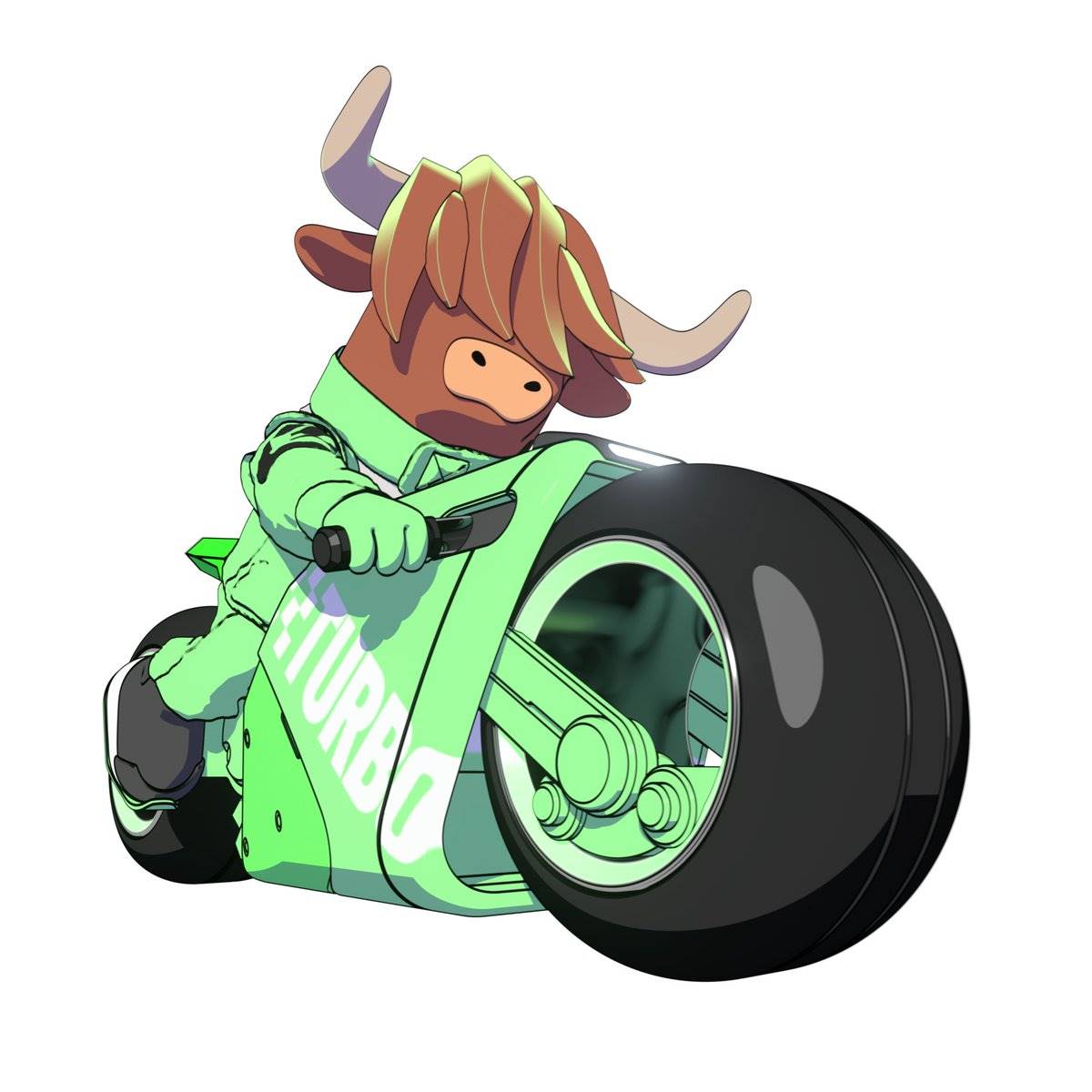
Many people have asked me about Turbo and whether they should create a mascot for their own project. The short answer — probably not. To explain why, let’s revisit Turbo’s origin story.
Long before I joined, the Eclipse core team had been joking about “thicc sequencers.” I’ll elaborate on that shortly. At the time, while fundraising announcements performed well, Eclipse struggled to maintain sustained market attention. That’s when Vijay reached out to me, and we began discussing my potential role at the company. On the day of my formal interview with Eclipse, I pointed out that the “intern meme” trend was already outdated. Too many projects were copying each other — creating intern personas to boost engagement and visibility (Eclipse was doing this too). The problem? Only a few teams executed it well. It was becoming clear that most marketing teams were simply imitating success without innovation.
This is a major flaw in industry-wide marketing strategies. Leadership teams often lack the confidence to take risks or invest boldly. So when they see something work, they mimic it rather than inventing new, unique approaches. They assume spending money on proven tactics is safer — but the flaw in that logic is that those tactics succeeded precisely because they were original and thoughtfully crafted. Mere imitation rarely works. If you’re not the first to do something, you must execute it better than anyone else to stand out.
I refused to let our brand suffer the same fate as failed crypto projects. Eclipse had to be unique. So I decided to abandon the previous strategy of using intern accounts to gain traction and instead try something new: create a mascot that could capture attention even from people who knew nothing about Eclipse.
Then came the breakthrough moment. Our marketer brought a Highland cow into an art gallery in New York City — and it went viral. Influencers outside crypto Twitter started posting photos with the cow and tagging Eclipse. That was my “aha” moment. The Highland cow symbolized both the “thick” nature of our sequencer and had viral potential. We found a natural way to link this animal to our brand. This is why we chose the Highland cow — not to copy others, but to create our brand story in real time.
With the mascot chosen, we began designing and naming him. Previously, Eclipse’s marketing leaned heavily on speed — but clearly, speed alone wasn’t compelling anymore. TPS metrics are stale; people no longer care if you’re slightly faster than another blockchain (which is why we don’t lead with speed as our core brand message). Still, I didn’t want to abandon speed entirely — Eclipse really is fast. During brainstorming, I realized the best way to showcase speed wasn’t direct promotion, but subtle implication. Even better if we could do it in a way disconnected from other crypto projects. So I looked outside the space for inspiration.
Most of you probably don’t know this, but my inspiration actually came from anime. When working with our website and animation designers, I asked them to draw from two key influences: *Akira* and *Speed Racer*. These non-crypto inspirations are exactly what allowed our brand — and Turbo — to stand apart.
After multiple rounds of discussion and refinement, we finalized a new logo, brand colors, website design, and Turbo’s visual identity. We adopted a bold lime-green aesthetic, placing the central character front and center. A cute Highland cow blending 2D and 3D styles, driving fast cars and motorcycles — designed to evoke speed and our “thicc sequencers.” The animation quality far surpassed anything I’d seen from other mascots, making our design truly distinctive. We named him “Turbo,” adding a final touch of flair.
But soon, I faced a challenge. Everyone at Eclipse got excited and wanted to weigh in. We hit a classic problem: too many opinions. I realized that to maintain momentum, I needed to control Turbo’s trajectory. Despite praising the Eclipse team, I directly rejected numerous requests. Here are a few examples:
A. Team members wanted to immediately pour significant resources into producing more Turbo content. Without sufficient data, I resisted. Instead, I gathered evidence — and eventually doubled down on Turbo based on three key data points:
A(1). Our Turbo-related Twitter content significantly outperformed all other posts.
A(2). Community enthusiasm for Turbo was unprecedented — fans created massive amounts of art, memes, and other content, proving we’d built something special.
A(3). Even people previously uninterested in Eclipse began reaching out to learn about Turbo.
B. Team members suggested using Fiverr to mass-produce Turbo content. I firmly opposed this. We’re a lean team with fewer than 30 full-time employees. Our strength lies in quality, not quantity. Sacrificing animation quality to increase output would make Turbo indistinguishable from other mascots — a path to self-sabotage.
C. Team members proposed financializing Turbo — turning him into an NFT or memecoin. I absolutely refused. We’re building an open ecosystem where developers can experiment freely, but the core Eclipse team will not support a Turbo NFT collection or memecoin. The reason is simple: if we promise something and fail to deliver, we risk burning all the goodwill and momentum we’ve built around Turbo. Plus, it would severely distract our product and engineering teams. I never want Turbo tied to the performance of a digital asset. Turbo is a brand asset — one with greater potential than Eclipse itself to capture mainstream attention.
I share this not to boast, but to show the depth of thought behind the scenes. Turbo has resonated with audiences and become one of our most effective marketing tools. So when you ask me, “Should I create a mascot?” — it’s not a simple yes-or-no question. The real question is whether you’re willing to commit deeply to building a brand mascot. If you just slap together an animal character and call it a day, it won’t move the needle. Water takes time to boil — yet I feel many expect it to happen instantly.
Honestly, Turbo’s story is still in its early chapters. We haven’t yet fully leveraged him or Eclipse’s overall brand to achieve revolutionary success. But we’re working behind the scenes, letting creative ideas mature over time. Turbo is here to stay, and I’m incredibly excited for everyone to see what we’ve planned for the next six months. We’ve got some bold moves lined up. November is just the beginning.
I hope you enjoy all upcoming Turbo content, as we continue building a complete narrative around Eclipse. I encourage you to think of your brand as a story too. Find ways to connect all your announcements to a central brand positioning or narrative. Believe in something! Make commitments and take bold, thoughtful risks. Be the leader, not the follower.
What other topics would be helpful for you? Brand repositioning? Brand strategy? Agencies (Part 2)? Anything else? Let me know in the comments below.
Until then, outshine everything.
This is no longer just a meme to me. Marketers may not be as technical as engineers — but we don’t need to be.
Join TechFlow official community to stay tuned
Telegram:https://t.me/TechFlowDaily
X (Twitter):https://x.com/TechFlowPost
X (Twitter) EN:https://x.com/BlockFlow_News
 @akachacolate