friend.tech rug? Where is Web3 social?
TechFlow Selected TechFlow Selected
friend.tech rug? Where is Web3 social?
friend.tech relinquishes control of smart contract—soft rug?
 Navigating Web3 tides with focused insights
Author: Karen, Foresight News
Past glories now cast a shadow over present decline. The rise and fall of friend.tech resembles a dramatic plot twist, evoking deep regret.
On September 8 (Beijing time), friend.tech's official Twitter announced a telling change—setting its management and ownership parameters to 0x000...000. Ostensibly, this was to prevent any future modifications to fees or functionality; in reality, it marked a complete relinquishment of control over the smart contract. Some community members interpreted this as a sign of stagnation and the project’s effective end.
Although friend.tech attempted to reassure the market by emphasizing that the change wouldn't affect the normal operation of its web client and that the development team would not collect any fees from the smart contract or platform, social media buzz quickly turned negative. Phrases like "friend.tech is dead" and "soft rug" began spreading, reflecting users’ anxiety and disappointment about the project’s future.
Notably, since August, friend.tech’s official Twitter content has become unusually monotonous and mechanical—posting only daily rankings of the top five Clubs, with no other fresh updates or engagement. This shift not only reveals the team’s exhaustion and helplessness but may also foreshadow the internal struggle and final decision to abandon control of the smart contract.
From Market Leader to Decline
Looking back, friend.tech’s ascent was once remarkably brilliant. Initially powered by support from Paradigm, active participation from heavyweight KOLs, an exclusive invite-only design, anticipated airdrops, and innovative monetization of KOL influence and IP, friend.tech achieved a stunning growth from zero to over 100,000 users within just two weeks. Its total user count eventually surpassed 910,000.
Yet times have changed. Today, friend.tech has lost its former luster. Daily active users have dropped to single or double digits over the past two months. The daily trading volume of Keys has plummeted from a peak of $20 million to merely thousands of dollars. The once-thriving ecosystem appears to have collapsed within just months.
Even more disheartening is the cliff-like drop in the FRIEND token price. After peaking near $3 in May, it has now fallen to $0.06—a decline exceeding 98%. The market cap stands at only $5 million. Influencer Machi Big Brother invested heavily in FRIEND tokens and now faces massive unrealized losses: his initial $15.6 million purchase is now worth just $570,000, representing a loss of at least $15 million. This serves as a microcosm of friend.tech’s downfall.
Reviewing friend.tech’s trajectory, uncertainties within the team and external collaborations laid early groundwork for its decline. From shifting dynamics with Base, to the failed vision of Friendchain, and ultimately abandoning plans to migrate the FRIEND token to another chain, strategic indecisiveness further deepened its crisis.
In late May, co-founder Racer hinted at instability in the relationship with Base and potential migration away from the protocol. In June, friend.tech announced a partnership with Conduit to develop Friendchain, a social-dedicated chain on Base with FRIEND as the gas token. Soon after, the team deleted the announcement, abandoned the Friendchain vision, and decided—based on community feedback—not to migrate FRIEND to another chain.
Simultaneously, friend.tech disabled all protocol fees across BunnySwap (built-in swap), Clubs, and v1 smart contracts. Now, 100% of fees go directly to traders, liquidity providers, and Club Chairs within the community. Previously, friend.tech V1 charged a 10% fee on every transaction, half of which went to the protocol.
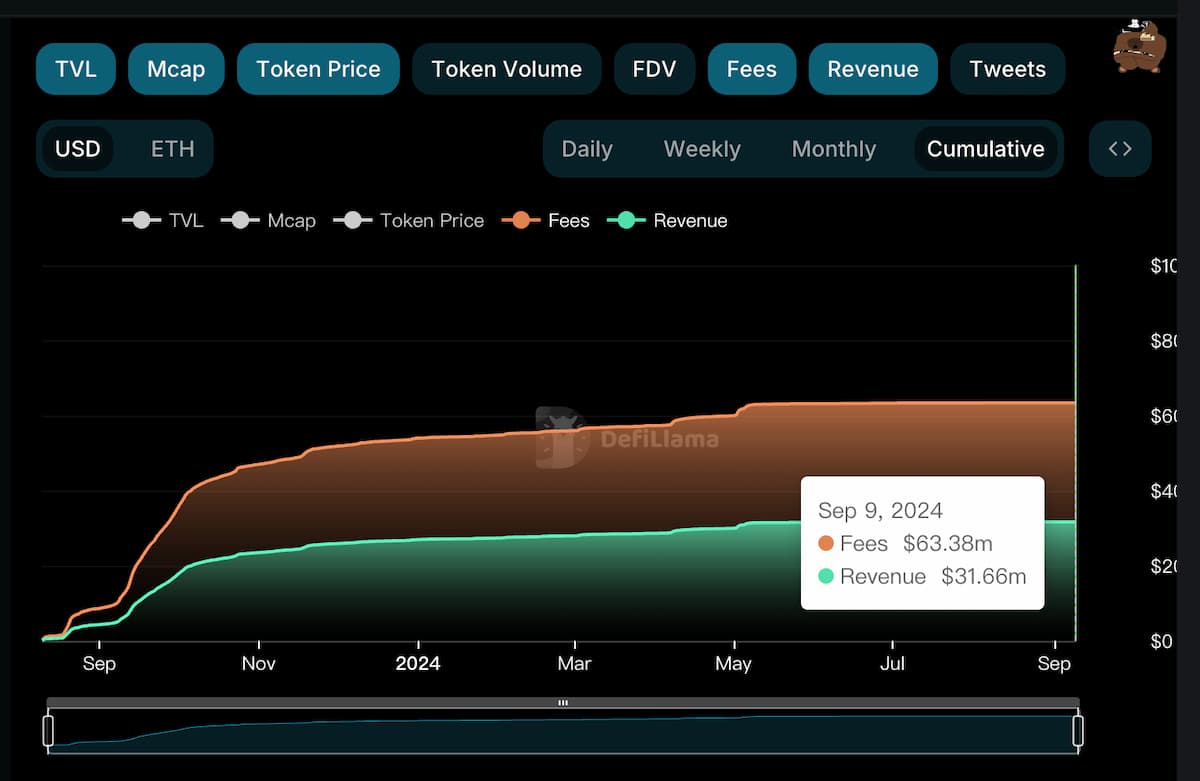
Data from DefiLlama shows that, to date, friend.tech has generated $63.38 million in fees, with $31.66 million in revenue. As shown in the chart below, during its heyday in October last year, the protocol recorded over $1 million in daily fees. However, after the release of V2, fee growth essentially stalled, with recent daily fees dropping to just hundreds of dollars.
Source: DefiLlama
Why Did friend.tech Fade Away?
The rise and fall of friend.tech serves as a mirror, reflecting how Web3 social projects must guard against bubbles even while pursuing rapid expansion.
Beneath friend.tech’s silence lies a complex web of contributing factors. First and foremost is the product’s high speculative nature, which attracted many short-term investors seeking quick profits but failed to build a solid foundation of long-term users, undermining user loyalty. Secondly, during its search for market positioning, friend.tech seemed unable to pinpoint a niche aligned with its core value, resulting in a disconnect between product and user needs. Additionally, previous aggressive PUA-style marketing tactics damaged its reputation and significantly eroded user trust. In terms of team dynamics and external partnerships, friend.tech faced numerous uncertainties that not only hampered execution efficiency but also intensified market concerns about its future. Most critically, frequent strategic vacillation led to constant shifts in direction, preventing the formation of sustained market impact or user stickiness.
Where Is Web3 Social Going?
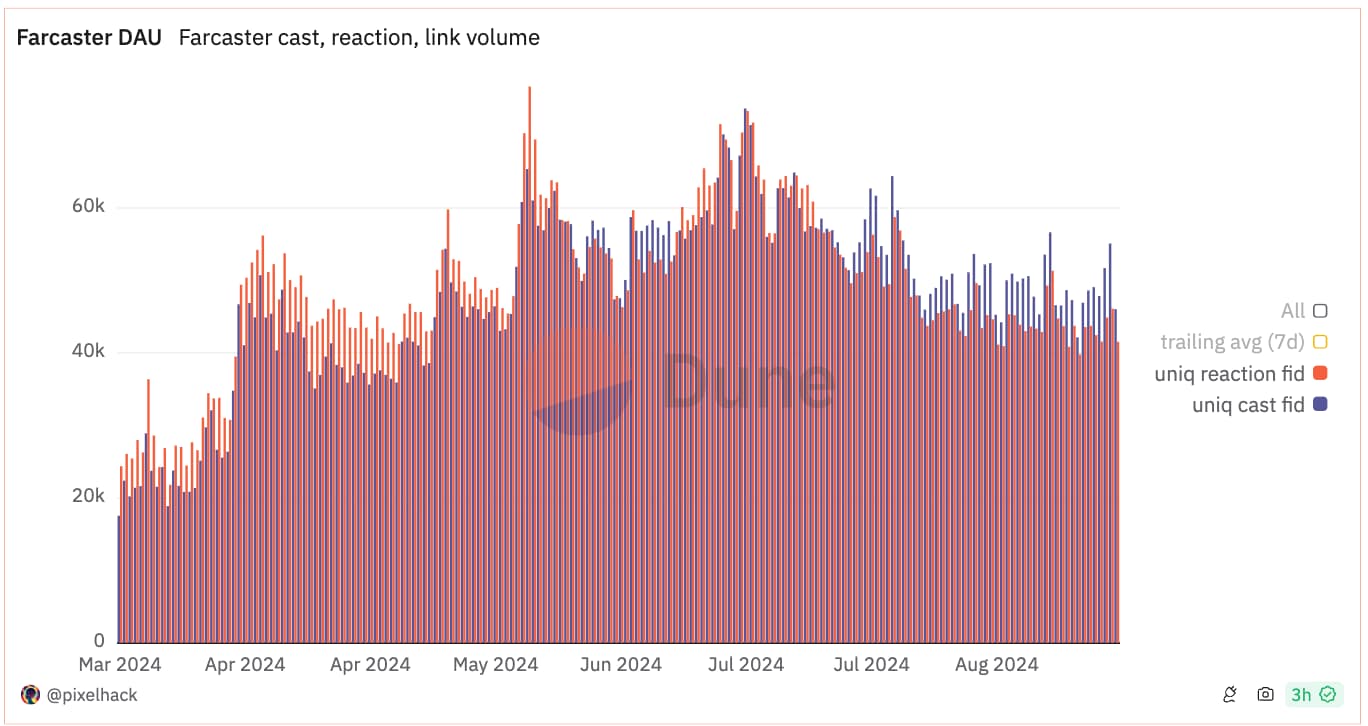
Meanwhile, Farcaster, another leading Web3 social project, has recently encountered dual challenges in user growth and platform activity. At mid-year, Farcaster saw daily posts and interactions exceed 140,000. But over the past month, this momentum sharply slowed, with DAU dropping to around 100,000—marking a clear weakening of growth.
Source: Dune (@pixelhack)
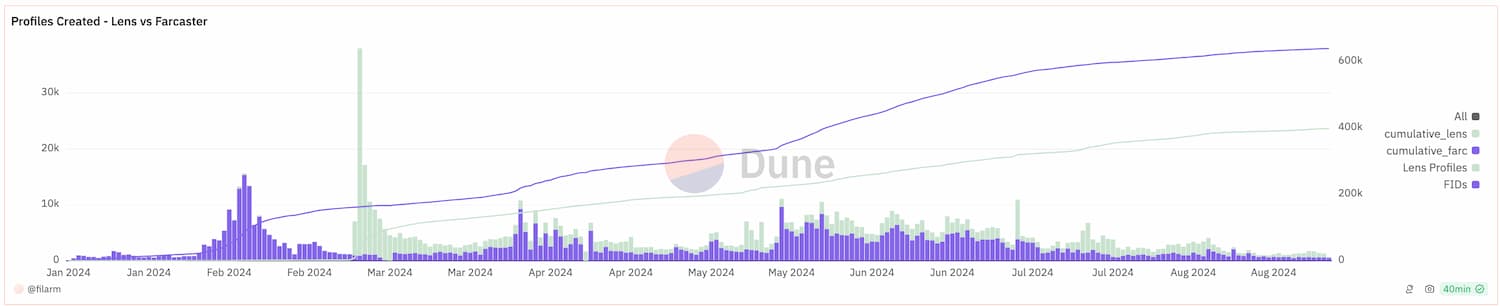
More severely, Farcaster has hit a bottleneck in user acquisition. Since early February, daily new user growth has plunged from a peak of 15,366 to an average of just 500–600 per day over the last two weeks. This drastic drop highlights a significant erosion in new user appeal and reflects serious challenges in sustaining growth momentum. Furthermore, memes within the Farcaster ecosystem have suffered heavy losses—Degen, for instance, has lost over 95% of its value since hitting an all-time high at the end of May.
Source: Dune (@filarm)
These figures not only reveal shaken market confidence but also signal that the Farcaster ecosystem is undergoing unprecedented pressure and adjustment.
In contrast, Telegram has strengthened its dominance in Web3 social through synergistic development with the TON ecosystem and explosive growth in mini-program games. For native Web3 social projects aiming for large-scale adoption, greater focus is needed on precise positioning, reducing the migration cost from Web2 to Web3 social experiences, optimizing user experience, and building trust and engagement.
Join TechFlow official community to stay tuned
Telegram:https://t.me/TechFlowDaily
X (Twitter):https://x.com/TechFlowPost
X (Twitter) EN:https://x.com/BlockFlow_News
 Foresight News