When Blast rebranded itself as a full-stack chain instead of an L2, "aligned with Ethereum" gradually became a meme...
TechFlow Selected TechFlow Selected
When Blast rebranded itself as a full-stack chain instead of an L2, "aligned with Ethereum" gradually became a meme...
The original slogan and narrative are always just means, never ends.
 Navigating Web3 tides with focused insights
By TechFlow
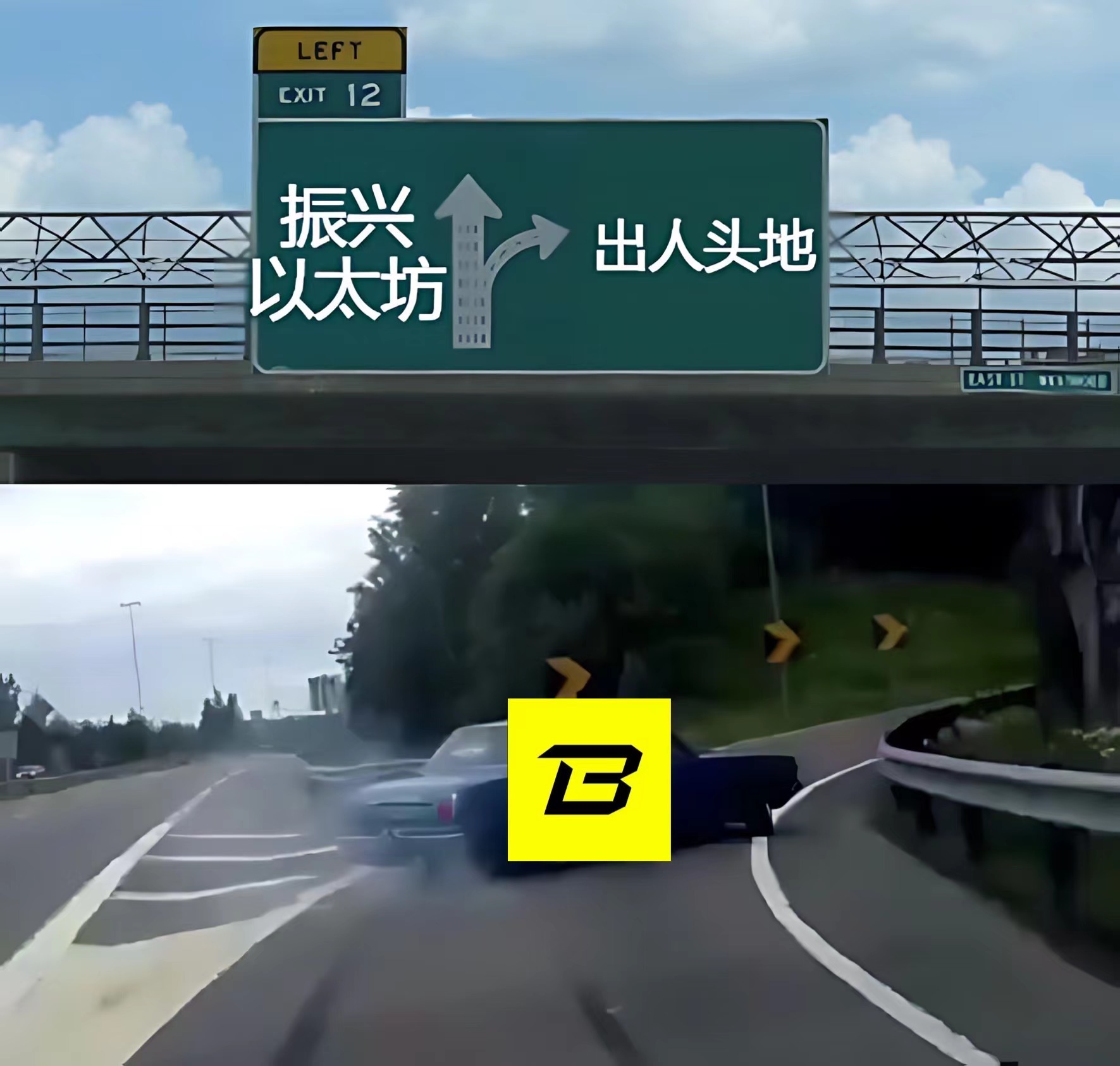
A few weeks ago, after Blast distributed its airdrop, it seemed like everyone stopped paying attention to the project.
But as long as there are enough eyes in the community, no detail goes unnoticed.
Yesterday, sharp-eyed users noticed that Blast had changed its official X account handle from @Blast_L2 to simply @Blast.
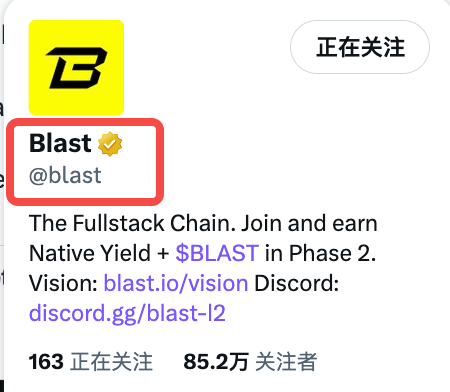
Official accounts often represent a project's brand and positioning. A single word change may seem minor, but the implications can be significant.
Although this is just a small username update—not big enough to warrant an official press announcement—it could very well be part of a larger strategic plan when viewed from a branding and perception standpoint.
At the same time, Blast’s profile description now refers to itself as "The Fullstack Chain" instead of an Ethereum L2, suggesting a deliberate effort to downplay its identity as an Ethereum Layer 2.
But is this merely a branding move designed to highlight differentiation, or does it signal a technical shift toward independence—breaking away from Ethereum to become a standalone chain?
Helping Ethereum Matters, But Growing Ourselves Matters More
Undoubtedly, among all the L2s, Blast stands out as perhaps the most skilled in operations and community engagement—with no real equal.
Of course, Blast's ambitions go far beyond just distributing airdrops for popularity. Becoming a "fullstack chain" was actually written into its second-phase development roadmap from the beginning.
According to official diagrams, "fullstack" means that Blast isn't just a ledger handling transactions and state changes—it aims to integrate every upstream and downstream component related to the blockchain.
From fiat on-ramps and off-ramps, down to wallets, Telegram bots, and DApps within its ecosystem, everything becomes part of the Blast chain, extending its reach across broader services.
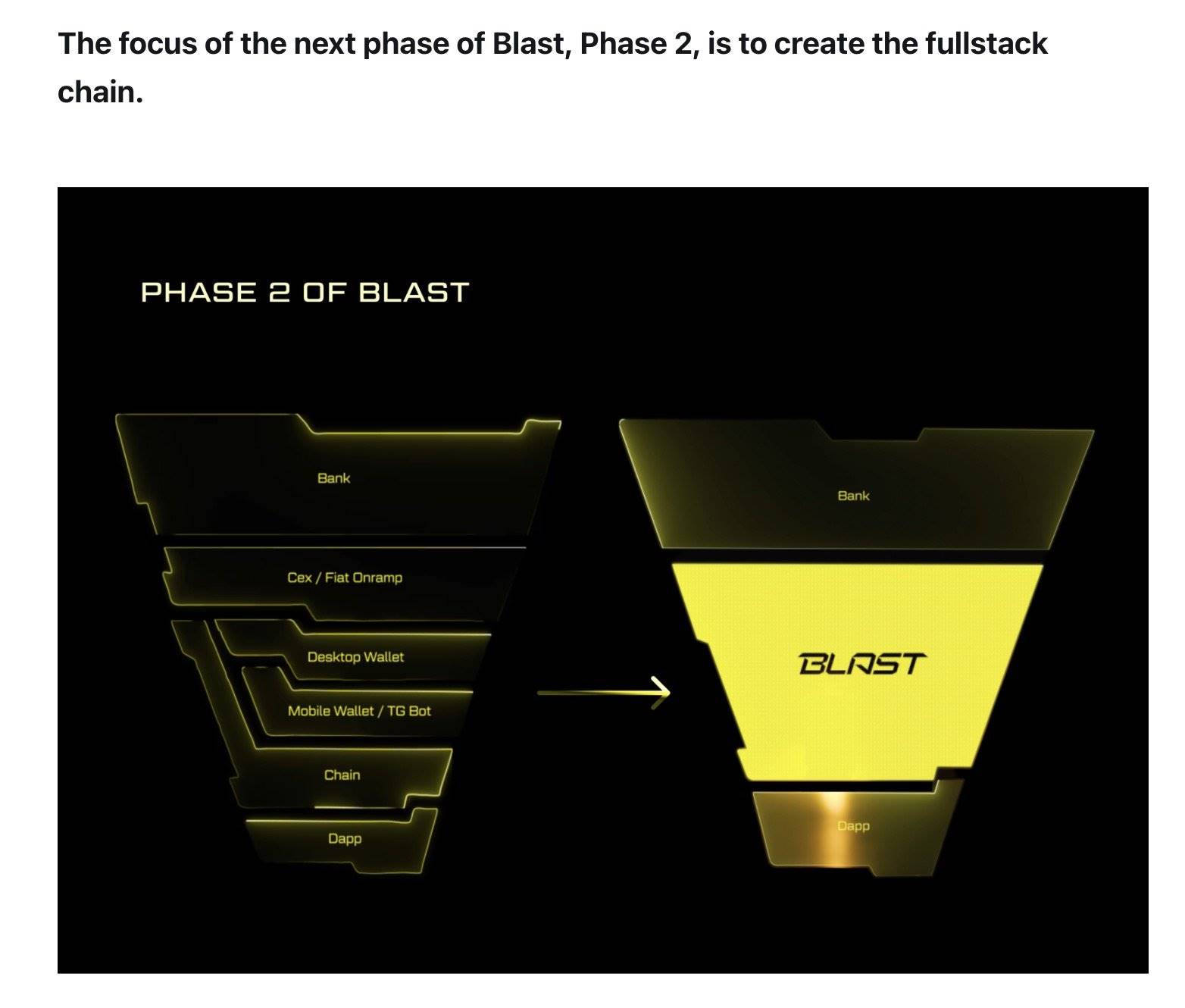
From infrastructure to applications, from capital flows to information flows—Blast wants a piece of everything.
This is undeniably an ambitious and strategically sound approach. Most L2s look nearly identical; to stand out, you need to build around the surrounding ecosystem and adjacent services.
However, the original purpose of L2s was to help Ethereum solve scalability issues. Blast’s fullstack vision goes well beyond simple performance improvements.
The emphasis here is clearly on self-development. That said, one could still argue it indirectly improves the Ethereum user experience—and that wouldn’t be wrong either.
But does moving from an L2 to a "fullstack chain" mean abandoning its role as an L2 to become an independent L1?
Currently, the answer appears to be no.
In yesterday’s most-viewed post on this topic, X user @0xjim interpreted the change as “leaving Ethereum to form a separate chain.”

Wang Qiao from Alliance DAO offered a different take in the comments, describing it as an act of “integration”—building native onboarding channels, wallets, and supporting tools, rather than severing ties with Ethereum.
Other voices in the community were even sharper, pointing out that more rollups may start referring to themselves as 'chains' in the future. This isn’t about becoming independent L1s detached from Ethereum, but rather:
Cutting ties with the idea that they should look and feel exactly like today’s L2s.
Technical Homogenization Is the Root Problem, Standing Out Is the Obsession
Every L2 starts with grand visions and bold promises.
Though their wording varies, their stated goal is always some version of “making Ethereum better.”
This precisely defines the relationship between L2s and Ethereum—ethereum alignment: existing as parasitic extensions within the Ethereum ecosystem.
Helping process transactions faster, reducing congestion, enabling scalability...
If external L1s position themselves as “Ethereum killers,” then L2s like Blast are meant to be Ethereum’s assistants.
But these assistants have become too technically homogeneous. Whether ZK or OP, rollup-as-a-service now exists—you can spin up your own L2 in minutes.
When assistants start competing against each other, standing out becomes an obsession.
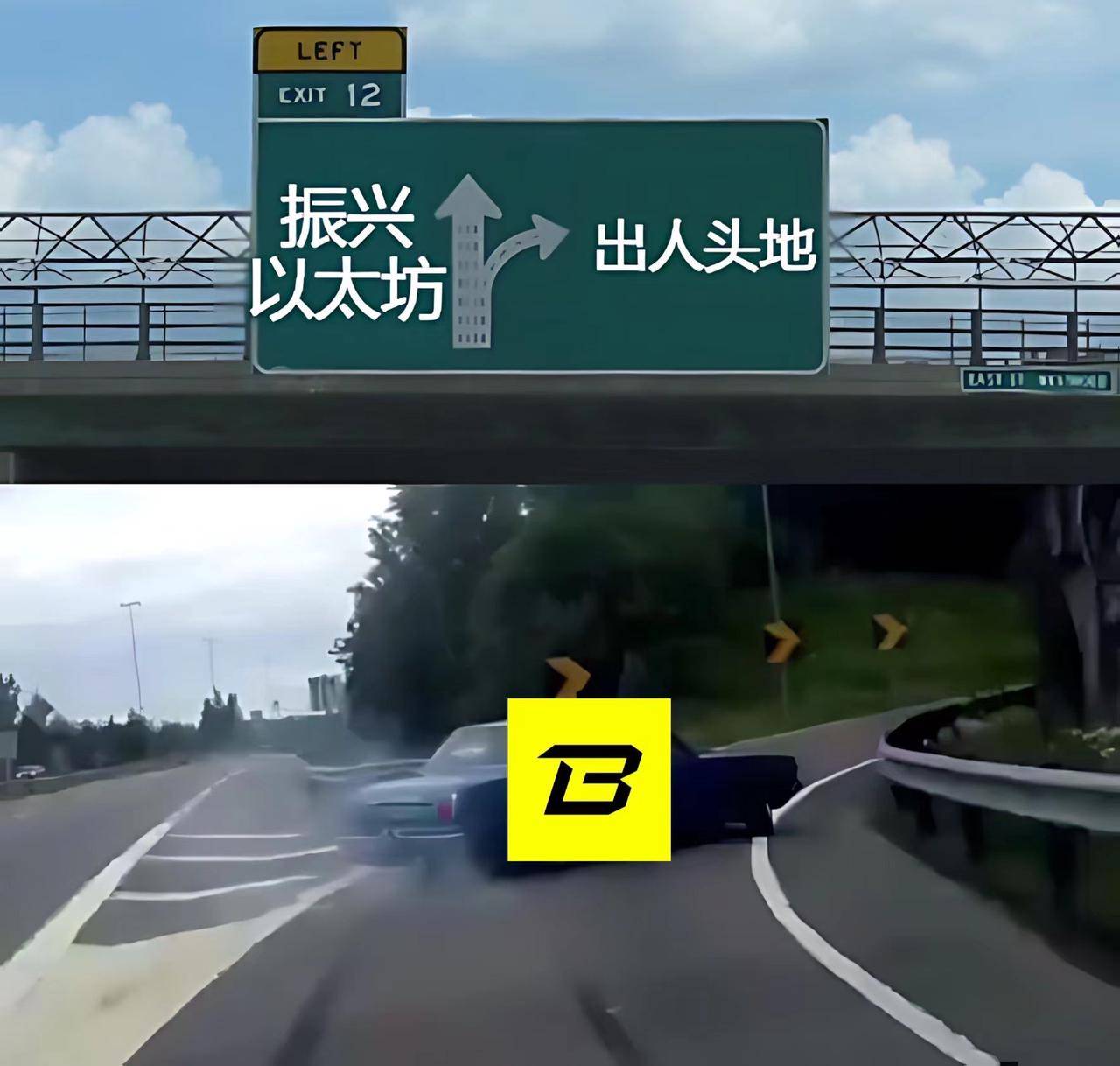
Attention and capital in crypto are finite. Users don’t really care about the technical differences between various L2s, since their end results are largely similar—most people just pick 1–2 to use.
When user experiences are roughly equivalent, dozens of L2s compete fiercely. Sometimes, being half a step ahead in branding or perception can make a big difference.
Thus, we increasingly see these so-called “Ethereum assistants” gradually shift from their original mission of “helping Ethereum” toward carving out their own identities.
If you go back and check the bios of various L2 official accounts, you’ll notice a curious consensus:
Not a single L2 explicitly calls itself an Ethereum L2 in its profile.
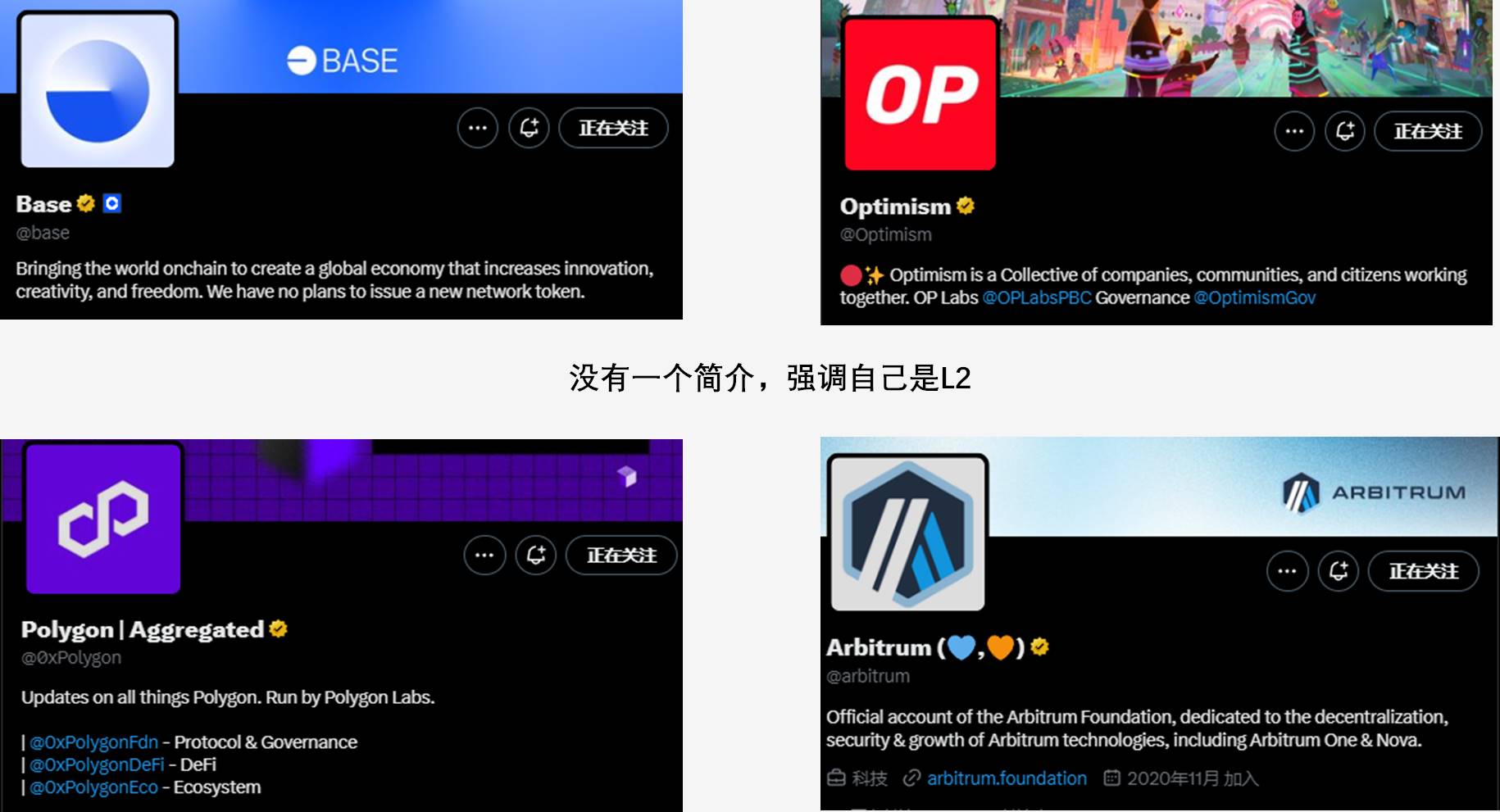
At this point, “ethereum alignment” is starting to feel more like a meme.
After all, projects exist to serve themselves. No team is purely altruistic, building something great for Ethereum without expecting anything in return.
Understanding this is crucial when navigating the crypto space:
Initial slogans and narratives are always means to an end—not the end itself.
Join TechFlow official community to stay tuned
Telegram:https://t.me/TechFlowDaily
X (Twitter):https://x.com/TechFlowPost
X (Twitter) EN:https://x.com/BlockFlow_News
 深潮TechFlow