Focus on the FIT21 Act: A New Driver for U.S. Crypto Market Regulation and Shifting Political Forces
TechFlow Selected TechFlow Selected
Focus on the FIT21 Act: A New Driver for U.S. Crypto Market Regulation and Shifting Political Forces
FIT21 is the first bill attempting to comprehensively define how the United States should regulate the crypto market.
 Navigating Web3 tides with focused insights
Author: Avichal - Electric ϟ Capital
Translation: TechFlow
The U.S. House of Representatives votes on FIT 21. Biden just said he wants comprehensive cryptocurrency regulation. So,
-
What is FIT21?
-
Why is this bill important?
-
What does FIT21 reveal about shifting political alliances and power dynamics in the U.S.?
What is FIT21?
FIT21 is the Financial Innovation and Technology for the 21st Century Act, the first bill attempting to comprehensively define how the U.S. should regulate the crypto market.
FIT 21 covers several key areas and provisions:
-
Clarifying jurisdiction between the Securities and Exchange Commission (SEC) and the Commodity Futures Trading Commission (CFTC)
-
Providing consumer protections through transparency and disclosure requirements for sponsors and endorsers
-
Prohibiting institutions from blocking people's access to cryptocurrency
-
Requiring the Treasury Department to study stablecoins
FIT21 attempts to define terms around decentralized systems, and when a network becomes sufficiently decentralized to no longer be considered a security. It introduces a process to certify whether an asset is sufficiently decentralized and classify it as a commodity. This is a major breakthrough.

The SEC must review applications and respond within 90 days. If the SEC determines that an asset operates without a controlling entity, it will be classified as a commodity, placing it under the jurisdiction of the Commodity Futures Trading Commission (CFTC).
This isn't ideal for those skeptical of the SEC. But establishing clear rules is a significant step forward.
So why is FIT21 important?
After three and a half years of learning, I’ve realized one thing: political and legislative progress is often incremental and imperfect—but occasionally there are major breakthroughs.
When you can turn some of what you want into actual law, take it.

FIT21 isn’t perfect, but it gets us closer. We not only win new battles—we gain momentum in the larger game. We prove to the world that we know how to get things done. And we may not get another opportunity like this for years.
There is no corresponding bill in the Senate yet. So it won’t become law immediately.
Today’s vote is performative—but 80% of power is performance.
What does FIT21 reveal about shifting political alliances and power dynamics in the U.S.?
But who is performing? For whom? What do their performances tell us? These performances will show you where the world is heading.
This vote tells us:
-
Republicans have been focused on this issue from the beginning
-
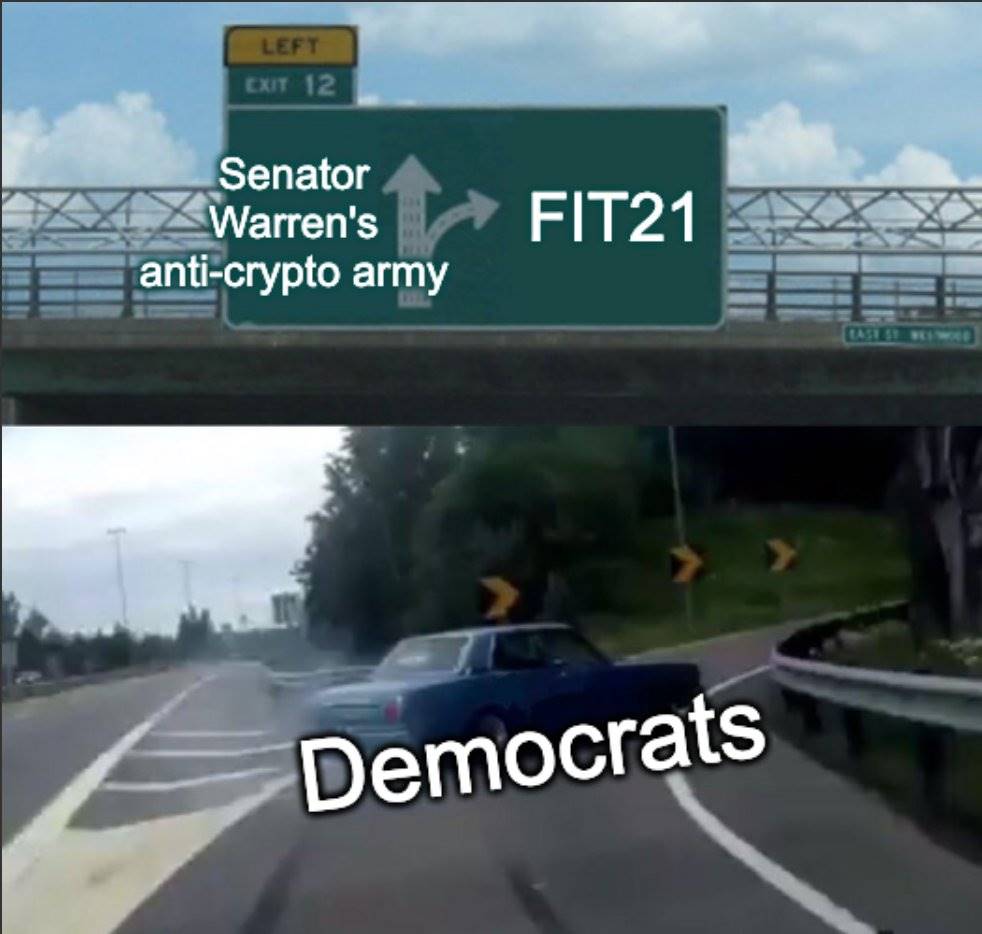
Democrats fear losing votes, funding, and falling behind Republicans on this issue
-
Democrats are breaking away from Elizabeth Warren
-
The President is distancing himself from Warren
Power centers are shifting—and cryptocurrency is winning.
@PatrickMcHenry, @RepFrenchHill, @GOPMajorityWhip, and others have long advocated for crypto within the Republican Party. As 50 million American crypto holders mature, they are now fully prepared for this power shift—a strong validation of their strategic foresight.
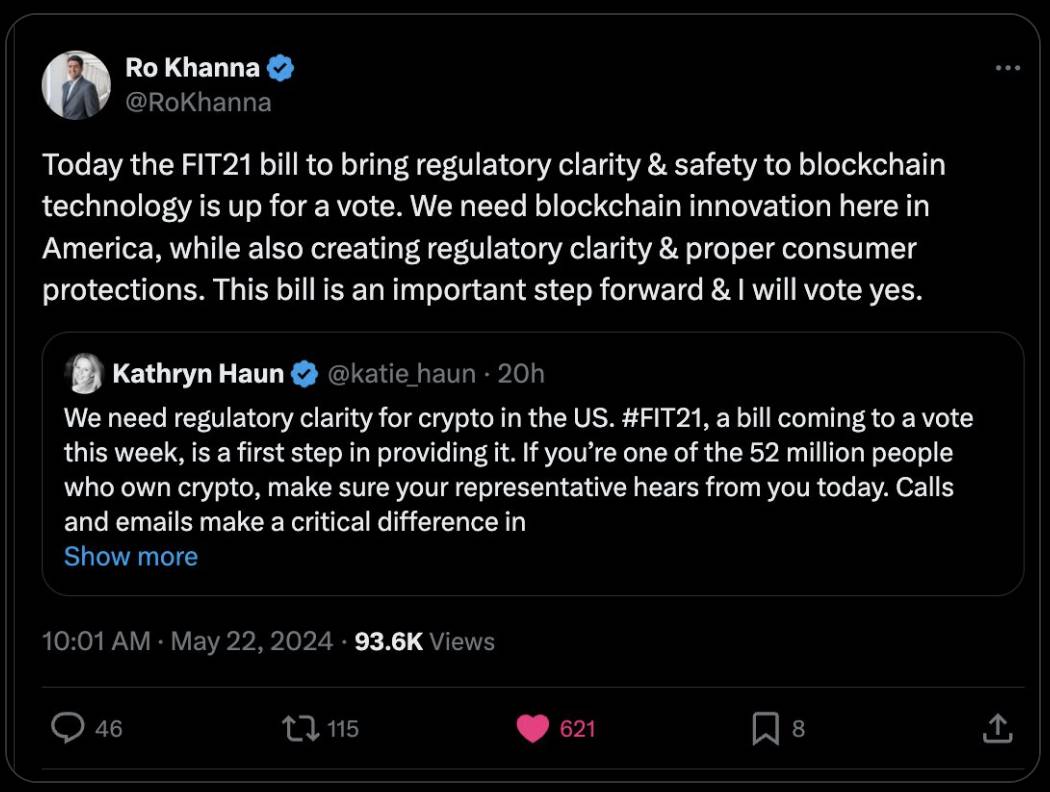
If you look at whose positions have changed over the past six months, it’s moderate Democrats. Similar to Democrats who voted to overturn SAB121—@RepRitchie, @RepMoulton, @RepSlotkin—we now see figures like Jim Himes, @RoKhanna, and @RepWileyNickel voting alongside their Republican colleagues.
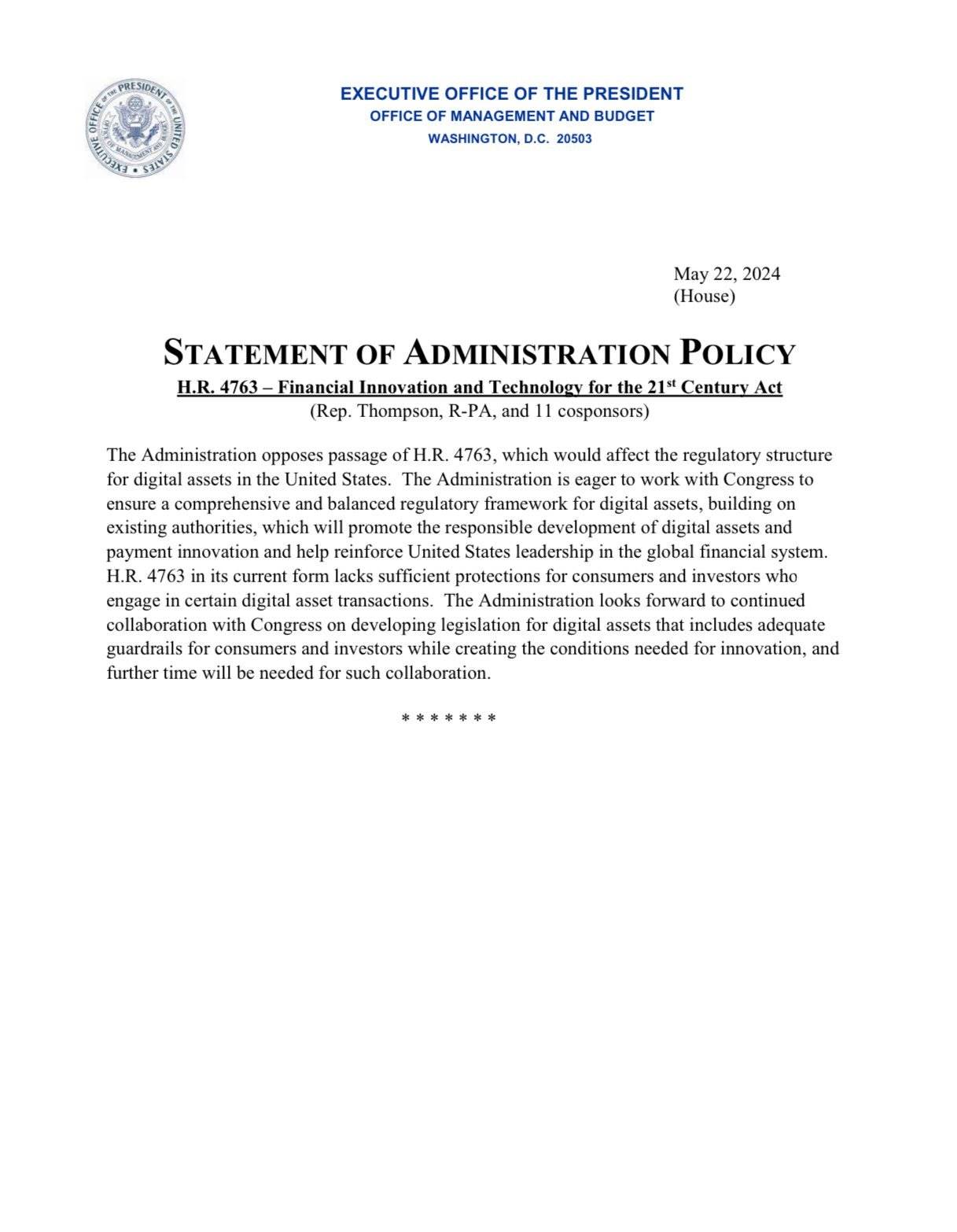
A year ago, this might have been swiftly vetoed by the President. Today, the White House wants to help clarify crypto regulations and will not veto them.
A complete 180-degree turnaround. White House staff brought their colleagues here.
What does this all mean? What signals does it send?
-
It shows that moderate Democrats now recognize the importance of crypto.
-
There are enough people here to influence election outcomes.
-
There is enough funding to support campaigns.
-
Democrats are losing these voters.
Elizabeth Warren was once the focal point of tech and crypto regulation. But having cost the party votes and donations ahead of 2024, she has lost much of her influence. Democrats have now signaled they don’t want to go down with Warren.
In 2025, the Senate will appoint new commissioners to the SEC, CFTC, FDA, FTC, and others. If Warren still holds power, expect more appointees like Gensler. If Warren loses power, we’ll instead get people like @HesterPeirce. (Note: The author implies that crypto’s influence in U.S. politics will continue to grow regardless.)
Join TechFlow official community to stay tuned
Telegram:https://t.me/TechFlowDaily
X (Twitter):https://x.com/TechFlowPost
X (Twitter) EN:https://x.com/BlockFlow_News
 @ElectricCapital