Memory Stocks Squeeze Korean Retail Investors
Author: Su Yang, Tencent Tech
The global memory chip market is experiencing an unprecedented wave of price hikes.
AI data centers are aggressively purchasing memory, with production capacity at Samsung Electronics, SK Hynix, and Micron Technology already fully booked. Some memory chips have seen prices surge tenfold over the past year. Electronics manufacturers are scrambling across suppliers to secure supplies, with some products forced to raise prices or downgrade specifications.
While the supply chain scrambles to secure inventory, the capital market is dumping memory stocks.
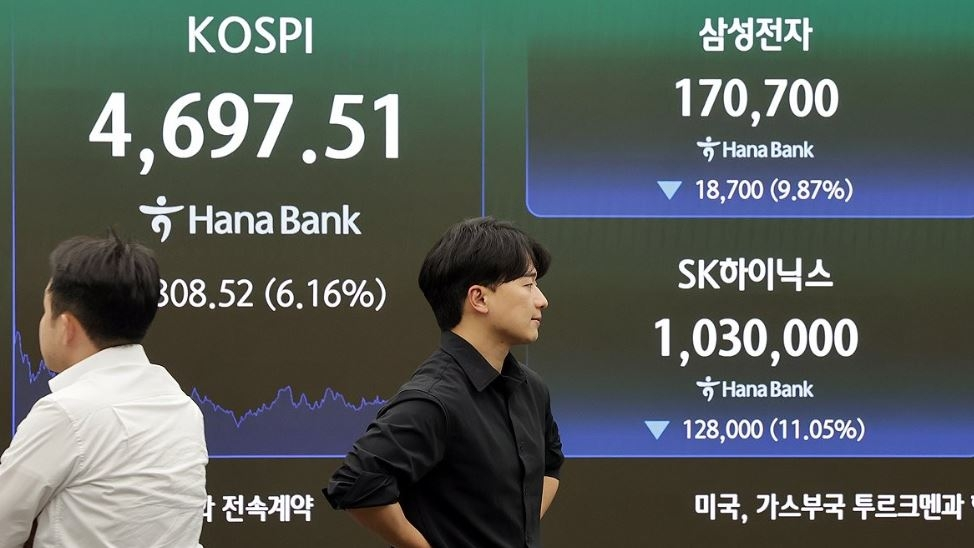
On November 25 local time, SK Hynix shares fell 11.05%, Samsung Electronics dropped 9.87%, and the KOSPI index plummeted over 6%. Memory stocks, which had previously benefited from surging AI demand, suddenly faced a wave of concentrated selling.
On one side, chips remain in short supply with manufacturers' orders booked years into the future; on the other, investors worry that high profit margins may not be sustainable. Institutions like Goldman Sachs and Morgan Stanley are looking ahead to 2028, assessing how memory prices and corporate earnings might shift once new production capacity comes online.
While AI demand continues to push up memory chip prices, the stock market is already cooling down this cycle of prosperity.
How Much Longer Will Memory Chips Remain Short?
The most direct driver behind this round of memory shortages is the AI data center sector.
Major tech companies continue to build out AI infrastructure, requiring massive purchases of DRAM and high-bandwidth memory (HBM). Compared to traditional consumer electronics customers, cloud computing giants have more abundant capital and larger procurement scales. To ensure supply, they are willing to sign long-term contracts, even locking in production capacity for the next several years in advance.
SK Hynix is one of the primary beneficiaries of this demand surge. The company holds a significant market share in the HBM space, with demand for high-bandwidth memory from AI chipmakers like Nvidia generating a flood of orders. As AI server deployments continue to expand, available capacity among memory manufacturers is growing increasingly tight.
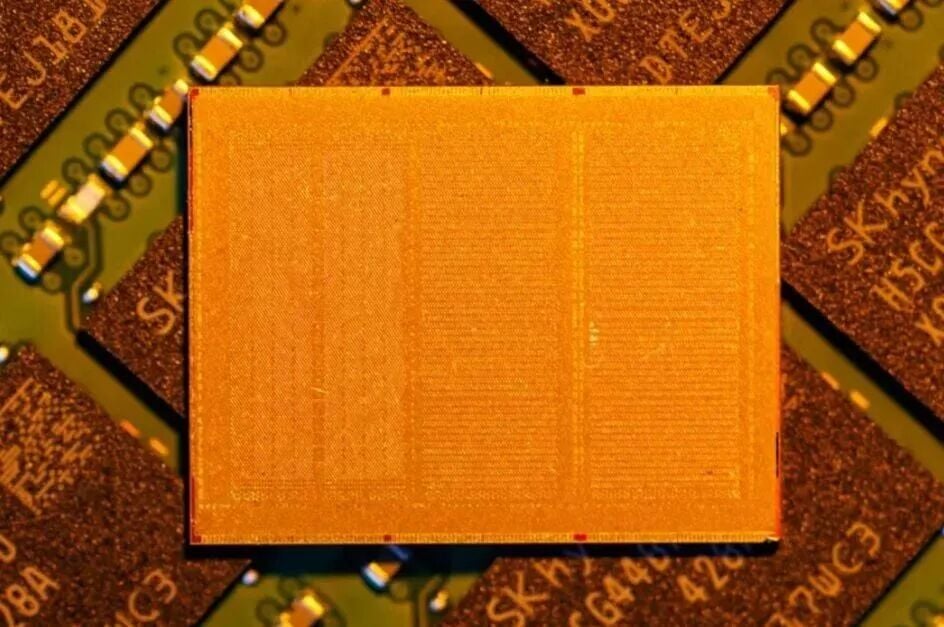
Figure: SK Hynix memory chips installed on DIMMs
The pressure driven by AI demand has also spilled over into the traditional memory market. Because HBM offers higher profit margins, manufacturers are shifting more production resources toward it. However, HBM manufacturing involves complex processes and packaging steps, competing with traditional DRAM for production resources, equipment, and capital investment. Consequently, standard memory required by consumer electronics manufacturers is being squeezed.
Ramping up production cannot quickly alleviate the shortage either. Although Samsung Electronics, SK Hynix, and Micron Technology are all increasing investments, building new wafer fabs requires multiple stages including construction, equipment installation, and process calibration, a cycle that typically spans several years. This means additional capacity in the short term will remain limited, making it difficult to rapidly improve the tight supply-demand dynamic.
According to a November 25 report by The Wall Street Journal, some electronics manufacturers have formed dedicated teams for procuring memory chips and are even sourcing inventory from second-hand trading platforms like eBay to mitigate supply chain risks.
Memory price hikes are beginning to spill over into the consumer market. Apple has raised prices on certain MacBook models, and the starting price for the iPhone 18 Pro series has increased. Microsoft Xbox, Amazon Echo Dot, and Meta Quest products also face cost pressures. Meanwhile, some manufacturers have opted to reduce device memory configurations; storage capacity on certain Motorola models was cut from 256GB to 128GB, yet their prices did not drop accordingly.
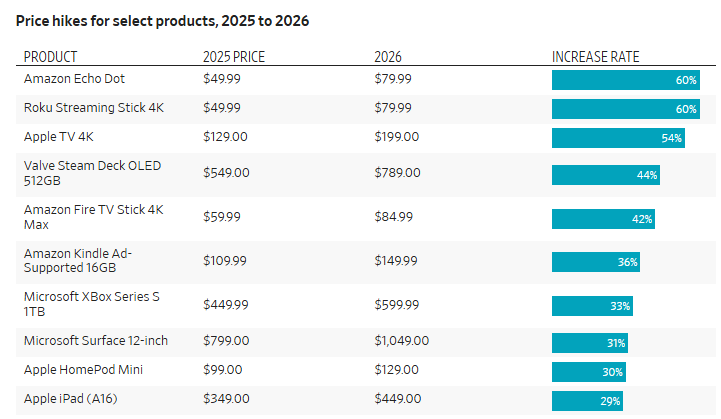
Figure: Prices adjusted upward for some popular electronics due to rising memory costs
However, demand is not growing uniformly across all sectors.
A storage industry report released by GF Securities on November 26 cited TrendForce data indicating that Chinese cloud service providers have recently slowed their procurement pace. One key reason cited is insufficient GPU supply. Meanwhile, due to corporate cuts in IT budgets, some overseas cloud clients have also delayed their procurement plans for traditional servers.
The consumer market situation warrants even closer attention. Some clients are slashing enterprise SSD (eSSD) orders, and consumer electronics makers are beginning to downgrade memory specs, creating headwinds for consumer-grade DRAM demand growth.
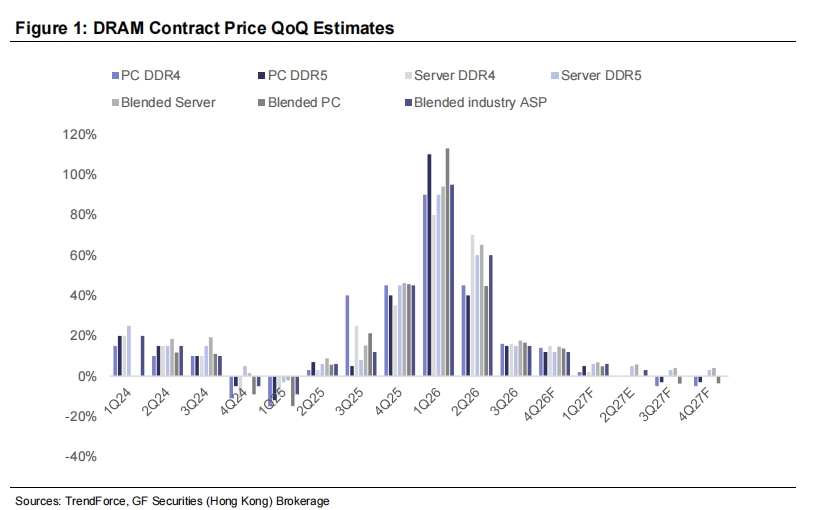
Based on this, GF Securities has lowered its forecast for 2027 DRAM contract prices. Previously, the firm predicted sequential quarterly price increases of 10%, 7%, 5%, and 3% for next year; the latest outlook trims these figures to 6%, 3%, 0%, and 0%. Under this projection, DRAM prices will continue to rise in the first half of next year but remain essentially flat in the second half.
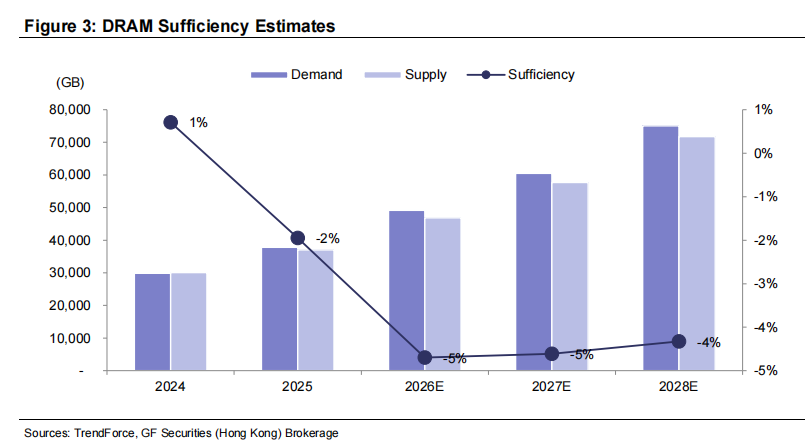
A slowdown in price growth does not indicate that supply has become adequate. GF Securities still forecasts supply deficits in the DRAM market of 5%, 5%, and 4% for 2026, 2027, and 2028, respectively. With HBM continuously occupying wafer capacity and major players remaining cautious about expanding traditional DRAM production, overall supply remains tight.
The shortage is also reflected in manufacturers' order book cycles. SK Hynix has already sold its DRAM capacity through 2029, while Micron has similarly locked in substantial volumes via multi-year contracts. Kim Woo-hyun, CFO at SK Hynix, previously noted that constrained supply conditions could persist until 2030.
Nevertheless, institutions hold differing views on how long supply constraints will last. Nomura Securities believes continued AI infrastructure development will sustain memory demand, potentially prolonging tight supply through 2028. Goldman Sachs, meanwhile, projects the DRAM supply-demand gap to narrow from 5.1% in 2027 to 1.2% in 2028, with traditional DRAM and NAND prices likely falling around 20% by then.
Divergence Between Stock Prices and Demand
While memory chip prices continue to climb, SK Hynix's stock price has already pulled back sharply. Behind these divergent trends lies a disconnect between current industry demand and the capital market's expectations for future profitability.
The memory industry is highly cyclical. During periods of tight supply, manufacturers can raise prices, boosting profits. As new capacity gradually comes online, supply-and-demand dynamics can reverse, causing chip prices and margins to slide.
This is precisely what investors fear. Although SK Hynix benefits from HBM demand, its traditional DRAM and NAND businesses still weigh on overall performance. If pricing for conventional memory slows or turns negative, the company's overall profit growth could be dragged down, even if HBM remains strong.
GF Securities' projections for 2028 illustrate the potential downside risk for memory prices.
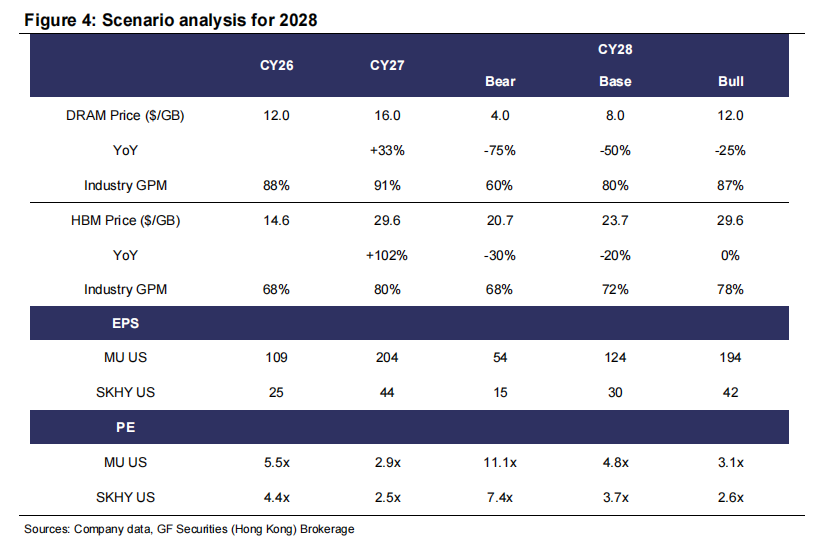
Using $16 per GB for traditional DRAM in 2027 as a baseline, the firm modeled three scenarios: if prices revert to pre-AI boom levels, they could fall to $4 per GB; under long-term contract estimates, they would hover around $8; if demand stays robust, prices might hold at $12. These correspond to declines of 75%, 50%, and 25%, respectively.
HBM prices also face downward pressure. GF Securities expects the 2028 price per GB to range between $20.70 and $29.60, representing a decline of 0% to 30% from the $29.60 seen in 2027.
Despite this, GF Securities is not bearish on leading memory manufacturers. The firm remains bullish on Micron, SK Hynix, and Samsung Electronics, noting that if demand weakens further and prices begin to fall, major players may proactively curb capex to stabilize the market, making severe stock corrections relatively manageable.
Expectations surrounding AI infrastructure investments have also seen notable revisions recently.
On November 26, research firm SemiAnalysis published a report significantly lowering its forecast for future AI compute investments. The report projects global AI data center compute capacity could drop from a previous estimate of 303GW to roughly 240GW by 2028.
The report also trimmed its outlook on chip shipments and energy demand. Under the updated forecast, AI chip volumes between 2026 and 2030 will be 17% lower than previously expected, with high-power ASIC shipments cut by 24%. This adjustment implies that future demand growth for memory chips and related hardware may not be as strong as anticipated.
Korean brokerages have already begun to diverge on the medium-term outlook.
Daol Investment Securities argues that recent stock pullbacks are excessively steep relative to corporate fundamentals, maintaining a Buy rating on SK Hynix with a fair value target of 2 million Korean won. BNK Securities also holds a Buy rating, viewing the short-term correction as a buying opportunity.
Overseas investment banks are also trimming expectations. Goldman Sachs slashed SK Hynix's price target from 3.5 million won to 2 million won, though it maintains a Buy rating. Morgan Stanley cut its target from 2.3 million won to 1.7 million won, issuing a more cautious long-term outlook.
Morgan Stanley also reduced its forecast for SK Hynix's long-term average operating margin from 2029 to 2035 from 53% to 28%, reflecting concerns over the sustainability of the memory industry's long-term profitability.
Not all institutions are bearish. Nomura Securities maintains a 4.7 million won price target for SK Hynix, arguing that AI-driven demand is sufficient to sustain tight supply conditions for an extended period.
The core disagreement among institutions does not revolve around whether AI will need memory chips, but rather whether demand growth will consistently outpace supply expansion and how long the elevated profit margins forged during shortages will endure.
Who Is Getting Liquidated?
The extreme volatility in memory stocks has exacted a heavy toll on Korean leveraged investors who bet on upside moves.
On November 25, multiple SK Hynix single-stock leveraged ETFs listed on the Korean market fell more than 21%. The RISE SK Hynix single-stock leveraged ETF dropped 22.78%, while the KIWOOM SK Hynix futures single-stock leveraged ETF declined 22.21%. Peer products managed by SOL and KODEX fell 21.84% and 21.72%, respectively.
This is not the first time Korean retail investors have suffered heavy losses in memory stock leveraged trades.
Data submitted by Korea's Financial Supervisory Service to parliament reveals that between the launch of single-stock leveraged products on May 27 and August 14, individual investors incurred cumulative losses of 6.313 trillion Korean won on leverage and inverse products tied to Samsung Electronics and SK Hynix. Realized losses totaled 2.3242 trillion won, while unrealized paper losses on held positions amounted to 3.9888 trillion won.
Investors across various age groups were affected. Those in their 40s saw accumulated losses of approximately 2.053 trillion won, the largest cohort; investors in their 50s lost roughly 1.8655 trillion won, ranking second; and those in their 30s suffered 1.0506 trillion won in losses. Retail investor losses on these high-risk instruments have emerged as a focal point in South Korea's capital markets.
Drawdowns for individual products were even more staggering.
Reporting on November 6, Korean financial media outlet Edaily noted that the SOL SK Hynix single-stock leveraged ETF closed at 3,340 won that day, down more than 80% from its peak on June 22.
Korean media had previously reported that some retail investors continued accumulating leveraged products during the memory stock downturn, hoping to average down their cost basis and wait for a rebound. The concentrated selling on November 25 inflicted even heavier losses on these investors.