An investment podcast fed 200 historical episodes to AI for analysis: correctly bet on Micron's 180% surge, but missed Cursor's 6 billion acquisition.
TechFlow Selected TechFlow Selected
An investment podcast fed 200 historical episodes to AI for analysis: correctly bet on Micron's 180% surge, but missed Cursor's 6 billion acquisition.
Computing power is king, energy is the bottleneck, but the most asymmetric bet is the intelligence yet to be distributed.
 Navigating Web3 tides with focused insights
Organized & Compiled: TechFlow
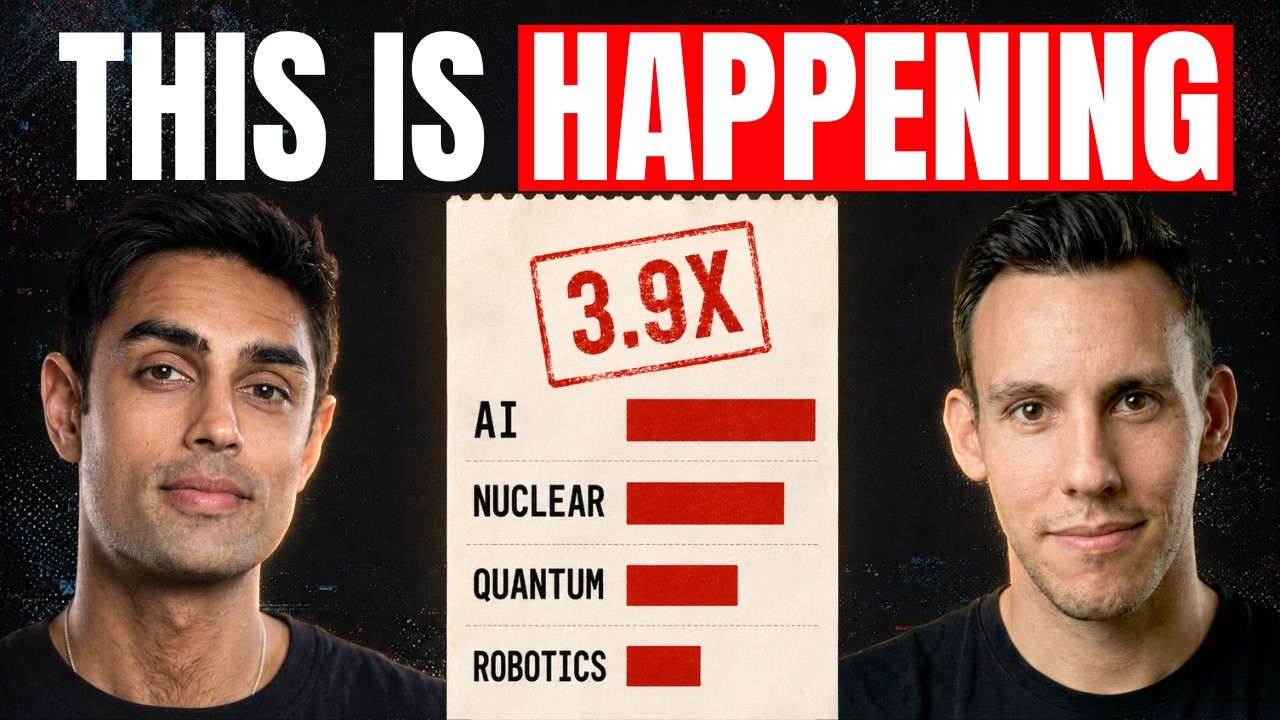
Guests: EJ and Josh, Limitless Podcast Hosts
Podcast Source: Limitless Podcast
Original Title: AI Found the Trades We Missed
Air Date: July 8, 2026
Key Takeaways
Limitless Podcast has reached its 200th episode. The two hosts did something slightly dangerous: they fed the transcripts of all 200 episodes to Claude and ChatGPT, letting AI help them find hidden investment themes they missed, review judgments made over the past year, and predict AI's next stop. 14 months ago when they pressed record for the first episode, SpaceX was still a private company valued at $350 billion, Anthropic was valued at $61 billion, OpenAI valued at $300 billion, and GPT-4o was the flagship model. Now SpaceX is public with a market cap over $2 trillion, Anthropic is close to $1 trillion, and ChatGPT users have more than doubled.
The episode unfolds along two lines. One is review: When they first shouted "compute is national security," SanDisk rose 35 times; when betting on memory chips, Micron rose 180%, SK Hynix became the company with the largest market cap in Korea, and Samsung's profits surpassed Nvidia's. They even said on the show three months ago they wanted to buy Cursor stock, only for Cursor to be acquired by SpaceX for $60 billion. If you made a portfolio of the companies founded by the founders they interviewed, the one-year return is about 4 times, with the best, Valor Atomics, at 13 times. The other line is forward-looking: Mentions of big terms like superintelligence and AGI on the show plummeted 90%, while Anthropic mentions quadrupled and surpassed OpenAI. The three directions they are most bullish on next are space-trained models, AI implementation in vertical fields, and small models on the edge.
Highlights Summary
On the Validation of Compute and Memory
- "We earliest said compute is a national security issue. Whoever owns watts, chips, energy, and cooling owns the rest of the economy. Looking back after 200 episodes, this is even more correct than back then."
- "The average return for memory manufacturers is 153%. If you bought Micron at the end of last year, you're up 180% now. SK Hynix became the company with the largest market cap in Korea, squeezing Samsung out. Samsung just became the company with the highest profits globally, surpassing Nvidia."
- "Three months ago we said we hoped to buy OpenAI stock, but there was a company that could catch this tailwind, called Cursor. Three months later Cursor was acquired by SpaceX for $60 billion."
On the Limitless Investment Portfolio
- "If you made a portfolio of the founders' companies we interviewed on the show, investing from the day of the interview to today, the total return is about 4 times, with the best, Valor Atomics, at 13 times."
- "When Valor Atomics CEO Isaiah Taylor was on the show, he had just finished his seed round, now valued at $2 billion. His logic is simple: data centers lack electricity, he builds small modular nuclear reactors."
- "Boom Supersonic originally built supersonic aircraft, now they've also started building gas turbines for AI data centers."
On Trend Shifts
- "The term superintelligence was mentioned 60 times last year, only 6 times this year. AGI dropped 54%, robots dropped 60%. Crypto basically went to zero."
- "Anthropic mentions last year were only a quarter of OpenAI's, this year they quadrupled and already surpassed: 806 to 758. A year ago we were saying Claude 3.7 wasn't great, ChatGPT was the king. This company completely turned the tables this year."
- "The AI company we mentioned most is not OpenAI, not Anthropic, it's Google. But Google's momentum has clearly slowed down."
On the Next Bets
- "Fable 5's price is $10 per million tokens input, $50 output. If you burn a few million tokens a week, this cost is painful. Uber and Meta are already cutting AI token spending."
- "Most companies and ordinary people haven't truly used these AI tools yet. Models are already ridiculously powerful, but implementation dispersion is still small. The core question for the next 200 episodes is: how the world extracts value from these tools."
- "Whoever solves the energy problem will be one of the most powerful companies on Earth. Regardless of whether AI stays or goes, energy is the ceiling for everything."
Episode 200: Feeding All Transcripts to AI
EJ: Welcome to Episode 200. We've said 1.4 million words on this show, 99.9% of which is Josh and me arguing about who has more compute, whose model is better, and which AI company is most worth investing in. Before recording this episode we did something slightly dangerous: we gave all 200 episodes' transcripts to Claude and ChatGPT, letting it help us find hidden investment themes we might have missed, sort through what we said and judgments we made over the past year, and where AI's next stop is.
Looking back 14 months ago when recording the first episode, the world was completely different than now. Back then SpaceX was still a private company, valued at 350 billion. Now it's public, market cap over 2 trillion. Anthropic was valued at 61 billion then, now close to 1 trillion. OpenAI was valued at 300 billion then, ChatGPT had about 500 million users, now more than doubled. Models are even more interesting: back then GPT-4o was the flagship, Claude was still at 3.7, Gemini still at 2.5. The most outrageous thing is, when the first episode was recorded, almost all code worldwide was still handwritten. Now it's reversed.
So what we need to do today is review what exactly happened over the past year, then look forward based on these trends. Let's start with the judgments we bet right on.
Compute is King: An Validated Early Bet
EJ: Josh, do you remember Episode 4? June 5, 2025, this is what we said verbatim: Compute is now a national security issue, whoever owns watts, chips, energy, and cooling owns the rest of the economy. Our meaning back then was very direct—compute is king, whoever owns GPUs, whoever can power GPUs, can build the best models.
Looking back after 200 episodes, this is even more correct than back then. Anthropic signed four new compute contracts in the past few months. OpenAI is expanding production crazily, their aggressive bets on acquiring compute proved very correct. They didn't set any limits on any users, and this exactly supported this core demand of inference, letting AI agents run 24/7. Compute is king, this was one of our earliest judgments.
Josh: I just checked, when we said that sentence, SanDisk rose 3500%. 35 times return. If you told someone in June 2025 that the federal government would invest in companies like Intel, these stocks would rise this much, we would probably invest too, but would also be quite surprised this compute race had become important to this degree. The scarcest resources in the world right now are energy and memory to power GPUs. To notice this so early is really remarkable. I really wish we had actually invested back then.
Memory Chips: 153% Average Return
EJ: Another asymmetric bet was AI chips, especially memory. When doing predictions at the end of last year, our core logic was: memory is expensive, it's the bulk of the entire AI system. For GPUs to run, you have to remember all conversation context with ChatGPT and Claude. Memory prices would likely rise, memory manufacturers' stock prices would rise along with it.
Guess what the average return of these three top memory manufacturers is?
Josh: Infinite. This is probably the best single investment you could have made in the past year.
EJ: Not that exaggerated, but close. 153%. If you bought Micron at the end of last year, you earned 180%. If you could buy SK Hynix, it has become the company with the largest market cap in Korea, squeezing out Samsung which monopolized for decades. Samsung just became the company with the highest profits globally, surpassing Nvidia.
This is a comprehensive arms race, these companies are constantly surpassing each other.
Cursor: Acquired by SpaceX for $6 Billion
EJ: March 2026, not too long ago, we said this was an asymmetric bet: I really wish I could buy OpenAI stock, but there was a company that could catch this tailwind, called Cursor.
Three months later, Cursor was acquired by SpaceX for $60 billion.
Josh, should we start managing a fund?
Josh: We need a fund. Does anyone want to invest in us?
EJ: If we really turned these judgments into investments, the returns should be quite considerable.
Limitless Investment Portfolio: 4 Times Return in One Year
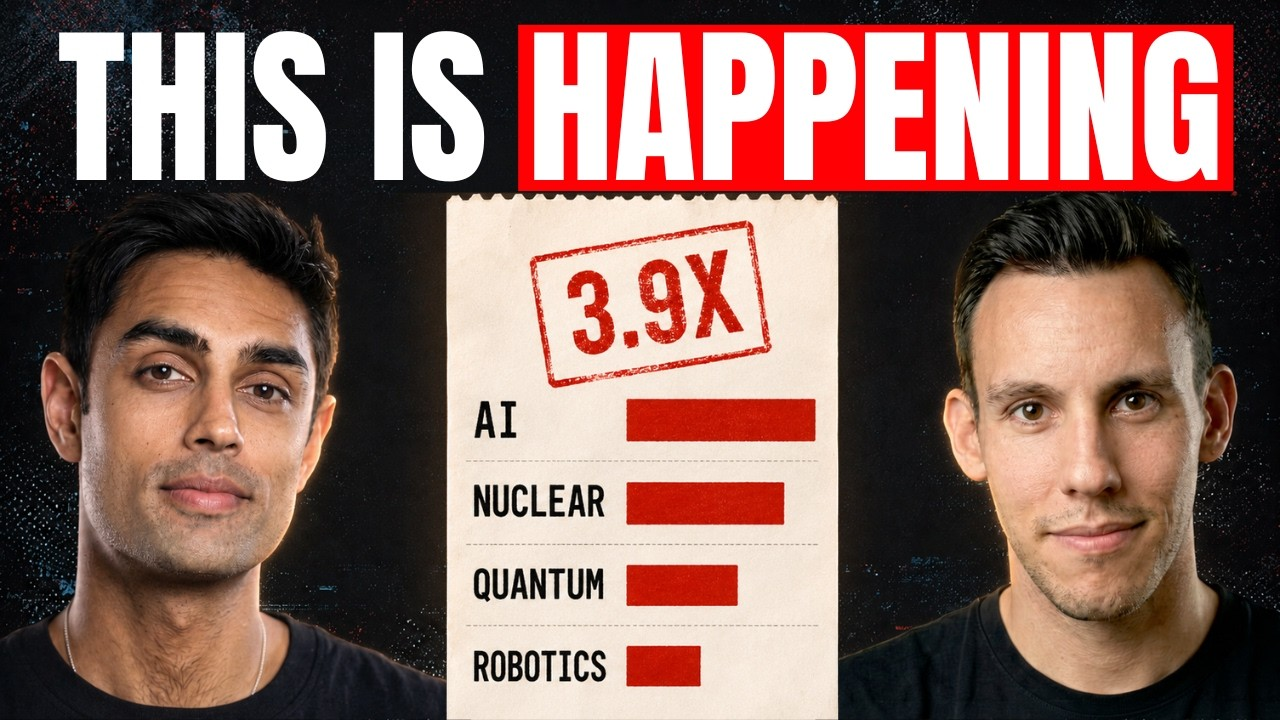
EJ: When doing the show early on, we interviewed many founders doing frontier tech. These companies were all carefully selected by us, felt especially potential. We got exclusive interviews with CEOs and founders. If we invested money on the day of the interview, the total return to today is about 4 times, in a little over one year.
The best is Valor Atomics, 13 times. Episode 10 we invited CEO Isaiah Taylor, he builds small modular nuclear reactors. Logic is very straightforward: data centers lack electricity, he comes to solve this problem. When on the show just finished seed round, now valued at $2 billion.
OpenRouter is the same, founder Alex Atallah when on the show valued at 500 million, now 1.3 billion. OpenRouter's logic is what we repeatedly talked about: companies won't use just one model, will use different models for different scenarios. This is also why Cursor was favored, and also why SpaceX spent 60 billion to buy it. OpenRouter can get early versions before models officially release, Claude, ChatGPT, Chinese models all available. Developers can use various models without limits. They aggregate very rich user intent data, can use this data to judge what models to build next.
Zipline is also very interesting, does drone delivery. When on the show still displaying early prototypes, now already operating in several major cities. Perplexity rose from 18 billion to 21 billion, mainly because Samsung set its product as the default AI agent on all phones.
Boom Supersonic is a relatively special case. Originally built supersonic aircraft, now also started building gas turbines for AI data centers.
Josh: 400% return, compared to the broad market is already crazy. Would be great if we could actually invest.
EJ: I'm willing too. But this simulated portfolio tells us, several clear trends formed over the past year: energy is the bottleneck, nuclear is one solution; model routing layer is a real demand; AI implementation on mobile has already started.
Trend Shift: Superintelligence Exits, Anthropic Tops
EJ: Past 14 months, the topics we discussed changed a lot. After using AI to analyze 200 episodes of transcripts, trend shifts are seen very clearly.
The term superintelligence was mentioned 60 times last year, only 6 times this year—plummeted 90%. Crypto basically went to zero, now it's winter. Robots dropped 60%, AGI dropped 54%. We mentioned these big terms less, maybe because they feel like they're arriving soon, boundaries becoming blurrier. You see these Mythos-level models, feel like this seems like AGI. Robots are relatively interesting, we seem to be in a middle ground: many companies are building, but haven't officially released yet. Optimus new version is coming but hasn't debuted, Figure is also making new robots but hasn't gone public. I guess later this year there will be intensive releases, then robot topics will explode again.
Most astonishing is Anthropic. Last year we mentioned it probably only a quarter of OpenAI and ChatGPT. This year quadrupled, already surpassed: 806 to 758. A year ago we were still looking at Claude 3.7 Opus, felt not great, ChatGPT was the king. This company completely turned the tables this year. Claude Code only a little over one year, end of last year almost no one used, now everyone is using.
There's also an interesting discovery: The AI company we mentioned most on the show is not OpenAI, not Anthropic, it's Google. But Google's momentum has clearly slowed down. First few months their product iteration speed was ridiculously fast, almost every week had new things, and all good. But later slowed down. Now the real two big players are OpenAI and Anthropic, don't see changes in short term. Maybe Grok can become the annual comeback player, SpaceX's AI team is going all out.
Next 100 Episodes: Three Tracks Worth Watching
EJ: If picking three most important trends next, first is space-trained models. We earliest mentioned StarCloud, this startup from Y Combinator sent H100 GPUs to space to start training models. Now SpaceX AI's entire strategy is launching massive satellites to train models in space, highly likely Grok and other models. This trend will get stronger, SpaceX will be the leader.
Second is AI model implementation in vertical fields. General large models are great for chatbots, but applying to niche fields needing expertise not so good. Anthropic and OpenAI past few months are both doing joint ventures, raised billions of dollars, sending engineers into these fields to find best solutions. I think next focus will be on finance and biological sciences. Anthropic already released Claude Science, OpenAI released gene benchmarks, also acquired Retro Science Labs doing new drug R&D. Google has AlphaFold doing molecular sequencing and new drug discovery. I'm particularly bullish on this direction, might be very close to AGI for science.
Third is edge computing and local models. Uber and Meta are already cutting AI token spending, because frontier models are too expensive. Fable 5's price is $10 per million tokens input, $50 output. If you burn a few million tokens a week, this cost is very painful. Next there will be more companies turning to small models running locally—maybe Chinese open source models, maybe American open source models, or like Apple training themselves, running on their own local hardware models. OpenAI might release new equipment end of year, Apple is also doing, many companies doing glasses or devices hanging on chest. These devices' core concept is personal AI agent.
Energy and Implementation: AI's Real Bottleneck
Josh: If letting me pick two most concerned directions, first is how the world extracts value from these AI tools. Now there is a huge asymmetry: few companies built tools powerful to unimaginable, but world hasn't figured out how to use yet. Most people, most companies actually haven't started using at all. Models are already ridiculously powerful, but implementation dispersion is still very small. Next 200 episodes' core question is this: how to distribute this intelligence into daily devices, how to redefine ordinary positions in companies. This is what I'm truly excited about.
Second is energy. Whoever solves energy problem, is one of the most powerful companies on Earth. Regardless of whether AI stays or goes, energy is the ceiling for everything. Now there are several companies doing interesting things. Travis Kalanick's new company Adams is doing precious metal-driven narrow scenario robots, using robots to distribute materials. Tesla's Optimus is making humanoid robots, if made to Model 3 and Model Y that scale—and Model Y is now the highest selling car globally—this thing is huge.
EJ: I'll add one more. China might soon close source a batch of models. This morning there was news saying Chinese government already required AI labs to cut off external access, basically their export control version. They don't want West especially Americans to get their models. This might turn to paid model, or might directly privatize. I think this is not good for the whole world, but next 6 to 12 months this is a real geopolitical risk.
There's also a farther but worth watching trend: Recursive Self-Improvement (RSI). It's AI models smart enough to build next generation themselves. This problem is hard, but many smart people predict roughly early 2027 will realize. If truly reached that step, AI models can work for you 24/7. But this also means we will rely more and more on these AI agents, sharing more and more personal data. This makes me a bit worried.
Bullish Index: 192 to 68
EJ: Finally share a data point. Past 200 episodes, we said "bullish" 192 times, said "bearish" 68 times. Ratio 2.8 to 1. We two people's attitude towards future is extremely optimistic. Regardless of how scary or smart AI tools become, I think what it brings will be abundance, is GDP explosion, is scientific breakthroughs and new drugs. And this thing doesn't distinguish age—you can be 24 years old dropping out of Harvard to build chips competing with Nvidia, or can be a student taking AP Science class in school, using a model to discover something NASA is willing to sponsor. Latter is NASA's now that intern's true story.
Josh: You can't just jump to this paragraph not reading others. Bullish bearish ratio 2.8 to 1, quite funny. Also "exponential" this word, I accounted for 48 times, you 28 times. Database says "This house physicist has a favorite curve". Then so-called "Waffle Index"—38.9 hours to 27.9 hours, one person spoke 40% more words than another. Database says "Speaking duration gap significant, one host speaking duration 40% more"
EJ: I don't know who you're talking about. I don't really occupy the mic.
Josh: Right, you only contribute the value you can contribute.
EJ: 200 episodes. To those listening from day one, thank you. This show itself was an accident—David from Bankless asked me if I was willing to do my own podcast, I said okay, then went on a vacation, came back found podcast already existed. Then just did it, everyone very supportive, we made some pretty good things. Looking back, this is a very cool experience in life. But still feels very early, still lots to talk about, AI is still the hottest thing, but AI downstream still lots worth chatting about. This is Limitless's original idea—explore the frontier.
So 200 episodes, to everyone still listening, you are legends. Thank you for your support all along. If you haven't subscribed, haven't clicked like, try today, no better day than Episode 200.
Josh: We are still global tech podcast top 30. Ranking still rising.
EJ: 200 episodes, cheers. See you next 200 episodes.
Join TechFlow official community to stay tuned
Telegram:https://t.me/TechFlowDaily
X (Twitter):https://x.com/TechFlowPost
X (Twitter) EN:https://x.com/BlockFlow_News
 深潮TechFlow