Looking back at this year’s Hong Kong Web3 Carnival, everyone is bidding farewell to the amateur era.
TechFlow Selected TechFlow Selected
Looking back at this year’s Hong Kong Web3 Carnival, everyone is bidding farewell to the amateur era.
All the keynote speeches tell us: the early-mover advantage is over, and the rules for amateurs are being rewritten.
 Navigating Web3 tides with focused insights
By Kuli, TechFlow
The Hong Kong Web3 Carnival concluded nearly a week ago.
The buzz faded quickly. During the event, X was still buzzing with that viral clip of Vitalik Buterin suddenly jumping beside the venue fence; hotel staff jokingly mocked tote bags printed with Bitget’s CEO; modeling agencies lined up male and female models in front of exchange booths; ten shuttle buses brought elderly attendees to collect free merchandise...
By this week, none of those anecdotes remain in conversation.
The media lifecycle of industry conferences tends to follow the same pattern: three days of live updates and behind-the-scenes snippets during the event; a few soft retrospective pieces published in the following week; then the event fades from collective memory.
Yet upon reflection, this year’s substantive content feels meaningfully different.
The Wanxiang-hosted Hong Kong Web3 Carnival serves as an annual barometer for the Chinese-speaking crypto community. Every year at this time, stakeholders ranging from the Hong Kong SAR Government to the world’s largest exchanges—and from Ethereum’s founder to veterans of traditional finance—fly in to gather under one roof. Their willingness to do so signals that this forum remains essential for collectively assessing where the industry stands today.
This conference has never existed in isolation. It unfolds against simultaneous developments in regulatory compliance, policymaking, and traditional finance.
Looking back at the key speakers who took the main stage this year, each spoke from distinct professional positions—but their messages, taken together, form a single coherent picture:
The amateur era of the crypto industry is over.
For over a decade, the industry has operated in what we might call an “amateur era”: sustained by faith, narrative, and the next hype cycle—profiting primarily from early-stage opportunities. This approach works fine during bull markets, but when conditions sour, all that remains are gossip and rumors.
This year’s speakers delivered remarks that don’t quite align with that old playbook—yet they’re well worth revisiting.
Hong Kong Is Selling a Table
First, Financial Secretary Paul Chan delivered his opening address on April 20—a speech packed with notable statements, but one line in particular had been awaited by the crypto industry for over a decade:
“Same activity, same regulation.”
This means digital assets on-chain and traditional assets off-chain—so long as they pose equivalent risk—will be subject to identical regulatory standards.
Ten days earlier, on the afternoon of April 10, the Hong Kong Monetary Authority (HKMA) announced its first batch of stablecoin issuer licenses. Of 36 applicants, only two received approval: HSBC and Anchor Point Fintech—a joint venture formed by Standard Chartered, HKT, and ANI Group—both institutions with note-issuing bank status.
Ten days later, Financial Secretary Chan stepped onto the Carnival stage—not as a policymaker announcing new rules, but as someone standing atop a framework already implemented: licenses issued, signatures signed—now explaining how the game will be played going forward.
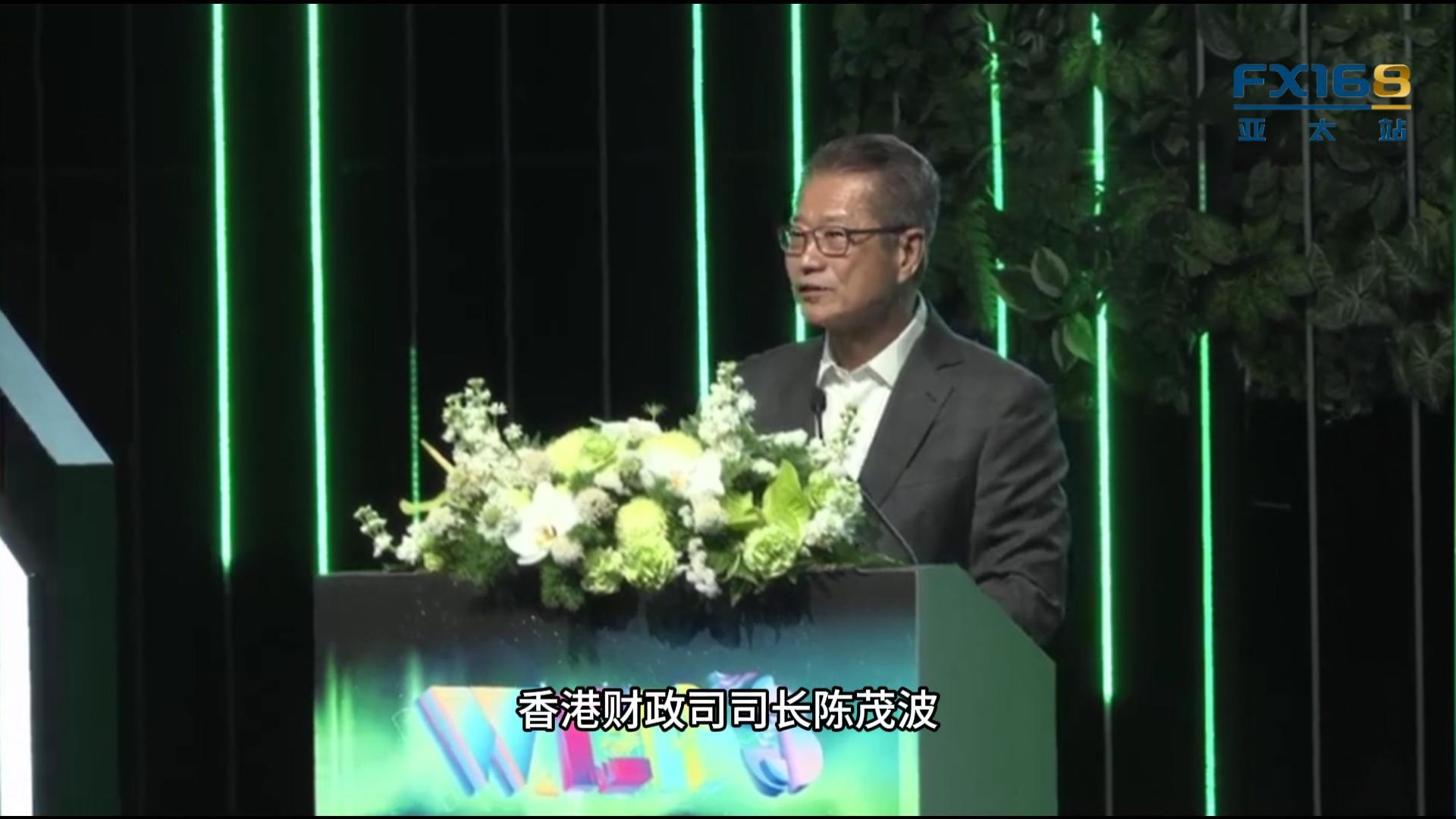
Those four words—“same regulation”—constitute the most significant message the crypto industry heard at this Carnival, though it went largely unnoticed amid the flurry of memes and gossip.
For over a decade, crypto has heard two primary regulatory tones: “wait-and-see” or “ban.” This time, Hong Kong offered a third: “We’ll play by the same rulebook.”
Playing by the same rulebook means crypto is now officially invited indoors. Inside, there are banks, insurers, and brokerages—all gathered around the same table. That table has stood in traditional finance for centuries. Crypto players used to watch from outside. Now, they’ve taken seats at the table.
But sitting at the table comes with a cost: you must abide by its rules when dining.
A less conspicuous but critical line from Chan’s speech reads: “Decentralization and digital intelligence do not imply diminished accountability.” The notion that “code is law,” or that on-chain actions are exempt from off-chain responsibility—such thinking no longer holds at this table.
Yet taking a seat at the table is far harder than remaining outside.
HSBC has participated in HKMA’s tokenization pilot programs and the e-HKD+ initiative since 2022—nearly four years of work before receiving its license in April 2024. Of the 36 applicants, 34 were left outside the door.
The flip side of “same regulation” is “same opportunity.” In mature financial markets, these two concepts are inseparable. This, truly, is the signal the Financial Secretary sent from the stage.
For over a decade, the crypto industry grew through “build first, ask questions later,” thriving in regulatory gray zones and capitalizing on information and compliance arbitrage. Early-stage booms are defined by unestablished rules—where speed determines who gets the spoils.
That path may no longer be viable after this stablecoin licensing round. Rules are now laid out upfront; practitioners must demonstrate capability within those boundaries.
Near the end of his speech, the Financial Secretary did something unexpected: he addressed international attendees directly, urging them to “stay in Hong Kong a little longer,” listing rugby sevens matches, Michelin-starred restaurants, tax-free wine, and country parks…
I’d interpret this as friendly salesmanship. Hong Kong isn’t merely signaling support for crypto—it’s actively recruiting crypto businesses. A policy once doubted for potential reversals a year ago now sees the Financial Secretary personally welcoming participants.
The table is set. The host is inviting guests to take their seats.
Fu Peng: An Outsider’s Marketing Effect
Another highlight was undoubtedly Fu Peng.
“These past few days, many people have bombarded me with the same question: Why am I so close to the crypto community?” This statement itself became the biggest news—not just of his talk, but of his evolving identity.
Recent sentiment toward Fu Peng in crypto circles has been mixed. Some view his investment acumen as mediocre and suspect he entered crypto to capitalize on fame; others complain on X about him blocking certain KOLs. These controversies are real—but within the context of this Carnival, one fact outweighs them all:
What Fu Peng has done consistently over the past 25 years is something no one in crypto has done over the past 15.
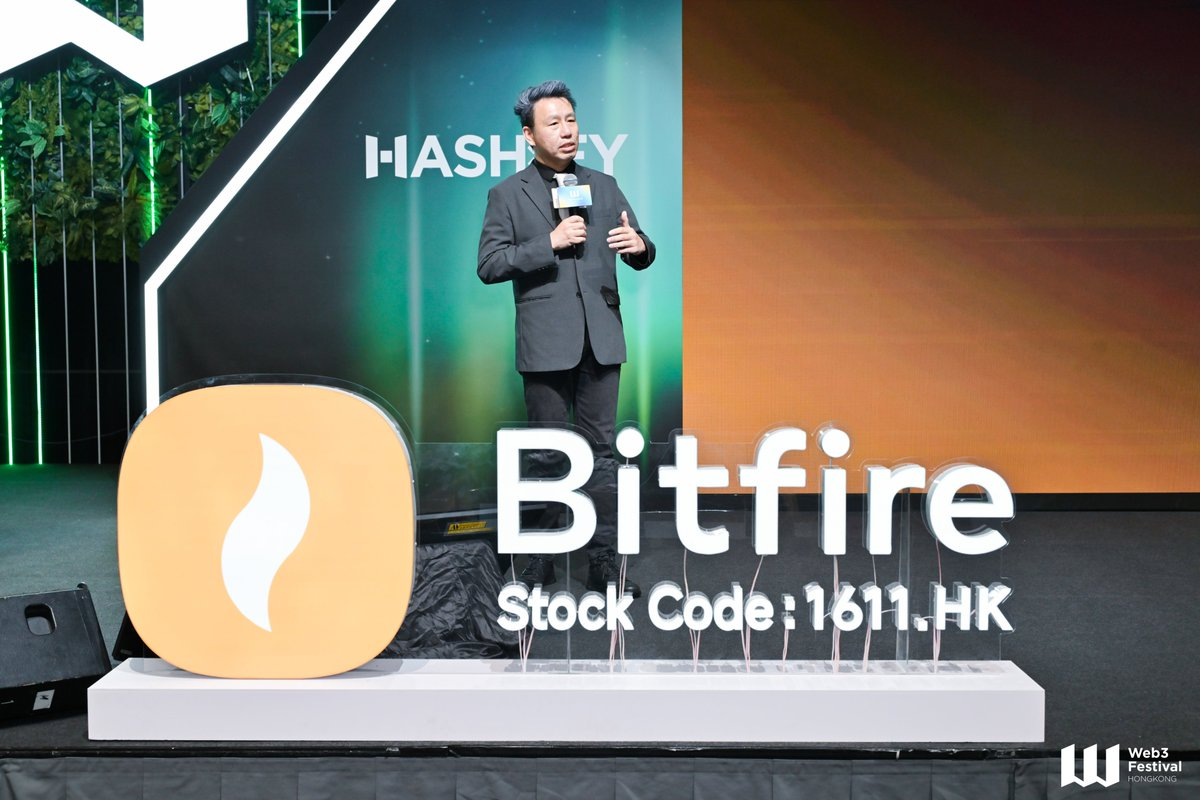
Fu Peng’s core business lies in traditional hedge funds, specializing in macro asset allocation—what Wall Street calls FICC (Fixed Income, Currencies, and Commodities). It’s the practice of weaving interest rates, commodities, foreign exchange, and equities into cross-asset portfolio strategies.
Whether he executes it well is one matter—but this is the language spoken by Wall Street’s most profitable division. For over a decade, crypto and FICC have run on parallel tracks, because crypto focused not on portfolio construction, but on which meme coin might 100x.
Fu Peng’s assessment: “2025–2026 may mark the historic turning point for crypto assets.” Going forward, the standard menu of macro asset allocation will add a “C”—Crypto.
The accuracy of this forecast matters less than who delivers it. Coming from Fu Peng—as opposed to a crypto-native leader—it carries far more weight.
Crypto insiders have claimed for over a decade that crypto will enter the mainstream—repeating the assertion at every market peak. Yet those voices remain insiders trying to persuade outsiders. Fu Peng isn’t an insider—he’s a representative of the previous system.
Historically, crypto’s narrative authority resided solely within its own echo chamber. In bull markets, such messaging functions as storytelling; in bear markets, it devolves into self-indulgence.
Fu Peng’s “FICC + C” framing symbolizes traditional finance’s growing inclusion of crypto in asset allocation—a trend already perceptible in practice. What amplifies its impact is Fu Peng’s unique background, track record, and institutional positioning—making his onstage declaration especially resonant.
He also posed a rhetorical question mid-speech: “I wonder whether today’s talk will go down in history?” Spoken by him, it risks sounding pretentious.
Whether it enters the history books remains uncertain. But while crypto’s amateur era preached faith, its mainstream era must speak the language of asset allocation.
In that sense, Fu Peng did the industry a favor.
Vitalik’s Tone Shift Begins With AI
The third standout speaker was, unsurprisingly, Vitalik Buterin.
Vitalik’s 90-minute dialogue with Xiao Feng devoted fewer than five minutes to grand vision—while the rest was grounded engineering discourse on three concrete priorities: quantum resistance, AI resistance, and security redundancy.
He recounted a story from the 2016 Shanghai Ethereum Developer Conference.
Four hours before opening, the Ethereum network suffered a DoS attack. Vitalik was woken by phone and spent three hours leading his team to restore service.
His greatest concern today? That AI could replicate that attacker’s solo feat within two to three years. “If we’re not secure, AI three years from now will find every vulnerability—and that will cause us tremendous pain.”
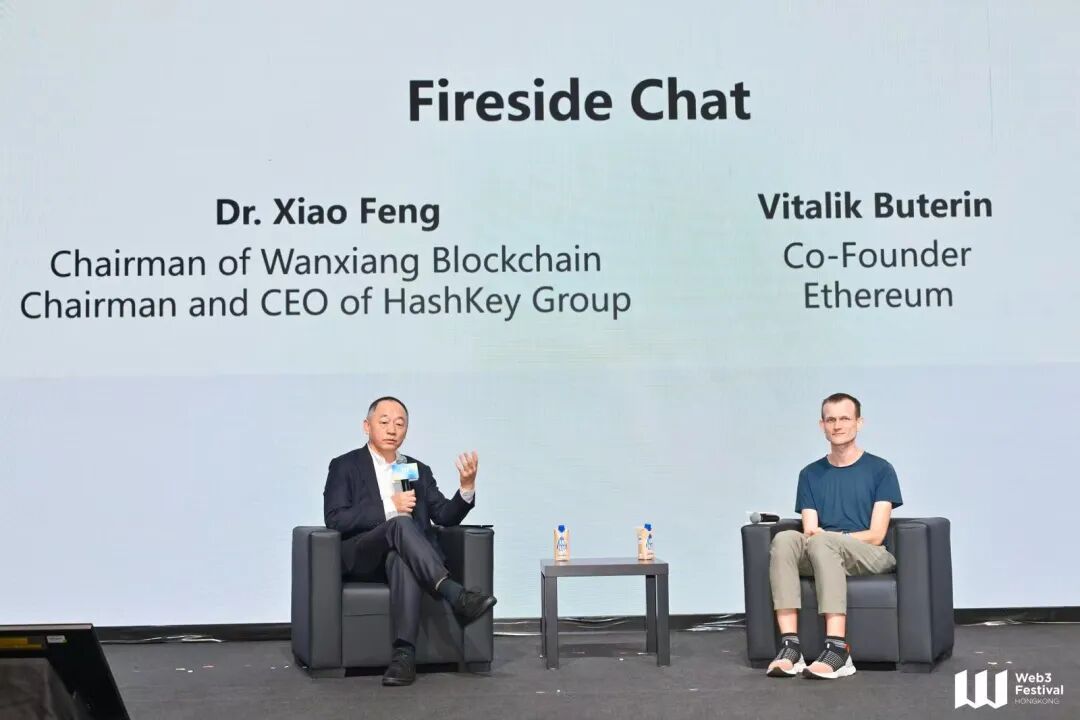
Quantum resistance is part of the same timeline. Google’s recent paper offers a conservative estimate: quantum computing could break Bitcoin and Ethereum’s current elliptic-curve cryptography by 2035. Vitalik doesn’t buy that timeline—he and Sunny King share a similar view: AI acceleration could compress it to 3–5 years.
So Vitalik is focused on Ethereum’s survival strategy amid rapid technological evolution—and particularly AI’s accelerating pace. This reflects a strategic choice: over the past few years, Ethereum’s narrative spotlight has been stolen—first by Solana, then by other emerging chains.
Each new chain touts itself as faster, cheaper, higher-TPS. Vitalik’s current positioning for Ethereum is clear: delegate performance challenges to Layer 2s and hardware acceleration; let Ethereum’s Layer 1 focus exclusively on decentralization and security—a Layer 1 that opts out of the speed race.
He also delivered the most pivotal line of the entire dialogue:
“I hope everyone builds things fundamentally different from what Ethereum has done in the past.”
He said this in response to a closing question: “Any message for the Chinese-speaking community?” Usually a sentimental moment, his reply contained no references to community, belief, or utopian futures—only a call to re-examine, from first principles, what the world needs today—“and that answer may not necessarily involve Ethereum as a technology.”
Thus, Vitalik’s role at the Carnival was to define Ethereum’s next decade: a shift from idealism-driven to engineering-driven development. In the amateur era, slogans sufficed; in the engineering era, real technical competence is non-negotiable.
The industry’s very existence may hinge—partially—on whether Ethereum survives. To clarify: I’m not referring to ETH’s price.
He Yi: Hunting the Next Wave of Users
He Yi’s dialogue with Wanxiang Blockchain was nominally about AI’s impact on Binance—but her most emphatic point in thirty minutes wasn’t AI. It was user count.
“We used to say we aimed for one billion users. This year, I tell you: our goal is three billion users.”
That target sounds like PR rhetoric—yet viewed against Binance’s current reality, it reveals underlying anxiety.
Binance hasn’t had an easy few months. Controversy surrounding the October 11 liquidation event has lingered without resolution. While legal outcomes aren’t the focus here, another trend is unmistakable: longtime users are leaving.

Some exited after losses; others shifted to U.S. equities, perceiving better returns; still others simply gave up, seeing no near-term catalyst for recovery… For a decade, exchanges retained users by promising “the next bull market.” This time, the bull didn’t arrive—and retention failed.
He Yi explicitly acknowledged this:
“The industry’s early-stage boom is over. As early-stage opportunities dwindle, complaints multiply: ‘Why won’t Bitcoin keep falling—I can’t bottom-fish!’ Or ‘Why won’t Bitcoin just keep rising?’”
During the early boom, exchange revenues—from trading fees, new token listings, derivatives leverage—depended entirely on daily inflows of speculative capital. Now, fewer people are entering—and less capital flows in.
If existing crypto users can’t be retained, then Binance must evolve beyond serving only crypto users. She stated it plainly: “Becoming a company serving three billion users means BN isn’t just an exchange—it’s global financial infrastructure.”
Tripling user scale: where does that growth come from? He Yi offered her second answer:
“Crypto isn’t built for humans—it’s built for AI… Future users may number in the hundreds of billions, even trillions.”
The logic: human bank accounts require verified identity; AI agents lack identity. To execute payments, resource orchestration, or autonomous decisions, on-chain accounts are the only viable path. This idea wasn’t novel—Sun Yat-sen (“Sunny King”) and Xiao Feng both touched on it at the Carnival—but He Yi was the only one speaking from the vantage point of the world’s largest exchange.
We don’t yet know the execution details—but publicly voicing this ambition signals Binance’s acknowledgment that legacy user-acquisition logic must change.
One final quote from He Yi stuck with me—jotted onto a sticky note:
“Our work today resembles that of candle factory workers—yet electricity has already arrived.”
In crypto’s amateur era, the dominant job was trading tokens. In its mainstream era, the dominant job may be building accounts for AI agents—carving out a slice of the payments rail as AI becomes central.
The distance between those two eras? It’s the gap between candle factories and electric lighting.
The Organizers Are Already Crossing the Bridge
The crypto industry hosts countless conferences annually—but Wanxiang’s is different.
When Wanxiang Blockchain Lab launched in 2015, crypto was still in its wild west phase. Founder Xiao Feng backed Bitcoin mining farms, Ethereum, and Polkadot with real capital. Over the past decade, many early traditional investors exited—yet Xiao Feng remains firmly in the arena.
After listening to his on-site speech, I reflected for some time.
Specific proposals—like AI tokens, blockchain tokens fused with privacy computing, or transforming hospital data into monetizable, callable assets—can be assessed gradually for feasibility.
What deserves deeper attention is where he’s speaking from.
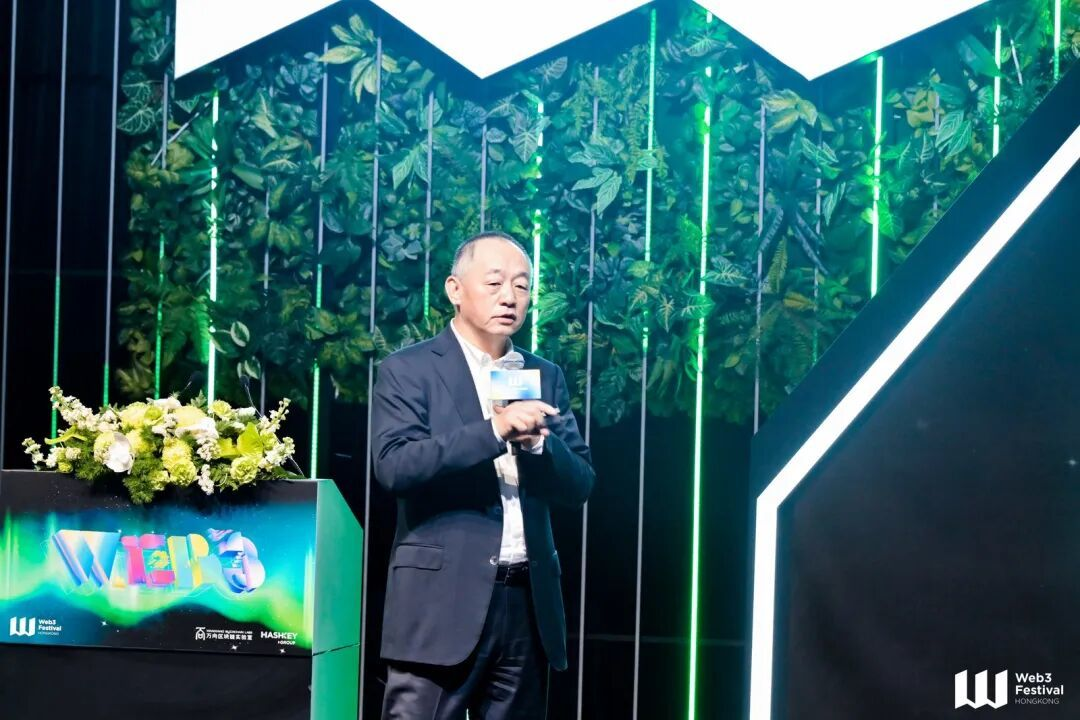
HashKey Group has executed several moves recently: its parent company listed on the HKEX—an achievement in regulatory-compliant equity structuring; HashKey Chain, an Ethereum L2, targets traditional financial institutions; HashKey’s research team advises regulators and collaborates with banks, insurers, and custodians.
Collectively, these steps don’t signal mere optimism about crypto’s future. They reflect a deliberate repositioning by Xiao Feng—or Wanxiang/HashKey—as a bridge: one end anchored in native crypto ecosystems, the other embedded in traditional finance and regulatory frameworks.
Hosting this Carnival essentially gathers traffic, influence, and projects on the crypto side—then HashKey translates those into services usable by banks and regulators.
The wider the bridge spans, the more valuable it becomes.
When Xiao Feng declared, “All future commercial entities will become token factories,” I believe he directed that statement at traditional finance—not crypto. He wasn’t telling the crypto world, “We must become infrastructure.” He was telling traditional finance, “You’ll all issue tokens soon—and we can help you do it.”
The person whose tone shifted earliest at this Carnival may well have been Xiao Feng himself. Others began adapting their language only recently—but if you’ve attended Hong Kong events regularly, you’ll notice he’s been bridging these two linguistic worlds for three to four years.
Conference organizers aren’t necessarily passive observers. They may be the first to recognize where the industry must head—and the first to act.
Postscript
During Hong Kong’s event week, the most common complaint was: “The main stage has nothing—everything happens at side events.”
Indeed, the main exhibition hall takes twenty minutes to walk through; real deals, partnerships, hiring, and negotiations happen elsewhere. Yet without the main stage, those side events wouldn’t exist.
An industry conference’s purpose isn’t merely to host speeches—it’s to convene tens of thousands of relevant professionals in one city during one week. Once people gather, real value emerges organically—between people.
In bear markets, gathering people physically—in one tangible space—to shake hands, share meals, exchange cards, and assess credibility remains invaluable. That may be the Carnival’s true function this year.
With the crypto boom over, the next frontier could be AI, RWA, or prediction markets—the right direction requires firsthand experience. Even if crypto pivots to new business models, new rules, new partnerships, and new long-term relationships must still be forged.
Such business demands “a place.” And the people doing that business need to be “present.”
The next Hong Kong Web3 Carnival will almost certainly return next year at the same time. Will you be present?
Join TechFlow official community to stay tuned
Telegram:https://t.me/TechFlowDaily
X (Twitter):https://x.com/TechFlowPost
X (Twitter) EN:https://x.com/BlockFlow_News
 深潮TechFlow