Trump Opposes Prediction Markets for Two Full Days
TechFlow Selected TechFlow Selected
Trump Opposes Prediction Markets for Two Full Days
Within 48 hours, he changed his answer.
 Navigating Web3 tides with focused insights
Author: TechFlow
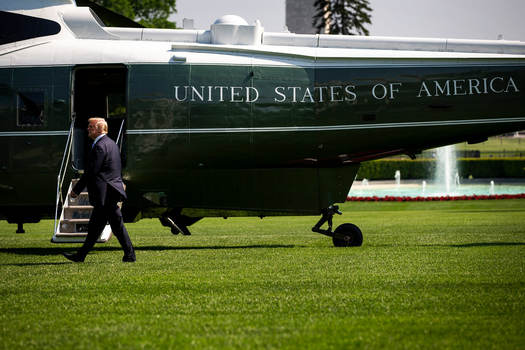
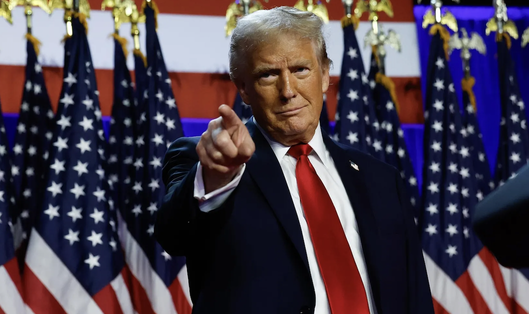
At a White House press briefing, Trump looked visibly distressed and said: “You know, unfortunately, the entire world has become, to some extent, a casino.”
At that very moment, his son Donald Trump Jr. was serving simultaneously as an advisor to Polymarket and Kalshi—the two largest prediction market platforms—one role paid, the other as an investor and board member.
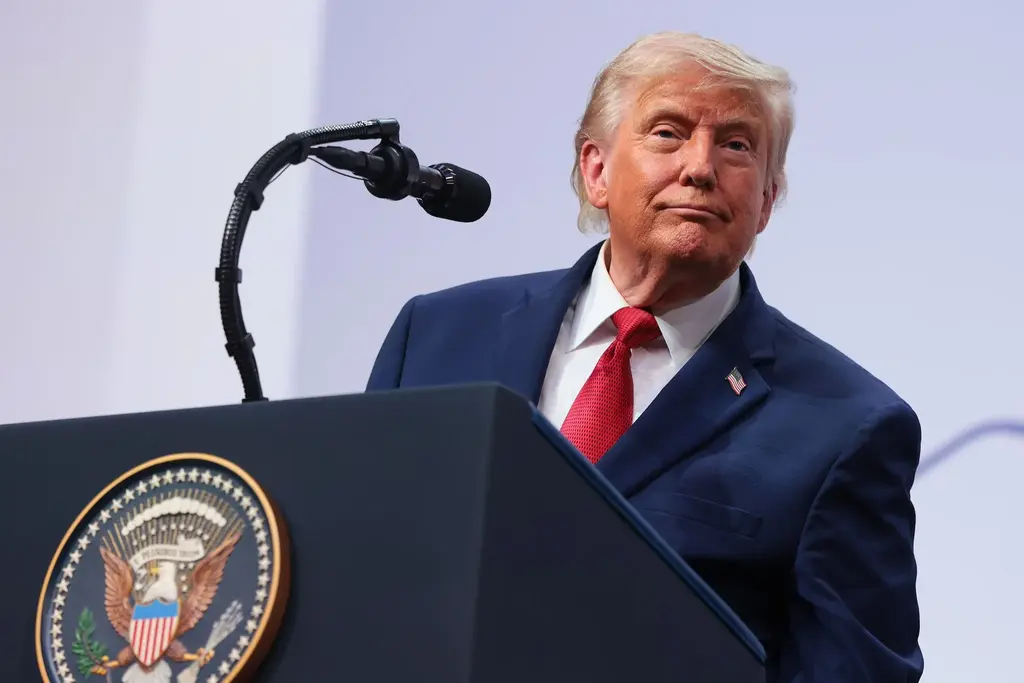
Forty-eight hours later, Trump performed a dramatic political about-face and publicly endorsed prediction markets.
This is arguably the most captivating piece of political performance art of 2026.
He Changed His Answer Within 48 Hours
The story begins with a U.S. Army Special Forces soldier.
Earlier this year, this soldier participated in a military operation targeting Venezuelan President Nicolás Maduro. During the operation, he placed bets on Polymarket—wagering that Maduro would be ousted before month’s end and that the U.S. would launch military action against Venezuela. He placed 13 trades in total, investing approximately $33,000 in principal—and ultimately earned over $400,000.
Afterward, he attempted to delete his account and obscure the fund flow via cryptocurrency. It didn’t work. Federal prosecutors arrested him on charges of misuse of classified government information, wire fraud, and commodity fraud.
Reporters brought this case to Trump and asked: “What do you think about prediction markets?”
Trump’s first answer was: “I’ve never been particularly in favor of this industry.” He described gambling as having turned the whole world into a casino—a remark tinged with moral concern.
Forty-eight hours later, he reversed course.
Trump shifted his position, claiming that “very smart” people he knew supported the industry and that the U.S. shouldn’t fall behind in this domain.
Two answers—from the same person—less than two days apart.
The Person Who Convinced Him Was His Son
Observers widely credit Donald Trump Jr. for this reversal.
Donald Trump Jr. serves as an advisor to both Kalshi and Polymarket. He has long advocated for prediction markets—especially during election coverage, where he argues they reflect electoral outcomes more accurately than traditional media.
But his stake extends far beyond the title “advisor.” His advisory role at Kalshi is compensated; through his venture capital firm, 1789 Capital, he invested “double-digit millions of dollars” into Polymarket and joined its advisory board.
One person receiving compensation from two rival platforms is already unusual enough. Even more striking is that his father serves as the highest-ranking executive official of the U.S. federal government—the very entity responsible for regulating this industry through the Commodity Futures Trading Commission (CFTC).
Donald Trump Jr.’s spokesperson stated he “will not interact with the federal government on behalf of any company.”
That statement inspires confidence roughly equivalent to a referee declaring he won’t influence officiating decisions on behalf of any team.
The Regulator Is Shrinking
To fully grasp this story, another thread must be understood.
The Commodity Futures Trading Commission (CFTC), the agency responsible for regulating prediction markets, has cut its staff by 24% since Trump returned to the White House—reaching its lowest staffing level in 15 years.
Meanwhile, Trump’s social media company announced plans to launch its own prediction platform—and Donald Trump Jr. serves as a paid advisor to Kalshi and an investor in Polymarket.
On one side, family members are profiting handsomely from the industry; on the other, the agency tasked with overseeing it is slashing personnel. CFTC Chair Rostin Behnam explained this downsizing by citing AI: “Our operational efficiency is higher than ever.”
Former senior CFTC officials disagree. They warn regulatory capacity has eroded: “Some of these layoffs make no logical sense. Certain matters will inevitably be shelved, and they simply cannot pursue as many cases as they could at full staffing.”
The Maduro case is merely the tip of the iceberg. Researchers have uncovered multiple suspected insider trading incidents—including precise oil futures bets placed just before the U.S. announced major policy shifts toward Iran.
Who Turned the World Into a Casino?
Let’s return to Trump’s statement: “Unfortunately, the entire world has become, to some extent, a casino.”
When he said this, he may have forgotten that in the 1980s he built an actual casino empire—later shuttered after a string of bankruptcies. He may also have forgotten that the memecoins he launched are, in essence, casino chips.
Today, monthly trading volume on prediction markets has surged—from roughly $1.2 billion at the start of 2025 to over $20 billion in January 2026—with more than 800,000 active wallets per month.
This casino is doing extremely well.
And the arrested soldier? He was just an ordinary player who happened to win $400,000 in this casino using classified information. He broke the law—but he merely carried out, too conspicuously, something many others close to power may already have done.
As one analyst put it: How many of Trump’s direct subordinates have already attempted the same thing? Nobody knows. Has the Department of Justice investigated? We’ve heard nothing.
Forty-eight hours later, Trump changed his stance, saying “very smart” people he knew supported prediction markets.
Everyone knows exactly who he meant.
Join TechFlow official community to stay tuned
Telegram:https://t.me/TechFlowDaily
X (Twitter):https://x.com/TechFlowPost
X (Twitter) EN:https://x.com/BlockFlow_News
 深潮TechFlow