“On-Chain Banking” Explained: Four On-Chain Models Coexist, While Regulation and Security Remain Uncertain
TechFlow Selected TechFlow Selected
“On-Chain Banking” Explained: Four On-Chain Models Coexist, While Regulation and Security Remain Uncertain
The Rise of On-Chain Banking Models and the Dilemma of Consumer Protection
 Navigating Web3 tides with focused insights
Author: Castle Labs
Translated by: AididiaoJP, Foresight News
The digitization of banking has been one of the most iconic trends of the past decade.
From online banking to mobile banking, and then to digital banks—originally referring to banks with no physical branches, built entirely from scratch rather than retrofitting legacy systems.
Today, they coexist alongside traditional banks.
Some digital banks have achieved remarkable success—for example, @Revolut, which began as a foreign-exchange card for travelers and evolved into a multi-product financial platform serving over 50 million users globally, generating $4 billion in annual revenue.
The global digital banking market is valued at $148.9 billion and is projected to exceed $4.4 trillion by 2034. Revolut’s transaction volume approached $1.3 trillion in 2024, proving that new entrants can compete with deeply entrenched banking monopolies.
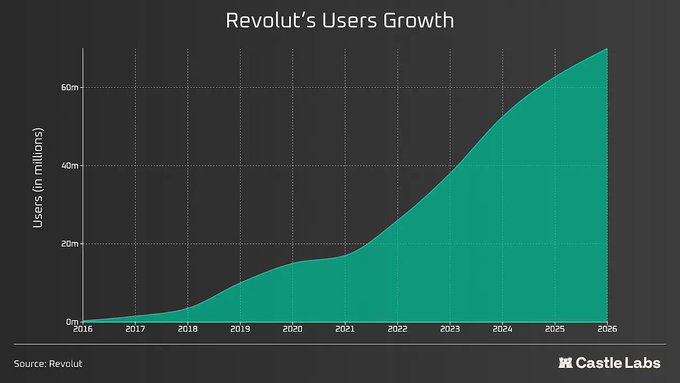
Traditional digital banks once promised to replace traditional banks—but ultimately ran on the same rails: the same correspondent banks, the same settlement delays, the same custodial model—just wrapped in a better app experience.
The underlying infrastructure remains the very system that makes banking cumbersome: intermediaries, agents, and compliance officers must still be navigated—no matter how polished the mobile interface appears. When Silicon Valley Bank collapsed in March 2023, it reminded customers how invaluable a physical banker becomes during crises. Without reliable physical fallbacks, banking remains remote and impersonal—much like DeFi hacks and exploits, often left unresolved.
Dozens of crypto-native banks are already operational, while stablecoin supply has surpassed $308 billion. The clearest evidence this market can generate real revenue is @RedotPay. This Hong Kong–based stablecoin payments fintech company was founded in April 2023 and now processes over $10 billion annually in payments. It raised $194 million in 2025 alone. By February 2026, Bloomberg reported RedotPay was preparing for a U.S. IPO targeting a valuation exceeding $4 billion, with JPMorgan, Goldman Sachs, and Jefferies serving as advisors. Data shows RedotPay processed $91 million in crypto card transactions in November 2025 alone—second only to Rain’s $240 million.
Its architecture more closely resembles Revolut’s crypto top-up functionality than any of the models described below. RedotPay proves demand exists. The protocols discussed in this article are building architectures that could reshape banking itself.
The maturation of DeFi infrastructure enables a new kind of bank: users can store, spend, earn yield on, and borrow assets on-chain—without intermediaries.
Crypto cards make users feel they finally truly own their money—free from external control—and increasingly robust infrastructure supports this reality.
This article explores how these on-chain banks differ from one another, whether they offer equivalent safeguards, whether they mitigate operational risk, and whether they meet compliance requirements—because off-chain digital banks and on-chain banks are fundamentally different, and comparing them directly is almost a category error.
From Digital Banks to On-Chain Banks
Digital banks refer to purely digital institutions without physical branches, built from the ground up—not retrofitted legacy systems. They exist on smartphones, instantly accessible—but beyond corporate offices, they lack physical presence.
The evolution of banking is clear (though slow), with each generation built upon the last—mirroring the paradigm shifts seen in scientific discovery. Crypto banks, however, differ profoundly from the digital bank model—and we’ll see precisely how.

Web2 digital banks like Revolut, SoFi, and Nubank are mobile-first interfaces built atop traditional banking infrastructure. In remote regions of developing countries where traditional banks (e.g., HSBC) cannot open branches, digital banks deliver critical access. These platforms expand accessibility and utility—but do not grant users autonomy.
- They remain custodial: banks hold users’ funds on their balance sheets.
- They still rely on correspondent banks for cross-border settlements.
- They remain constrained by jurisdictional licensing regimes: Revolut spent years and hundreds of millions of dollars securing banking licenses jurisdiction-by-jurisdiction.
Built for convenience—but the model remains inherently centralized, controlled, and far from private.
Web2/3 hybrids like Xapo, Nexo, and Matrixport represent the first attempt to bridge traditional and crypto banking. They offer both fiat and crypto services within a single app—but the underlying model remains predominantly custodial. Users can hold Bitcoin alongside GBP or EUR—but the platform controls private keys and manages assets. In the backend, these platforms operate pooled custody, aggregate user funds, execute crypto trades via centralized order books, and settle fiat through the same correspondent bank channels used by Web2 digital banks. Their distinction from Web2 lies solely in asset-class access—not architecture.
These platforms resemble centralized exchanges: even if users see their assets, those assets are held by third parties. If the platform collapses due to structural or financial failure—as with FTX—users lose their assets.
Thus, Web2/3 hybrids inherit the counterparty risk of centralized platforms—the same risk models that caused Celsius or BlockFi to collapse—with the sole added feature of supporting crypto assets.
On-chain banks like @ether_fi, @useTria, and @superformxyz represent an architectural shift. Built on smart contract wallets, integrated with DeFi protocols for yield generation, and connected to Visa and Mastercard via card infrastructure providers, they are designed for composability and yield generation from inception—with varying degrees of self-custody depending on the product.
User assets reside in self-custodial smart contracts—not on the platform’s balance sheet. Yield is generated transparently via DeFi strategies—not by banks re-lending deposits. Spending occurs via on-chain settlement routed to Visa or Mastercard. As Blocmates puts it: “You’re not storing money with them—you’re using money through them.” This distinction is fundamental: it’s trust in an institution versus trust in a smart contract.
Their risk profiles differ—but smart contracts eliminate human intervention entirely. If anything goes wrong with the platform, users retain full control over their funds.
B2B on-chain banks represent the furthest extension of this thesis. Dakota is building crypto-native digital banking services for enterprises—offering treasury management, stablecoin payroll, and cross-border payments without waiting for correspondent bank settlements. Deposits are backed by U.S. Treasuries, with zero transaction fees and yield generated via Treasury and DeFi strategies.
The distinction lies in structure: in traditional digital banks, assets sit on the bank’s balance sheet. In crypto-native digital banks, assets reside on a transparent, verifiable ledger—and users retain ownership. Each generation moves closer to direct user control: from digital interfaces, to expanded crypto access, to full intermediary elimination. If adopted widely by enterprises—and if it satisfies regulatory requirements and consumer expectations for security—the entire financial stack could migrate on-chain.
But the question isn’t just whether on-chain banks can replace—or at least compete with—incumbents. It’s how they function in practice. Let’s begin with the most basic use case: buying coffee at your local café.
How Crypto Cards Help You Buy Coffee
One core value proposition of crypto digital banks is enabling everyday spending via crypto cards.
Crypto card spending is growing exponentially—reaching $406 million in monthly transaction volume in November 2025, a record high. Annualized spending on Visa cards pegged to stablecoins alone reached $3.5 billion.
In this section, we use the simple coffee purchase to explore the underlying infrastructure of different crypto cards.
What happens between swiping the card and the merchant receiving payment?
Two distinct mechanisms currently dominate the market.
Fiat Settlement Model
This is the standard model for consumer spending—used by Crypto.com and Binance Card.
The user swipes; the merchant terminal sends an authorization request via Visa or Mastercard—identical to any conventional card payment.
The issuing institution’s system checks the user’s crypto or stablecoin balance, performs anti-fraud checks, and—if approved—automatically sells the user’s selected asset at the real-time market rate and converts it to fiat. By the time the transaction reaches the card network, it’s indistinguishable from any other card payment. From the merchant’s perspective, everything proceeds as usual—they receive local currency exactly as with any other fiat transaction.
Who handles the conversion depends on the card’s infrastructure: program managers like Baanx and Bridge convert crypto to fiat themselves before passing funds to issuing banks (e.g., Lead Bank, Cross River Bank), which then settle with Visa. Full-stack issuers like Rain handle the entire chain—clearing stablecoins and settling directly with the Visa network, which routes amounts to acquiring banks for settlement in the merchant’s desired fiat currency.
Stablecoin Settlement Model
Stablecoin settlement is growing rapidly but remains early-stage—and operates differently. Instead of converting to fiat before settlement, issuers fulfill settlement obligations to Visa directly via blockchain using stablecoins. Visa launched USDC settlement for U.S. institutional partners, enabling participating issuers and acquirers to settle VisaNet liabilities on the Solana blockchain using Circle’s USDC.
The benefits for issuers are tangible: faster fund movement, 24/7 inter-institutional settlement on-chain—with zero change to the end-user’s card-swiping experience. Visa-pegged card spending hit $3.5 billion annualized in 2025—a ~460% YoY increase—yet accounts for only ~19% of total crypto card settlement volume. As of early 2026, native stablecoin settlement supports limited assets—primarily Visa’s USDC and PYUSD, while Mastercard expands support to additional stablecoins. Tether’s USDT—the world’s largest stablecoin—remains absent from Visa and Mastercard’s native settlement programs.
Visa is also a design partner for Arc—a new Layer 1 blockchain developed by Visa and Circle—and plans to use Arc for USDC settlement and run a validator node.
The payments network layer is dominated by Visa, accounting for >90% of on-chain card transaction volume. This divergence reflects differing strategies.
Visa partnered early with emerging infrastructure providers like Rain and Reap—capturing crypto-native issuers through a single integration node, allowing Visa to reach dozens of card products. Mastercard focused instead on direct partnerships with large centralized exchanges like Revolut, Bybit, and Gemini.
To date, Visa has facilitated nearly $100 billion in cryptocurrency purchases and over $25 billion in cryptocurrency spending—across 150 million merchants and 14,500 financial institutions.
Between users and networks lie two types of intermediaries—and this distinction determines how much profit each digital bank captures per transaction.
Program managers—companies representing issuers but lacking direct network membership—like Bridge or Gnosis Pay handle crypto-to-fiat conversion but rely on issuing banks to settle with the payment network. Baanx’s Crypto Life serves as the white-label program manager behind MetaMask Card and Ledger Card.
Full-stack issuers like Rain and Reap hold direct Visa principal membership, owning the entire tech stack: BIN sponsorship, bookkeeping lenders, network settlement—all integrated into one product. By consolidating existing issuing infrastructure into a single product, Rain captures most of the value otherwise lost to banks and other intermediaries. Rain’s valuation is reportedly approaching $2 billion.
This is highly illustrative: a protocol built on Rain’s full-stack infrastructure (e.g., @Plasma) retains a larger share of interchange fees than protocols routed through program managers, issuing banks, and networks—due to fewer intermediaries splitting revenue.
The architecture behind the card matters as much as the architecture on-chain. Next: what sits above the payment channel—and how do these protocols reimagine banking services on a single ledger?
On-Chain Banking Models
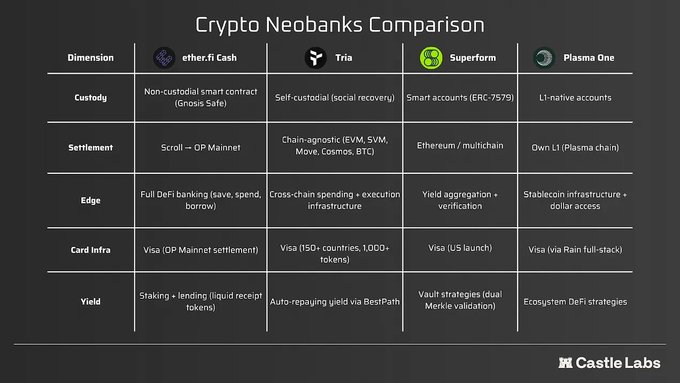
This section examines four protocols adopting radically different approaches to on-chain digital banking.
Each made fundamentally divergent architectural choices—choices that, if successful, could set standards for crypto banking.
ether.fi Cash: TradFi Banking on-Chain
ether.fi accounts for over one-quarter of all crypto card spending.
Cash—the non-custodial crypto card from ether.fi—is now its largest revenue source, contributing ~50% of protocol revenue.
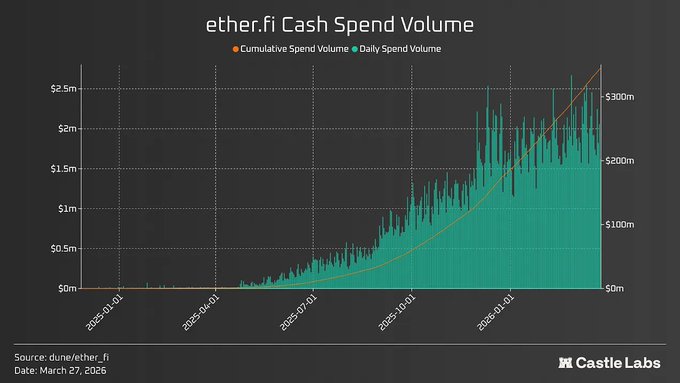
ether.fi Cash’s uniqueness lies in its custody and wallet infrastructure architecture: a modular system built on Gnosis Safe called EtherFiSafe. Each user receives a dedicated multisig smart contract wallet with whitelisted modules enabling spending, borrowing, and yield generation from a single non-custodial vault.
This differs sharply from Web2/3 hybrids. In hybrid models like Nexo, platforms pool user funds in omnibus accounts. With ether.fi Cash: each user’s funds reside in their own smart contract—even ether.fi itself cannot access the user’s private keys. Even if the ether.fi platform vanished tomorrow, users could still access funds via the Gnosis Safe smart contract and recover them through any Web3 interface.
The product offers two spending modes:
- Direct Payment Mode draws assets from the user’s vault to fund card transactions.
- Borrowing Mode allows users to deposit ETH as collateral into staking or liquidity vault products, then borrow via a dedicated Aave deployment. Users spend the borrowed stablecoins while their ETH continues earning yield. This is a major upgrade: no traditional digital bank nor Web2/3 hybrid currently offers borrowing against staked crypto collateral with direct card-based spending of loan proceeds.
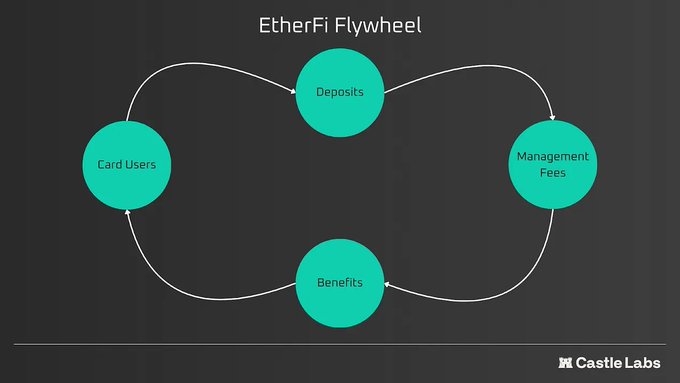
This creates a flywheel: cards drive deposits, deposits drive TVL, TVL drives management fee revenue.
Scale-wise, ether.fi has ~300,000 accounts and nearly 70,000 active cards.
Migration to OP Mainnet began February 19, 2026, under a long-term enterprise partnership with Optimism—moving all accounts from Scroll. Visa cards launched February 26, offering up to 3% cashback and integrating Apple Pay and Google Pay.
ether.fi Cash offers 2–3% cashback based on membership tiers, with promotional periods delivering up to 5% total rewards—partially paid instantly in SCR or wETH, the remainder in ETHFI tokens. The key distinction lies in ether.fi’s cost structure. Unlike centralized exchanges—which pay rewards in fiat or liquid crypto, incurring real USD costs—ether.fi uses token incentives, achieving near-zero marginal capital cost. The trade-off is volatility: if ETH or SCR falls 20%, cashback value shrinks accordingly.
Tria: Self-Custodial Payment Infrastructure
If ether.fi built a bank, Tria built an operating system.
Tria doesn’t compete as a standalone consumer product—it provides the settlement and wallet infrastructure upon which other crypto banks depend. It’s akin to SWIFT’s contribution to correspondent banking relationships in the 1970s: establishing an industry-wide standard, rather than each bank building proprietary channels.
Its core innovation is BestPath AVS—a decentralized settlement marketplace being open-sourced as an Active Verification Service on EigenLayer—where solvers, routers, and relayers compete to route cross-chain transactions. Other digital banks and wallets can plug into BestPath to gain cross-chain settlement capability without building bridges from scratch.
Tria is truly chain-agnostic: users can hold assets on any supported chain and spend via Visa cards—no manual bridging, swapping, or gas management required. Wallets are fully self-custodial, support social recovery, require no seed phrase, and need no gas token.
To date, Tria’s card products have processed over $60 million in total transaction volume—settling across Arbitrum, Base, Optimism, Polygon, and Solana—with ~$12 million in monthly card spending as of March 2026. Platform users exceed 500,000.
Beyond payments, Tria’s perpetual futures product—running on Hyperliquid (using referral code)—generated $475 million in trading volume and $439,000 in fees in its first 30 days alone—implying $5.3 million in annualized revenue just from perpetuals. Tria currently accounts for 0.116% of Hyperliquid’s global perpetuals volume—a significant share for a product launched mid-market explosion.
BestPath and Tria’s CoreSDK—a modular developer toolkit for wallet creation, identity, and payment processing—enable other digital banks to integrate Tria’s infrastructure without rebuilding from scratch.
Other ecosystems integrating Tria include 0G, Aethir, Sentient, Base, Arbitrum, and Monad.
Superform: User-Owned Savings Jars
Superform approaches digital banking from a completely different angle: yield aggregation with full on-chain verifiability.
Its architecture uses ERC-7579 smart accounts and SuperVault—a vault framework employing dual Merkle verification. Practically, this means every yield strategy is cryptographically verified on-chain. Traditional savings accounts obscure how banks invest deposits; hybrid platforms like Nexo derive yield from centralized lending desks; Superform’s vault framework is transparent: users can verify exactly where their funds are deployed—across Morpho, Euler, Aave, and Pendle.
SuperVault v2 strategies—including SuperWBTC, SuperWETH, and SuperUSDC—deliver optimized cross-chain yield. A verifier network adds an extra security layer: any yield strategy requires approval from a network of independent verifiers who stake their own capital as diligence assurance. If a verifier approves a strategy later proven malicious or flawed, they forfeit their staked capital via economic slashing.
If ether.fi is a full DeFi bank, and Tria is the payment infrastructure layer, Superform is a savings account—an autonomous, user-owned savings jar generating institutional-grade yield without active management.
Plasma One: Stablecoin Infrastructure Play
Plasma pursues vertical integration.
It’s built on its own Layer 1 blockchain with native Tether integration—giving Plasma control over the entire tech stack:
- Consensus layer
- Stablecoin infrastructure
- Yield-generating DeFi ecosystem
Spending is routed to the card network via Rain’s Visa principal membership.
This vertical integration is its key architectural distinction:
- ether.fi builds on Ethereum L2 and uses third-party DeFi protocols for yield.
- Tria is chain-agnostic and protocol-agnostic—routing across multiple chains.
- Superform aggregates yield from existing protocols.
- Plasma owns the entire stack—from consensus to card settlement—granting greater control but introducing centralization trade-offs: theoretically capable of pausing or reverting transactions.
Plasma focuses on emerging markets and dollar access—targeting the billions who prioritize stable dollar exposure over DeFi composability.
Consumer Protection—or Its Absence
Beyond regulatory issues discussed later, the primary disadvantage of on-chain banks lies in uncertainty around consumer protection.
Traditional banks provide a safety net forged over decades of regulation and failure.
Card transactions enjoy chargeback rights: if a merchant defrauds a cardholder, Visa’s Zero Liability Policy reverses the charge. If a bank fails, depositors hold legal priority over other creditors. These protections are legally mandated—binding every institution, from JPMorgan to small local banks.
Crypto digital banks offer none of the above. No FDIC insurance. No deposit guarantees. Blockchain transactions remain irreversible. If funds are sent to the wrong address or stolen in a hack, no protocol-level chargeback mechanism exists. DeFi exploits have cost billions—with no meaningful way to recover funds.
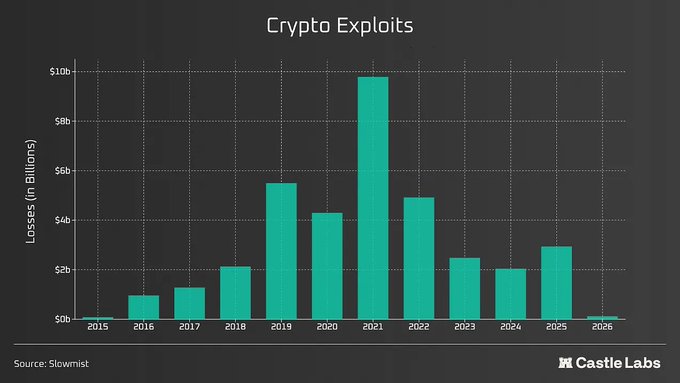
On-chain banks offer a fundamentally different risk model—one relying on practical safeguards not codified in law.
Self-custody is the first line of defense. In ether.fi Cash, each user deploys a dedicated smart contract vault protected by Turnkey’s trusted execution environment. Even ether.fi itself cannot access the user’s private keys. If the ether.fi platform vanished tomorrow, users could still access funds via the Gnosis Safe smart contract. Yet power comes with responsibility—meaning users bear full responsibility for their funds. Lose your keys? No hotline. No AI agent. No teller quietly listening behind the counter.
Smart contract audits and bug bounties form the second line of defense. ether.fi’s contracts are audited by leading security firms, and the protocol runs a bug bounty program via Immunefi—paying up to $200,000 for critical vulnerabilities. As of February 2026, the platform has processed over 80,000 transactions with zero security incidents—but as ether.fi’s own documentation states, “Interacting with smart contracts always carries risk,” and the protocol “cannot guarantee that the methods employed are or will remain 100% secure.”
Superform addresses this via its verifier network and economic slashing: verifiers approving malicious strategies forfeit staked capital.
Plasma takes yet another approach: controlling its own L1, it builds consumer protection at multiple architectural layers.
- At the base layer, Plasma regularly anchors cryptographic state commitments to the Bitcoin blockchain—inheritating Bitcoin’s security model.
- Its PlasmaBFT consensus is a Byzantine Fault-Tolerant mechanism inspired by HotStuff—ensuring correct operation even if up to one-third of validators misbehave.
- Above consensus, Plasma benefits from native Tether integration—enjoying direct issuer oversight, vetted DeFi partners (not permissionless deployments), and a Bitcoin cross-chain bridge secured by the same decentralized validator set—with BitVM2 planned for further trust minimization.
- As a last resort, Plasma’s validators could theoretically pause or revert transactions in extreme scenarios—introducing centralization trade-offs.
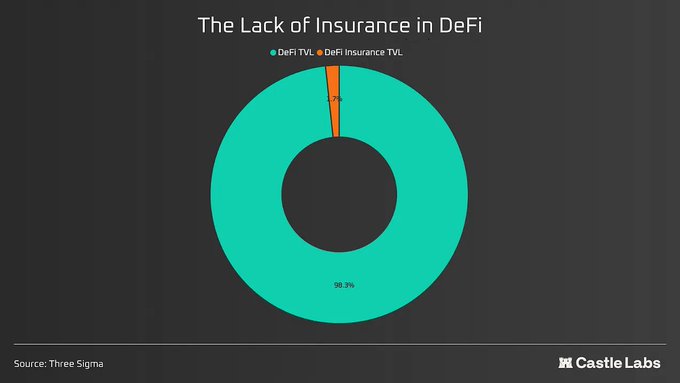
Optional DeFi insurance exists—but is not standard. ether.fi users can purchase smart contract insurance from Nexus Mutual—a decentralized alternative bundling coverage for EigenLayer, ether.fi, Morpho, Pendle, and Uniswap into a Cover NFT. This is voluntary and user-paid; it’s not embedded in the product like FDIC insurance is in bank accounts. Most users won’t buy it—paying extra to protect funds feels prohibitive and unintuitive: less than 2% of DeFi’s total TVL is covered by any insurance, and the entire decentralized insurance industry holds only a fraction of the capital locked in lending or trading protocols. When users expect deposit insurance embedded at zero explicit cost, asking them to pay extra is difficult.
Borrowing introduces liquidation risk—with no analog in traditional banking. If a user borrows against ETH and the price drops below the liquidation threshold, the smart contract automatically sells collateral to repay debt. No margin call. No grace period. No human intervention. Users must actively monitor their health factor and adjust collateral ratios.
Yet card-level protections still apply. Because these cards run on Visa’s rails, users receive Visa Signature benefits: $2,000 purchase protection, $10,000 extended warranty, $10,000 purchase protection, and Visa’s Zero Liability policy against fraudulent transactions. These protections originate from Visa—not the protocol—and cover only card transactions.
Thus, on-chain banks eliminate counterparty risk—but introduce smart contract risk. On one hand, users are no longer exposed to the platform’s balance sheet: their assets cannot be rehypothecated, frozen by compliance officers, or lost in a bank run. On the other, they face consequences of code vulnerabilities, oracle manipulation, cross-chain bridge attacks, and their own errors—potentially catastrophic ones.
For sophisticated DeFi users, this may represent a superior risk profile.
For mainstream consumers expecting banks to intervene when things go wrong, on-chain banking remains an uncomfortable substitute—the chasm between DeFi’s transparency and traditional banking’s safety net remains vast.
The Heavy Regulatory Burden
In the U.S., President Trump signed the GENIUS Act on July 18, 2025—making it the first federal legislation on digital assets in U.S. history.
The framework establishes three categories of permitted stablecoin issuers:
- Subsidiaries of insured depository institutions.
- Federal Qualified Nonbank Issuers (regulated by the OCC).
- State-Qualified Issuers.
Stablecoin payments must be backed 1:1 by USD, short-term Treasuries, overnight reverse repos, or specific money market funds. Monthly attestations and redemption rights are mandatory. Crucially, permitted payment stablecoins are explicitly defined as non-securities under federal law—removing them from SEC jurisdiction.
The FDIC has proposed application procedures for regulated institutions seeking to issue stablecoins under the Act. For crypto digital banks, the impact is positive: GENIUS-compliant stablecoins become the reference standard, with infrastructure implementing the administration’s intent—shielding compliant entities from regulatory wrath.
In the EU, the Markets in Crypto-Assets Regulation (MiCA) is now fully in force, and the Anti-Money Laundering Authority (AMLA) will launch operations this year. Europe hosts over 50 active digital banks—but compliance costs are rising, and many regulatory requirements remain poorly adapted to on-chain business models. Meeting them grows increasingly expensive. These models face unique challenges because existing AML frameworks were designed for custodial intermediaries—not self-custodial smart contract wallets—creating friction in transaction monitoring, Travel Rule compliance, and customer due diligence—difficult to naturally embed in decentralized operations.
This raises enforcement questions.
Past enforcement records should give crypto digital banks pause.
Even mature digital banks faced major penalties in the U.S. and EU:
- Monzo was fined $27 million by the UK’s FCA in July 2025 for AML failures.
- Revolut was fined $3.8 million in Lithuania.
- Cash App settled with 48 U.S. states for $80 million—showing that even in the new world, rule-breakers face consequences.
Some digital banks report false-positive rates exceeding 95% in transaction monitoring—meaning for every truly suspicious transaction detected, 19 legitimate ones are flagged. AML monitoring systems use broad rules: digital bank customers trigger identical red flags—yet systems cannot distinguish whether a flagged transaction represents a freelancer paying rent or a criminal structuring deposits—based on crypto-specific characteristics (outflows, cross-border payments, micro-transfers).
Moreover, traditional banks still refuse banking services to crypto businesses: regardless of actual risk profiles, crypto activity almost universally triggers internal AML alerts across traditional banking systems. In Europe, correspondent banks pressure smaller institutions to sever ties with crypto clients—forcing them to choose between serving crypto clients or retaining their place in the financial system.
RedotPay exemplifies the traditional fintech response to this challenge. It holds VASP licenses in Lithuania and Argentina, a moneylender license in Hong Kong, and a trust or corporate service provider license—and maintains full PCI DSS compliance. This is a compliance-first strategy: accumulating licenses faster than competitors.
RedotPay’s multi-jurisdictional licenses are why it operates in 100+ countries—while protocol-native institutions remain geographically constrained. Its planned U.S. IPO will further cement this advantage—embedding the company within U.S. public market disclosure and governance requirements.
By design, on-chain digital banks are inherently more transparent than traditional banks:
- Every transaction is verifiable on-chain.
- Every reserve is auditable in real time.
- Every smart contract interaction is immutably recorded.
Theoretically, on-chain transparency should make these protocols safer—not more suspicious.
Yet compliance is becoming an unavoidable structural factor—just as in traditional banking.
Protocols embedding GENIUS Act and MiCA compliance into their architecture will become blue-chip retail products.
The Long Road Ahead
First-generation digital banks changed banking’s appearance; second-generation banks change how banking works—replacing custodial, intermediary-dependent infrastructure with self-custodial, on-chain alternatives.
Four models converge on identical banking products: saving, spending, earning, borrowing—but from fundamentally different starting points.
- ether.fi emerged from DeFi staking—and has turned Cash into its primary revenue stream.
- Tria emerged from cross-chain execution infrastructure—and positions BestPath as the settlement layer for other digital banks.
- Superform emerged from yield aggregation—and is building an automated savings account.
- Plasma emerged from stablecoin infrastructure—and targets the billions needing dollar access—not DeFi composability.
The elephant in the room is the complete absence of consumer protection.
If crypto cards are tools designed for sophisticated users who understand DeFi mechanics, collateral management, and smart contract risks—then the lack of deposit insurance, chargeback protection, and institutional safety nets means these products cannot yet replace traditional banking services.
Crypto digital banking remains an experiment. Neither digital nor traditional banks—given the immense safeguards they offer customers—should view them as threats. Given Europe’s uncertain long-term regulatory outlook, the U.S.’s unpredictable legislative future, and the total absence of consumer protection, prudence suggests relying on a friendly banker—or at least a helpful AI agent ready to respond.
Many digital banks burn cash without ever turning a profit. Crypto digital banks face the same unit economics scrutiny.
Join TechFlow official community to stay tuned
Telegram:https://t.me/TechFlowDaily
X (Twitter):https://x.com/TechFlowPost
X (Twitter) EN:https://x.com/BlockFlow_News
 @castle_labs