A Hair Dryer Unveils the World’s Largest NVIDIA Chip Smuggling Case
TechFlow Selected TechFlow Selected
A Hair Dryer Unveils the World’s Largest NVIDIA Chip Smuggling Case
$2.5 Billion: The Most Secretive Business in the U.S.-China Chip War
 Navigating Web3 tides with focused insights
Author: David, TechFlow
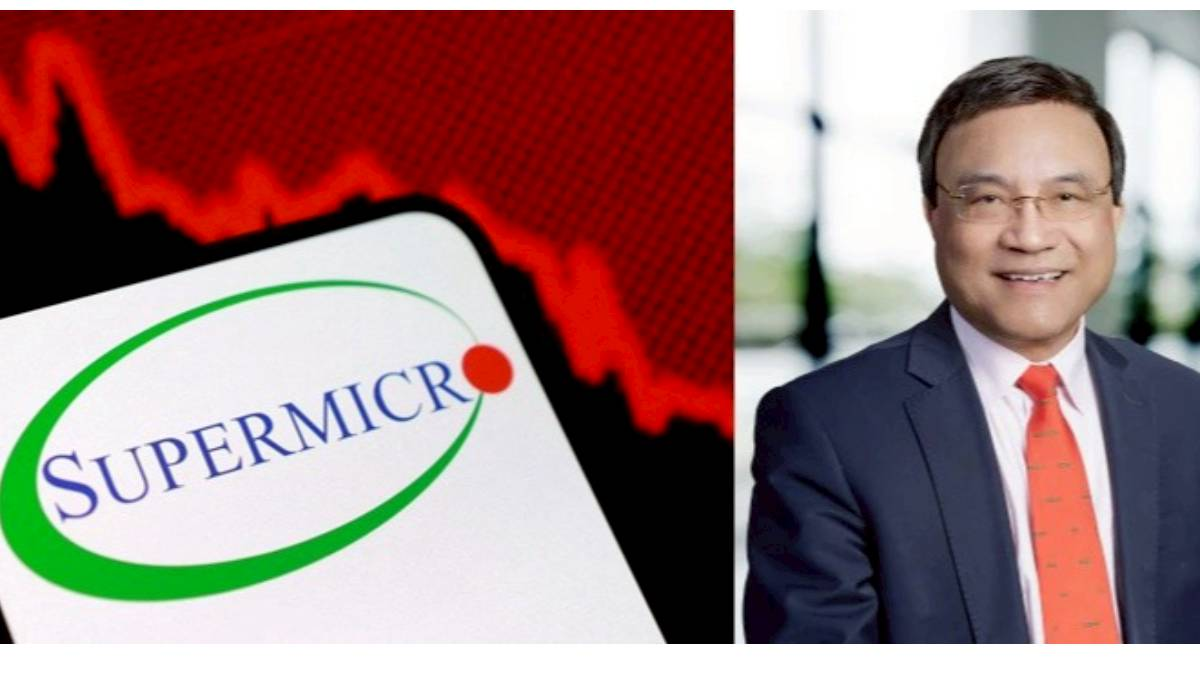
Early this morning, Wally Liaw, co-founder of Supermicro, was arrested in California.
Supermicro is one of the world’s largest AI server manufacturers and a core supply chain partner of NVIDIA. Last quarter alone, it secured $13 billion worth of NVIDIA Blackwell chip orders.
Liaw has been with the company since its founding in 1993 and currently serves as Senior Vice President and board member.
He is charged with:
Smuggling $2.5 billion worth of NVIDIA AI chip servers into China via shell companies in Southeast Asia. Maximum sentence: 20 years.
The U.S. Department of Justice has labeled this case the largest AI chip smuggling operation in history.
Yet the details of this case read like a Hollywood script.
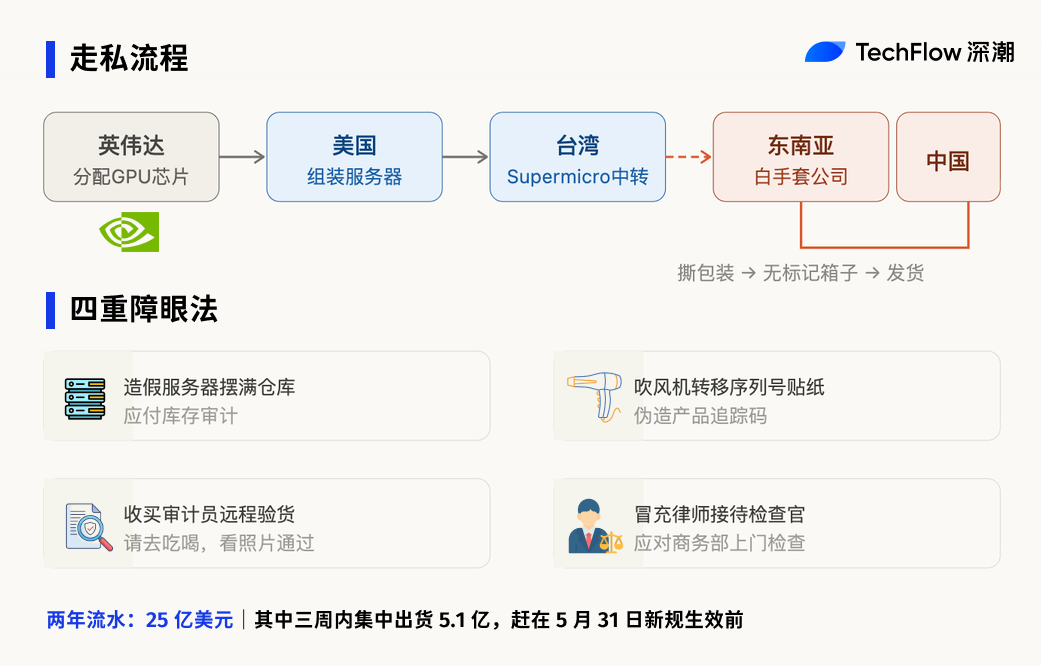
According to the indictment, Liaw and his co-conspirators used a Southeast Asian company as a “front,” purchasing large quantities of NVIDIA GPU-equipped servers from Supermicro under the pretense of “internal use.” Once the servers arrived in Southeast Asia, staff stripped off original packaging, repacked them into unmarked boxes, and shipped them to China.
The real goods were gone—but Supermicro’s compliance team and the U.S. Department of Commerce conduct periodic warehouse audits, scanning serial numbers. The warehouse couldn’t be empty.
So they built thousands of fake servers.
Their exteriors were identical to genuine units—but internally, they contained no chips and could not power on. They existed solely to deceive auditors.
But fake servers weren’t enough—the serial numbers on packaging also had to match. Staff used hair dryers to heat up the serial number labels on authentic packaging, carefully peeled them off intact, and reapplied them onto the boxes housing the fake servers…
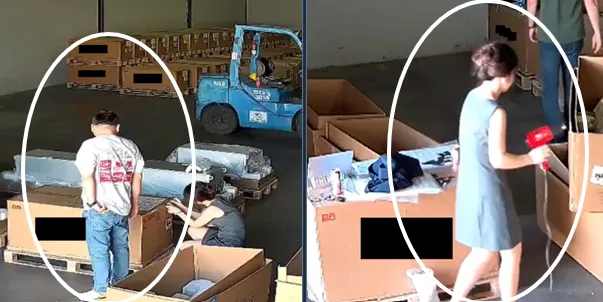
Auditors scanned the barcodes—and the system reported everything as normal.
Warehouse surveillance footage captured the hair dryer moment. By then, however, the real goods were already en route to China.
Even more astonishingly, when Supermicro’s own compliance team sent personnel to inspect the facility, co-conspirator Sun sent photos and videos of the fake servers to the auditors—“proving” the goods were present.
On another occasion, U.S. Department of Commerce export control officials conducted an on-site inspection. Someone at the scene impersonated a lawyer to greet them.
Lead defendant Liaw is 71 years old and holds $430 million worth of Supermicro stock. Financially, he clearly lacks for nothing.
The indictment includes another telling detail: A broker forwarded Liaw a news link about several Chinese nationals arrested in the U.S. for smuggling AI chips. Liaw responded with a string of crying-face emojis—and continued operations.
Following the announcement, Supermicro’s after-hours stock price fell 13%. The company issued a statement confirming Liaw’s suspension and the termination of co-conspirator Sun. Steven Chang, sales manager at Supermicro’s Taiwan office, remains at large.
Supermicro itself is not named as a defendant. The company asserts it maintains a “robust compliance system.”
Yet this isn’t the first time the company’s compliance framework has failed.
$2.5 Billion: A Chip-Smuggling Production Line
This smuggling pipeline didn’t materialize overnight.
The indictment reveals Liaw actively orchestrated operations. He directly messaged the Southeast Asian company’s head using encrypted messaging apps: “How much can you absorb in January? February? March? April? Just give us rough estimates—we’ll use those figures to apply for chip allocations from NVIDIA.”
Thus, the workflow was:
First, confirm demand volume from Chinese buyers; second, use that figure to negotiate allocation quotas with NVIDIA—citing the Southeast Asian company’s “internal use” as justification. Once NVIDIA approved the quota, servers were assembled in the U.S., shipped to Taiwan, handed over to the Southeast Asian company, which then removed packaging and forwarded shipments to China.
From end customers to sourcing to logistics—Liaw personally managed the entire chain. He wasn’t a middleman. He was Supermicro’s co-founder and head of business development.
Using his own company’s supply chain to smuggle his own company’s products.
Between 2024 and 2025, servers valued at $2.5 billion flowed through this channel. The indictment notes this scale expanded gradually—using the phrase:
“Growing bolder.”
The boldest single shipment occurred between late April and mid-May 2025: $510 million worth of servers transited from the U.S. to China via Southeast Asia in just three weeks.
Why the sudden acceleration? Possibly because Liaw saw a White House announcement.
In early 2025, the U.S. government announced new AI product export control rules, scheduled to take effect mid-May—further tightening chip export scrutiny on Southeast Asia and other regions. Liaw forwarded this news to the Southeast Asian company’s head with one line:
“We need to speed these up before May 13!”
May 13 marked the rule’s effective date. Until then, existing loopholes remained usable—so the final three weeks became a frantic sprint. Volumes normally requiring months were compressed into twenty days.
Meanwhile, Steven Chang at Supermicro’s Taiwan office handled another critical task: ensuring no one conducted real inspections.
The indictment states he blocked auditors from accessing the actual storage areas housing servers at the Southeast Asian data center—and even arranged what he called a “friendly” auditor to perform the review.
All forged documents, fake servers, and hair-dryer-applied labels served one purpose: keeping the production line running uninterrupted. And during those final three weeks, throughput hit its peak.
Yet Supermicro isn’t the only company involved in chip smuggling.
Over the past two years, the U.S. Department of Justice has dismantled multiple chip-smuggling networks—ranging from tens of millions to hundreds of millions of dollars in value, each more audacious than the last. And the profiles of participants have steadily escalated.
Tighter Chip Bans, Higher-Profile Smugglers
Supermicro isn’t the first to be caught.
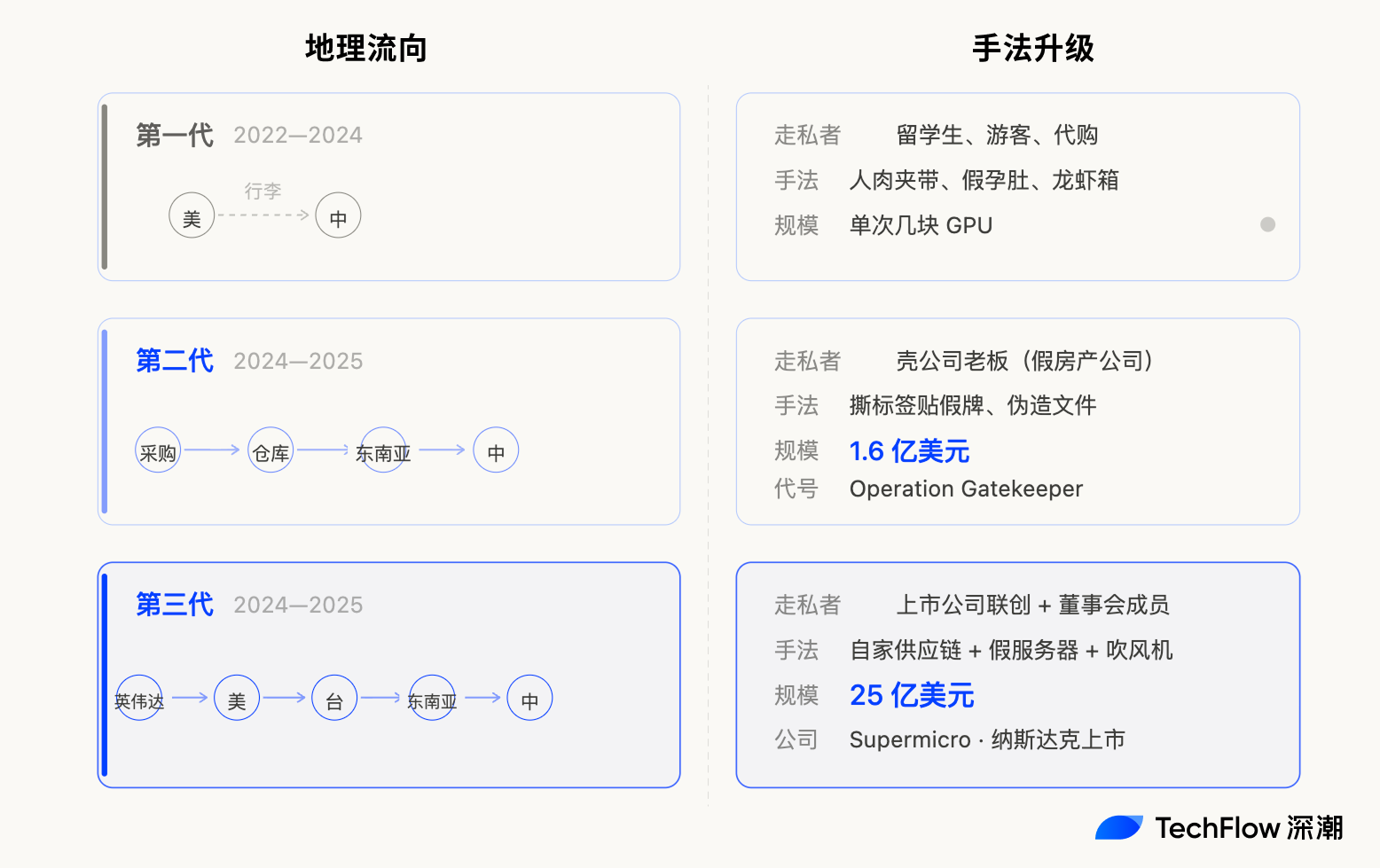
Looking back two years, chip smuggling has evolved across three generations—each marked by rising participant status, increasingly sophisticated methods resembling legitimate business, and ever-larger scales.
Generation One: “Ant-Carrier” Operations
When chip bans first emerged in 2022, smuggling remained a physical, labor-intensive activity. Students, tourists, and personal shoppers carried one or two NVIDIA GPUs per trip—concealed in personal luggage—and claimed “personal use” if intercepted at customs.
Some packed chips inside live lobster crates; others strapped them to their bodies beneath fake pregnancy bellies.
In Shenzhen’s Huaqiangbei electronics district, a full aftermarket ecosystem supports these chips: specialized workshops repair damaged or previously de-soldered GPUs—processing over 500 units monthly, charging $1,400–$2,800 per unit—then reselling them to data centers and AI startups.
At this stage, smugglers operated without corporate entities or formal documentation—relying solely on human couriers and raw nerve. Individual transaction values were small—but every mosquito leg adds up.
Generation Two: Corporate Fronts
By late 2025, the DOJ dismantled a network codenamed “Operation Gatekeeper.” Its ringleader was Alan Hsu, a 43-year-old Houston resident who used his own company to bulk-purchase NVIDIA chips from Lenovo and ship them to a warehouse in New Jersey.
The company—Janford Realtor—was registered as a real estate firm.
It never completed a single property transaction.
Upon arrival at the warehouse, workers stripped off NVIDIA’s original labels and replaced them with a fictitious company name: “SANDKYAN.” Shipments then transited Malaysia and Thailand before entering China. This network moved over $160 million in chips within eight months.
The most dramatic moment came during the takedown: FBI agents secretly infiltrated the New Jersey warehouse and removed all GPUs. When smugglers discovered the inventory missing, they assumed theft—and sent representatives to “redeem” the goods.
The ransom demand reached $1 million—and the negotiators were arrested on the spot by the FBI.
Generation Three: Industry Insiders Like Supermicro
No longer fake companies. No longer intermediaries. Now, co-founders of publicly listed companies personally running operations.
No need to buy chips from third parties—Supermicro itself is NVIDIA’s core supplier. No need to fabricate buyer identities—leveraging the company’s own supply chain, customer relationships, and allocation quotas to procure chips, then bypassing internal compliance teams entirely.
From backpack-carrying couriers to fake real estate firms to Silicon Valley executives at public companies—three generations of smugglers share only one commonality:
End buyers are in China; chips are all NVIDIA’s.
The difference? In 2022, the person hiking across borders with a backpack risked personal freedom. In 2026, the executive orchestrating operations from a Silicon Valley office risks a company worth tens of billions of dollars.
Each tightening of restrictions escalates profit margins—and attracts higher-profile participants.
So how profitable is this business?
The Black-Market Price of a Single Chip
Why can’t chip smuggling be stopped? The answer lies in pricing.
Multiple overseas media outlets report NVIDIA’s high-end GPUs command approximately 50% premiums in China’s black market versus official U.S. channels. Export controls create price arbitrage; price arbitrage creates profit; profit attracts smugglers.
Demand is inelastic. Ray Wang, analyst at semiconductor research firm SemiAnalysis, told CNBC:
“Over 60% of China’s top-tier AI models still run on NVIDIA hardware. Training a large language model requires thousands of high-end GPUs—missing even one halts operations entirely.”
This means Chinese AI firms aren’t merely “wanting” NVIDIA chips—they’re “forced to buy” them.
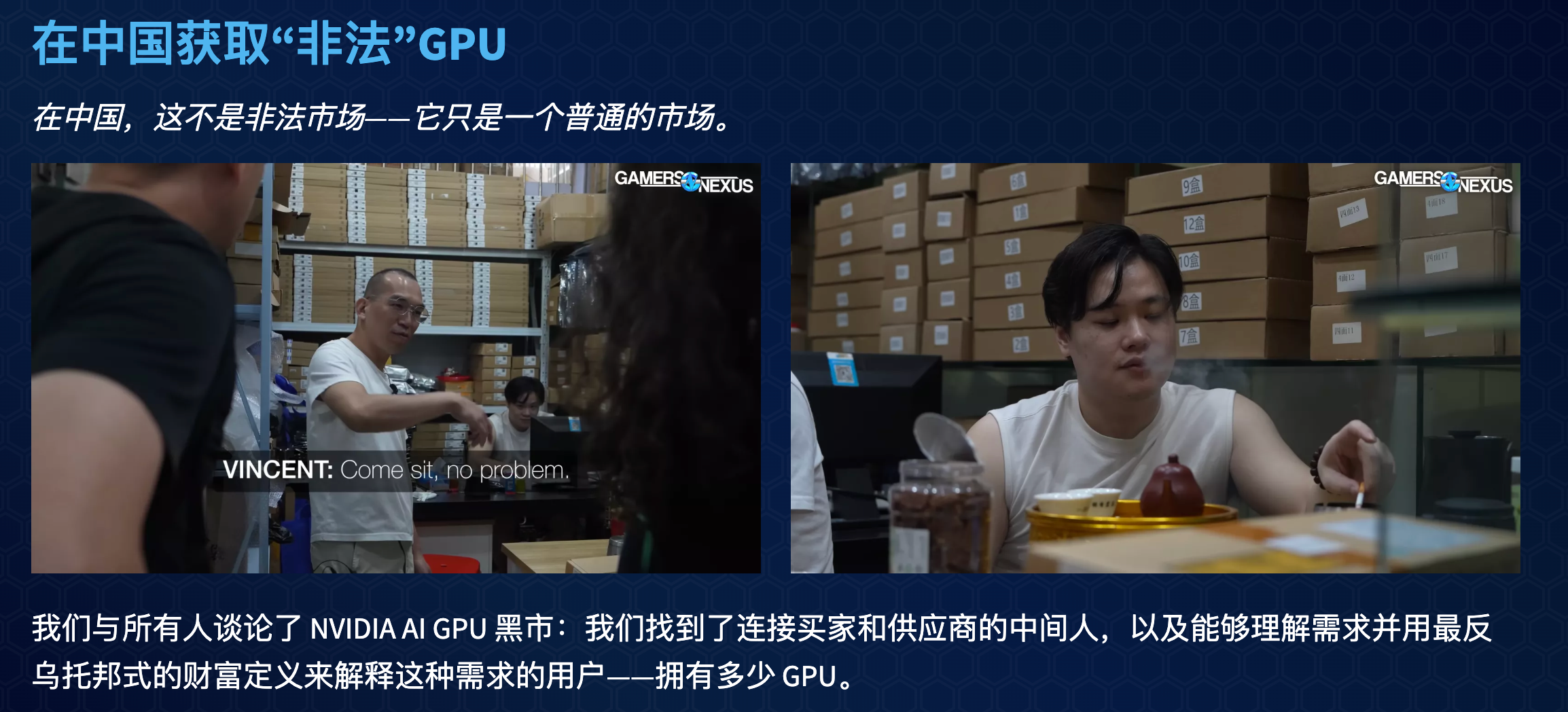
Source:GamersNexus Deep Investigation of Huaqiangbei Chip Market
What about supply?
After leaving NVIDIA’s factory, chips pass through distributors, system integrators, and server manufacturers—each representing a potential smuggling entry point. U.S. export controls primarily focus on the sales and shipping stages, relying on buyers’ self-declaration of end users.
Once chips leave U.S. territory, subsequent handling depends largely on voluntary compliance.
Last year, the Financial Times estimated over $1 billion worth of embargoed chips entered China through various channels in just three months following April 2025. Industry insiders estimate the entire black market’s monthly transaction volume may reach $1 billion...
Ironically, U.S. government policy itself remains inconsistent.
In December last year, the DOJ publicly announced the takedown of Operation Gatekeeper and arrests of multiple suspects. On the same day, Donald Trump posted on Truth Social announcing approval for NVIDIA to sell H200 chips to China.
Later, the U.S. government opened another loophole—allowing NVIDIA to sell lower-performance H20 chips to China, provided NVIDIA pays 15% of sales revenue to the U.S. government.
Cracking down on smuggling while simultaneously selling chips—and collecting commissions. This renders the entire ban regime difficult to justify.
Tell a chip broker smuggling is illegal—and they might reply: “The government sells them too. They just call it ‘conditional exports.’”
A deeper paradox lies in NVIDIA’s position: It’s now the world’s most valuable company, with a $4.3 trillion market cap. The more advanced its chips become, the greater the demand—and the higher the black-market premium—making smuggling ever more lucrative.
A Hair Dryer Can’t Blow Away Demand
When even the government alternates between cracking down and authorizing exports, what signal does that send to personnel across the chip supply chain?
Consider Supermicro—the company featured in this article—which helped Elon Musk build the Colossus AI compute cluster in 122 days, and secured $13 billion in NVIDIA Blackwell orders last quarter.
Server builders and server smugglers are the same people.
The $2.5 billion smuggling case ultimately unraveled over a hair dryer. Surveillance footage captured workers using hair dryers to peel off serial number labels—and that clip now sits on the U.S. Department of Justice’s official website, accessible to anyone.
In the same week Liaw was arrested, NVIDIA CEO Jensen Huang publicly stated the company faces an order backlog approaching $1 trillion.
A $1 trillion demand sits there. So does the black-market premium.
Perhaps the next person willing to pick up a hair dryer won’t wait long.
Join TechFlow official community to stay tuned
Telegram:https://t.me/TechFlowDaily
X (Twitter):https://x.com/TechFlowPost
X (Twitter) EN:https://x.com/BlockFlow_News
 深潮TechFlow