Introducing the RCM Protocol
TechFlow Selected TechFlow Selected
Introducing the RCM Protocol
XMAQUINA is a decentralized ecosystem, giving a global community early exposure to the world’s leading robotics companies before they disrupt trillion-dollar industries.
 Navigating Web3 tides with focused insights
Author: XMAQUINA
The future of robotics must not be monopolized by institutions.
XMAQUINA is committed to changing this status quo. The RCM Protocol goes further—it outlines the next step for the robotics industry: transitioning from closed markets to a more liquid, open, and permissionless ecosystem.
Democratizing robotics must go beyond mere access—it must enable liquidity, scalability, and seamless integration into the broader crypto economy.
RCM is that bridge.
The Humanoid Robot Wave Is Coming
Humanoid robots are experiencing explosive growth.
Valuations are surging, commercialization is accelerating rapidly, and capital is flowing in steadily.
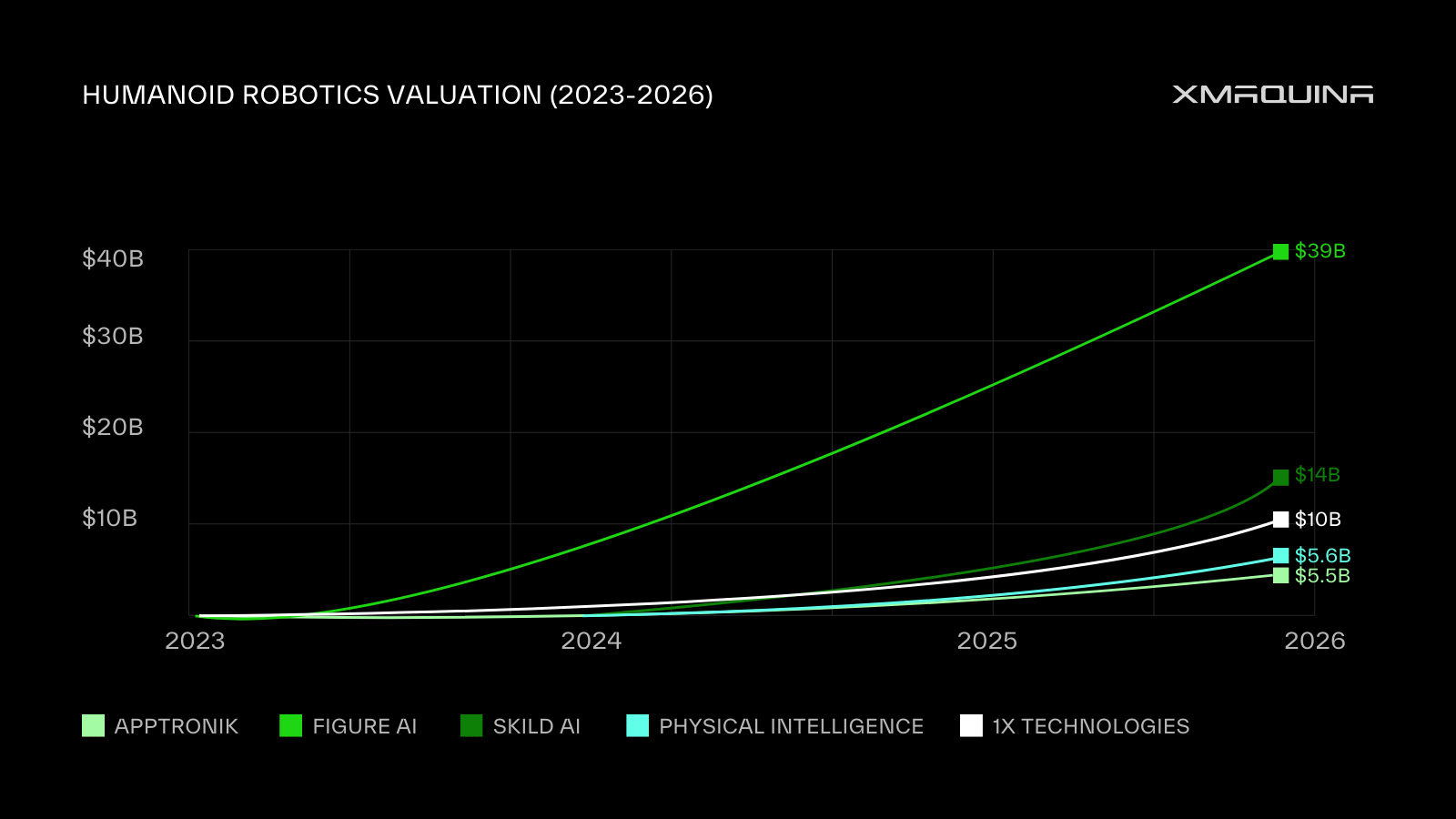
Figure AI’s valuation grew from $500 million in its Series A round in May 2023 to $39 billion in its Series C round in September 2025; Skild AI’s valuation tripled within just seven months, reaching $14 billion at the start of 2026; Physical Intelligence achieved a $5.6 billion valuation in under two years. Meanwhile, 1X Technologies signed an agreement to deploy 10,000 humanoid robots by 2030.
These figures reflect real market performance—not hype—and we’re also seeing early commercial adoption: Figure’s product launched in early 2025, while Skild AI generated $30 million in revenue within months of its launch.
Yet market access remains restricted, entry barriers remain high, retail investors are excluded, secondary markets are fragmented, and resources remain concentrated in the hands of a few institutions.
RCM aims to break this structure and open the robotics economy to more regions worldwide.
Reshaping the Robotics Capital Market
Robotics equity has become one of the hottest—and hardest-to-access—asset classes. Due to closed fundraising rounds, high minimum investment thresholds, and accredited investor requirements, ordinary participants face steep barriers to entry. Even when secondary trading occurs, it tends to be highly fragmented, opaque, and largely confined to private markets.
The RCM Protocol aims to change this.
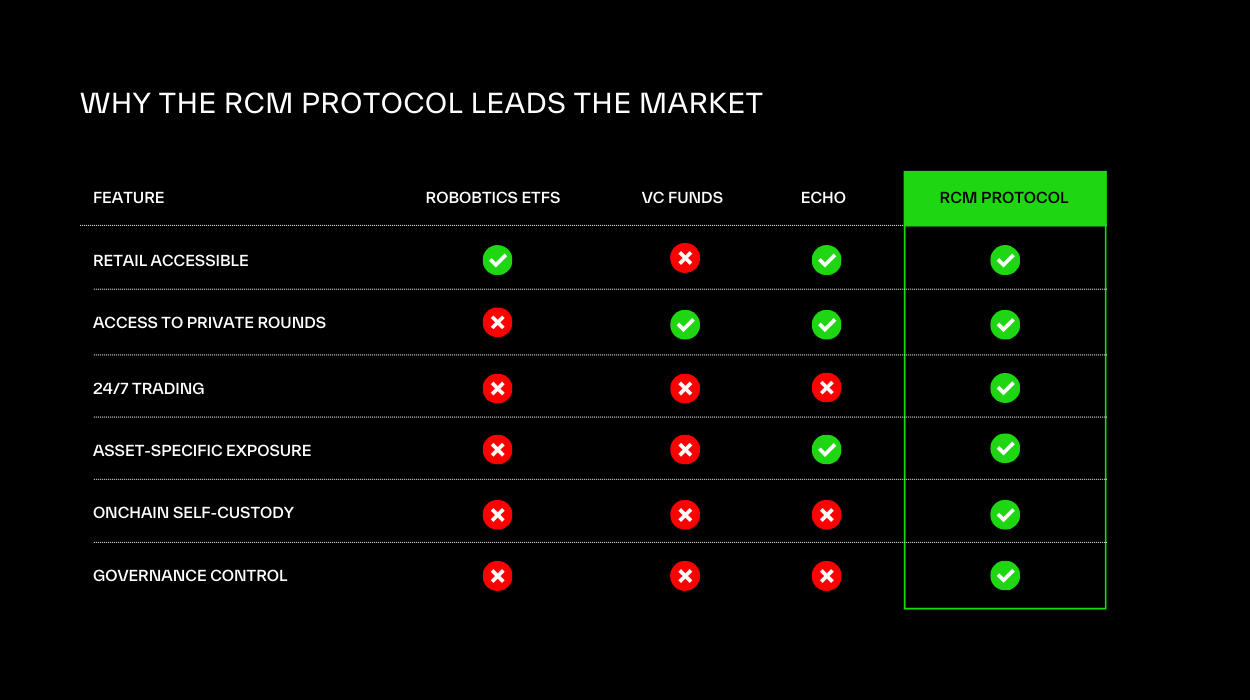
RCM seeks to create a more liquid, permissionless secondary market by bringing verified robotics equity positions on-chain. Each SPV (Special Purpose Vehicle) holding verified equity in a robotics company is represented by a dedicated SubDAO token tied to that specific asset. These tokens are designed to be tradable on DEXs—with no minimum investment, no accredited investor requirements, and no intermediaries.
This structure also enables targeted exposure to specific assets. Instead of investing in pooled funds, investors can choose individual companies they believe in—be it general-purpose humanoid robots, automated warehouses, or defense robotics.
Every transaction incurs a fee, which flows into the DAO treasury and—under governance—is allocated toward key initiatives, including:
- Acquiring additional robotics equity
- Executing DEUS buybacks
- Funding DEUS staking incentives
Additionally, each SubDAO token is paired with the DEUS token to form a liquidity pool—increasing demand and utility for DEUS itself.
This creates a virtuous cycle: more trading generates more fees for the treasury, enabling acquisition of more robotics positions—and driving greater value back to the DEUS token.
Built on Pump.fun and Virtuals
RCM draws inspiration from two protocols reshaping on-chain value creation.
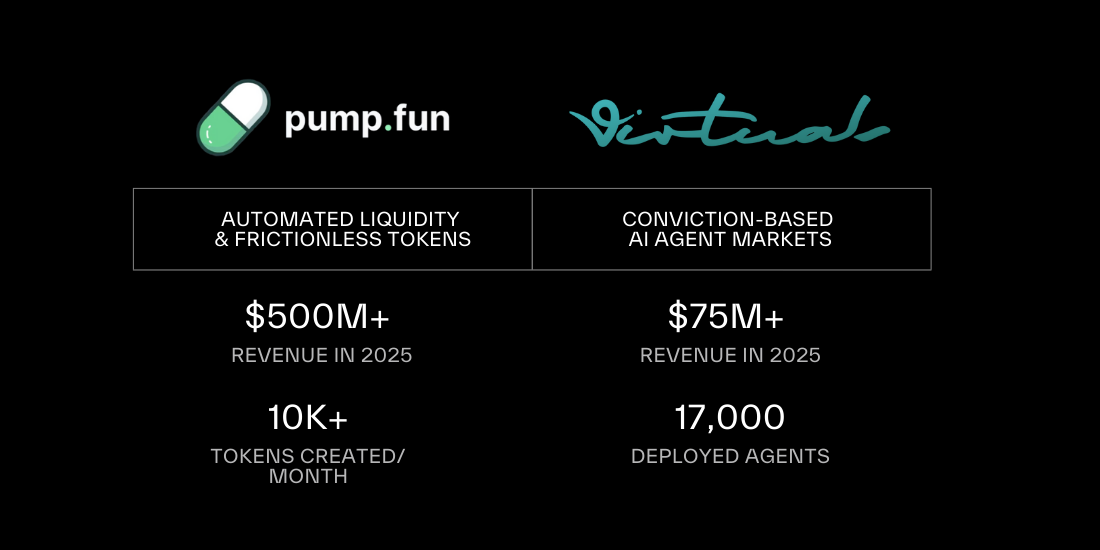
Pump.fun demonstrated the immense power of automated liquidity and frictionless token creation—unlocking massive participation and generating over $500 million in trading volume within its first year.
Virtuals Protocol introduced a new market paradigm—one centered on attention and belief, tokenized around specific AI Agents, where communities express support and speculate on their future relevance.
RCM applies these breakthrough innovations to the entirely new domain of “robotics equity,” adding one critical layer: real-world alignment.
The design goals of RCM are:
- Automating liquidity provision for robotics equity positions
- Enabling belief-driven participation at the individual-asset level
- Anchoring tokens to SPVs holding verified, real-world equity
RCM is not a token framework—it’s a capital coordination layer. It’s a new architecture enabling people to access, price, and participate in private robotics markets via on-chain infrastructure.
This design paves the way for a new class of token—one built on “belief,” but grounded in real exposure.
What Are Robotics SubDAO Tokens?
Once a Robotics SubDAO auction concludes, the raised funds are used to acquire equity in a specific robotics company. That equity is held in an SPV established solely for that position. Upon confirmation of the position, a unique SubDAO token is minted to anchor it.
These tokens do not represent equity or ownership, nor do they confer any shareholding or dividend rights. Instead, they allow on-chain participants to express conviction and engage—trading and building around the asset.
As regulatory clarity improves, new mechanisms may be introduced to deepen the link between SubDAO tokens and their underlying assets.
SubDAO tokens feature:
- Asset specificity: Each token corresponds to one SPV and one robotics company
- Tradability: Designed to provide continuous liquidity on DEXs
- Anchorability: Backed by real-world equity
They represent a new way to coordinate belief, capital, and community around the robotics market.
How It Works
1. Project Sourcing
XMAQUINA identifies top-tier investment opportunities among robotics companies.
2. Fundraising
The community and institutions fund projects via SubDAO auctions. If the funding target isn’t met, the project does not proceed.
3. SPV Creation
Upon successful fundraising, a dedicated SPV is formed to hold the equity.
4. Token Issuance
A SubDAO token is issued, anchored to the specific SPV and robotics company.
5. DEX Listing
The token is paired with DEUS and listed for trading on DEXs.
6. Protocol Revenue
Transaction fees flow into the treasury and are governed by DEUS holders.
The RCM Protocol transforms DAOs from closed-fund models into self-sustaining, revenue-generating, and continuously appreciating organizations.
Expanding Possibilities
The protocol’s architecture also opens the door to future integrations with prediction markets and perpetual contracts.
Such integrations will let users bet on company milestones, product launches, and broader industry trends—bringing liquidity and transparency to one of the world’s most opaque markets: the robotics industry.
Bullish on Robotics? So Are We.
XMAQUINA is a decentralized ecosystem enabling global communities to gain early access—before world-leading robotics companies disrupt trillion-dollar industries.
You no longer need to watch from the sidelines—you can now capture the upside of the embodied AI revolution.
Join XMAQUINA’s Discord server to connect and collaborate with thousands of futurists participating in the DAO.
Also follow our X account for the latest updates.
Join TechFlow official community to stay tuned
Telegram:https://t.me/TechFlowDaily
X (Twitter):https://x.com/TechFlowPost
X (Twitter) EN:https://x.com/BlockFlow_News
 @xmaquina