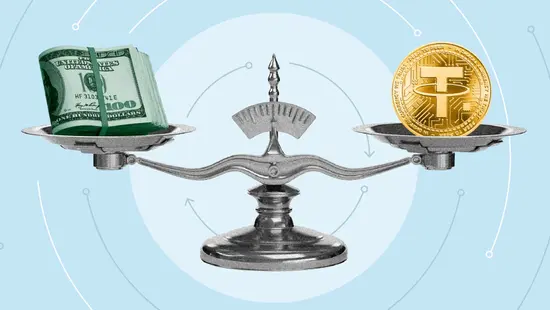
Crypto Narrative Predictions for 2026: Reputation Dominance, ICO Revival, and New-Style Banks—Stablecoins Could Emerge as the Ultimate Winner
TechFlow Selected TechFlow Selected
Crypto Narrative Predictions for 2026: Reputation Dominance, ICO Revival, and New-Style Banks—Stablecoins Could Emerge as the Ultimate Winner
In the era of artificial intelligence, reputation will become increasingly important—not only as a key distinction between humans and machines, but also as a cornerstone for ensuring healthy ecosystem development.
 Navigating Web3 tides with focused insights
Author: Wazz
Translation: TechFlow
Reputation
Whether driven by InfoFi, the desire for "ElonBucks," or the noble life goal of becoming a Key Opinion Leader (KOL) in crypto, there's no denying that our CT (Crypto Twitter) feeds, your favorite token airdrops, and the testnets you're currently farming are already flooded with bots. And as AI technology advances, this trend will only intensify.

In this chaotic, AI-driven dystopia, only one thing can truly distinguish real humans from bots. And no, it doesn't require handing over your biometrics to some “trusted” French developers.
That one thing is *reputation*. It cannot be replicated by any bot—because building it takes hundreds, even thousands of hours, and can only be maintained through meaningful social relationships. It’s called reputation. And no, you can’t have Grok dress it up in a bikini.
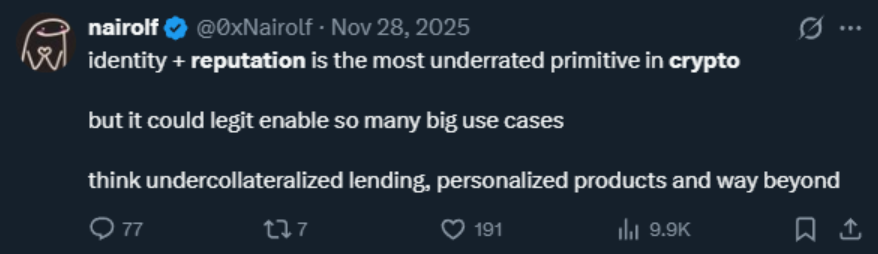
Reputation is an unshakable filter—no matter how much your binary friends flatter in the comments, they’ll never pass through.
It helps you identify bad actors, scammers, and impersonators (e.g., @ethos_network); it filters out profit-driven speculators, sybils, and misaligned investors (e.g., @legiondotcc); and it allows you to find credible, authentic, and influential voices in crypto (e.g., @KaitoAI before the InfoFi craze).
In the age of artificial intelligence, reputation will become increasingly vital—not just as the key differentiator between humans and machines, but as the cornerstone of a healthy ecosystem. Therefore, in 2026, reputation will dominate the crypto narrative.
The ICO Revival
2017 was the wild era of crypto. Fueled by regulatory gray zones, Ethereum’s innovative ERC-20 standard, and massive speculative appetite, thousands of projects successfully raised funds through what we now know as Initial Coin Offerings (ICOs).
This fundraising model was extremely efficient—but also so chaotic that it quickly became a breeding ground for scams, eventually leading major regulators to shut it down. Yet during that time, landmark projects like BNB, TRX, and ADA were born, all of which remain among the top ten cryptocurrencies by market cap today.
The ICO ban plunged the industry into a “dark age,” but also forced crypto into an experimental phase around token distribution and capital raising.

For token distribution, we tried airdrops. Initially effective and low-cost, they captured widespread attention—but were ultimately gamed by speculators and industrialized farmers, draining resources.
For fundraising, we adopted low-circulating-supply, high-FDV (Fully Diluted Valuation) venture capital models. While highly profitable for certain groups—mainly insiders—this approach completed most price discovery before public launch, leaving retail investors holding the bag and suffering heavy losses.

If 2025 was the year of regulatory clarity (the main reason ICOs were previously blocked), then 2026 may well become the “Year of ICO Revival.” History doesn’t repeat itself, but it often rhymes—this new wave of ICOs could give rise to some of the next major crypto giants.
This space is becoming one of the most exciting sectors in crypto, with several projects already emerging, such as reputation-based ICO initiatives like @legiondotcc, @MetaDAOProject, and @echodotxyz, recently acquired by Coinbase.
Crypto Neobanking
Neobanks have already disrupted traditional banking. Revolut has become one of Europe’s most valuable fintech companies, while Nubank holds the same status in Latin America. With the growing number of digital-native investors, the rise of crypto neobanking feels inevitable—especially given its ability to leverage the same regulatory clarity now benefiting ICOs.

Self-custody accounts, yield-bearing accounts, and direct, instant cross-border stablecoin payments—these features clearly set crypto neobanks apart from legacy banking systems.
As stablecoins gain adoption and offer holders greater, more democratized yield opportunities (no more enduring 0.2% APY savings accounts), crypto neobanks will gradually erode traditional finance (TradFi)'s market share.
While there’s still no clear winner—and I’m not sure if any native tokens will benefit—the real winners might just be stablecoins themselves. Still, in my view, crypto neobanking will be one of the most important narratives of 2026.
Join TechFlow official community to stay tuned
Telegram:https://t.me/TechFlowDaily
X (Twitter):https://x.com/TechFlowPost
X (Twitter) EN:https://x.com/BlockFlow_News
 @WazzCrypto