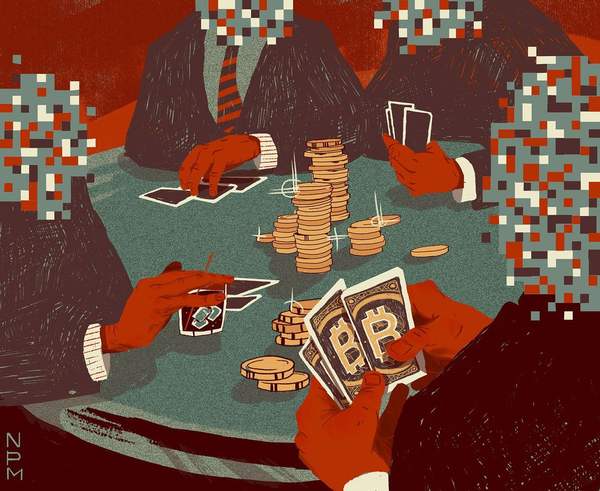
The Dark Side of American AI: "Working for" Chinese Bitcoin Miners
TechFlow Selected TechFlow Selected
The Dark Side of American AI: "Working for" Chinese Bitcoin Miners
Why is a Chinese mining company being pointed to as potentially threatening the U.S. power grid?
 Navigating Web3 tides with focused insights
By: Lin Wanwan
In late 2025, a Chinese cryptocurrency hardware company, Bitmain, was added to the U.S. national security review list.
On November 21, the U.S. Department of Homeland Security launched "Operation Red Sunset," placing Bitmain under scrutiny on grounds of national security. The allegations were severe: investigating whether its equipment contained remote backdoors and could deliver a fatal blow to the U.S. power grid in extreme scenarios.
Why would a Chinese mining company be linked to potential threats against the U.S. power grid?
This reflects America's extreme anxiety over core resources. Because right now, Silicon Valley is witnessing the most expensive "silence" in tech history.
In AI data centers, tens of thousands of Nvidia H100 GPUs lie idle on the floor, gathering dust. These chips, priced at $30,000 each and dubbed "industrial gold" by Jensen Huang, should be running at full speed to power GPT-5 or Sora. But now—they have no electricity.
Humanity’s most advanced assets are now stalled by the most primitive physical bottleneck.
The U.S. faces an unimaginable power shortage—44 gigawatts short, equivalent to the entire electricity output of a medium-developed country like Switzerland. In this supposedly most technologically advanced nation, the average wait time to power a new AI data center has stretched beyond 48 months.
America’s power grid resembles an aging elder.
At this moment of despair, when AI giants hold billions of dollars but cannot find a single power outlet, they discover that their lifeline lies precisely where they once looked down upon—Bitcoin mining farms.
Suddenly, Wall Street realizes: these people possess the scarcest asset in the AI era—massive amounts of electricity already contracted with energy companies.
And they begin to realize: this survival rule of “computing power equals electricity” had already been fully demonstrated across the Pacific a decade ago by a group of Chinese engineers.
Because the first “electricity training ground” built for the American AI era was actually completed ten years ago in China, then relocated to the U.S. three years prior due to a regulatory ban.
The contest across the ocean hides inevitability within coincidence. Just as historical tides cannot be diverted, each generation has its destiny. Every footnote tells us: greatness cannot be planned.
American Power Inherits the “Chinese Legacy”
History always writes the answer first, then waits for someone to ask the question.
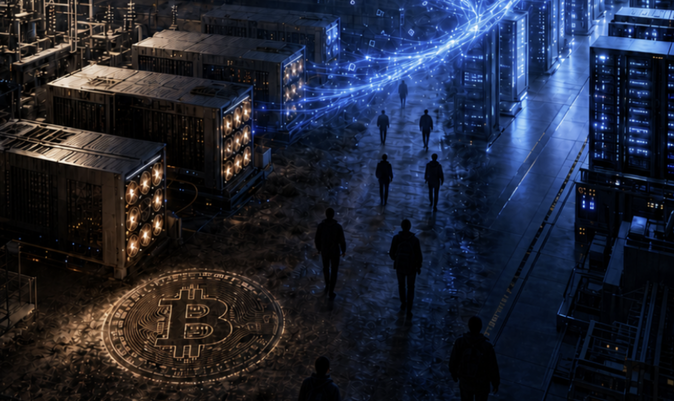
In June 2024, U.S. Bitcoin miner Core Scientific announced shocking news to Wall Street: it signed a $3.5 billion agreement with CoreWeave—Nvidia’s so-called “favorite son”—to lease infrastructure originally used for Bitcoin mining to train AI models.
This news caused a sensation in Silicon Valley, hailed as a “marriage of computing power.” Yet for Chinese miners and officials who lived through the “5·19” storm, the headlines carried a bittersweet taste.
Because much of the infrastructure used by companies like Core Scientific, IREN, and Cipher to house Nvidia H100s actually carries Chinese DNA.
In a sense, the first ring of “electrical defense works” in the American AI era fully inherited the industrial legacy left behind after China’s great分流 (diversion) of computing power.
And the man who unintentionally drew the blueprint was named Micree Zhan.
Micree Zhan, a quintessential engineer graduate from the Institute of Microelectronics at the Chinese Academy of Sciences, was supposed to follow a quiet path writing code and designing circuits in some tech park.

Until 2013, when Zhan co-founded a company with Jihan Wu—Bitmain.
It’s said Zhan spent only two hours reading the Bitcoin whitepaper. He may not have grasped the future of currency, but he understood the essence behind the math—a computational game of hash collisions.
In 2016, Bitmain made a move that shocked the industry: pouring massive wafer orders onto TSMC. The Antminer S9, powered by TSMC’s most advanced 16nm FinFET process, emerged as both a miracle of chip production capacity and an unprecedented “thermodynamic furnace.”
To Zhan, the S9 was a chip; to the State Grid, it was pure industrial load.
It didn’t operate in shifts like factories nor fluctuate with temperature. It ran 24/7 with a smooth, straight-line power curve, indifferent to voltage or source. From that moment, a new system emerged: electricity transformed from a public service into a “B2B raw material” that could be instantly priced, traded, and monetized. This form of energy, difficult to store cheaply once generated, found value parasitically embedded within strings of digital numbers. Bitcoin mining became an industry—spanning hydropower in Sichuan mountains to wind farms on Inner Mongolian grasslands, mining rigs operated wherever China had surplus electricity.
Zhan might not have realized it then, but the industrial standard he defined for Bitcoin miners inadvertently prefigured a perfect energy supply solution for America’s future AI hunger.
In the craziest year of 2018, Bitmain alone consumed 74.5% of global market share. But even more terrifying—the remaining share was entirely dominated by Chinese players. Whether Canaan Creative, the ASIC pioneer, or Whatsminer founded by former Bitmain chief chip designer Yang Zuoxing, all were Chinese.
This wasn't global competition—it was a 2,000-kilometer-long “civil war among Chinese engineers.” From Zhongguancun’s Aobang Science Park in Beijing to Nanshan’s Smart Park in Shenzhen, 99% of the world’s computing hearts pulsed with Chinese rhythm. A completely closed loop locked by Chinese supply chains, one that Silicon Valley could only look up to.
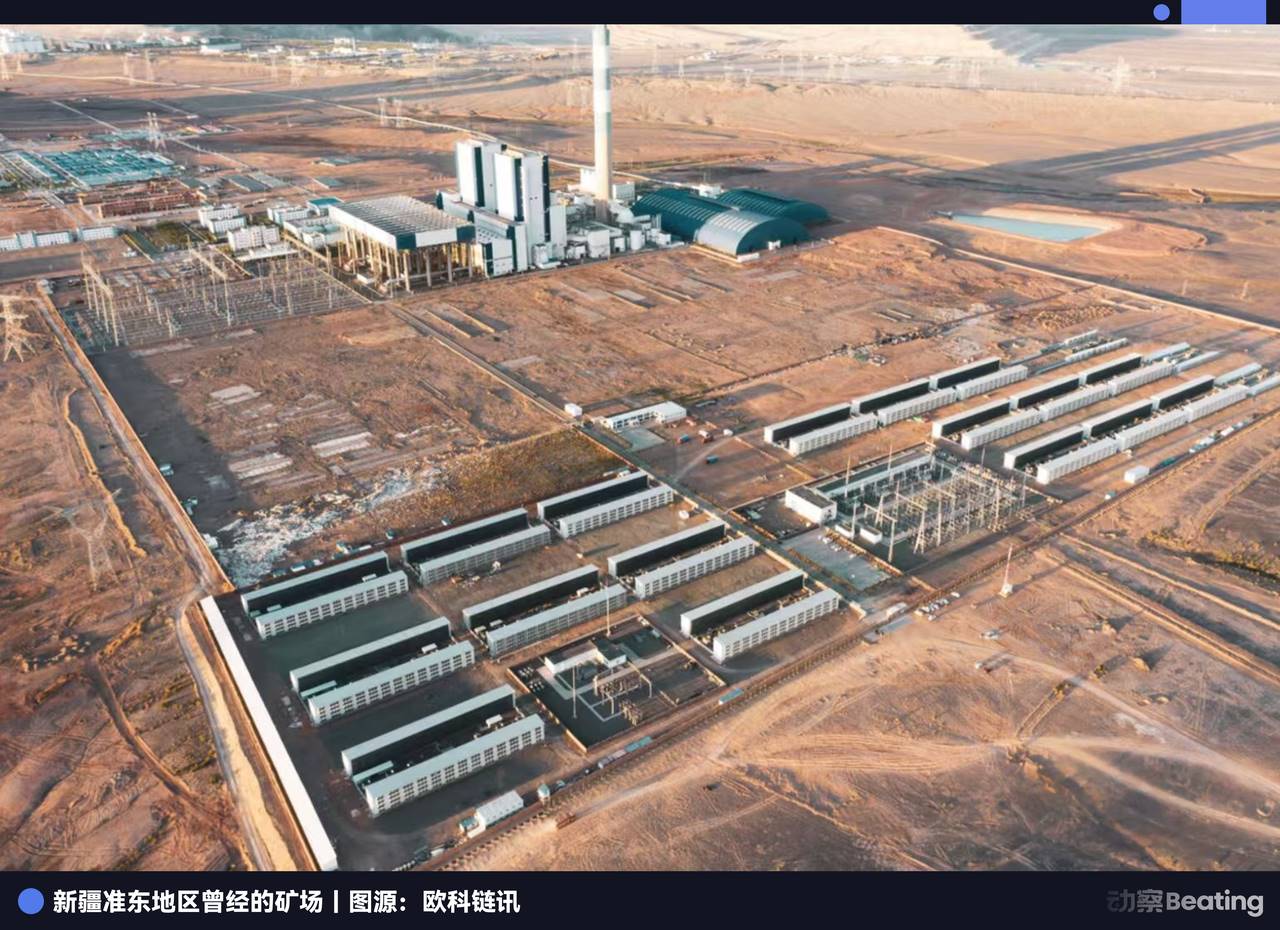
Then in May 2021, a single regulatory ban silenced the roaring hum along the Dadu River that had lasted for years.
For the state, it marked the end of a power-hungry industry; for the sector, it was the beginning of an epic “technological exodus.” Thousands of containers boarded ships, crossing oceans—not just carrying the latest Antminers designed by Zhan, but also a unique “philosophy of power survival” forged in China.
One destination: Texas, USA.
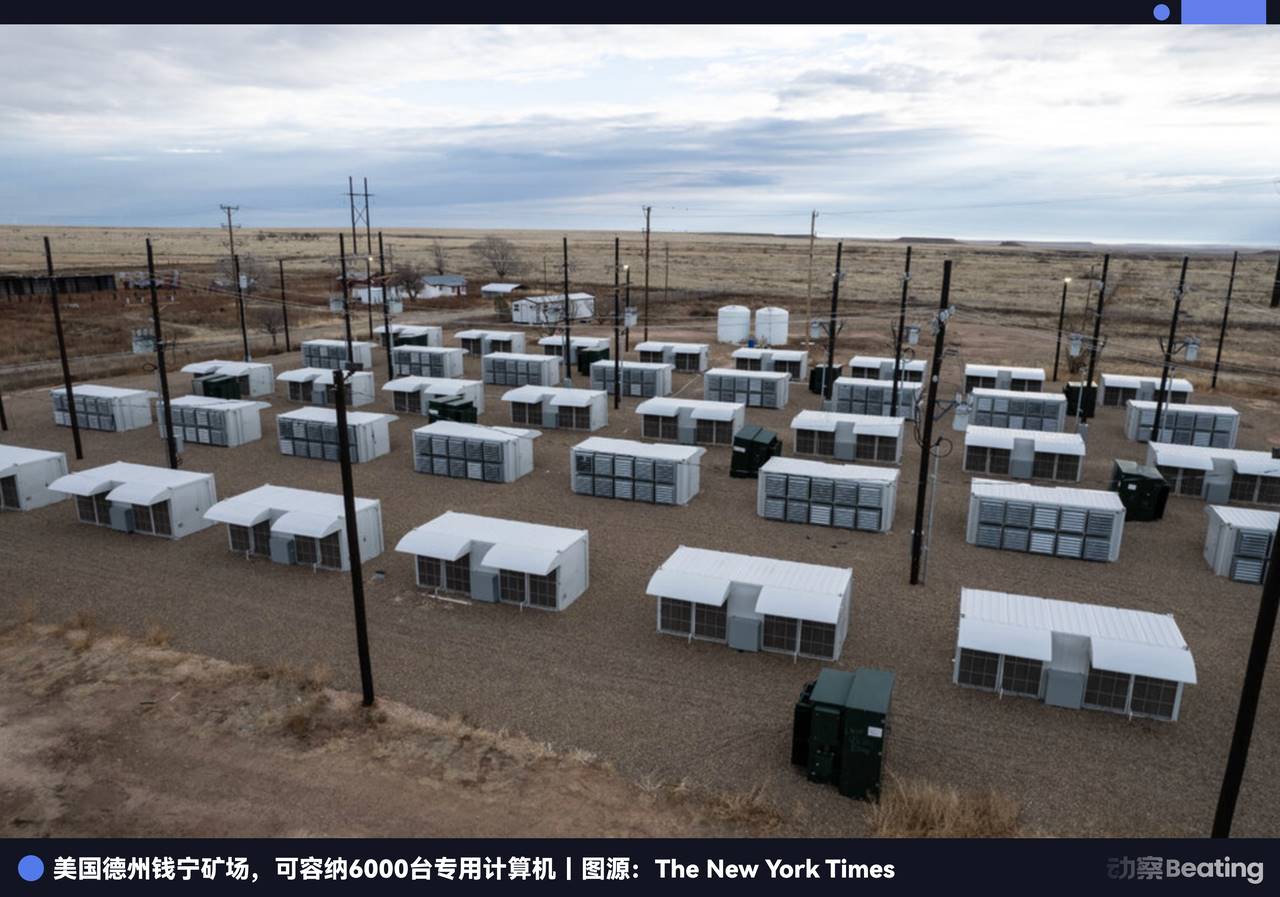
Texas boasts its independent ERCOT grid and the freest, wildest electricity market in America. For these Eastern “compute refugees,” it was essentially a scaled-up version of “Sichuan + Inner Mongolia.”
Yet when these Chinese arrived, American energy experts were stunned: these weren’t refugees—they were a well-equipped “energy special forces unit.”
Back in Sichuan, mine operators relied on drinking binges and personal connections with station managers to secure cheap power—based on informal understandings. But in Texas, this logic rapidly evolved into high-frequency trading algorithms.
Texas electricity prices fluctuate in real time, changing every 15 minutes and sometimes spiking from 2 cents to $9. Traditional Silicon Valley data centers (like Google and Meta) avoided such volatility like the plague, accustomed to fixed rates like greenhouse flowers.
But how did Zhan’s “disciples” react? With excitement.
They converted their manual shutdown/startup experience from China into automated demand-response programs. When prices turned negative (which happens in Texas when wind power floods the grid), they ramped up full throttle, greedily consuming electron flows—even getting paid to use electricity. When heatwaves hit and prices soared, they could cut off hundreds of megawatts within seconds, selling power back to the grid at margins far exceeding mining profits.
This “energy arbitrage” strategy left veteran American power traders dumbfounded. Today’s U.S. mining giants like Riot Platforms and Marathon survive and pivot toward AI data centers thanks precisely to these Chinese-originated power algorithms.
Another key legacy from Zhan’s era was the relentless pursuit of rapid physical infrastructure deployment.
Traditional U.S. data centers take 2–3 years to build—refined craftsmanship for elite engineers. But the “mining world” rejected this. Their logic: every second offline is a crime against profit.
Thus, in the Texan wilderness, a “Chinese speed” emerged that left local builders speechless: no fancy glass facades, no complex central air conditioning—just giant industrial fans roaring. This modular, containerized, minimalist cooling approach compressed construction cycles to just 3–6 months.
This rugged yet highly efficient engineering capability was initially mocked by Silicon Valley as “e-waste yards,” but is now in hot demand—because AI compute exploded too fast. OpenAI can’t wait three years; they need plug-and-play infrastructure now.
Clearly, in Silicon Valley, GPUs can be bought with money—but time cannot.
This “time” was a legacy of past chaos. Back then, chasing Bitcoin mining, Chinese miners and their successors aggressively acquired land, built substations, and stockpiled today’s invaluable “grid connection capacity” across America.
Power quotas have become the new hard currency for American capital. What’s being “inherited” isn’t piles of silicon scrap, but the right-of-way to connect to the grid.
Mining firms secure billion-dollar contracts simply because, amid nationwide power shortages, they hold tightly the very keys to ignite the AI era.
The Night of the “Invisible Champions” Migration
These brutal pleasures will ultimately end in brutality.
2018 was a hidden watershed in business history. That year, Sam Altman, founder of ChatGPT, was still struggling to keep his nonprofit alive; Elon Musk had just gasped back from near-bankruptcy. To them, computing power was still just obedient servers in server rooms.
But across the Pacific, Micree Zhan and Bitmain had already turned computing power into an industrial beast. They didn’t understand AI’s future, but they already held the key to it: how to tame power-hungry silicon chips at gigawatt scale.
This is a story of rogue heroes, national will, and historical irony. China spent seven years allowing and nurturing a power-devouring monster in western rivers and coal fields, then on a summer night in 2021, for greater financial security and carbon goals, uprooted it entirely.
To understand why America now bows to mining firms to absorb AI’s power explosion, one must first grasp the “energy drill” conducted a decade ago beside the Dadu River in Sichuan, China.
Zoom back to August 2019.
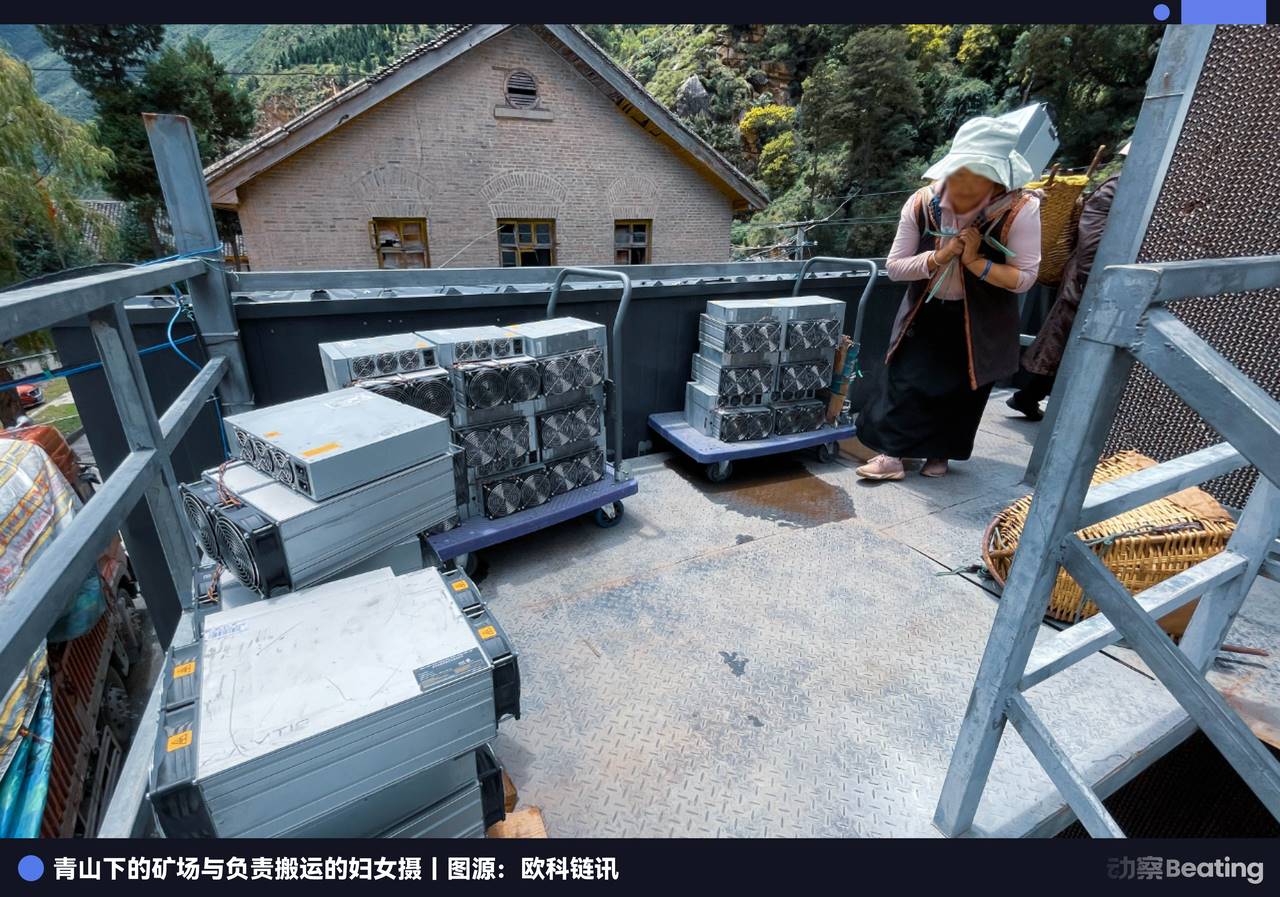
It was Bitmain’s golden age—and a brief window when Chinese mining shifted “from gray to official.” To solve the long-standing problem of “water curtailment during wet seasons” (generating hydro power but unable to transmit it, forcing wasteful discharge), the Sichuan provincial government introduced a policy called “Hydropower Consumption Demonstration Zones.”
This was a real official document implemented in areas like Ganzi and Aba in Sichuan.
According to Caixin’s reporting at the time, under this policy, Zhan’s mining rigs were no longer illegal “black operations” hiding in mountains, but honored guests helping regional grids “balance peak and off-peak loads.”
At that time, Bitmain effectively served as a “super capacitor” for China’s western energy network. What Zhan prided himself on wasn’t just 7nm chips, but the ability to instantly convert surplus electricity into digital assets.
Back then, China controlled 75% of global Bitcoin computing power. From Wall Street to London’s financial district, anyone wanting to play this game had to heed Zhan’s lead and rely on power loads from Sichuan and Xinjiang.
Yet beneath this “gray-zone prosperity” loomed two swords of Damocles.
The first was “financial security.” Regulators long recognized this wasn’t merely technological innovation, but a massive capital channel operating outside foreign exchange controls.
The second was “dual energy controls.” With the 2020 announcement of China’s “3060 dual-carbon” goals, every kilowatt-hour became a political calculation. Mining—an industry labeled “high-energy, low-employment, no tangible output”—was fated to be sacrificed on the macro-strategic scale.
The turning point landed precisely on May 21, 2021.
That evening, the State Council’s Financial Stability and Development Committee held its 51st meeting. Its press release contained a brief yet heavy sentence: “Crack down on Bitcoin mining and trading activities.”
This was no longer a mere “risk warning” or “development restriction”—it was a top-level “zero-out order.”
In the following month came the most dramatic 30 days in China’s computing industry history. Inner Mongolia responded first, cutting power to coal-powered mining farms; Xinjiang followed with sweeping inspections.
The climax came late on June 19, 2021.
On that day, Sichuan’s Development and Reform Commission and Energy Bureau issued a notice ordering the clearance and shutdown of virtual currency mining projects. This became famously known in the industry as “Sichuan Shutdown Night.”

Even today, real videos from that night circulate online: in a super-mine in Ngawa Prefecture, as midnight struck, staff tearfully pulled down the circuit breakers row by row. The roar of cooling fans—like jet engines running for years—vanished instantly.
Millions of mining rig LEDs went dark simultaneously. The world fell eerily silent, save for the ever-rushing waters of the Dadu River.
At that moment, global Bitcoin network computing power plummeted nearly 50%. China, with resolute determination, severed this industry—consuming tens of billions of kWh annually—from its national power grid.
We successfully defended our financial frontiers and freed up precious energy space. But within this grand narrative, an unexpected subplot was planted: we kept the electricity, but expelled the very people who knew best how to use it.
Yet the powered-down machines didn’t vanish—they began their migration.
In the second half of 2021, Shenzhen’s Yantian Port experienced unprecedented congestion. According to freight forwarders, thousands of containers piled high, filled entirely with S19 miners dismantled from Sichuan and Xinjiang.
This was a “Dunkirk evacuation” of computing power.
The story returns to the beginning.
In 2024, when ChatGPT ignited the globe, AI giants suddenly realized: they lacked power, substations, and high-power facilities deployable at speed.
China had cleared out “backward production capacity,” yet packaged and delivered to the world the complete capability of building and operating ultra-large-scale, high-consumption computing centers.
This was a strategic choice concerning national financial sovereignty—resolutely abandoning this high-risk digital frontier. From a macro-prudential standpoint, it was absolutely correct and necessary. Yet history’s irony lies here: those actively squeezed out, expelled bubbles and excess computing power ultimately solidified on the other side of the Pacific into the most unshakable foundation of rival power grids and energy systems.
But if one believes the final outcome of this great computing migration is merely “the East lost, the West gained,” they see only the chips on the table, not the table itself.
The AI arms race, stripped bare, is an endless consumption of energy by computing clusters, eventually becoming a battle of electricity cost. In this war of attrition, no nation possesses greater strategic depth than China.
The U.S. needs miners as “flexible loads” to patch and sustain its grid—an elixir to treat its “geriatric illness.”
But China is different, possessing the State Grid as a central brain. Using ultra-high-voltage transmission (UHV), it channels the cheapest clean energy from the west to eastern data center clusters like arterial blood flow—continuous and low-loss.
Yet regardless, swept by the tides of history, Bitmain—the ultimate synthesizer of power management in China’s computing era—unintentionally became a strategic force reshaping global energy dynamics. The skills honed beside the Dadu River were unknowingly gifted across the ocean, erecting the first ring of electrical walls for the coming American AI era.
The Fate of the “Recruited Miners”
So, have these recruited “former Bitcoin miners” truly ascended to sit at the AI era’s table?
The answer may lie in the calculations of the giants. Have you ever wondered why Microsoft and Google, sitting on hundreds of billions in cash, would genuinely hand over control of power to miners? Is it merely because building their own takes too long?
Certainly not. The fundamental reason is they fear history’s lessons more than anyone.
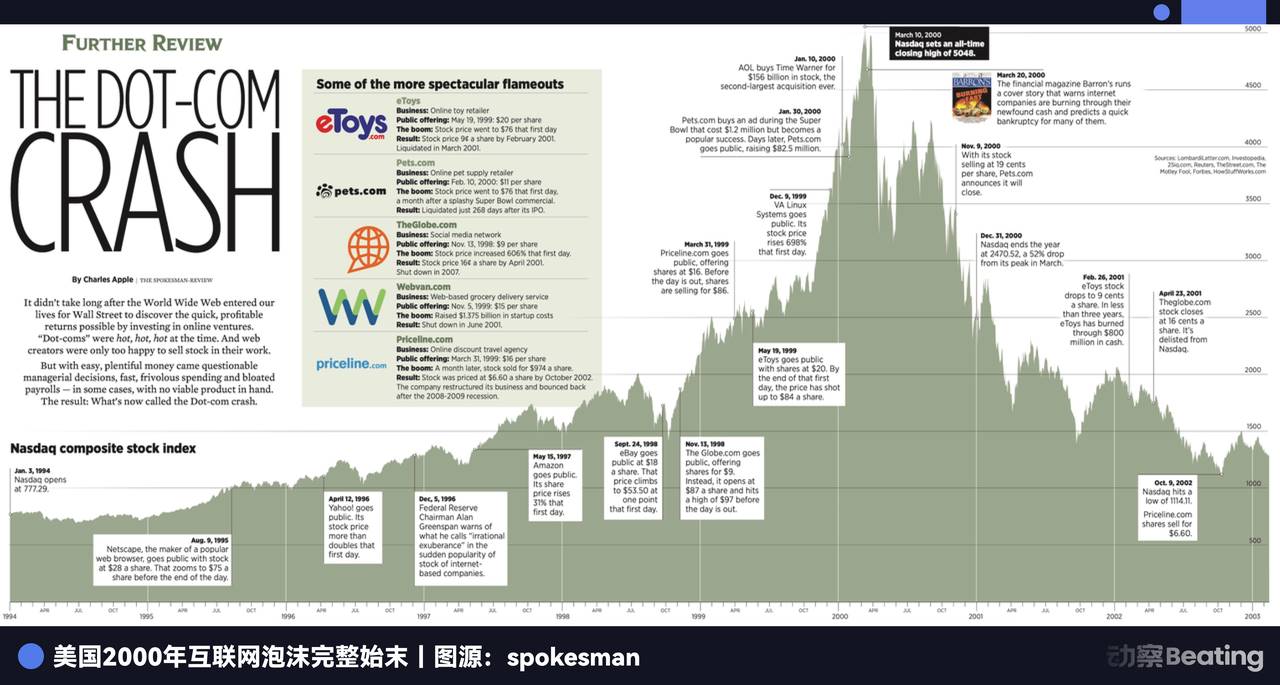
Looking back at business history, every Silicon Valley titan’s redwood desk holds an invisible tombstone inscribed with a once-glorious name: Global Crossing.
This was the hardest-fallen infrastructure giant of the 2000 dot-com bubble. At the time, America’s elite firmly believed the world would soon enter the internet age, requiring ever-faster connectivity. Fueled by religious fervor, founder Gary Winnick amassed tens of billions in debt, madly laying over 100,000 kilometers of fiber-optic cables across ocean floors linking Americas, Europe, and Asia.
When the bubble burst, “.COM” sites could simply shut down servers and lay off staff to liquidate. But infrastructure providers faced massive asset burdens: those undersea fibers capable of transmitting terabytes per second overnight became shareholders’ worst “dead assets”—unsellable, immovable, rotting slowly on dark seabeds, decaying on balance sheets.
In 2002, Global Crossing collapsed under $12.4 billion in debt. The cruelest irony: Li Ka-shing’s Hutchison later tried to buy these assets for less than 1% of their original value, like scavenging scrap metal.
Global Crossing proved a harsh truth with its corpse: in early tech transformation, whoever shoulders irreversible heavy assets becomes the first sacrificial lamb during downturns. They thought they held the data arteries of the future, but ended up as offerings to infrastructure.
Today’s Microsoft CEO Satya Nadella and Google CEO Sundar Pichai surely remember this tombstone better than anyone.
So when you read their recent financial reports, you’ll find their risk control boils down to four words: asset isolation.
AI giants’ CapEx spending is skyrocketing, but every dollar is calculated to the bone: one part goes to GPUs and custom servers—relatively “generic” assets that can pivot quickly or be sold at discount if needed; the other part—data center buildings, cables, cooling systems—are classic “dedicated heavy assets,” which they try to offload as much as possible.
The real game plan lies here: they want to distribute that “pit” to others.
AI giants use long-term computing power contracts, power agreements, and campus leases to build a chain that “appears as OpEx operating expenses” while effectively shifting CapEx risks elsewhere.
To recruited miners and infrastructure players eager to transform, the giants’ pitch sounds sweet: “You invest in building factories, handle liquid cooling upgrades, and I’ll sign power usage contracts. As long as AI becomes the era’s windfall, you collect rent per contract, and I gain business growth and stock returns.”
It sounds like shared risk—until you think deeper. It feels more like the popular saying: “Better the Taoist die than the monk.”
But what if AI turns out to be another Global Crossing-style illusion?
Giants might pay a penalty fee or record an impairment charge and exit gracefully, moving on to the next story. But those who thought they finally “got a seat at the table”—the infrastructure buyers—will face bank loan demands and explain to creditors what to do with facilities custom-built for ultra-high-density workloads that can only run H100s and nothing else.
Going further, someone might ask: if the AI bubble bursts, can miners just swap out GPUs and go back to mining coins?
More realistically, most “AI-transitioned” mines aren’t swappable with one click: AI server rooms use GPU+liquid cooling; Bitcoin mining demands cost-minimized ASIC containers. The two systems are almost entirely incompatible. Capital markets have already valued you as an “AI infrastructure stock”; reverting to mining means resetting your valuation anchor from AI back to “high-energy miner”—your buildings remain, but your story and market cap get wiped out first.
So history doesn’t repeat, but it rhymes. Yesterday’s fibers lie buried under the sea; today’s data centers stand on barren lands. The bill-payers have changed, but the roles remain the same.
Greatness Cannot Be Planned
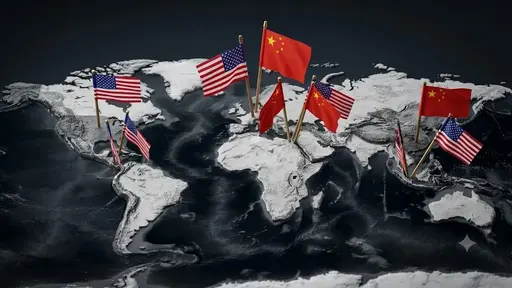
Today, in the chess game of U.S.-China AI competition, computing power and electricity are two decisive factors.
While the U.S. lags behind China in grid construction speed compared to China’s UHV pace, it unexpectedly gained a massive “shadow inventory.” When Silicon Valley’s data center builds are choked by environmental regulations and supply chains, these mining farms can immediately step in, powering the training of GPT-5 and GPT-6.
The charm of the business world lies in its unpredictability. All strategic planning is essentially driving by looking in the rearview mirror.
This was a strategic aid no one anticipated. Not planned by White House policymakers, nor simulated by the Pentagon, but accidentally constructed by wandering Chinese engineers and profit-chasing speculators through chaotic market battles.
The world is always filled with “precise errors” and “vague correctness.” Perhaps this is the parable left by business history: greatness cannot be planned.
Join TechFlow official community to stay tuned
Telegram:https://t.me/TechFlowDaily
X (Twitter):https://x.com/TechFlowPost
X (Twitter) EN:https://x.com/BlockFlow_News
 BlockBeats