

SEC sends positive signals on DeFi regulation, what does it mean for the crypto industry?
TechFlow Selected TechFlow Selected
SEC sends positive signals on DeFi regulation, what does it mean for the crypto industry?
"DeFi aligns with American core values."
 Navigating Web3 tides with focused insights
By Attorney Pang Meimei
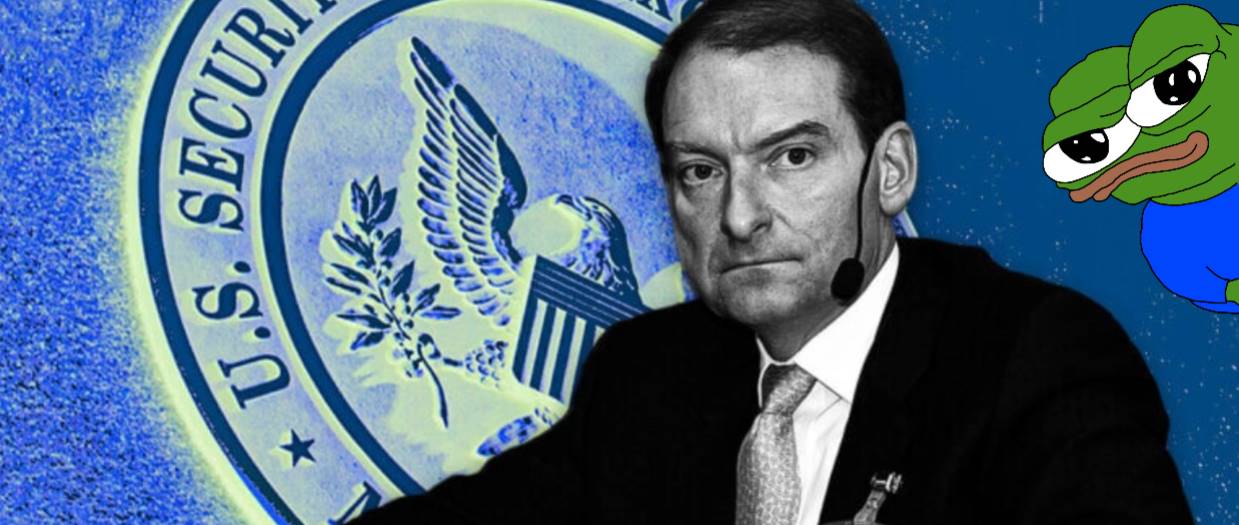
"Once the 'innovation exemption' moves from concept to implementation, the U.S. DeFi ecosystem may escape some of the current regulatory gray areas, allowing projects to advance technological deployment and business model exploration within a clearer legal framework. This would not only support domestic project development but could also attract overseas DeFi builders back to the U.S. market, fostering a healthier, compliant, and competitive decentralized finance landscape."
Today, let's discuss a topic that has energized the entire crypto community: the U.S. Securities and Exchange Commission (SEC), previously known for its strict scrutiny of decentralized finance (DeFi), recently signaled a shift during the June 9 "DeFi and the American Spirit" crypto roundtable by announcing it is exploring an innovation exemption mechanism specifically for DeFi. This move quickly triggered strong market reactions, with multiple DeFi tokens surging.
As a web3 lawyer, I've seen too many projects fail due to regulatory uncertainty. Can this signal truly bring a substantive breakthrough for the DeFi ecosystem?
1. SEC Chair’s Statement: DeFi Aligns With American Core Values
SEC Chair Paul Atkins stated clearly at the meeting that "the fundamental principles of DeFi closely align with core American values such as economic freedom and private property rights." He particularly emphasized support for self-custody models of crypto assets and recognized blockchain technology's critical role in enabling financial transactions without intermediaries. The "innovation exemption" policy hinted at by Atkins represents a green lane for DeFi—under this framework, qualifying DeFi projects could enter the market faster and experiment with business models while meeting basic regulatory requirements. More importantly, on September 5, the SEC and the Commodity Futures Trading Commission (CFTC) jointly issued a statement calling for regulatory coordination, marking a shift from operating in silos to collaborative oversight—an unmistakable sign of major change in crypto regulation.
2. What Does This Mean for the DeFi Industry?
As a lawyer, what matters most to me is the "compliance boundary." These positive signals indicate a fundamental shift in the logic of U.S. crypto regulation—DeFi is no longer a regulatory "gray zone."
First, the shift in regulatory stance brings clear benefits to entrepreneurs. The "innovation exemption" policy implies that truly decentralized platforms may be exempt from registering as securities, avoiding burdensome disclosure and audit obligations. This lowers entry barriers and could attract more institutional capital into the DeFi ecosystem. For Chinese project teams or developers, this also suggests greater potential for cross-border collaboration between China and the U.S. Regulatory loosening is undoubtedly a catalyst for structural transformation in DeFi.
Second, enhanced investor protection strengthens market confidence. From April to June 2025, the SEC’s cryptocurrency task force hosted four public roundtables covering crypto trading, custody, asset tokenization, and DeFi. Organized by the SEC’s Crypto Task Force and open to the public, these events were described by SEC Commissioner Hester Peirce as a "Spring Sprint toward crypto clarity," signaling a shift from confrontation to cooperation. The SEC’s emphasis on "high-quality regulation" serves as investment protection for DeFi users, reducing rug-pull risks. Atkins reaffirmed the principle of "self-management of private property," explicitly supporting users’ direct participation in on-chain financial activities through personal wallets. This is essentially a declaration that DeFi is not securities and deserves its own distinct ecosystem. If we compare finance to an airplane, over the past few years DeFi has flown without clear flight paths—some DeFi projects, guided by strong direction, successfully took off and entered proper lanes, while others have hovered aimlessly, afraid to land or move forward. The coordinated oversight by the SEC and CFTC is like establishing flight corridors and building airports for DeFi. While planes may land at different airports, at least they won’t stray off course. Of course, the details of the exemption policy have yet to be finalized, and challenges remain. Until then, Attorney Pang Meimei still advises project teams to proceed with caution.
Third, code publishers should not be held liable—clarifying developer responsibilities. Drawing an analogy to developers of autonomous vehicles, Atkins stated that "those who publish code should not be held responsible for how others use it," shifting liability from tool creators to end users. Developers who build self-custody tools or privacy-enhancing software should not be penalized solely because their code is misused for illegal activities. SEC Commissioner and Crypto Task Force head Hester Peirce echoed this view, stressing that publishing code should be distinguished from engaging in financial activities. However, she cautioned that centralized entities must not exploit the label of "decentralization" to evade regulation. Clearly, the SEC now acknowledges the principle of "technological neutrality."
Finally, clearer staking regulations alleviate compliance concerns for participants. The SEC’s Division of Corporation Finance previously clarified in guidance that proof-of-work (PoW) mining and proof-of-stake (PoS) staking themselves do not constitute securities transactions. This clarification has greatly eased compliance anxiety among blockchain projects, miners, and validators. Market reactions were immediate—many staking-related projects rose in value, reflecting institutional confidence in the staking ecosystem.
3. Behind the Policy: Dual Drivers of Politics and Markets
This series of developments is no coincidence. In recent years, Republican commissioners at the SEC have consistently advocated for more favorable crypto policies. Long-standing proposals such as Hester Peirce’s "safe harbor" framework are gaining increasing acceptance among lawmakers. The market has responded positively, interpreting this as a sign that the U.S. is moving away from suppressing DeFi innovation through enforcement actions, instead embracing a more dialogic and structurally inclusive regulatory approach.
4. If Realized: A New Beginning for U.S. DeFi
Once the "innovation exemption" moves from concept to implementation, the U.S. DeFi ecosystem may escape some of the current regulatory gray areas, allowing projects to advance technological deployment and business model exploration within a clearer legal framework. This would not only support domestic project development but could also attract overseas DeFi builders back to the U.S. market, fostering a healthier, compliant, and competitive decentralized finance landscape.
Against the backdrop of Republican SEC commissioners pushing for friendlier crypto policies, regulators appear to be making genuine efforts to understand the essence of DeFi and are willing to make corresponding legal adjustments. For the industry as a whole, this is not merely a shift in regulatory attitude—it may represent a redefinition of innovation, responsibility, and freedom. From its wild growth phase in 2020 through regulatory vacuum to the SEC now legitimizing DeFi through regulatory reform, this move inspires confidence that DeFi can achieve coherence and seamless integration with traditional finance.
Join TechFlow official community to stay tuned
Telegram:https://t.me/TechFlowDaily
X (Twitter):https://x.com/TechFlowPost
X (Twitter) EN:https://x.com/BlockFlow_News
















