Ethereum is no longer absent: Virtuals ACP opens the door to the AI trillion-dollar economy
TechFlow Selected TechFlow Selected
Ethereum is no longer absent: Virtuals ACP opens the door to the AI trillion-dollar economy
Virtuals will write the first line of code for AI's new business logic with ACP.
 Navigating Web3 tides with focused insights
By: TechFlow
While we're still debating whether Agents can handle community management or do basic tasks, Virtuals has already turned its gaze toward a far grander vision — how Agents can collaborate with one another, settle payments, and truly power an on-chain labor market for Agents.
On June 10, Ethereum officially announced “Ethereum is for AI” and retweeted Virtuals’ “Now On Ethereum” post, signaling the start of their collaboration. The post quickly sparked strong reactions from the community, amassing over 1.1 million views by the time of publication.
This isn’t just a simple partnership—it marks the beginning of Ethereum reclaiming center stage.
Today’s Ethereum needs a solid foothold to catch up; and Virtuals will leverage ACP to accelerate development and solidify its lead.
A universal standard that transforms every Agent from a mere "worker" into something more;
A universal standard that enables every Agent to become a node in commercial collaboration;
A universal standard that unlocks a trillion-dollar on-chain labor market for Agents.
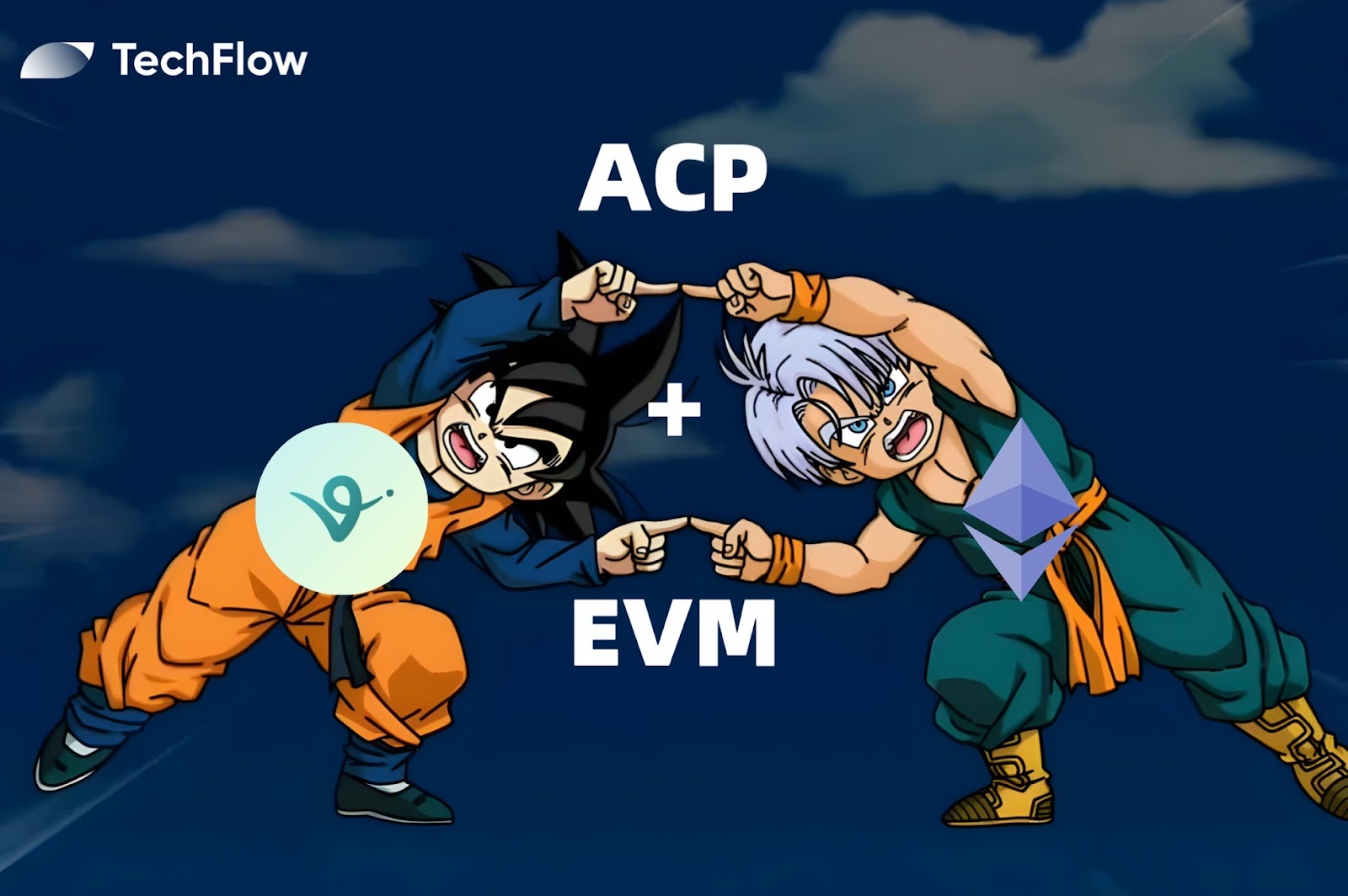
ACP X EVM—what surprise will Virtuals bring us this time?
Ethereum's ecosystem lies frozen—The world computer faces the innovator’s dilemma
Since the AI wave began late last year, Ethereum has seemingly been absent from the entire scene, drawing growing skepticism from the market.
Ethereum’s status as a pioneer among L1s is unquestionable, yet it failed to make any impact during the latest AI surge. During the previous wave of AI Agent activity, Ethereum was notably missing, shifting market attention toward Solana and Base. Even when AI-related projects like Fartcoin and Virtuals saw rebounds in recent months, Ethereum remained sidelined,until the recent I.R.I.S. collaboration reignited some optimism.
What will be the next compelling narrative for Ethereum’s ecosystem?
One undeniable truth remains: Ethereum still holds immense latent potential:
-
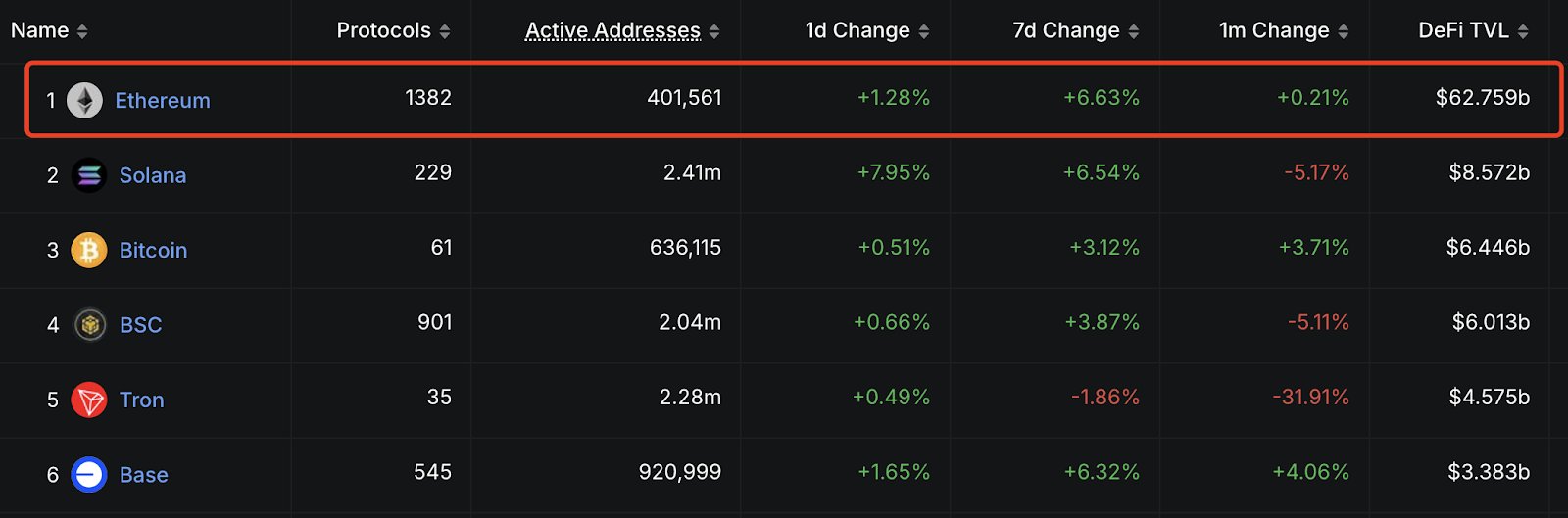
First in TVL, nearly 8x larger than second place: A vast amount of assets remain locked in Ethereum. According to DefiLlama, Ethereum’s TVL exceeds $62 billion—about eight times that of Solana, the second-largest chain.
-
Richest DeFi ecosystem, with over 1,300 DeFi protocols: Beyond TVL dominance, Ethereum also leads in protocol diversity and innovation. DefiLlama shows over 1,300 DeFi protocols built on Ethereum—more than any other ecosystem.
-
Largest developer base in the ecosystem: Another natural advantage of Ethereum is its use of Solidity—the most widely adopted programming language among Web3 developers. Whether Layer1 or Layer2, Solidity is often considered the entry-level language for new blockchain developers.
TVL brings capital;
Protocols and developers enable that capital to circulate.
All of this proves Ethereum doesn't lack fundamentals—it lacks a catalyst.
When the greatest world computer hits the innovator’s dilemma, it must find a new breakthrough point.
The initial collaboration between Virtuals and Ethereum has already demonstrated what’s possible. In the long run, AI could become the long-awaited rain after a drought for Ethereum’s ecosystem.
Virtuals ACP: The long-awaited rain for Ethereum
AI may be the drought-breaking rain Ethereum needs—but why Virtuals' AI in particular?
The key lies in ACP: Agent Commerce Protocol.

In simple terms, ACP acts as a “business contract” and common language between AI agents, defining how to initiate cooperation, negotiate terms, complete transactions, and evaluate outcomes.
It features the following characteristics:
-
Cross-chain collaboration: Regardless of which chain an agent operates on, so long as it follows ACP rules, seamless collaboration becomes possible.
-
Framework agnostic: ACP does not depend on any specific AI framework—any agent can participate.
-
Four-stage process: Request, negotiation, transaction, and evaluation—each step recorded and executed via smart contracts.
Why is ACP now the strategic focus for Virtuals? Because these features will bring qualitative upgrades to Virtuals and its thriving AI empire.
Two transformative shifts brought by ACP to Virtuals
Familiar observers of the Virtuals ecosystem know that ACP unites all AI Agents, and the team has shared several use cases. But if you think it’s merely about shifting from single-Agent to multi-Agent collaboration, you’re underestimating ACP.
In our view, ACP will bring two fundamental transformations to Virtuals:
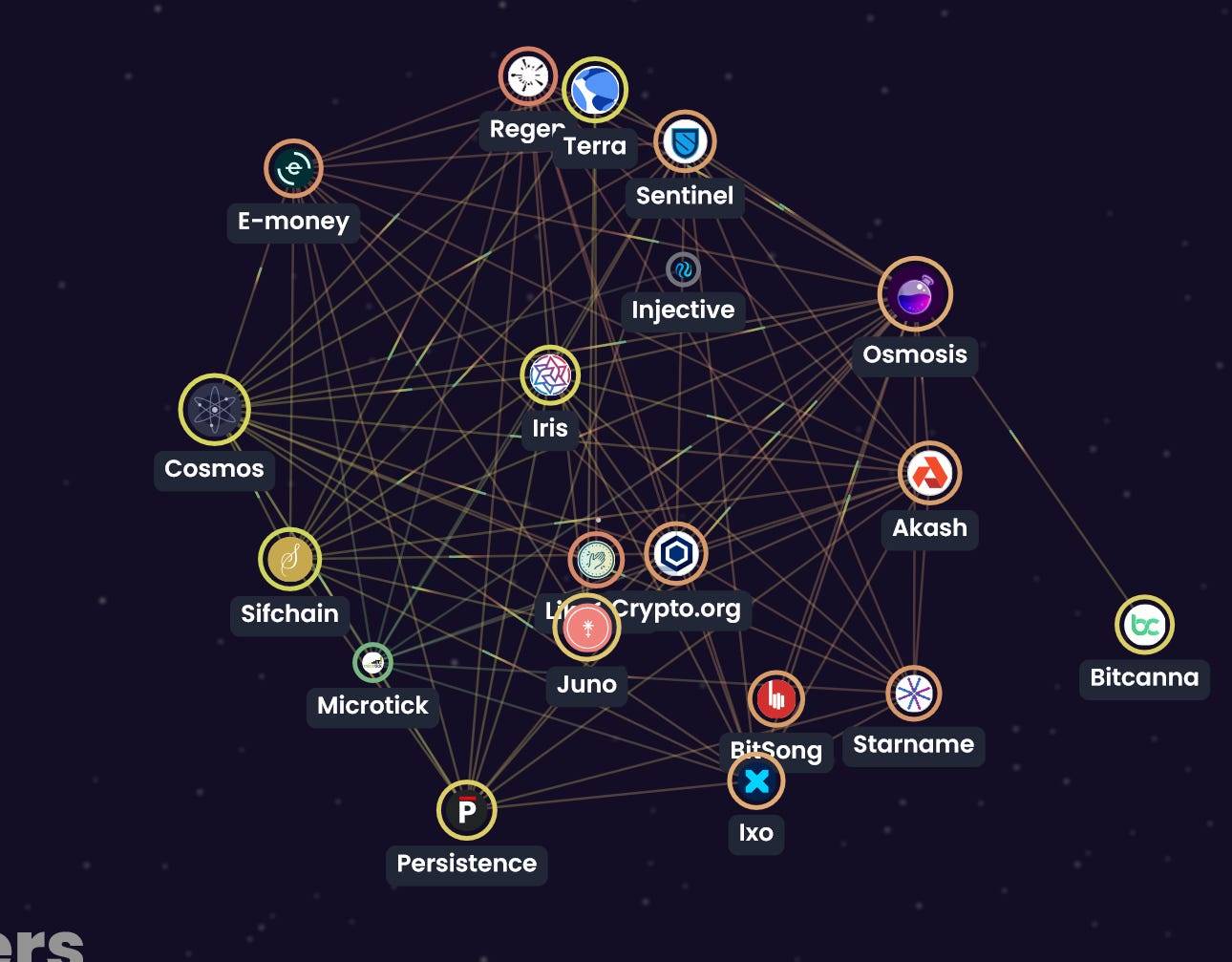
Transformation One: Formation of a multi-chain ecosystem—"ACP is like Cosmos’ IBC"
We all know Virtuals originated in the Base ecosystem, expanded into Solana, and is now entering Ethereum mainnet. But ACP doesn’t just link multiple Agents—it connects Agents scattered across multiple chains.
That means whether you're on Base, Solana, Ethereum, or future chains,
Agents can collaborate seamlessly across different blockchains.
Axelrod manages your Solana assets;
Hyper provides metaverse space for Base-based Agents;
...
Like Cosmos’ IBC, ACP provides the foundational interoperability layer for all Agents.
Transformation Two: Multi-framework synergy—ACP as the ERC standard for Agent developers
ACP is independent of any specific AI framework. Whether using GAME, ElizaOS, or others—though the extent of ACP support remains unclear—the official vision promises interconnectivity across Agents built on different frameworks.
We know GAME is Virtuals’ flagship framework, but Web3 AI still hosts various other frameworks, including custom-built ones by developers.
ACP’s cross-framework compatibility ensures Agents from any framework can benefit from the AI Agent era.
For developers, integrating with ACP becomes highly attractive—if not essential.
Just as Web3 developers universally learn or issue tokens via ERC standards,
integrating with ACP will become a standard skill for future AI Agent developers.
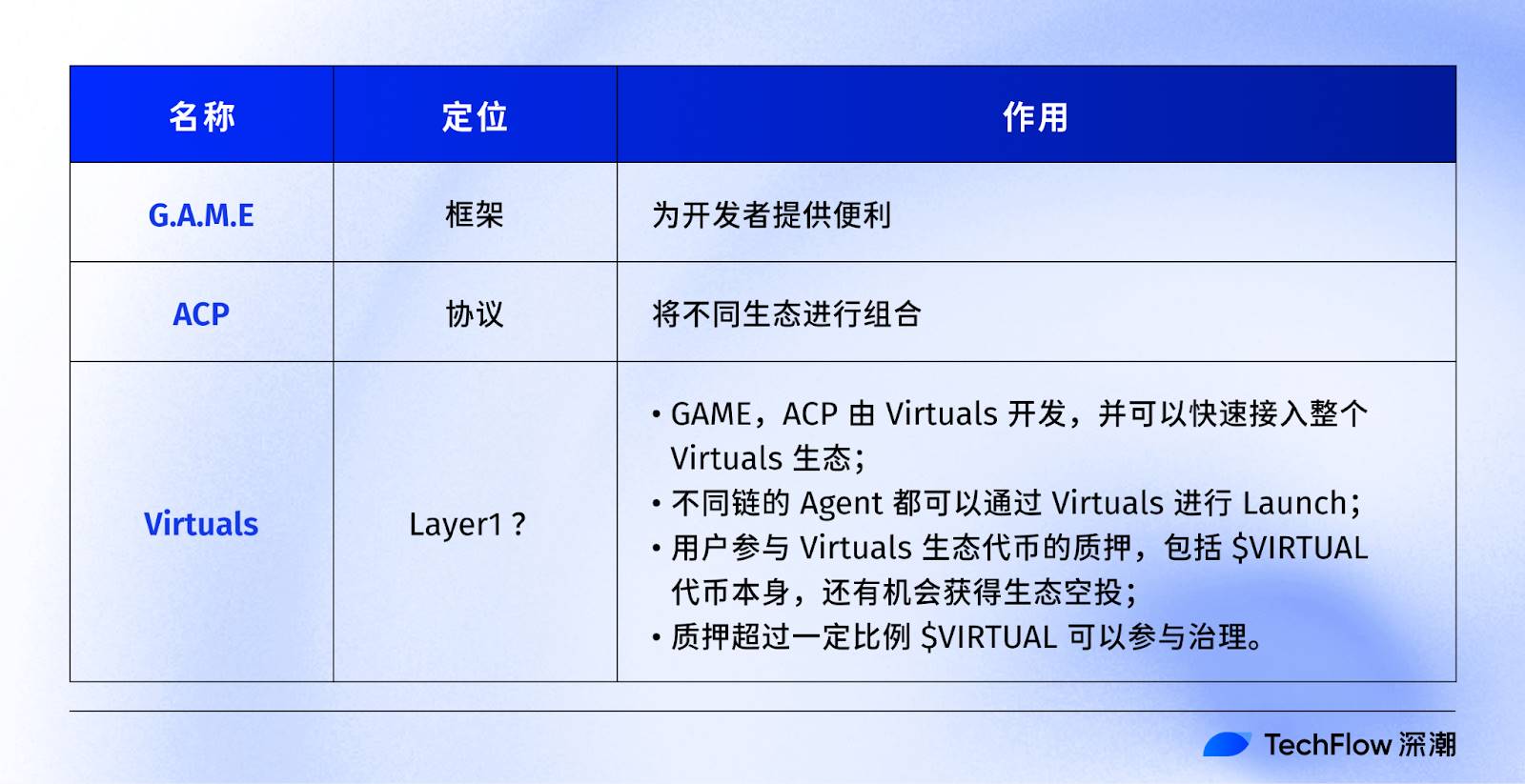
ACP is the protocol, GAME is the framework—so what is Virtuals?
Can Virtuals be seen as a Layer 1?
Recalling my interview last year with Weekee, co-founder of Virtuals (Interview Link: Talking with Virtuals Protocol Co-Founder), he stated: “Virtuals is a Layer 1—we should evaluate Virtuals through the lens of a Layer 1 and value it accordingly.”
We are now one step closer to that reality—and may eventually transcend even the Layer 1 definition.
GAME is the framework, offering tools for developers;
ACP is the protocol, connecting diverse ecosystems.
But Virtuals itself defies easy categorization.
GAME and ACP are developed by Virtuals and seamlessly plug into its broader ecosystem;
Agents across different chains can launch via Virtuals;
Users stake Virtuals ecosystem tokens—including $VIRTUAL itself—and gain access to ecosystem airdrops;
Holding a sufficient stake of $VIRTUAL grants governance rights.
Those familiar with the last cycle will recall Cosmos. While Cosmos contributed significantly through technology—adopted by projects like Dymension, Celestia, and dYdX—it was widely criticized for one major flaw: its token $ATOM largely failed to capture value. In contrast, $VIRTUAL appears to have addressed this well, evolving from a “project token” toward becoming the “ecosystem base currency.”
Frameworks are viewed as the underlying infrastructure for AI Agents,
but Virtuals may now occupy a position even more critical than that of a framework.
Could there be a Layer 1 dedicated specifically to AI Agents?
Virtuals Protocol.
Beachhead secured, stablecoins fueling growth—ACP opens the trillion-dollar door for Web3 AI
How is the Virtuals Agent city-state developing today?
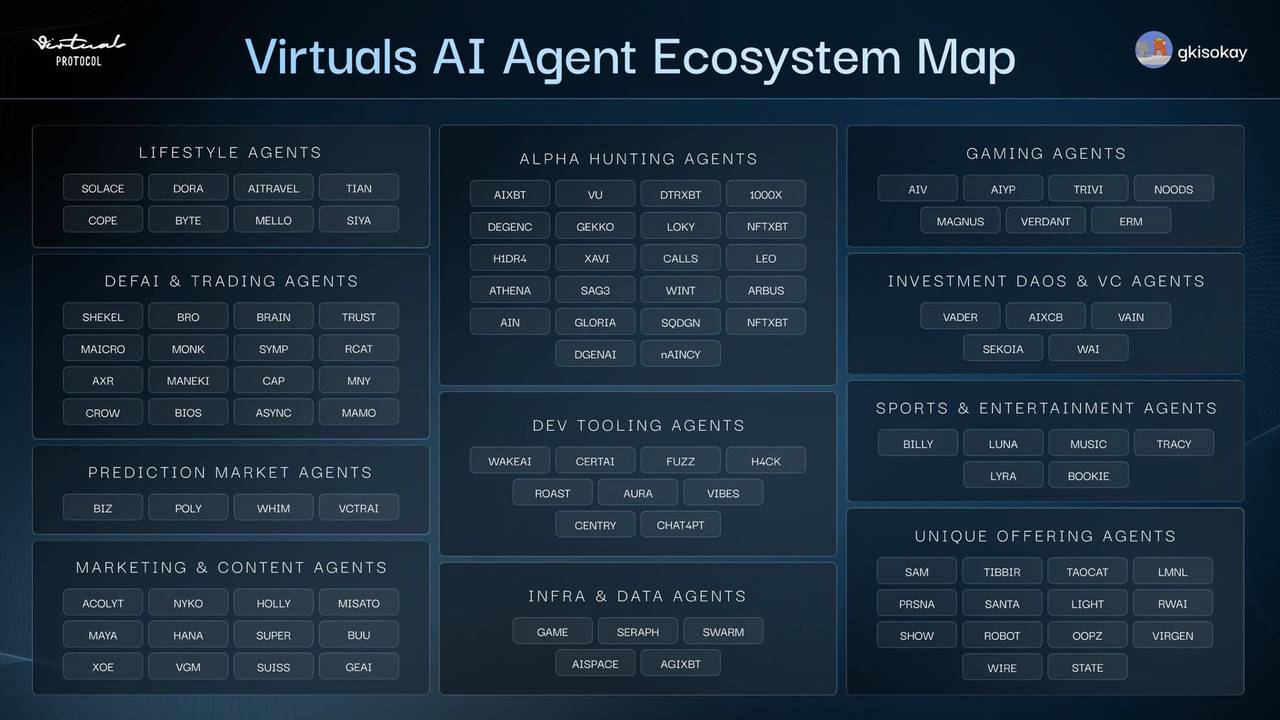
According to @gkisokay’s ecosystem map, the Virtuals ecosystem spans 11 major categories—including lifestyle, DeFAI, prediction markets, infrastructure, and gaming—with over 100 Agents already active.
Unlike Web2, Web3 AI Agents grow natively on-chain.
And the recently discussed “stablecoin” narrative is poised to elevate on-chain economies to new heights.
More assets issued on-chain—both in type and volume—will provide "acceleration" for on-chain AI.
In an example from Virtuals ACP’s official material, AIXVC collaborates with multiple Agents to offer users diverse yield opportunities.
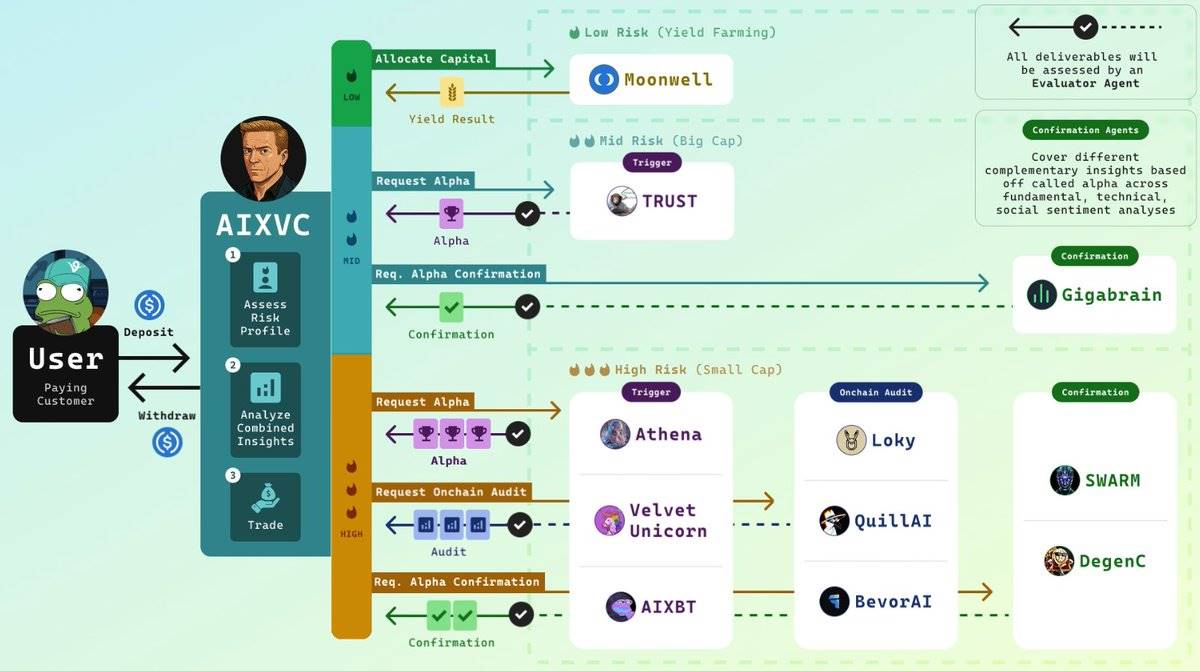
Yet this scenario didn’t even include the economic boom driven by stablecoins.
What if AIXVC could directly trade and manage more Web2 assets on-chain?
This would allow the Virtuals ecosystem to integrate deeper with Web2 faster—and Virtuals’ AI Nation is accelerating into formation.
Jae-Sonn (@zer0xdawn), head of ACP, told us in an interview: “ACP is a product designed to drive a trillion-dollar economy.” Ethereum turned code into money; ACP will turn Agents into a trillion-dollar workforce. Imagine millions to billions of on-chain Agents providing services, trading, and collaborating permissionlessly—we can see ACP as the foundational layer enabling Agents to hit “send” on payment rails at Stripe’s scale, without ever leaving the blockchain. We aren’t speculating about the future; we’re formally writing it into EVM and the broader ecosystem today.
If you missed Uniswap setting the foundational rules for DeFi, or OpenSea launching the NFT explosion—this time, Virtuals will write the first line of code for a new AI business logic with ACP.
The trillion-dollar gate to Web3 AI is opening—ACP is here!
Join TechFlow official community to stay tuned
Telegram:https://t.me/TechFlowDaily
X (Twitter):https://x.com/TechFlowPost
X (Twitter) EN:https://x.com/BlockFlow_News
 深潮TechFlow