








Yuga Labs lets go of CryptoPunks—will NFT blue-chips head to museums next?
TechFlow Selected TechFlow Selected
Yuga Labs lets go of CryptoPunks—will NFT blue-chips head to museums next?
We may also be witnessing NFTs slowly transitioning from highly volatile financial experiments to low-frequency cultural forms.
 Navigating Web3 tides with focused insights
Author: ChandlerZ, Foresight News
In May 2025, CryptoPunks were "sent to the museum."
More precisely, Yuga Labs transferred the intellectual property of this pioneering NFT art project to a nonprofit organization called Infinite Node Foundation (NODE). The foundation announced that the acquisition includes not only all IP rights to CryptoPunks but also a $25 million cultural fund, and will drive an ambitious museum partnership program aimed at integrating CryptoPunks into major global art institutions.
It also boldly declared: "This is not a transfer of ownership, but liberation."
Within hours of the announcement, the floor price of CryptoPunks quickly rebounded to around 48 ETH, with trading volume noticeably increasing. The once-quiet trading interface came back to life, as if reminding people of the glory these pixel icons once carried.
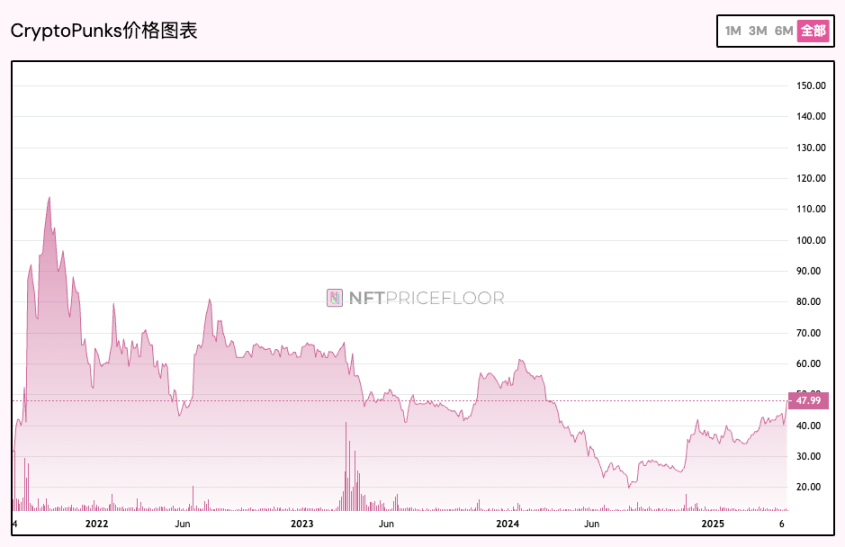
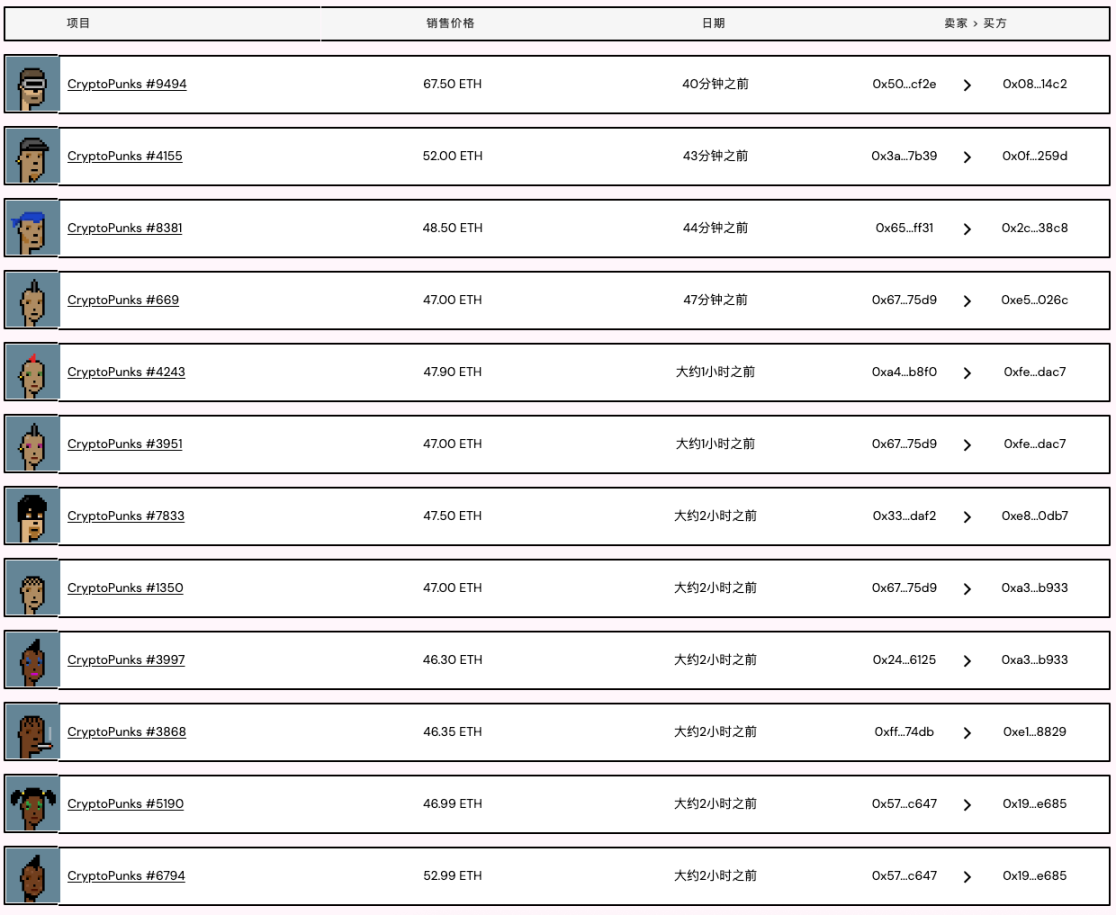
This blue-chip project, once regarded as a "Web3 totem," has entered a new chapter after years of market highs and emotional lows. The foundation has also formed an advisory committee to manage CryptoPunks, with Larva Labs founders and artists Matt Hall and John Watkinson returning to lead the committee, joined by Wylie Aronow (Yuga Labs) and Erick Calderon (Art Blocks). Additionally, NODE will appoint Natalie Stone as an advisor to support the NODE team during the transition period.
But is this "return" a fresh beginning or the closing of an era?
From Pioneer to Classic: The Past and Present of CryptoPunks
CryptoPunks was born in 2017, created by the Canadian developer duo Larva Labs, inspired by punk culture and generative art. The 10,000 pixel avatars were minted for free; at the time, there was no NFT market—only a small number of Ethereum users claimed these images through smart contracts.
What truly turned CryptoPunks into a crypto-culture totem was the explosion of the NFT market in 2021. That year, NFTs became a mainstream topic, drawing attention from Christie's auction house to major media outlets. Due to its "origin point" status, CryptoPunks were seen as "classical artifacts" of digital art, causing prices to soar.
In August 2021, Visa announced its purchase of CryptoPunk #7610 for 49.5 ETH, calling it an "important asset marking corporate entry into the NFT era." This move sparked widespread imitation and fueled a short-term surge in institutional NFT acquisitions. In the same year, multiple Punk avatars sold for high prices at Sotheby’s and Christie’s—such as Punk #7523 (commonly known as the "Covid Alien"), which fetched $11.7 million at Sotheby’s, setting a record for a single Punk auction. Having weathered the most frenzied phase of the NFT market, CryptoPunks achieved a total trading volume exceeding $3 billion, cementing its mythic status as a top-tier blue chip.
However, the peak did not last long. With Bored Ape Yacht Club (BAYC) launching in spring 2021 and rapidly building a strong social community, commercial licensing system, and celebrity influence, CryptoPunks began to reveal the limitations of its purist yet silent stance. Newcomers won broader user bases through flexible IP licensing, merchandise, and event activations, while CryptoPunks, due to Larva Labs' non-commercial policy, restricted holders from commercially using their Punk IPs, gradually marginalizing it in terms of community engagement and scalability.
This divergence ultimately led to Yuga Labs acquiring the CryptoPunks and Meebits IP in March 2022. The acquisition initially had a positive impact on CryptoPunks’ price, but subsequent developments fell short of public expectations. Under Yuga's stewardship, CryptoPunks were not heavily commercialized—on one hand avoiding vulgar IP dilution, but on the other failing to build an active ecosystem like BAYC. During Web3’s two-year winter, CryptoPunks gradually became something "respected but untouched."
Symptomatic "De-financialization": Nonprofit Foundation Takes Over the NFT Totem
The buyer this time, Infinite Node Foundation, is a nonprofit established in 2025 by venture capitalist Micky Malka and curator Becky Kleiner, aiming to integrate internet-native art into mainstream culture through research, exhibitions, and archiving.
According to NODE, this acquisition is not a traditional merger or acquisition. The foundation has pledged to build a permanent exhibition space in Palo Alto and host the first-ever full display of all 10,000 CryptoPunks avatars—an unprecedented curatorial feat in NFT history. Simultaneously, the venue will run a live Ethereum node, emphasizing the "on-chain locality" and "immutability" of blockchain-based art.
NODE’s intent is clear: they seek formal recognition for internet-native art within academic and museum institutions. It appears that CryptoPunks are undergoing an identity shift—from speculative commodities to "cultural heritage" that can be exhibited, studied, and narrated.
Yet this transformation isn’t entirely romantic. Although the deal amount remains undisclosed, the simultaneous establishment of a $25 million cultural endowment fund by NODE may suggest Yuga Labs’ profit-taking exit.
For Yuga, selling CryptoPunks was more about resource concentration and financial optimization. After large-scale layoffs in 2024 and a clear strategic pivot toward the Otherside metaverse and ApeCoin ecosystem, divesting Punks may have been a rational decision.
Who Defines the "Artistry" of NFTs?
Interestingly, the central theme behind this transaction is no longer valuation or floor price, but rather artistic historical status.
NODE’s involvement places CryptoPunks within a more traditional cultural narrative: permanent collections, academic research, art curation—terms that sound more aligned with MoMA or the British Museum than typical crypto community discourse.
In fact, the trend of NFTs becoming "museumified" has existed for some time. In 2023, Autoglyphs were collected and exhibited by London’s Serpentine Gallery; Fidenza and Ringers began being categorized by curators as representatives of the "generative art movement"; Beeple’s "Everydays," selling for $69 million at Christie’s, marked the starting point of NFTs entering museums.
From this perspective, NODE’s emergence represents a gentle arrangement—it does not attempt to "empower" CryptoPunks nor alter their original form, but instead places them on a path of institutional art preservation. Had a commercial entity been the buyer, the operational logic would likely involve IP licensing, brand collaborations, and traffic monetization—approaches that could generate short-term gains but risk undermining CryptoPunks’ symbolic value as a native digital cultural icon.
Still, new questions arise: what comes next for the NFT narrative?
NODE stated in its announcement: "This is not a transfer of ownership, but liberation." As CryptoPunks become old money, become "artifacts in storage," we may be witnessing NFTs slowly transform from high-volatility financial experiments into low-frequency cultural forms. And the evolution of CryptoPunks serves as a mirror, reflecting the industry’s anxieties.
Join TechFlow official community to stay tuned
Telegram:https://t.me/TechFlowDaily
X (Twitter):https://x.com/TechFlowPost
X (Twitter) EN:https://x.com/BlockFlow_News
 Foresight News






