TechFlow Logo
Login/ Sign up
ETH Gas
Gwei
Fear
gas
Wednesday's CPI "cooling ≠ safe," tariff impact peak to emerge in 3–6 months

Wednesday's CPI "cooling ≠ safe," tariff impact peak to emerge in 3–6 months

2025.03.12
Share

TechFlow Selected TechFlow Selected

techFlow

Wednesday's CPI "cooling ≠ safe," tariff impact peak to emerge in 3–6 months

The real test begins with the CPI data for March-April.

2025.03.12 - 04:04:18
CPI降息关税
The real test begins with the CPI data for March-April.

The U.S. February CPI data will be released this Wednesday, with market consensus expecting a slight cooling in inflation.

However, even if the data meets expectations (headline CPI +0.3% MoM, core +0.3% MoM), the annualized inflation rate would still be as high as 3.9%, nearly double the Fed's target—far from a moment to become optimistic.

We need to see monthly increases fall to 0.2% or lower before the market can confidently turn bullish. But caution is warranted due to potential data noise (e.g., energy price fluctuations). If actual data disappoints and comes in higher than expected, markets may face another sharp sell-off.

Viewpoint: Wednesday's CPI may cool, but that doesn't mean the market is safe

Secondly, we must pay attention to the lagged impact of tariffs:

  • In early February, the U.S. imposed an additional 10% tariff on Chinese imports, affecting furniture (32% of imports), apparel (26%), and electronics (21%).

  • This is expected to push February’s core goods inflation (excluding used cars) back up to 0.2% (from -0.1% in January), with educational goods seeing the most pronounced effect—prices up 2.8% MoM (vs. 0.1% in January). Some short-term price volatility may stem from inventory hoarding by firms, though such effects are unlikely to persist.

The real risk lies ahead: import data typically lags by 1–2 months. Even if this month’s CPI doesn’t reflect tariff impacts, March and April CPI readings are highly likely to face a second wave of pressure.

Shipping from China to the U.S. takes 25–35 days on average; goods shipped after February 1 won’t arrive until early March. After 1–2 weeks for customs clearance, the added tariff costs will begin flowing into wholesalers’ cost structures by mid-to-late March. Most products currently sold by U.S. retailers are drawn from Q4 2023 inventories—before the new tariffs—while newly procured, tariff-impacted goods will only enter retail channels starting in April.

Therefore, March and April CPI prints will mark the true test.

1. Home goods: wholesale costs rise in March, with retail prices potentially adjusted in April–May (estimated +0.3%–0.5% MoM);

2. Apparel: spring collection costs up 5%–8%, with the apparel component of April CPI likely turning positive MoM;

3. Consumer electronics: smartphones and accessories to rise 3%–5% starting March (e.g., Anker has already announced a price hike for April).
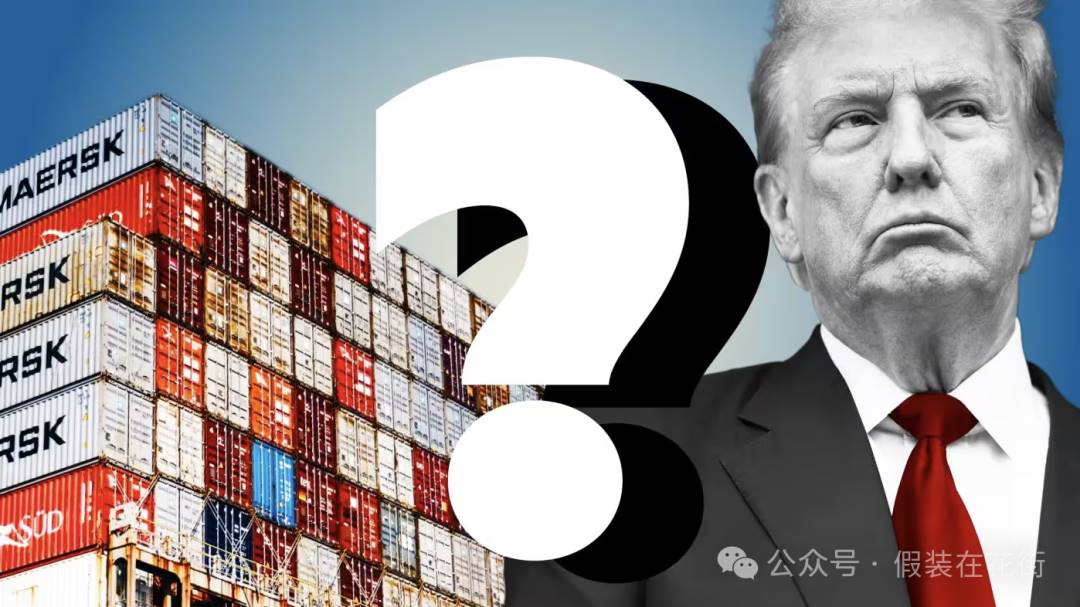
Viewpoint: Wednesday's CPI may cool, but that doesn't mean the market is safe

Historical Reference: Lessons from the 2018 Trade War

In July 2018, the U.S. imposed a 25% tariff on $34 billion worth of Chinese goods. The peak impact on CPI typically emerged about two quarters after policy implementation.

  • CPI rose with a 3-month lag: apparel CPI jumped 0.5% MoM in October 2018 (up from 0.1% previously);

  • Peak impact came after a 6-month lag: home furnishings CPI reached 3.2% YoY in January 2019 (up from 1.5% pre-tariff).

Therefore, if the market focuses solely on February’s data and concludes that “the worst is behind us,” it risks serious misjudgment. This concern stems from observing how quickly bond yields have recently declined, as risk-off moves in equities have dampened inflation expectations. Rate markets still price in around two rate cuts this year, suggesting they’ve largely anticipated a benign CPI print. Should the data meet expectations while rate-cut bets remain unchanged, the market would effectively be underestimating the risk of inflation rebounding.

If core goods inflation rebounds to over 0.4% in March (a high-probability scenario), the Fed may be forced to reevaluate its stance that “inflation is under control,” potentially wiping out 2025 rate cut expectations entirely.

Additionally, January’s nonfarm payroll report showed average hourly earnings up 4.3% YoY, reflecting persistently high labor costs in the services sector, which could feed through to further price hikes. Whether this triggers a wage-inflation spiral is another key development to monitor beyond tariffs.

High-frequency indicators to watch:

1. U.S. Import Price Index (to be released March 15): directly reflects tariff pass-through;

2. Retailer earnings call transcripts (e.g., Walmart, Best Buy in April): monitor management commentary on pricing pressures.

Join TechFlow official community to stay tuned

Add to Favorites
Share to Social Media

Related Articles

2026.04.09

“The New Fed Wire”: The Fed’s rate-cut prospects remain bleak, regardless of whether a ceasefire agreement is reached.

If the risk of the Iran conflict pushing the economy into recession is the strongest justification for resuming rate cuts, then the end of the war could反而 make it harder for the Fed to ease policy in the short term; meanwhile, a ceasefire also reduces the likelihood of a Fed rate hike.

“The New Fed Wire”: The Fed’s rate-cut prospects remain bleak, regardless of whether a ceasefire agreement is reached.
2026.03.03

Arthur Hayes: The U.S. has cut interest rates every time it waged wars in the Middle East over the past 40 years—and this time is no exception.

The timing to go all-in on Bitcoin and high-quality altcoins like $HYPE.

Arthur Hayes: The U.S. has cut interest rates every time it waged wars in the Middle East over the past 40 years—and this time is no exception.
2026.02.13

January CPI May Provide Further Evidence of Cooling Inflation, But Is It Enough to Shift the Fed’s Wait-and-See Stance?

Slowing inflation will provide the Federal Reserve with greater policy flexibility; however, against the backdrop of fiscal expansion and three interest rate cuts last year—which delivered additional stimulus to the economy—markets are more focused on whether this deceleration is sustainable.

January CPI May Provide Further Evidence of Cooling Inflation, But Is It Enough to Shift the Fed’s Wait-and-See Stance?
2026.01.19

Trump's tariff threats hit allies, cryptocurrency plunges while gold and silver reach new highs

The "liberal international order" established after the end of the Cold War is collapsing, giving way to a new world dominated by economic nationalism.

Trump's tariff threats hit allies, cryptocurrency plunges while gold and silver reach new highs
2025.12.18

Huobi Growth Academy | Cryptocurrency Market Macro Research Report: Liquidity Re-pricing Amid Fed Rate Cuts, BOJ Rate Hikes, and the Christmas Holiday

The current correction in the crypto market is more akin to a phased repricing triggered by changes in global liquidity flows, rather than a simple reversal of a trending move.

Huobi Growth Academy | Cryptocurrency Market Macro Research Report: Liquidity Re-pricing Amid Fed Rate Cuts, BOJ Rate Hikes, and the Christmas Holiday
2025.12.15

Rate Cut Uncertainty: Why the Fed's Positive Moves Become a "Roadblock" for Crypto Markets?

Observation shows that after the Federal Reserve announced a rate cut on December 11, aside from gold, market reactions were generally muted. This was not due to a single factor, but rather because the market had already fully priced in a 25-basis-point rate cut prior to the meeting, leading to profit-taking after the positive news was exhausted.

Rate Cut Uncertainty: Why the Fed's Positive Moves Become a "Roadblock" for Crypto Markets?
2025.12.11

Crypto Morning News: Fed cuts interest rates by 25 basis points, He Yi pledges compensation for users affected by WeChat account theft

The U.S. Senate Banking Committee may delay审议 of the "Cryptocurrency Market Structure Act" until 2026.

Crypto Morning News: Fed cuts interest rates by 25 basis points, He Yi pledges compensation for users affected by WeChat account theft
2025.12.11

A less "hawkish" hawkish rate cut, and balance sheet expansion that's "not QE"

The Fed cut interest rates by 25 basis points as expected, still projecting one rate cut next year, and launched RMP to purchase $40 billion in short-term bonds.

A less "hawkish" hawkish rate cut, and balance sheet expansion that's "not QE"
2025.12.10

Crypto Morning Brief: Hassett hints at rate cut, Stripe to launch stablecoin payment feature

Circle obtains a financial services license from the Abu Dhabi Global Financial Centre.

Crypto Morning Brief: Hassett hints at rate cut, Stripe to launch stablecoin payment feature
2025.12.09

In the early hours of this Thursday, it wasn't the interest rate cut itself that determined the direction of risk assets

Rate cuts are almost a "given," the real variables lie elsewhere.

In the early hours of this Thursday, it wasn't the interest rate cut itself that determined the direction of risk assets
TechFlow Logo

Navigating Web3 tides with focused insights

Contribute An Articleemail
Media Requestsmsg

Risk Disclosure: This website's content is not investment advice and offers no trading guidance or related services. Per regulations from the PBOC and other authorities, users must be aware of virtual currency risks. Contact us / [email protected] ICP License: 琼ICP备2022009338号