The Honey Jar Co-Founder: From Berachain to The Honey Jar, Deconstructing the Organic Growth of Crypto Communities
TechFlow Selected TechFlow Selected
The Honey Jar Co-Founder: From Berachain to The Honey Jar, Deconstructing the Organic Growth of Crypto Communities
Honeycombs have increased in value by 12 times over the past 12 months, becoming the top-performing asset across the entire NFT space.
 Navigating Web3 tides with focused insights
Compiled & Translated: TechFlow
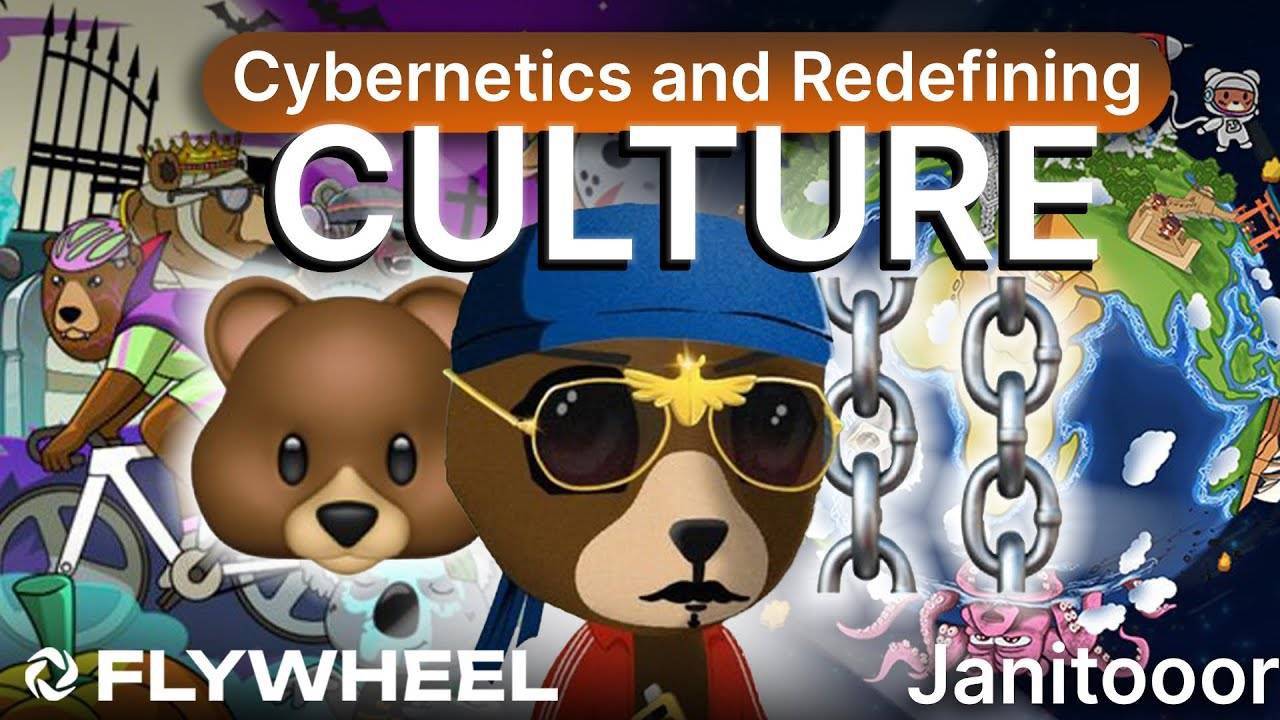
Guest: Janitooor, Co-founder of The Honey Jar
Podcast Source: Flywheel DeFi
Original Title: Cybernetics and Redefining Culture w/ Jani - Flywheel
Release Date: November 7, 2024
Introduction & Background
-
At the start of the podcast, the host notes a false impression of short-term thinking in the crypto space—especially regarding new cycles and attention spans. He argues this mindset is flawed and suggests adopting a gardener’s long-term perspective when planning and building.
-
The guest for this episode is Jani, whom DeFi Dave calls a “legend,” and who co-founded The Honey Jar and contributed to multiple projects. The discussion dives into cybernetic feedback loops, cultural phenomena, and what enables certain groups—referred to as "Cults"—to endure.
Jani's Background and Perspective on Cults
-
Jani reflects on his decade-long journey in cryptocurrency, noting that he was involved even before the Ethereum whitepaper was published. He emphasizes that we are actively shaping the future in real time within this fast-moving industry. Understanding “Cults,” he says, requires examining narratives and authority figures, while also recognizing their frequent association with isolationism.
Understanding Community Phenomena in Crypto Context
-
Jani points out that the word “Cult” has Latin roots tied closely to “cultivation,” which inspires him to draw lessons from nature and underscores the importance of sustainable systems and practices. He observes that in recent years, crypto has seen personality-driven “Cults” emerge, many of which ended poorly—for instance, through project collapses.
-
Nonetheless, he stresses that viewed holistically, crypto itself can be seen as a natural system with self-sustaining properties. While individual actors or projects may fail, the broader ecosystem continues to produce successful examples.
-
Jani adopts a freeform, somewhat chaotic thinking style and encourages hosts and listeners alike to interrupt him at any point to dive deeper into emerging ideas.
Maintaining Fresh Perspectives
-
DeFi Dave notes how many people in crypto fall into comfort zones, becoming dogmatic and resistant to change over time. He asks Jani how he refreshes his own perspective to identify new communities or promising “Cults” worth joining.
-
Jani responds that maintaining anonymity is one practice—he has repeatedly started fresh with new identities, avoiding attachment to past personas. This helps preserve a beginner’s mind. DeFi Dave agrees it’s difficult but admits pride in his creations while also valuing emotional distance.
Deep Engagement and Diversity of Communities
-
Jani elaborates that maintaining multiple identities across different communities allows him to engage more fully and observe each group’s dynamics and interaction patterns. He notes that modern social media algorithms place everyone in different “town squares,” so by cultivating diverse interests, he gains visibility into internet pluralism and the unique rituals and practices of various communities.
-
He highlights that community rituals and modes of interaction are key to understanding “Cult” phenomena—how newcomers are invited or excluded matters deeply. Active participation across communities keeps his perspective fresh and helps him grasp distinct cultural nuances.
Cybernetics and Feedback Loops in Crypto
Basics of Feedback Loops and Cybernetics
-
DeFi Dave raises feedback loops as a core concept in crypto, likening cross-community experimentation to “A/B testing”—observing reactions and adjusting accordingly. He brings up cybernetics—the study of systems and their feedback mechanisms—and asks how it drives innovation in cryptocurrency.
-
Jani explains cybernetics as the study of control mechanisms and feedback loops within systems. He sees Bitcoin’s emergence as a pivotal milestone—an autonomous digital system capable of impacting the physical world, particularly through energy consumption. Bitcoin operates like a closed “box” where tokens are endogenous, yet dependent on external power and computational resources.
From Bitcoin to New Chains
-
Jani expands that throughout crypto’s evolution, innovation has centered on discovering new mechanisms that trigger real-world actions. Recognizing these drivers is vital for fostering community growth. He notes that newer blockchains constantly seek novel levers to influence behavior outside the chain.
-
Discussing Berachain, Jani mentions seeing concepts related to natural systems and cybernetics in its whitepaper—particularly around flow control. He links flow control to token emission design, especially in incentivizing user engagement and energy usage.
Applications of Flow Control
-
DeFi Dave expresses curiosity about flow control, asking if it relates to “proof of liquidity.”
-
Jani further unpacks the idea of flow control and how various blockchain mechanisms encourage user participation. He emphasizes that a cybernetic lens helps us understand how such designs function in reality and drive the broader evolution of the crypto ecosystem.
Optimizing Airdrops and Incentivizing High-Value Behavior
Current State and Challenges of Airdrops
-
DeFi Dave notes that current airdrop models often promote low-value behaviors and asks how they could be improved to reward higher-value actions. He frames airdrops as feedback loops and wonders how value creation within them can be elevated.
-
Jani agrees, stressing that focusing on overall value generation is crucial when driving user behavior. He critiques the overemphasis on Total Value Locked (TVL), arguing users care more about executable on-chain activities (TTD—"Things To Do") than abstract metrics.
From Value Locking to Actionability
-
Jani elaborates that users don’t care about underlying complexity—they just want things to work. Just like most people don’t care how a toaster functions, only that it makes toast. Similarly, in digital spaces, users prioritize application-layer functionality over base-layer blockchain details.
-
He asserts the focus should shift toward offering users meaningful interactions and experiences—not merely inflating locked value. Whether gaming, social platforms, or financial services, the goal is rich utility and engagement.
Incentivizing High-Value Actions
-
To promote high-value behaviors, Jani recommends designing systems that make it easy for users to discover and participate in valuable activities. Airdrop mechanics should align with actual user needs and behaviors, encouraging sustained involvement rather than short-term farming.
-
This approach not only boosts engagement but supports healthier ecosystem development. Understanding diverse stakeholder motivations—including both financial actors and end consumers—is essential for crafting effective incentive structures.
Going All-In and Leveraging Bong Beras
Background and Value of Bong Beras
-
DeFi Dave asks how Bong Beras—a NFT project on Bera Chain—managed to generate meaningful activity and value.
-
Jani shares his background in data analytics and traffic analysis, reflecting on observations made during the DeFi summer boom.
-
He describes Bong Beras as an intriguing NFT format featuring a rebase mechanism—each generation comes with varying supply and traits. Initial supply was extremely limited: only 101 accidentally generated NFTs and six honorary editions. This scarcity captured attention and motivated deeper engagement.
NFT Rebase Mechanism
-
The rebase mechanism allows holders to earn additional tokens simply by holding a Bong Bera NFT. For example, owning one grants extra NFTs in the next generation—an idea inspired partly by the then-popular Olympus-style rebase narratives. Jani notes this design transforms passive ownership into active participation.
-
He emphasizes that holding Bong Beras isn't just about asset accumulation—it's about joining an expanding ecosystem where participants feel greater belonging and involvement.
Power of Community and Culture
-
On community culture, both DeFi Dave and Jani highlight the lighthearted, humorous atmosphere surrounding Bong Beras. Despite market volatility, members supported each other and shared experiences joyfully.
-
Jani says being part of such a community fostered genuine connection. Even amid uncertainty, co-creating with like-minded individuals felt deeply rewarding.
Trading Strategy: From Holding to Exchanging
-
Jani shares his trading strategy with Bong Beras. He realized that in NFT markets, owning either the rarest or most common assets often yields better liquidity. So he began exchanging within the community to increase holdings and gain strategic advantages.
-
For instance, trading one second-gen Bong Bera for three more common NFTs increased his inventory and opened future opportunities. This approach kept him competitive while strengthening community ties.
Building The Honey Jar Mechanism
Origins of The Honey Jar
-
Jani recounts launching The Honey Jar (THJ) in 2023, admitting his initial motive was profit—selling a Bong Bera for significant returns. He conceived placing a Bong Bera into a smart contract and building a hive-like structure around it.
-
The plan: sell 16,420 Honey Jars at ~$100 each, allowing him to exit cleanly while giving others a chance to win a Bong Bera—a win-win scenario.
Open Thinking and Collaboration
-
Drawing on his habit of thinking publicly and collaborating openly, Jani found a “mentally unhinged” partner to build the project together. His open mindset allowed fluid expression across evolving identities and communication styles.
Community Input and Feedback
-
Smokey reached out during development, inviting collaboration on an ongoing initiative. Jani recalls early days in crypto where, despite feeling intellectually outmatched, he still accessed cutting-edge ideas and technologies.
-
Seeing Berra Chain innovate economically—particularly in validator-app relationships—convinced him of its potential, even though the tech and ecosystem were nascent.
Facing Challenges and Adaptation
-
Jani discusses challenges like being repeatedly kicked from Discord servers, which frustrated him. Still, he persisted in engaging with the community and sharing insights.
-
These experiences deepened his understanding of crypto ecosystems and reinforced resilience and problem-solving under pressure.
Honeycombs Structure, Integrators, and Community Participation
-
Jani notes that during THJ’s development, many showed strong interest and proactively sought partnerships. After two months, nearly 40 collaborators expressed intent to join, eager to offer benefits to Honey Jar holders.
-
This organic business development (BD) signaled the project’s potential. Partners weren’t just seeking logo swaps—they saw real utility and believed THJ could solve their problems.
Modular Thinking and Problem Solving
-
Jani likens these collaborations to “networked help,” akin to Lego blocks snapping together. Participants aim to solve problems via clear inputs and outputs. This modular logic helped crystallize the narrative of THJ as a “benefits aggregator.”
-
He believes THJ was among the first in this space. Through multiple airdrops, holders have already recouped initial investments—many breaking even purely from rewards.
Market Conditions and Launch Timing
-
Jani recalls choosing March 3rd—linked to Ethereum Denver—as the mint date. Though considered unlucky in crypto circles, they embraced the irony. Shortly after launch, SVB collapsed, adding surreal timing they found poetically fitting.
-
In that volatile climate, the mint succeeded, and they leaned into humor—marketing themselves as a “scam.” This irreverent attitude attracted kindred spirits and created unique energy.
Taking Work Seriously While Keeping Humor
-
Jani stresses that while the team doesn’t take themselves too seriously, their dedication to execution is evident. This blend of humor and seriousness helped them stand out in a crowded market and attract passionate community members.
Developing a Cybernetic Culture Based on Honeycombs
Genuine Integration and Community Involvement
-
DeFi Dave asks about concrete integrations beyond airdrops in The Honey Jar. Jani offers a different take on “cult” narratives, usually defined by difficulty leaving. But in Bera Eco, entry is frictionless—anyone can join easily.
-
Yet few leave, suggesting powerful intrinsic appeal.
Frictionless Access and Community Autonomy
-
Jani reflects on progress achieved without official organizational backing. At Ethereum Denver’s “Chaos Carnival,” community energy drew investor attention. Despite zero marketing spend from the core org, their events gained massive traction online—some mistook The Honey Jar as an official arm of the foundation.
-
This highlights the autonomy and self-organization possible in decentralized environments—the true power lies in participant initiative and creativity.
Relationship with the Foundation
-
Jani says their relationship with the foundation remains independent. Free from interference, they operate autonomously, adapting strategies based on community feedback.
-
He praises the foundation’s recent RFP (Request for Proposal) program, which standardizes how apps access liquidity—eliminating redundant outreach and improving efficiency.
Community Knowledge and Foundation Support
-
Jani emphasizes that the foundation acknowledges frontline participants understand community needs and usage better than centralized teams do. This humility reflects wisdom in ecosystem support.
-
User habits and preferences largely determine ecosystem vitality. The foundation’s role, he believes, is to empower that energy with resources—not dictate direction.
Berachain’s Cybernetic Culture vs. Other L1/L2 Blockchains
A Unique Cybernetic Culture
-
Jani says Berachain’s cybernetic culture features a distinctive mechanism for channeling value to those most likely to become loyal users. Throughout his career in blockchain, he’s never seen another L1 flourish culturally like Berachain.
-
He defines “cybernetic culture” as Berachain’s ability to precisely target user groups exhibiting “cult-like” behaviors—such as intense engagement during specific periods or participating in seemingly pointless yet entertaining activities.
User Behavior and Community Engagement
-
Jani gives an example: about 20% of ETA tokens and NFTs were sent to burn addresses purely because it was fun—not for profit. This shows a subset of users highly engaged and playful.
-
Despite THJ NFTs being free and peaking at 0.7 ETH, roughly 15% of holders chose not to sell—some even increased positions. These users invested real money and time over years, enduring market swings and forming deep “trauma bonds.”
Contrast with Other L1s
-
Jani stresses Berachain launched into an already mature cultural environment hardened by repeated market trials—a resilience rarely seen in other L1s. Reflecting on pre-Bitcoin days, when blockchain concepts were vague, he sees Berachain arriving at the perfect moment—riding a prepared cultural wave.
-
This cultural readiness provides strong tailwinds for adoption, enabling deeper resonance with users.
Technology Meets Movement
-
Finally, Jani says Berachain isn’t just launching technology—it’s igniting a movement. By integrating tightly with the community, it fosters belonging and identity unmatched by other L1s.
Rise of Honeycombs and Shifting Community Dynamics
-
Jani notes Honeycombs (Honeycomb) have performed exceptionally well over the past year, ranking among the top-performing NFT assets. Though briefly overtaken by niche assets like “schizo posters,” Honeycombs rose 12x in value over 12 months—outpacing peers significantly.
NFT Ecosystem and Community Engagement
-
Jani continues discussing shifts in the NFT ecosystem, noting that in the last cycle, 80% of new wallets and market entrants came via NFTs. Even if some became less active, many still hold assets on-chain, ready to re-engage.
-
Studies show NFT-originated users rarely transition into DeFi. Most remain focused on NFTs, indicating limited crossover interest.
Visibility vs. Invisible Economies
-
Jani points out that while Vera (possibly a project or concept) dominates attention in certain CT circles, it remains invisible across large parts of the on-chain economy. This asymmetry creates informational edges and actionable opportunities.
-
Deep data analysis reveals hidden behavioral patterns, guiding strategic decisions.
Future Opportunities
-
Jani expresses confidence in Honeycombs’ future, believing its unique culture and user base position it to lead NFT innovation. He anticipates the community seizing upcoming opportunities to further grow the ecosystem.
Roles and Social Interactions Across Domains
Switching Roles and Identities
-
DeFi Dave observes that many in crypto create separate identities for different social contexts—like “men in the dark,” presenting radically different selves across circles. While everyone wears masks to some degree, he finds himself particularly transparent about this duality.
-
Jani adds that people naturally express different facets of themselves in different settings. One’s crypto persona might starkly contrast with family or friend dynamics. Such self-differentiation can make transitioning between circles challenging.
Dynamics of Social Interaction
-
Jani shares an observation using “first response time” as a metric for network vibrancy. When he signals interest on social media, rapid replies indicate community heat. For example, asking about SPX drew near-zero responses in 24 hours—only basic advice from a few—revealing low engagement in that space.
-
In contrast, mentioning “Sparto Gremlins” flooded his notifications instantly. This surge reflects high community activation and confirms stronger ties to Bitcoin circles.
Community Overlap and Interaction Strategies
-
DeFi Dave suggests this may stem from overlap between Bitcoin and other communities. He suspects Bitcoin and SPX communities have little intersection, so identity fragmentation affects interaction frequency and quality.
-
He recalls a tweet last year—not targeting SPX—that unexpectedly drew heavy attention from that niche. This revealed how inter-community overlaps shape social media experiences.
A New Definition of Community Phenomena
-
Jani poses a question: What *is* a “community” (cult)? The term carries varied meanings—from Jonestown tragedy to SBF-style FTX—or traces back to Latin “cultus,” meaning “cultivation” or “growth.” Spending much time gardening outside crypto, he draws parallels to reflect on what communities truly are.
Short-Term vs. Long-Term Mindset
-
Jani believes crypto often defaults to short-term thinking—chasing quick cycles and fleeting attention. He advocates applying a gardener’s mindset: patience, long-term nurturing. Communities go through seasons—some thrive temporarily, others persist.
-
When a community succeeds, members may cash out due to outsized rewards—a common lifecycle pattern.
Persistence and Cultural Depth
-
Jani emphasizes that while many have reasons to leave, exceptional builders stay once embedded in the culture. That depth makes communities durable. Culture, he argues, acts like a natural system—resilient across seasons and shocks.
-
With Honeycombs, the original goal was fundraising during a bear market. But growing participation amplified activity and cohesion organically.
Innovation and Building Momentum
-
Jani adds that numerous projects in the Bera ecosystem now integrate with Honeycombs—evidence of vibrant innovation. While Ethereum appears stagnant, Bera’s builder scene remains active and creative.
-
Many continue building not for profit alone—but out of passion and belief in the future.
Conclusion and Outlook
-
Finally, Jani concludes that defining a “community” goes beyond labels—it’s a complex ecosystem shaped by interactions, cultural continuity, and shared vision. He hopes more will embrace and contribute to this evolving phenomenon, advancing crypto’s trajectory.
Sustainably Prioritizing Community
A New Definition of “Community”
-
DeFi Dave revisits the idea of redefining “community” (cult). Traditionally, the term evokes negativity—like Jonestown—where people are passively brainwashed. He wants to redefine it positively, emphasizing agency and choice.
Lessons from Web2
-
Jani discusses lessons from Web2, where users are treated as products. Value flows and power imbalances favor corporations, with profits privatized and user interests sidelined. “Honeycombs” offers a framework where the community itself becomes the product—and members benefit directly.
Community as Product
-
Jani elaborates on how “Honeycombs” operates. Despite team members spanning continents, there are no regular meetings—collaboration happens asynchronously and efficiently. Active community participation and network effects enable smooth operations.
-
Honeycombs holders are incentivized to expand networks. When interfacing with core teams, discussions focus on fine-tuning integration—not sales pitches.
Network Effects and Adaptability
-
Jani introduces “network effects” and “adaptive culture.” Participants gain proportional benefits relative to community size. Meanwhile, projects integrating Honeycombs tap into an existing active user base, freeing them to focus on building.
-
On-chain behavior of Honeycombs holders can be analyzed, providing valuable data for teams to better understand demand and market trends.
Summary and Outlook
-
Finally, DeFi Dave and Jani stress that with this new definition, communities aren’t passive recipients—they’re active co-creators in a value-generating ecosystem. A model built on cooperation and shared incentives fosters sustainability.
Community Phenomena as Cybernetic Organizations
Reframing the Concept of “Community”
-
Jani returns to redefining “community” (cult). From his view, it resembles a natural system—dynamically interacting between digital and physical realms. Drawing on the Latin root “cultus” (cultivation), he emphasizes self-sustaining capability as central to this new framing.
Culture and Self-Sustenance
-
He notes that throughout history, self-sustaining cultures survive across environments—be it “summer” or “winter.” This resilience ensures endurance. Jani believes assets and tools rooted in cybernetic culture will prove more sustainable than fleeting trends.
Financial Populism and Absurdism
-
He observes today’s rise of financial populism and absurdism—exemplified by meme coins. These assets can be traded, but may lack lasting value. Contrasting short-lived fads with enduring systems, he argues the latter deserve investment.
Adaptability and Long-Term Viability
-
Jani expresses confidence in cybernetic cultures due to their adaptability. While meme coins may represent the latest form of financial absurdism, he’d rather allocate his Bitcoin to adaptive, evolving cultures built to last.
Conclusion and Outlook
-
Ultimately, he stresses that viewing communities as cybernetic organizations reveals how they maintain vitality and adaptability amid change. This perspective not only clarifies current market dynamics but guides future investment toward more sustainable ventures.
Keys to Sustaining Community Phenomena
-
DeFi Dave asks: What sustains communities long-term? He references earlier topics—shared trauma, hardship bonding, inside signals, and memes—and wonders what else contributes to longevity.
Economics and Culture
-
Jani replies that economics plays a vital role in long-term sustainability. Communities thrive when they coordinate collective effort across domains. Diverse participation mechanisms are needed to sustain economic flow and engagement.
Sustainability of Closed-Loop Systems
-
He adds that communities with closed-loop systems are more sustainable, as value circulates back internally. Mechanisms like those on Bera Chain generate more feedback loops, enhancing self-sufficiency.
Participation and Feedback
-
Jani emphasizes finding areas worthy of deep commitment—like Bera Chain. Feedback loops help members adapt and stay engaged, preserving momentum.
Self-Regulation and Balance
-
On regulating dopamine levels, Jani shares gardening as a grounding practice, highlighting the need to balance online and offline life. Engaging in activities with different rhythms supports mental health and prevents burnout from constant high-intensity digital interaction.
Defining Culture and Participation
-
DeFi Dave seeks further clarity on defining culture.
-
Jani says he’s writing about it and refers to articles published on Mirror exploring Bera Chain’s cultural history. He encourages exploration of diverse communities to find personally resonant ways to participate.
Conclusion and Future Outlook
-
Finally, DeFi Dave and Jani discuss the future of communities, emphasizing positive feedback loops and diverse forms of engagement. They urge listeners to explore different communities and platforms to discover their ideal cultural fit and mode of participation.
Join TechFlow official community to stay tuned
Telegram:https://t.me/TechFlowDaily
X (Twitter):https://x.com/TechFlowPost
X (Twitter) EN:https://x.com/BlockFlow_News
 深潮TechFlow