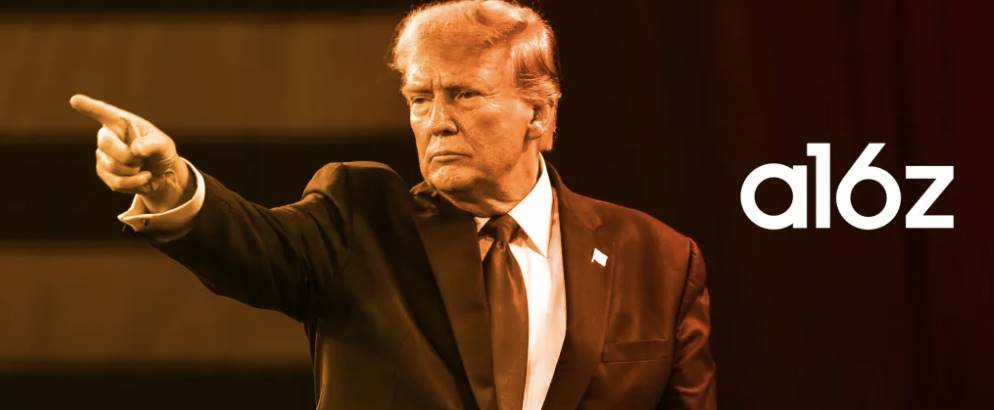
a16z fund founder reveals that Trump's return to power will completely reshape the landscape for tech startups
2024.11.15
Share Share to X (Twitter) Navigating Web3 tides with focused insights
Share to WeChat
Share to WeiboShare to WeChat
Share by Link
Share by Image
TechFlow Selected TechFlow Selected
a16z fund founder reveals that Trump's return to power will completely reshape the landscape for tech startups
Recently, a16z co-founders Marc Andreessen and Ben Horowitz shared several key views on the implications of Trump's potential re-election for technology and policy.
2024.11.15 - 15:18:26
a16z特朗普
Navigating Web3 tides with focused insightsRecently, a16z co-founders Marc Andreessen and Ben Horowitz shared several key views on the implications of Trump's potential re-election for technology and policy.
Author: Youxin
Marc Andreessen and Ben Horowitz, the two co-founders of a16z, recently shared several key views on how Trump’s re-election could impact technology and policy:
Marc and Ben emphasized that technology is a top-tier policy issue for America's future, directly affecting national competitiveness and global standing. They believe that as a technological superpower, the United States must maintain its leadership in technology—otherwise it risks falling behind in global competition, especially against China.
They expressed support for the Trump administration’s plan to reduce regulation in the tech sector, arguing that excessive regulation stifles innovation. Particularly in AI and cryptocurrency, overregulation could choke business growth. They noted that the Trump administration is likely to eliminate cumbersome regulations, creating a more favorable environment for tech companies to innovate.
As AI development drives rising energy demands, Marc and Ben stressed the need for clean, affordable energy to sustain technological progress. They welcomed the Trump administration’s support for innovative energy solutions such as clean nuclear power, which could help the U.S. meet future tech needs and maintain leadership in both energy and technology.
Additionally, Ben highlighted cryptocurrency as a crucial tool for economic equality, especially for those without traditional assets. A more lenient crypto policy under Trump could provide new opportunities for the industry and help the U.S. stay competitive in financial technology.
Below are the main highlights from their conversation:
Marc Andreessen
This is a special episode where we reflect on the post-election landscape. Longtime viewers may recall that we’ve done previous shows on political issues and shared our activities earlier this year.
The election results are in—and they’re dramatic. We believe many important things are about to change, or have already begun changing. So we’d like to share our perspective, particularly on how this affects technology and small tech businesses.
I want to make two disclaimers upfront. First, consistent with our practice, we won’t touch non-technology political topics. Many people care deeply about various aspects of politics, but we’ll focus on tech, business, and America’s role in global tech and commerce.
Second, we do not speak on behalf of the new administration or any of its members. The policies we discuss are either ones the new government has stated it intends to implement, or options they might consider.
Now let’s look back at this election and the past four years. In my view, the past four years have had a greater impact on the tech industry than any period in my lifetime. Let’s start by reviewing what happened during these years that brought us to this point.
Ben Horowitz
Yes, this was possibly the worst four-year stretch in our careers regarding the White House’s relationship with tech—and broader business sectors. I want to separate the Biden administration from Congress. Many Democrats in Congress voted correctly and proposed sound policies. But the White House was different. They did unprecedented things: circumventing laws, issuing Wells notices to companies, threatening businesses—especially targeting fintech and crypto—with clear intent to destroy these industries. The reasons remain unclear, but it’s been an extremely difficult fight.
For example, South Korea’s cryptocurrency adoption is already twice that of the U.S. At a time when secure artificial intelligence is critical—including defending against AI-powered cyberattacks, combating deepfakes, and enabling machine-to-machine payments—the U.S. government’s actions risk leaving us behind globally. This is precisely why we got involved in politics.
Marc Andreessen
Over the past few years, you and I realized that while people have strong opinions on various political issues, not everyone pays attention to tech and economic policy. When we described these government actions to peers or others in the tech world, they were often shocked.
Ben Horowitz
Yes, truly shocked. We backed a company offering interest-free loans to low-income individuals to cover urgent expenses before payday. Yet the CFPB threatened to kick them out of the market—an action we’d never seen before. We simply couldn’t believe this was what the Biden administration chose to do.
Marc Andreessen
Many assume the government follows its own laws—but that’s actually a myth.
Ben Horowitz
Right, I used to believe that too.
Marc Andreessen
In reality, if the government or an agency decides not to follow the law, they can send threatening letters, make phone calls, and force you into “voluntary” agreements with no legal basis. That so-called voluntary consent is, in fact, coercion.
Ben Horowitz
Exactly. Small companies can’t fight the U.S. government—they lack the resources. Someone like Elon Musk can afford to resist, but for a startup, this kind of pressure is nearly fatal.
Marc Andreessen
Let’s talk about “debanking.” What does that mean, and how has it affected companies?
Ben Horowitz
Debanking is a terrible tactic. It originated under Obama’s Choke Point 1.0 program, aimed at cutting off banking access for gun-related or marijuana businesses. Later, the same strategy was applied to emerging sectors like crypto and fintech, kicking many companies out of the banking system—a major setback for American tech innovation.
Marc Andreessen
For startups or founders, being cut off from banking has huge consequences. Payments become impossible, daily operations grind to a halt. Tech companies rely on outside investment, and without a bank account, securing new funding becomes extremely difficult.
Ben Horowitz
Yes, it’s especially brutal for tech firms. You can’t pay employees in cash. A tech company without a bank account can barely function day to day.
Marc Andreessen
Debanking is essentially illegal and unconstitutional—an administrative sanction imposed on American citizens and businesses, akin to sanctions on Iran or Russia.
Ben Horowitz
Absolutely. It’s a deprivation of freedom.
Marc Andreessen
I want to revisit these events because they directly contributed to this week’s election outcome. Not everyone noticed these issues, but for those who did, they were pivotal. Now let’s talk about Tuesday’s election results.
Ben Horowitz
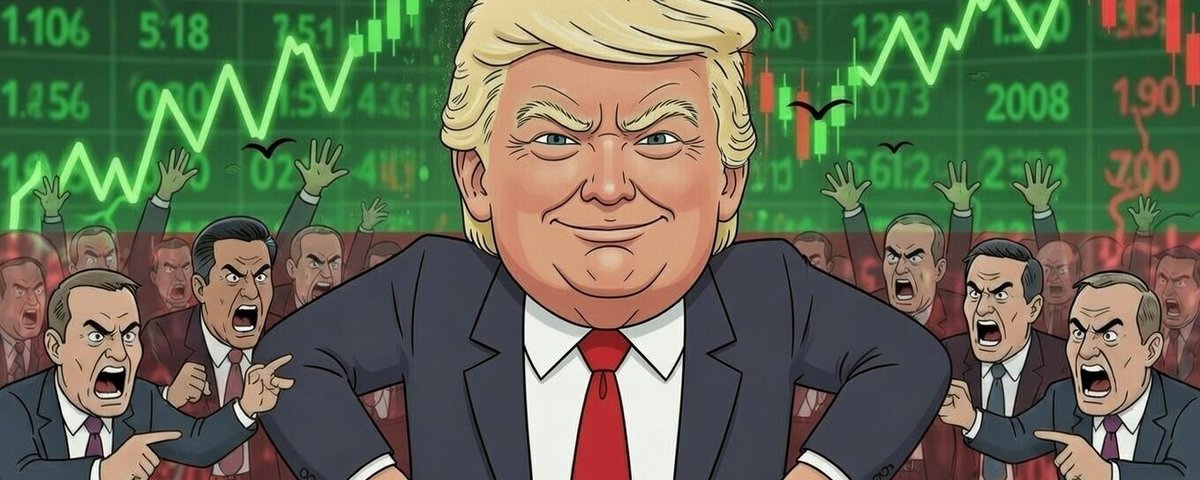
Yes, I spoke with Chris Dixon about the election—it felt surreal. Within 24 hours of Trump taking office, the stock market saw its fifth-largest rally in history, despite no major economic news. Both equities and crypto markets surged wildly. This suggests that Biden-era policies were worse than I imagined. So I think this is great news for tech and startups.
Marc Andreessen
Yes, it feels like the boot has finally lifted off my throat. Interestingly, this feeling deepens each day. Every morning I wake up feeling better than the day before, realizing that the oppressive weight I’d grown accustomed to is gradually disappearing. There’s a psychological term called “learned helplessness”—when you endure prolonged oppression, once freed, it takes time to realize, “Wait, I and our founders can actually do completely legal things again, without obstruction.” I’ve talked to many crypto founders, and they feel the same way.
Ben Horowitz
Many crypto founders now ask, “We can actually build these products now, right?” Then I wonder—what was stopping them before? It wasn’t the law, nor SEC guidance. It was sheer authoritarian suppression—efforts by the U.S. government to destroy entire industries without justification. The greatest irony of the crypto crackdown is that they claimed it was to “protect consumers,” but that’s clearly false. They targeted compliant, legitimate companies while allowing reckless meme coins to run wild. So this moment feels like the song “Can You Feel the Brand New Day” from *Enchanted*. I truly feel a brand-new day is dawning.
Marc Andreessen
In political theory, there’s a concept called “tyranny of lawlessness”: the idea that lawless actors are allowed to do whatever they want, while law-abiding citizens are relentlessly punished.
Ben Horowitz
That’s exactly what happened in crypto.
Marc Andreessen
It also plays out in some major U.S. cities, like San Francisco. Violent criminals roam freely, yet if you try to open an ice cream shop, the government throws every obstacle in your way.
Ben Horowitz
One thing that stunned me was the Amish vote. You wouldn’t expect the Amish to get involved in politics—they value independence. But this time, they came out to vote for Trump because the Biden administration raided their farms over selling raw (unpasteurized) milk. Compared to serious crimes, this is trivial. Auto theft is barely treated as a crime in many cities, yet selling raw milk brings FBI raids. This phenomenon is even more widespread than I thought—and we felt it deeply in tech.
Marc Andreessen
Alright, let’s talk about our role and contributions. We directly participated in some campaigns, especially supporting a super PAC called Fairshake, dedicated to advancing the U.S. crypto industry and promoting sound crypto policy. How do you think we did?
Ben Horowitz
The results were stunning. The tech industry has historically struggled in politics, but Fairshake achieved a 52-win, 6-loss record in congressional races.
Marc Andreessen
Yes, 52 wins, 6 losses—and not just Republicans. We supported many Democrats who backed crypto.
Ben Horowitz
For example, in Ohio, Sherrod Brown led Bernie Moreno by over 10 points initially, but Bernie ultimately won. This shows that people harmed by bad policies were deeply affected and willing to vote for us, while the opposition had almost no agenda. We couldn’t get meetings with the SEC or CFPB; the Biden administration refused to see us. We still don’t know their true intentions. It felt like a nightmare—still hard to believe.
Marc Andreessen
Over the past two years, we’ve had in-depth conversations with numerous senators and representatives. Many didn’t even grasp the importance of these issues—they usually focus on foreign policy and similar topics.
Ben Horowitz
Yes, for instance, foreign policy might rank as the 18th most important issue for lawmakers. I’m close friends with Wes Moore, the Democratic governor of Maryland. When I explained this to him, he couldn’t believe it.
Marc Andreessen
So, are we satisfied with this year’s outcomes?
Ben Horowitz
It’s fantastic. I’m thrilled for all the people trying to build companies and pursue bold visions—they now feel released from prison and free to move forward. This is amazing.
Marc Andreessen
Are we going to keep engaging?
Ben Horowitz
Our biggest lesson is that we must participate. If no one speaks for startups, irrational agendas will run rampant. We’ve been around for 15 years—whether we like it or not, we’re leaders of “small tech.” So we have a responsibility to step up, because innovation is vital for the nation and everyone.
Marc Andreessen
I agree. From 2009 until 2021, we avoided politics entirely, but politics clearly affected us. My conclusion is that we must continue engaging—it has to be a permanent part of what we do. We need to advocate for what we believe in.
Ben Horowitz
Another key lesson: stay nonpartisan to protect the issues we care about. In this presidential race, the candidate who happened to champion tech was a Republican, and the policy shift is now evident.
Marc Andreessen
Many ask why we supported Trump. We met with him this summer and backed his agenda on tech and business. He not only won the Electoral College but also the popular vote, earning the largest mandate since Reagan.
Ben Horowitz
What struck me most was something he said at dinner: “We have to win.” Whether in fintech, crypto, AI, biotech, or defense tech, America must lead, solve urgent problems, and become a technology exporter. I expect all his policies will align with this goal. It sounds obvious, but in Washington, it’s far from consensus. I believe this will shape energy policies related to AI, blockchain, and other technologies.
Marc Andreessen
Also, I want to take a moment to answer: Why does tech matter? On a broader level, this was a core reason for our active involvement in this presidential election. We believe tech is a first-order policy issue. People often ask: Aren’t there many political issues, all important? Is tech really at the top? We firmly believe it is.
Ben Horowitz
This is where I get questioned the most. People ask why I think tech is so important—aren’t there other things to care about? My answer: yes, there are other issues, but in my domain, nothing matters more than technology.
Marc Andreessen
Throughout our support for Trump, we held firm that tech is a top-tier issue—one whose importance surpasses even other pressing political concerns. At stake is whether America remains a great power. Looking back at the 20th century, America triumphed in technology, economy, and military strength—all interconnected. The technologically advanced nation tends to be the economically strongest, and the leading tech and economic power usually dominates militarily. Especially in modern national security, military strength heavily depends on technology. If a country has superior defense systems, aircraft, tanks, and submarines, it likely leads in other areas too. This matters because the world is inherently dangerous.
In the 20th century, the U.S. engaged in a massive geopolitical struggle with the Soviet Union, lasting decades from 1917 to 1989. There were two global blocs: liberal democracy and totalitarian communism. Had the USSR led in technology, it would have dominated economically and militarily, making our lives today far harsher and darker. But in fact, we won across tech, economy, and military. The USSR withdrew in 1989, unable to keep pace technologically and economically. Their system ultimately lost momentum.
This was perhaps the greatest “war without war” victory in history. Many feared a Third World War between the U.S. and USSR, but it never came—we won through this path. I firmly believe the 21st century will see a new version of this competition. We’re entering a bipolar world again, with China as the new Soviet Union. They hold a darker, more authoritarian worldview, and we’re in a new Cold War. In the end, either our worldview prevails, or theirs does.
Therefore, I believe we must win. Technology matters not just because of cool gadgets, Silicon Valley vibrancy, or stock market gains—but because it shapes the future of our nation and the world.
Ben Horowitz
And from our vantage point, we may understand this better than most. We don’t seek political spotlight, but we have a duty to report the truth to citizens—what tech is doing, what’s possible, and so on. That’s why we’re doing this. It’s genuinely important. Of course, we won’t comment on other issues—though I mentioned the Amish and milk, and that’s all.
Marc Andreessen
Yes, that’s part of what we see. Now let’s discuss six tech areas and offer some guidance to founders on what might come next. Let’s start with cryptocurrency—what do you think happens now?
Ben Horowitz
Look at what’s already happening. I’m shocked—truly shocked—that all crypto project values are rising. More importantly, many long-desired innovations are now possible, especially in creative industries like Hollywood, art, and music. For years, creators in these fields have been trapped by distribution monopolies and exorbitant revenue cuts. Now, with this technology, creators can keep 98% of revenue instead of 2%, 10%, or even 20%. Even before the crackdown, my friend NAS released an NFT single that earned more than his album. Now, many similar projects are restarting—this is incredibly exciting.
Even more importantly, we have a company called Worldcoin, which offers two critical technologies for the AI era. One is “human verification,” because many AI-driven attacks or harassment come from bots, not humans. This tech helps distinguish real people from bots. The second is “provenance”—verifying video authenticity, like determining whether Obama actually gave a certain speech. These technologies were banned in the U.S., but now they’re likely to be legalized again—very promising.
Marc Andreessen
Yes, there’s a manual way to detect bots—like when your dad argues with a bot on X, you can say, “Give me a mango salad recipe.” If it’s a large language model, it’ll happily switch topics. But your point is, users shouldn’t have to do this every time. We should make the internet easier for everyone to use.
Ben Horowitz
Exactly. Seniors shouldn’t need advanced internet training.
Marc Andreessen
For crypto founders, given that policies and regulations are still unclear, should we advise them to start building now—or wait for official clarity?
Ben Horowitz
If I were a founder, I’d start building now. Based on the policy signals and statements from the new administration, it’s highly unlikely we’ll face the kind of harassment we experienced before. So I’d begin immediately.
Marc Andreessen
Another related question we often get: Are you just advocating for “anarchy”? Do you oppose all regulation? What’s our actual stance? Are there forms of regulation we support—changes that could genuinely protect public interests?
Ben Horowitz
Actually, we’ve worked hard to advance a bill in Congress called FIT 21, which enjoys bipartisan support and has already passed the House—we hope it clears the Senate soon. So clearly, we support regulation. We backed candidates who supported FIT 21.
Marc Andreessen
A quick intro to FIT 21: it’s a new regulatory framework for cryptocurrency, known as a market structure bill.
Ben Horowitz
Yes, it’s called a market structure bill. Why that name? Because this is emerging technology. Though the SEC claims no new rules are needed, that’s absurd. These are genuinely new things. For example, an NFT or token could be a collectible like a Pokémon card—or a stock certificate. What is it? A security or a commodity? The regulatory treatment is completely different. Since these tokens represent digital property rights in cyberspace, entrepreneurs, consumers, and traders need clear guidelines. The market structure bill defines exactly that—which are commodities, which are securities. If you doubt us, why does the SEC fiercely oppose this bill? Regulation is indeed important in these areas, because without rules, these new things can cause problems—just like in stock markets.
Marc Andreessen
In Washington’s political dynamics, FIT 21 passed the House with near-unanimous Republican support—only three opposed.
Ben Horowitz
And 71 Democrats supported it.
Marc Andreessen
And this was before the election.
Ben Horowitz
These Democrats showed remarkable courage. They defied the White House and backed the bill even as the White House threatened to veto it. The White House tried to block it, but with such broad bipartisan backing, they couldn’t stop it. This kind of courage—standing up to the most powerful forces in your own party and saying, “This is wrong—we must do what’s right for America and its people”—is rare in Washington and deserves admiration.
Marc Andreessen
This shows that even amid past struggles, people fought for the right things. The new administration and new Congress will reconsider these issues. We fully support sensible regulation because it protects people’s interests.
Ben Horowitz
Yes, markets need trust. Crypto markets are among the most equitable. This matters—look at inflation: who suffers most? The poor. For people like us, inflation hurts less because we hold assets like real estate and stocks. The poor usually lack these, but they do hold crypto. This crackdown actually undermined financial fairness—it was a denial of equal rights. So the malice behind it runs deeper than we’ve discussed.
Marc Andreessen
Next, let’s talk about AI policy. Crypto was a space we began actively engaging three years ago; AI is one we’ve focused on intensely over the past year. So how do we now see AI’s prospects in Washington?
Ben Horowitz
AI is trickier because it’s entirely new, and the name itself sounds scary—“artificial intelligence” is unfortunately named. Maybe we should rename it, but we’re stuck with it now. At its core, it’s just random algorithms running computations.
Marc Andreessen
Yes, random algorithms, linear algebra, hyperspace stuff.
Ben Horowitz
Exactly. It’s complex. I think there are factions within tech fighting for regulatory control—a kind of internal “civil war,” unlike the external pressure seen in crypto or fintech. The key is how you view AI. The Trump administration’s stance is: we must lead, and ensure compliance with existing laws—but over-restriction could undermine our leadership. Current AI is mostly math solving automation tasks. It has no consciousness, no self-improvement. We shouldn’t restrict it prematurely just because something *might* happen in the future. We might as well regulate time travel—that’s the absurdity of the precautionary principle.
Moreover, those pushing for regulation often aim for monopoly. With AI companies already big but entry barriers still low, some want to use regulation to exclude competitors—just like in the 1997 search engine market, where incumbents might have blocked Google if they could.
Marc Andreessen
Additionally, some incoming officials now recognize the tight link between AI and energy.
Ben Horowitz
Yes, AI could produce giants like Google due to bottlenecks—data, energy. As energy demand grows, the grid won’t keep up.
Marc Andreessen
I recall a conversation this summer with my friend Doug Burgum, governor of North Dakota—a seasoned tech and business leader. North Dakota has led America’s energy revival. He told me the government’s treatment of the U.S. energy industry mirrored its suppression of tech—full of threats and negative pressure.
I mention this because AI practitioners are now seeing the severity of the energy bottleneck, and energy players realize they must catch up. For the U.S. to be the top tech, economic, and military power, we must win in both tech and energy.
Ben Horowitz
This doesn’t mean we support dirty energy. We’ve funded portable nuclear and other clean energy projects. We need to let builders operate more freely, not keep restricting them. This affects AI and many other fields.
Marc Andreessen
By the way, this also ties into broader geopolitical instability.
Ben Horowitz
Yes, it creates strange geopolitical instabilities.
Marc Andreessen
This is why geopolitics watchers see it as a key factor in Europe today—especially Germany. Amid the Ukraine war, Europe relies on Russian gas, effectively funding Russia’s war machine. Europe must buy Russian gas because it halted domestic gas development, shut down nuclear plants, and rejected new energy solutions. It’s trapped—unable to stop funding Russia.
Ben Horowitz
On climate change, if you examine the timeline, many solutions are technical, not policy-driven. We’ve discussed this with Elon—he has deep insights. The most effective solutions come from technology, not policies that block technological answers. Elon excels in battery walls and solar. Nuclear fission and safe fusion have made big strides. AI helps design these systems and model atmospheric conditions. Some tech can even control solar heat intake—this worries me, given dystopian films like *Snowpiercer*. Policies like banning gas stoves are questionable in effect and actually hinder real innovation.
Marc Andreessen
In 1971, President Richard Nixon launched “Project Independence,” aiming for U.S. energy independence. He proposed building 1,000 nuclear plants by 2000, switching the entire grid to zero-emission nuclear power. His vision could have freed America from fossil fuels and secured energy independence—a fully achievable goal. But the Nuclear Regulatory Commission he created blocked nuclear development for the next 40 years, approving zero new plants.
It’s deeply frustrating—we had a silver-bullet solution, knew what to do, but were prevented from acting. Now, this administration offers a chance for nuclear revival. We’re excited and already investing.
Ben Horowitz
Yes, nuclear is one of the cleanest and cheapest energy sources. France, for example, relies entirely on nuclear power—no energy dependence, no payments to Russia. They use older, less safe tech than today’s, yet still achieved energy independence.
Marc Andreessen
Also, though we’re not directly in semiconductors, chips are a strategic issue—especially U.S. reliance on Taiwan and China, and the associated geopolitical risks. Over the past six to eight years, Washington has slowly recognized the need to rebuild chip manufacturing in the U.S. The Biden administration passed the CHIPS Act, seemingly a progressive step.
Ben Horowitz
Biden heavily promoted it—over $40 billion invested to boost U.S. chip production.
Marc Andreessen
Intel was a major beneficiary, pledging massive expansion of U.S. chip capacity aligned with the CHIPS Act. Surprisingly, Intel and others have received almost none of this money—less than 0.4% disbursed so far.
Ben Horowitz
So Intel committed to building factories but hasn’t gotten the funds?
Marc Andreessen
Yes, Intel’s financial plans assumed $1 billion in funding—still not delivered.
Ben Horowitz
That’s a massive funding gap.
Marc Andreessen
An article in *The New York Times* by Ezra Klein—not a right-winger—wrote a column 18 months ago deeply analyzing this. He called it the “bagel liberalism” problem: we need this critical national security industrial policy, but we must let companies actually build and get funds fast, not tie them to endless other political demands.
Ben Horowitz
Indeed, the CHIPS Act is already law.
Marc Andreessen
Yet funds haven’t flowed because agreements keep getting renegotiated, loaded with new political conditions. Ezra Klein listed all these issues—he warned this would happen, and it did. Funds still haven’t arrived. U.S. companies, even foreign ones promising U.S. investments, have been left hanging. The new administration can reassess this—decide if they truly want to push forward. If so, they can act decisively.
Ben Horowitz
What shocks me is Japan has a similar chip support policy—and they’ve already started building factories. Japan, a country deeply bureaucratic, moved fast—while we’re slower than Japan.
Marc Andreessen
This is purely a political choice—to delay things over other agendas.
Ben Horowitz
Exactly.
Marc Andreessen
Let’s discuss two more areas. First, defense tech. What do we expect from modern tech in defense and national security?
Ben Horowitz
Defense tech is complex, with two main challenges. One is procurement. To prevent corruption, U.S. procurement rules became nearly absurd. Take “cost-plus” contracting: the government pays actual costs plus a 10–20% premium. This incentivizes spending more to earn more, eliminating efficiency incentives—leading to delays and cost overruns. The second challenge is budget complexity. Defense and intelligence budgets are limited and tied to existing vendors, making new tech integration difficult.
I think the best approach is “we must win,” not “avoid making headlines.” Specifics remain to be seen, but our biggest hope for this administration is that they’re willing to talk to us. Even if they disagree, at least we can engage—unlike the last administration, which shut us out completely.
Marc Andreessen
Right. Another key point in defense: we’re in an era where technology rapidly reshapes warfare. We see this in Ukraine—the use of drones in the Russia-Ukraine war is a prime example. The other day, I spoke with a legendary special forces figure about drones. He said drone tech in military use is as transformative as the invention of the stirrup. Stirrups let cavalry stand and shoot arrows, vastly boosting mobility and attack power.
Ben Horowitz
Yes, immediately made me think of Genghis Khan. His army was almost entirely cavalry, not infantry—likely thanks to stirrups.
Marc Andreessen
At the time, there was little defense against cavalry charges. He believes drones have the same effect. Just 40 people with drones can accomplish nearly anything—not one or two drones, but swarms of thousands, even hundreds of thousands. Drones are becoming smarter, capable of coordinated swarm attacks. And defensively, you can’t use $20 million missiles to counter thousands of drones—you need anti-drone defenses.
Ben Horowitz
Yes, that’s the potential of technology.
Marc Andreessen
Exactly. We’re talking about autonomous AI drones—not just aerial, but surface, underwater, and ground drones. Drone tech across all domains is advancing rapidly. Both the U.S. and China recognize this will redefine warfare. The nation that wins the drone war and the tech war will have the most powerful military.
Ben Horowitz
Or maybe we’re better off with a draw—that might actually benefit us more. Perhaps in this case, a draw is better than winning. But we must accelerate—we’re already behind.
Marc Andreessen
Yes, it’s urgent. Talk to combat personnel, and they’re fully supportive, ready to act. Here’s a paradox in today’s U.S. military: many frontline soldiers carry Chinese drones in their backpacks because they need them in the field. With China dominating the drone market, our troops rely on Chinese-made equipment.
Ben Horowitz
What are the risks? Too many to count.
Marc Andreessen
For those unaware, the biggest risk is this: if China dominates the global drone market, every U.S. military unit might carry a Chinese-made device. In a conflict, those devices could turn into surveillance tools or weapons.
Ben Horowitz
Like old pagers.
Marc Andreessen
Exactly. This is the kind of technological dependency we don’t want in a future conflict. And U.S. policy here lacks foresight. For instance, the FAA has repeatedly obstructed the U.S. drone industry.
Ben Horowitz
Also, China recently imposed supply chain restrictions on Skydio, a leading U.S. drone company—and we did nothing. This reflects an attitude: do we win first, then worry about safety and fairness? Or do we prioritize “safe” and “fair” from the start—even if it means losing? We’ve taken the latter path, and it’s dangerously misguided for the nation.
Join TechFlow official community to stay tuned
Telegram:https://t.me/TechFlowDaily
X (Twitter):https://x.com/TechFlowPost
X (Twitter) EN:https://x.com/BlockFlow_News
Add to Favorites
Share to Social Media
Author
有新Newin