Understanding TAC: The Catalyst Reigniting TON's Ecosystem Heat, the Lubricant Enabling Seamless Migration of EVM Applications
TechFlow Selected TechFlow Selected
Understanding TAC: The Catalyst Reigniting TON's Ecosystem Heat, the Lubricant Enabling Seamless Migration of EVM Applications
TAC's core objective is to serve as a bridge between EVM applications and the TON ecosystem.
 Navigating Web3 tides with focused insights
Written by: TechFlow
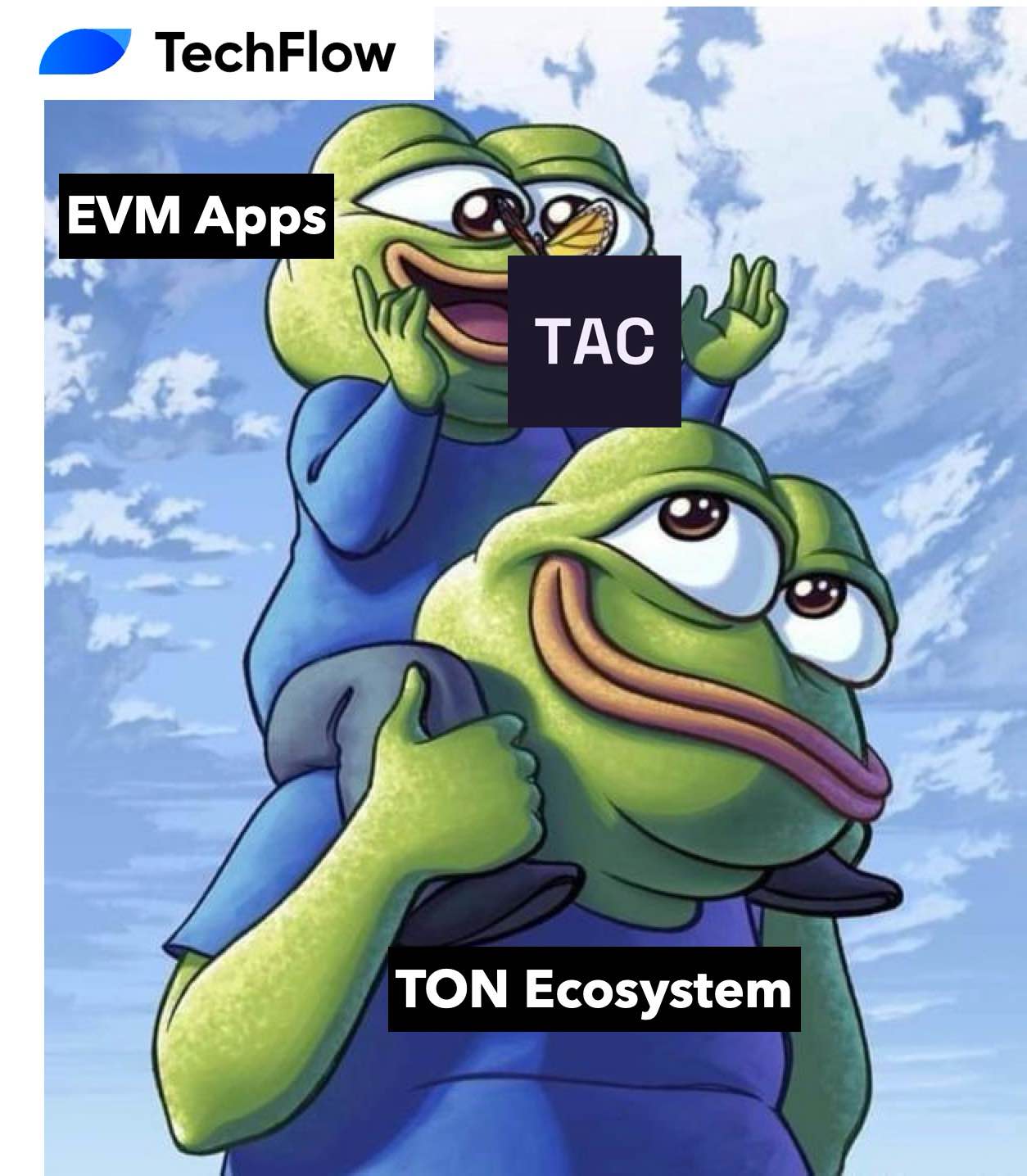
As Bitcoin soars, the market has once again embarked on a journey to find new narratives and opportunities.
Since there’s no major new narrative emerging in the short term, one smart move during a bull run is internal structural adjustment within existing narratives.
For example, migrating EVM applications to the TON ecosystem.
Two days ago, tokens within the TON ecosystem saw broad gains—some rising over 100% in a single day, HMSTR up more than 70%. Market attention is returning to TON and Telegram-related applications.
Research also shows that daily transaction volume on the TON blockchain has increased 12-fold over the past year, from 100,000 to 1.2 million.
However, TON has long faced a key challenge: TON's technology xxxxxx makes it difficult to xxxxx.
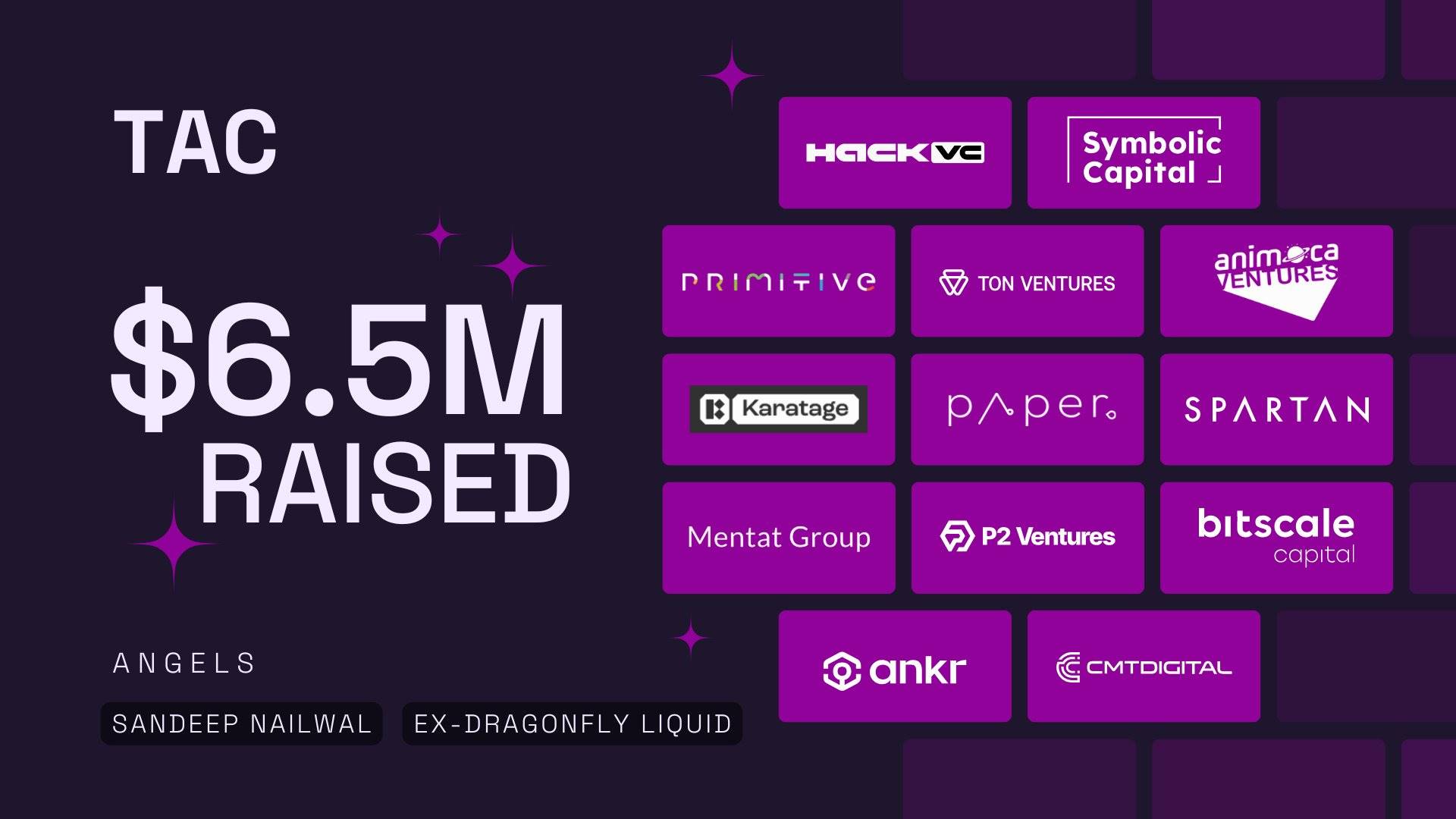
Yesterday, TAC, a network expansion project for TON, completed a $6.5 million seed round led by Hack VC and Symbolic Capital, with participation from Primitive, Paper Ventures, Karatage, Animoca Ventures, Spartan Capital, TON Ventures, and Ankr.
One of the project’s core features is enabling TON and Telegram users to access Ethereum Virtual Machine (EVM) applications directly within apps. Conversely, this means EVM-based applications can now seamlessly migrate to the TON ecosystem.
At this juncture, facilitating interoperability between crypto ecosystems—allowing capital and applications to move seamlessly—might just unlock new opportunities.
We took a quick look at TAC’s design to help you get an early understanding.
Lubricating the Migration of EVM Applications
In the blockchain world, an ecosystem's prosperity often depends on the richness of its applications and user engagement. As a high-profile project closely tied to Telegram, TON has always drawn significant attention.
Yet despite TON’s vast potential user base, its ecosystem development faces a major obstacle: incompatibility with mainstream Ethereum Virtual Machine (EVM) applications.
While TON’s unique architecture brings advantages in efficiency and low cost, it also creates a technological divide from the EVM ecosystem. This means mature DeFi, NFT, and Web3 applications cannot run natively on TON, limiting the pace of ecosystem growth.
For developers, migrating existing EVM applications to TON typically requires extensive code rewrites—time-consuming, labor-intensive, and error-prone.
When a heterogeneous but traffic-rich platform like TON (regardless of traffic quality) meets EVM-native projects eager to expand into new user bases, what you have is a desire for migration—but one fraught with friction and inefficiency.
And if they miss this window of opportunity, they’ll watch as TON-native apps eat up the available market share.
This makes TAC’s mission clear: to provide an elegant solution to this very problem. TAC, short for TON Application Composer—think of it as a “weaver” of TON applications—aims to become the bridge between EVM apps and the TON ecosystem.
With TAC, developers can deploy their EVM applications onto the TON network at near-zero cost, while users can interact with these apps using their familiar TON wallets.
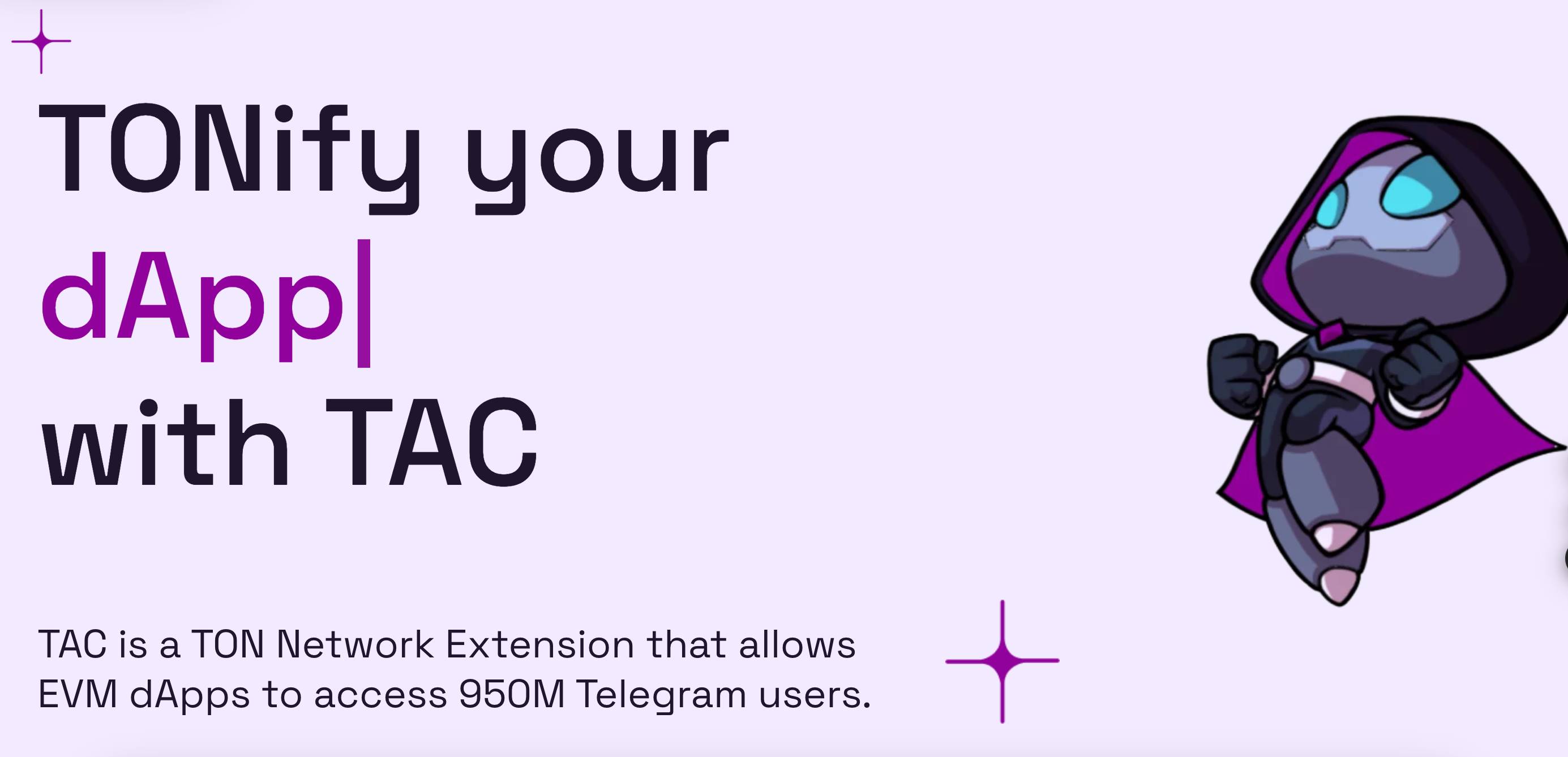
A promising and imaginative narrative is already laid out on the project’s website:
Tonify your dApps.
According to official materials, with TAC, you can achieve the following:
-
Native TON experience: Access EVM applications directly from your TON wallet, with the familiarity and security you trust;
-
Simple integration: Migrate your EVM applications to TON without rewriting code or learning new frameworks;
-
Proxy applications: Automatically generated smart contracts across TON and EVM networks enable direct communication between TON wallets and EVM applications;
But knowing is easier than doing. Let’s examine how TAC delivers on its promises through technical implementation.
Proxy-Based Design, Unlocking Cross-Chain Potential
In simple terms, TAC’s innovation lies in its concept of "Proxy Apps."
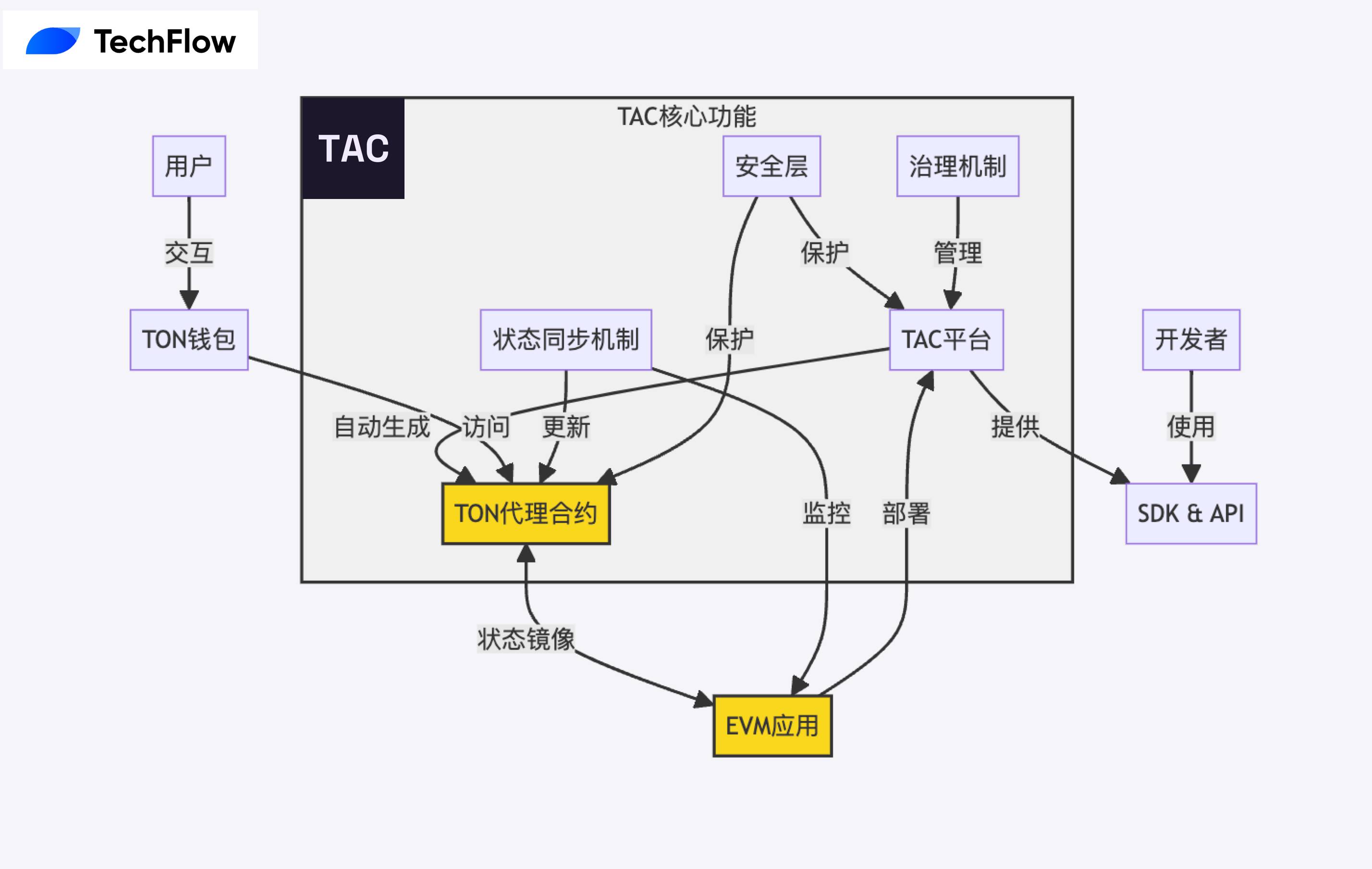
These proxy applications act as "avatars" of EVM smart contracts on the TON network, automatically handling cross-chain communication and state synchronization. For developers, this means they can retain their original Solidity codebase without learning new languages or rewriting logic. For users, it enables seamless access to rich EVM application ecosystems—all within Telegram, a platform with hundreds of millions of users.
Going deeper, these proxy apps are not just simple message relays, but a full-fledged cross-chain protocol implementation.
When a developer deploys an EVM application to the TAC platform, the system automatically generates a corresponding proxy contract on the TON network. These proxy contracts serve as precise "clones" of the original app, replicating all functionalities and states on TON.
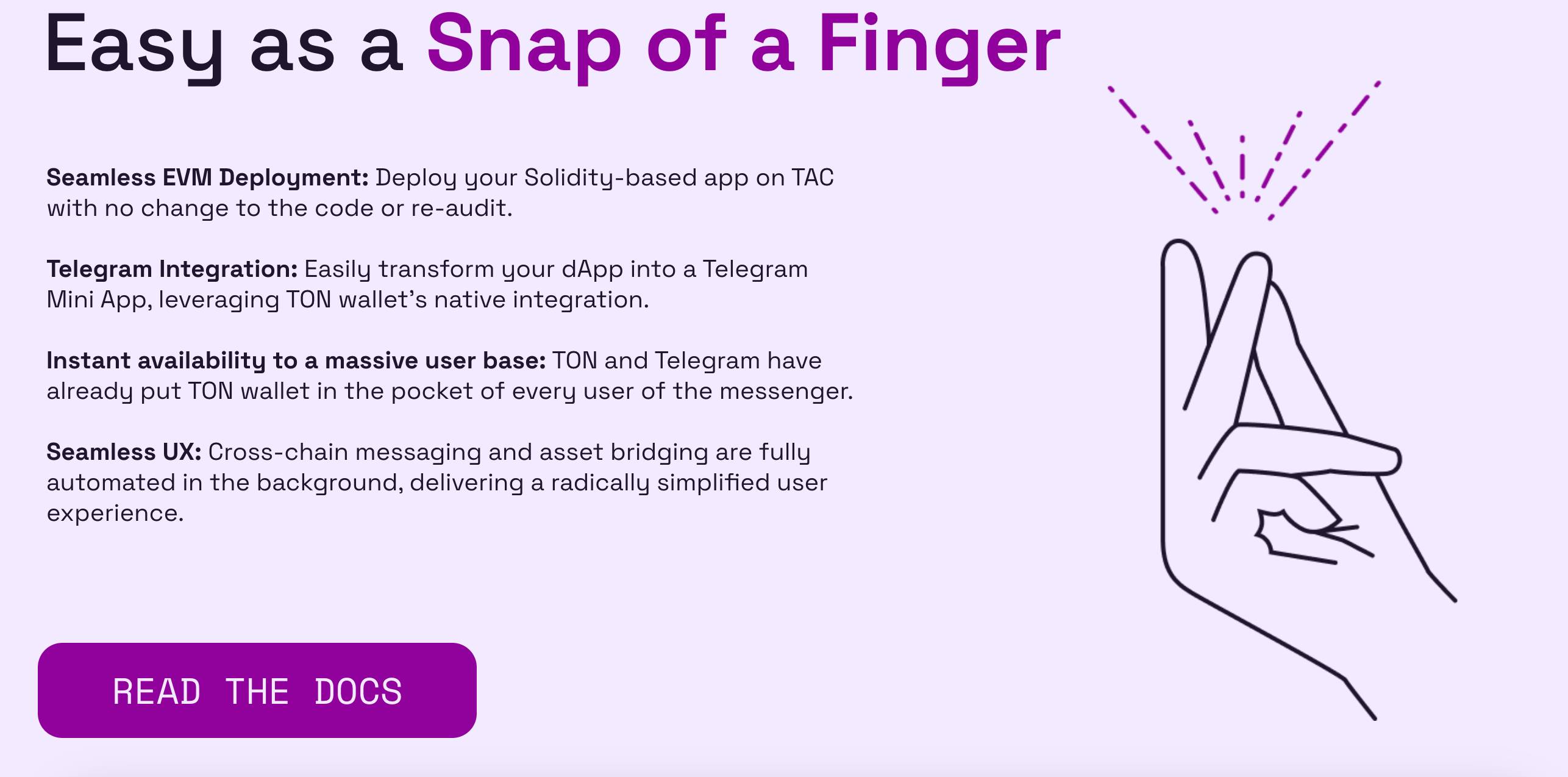
Let’s take a concrete example: suppose a developer wants to port a popular Ethereum DEX to TON. Traditionally, this would require completely rewriting smart contracts and solving complex cross-chain state sync issues. With TAC, the process becomes remarkably simple: the developer simply submits their existing Solidity contract to TAC, and the system automatically generates a TON-side proxy contract and establishes a communication bridge between the two chains.
Another technical highlight of TAC is its innovative state synchronization mechanism. Traditional cross-chain solutions often rely on complex consensus mechanisms to ensure data consistency—increasing system complexity and introducing security risks. TAC uses a technique called "state mirroring," leveraging intelligent event listening and state replication to ensure the TON-side proxy contract reflects real-time changes in the EVM contract. This design enhances reliability while significantly reducing cross-chain operational costs.
For developers, TAC’s value extends beyond technical convenience. It introduces a new development paradigm: Write once, deploy across multiple chains.
Developers can continue using familiar tools like Solidity without needing to learn TON-specific tech stacks. With SDKs and APIs provided by TAC, deployment and management become as easy as installing a plugin. This low-barrier approach could be a key driver behind the next wave of DApp innovation.
Equally important is TAC’s breakthrough in user experience. Traditional cross-chain applications often require users to hold native tokens on multiple chains to pay gas fees—an intimidating hurdle for average users. TAC elegantly solves this: users only need TON tokens to interact with any EVM application deployed via TAC. Such seamless UX is crucial for mass adoption of Web3 applications.
Still, every technological innovation faces challenges. For TAC, one of the biggest is ensuring security while maintaining high efficiency. The project employs a multi-layered security architecture—including smart contract audits, state verification, and fault recovery mechanisms—to safeguard cross-chain operations. Additionally, TAC introduces a novel governance model allowing community participation in critical protocol upgrades, providing strong support for long-term sustainability.
Outlook and Roadmap
According to the project’s official X account, TAC will launch its testnet during Devcon in Bangkok. However, specific details and rules for participation have not yet been published on the website.
That said, following common practices, TAC may introduce social media campaigns, testnet interactions, token bridging tasks, and incentives for both end-users (C-side) and developers (B-side)—a necessary path for any infrastructure platform.
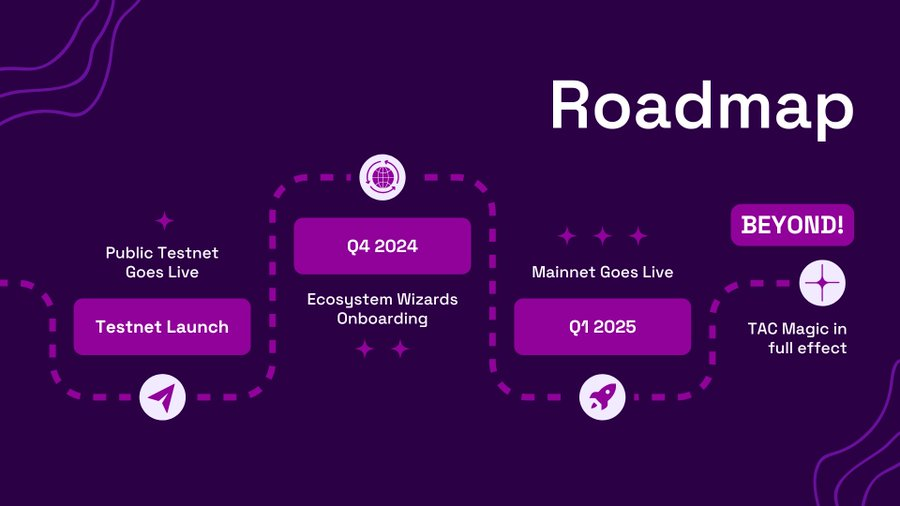
The mainnet launch is currently planned for Q1 next year. Whether the project gains momentum during this window will depend on two factors: whether the broader crypto bull market continues, and how well the TON ecosystem performs going forward.
The hype around click-to-earn games has largely faded, and most projects experienced varying degrees of user loss and declining interest after their token launches.
Can TAC bring diverse EVM applications into the TON ecosystem, revitalizing what currently appears to be a drying-up landscape? Only time will tell.
Join TechFlow official community to stay tuned
Telegram:https://t.me/TechFlowDaily
X (Twitter):https://x.com/TechFlowPost
X (Twitter) EN:https://x.com/BlockFlow_News
 深潮TechFlow