Hot Topic Explained: Nine Misconceptions About Chain Abstraction
TechFlow Selected TechFlow Selected
Hot Topic Explained: Nine Misconceptions About Chain Abstraction
Is chain abstraction the end of cross-chain bridges? How does chain abstraction redefine liquidity? Is chain abstraction secure?
 Navigating Web3 tides with focused insights
Recently, Chain Abstraction has gained increasing attention in both Chinese and English communities, with founders of projects like Uniswap and Safe sharing their views. Combining insights from researcher @HelloLydia13's series on Chain Abstraction, Biteye summarizes the nine prevailing misconceptions about Chain Abstraction today.
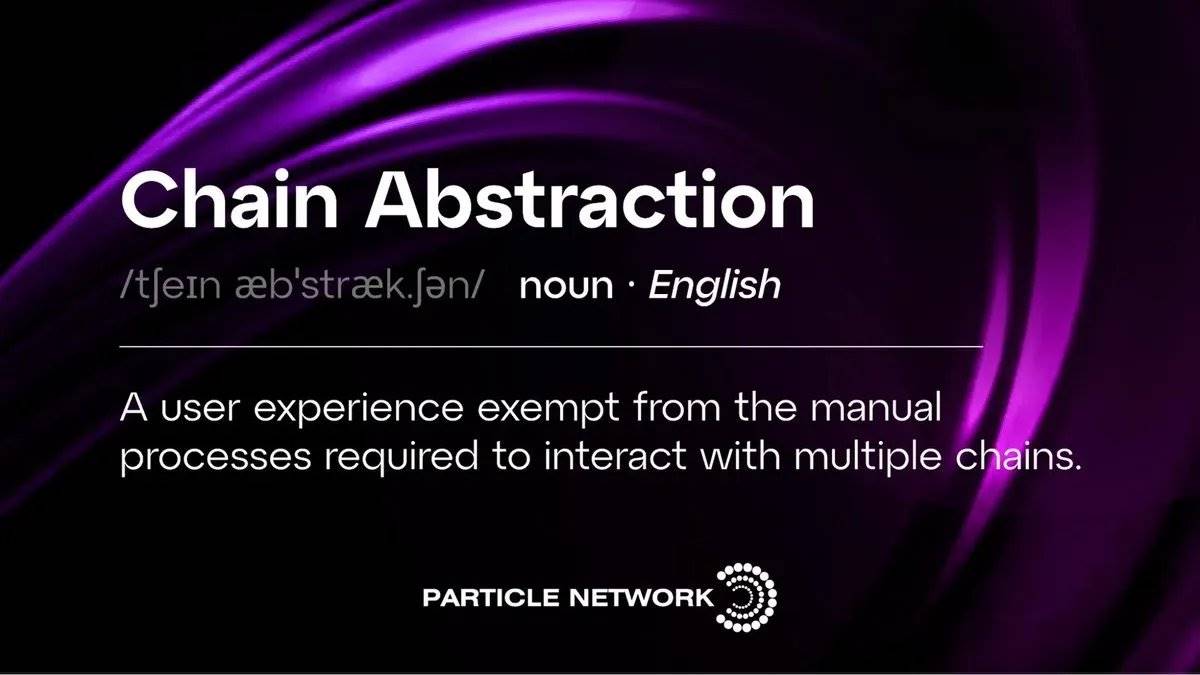
Before diving in, here's a one-sentence definition of Chain Abstraction: a user experience that eliminates the need for manual interaction across multiple chains.
1. Chain Abstraction = Cross-chain Bridge?
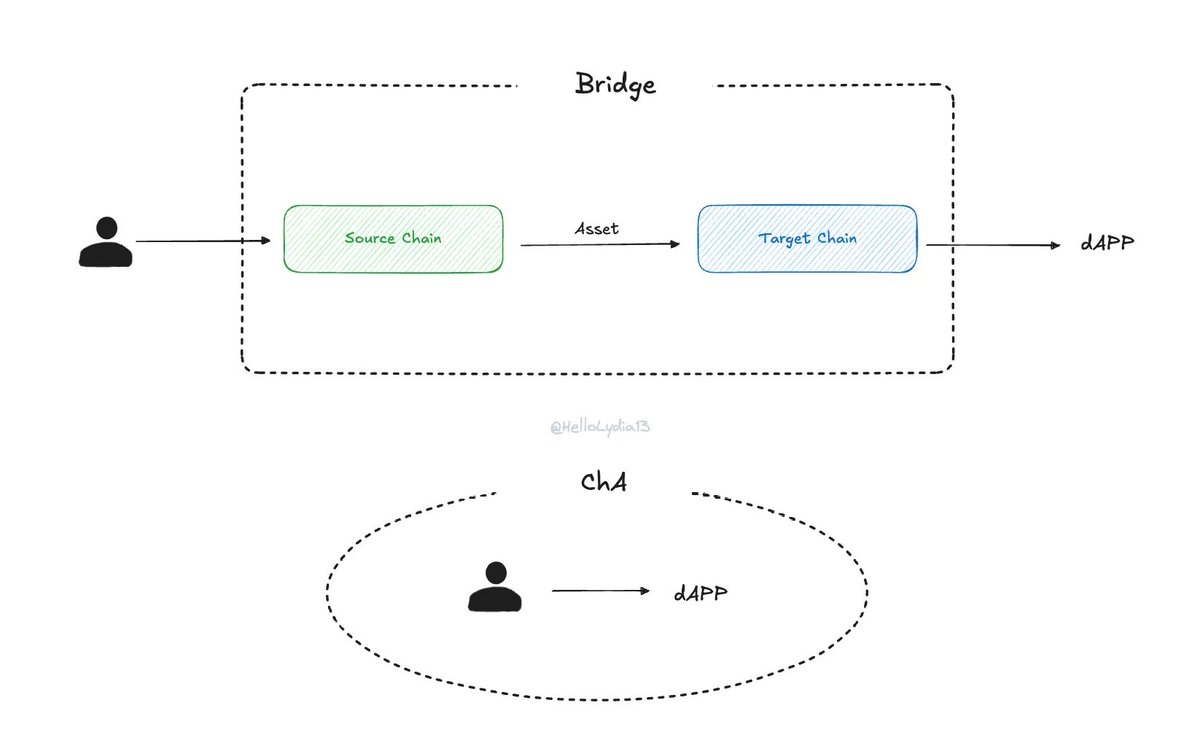
The underlying logic of Chain Abstraction is fundamentally different from that of cross-chain bridges.
-
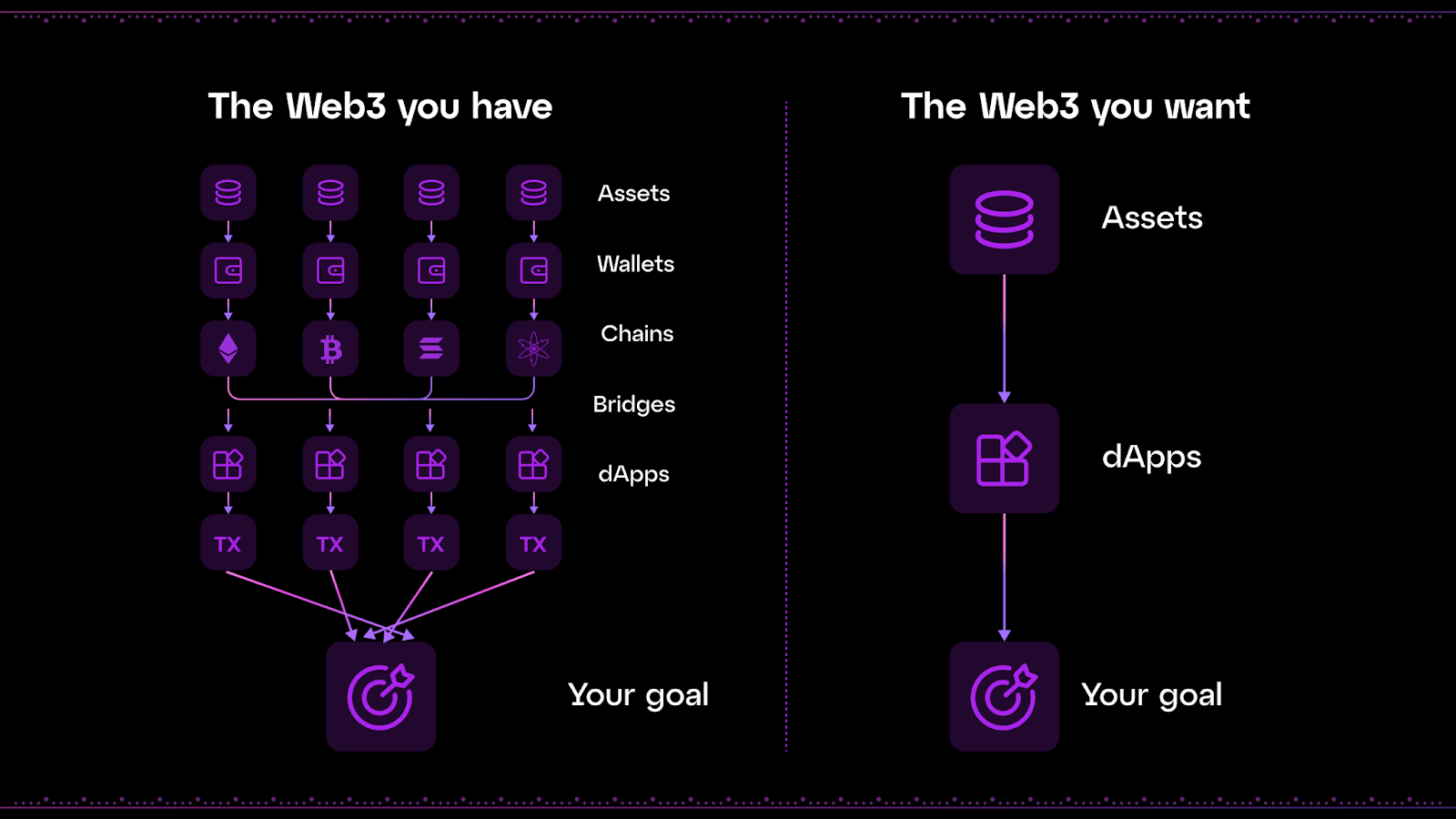
Cross-chain bridges are essentially tools users must use as an extra step to achieve a specific interaction goal.
-
Chain Abstraction removes this additional barrier, allowing users to directly use their entire on-chain balance for dApp usage or transfers—eliminating the concept of “crossing” chains altogether.
In this sense, Chain Abstraction can be seen as the end of cross-chain bridges.
2. Chain Abstraction = Multi-chain Wallet?
The key difference between Chain Abstraction and multi-chain wallets lies in liquidity integration.
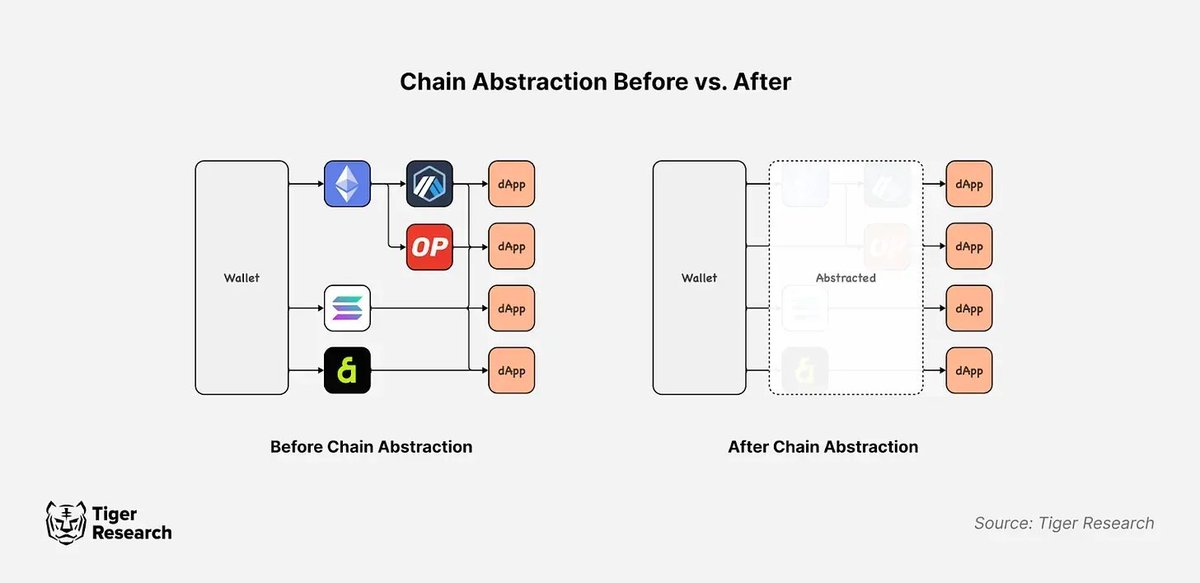
A multi-chain wallet merely acts as an "aggregator" at the user interface level; users still have to manually switch between different chains when using dApps.
Chain Abstraction truly "integrates" multi-chain liquidity. From a purchasing power perspective, assets on any chain are equivalent, and any token can be used to pay gas. Users only need to focus on interacting with the dApp itself.
To summarize:
-
Multi-chain wallet → A wallet that makes it easier to switch chains for asset management.
-
Chain Abstraction → Skip chains entirely and interact with assets and dApps directly.
3. Chain Abstraction = Account Abstraction?
From a non-technical perspective:
-
Account Abstraction is like having a hammer and looking for nails—an established technical upgrade (ERC-4337, EIP-3074, EIP-7702, EIP-7560) initiated by the Ethereum Foundation from the supply side regarding account architecture.
-
Chain Abstraction is finding a nail and then seeking a hammer—it addresses a clear industry problem: too many chains, fragmented infrastructure.
The problem space for Chain Abstraction is well-defined, which is currently rare in Web3. Only real demand can drive actual adoption of projects and value capture for tokens.
4. Chain Abstraction = Intent?
Chain Abstraction and intent exist on completely different dimensions.
-
Broadly defined, intent remains a vague concept, whereas Chain Abstraction is a mature sector with clear definitions, problem scenarios, research frameworks, and ecosystem maps.

-
Narrowly defined, intent focuses on technical details, while Chain Abstraction is a higher-level concept applicable to all forms of dApps.
-
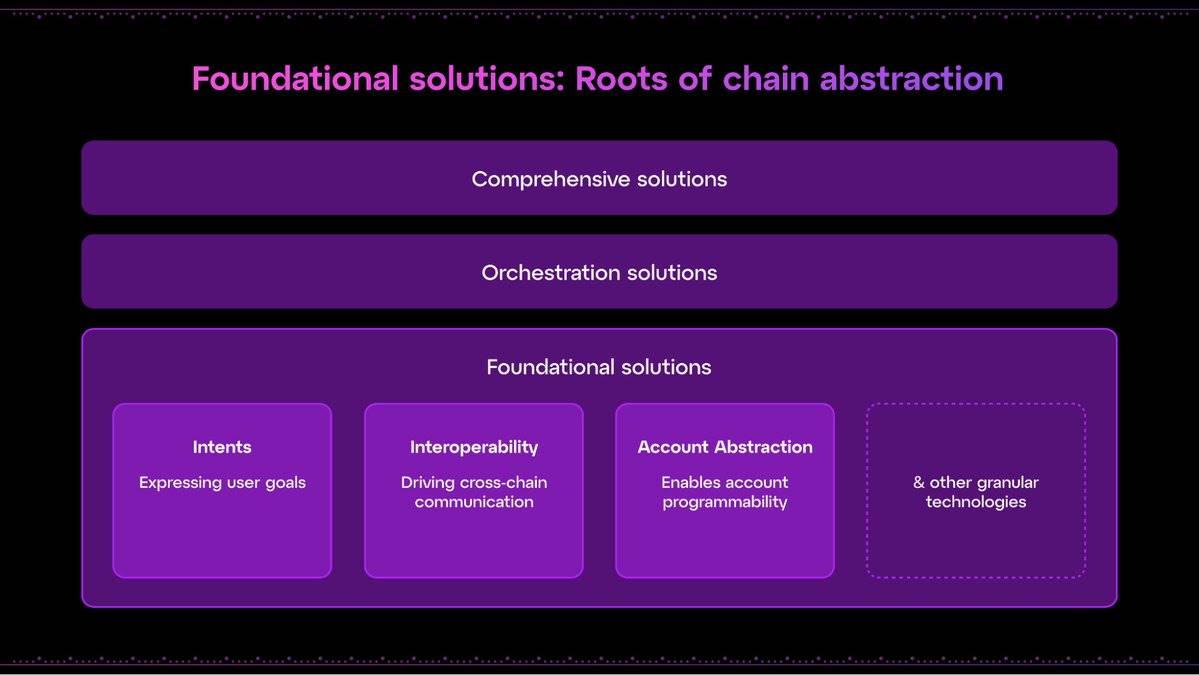
Intent can serve as a key technology enabling Chain Abstraction, alongside Account Abstraction and interoperability protocols.
5. Chain Abstraction = UX Optimization?
Chain Abstraction is not just simple UX optimization. It fundamentally transforms the traditional TVL model (static, asynchronous, non-real-time, requiring pre-crossing assets to specific chains) into a fluid, real-time multi-chain ecosystem (assets usable anytime, anywhere).
This redefines the very concept of liquidity—making multi-chain liquidity truly “liquid.”
-
For public chains: New chains no longer need to acquire and lock TVL upfront but can focus from day one on specific use cases like payments, gaming, or trading.
-
For users: The concept of distributed multi-chain assets disappears. There’s no need to deposit funds across various chains—just check the total account balance and use it instantly.
-
For developers: Building products redundantly within closed, isolated ecosystems becomes unsustainable. True innovation becomes necessary.
6. Chain Abstraction Gas Costs Are High?
This can be addressed from two angles:
-
Does it increase transaction costs on individual chains? No. The cost incurred by Chain Abstraction transactions across chains is equivalent to what users would pay if moving assets manually.
-
Does it add extra gas fees? It depends on the Chain Abstraction solution and dApp. For example, with Particle Network, the total gas paid includes gas to its underlying L1, but this portion is extremely low—nearly negligible—compared to external chains.
Additionally, Chain Abstraction allows projects to subsidize gas. Some projects may even reduce gas costs through optimized底层 interactions (e.g., introducing clearing layers, transaction batching).
In summary: Costs are nearly identical (and could be lower in the future), but the experience is significantly better.
7. Does Chain Abstraction Introduce Interaction Security Risks?
This can be answered from three aspects:
-
Does it interfere with user decisions? No. Chain Abstraction does not interfere with user decisions—it only improves interaction efficiency after the decision is made.
-
Does it deprive users of awareness and control? No. Under Chain Abstraction logic, users retain full visibility into the underlying mechanics of each transaction and maintain sole control over their assets across chains.
-
Does it introduce additional security risks? This depends on the specific Chain Abstraction solution and dApp. Well-designed Chain Abstraction systems can remain decentralized and transparent.
In short, Chain Abstraction aims not to influence *which* dApp users interact with, but to make their chosen interactions seamless and efficient. User rights are not compromised in this process, and well-designed Chain Abstraction solutions are highly secure.
8. Since Only One or Two Top Chains Have Traffic, Isn't Chain Abstraction Unnecessary?
The reality is not “only top chains have traffic.” Consumer perception of social media traffic does not reflect actual chain activity.
Beyond Base and Solana, L2s such as Arbitrum and Mantle—which may not be prominent to average users—have accumulated substantial TVL. TON and Aptos both surpass Ethereum in monthly active users. Polygon, Blast, and Starknet generate $20–30 million in fee revenue annually. Claiming these chains “have no traffic” is unreasonable.
The future cannot be built on a single chain, nor will it be dominated solely by “top chains with traffic.”
A single-chain future is impossible because scaling a monolithic chain infinitely is unfeasible and leads to severe risk concentration—Web3 cannot rely on a single state machine.
The future won’t see “only top chains and apps getting traffic,” given the increasingly diverse L2 ecosystem within Ethereum (Unichain, Movement), the strong rise of new EVM L1s (Monad, Sei, Berachain), vibrant non-EVM ecosystems (Sonic, Sui, Aptos), and continuously lowering deployment barriers for appchains (monthly operating costs as low as $1,000).
In short, we face an irreversible multi-chain future. Chain Abstraction is inevitable, regardless of individual opinions.
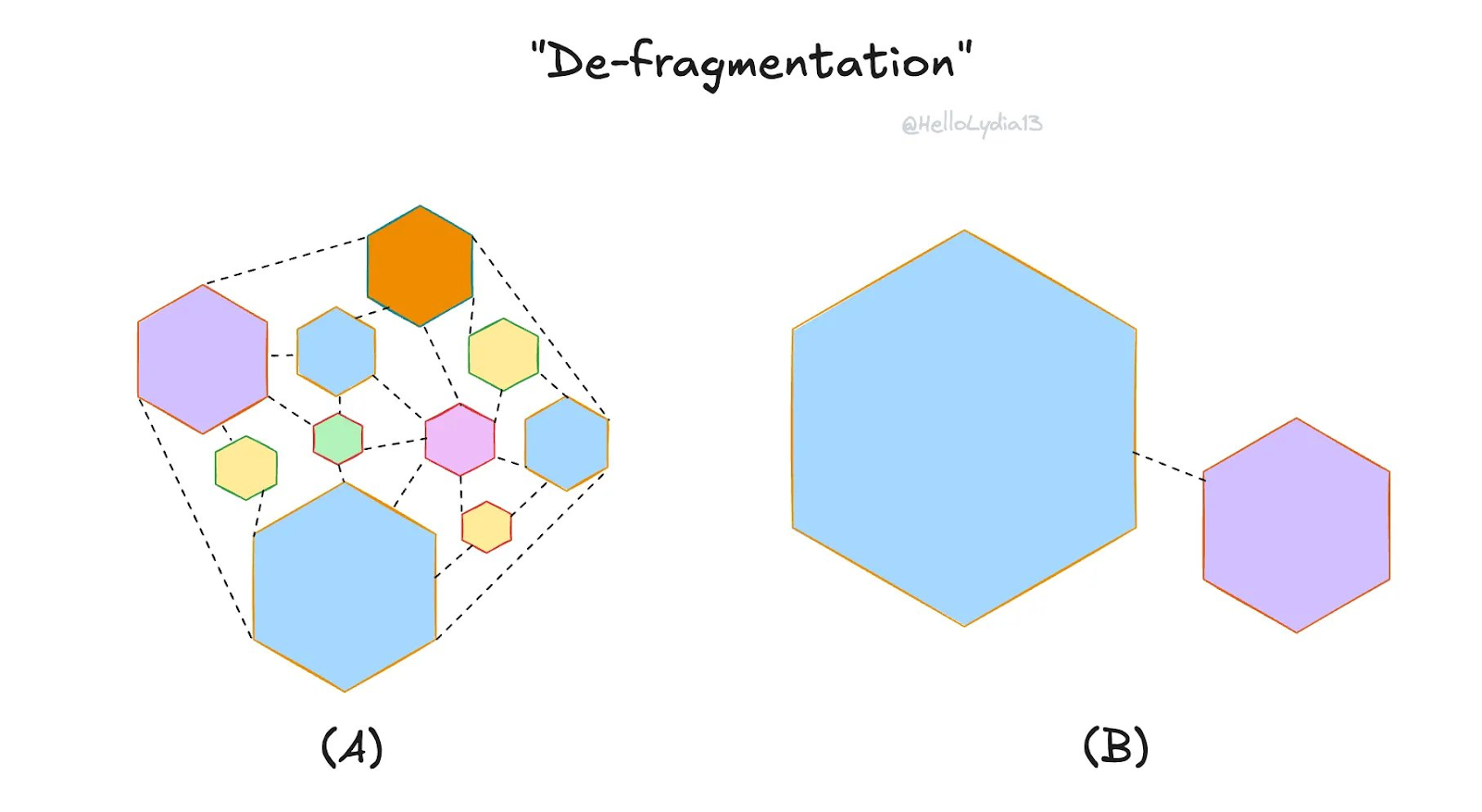
9. Doesn’t Chain Abstraction Fail to Fundamentally Solve Fragmentation?
We define the resolution of fragmentation from two perspectives:
-
For users: The most direct pain point of fragmentation is needing to manually bridge across chains, prepare different gas tokens, and frequently manage balances across multiple chains. Chain Abstraction has already solved this.
-
For developers: There are two approaches to solving fragmentation: 1) Deploy contracts across all chains, but user experience remains fragmented. 2) Deploy on a single chain yet allow access from any chain, seamlessly tapping into liquidity from other chains—this is Chain Abstraction’s solution.
Thus, Chain Abstraction resolves fragmentation from both user and developer perspectives.
Completely unifying underlying blockchain liquidity is impractical. Fundamental differences between blockchains make atomic equivalence impossible.
Conclusion
Interpretations of Chain Abstraction vary widely. Different groups emphasize different aspects when discussing it, which may explain why @HelloLydia13 chose to clarify misconceptions first. Only by returning to first principles can truth become clearer through debate.
In summary, unlike pure “hype narratives,” Chain Abstraction is a clearly defined, rapidly evolving sector driven by genuine demand. We believe Chain Abstraction will ultimately benefit everyone and lead the next wave of innovation in the industry.
Join TechFlow official community to stay tuned
Telegram:https://t.me/TechFlowDaily
X (Twitter):https://x.com/TechFlowPost
X (Twitter) EN:https://x.com/BlockFlow_News
 @BiteyeCN