

Why are developers betting on the Move public blockchain?
TechFlow Selected TechFlow Selected
Why are developers betting on the Move public blockchain?
Core logic: For a general-purpose L1, DX is more important than UX.
 Navigating Web3 tides with focused insights
By Alex Liu, Foresight News
DX Matters
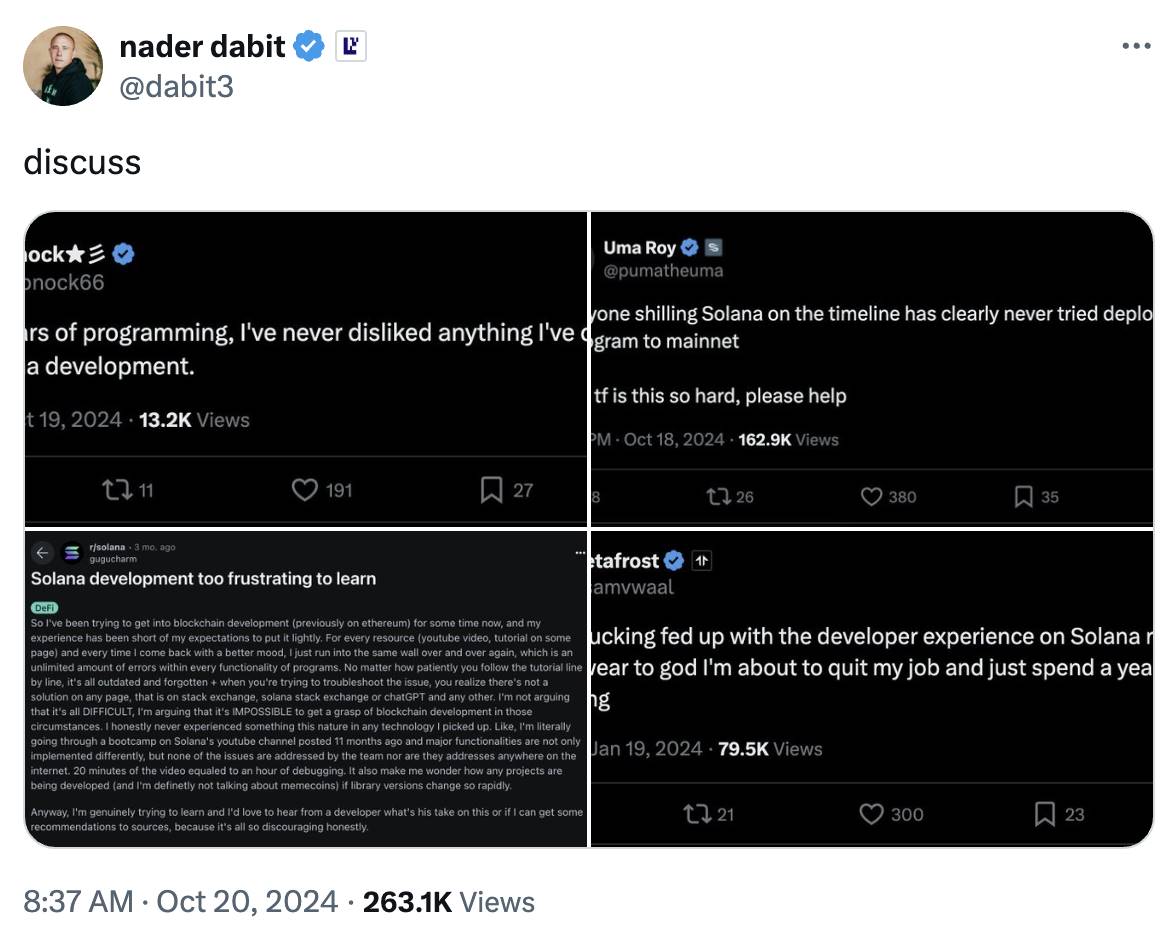
On October 22, nader dabit, DevRel at EigenLayer, posted a tweet on X showing screenshots of four different people complaining about the Solana developer experience—sparking significant discussion in the community.
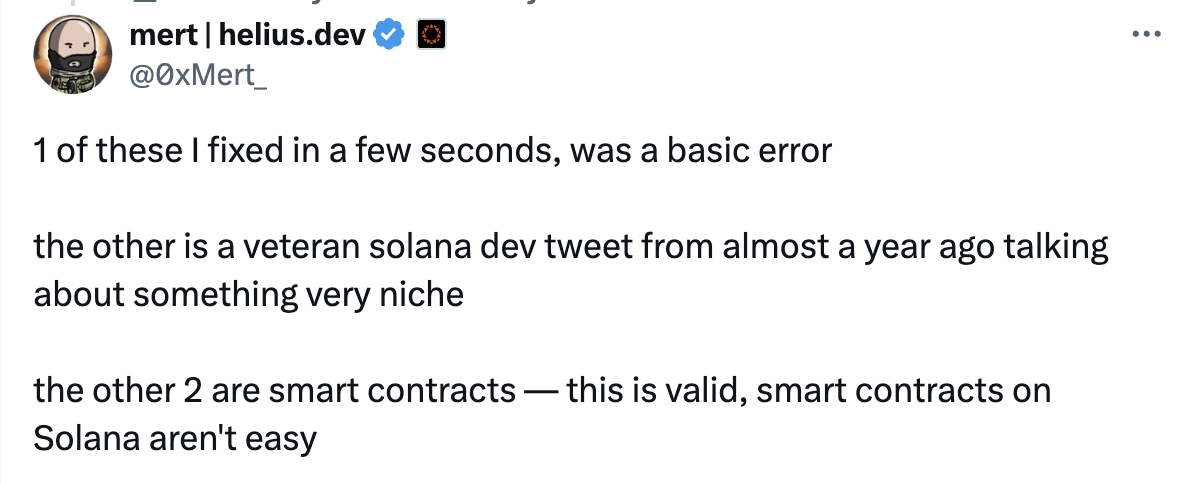
Mert, CEO of Helius and a prominent figure in the Solana ecosystem, pushed back against two of the complaints but still admitted: "Writing smart contracts on Solana isn't easy."
This highlights a current weakness for Solana—its Developer Experience (DX). Unlike User Experience (UX), users cannot directly perceive a blockchain's DX. Yet this is precisely why, despite Solana already dominating the high-performance L1 landscape, I am choosing to bet on Move-based blockchains. (The author is bullish on and holds SOL, SUI, and APT.)
The logic is simple: in the long run, for general-purpose L1s, DX matters more than UX.
Does DX matter? Yes. DX affects developer onboarding—and developers are the moat for EVM ecosystems.
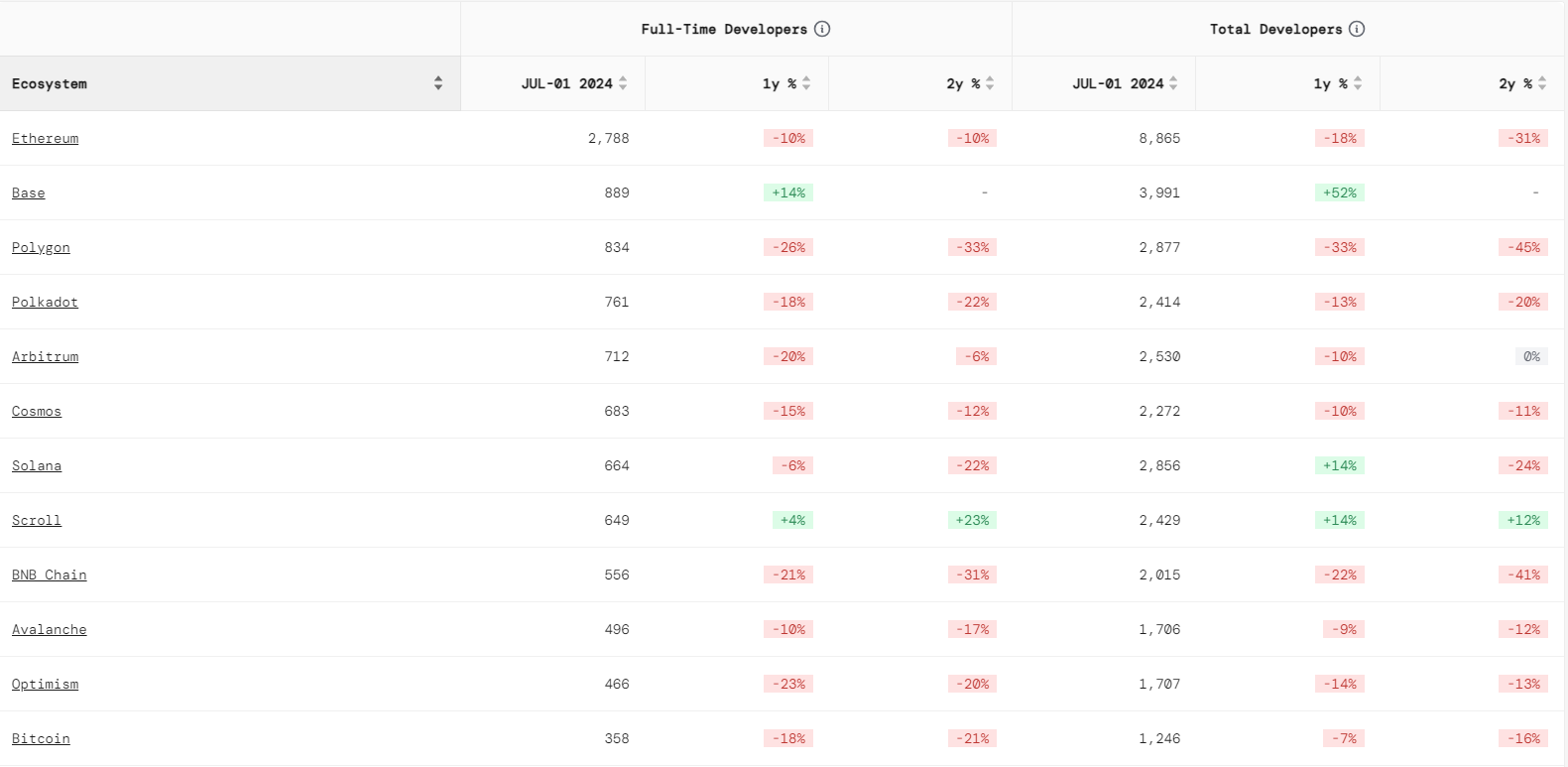
According to developer report data, Ethereum remains the leading blockchain in terms of monthly active developers. As of July 1, it had 2,788 full-time developers, with over 8,865 developers in total. Since 2019, the number of researchers working on Ethereum has surged by 2,100%.
The top three blockchains by full-time developers all belong to the EVM ecosystem. This is no coincidence—it’s closely tied to the fact that Solidity, the smart contract language for EVM, is simple and easy to learn (with syntax similar to JavaScript, the most widely used web development language) and benefits from mature development frameworks like Hardhat and Foundry.
Does this actually matter? Users can’t feel DX, but they can clearly see that “Solana’s token outperformed Ethereum’s last year.”
The issue is: developers—not users—are the real customers of general-purpose L1s. Users care about apps, not chains. Superior DX attracts better developers, enables better apps, and ultimately drives mass adoption. When all base-layer blockchains offer high performance and cross-chain abstraction matures, users will barely notice differences between chains—they’ll only care about app-level UX.
Users don’t need to use blockchains; they need to use apps. Polymarket’s election prediction market brought massive new users to Polygon, many of whom probably don’t understand “what is blockchain?” Moonshot is another prime example—users pay with credit cards, and on-chain activity is abstracted away to near invisibility.
Ethereum and the broader EVM ecosystem boast the largest developer community, the deepest talent pool, and the strongest mindshare. That’s why Ethereum remains the smart contract platform with the highest market cap. In a way, its beginner-friendly, accessible DX supports ETH’s valuation.
DX Rankings
In terms of DX today, the ranking looks roughly like this: Move-based blockchains > EVM (Solidity) > Solana.
This DX comparison includes both usability and learning curve. Solana smart contracts primarily use Rust—a language with relatively complex syntax. Since Rust wasn’t designed specifically for blockchains, developers often end up “reinventing the wheel.” The Anchor framework, created by Backpack founder Armani, has greatly improved this situation. But it still doesn’t match Move—a blockchain-native language based on Rust, backed by Facebook’s resources and built from the ground up for blockchain development. (This view is summarized from the author’s conversations with multiple developers across Sui, EVM, and Solana.)

Outlook for Move
If DX is so good, why hasn’t a killer app emerged on Move-based blockchains yet?
I believe this reflects the industry’s stage of development. The blockchain industry is still in its “infrastructure” phase—laying the groundwork for mass adoption. Capital and attention haven’t yet shifted toward applications. Solana’s DX still needs improvement, yet it has achieved undeniable success—because most users are directly “using the chain,” leveraging blockchain’s most primitive and core function: asset issuance, especially for meme coins. It’s more of a crypto-native PvP game, rather than user growth driven by compelling apps. I remain bullish on Solana long-term and believe its DX will improve. But right now, it’s not the best option.
I believe that for general-purpose L1s, DX matters more than UX; and that a future dominated by applications—where value is driven by apps—will come. That’s why I’m betting on Move-based blockchains with superior DX.
Join TechFlow official community to stay tuned
Telegram:https://t.me/TechFlowDaily
X (Twitter):https://x.com/TechFlowPost
X (Twitter) EN:https://x.com/BlockFlow_News
 Foresight News















