When the gaming industry faces a "midlife crisis," can AI rejuvenate traditional gaming?
TechFlow Selected TechFlow Selected
When the gaming industry faces a "midlife crisis," can AI rejuvenate traditional gaming?
Artificial intelligence has the potential to disrupt the gaming industry.
 Navigating Web3 tides with focused insights
By: dailyai
Translated by: MetaverseHub
For years, the gaming industry appeared to be an unstoppable "giant," with rising revenues driven by increasingly rich content and the explosive growth of mobile gaming.
However, as we move into the mid-2020s, growing signs suggest that the gaming industry is entering a downturn.
After a brief pandemic-driven boom in 2020 and 2021, global game revenue declined in 2022. According to Newzoo, global gaming revenue grew only 0.5% in 2023, reaching approximately $184 billion.
While this figure remains impressive, it falls far short of the double-digit percentage growth once expected by the industry.
The slowdown is even more pronounced in mature markets like North America and Europe, where key segments such as console and mobile games are nearing saturation. Mobile gaming revenue—the engine behind much of the industry's prior growth—actually declined in 2022 and has only recently begun to stabilize.
Yet stagnant revenue is only part of the problem. Even as growth slows, the cost of developing top-tier AAA games continues to skyrocket.
Budgets for major franchises like Call of Duty and Grand Theft Auto now routinely exceed $300 million. Some titles have combined development and marketing costs approaching $660 million—a staggering sum unimaginable just a decade ago.
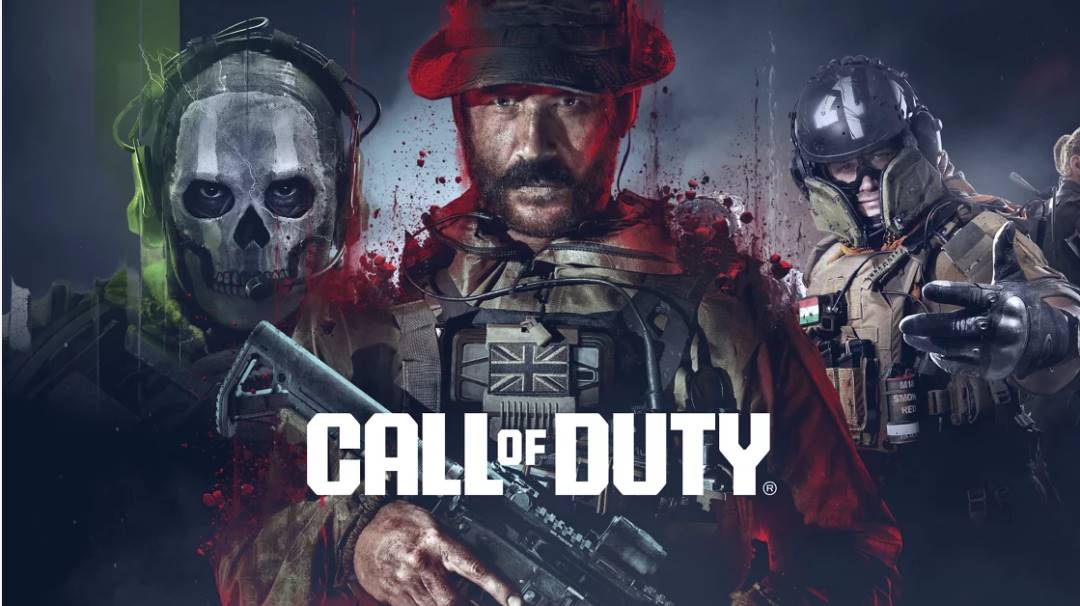
These ballooning budgets force studios to play it safe, relying heavily on established franchises and proven formulas rather than taking creative risks. Innovation is taking a back seat.
There’s also evidence that enthusiasm for games is waning: player satisfaction ratings dropped from 3.4/5 in 2014 to 2.9/5 in 2021.
Even recent entries in flagship series like Call of Duty and FIFA seem to be losing their luster. While we’ve seen historic releases like Elden Ring, its five-year development cycle and over $200 million budget make it a generational event—not the annual stream of hits seen before 2020.
Layoffs due to financial strain are also becoming impossible to ignore. The pace of job cuts is accelerating, with over 10,500 game developers laid off across more than 30 studios in 2023 alone.
Meanwhile, the industry is grappling with a rising wave of labor activism as workers push back against the notorious “crunch culture” long endemic to game development.
01. The Rise of Independent Developers
As tensions mount within AAA studios, independent developers are gaining greater influence in the gaming landscape—an effective counterpoint to mainstream game development.
In 2024, indie games occupied five of the top ten spots on Steam’s highest-grossing chart.
Titles like Palworld (budget: $6.75 million, sales: 25 million copies) and Enshrouded have resonated strongly with players, demonstrating that indie games can achieve commercial success on par with AAA titles.
This surge in popularity reflects a broader trend: indie games’ market share on Steam is projected to grow from 25% in 2018 to 43% in 2024.
Even in 2023—a year packed with highly anticipated AAA releases like Baldur’s Gate 3 and Spider-Man 2—indie game revenues remained stable, indicating a steadily expanding audience.
The rise of indie games reflects growing player interest in novel experiences and creative risk-taking. While AAA development often focuses on established franchises and safe formulas, indie developers push boundaries and experiment with bold new ideas.
At the same time, tools like Unity and Unreal Engine have made high-quality game development more accessible, while digital platforms like Steam offer excellent avenues for reaching audiences.
Many indie successes have been fueled by viral social media marketing, outpacing traditional promotional strategies used by large studios.
Building on this momentum, artificial intelligence (AI) is poised to further disrupt the industry’s power balance and redefine the very nature of creativity in game development.
By automating and streamlining design and content creation processes, AI will level the playing field, enabling small teams—and even individuals without technical expertise—to create competitive gaming experiences.
02. A Paradigm Shift Driven by AI
The potential for AI to transform gaming has been discussed for decades, but this future is no longer theoretical.
Recent breakthroughs such as Google’s GameNGen and DeepMind’s Genie offer a glimpse into the future of AI-driven game design.
GameNGen can generate fully playable classic game levels in real time, such as DOOM, while Genie creates interactive 2D environments from simple image or text prompts.
These advances are part of a long-term trend toward AI-powered innovation in gaming—an industry still in its infancy.
The journey began with early milestones like IBM’s DeepBlue, which defeated renowned chess world champion Garry Kasparov in 1997.
DeepBlue’s victory was a landmark moment, showcasing AI’s potential to excel in rule-based strategic challenges.
Fast forward to 2016, when Google DeepMind’s AlphaGo achieved another major leap. This AI system mastered Go, an ancient Chinese board game known for its immense complexity and reliance on intuition.
By defeating world champion Lee Sedol 4–1, AlphaGo demonstrated that AI could tackle domains once thought exclusive to human intellect.
In 2018, researchers David Ha and Jürgen Schmidhuber published “World Models,” showing how AI could learn to play video games by building internal representations of game worlds.
A year later, DeepMind’s AlphaStar showcased the power of reinforcement learning by mastering the complex strategy game StarCraft II, competing at a level comparable to top human players.
Today, GameNGen represents the cutting edge of this field. Trained on actual gameplay footage from Doom, it internalizes the game’s mechanics, level design, and aesthetics.
It then uses this knowledge to instantly generate novel levels, maintaining coherent layouts and gameplay flow.
In contrast, Genie leverages foundation models to create interactive environments from freer inputs like sketches or descriptions. Trained across diverse genres and visual styles, Genie can adapt to various aesthetics when generating content.

Behind the scenes, these AI systems are powered by deep neural networks—networks that are themselves evolving into game engines capable of generating complete, playable experiences from scratch.
Essentially, game worlds are being created inside AI systems, not through traditional programming, but via deep neural networks trained on the rules, patterns, and structures of game design.
Because game worlds are generated by neural networks, they have the potential to be far more dynamic and responsive than conventional environments. The same network generating the world can also simulate NPC behavior, adjust difficulty in real time, or reshape the environment based on player actions.
With AI handling the heavy lifting of world-building and level design, developers may finally focus on higher-level creative decisions—crafting art, concepts, and narratives.
While some jobs will be at risk, AI is poised to become the transformative boost the industry has been seeking.
03. Empowering Players and Disrupting Business Models
The real revolution begins when these AI tools fall directly into players’ hands.
Imagine a world where, with just a few simple prompts, a player can conjure up a game idea and immediately jump in to play it.
Want to combine the neon-lit cityscapes of Cyberpunk 2077 with the frenetic combat of Doom Eternal? Just describe it to an AI model, and your vision becomes reality.
This may be a vision for the distant future, but in the near term, AI will enable players to create and customize simpler games tailored to their unique preferences.
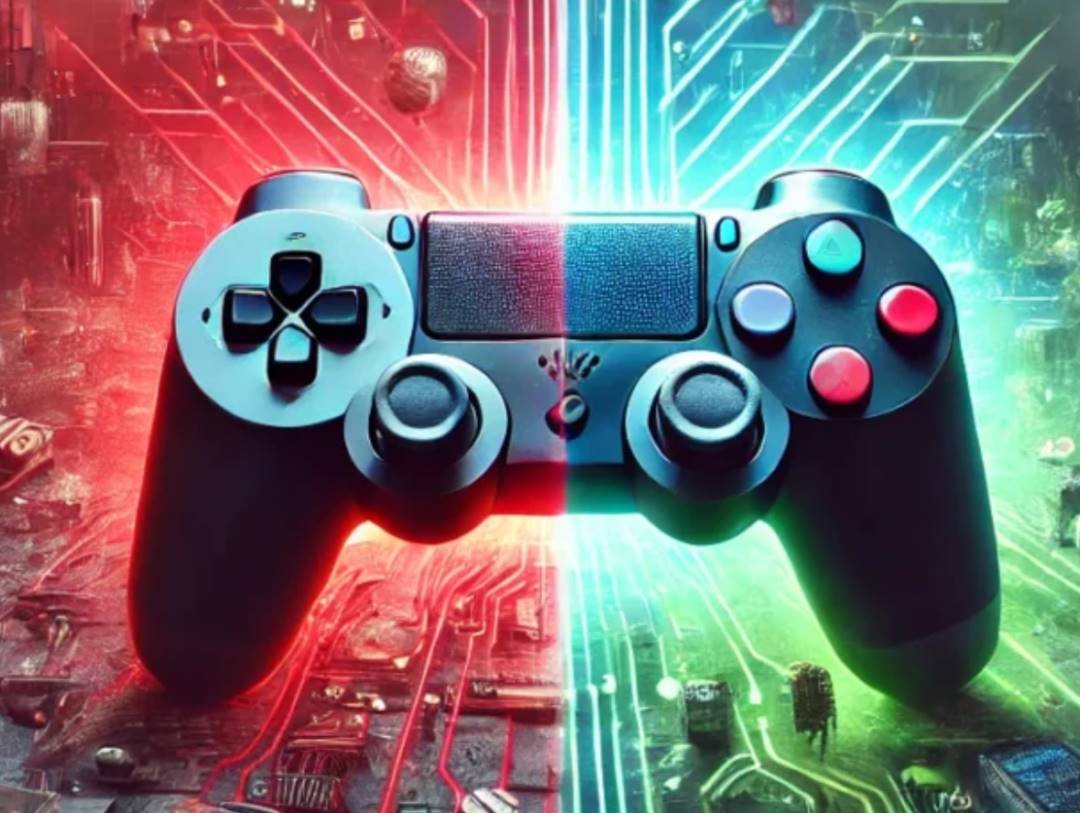
For example, players could use AI tools to build a platformer, defining the protagonist’s abilities, enemy types, and environmental themes. Or they could craft a puzzle game, setting the difficulty curve, visual style, and even the types of puzzles encountered.
The gaming industry will no longer be shaped solely by the creative direction of professional designers, but by the collective imagination of millions of players.
As AI creation tools grow more sophisticated, they may give rise to a new generation of “pro-player” creators, blurring the line between consumer and creator.
This bottom-up, democratized approach to game creation could fundamentally reshape the industry’s power structure. We may see the emergence of a more diverse, player-centric ecosystem, replacing the top-down model dominated by a handful of major studios.
Platforms providing AI tools for creation and curation will drive technological progress, monetizing through revenue shares from user-generated content or charging for advanced features.
Of course, realizing this vision won’t come without significant challenges. Issues around content moderation, intellectual property, workforce displacement, and revenue sharing must all be addressed.
Nevertheless, the wheels are already in motion. As technology evolves, we can expect to see increasing AI assistance in game development—and a fundamental reimagining of what games can be.
Join TechFlow official community to stay tuned
Telegram:https://t.me/TechFlowDaily
X (Twitter):https://x.com/TechFlowPost
X (Twitter) EN:https://x.com/BlockFlow_News
 @DailyAIOfficial