Optimism's New Revenue Engine Superchain: OP Stack Ecosystem Revenue Surpasses $40 Million
TechFlow Selected TechFlow Selected
Optimism's New Revenue Engine Superchain: OP Stack Ecosystem Revenue Surpasses $40 Million
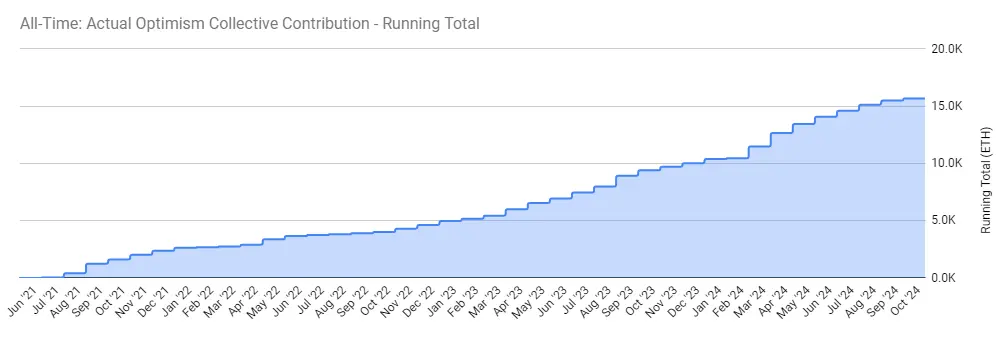
Optimism has generated approximately 15,700 ETH in revenue from OP Stack chains, worth over $40 million.
 Navigating Web3 tides with focused insights
Author: Xiyu, ChainCatcher
Editor: Nianqing, ChainCatcher
While the crypto community celebrates Uniswap—the leader in DeFi—launching its new Layer 2 network Unichain, Optimism, the key underlying technology provider behind the scenes, is quietly emerging as the biggest winner.
In an October 15 announcement by Uniswap regarding developer grants for Unichain, it was revealed that Unichain is a new Layer 2 network built using OP Stack technology. As a member of the Superchain, Unichain developers will also be eligible for additional rewards from Optimism Collective Grants. This statement serves as a clear public endorsement of OP Stack technology and demonstrates Uniswap's strong preference for OP Stack among various L2 stack development solutions such as Arbitrum and zkSync.
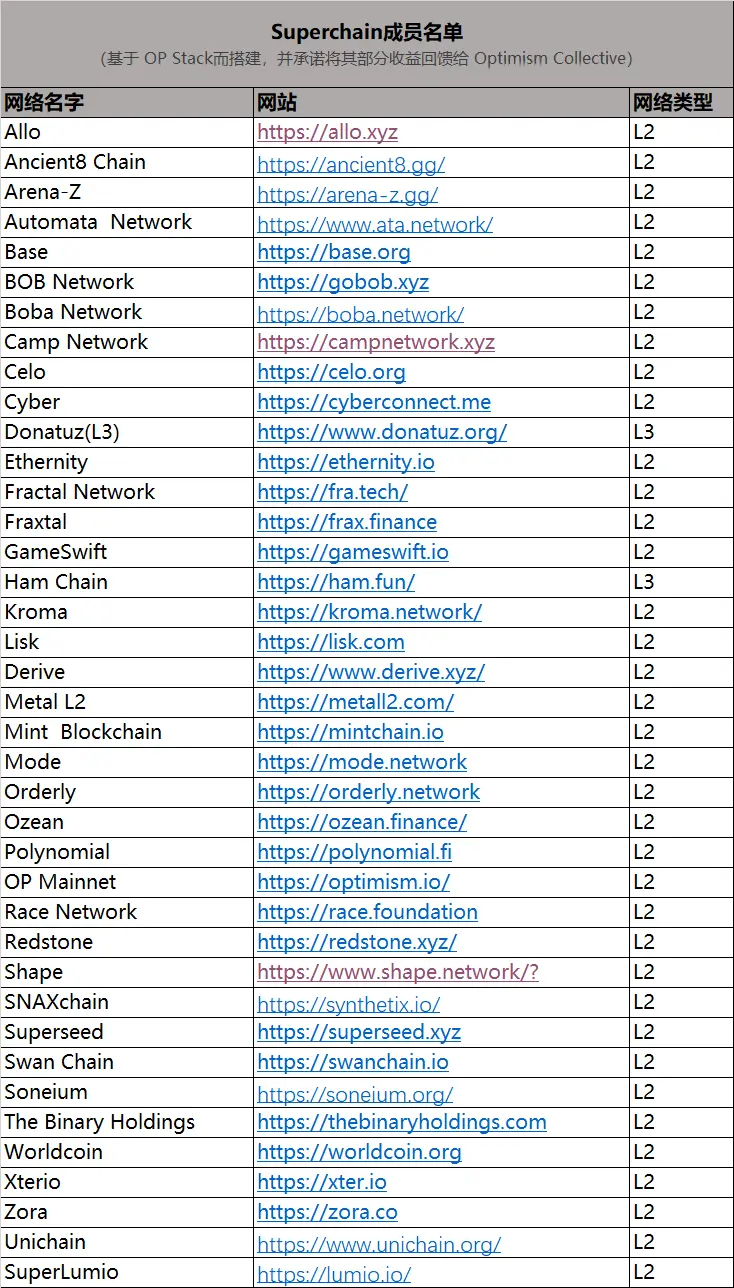
The collaboration not only signals Uniswap’s deep recognition of OP Stack’s technical capabilities but also brings a powerful new ally into Optimism’s Superchain ecosystem. As of October 17, there are now 39 L2 or L3 chains built on OP Stack, generating over $40 million in revenue for Optimism.
Uniswap’s entry is undoubtedly a boon for Optimism. As a long-standing pillar in the DEX market, Uniswap’s massive user base and trading volume could inject fresh vitality into Optimism’s Superchain ecosystem and open up new avenues for revenue growth.
OP Stack Revenue Surpasses $40 Million; Transaction Share Accounts for ~60% of the Layer 2 Market
OP Stack is an open-source modular toolkit launched by Optimism, the Layer 2 network, enabling developers to assemble or customize any Layer 2 network according to their needs while sharing Ethereum’s security and resources.
Since the Bedrock upgrade last June, Optimism has introduced the concept of Superchain for L2 networks built on OP Stack. It renamed its original Layer 2 mainnet to OP Mainnet, merging it with other OP Stack-based Layer 2 networks into a unified OP chain network known as Superchain.
Within the Superchain ecosystem, all chains share a standardized underlying architecture. Resources and information can be shared via the Optimism Bridge. Users and developers can treat all chains within the ecosystem as one integrated single chain—“Superchain.” Developers can focus on building applications targeting the entire superchain, while users no longer need to worry about cross-chain operations.
In August last year, after Optimism and Base established a revenue-sharing model, Base agreed to pay the higher of either 2.5% of total sequencer revenue or 15% of profits to Optimism Collective. In return, the Optimism Foundation committed to providing 118 million OP tokens in incentives to Base over the next six years. This arrangement created a win-win situation between Optimism and Base and set a benchmark for other OP Stack-based Layer 2 networks.
Since then, every OP chain within the Optimism Superchain has adopted this standardized revenue-sharing model, where each chain must contribute the higher of either 15% of total sequencer revenue or net profit (total sequencer revenue minus L1 data submission costs) to Optimism Collective.
As of October 16, the governance body Optimism Collective had earned 15,673 ETH through the Superchain, surpassing $40 million in value.
Currently, 39 blockchain networks based on OP Stack have joined the Superchain ecosystem, including Coinbase’s Layer 2 network Base, Uniswap’s new Layer 2 Unichain, Sony’s Soneium, Synthetix’s application-specific chain SNAXchain, Mode, CyberConnect’s social-focused L2 Cyber, Worldcoin’s chain, and others.
According to the latest data from Superchain Eco on October 13, transactions on OP Stack chains accounted for approximately 59.5% of all Layer 2 activity. Last week, Superchain averaged 6.1 million daily transactions, representing 37% of total Layer 2 transaction volume, with over 5,300 developers deploying applications in the ecosystem.
Among these 39 OP Stack chains, OP Mainnet’s full revenue goes directly to Optimism Collective, while the remaining 38 networks must remit 15% of either total sequencer revenue or net profit—whichever is higher. Optimism Collective conducts monthly revenue assessments across all OP chains.

In terms of revenue, data from Superchain shows that as of October 17, Optimism Collective has collected 15,700 ETH (worth approximately $40.82 million). OP Mainnet contributed the most, generating 12,775.25 ETH (~$33.21 million), accounting for 81.5% of total revenue. Base followed with 2,759.27 ETH (~$7.17 million), representing 17.6%. Other contributors include Zora, Mode, and RaaS platform Conduit.

With the rise of Base and increasing transaction volumes on OP chains like Mint and Orderly, their contribution share to Optimism Collective continues to grow. In October, Optimism Collective earned 244.9 ETH, with Base alone contributing 44.8%, and all other chains combined contributing 13.8%.
Is Optimism Becoming the Winner in the Layer 2 Race?
Through a standardized, open-source OP Stack toolkit, Optimism has successfully built the Superchain ecosystem. It provides developers with efficient infrastructure tools and technical support for seamless Ethereum integration while unlocking complex use cases across gaming, social, and more. This open and vibrant ecosystem has attracted numerous developers and projects, creating strong network effects. As more projects build on OP Stack, the ecosystem enters a virtuous cycle, driving continuous growth in Superchain-generated revenue and amplifying economies of scale.
Moreover, via Superchain, Optimism has established a unique business model with two clear revenue streams: direct on-chain revenue from its OP Mainnet Layer 2, and revenue sharing from the broader Superchain composed of OP chains.
These dual revenue channels form Optimism’s distinctive competitive advantage in the L2 landscape. Compared to rivals like Arbitrum, StarkNet, and zkSync, Optimism has carved out a unique business model with standout revenue performance.
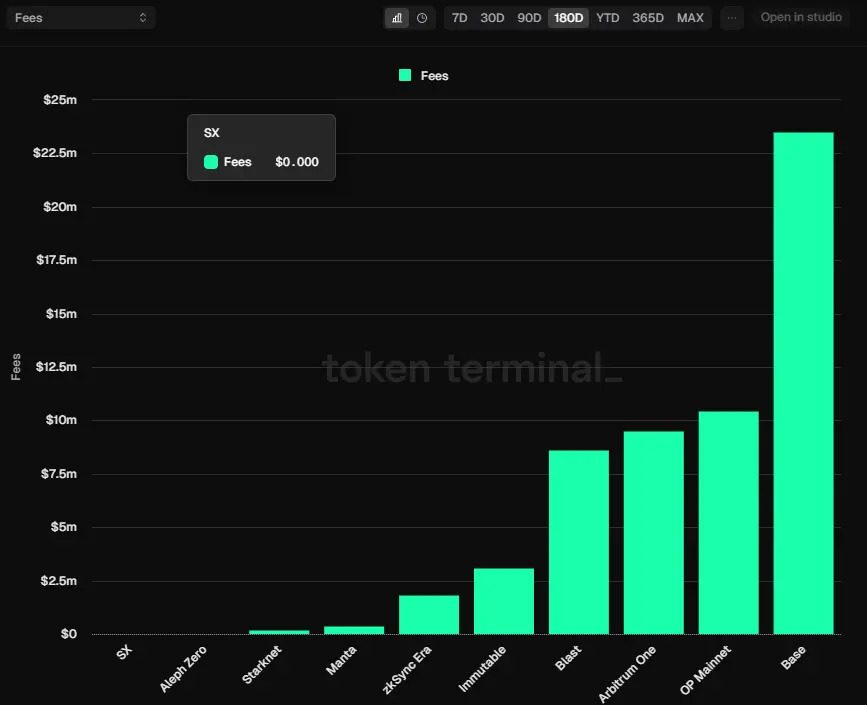
Data from Token Terminal shows that over the past six months, Base led the Layer 2 market with $23.51 million in revenue, followed closely by Optimism’s OP Mainnet with $10.24 million. Although Arbitrum maintains the highest TVL in the Layer 2 sector, its revenue stands at only $9.49 million—less than OP Mainnet. zkSync and StarkNet generated even less, at $1.84 million and $170,000 respectively.
Beyond OP Mainnet’s own revenue, Optimism also receives 2.5% of Base’s revenue or 15% of its profits—whichever is higher. Based on 2.5% of Base’s revenue, Optimism would receive an additional $587,000 over this six-month period.
Furthermore, every future transaction occurring on any OP Stack chain will funnel a portion of revenue back to Optimism, creating a sustainable income stream. With heavyweight projects like Uniswap joining the ecosystem, OP Stack-driven revenue is poised for continued growth.
Join TechFlow official community to stay tuned
Telegram:https://t.me/TechFlowDaily
X (Twitter):https://x.com/TechFlowPost
X (Twitter) EN:https://x.com/BlockFlow_News
 ChainCatcher 链捕手