OpenAI funding agreement details revealed: Sam Altman receives $10.5 billion in equity
TechFlow Selected TechFlow Selected
OpenAI funding agreement details revealed: Sam Altman receives $10.5 billion in equity
OpenAI's latest financing agreement includes a provision requiring the company to transform into a fully profitable entity within the next two years, or investors can demand repayment of their funds.
 Navigating Web3 tides with focused insights
By Youxin
OpenAI has become one of Silicon Valley's most valuable companies and is about to complete an oversubscribed $6.5 billion funding round at a valuation of $150 billion! Sam Altman requires investors to commit at least $250 million.
Details of OpenAI’s Latest Funding Agreement
According to a recent report by the Financial Times, OpenAI’s latest funding agreement includes a provision requiring the company to transform into a fully for-profit entity within the next two years—or else investors can demand their money back!
On one hand, relinquishing control from its nonprofit arm will make OpenAI operate more like a typical startup; on the other, this shift is expected to be welcomed by investors who have poured billions into the company.
OpenAI stated it is currently working with its board to ensure it remains optimally positioned to fulfill its mission, emphasizing that the nonprofit remains central to that mission and will continue to exist.
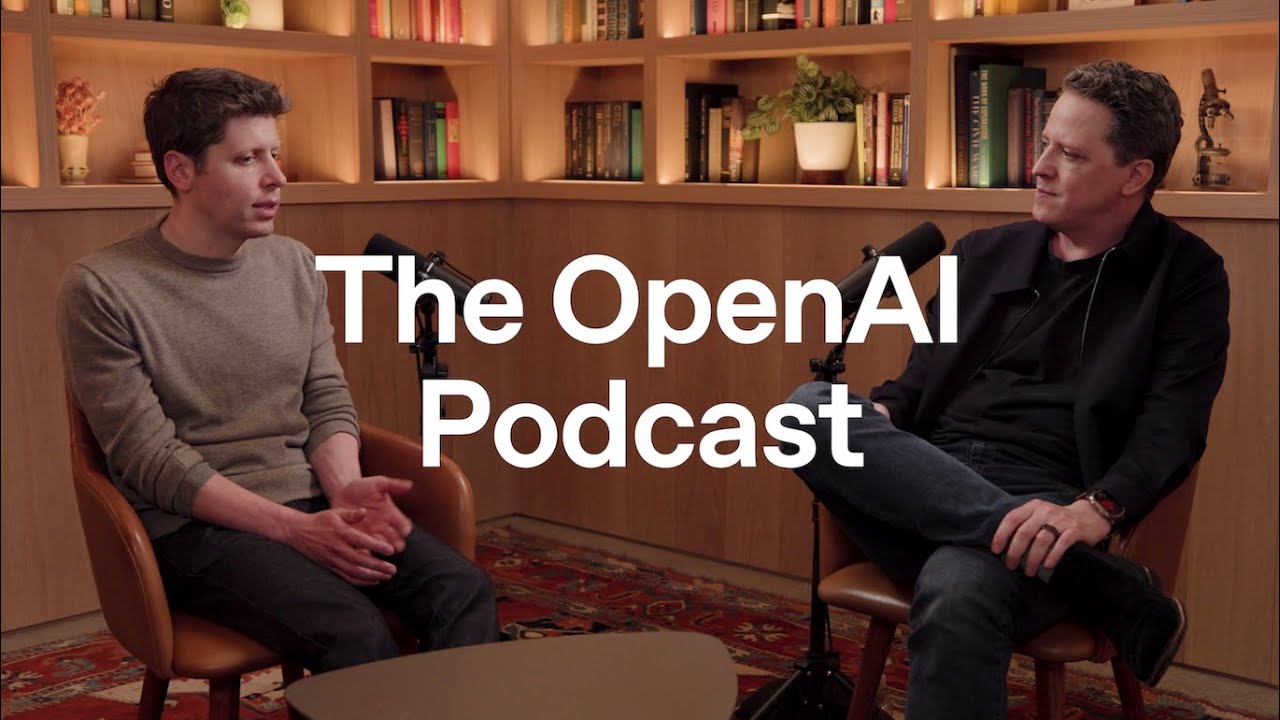
Reuters reported that the nonprofit board will further cede control but retain a minority stake in the new for-profit OpenAI. CEO Sam Altman will also receive 7% equity for the first time—worth approximately $10.5 billion at the latest valuation.
Altman called the news "absurd," possibly implying the percentage is too high. On Thursday, he told some employees he shouldn’t take equity, though there are “good reasons” why he should, without elaborating. However, investors are pushing for the equity grant to align his financial interests with those of OpenAI.
The Backstory Behind Key Technical Talent Departures
Following CTO Mira Murati’s announcement of her departure on Wednesday, other key figures such as Chief Research Officer Bob McGrew and Head of Post-Training Barret Zoph have also exited, triggering further leadership changes—leaving only two of OpenAI’s original 11 founders still at the company.
Murati’s exit shocked many OpenAI employees. In internal Slack channels, several staff responded with the “WTF” emoji.
Murati had previously played a critical role in mediating disagreements between OpenAI’s safety and product teams during releases. The departure of core technical leaders could significantly impact OpenAI and its standing in the AI race. Meanwhile, technical leads who previously reported to Murati and McGrew will now report directly to Altman.
In a memo to employees on Wednesday, Altman said he would become more involved in “the company’s technology and product areas,” having previously focused mainly on “non-technical” aspects such as fundraising, government relations, and business partnerships with companies like Microsoft and Apple.
Since launching its o1 series models, OpenAI has received widespread acclaim, and its enterprise software business has grown rapidly—drawing envy from competitors like Google and Anthropic.
Several OpenAI employees said Altman is urging teams to quickly turn breakthroughs into public products, creating pressure as staff work nights and weekends to launch offerings in short timeframes.
Sam Altman has appointed Mark Chen as the new Senior Vice President of Research and Josh Achiam as the new Head of Mission Coordination—Achiam was recently promoted from research scientist. Altman has also recently named Kevin Weil as the new CPO and Sarah Friar as CFO.
Current and former OpenAI employees say these personnel shifts reflect growing pains as the company evolves—from a nonprofit research lab founded in 2015 into a 1,600-person organization increasingly focused on revenue growth, up from around 750 people in November 2023.
Many recent hires come from traditional tech firms, bringing experience in sales and developer support, whereas OpenAI’s early team primarily came from AI research and AI safety communities.
Over the past few years, current and former OpenAI employees have collectively cashed out over $1.2 billion by selling profit units (which entitle holders to a share of company profits once OpenAI becomes profitable). OpenAI does not offer traditional equity like restricted stock.
Building a Data Center Empire Worth Hundreds of Billions
Returning to OpenAI’s latest oversubscribed $6.5 billion funding round, potential investors include UAE-based MGX, along with Microsoft, NVIDIA, Apple, and Tiger Global.
Altman compares global data centers to electricity. As power became more widely available, people found better ways to use it. He envisions data centers following the same path—eventually making AI as accessible and ubiquitous as electricity.
OpenAI executives have urged tech companies and investors across dozens of meetings to expand global computing capacity. Initial plans included asking the UAE to fund multiple chip fabrication plants, each potentially costing up to $43 billion—aimed at reducing manufacturing costs for top semiconductor producers like TSMC.
In a statement, OpenAI emphasized its focus on building infrastructure in the United States, aiming to maintain U.S. leadership in global innovation, drive national reindustrialization, and ensure broad distribution of AI benefits.
Shortly after launching the fundraising initiative, Altman visited TSMC’s headquarters in Taiwan. He told TSMC executives that realizing his vision would require $7 trillion and many years to build 36 semiconductor fabs and additional data centers.
Liz Bourgeois, an OpenAI spokesperson, said OpenAI has never considered projects worth trillions of dollars—though the total investment needed globally to build full AI infrastructure over decades might reach that scale, the projects OpenAI is actively exploring are in the hundreds of billions of dollars range.
At the same time, Altman visited South Korea and Japan. In Korea, he met with two chipmakers—Samsung and SK Hynix—but concerns arose over the UAE’s involvement due to its role in developing technologies seen as vital to both economy and national security.
This spring, OpenAI executives held meetings in Tokyo with Japanese officials, proposing to repurpose electricity from nuclear power plants decommissioned after the 2011 Fukushima disaster to power data centers.
During one meeting, when OpenAI requested 5 gigawatts of power—about 1,000 times what a typical data center uses—a Japanese official laughed.
Later, in talks with German officials, OpenAI explored building a data center in the North Sea to harness 7 gigawatts generated by offshore wind turbines. Ultimately, political pressures pushed OpenAI to focus on U.S.-based options.
According to insiders, Altman introduced an OpenAI research project titled “Infrastructure Is Destiny,” advocating for new data centers in the United States.
Each data center would cost $100 billion—about 20 times the price of today’s most powerful facilities—and house 2 million AI chips, consuming 5 gigawatts of power.
OpenAI leaders told White House officials, including the Secretary of Commerce and National Security Advisor, that AI data centers could act as catalysts for U.S. reindustrialization, generating up to 500,000 jobs.
Venture capital investment in AI startups reached $64.1 billion this year—approaching the 2021 peak—while global annual AI revenue remains only in the tens of billions of dollars.
Join TechFlow official community to stay tuned
Telegram:https://t.me/TechFlowDaily
X (Twitter):https://x.com/TechFlowPost
X (Twitter) EN:https://x.com/BlockFlow_News