TOKEN2049: Widening gap, the strong get stronger
TechFlow Selected TechFlow Selected
TOKEN2049: Widening gap, the strong get stronger
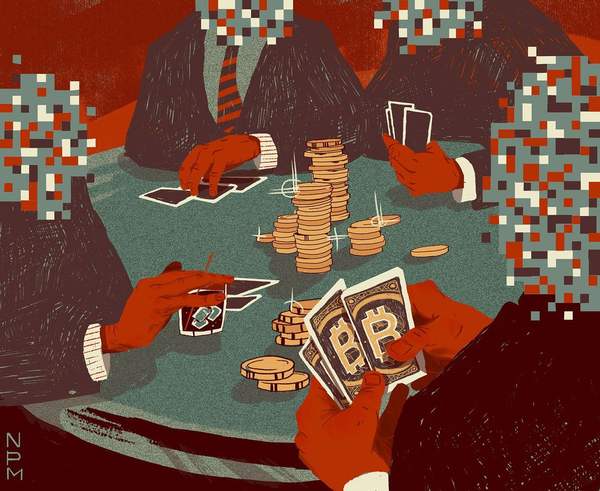
The new "Four Heavenly Kings" of the crypto industry have emerged, with the strong getting stronger and the weak left confused—the Matthew effect is beginning to show.
 Navigating Web3 tides with focused insights
Article by: Zhou Zhou, Foresight News
“The temperature difference has widened.” said Romeo, a Tier-1 investor.
Romeo successfully invested in prominent crypto startups such as Solv, Puffer, and Sonic this year. During Token2049, he observed significant shifts within the cryptocurrency industry. “Solana, Base, TON, and other ecosystems have grown stronger and increasingly popular, while many other sectors—once hailed as star projects or chosen ones—are now growing noticeably quieter.”
Heat across crypto sectors is becoming polarized. Some areas are heating up rapidly, while others are technically alive but effectively cold.
Solana, Base, TON, and BTCFi have emerged as the "Four Heavenly Kings" of the new era in the eyes of many industry participants, showing early signs of the Matthew effect—where the strong grow stronger. In contrast, previously promising sectors like NFTs, fully on-chain gaming, and (short-term) AI have seen sluggish or stagnant development over the past six months, facing increasing skepticism. Many projects have been proven unviable, leaving builders more uncertain than ever.
Beyond sectors and industries, other new phenomena are also unfolding.
Kay, head of Hashkey Chain, shared her immediate impression after attending TOKEN2049: “Confidence among Chinese entrepreneurs has strengthened significantly.”
At Token2049 in 2022, Chinese Web3 practitioners referred to themselves as the “Jews of Web3”—feeling insecure and rootless, anxious about finding no safe haven in Asia, yet fearing exclusion from Western capital and ecosystems when moving West—caught in a dilemma.
But at Token2049 in 2024, Chinese entrepreneurs appeared more composed and confident. After speaking with multiple Chinese and Western founders active in Base, Solana, and TON ecosystems, the author found that a large portion of developers and entrepreneurs in these three ecosystems actually come from Asian communities. In the BTCFi space, Chinese teams hold an absolutely dominant position.
This year, global attention is no longer solely focused on U.S.-centric crypto ecosystems. A multi-centered Asian crypto scene centered around Singapore, Hong Kong, Japan, and South Korea has become a new global innovation hub for the crypto industry.
This year’s Singapore Token2049 remained vibrant and lively, widely regarded as the undisputed “Crypto Spring Festival.” The difference? Founders building on fast-rising ecosystems feel more confident and resolute, while others are growing increasingly lost.
1. Widening Gap, The Strong Grow Stronger
Solana, Base, TON, and BTCFi have emerged as the best-performing ecosystems over the past year. Founders in these four ecosystems express far greater confidence in their future outlook.
Over the past year, these four ecosystems have consistently produced innovative projects and breakout applications, leading the direction of crypto development. Whether measured by capital inflow, user numbers, or project volume, they maintain clear advantages—resulting in the highest market热度 and strongest founder confidence.
Each of these sectors includes several tokens ranked within the top 100 cryptocurrencies by market cap. Notably, Solana-related tokens number as many as seven. Base, TON, and BTCFi each have approximately 3–6 new tokens entering the latest top 300 crypto rankings.
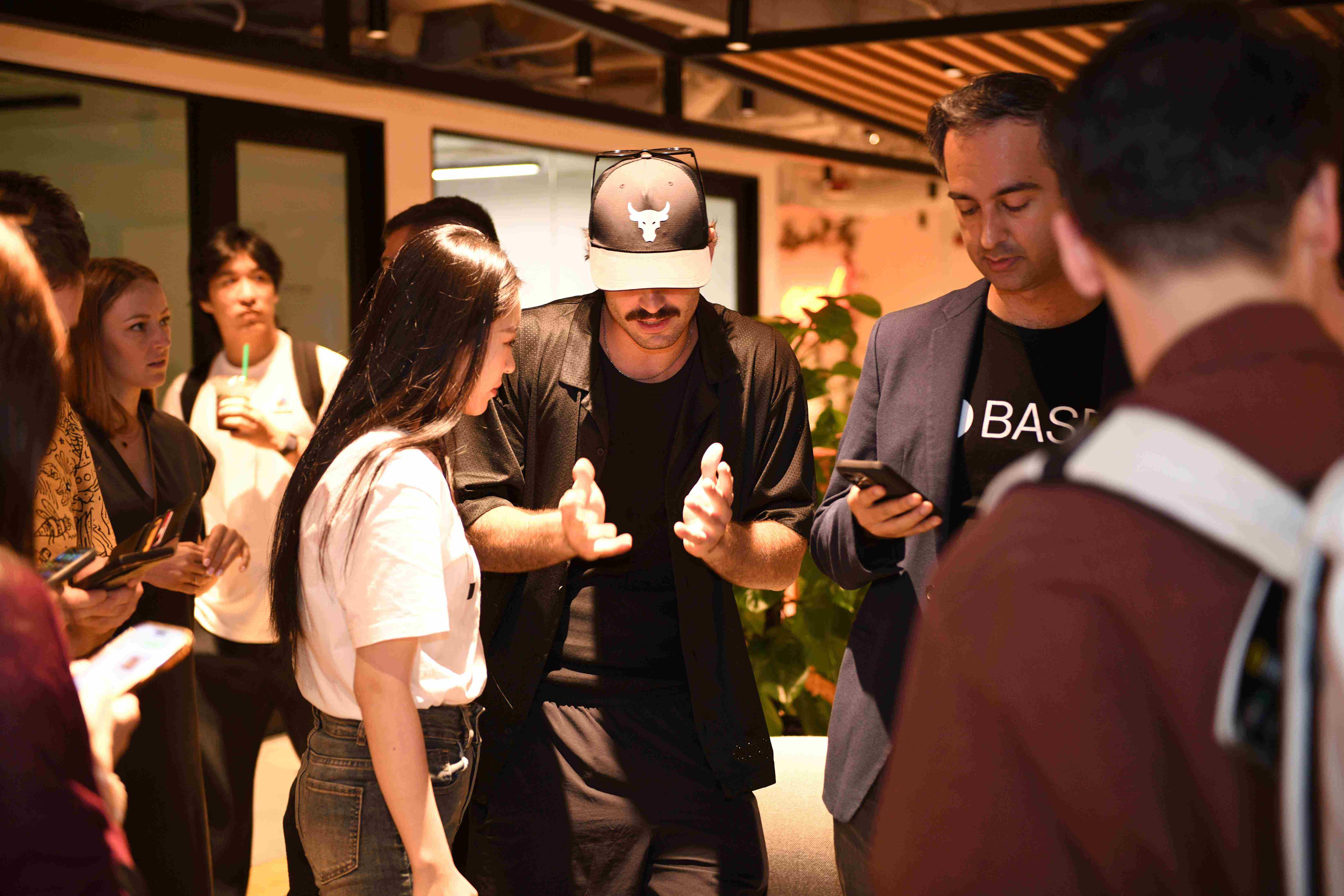
This ecosystem vitality naturally extended to event activity during Token2049. During the most intense five days of Token2049 (September 16–20), Base and TON hosted one to two events daily, all of which were packed. The Solana Breakpoint event was widely considered by attendees to be the best, liveliest, and most vibrant gathering outside the official Token2049 main conference.
This contrasts sharply with the previous Token2049, when these four ecosystems were still “small” and underdeveloped.
At Token2049 2023, Solana had just recovered from the FTX collapse, with SOL barely stabilizing around $20 without further decline. Ethereum was still the blockchain hegemon, and few could foresee Solana challenging its dominance so quickly. Now, many in the industry believe Solana may surpass Ethereum. Four months before last year’s Token2049, Ordinals (Ord) continuously dropped, losing four-fifths of its market cap and falling to just $3—many believed the Bitcoin ecosystem was dead. No one expected that two months later, Ordinals would list on Binance and begin a sustained rally, sparking waves of innovation in Bitcoin L2s, staking, and runes.
Hardly anyone mentioned Base or TON back then—they were essentially invisible during the last Token2049. But through repeated successes over the past half-year, both ecosystems have gained firm support from numerous founders.
As momentum builds behind Solana, Base, TON, and BTCFi, they continue attracting more capital and top-tier developers—the Matthew effect is clearly visible: the strong grow stronger, the weak weaker. Meanwhile, outside these four ecosystems, many crypto sectors are growing increasingly quiet.
2. Mass Adoption, A Glimmer of Hope
“After seeing TADA, I felt excited—like I finally saw a glimmer of mass adoption,” said Kay.
At this year’s Token2049, many practitioners were actually disappointed with the industry’s overall progress. There hadn’t been enough mass adoption products emerging. Yet upon arriving in Singapore for Token2049, Kay and many other crypto professionals were pleasantly surprised to discover a new way to hail rides—seamlessly paying for taxis using cryptocurrency.
TADA, Singapore’s second-largest ride-hailing app, launched a mini-program called TADA mimi on Telegram, integrating the TON cryptocurrency. Users can directly pay for rides with TON. Throughout Token2049, many Web3 practitioners experienced their first real-world crypto payment. Bitget Exchange joined the initiative, offering users at least one free ride—a promotional move that encouraged broader adoption of TADA.
Kay had noticed TADA years earlier when she worked at Bybit overseeing listing reviews. She learned that TADA’s founder is a Korean who previously operated cross-border logistics in Hong Kong—an area inherently close to crypto. TADA entered crypto early; its token MVL launched as far back as 2018 and currently holds a $100 million market cap.
Now that Kay has moved from Bybit to HashKey, she finds HashKey deeply collaborating with the TON ecosystem—one of the earliest institutions to prioritize development on TON. As head of Hashkey Chain, Kay aims to bridge Web2 and Web3, drawing in more users. I understand that today, exchanges including Binance, HashKey, Bitget, OKX, Bybit, and Huobi are all deeply involved in TON and Telegram collaborations—bringing substantial user growth to early adopters.
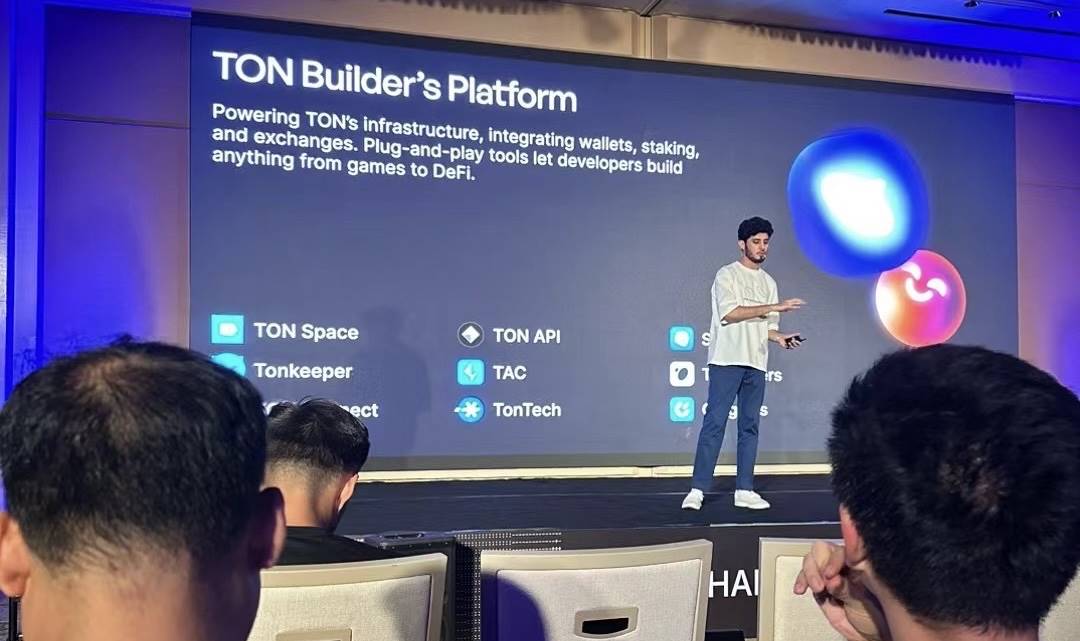
Practitioners see in the Telegram and TON ecosystem a potential path toward mass adoption, leveraging Telegram’s 900 million users—a highly overlapping user base with Web3 enthusiasts.
In some unpredictable scenarios, mass adoption products are slowly being validated.
Polymarket, a prediction market platform on Polygon, is breaking through crypto’s usual boundaries, attracting more external participants—for example, Bloomberg Terminal has integrated Polymarket. The platform is growing rapidly: according to DefiLlama data, its TVL was under $10 million at the beginning of the year, but by September, it had surpassed $110 million.
A Polygon engineer told me: “Polygon places great importance on Polymarket and has committed significant resources, actively embracing new prediction markets.” Other ecosystems have also recognized the potential—platforms including Blast, TON, Base, Wintermute, DYDX, and BitMEX have recently launched or announced prediction markets. From what I gathered at this conference, even more ecosystem teams are planning to integrate prediction markets into their products.
Besides prediction markets, I also spoke with Taki, a Korean entrepreneur in the Warpcast ecosystem, and Yawn, founder of StepN—the product from the last cycle most believed could achieve mass adoption. Both shared deeper reflections on Web3 social and whether social applications can drive mass adoption of blockchain products.
Web3 social remains a space full of imagination. Despite repeated failures, more participants continue innovating in this space. Yawn brought up Friend Tech and shared his thoughts on Web3 social: “How do we make ‘connect to earn’ work well, make map-based social fun, without wrecking the entire ecosystem economy? That’s a topic needing further exploration and validation,” said Yawn.
3. Confusion Still Lingers at Token2049
Although the strong rise of Solana, Base, TON, and BTCFi has boosted confidence for many practitioners, widespread uncertainty about the future persists—especially after four consecutive months of post-halving downturn, which dealt a harsh blow to many.
Investors are confused. This year, only a handful of “VC coins” outperformed BTC. Meme coins have beaten most so-called “value coins.” According to statistics, only 42 projects performed better than BTC this year, and 11 of the top 15 were meme coins—rendering the concept of value investing a joke.
Founders are confused too. Over the past year, many once-hot sectors have been disproven: fully on-chain games, NFTs, Web3 social, and (most) Ethereum L2s. Having faced setbacks over the past six months, these sectors have slowed or stalled, leaving practitioners pessimistic and disoriented.
During this Token2049, the author observed many “serious” project teams and investors shifting focus into meme-related sectors.
“98% of AI + Web3 applications have been disproven,” Tier-1 investor Romeo told me. “I’m very bullish on the future of AI and crypto. I believe there will definitely be an AI project that stands alongside Ethereum. But right now, all AI projects are memes.” Romeo stated bluntly.
When asked why he wasn’t investing in social, Romeo replied: “Building Web3 social is too hard. These kinds of markets usually have only one winner. Can you even call it a sector if there's only one winner?”
Investors are confused, founders are confused, builders and retail users are even more confused.
One new sector after another—hailed as the future of crypto—rises dramatically, then collapses just as fast. Watch them build their mansions, watch them host banquets, watch their mansions crumble. Too many sectors and projects are hyped up, only to be disproven shortly after. Especially during the four months following the halving, many secondary-market investors described the crypto market as hellishly difficult.
4. Rise of Chinese Crypto Talent, Multi-Center Asian Ecosystem Emerges
At this year’s Token2049, more and more Chinese teams are showcasing their strength on the world’s biggest stage.
SynFutures, the largest contract platform on Base, was founded by a Chinese team, with many employees appearing at Base-hosted events. Catizen, one of the largest Web3 games on TON, was created by a Chinese team and actively participated in TON-organized gatherings. Jupiter, Solana’s leading DEX, and Sonic, Solana’s first L2, were both founded by Chinese teams and were present across major Solana events...
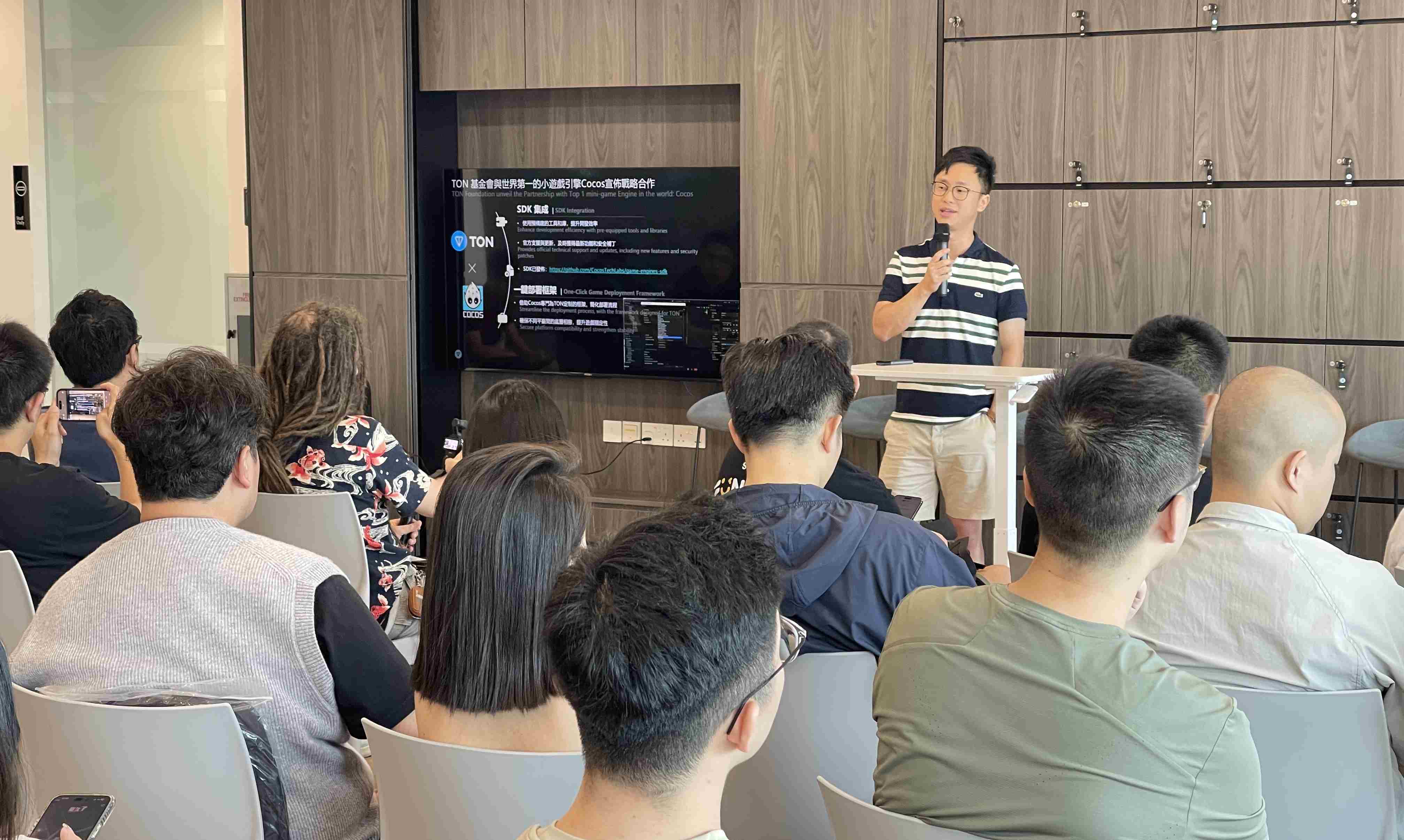
Across exchanges, RWA, stablecoins, and blockchain ecosystems—Chinese teams are deeply involved in nearly every scenario, missing no potentially successful crypto sector.
In 2022, the Chinese crypto ecosystem was in a weak position, as almost all notable innovations from the previous cycle originated in the West, with the U.S. dominating the industry narrative. But in this cycle, I see Chinese teams securing core positions in the hottest sectors—surviving and thriving. Some have even led the charge in establishing the Bitcoin ecosystem as a major new sector.
During Token2049, I also met many entrepreneurs and investors from South Korea, Japan, Singapore, and Hong Kong. These four Asian crypto ecosystems each exhibit distinct characteristics.
The Korean market is highly enthusiastic. Upbit has become the exchange with the strongest listing effect, even surpassing Binance and Coinbase. Japan’s Web3 ecosystem is rising fast—during StepN’s walking event, I saw many loyal Japanese users. Institutions like Sony and SoftBank have made moves in crypto in recent months, leading many to believe Japan’s crypto scene could be the next big wave.
Singapore and Hong Kong are evolving in different directions. Singapore is boldly experimenting in institutional crypto services—forward-looking and aggressive. A senior executive at a Singaporean bank told me that 20% of his fintech division’s business now comes from crypto, with rapid growth. The integration of TADA and TON delivered a major surprise to many Web3 attendees. Hong Kong’s market, backed by mainland China, holds vast potential—if breakthroughs occur in RWA or stablecoins, it could unlock enormous opportunities and is highly anticipated.
The multi-centered Asian crypto circle—centered around Singapore, Hong Kong, Japan, and South Korea—has become a new global innovation hub for the crypto industry.
The crypto industry resembles a massive jigsaw puzzle. No one knows the full picture, but through major information hubs like Token2049, its true landscape is gradually unfolding.
Join TechFlow official community to stay tuned
Telegram:https://t.me/TechFlowDaily
X (Twitter):https://x.com/TechFlowPost
X (Twitter) EN:https://x.com/BlockFlow_News
 Foresight News